Elijah, Rain, and the Patch of Earth That Waited
Ahab hunted the prophet through dry ravines. Elijah would not return while the king still stood unbent. Heaven answered with soil.
Table of Contents
 Click for full size
The Ravens Would Not Touch Ahab's Table
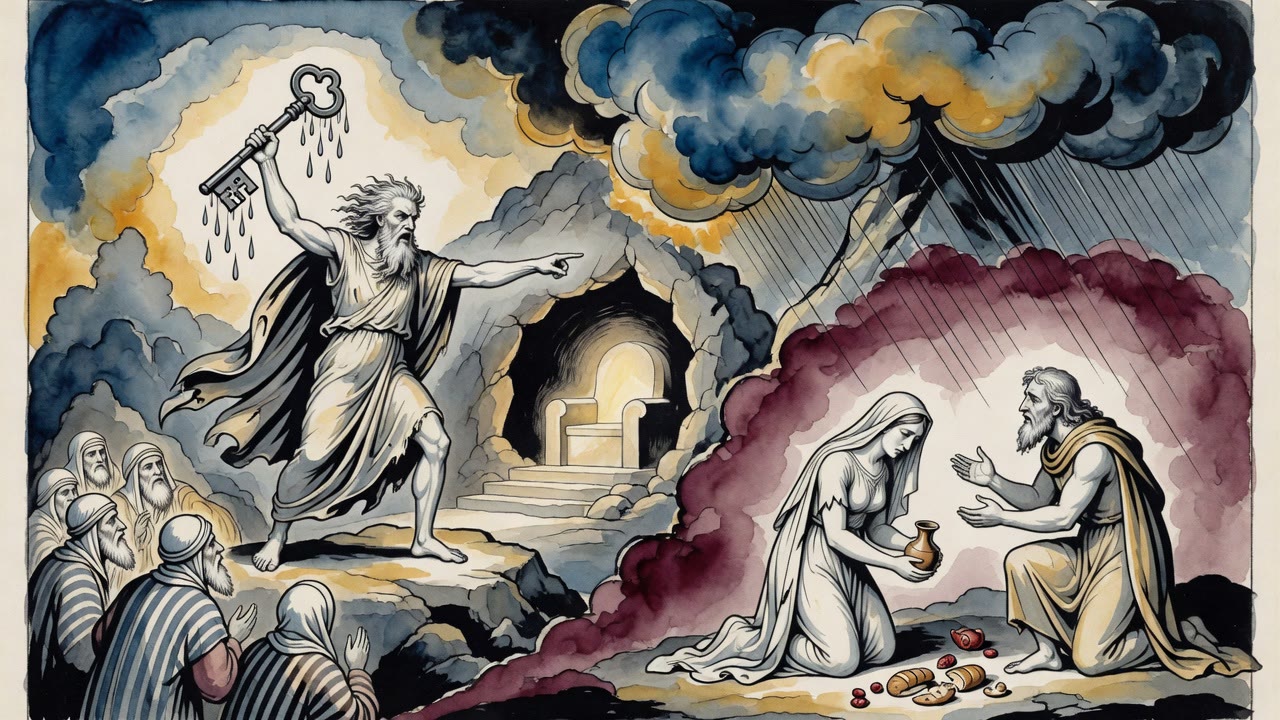
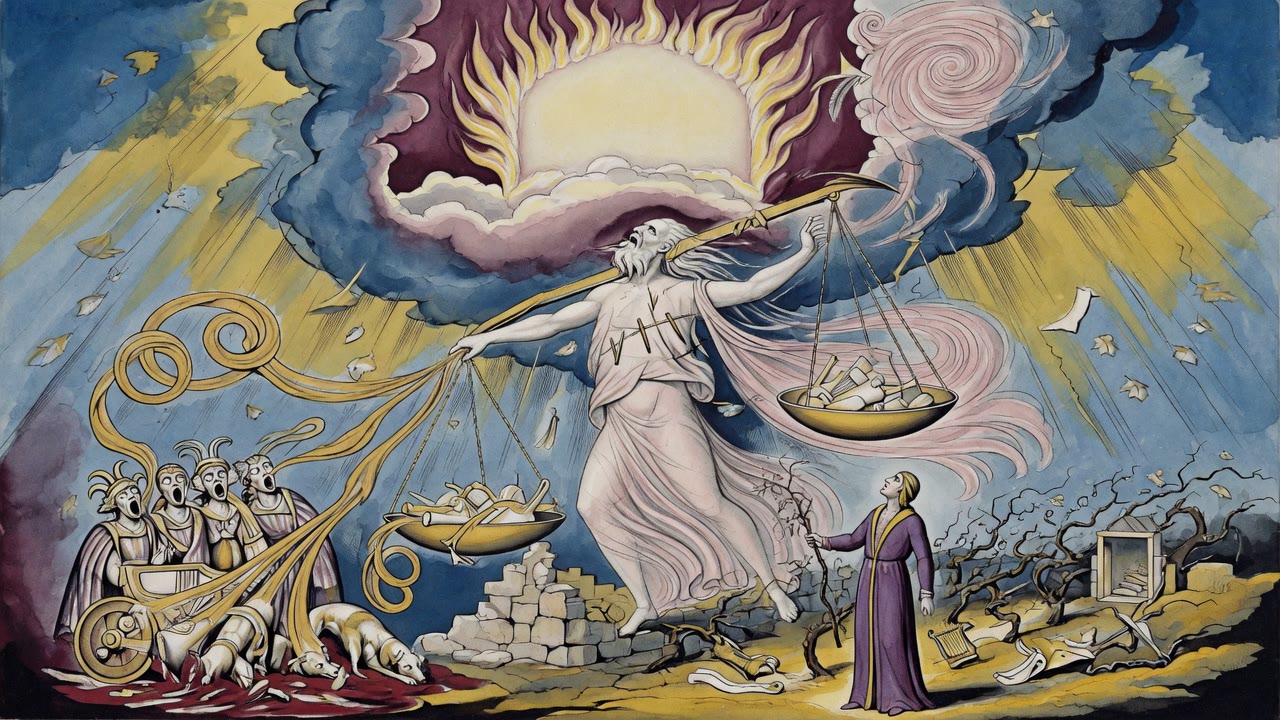
The sky had become a locked fist over the kingdom. Wells dropped. Cistern ropes scraped stone. Cattle nosed dry troughs while Ahab sent searchers through ravines for the one man who had made the clouds stop.
Elijah had spoken the drought, and the land wore his word in its cracked skin. No rain. No dew. No softening of the ground at dawn. The court could not feed the land with orders. Ahab still had guards, messengers, horses, and the seal of a king, but none of them could pull water from a cloud.
In the hard places, ravens brought Elijah bread and meat morning and night. They did not take it from Ahab's table. Those birds would not enter the house of that wicked one, because idols sat in it. They brought the food from the table of Jehoshaphat instead. Even the birds of heaven refused the king's bread. Elijah ate from a cleaner court and waited.
Elijah Would Not Show Himself
Then God told him to go back. Show yourself to Ahab. Rain was coming (1 Kings 18:1).
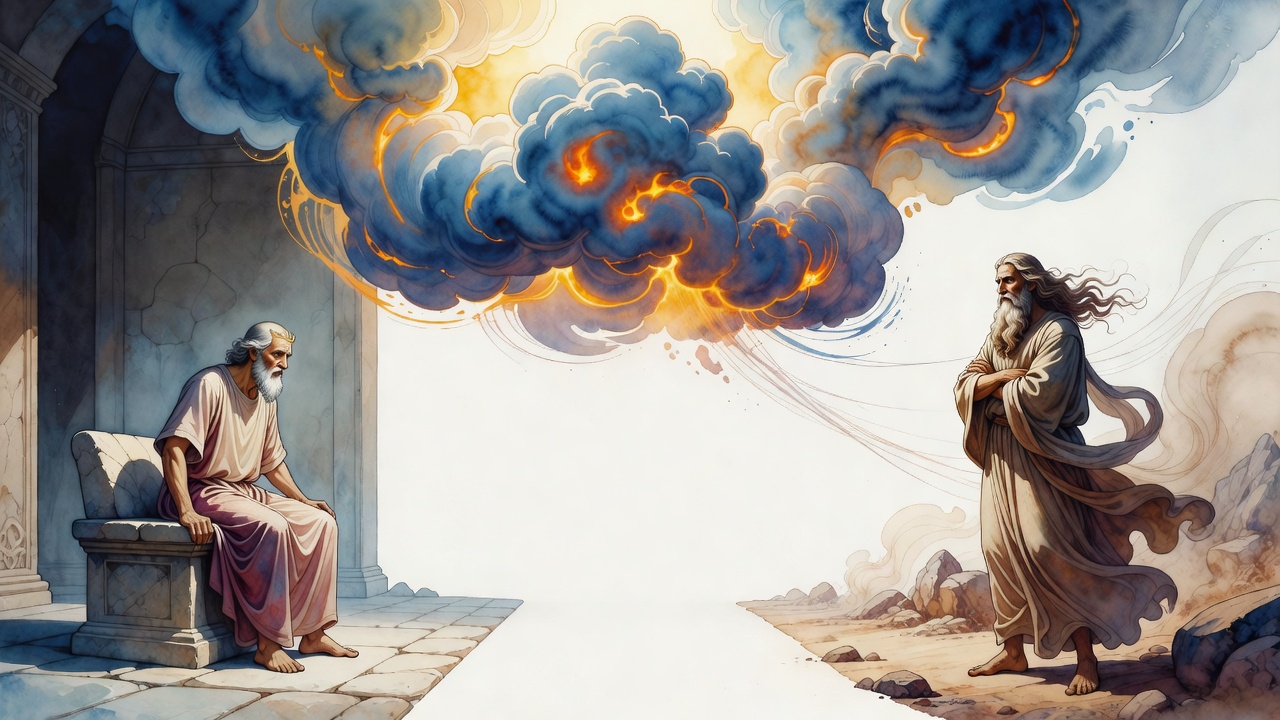
Elijah did not move. "How can I go, for until now he has not repented?" He had obeyed hard commands before, but this one scraped against the iron inside him. Ahab had not broken his altars. He had not torn the lie out of the palace. Why should rain come before the king bent his neck? Why should mercy walk in before confession opened the door?
The question was not cowardice. Elijah had faced kings, hunger, and silence. He could stand before danger. What he could not bear was cheap repair. Rain before repentance looked like a wound covered while the poison stayed inside. God did not answer by praising Ahab. He did not say the king had become righteous in secret. He answered Elijah with soil.
One Patch Stayed Dry Since the First Mist
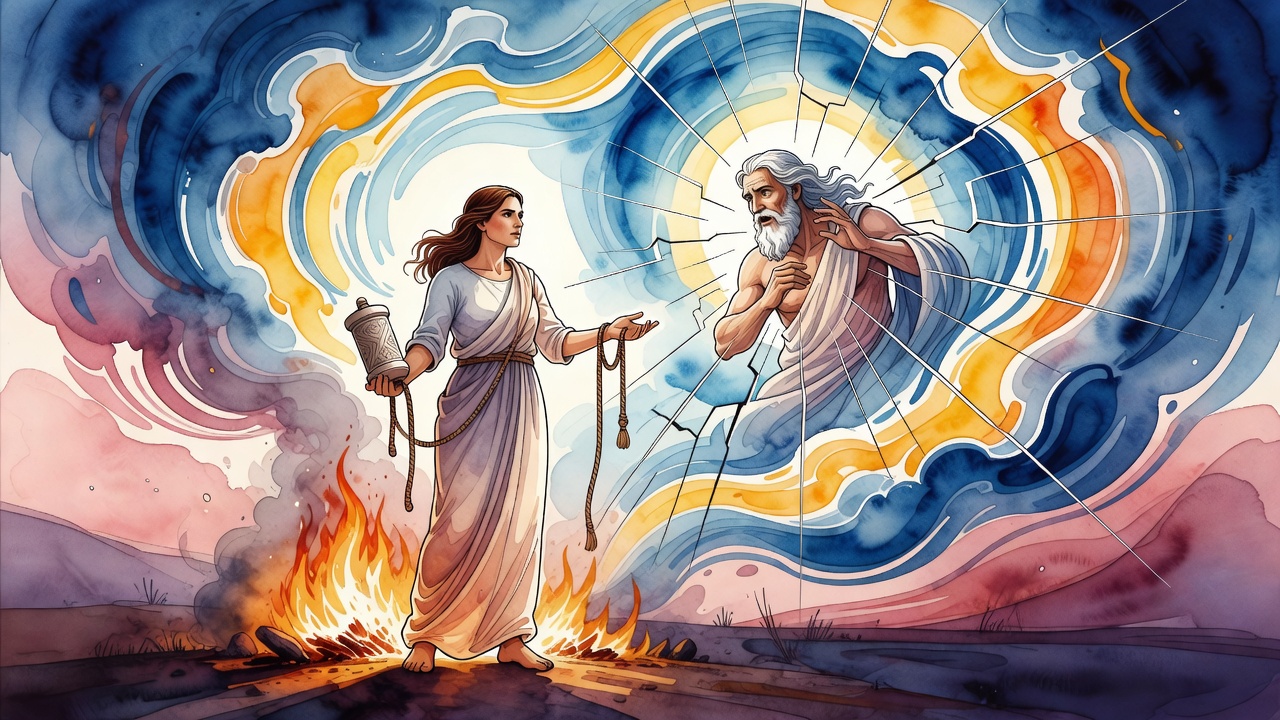
At the beginning, when the first mist rose from the earth, the ground drank like a newborn thing. Moisture climbed out of the deep and spread across the face of the soil (Genesis 2:6). The world received its first watering before any farmer lifted a hoe.
But one patch stayed dry. No drop reached it. No mist settled into it. While the rest of the ground darkened with wetness, that small place remained unchanged, holding its thirst from the first morning of creation. It was not forgotten. It was waiting.
God set that waiting place before Elijah. "When I watered My world, there was one patch of land that did not receive any rain. Even now, go and show yourself to Ahab, and I will give rain." Ahab's repentance was not the only clock in heaven. Creation had a clock too. A piece of earth had carried dryness since the first mist so that, in a later age, a prophet would have to learn that watering can begin before guilt has finished speaking. Elijah went.
The Bull Refused to Walk Toward Baal
On Carmel he made them pick two identical bulls, twins from one mother, raised in one pasture. Lots were cast. One for the Lord. One for Baal. Four hundred and fifty prophets of Baal and four hundred and fifty prophets of Asherah gathered around the bull that had fallen to their god, and they could not move its legs from the ground.
The bull spoke before the eyes of the entire people. "I and my counterpart emerged from one womb. Its lot is to be the portion of the Omnipresent, and the name of the Holy One is sanctified through it. My lot is to be the portion of the Baal, to anger my Creator."
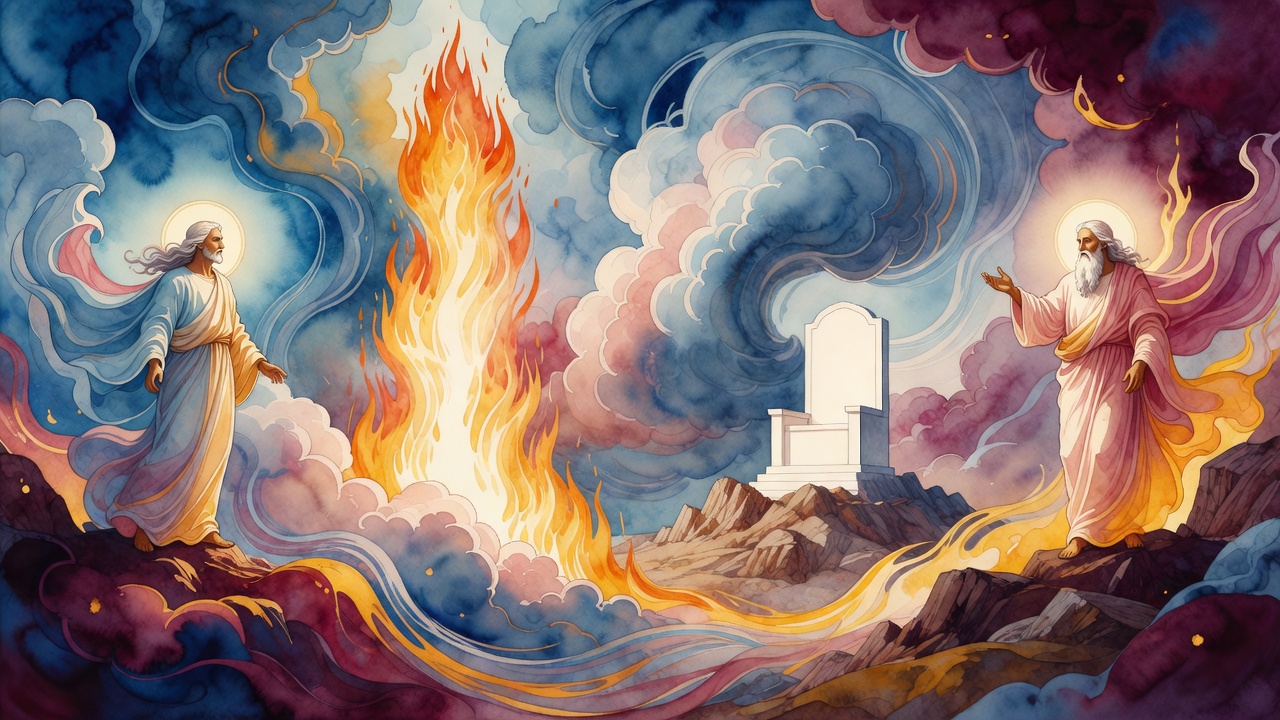
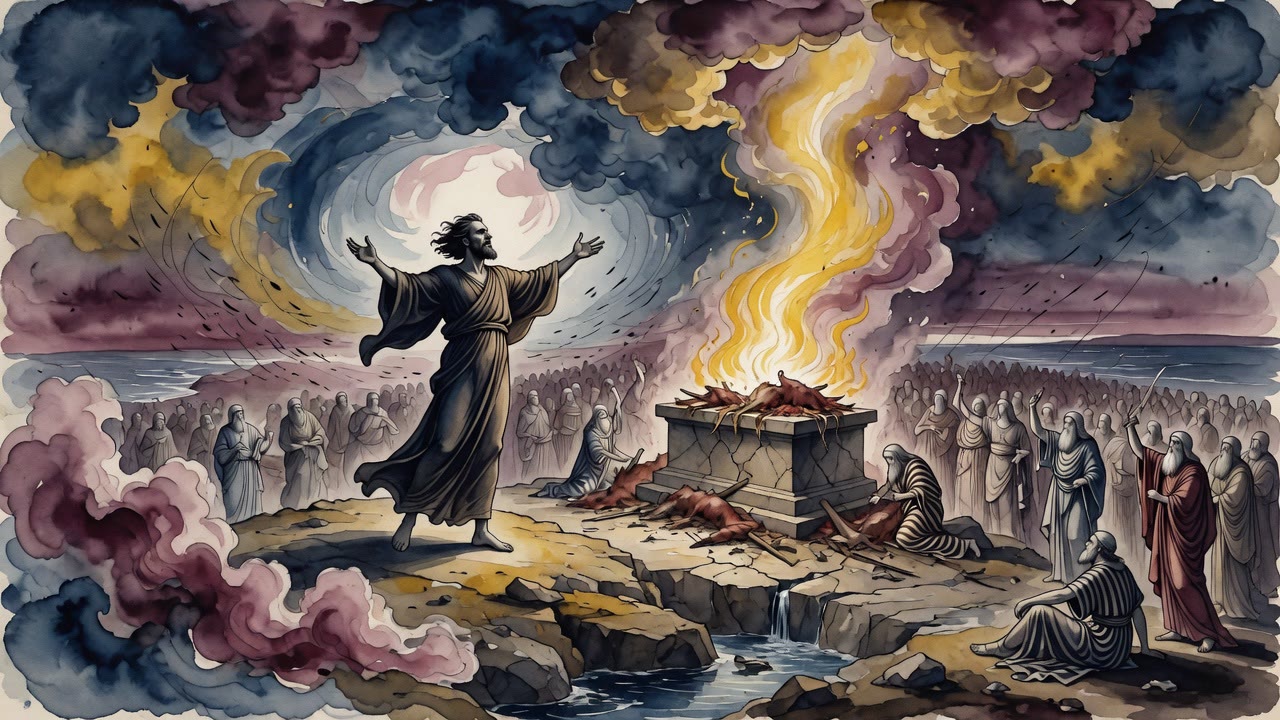
Elijah said, "Bull, bull, have no fear. Go with them, so they will not find a pretext. Just as the name of the Holy One is sanctified upon the one that is with me, so it is sanctified upon you." The bull answered that it would not move until Elijah himself delivered it into their hand. They took the bull that he gave them. Then the false prophets cried until their voices frayed. No fire came. Elijah repaired the broken altar, poured precious water into the trench, and prayed a short prayer. Fire fell. It ate the offering, the wood, the stones, the dust, and the water. The people fell on their faces. Only then did Elijah turn to Ahab and speak of rain as if he could already hear it.
A Cloud Rose Like a Hand
Nothing appeared at first. Elijah crouched low with his face between his knees while his servant climbed and looked toward the sea. The first report came back empty. Nothing. The second was the same. The third, the fourth, the fifth, the sixth. Empty sky over empty land.
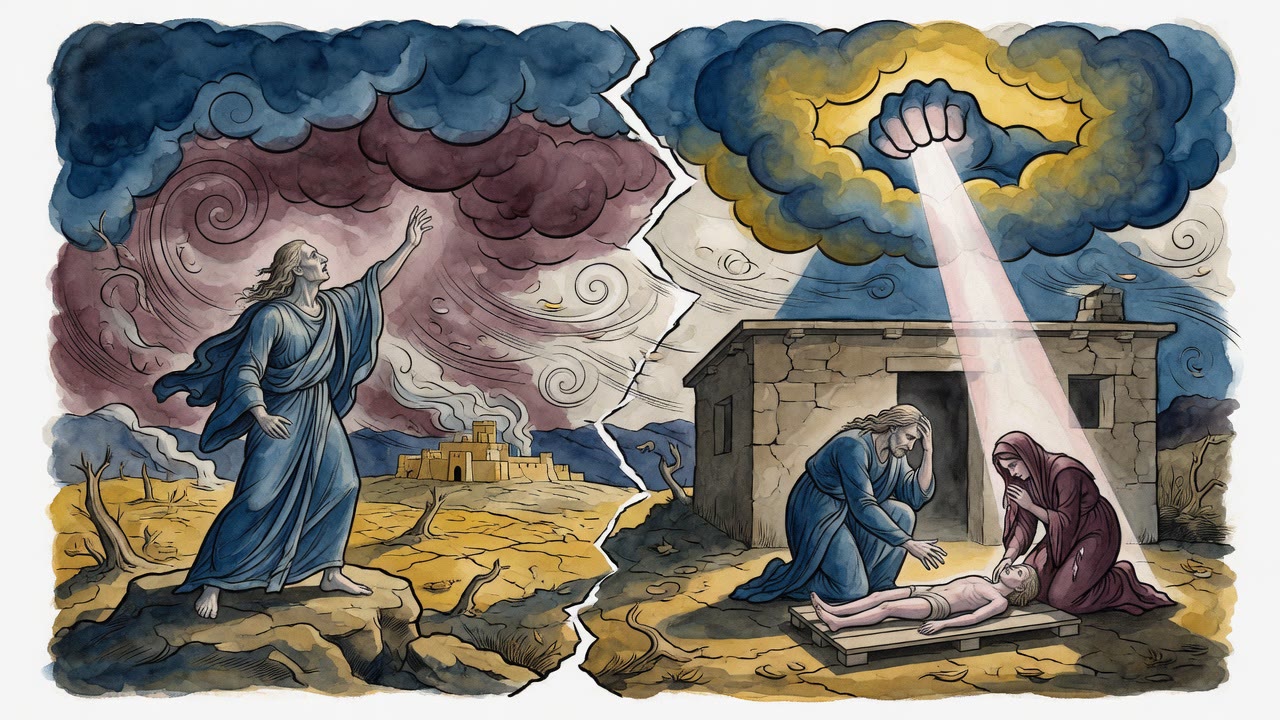
Seven times the servant climbed. On the seventh, the horizon changed by almost nothing. A small cloud rose from the sea, no bigger than a man's hand. That was enough. Elijah sent warning to the king. Harness the chariot before the rain traps the road. The hand-sized cloud gathered force, and the sky that had been a fist opened at last. Wind ran ahead of the storm. Water struck the ground that had forgotten how to receive it.
The old patch of earth was no longer alone in its thirst. The withheld thing had entered its hour, and the hour broke over Carmel in rain. Ahab rode into the wet. Elijah had gone after all, not because the king had bent, but because a square of creation had waited since the first mist, and the bull had walked to Baal only so God's name could be sanctified on both altars when the fire came.
← All myths