God Led Israel the Long Way While Egypt Sank
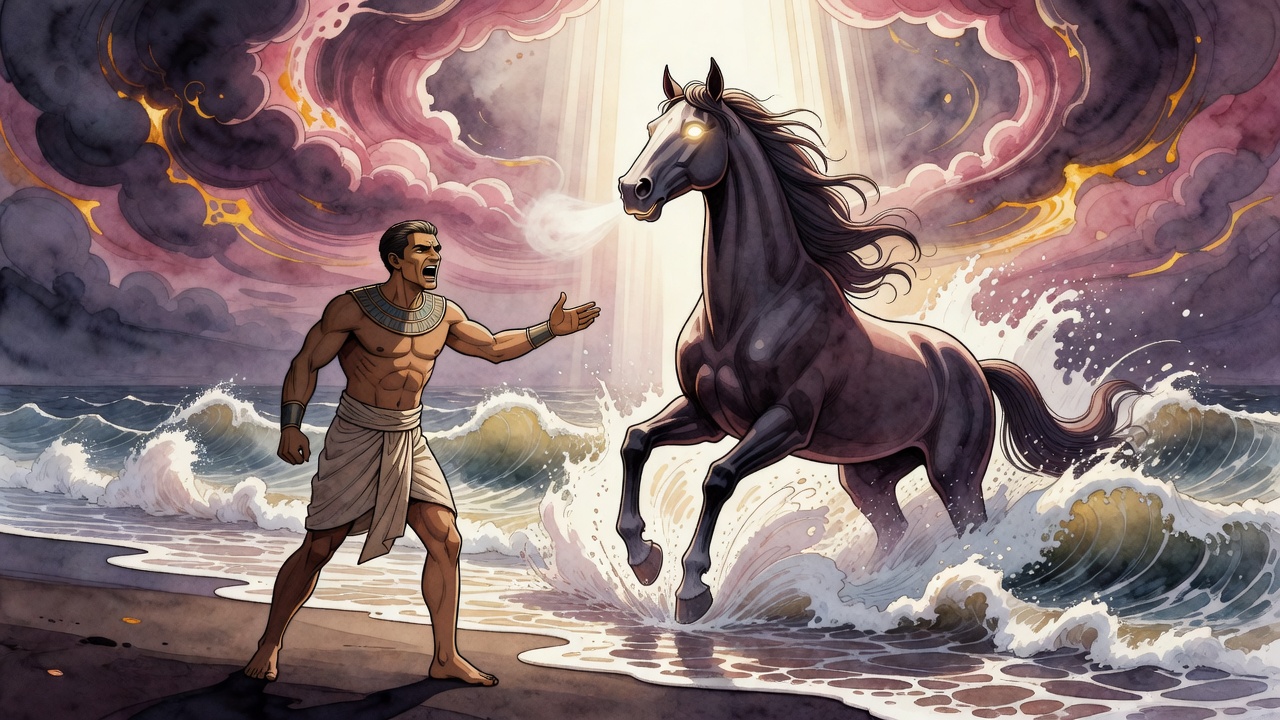
Pharaoh's horse ran at the water it had refused the day before. Down in the waves it saw the height of the world. The rider could not turn its head.
Table of Contents
 Click for full size
The Boy Would Not Stop Talking
A king's son came home with the dust of the road still in his hair. His father had ridden out after the highwaymen who took him and had killed every one of them. The boy was back in the house. The boy would not stop talking.
"This is what they did to me," he said. "This is how they hit me. This is the work they put me to."
The men were dead. The king had seen to it himself. He sat with his son in front of him and went over it again.
"This is what they did to my son."
He had won. Nobody was left of them to punish. It made no difference. The house was quiet except for the boy's mouth, and the king's hands, which would not rest on the table.
The Short Road Stayed Unused
Egypt had generations of that to answer for. They embittered the lives of the children of Israel with mortar and with brick and with every kind of work in the field (Exodus 1:14).
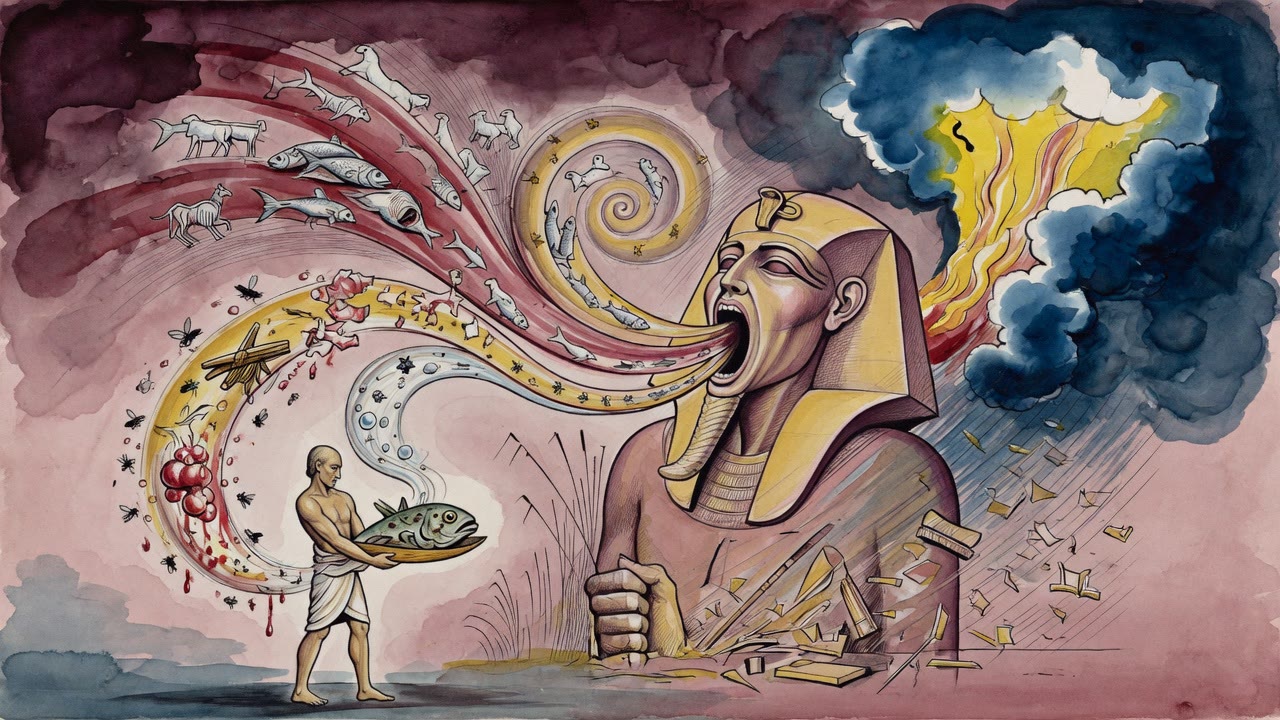
God sent ten plagues and brought His children out. Pharaoh stood in the doorway of his own dead house at midnight and told them to go.
It was not enough.
"I will not be comforted," He said, "until I have killed all of them."
When the people came up out of Egypt, the short road lay open in front of them, the coast highway through the country of the Philistines. He would not take it. He turned them into the desert instead. A live Egypt at their backs would have been a wound that kept talking. The sea was still ahead, and He meant to use it.
They walked with their bundles and their children and the taste of haste still in their mouths. Behind them the brick yards sat empty. Ahead of them there was no city, only sand and a column of cloud. Some of them looked toward the coast and saw how fast a week of marching could have ended. He did not turn the cloud that way.
Pharaoh Boasted at the Waterline
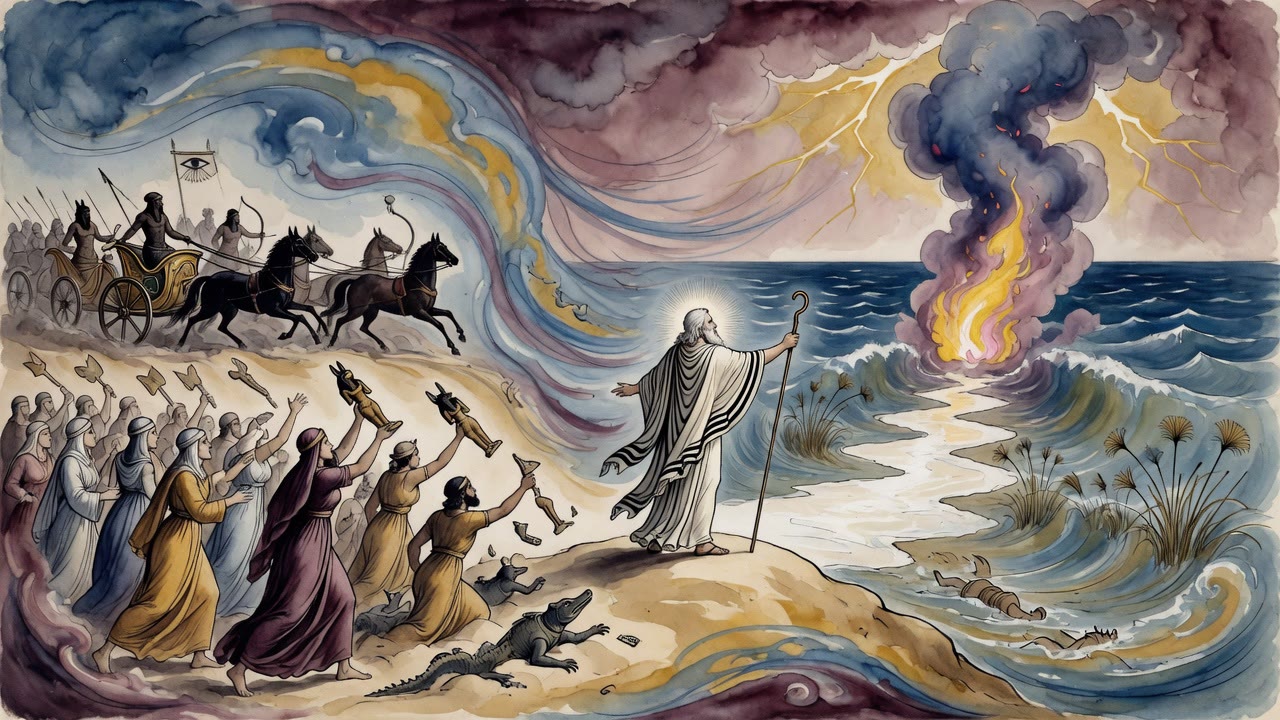
Pharaoh caught them at the sea. He stood up in his chariot at the waterline and told the water what he was about to do to the people crossing it.
He had chariots. Six hundred picked ones, and every other chariot in Egypt behind them. He had the fugitives boxed against water with nowhere left to walk.
The answer came down over his head.
"Do you have wind? Do you have wings?"
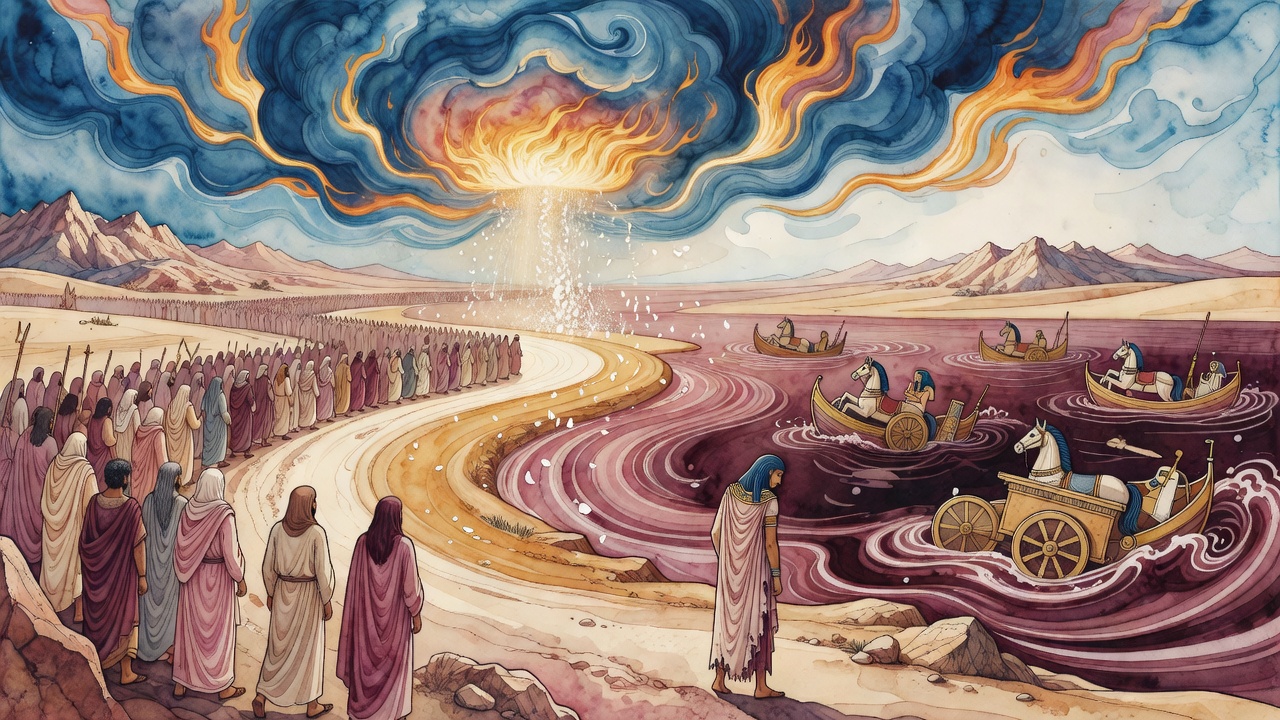
Then the Holy One reached under His own wheels and pulled out the cherub and pulled out the wind, the two He rides on and flies with, and sent them both down to the sea (Psalms 18:11). Pharaoh's boast sat in the air a moment longer. Then the water began to move the other way.
Israel walked between walls that had been sea an hour before. The ground under their feet was still wet enough to take a print. They did not run. They went through because the road behind them was already filling with horses.
The Horse Answered Its Rider
Every wave that stood up was a mare. The Egyptian horses were stallions in season, and the stallions went in after them. The riders pulled at the bits and could not turn their heads. They went down that way, chasing water, and sank to the floor of the sea.
One Egyptian was shouting at his horse on the way in.
"Yesterday I walked you to the river to drink and you would not come with me. Today you run at the water to drown me?"
The horse answered him.
"Look at what is in the sea. The height of the world is down there. I can see it."
Then the water came back over the crossing, and the Lord shook Egypt out into the middle of the sea the way a man shakes a thing out of a cloth. Horse and rider both, thrown into the water. "The horse and its rider He cast into the sea" (Exodus 15:1). Centuries later a prophet would still be writing that Egypt would be a desolation (Joel 4:19). That was the end of the sentence He had started in the brick yards, and it was the only thing He had said would console Him.
Bread Fell and the Dew Climbed
Bread comes out of the ground. Everyone knows where bread comes from. Rain and dew fall out of the sky, grain climbs up out of the dirt, and that is how the arrangement has always run.
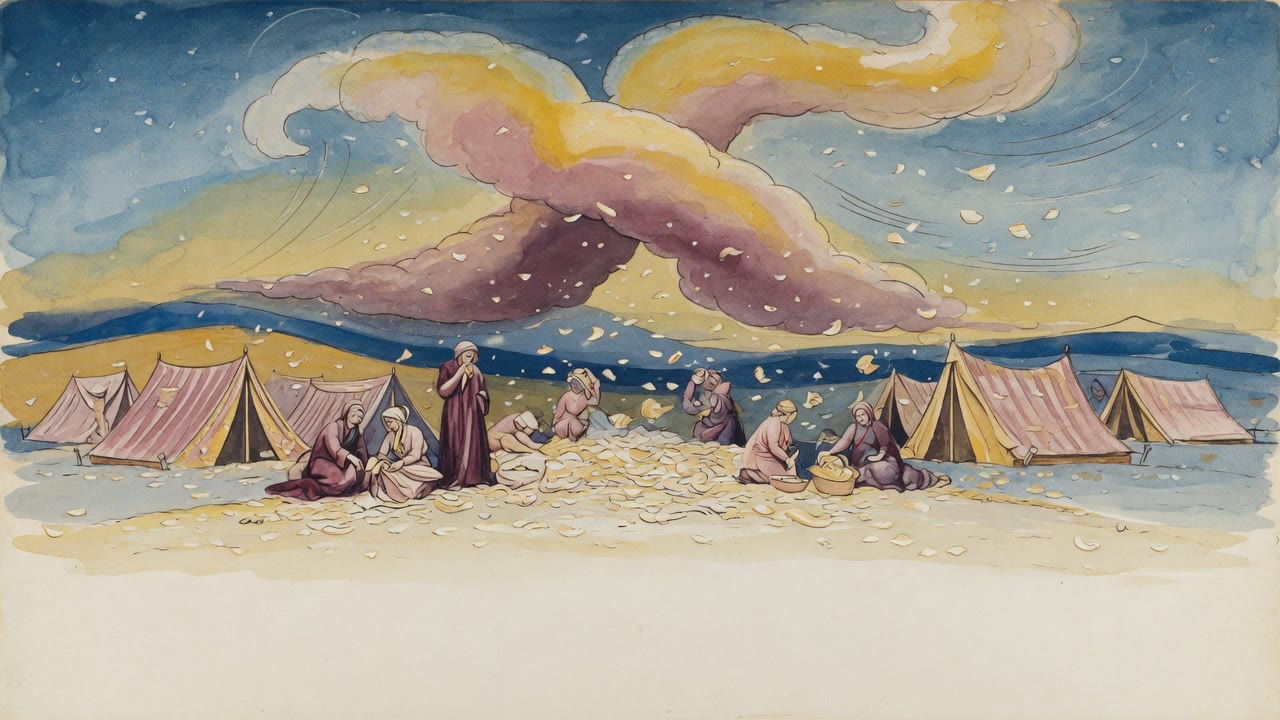
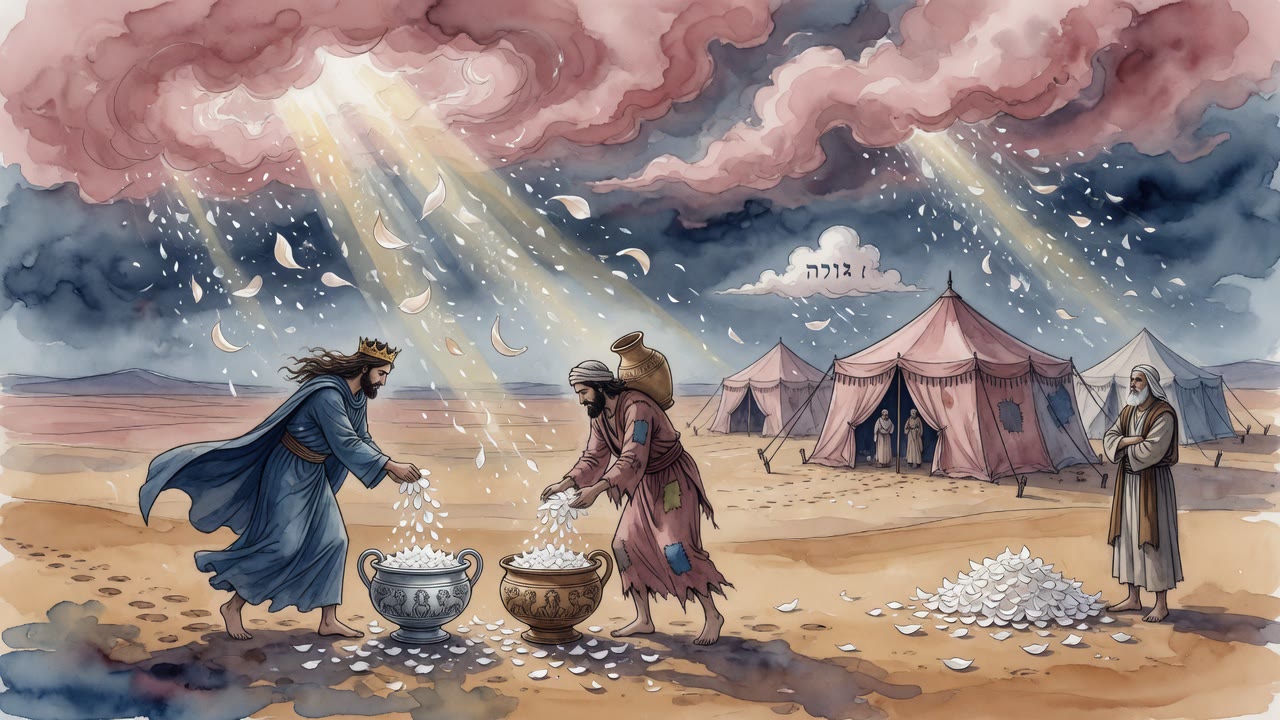
In the desert He reversed it. The bread came down out of the sky like rain, and the layer of dew went up off the ground. He had already split water and stood it up as dry land, then let it fall back and be water again. Whatever He wants, He does.
Morning after morning they came out of the tents and watched the dew lift. Under it the stuff lay on the sand, thin, strange, enough. No ledger. No officer with a scale. Long afterward Nebuchadnezzar fed Daniel and the other boys of Judah from his own kitchen, a portion appointed for every day, weighed out by a man's hand and written down. In the wilderness nothing was weighed. It came down the way rain comes down, with no ration and no floor to it, onto a people still counting up what the Egyptians had done to them.
The short road would have taken them past Philistine cities in a week. The long road put manna on the sand and Egypt on the sea floor. The boy in the king's house never did stop talking. Neither did the father.
← All myths