Israel Casts Off Egypt Before the Reed Sea
Pinned between Pharaoh's chariots and the Reed Sea, Israel flings Egyptian idols into the sand, then Moses is told only to go forward.
Table of Contents
 Click for full size
Chariots at Their Backs
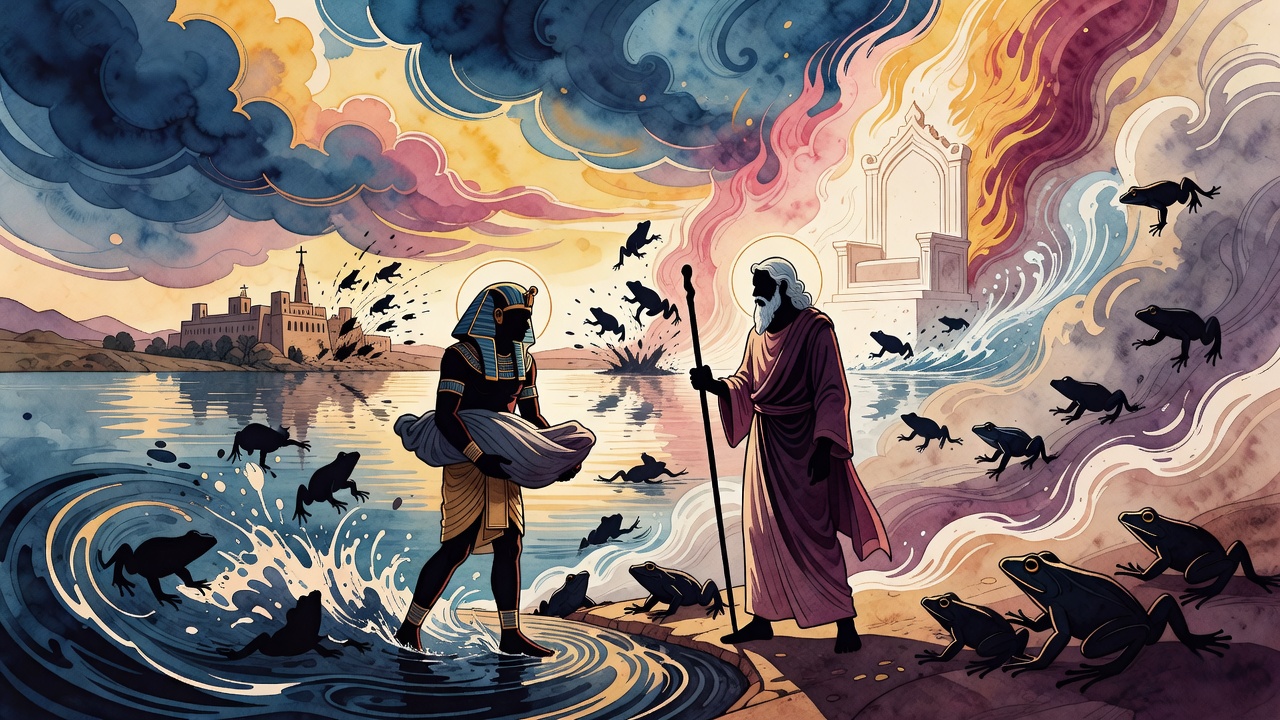
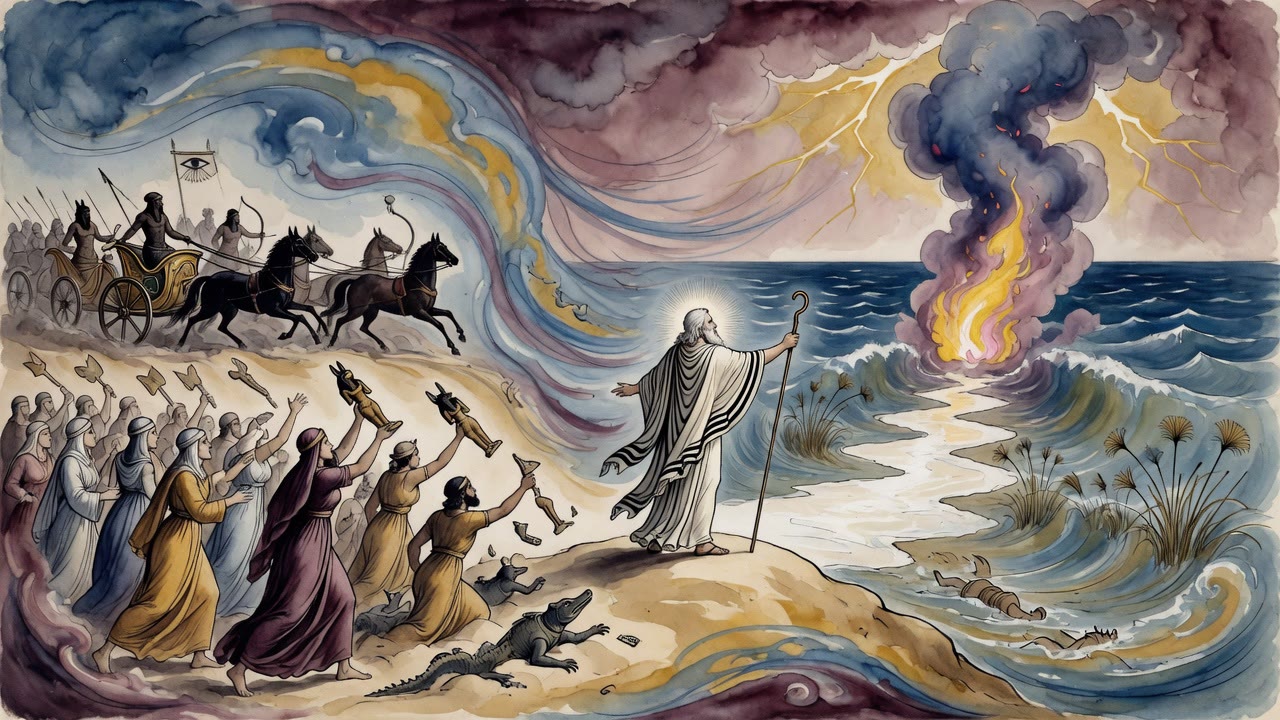
Pharaoh closed the last dry mile like a fist. Dust rose in wheels. The sea held its dark line ahead. Israel lifted its eyes and saw what it had fled still racing toward them, bronze and horses and the old master's breath (Exodus 14:10). Children pressed into thighs. Men who had carried dough on their shoulders now carried nothing but panic.
Behind them lay Egypt's gods, still warm in memory. Amulets. Small images. Habits learned in brick-yards when a slave needed a private luck. In that crush of fear the people did a hard thing. They cast the Egyptian abominations from themselves into the sand. Not later. There. Between the army and the water. Hands that had mixed mortar now threw away what they had trusted more than the Name.
Repentance did not wait for a quiet room. It happened with chariot dust in the teeth. They called on God with the raw voice of people who have nowhere left to stand.
Moses Asks Which Way
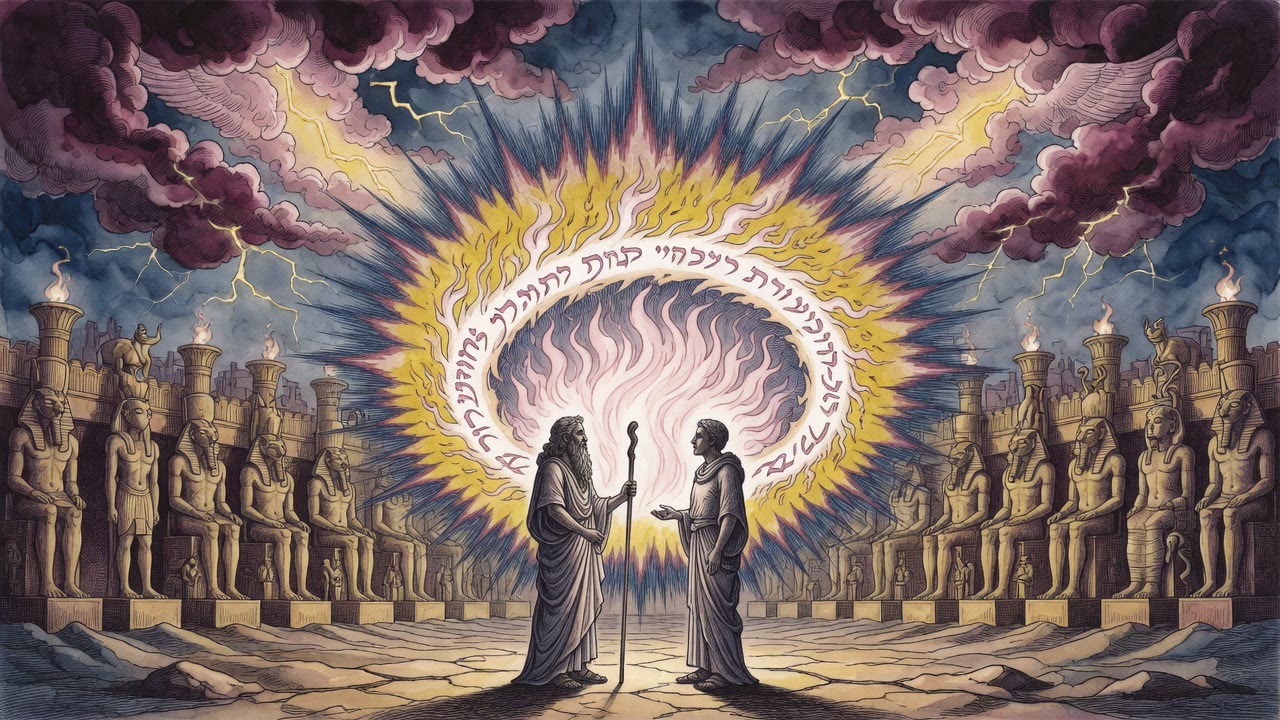
Moses saw the anguish and rose into prayer the way a shepherd rises when the flock is about to break. The enemy behind. The sea in front. No road that a map would bless. He spoke what the body already knew. Sovereign of all worlds, which way shall they go forward?
Heaven did not hand him a diagram. The answer came as a shove into motion. Speak to the children of Israel, that they go forward (Exodus 14:15). Forward into water that had not yet opened. Forward with idols still cooling in the sand behind them. Forward as if the next step itself were the argument.
Moses' mouth had asked for a path. The reply made the people the path. The prayer did not end. It changed shape into feet.
Fire Between Two Camps
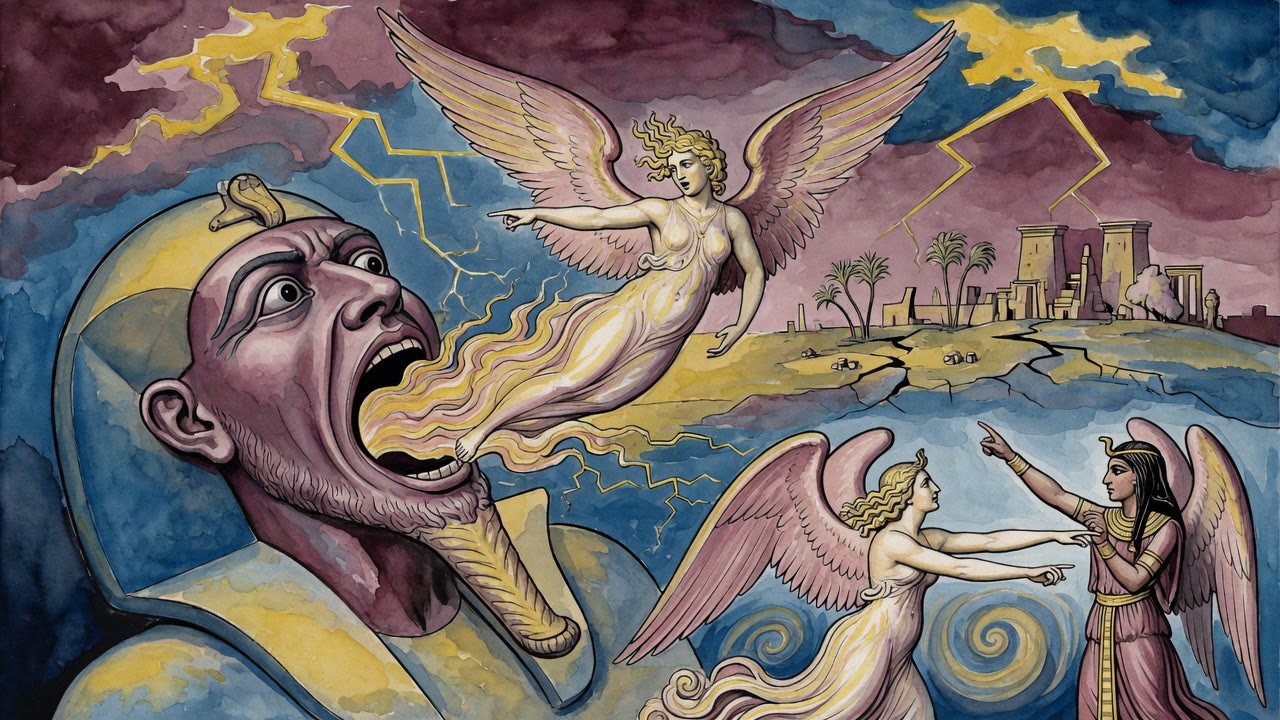
What did the Holy One do while the night stretched thin? He sent Michael, and the angel became a wall of fire between Israel and Egypt. Egyptians wanted the old chase. The fire refused them the last yards. Heat without smoke that any baker would claim. A border that burned without needing wood.
All that night the angels of heaven watched Israel's trouble and held back their usual praise. One camp did not draw near the other (Exodus 14:20). Even the choirs of above went quiet while a people learned whether repentance and a single command could outrun wheels.
Israel slept badly if it slept at all. Children dreamed of horses. Elders tasted salt they had not yet crossed. The fire held. Pharaoh's captains cursed a light they could not extinguish with water or orders.
The First Wet Step
Later tradition remembers Serah bat Asher at that waterline, seeing more than the rest. While others watched walls of water, she beheld angels gathered like a court and the Shekhinah (שכינה), the Divine Presence, moving among the singers when Miriam lifted her drum. Ordinary eyes already held more revelation at the sea than many prophets would hold in later years. The maidservant's vision outran books.
Morning still demanded more than thrown idols. Going forward meant the sea had to become road, or the fire would only delay a slaughter. Moses stood where prayer had failed to buy a detour and where command had become the only bridge. The people who had just purged their pockets of Egypt now had to purge their feet of stillness.
Some would later say Judah stepped first and made a sanctuary of courage. Some would remember only the wall of fire and the voice that said go. The story on that shore holds both pressures at once. Cast off what Egypt taught you to worship. Then walk toward water as if the Name has already claimed the depth.
Behind them, small gods lay face-down in trampled sand. Ahead, a sea that had never been a street waited for a nation that had just chosen whom not to carry. The chariots still breathed. The fire still stood. Between them, Israel learned that freedom begins with empty hands and a step no general would order.
When the waters finally rose into walls, the thrown abominations stayed on the Egyptian side of memory. What crossed was a people lighter by every idol it had refused to save.
A boy who had hidden a small Egyptian charm under his tunic felt the empty place against his ribs after he threw it. The space was colder than the metal had been. His mother did not scold him for the loss. She only pulled him closer while the fire wall hummed like a forge that belonged to no smith of Egypt.
Moses' staff was still ordinary wood in his hand. The miracle had not yet asked for it. The command had asked for people. That order felt heavier than any rod. He watched families finish the work of emptying their pockets and understood that a sea would not open for a nation still bargaining with two sets of gods.
Pharaoh's scouts reported a strange light and no path around it. Orders stacked on orders. The night refused to sell them a flank. Israel, for once, did not need a flank. It needed the next step and the courage to take it without a map drawn in Egyptian ink.
← All myths