Balaam Hands Pharaoh the Loophole to Drown Hebrew Babies
Three advisors stood before Pharaoh. One fled, one stayed silent, and Balaam found the loophole that drowned Hebrew babies in the Nile.
Table of Contents
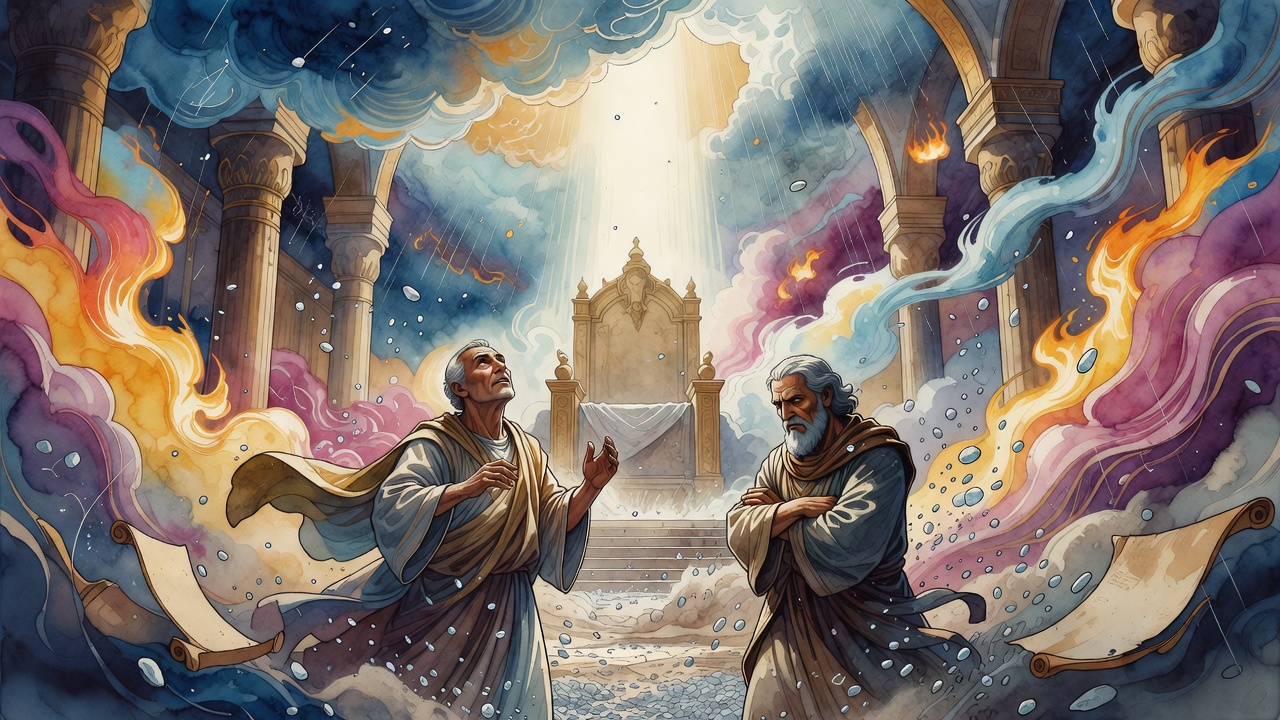
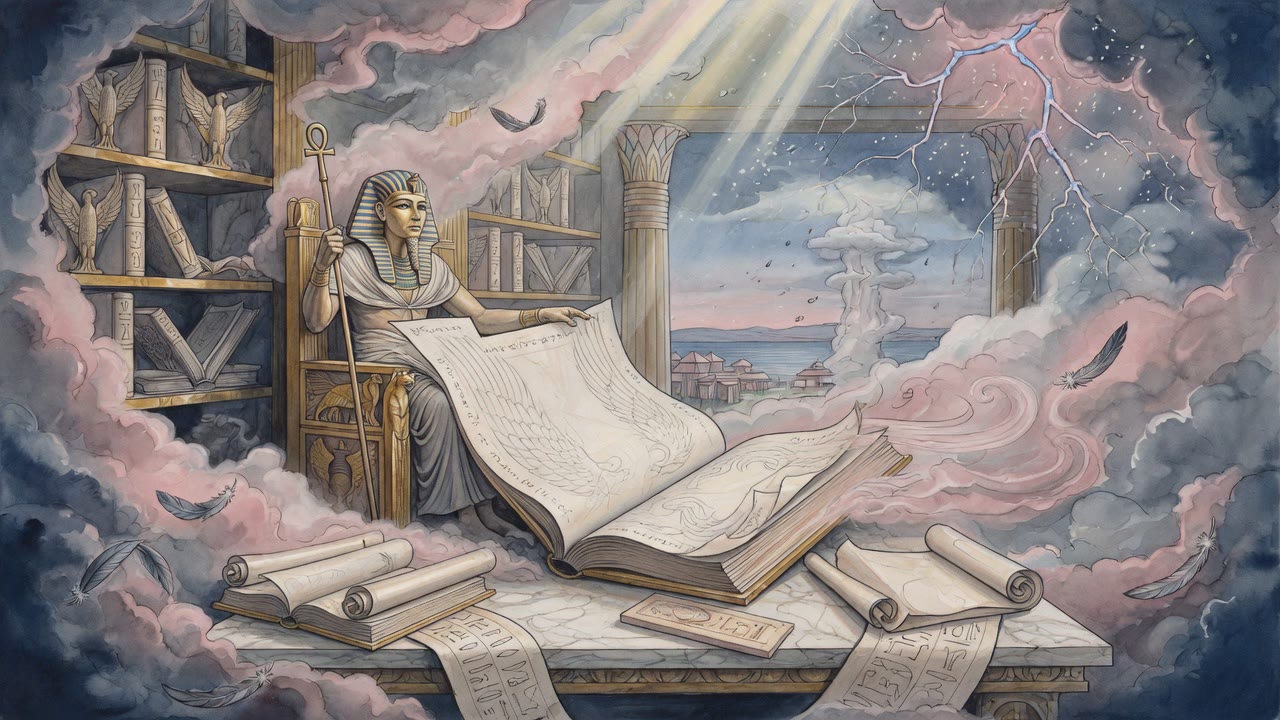
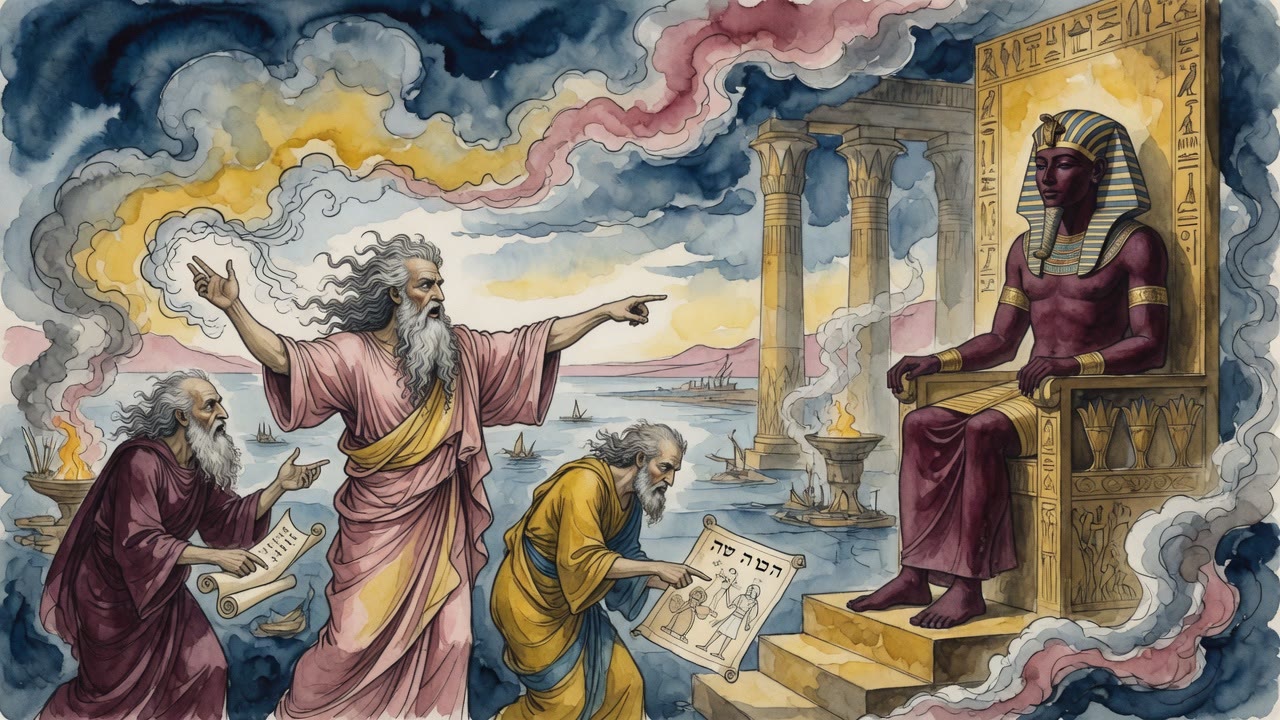
The throne room smelled of crushed lotus and sweat. Three men stood on the polished floor while Pharaoh leaned forward in his chair, the cords standing out on his neck, and asked them what to do about the Hebrews who multiplied faster than fear could keep pace. They were too many. They were everywhere. They worked the brick pits and the canals and still they bred, and the king wanted them stopped without bringing down whatever it was that watched over them.
 Click for full size
One of the three was a Midianite priest named Jethro. One was a man named Job, who would later learn what it costs to keep quiet. And one was Balaam, a prophet with a reputation for finding the door in a wall everyone else thought was solid.
Jethro Walks Out of the Court
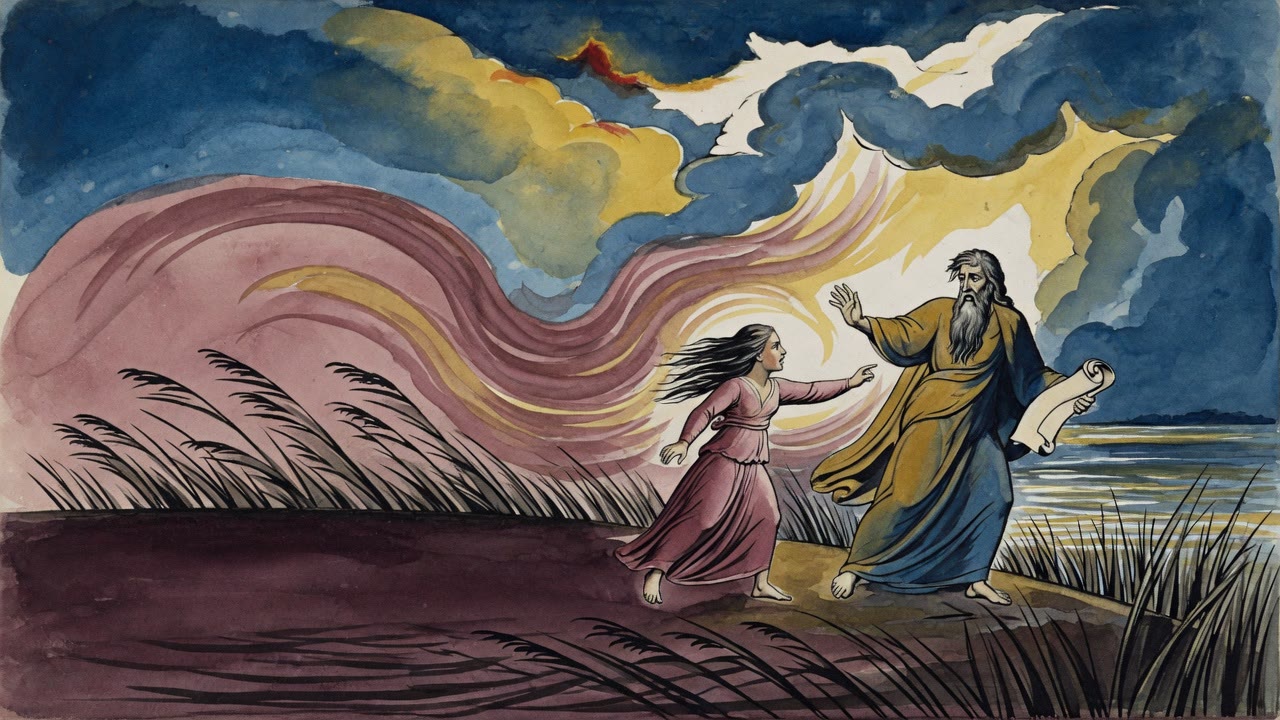
Jethro spoke first, and he spoke against the king. "Leave them be," he said. "They have done nothing. A people that grows is a blessing on the land that holds it, not a plague to be drained off. Harm them and you harm yourself."
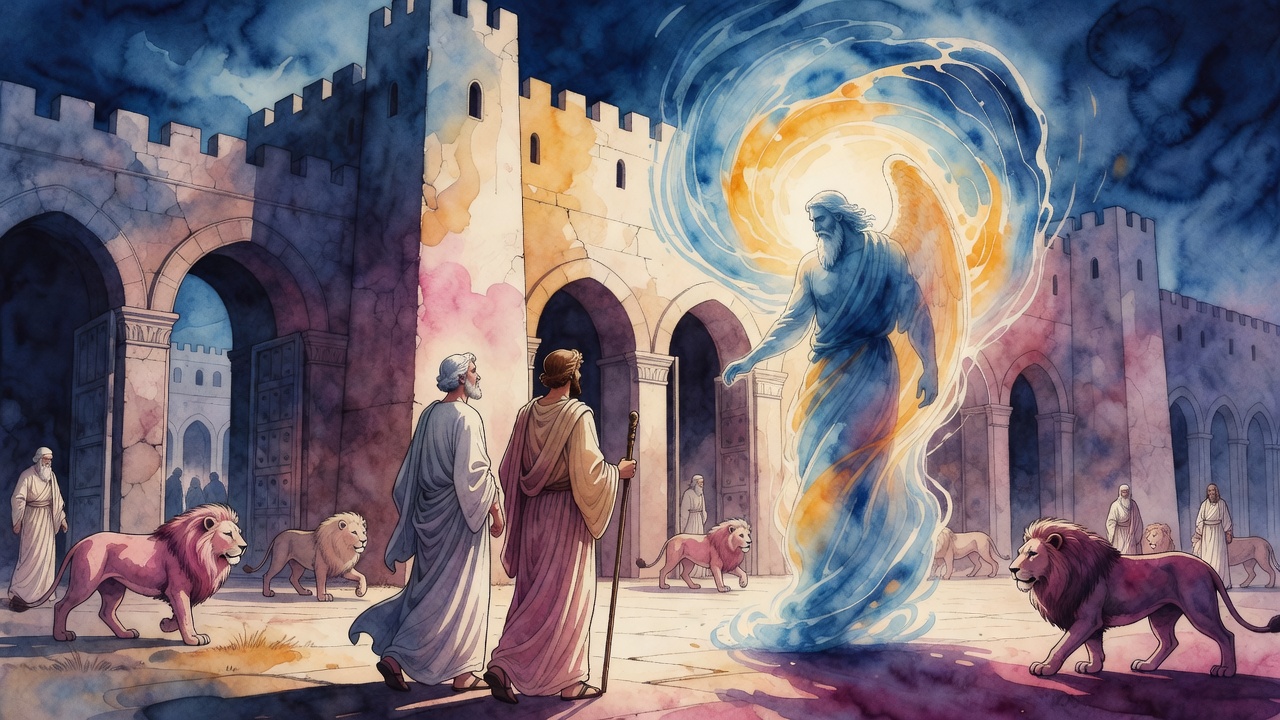
The room went cold around him. Jethro read the faces of the courtiers, the way a man reads weather, and he understood that none of this would end the way he wanted. So he did the only honest thing left. He turned, crossed the long floor under the painted ceiling, and walked out of Egypt entirely. He fled to Midian, where his daughters kept his flocks, and there, years later, a runaway Egyptian prince would find shelter at his well.
That left two men before the throne. One of them said nothing at all.
Job Holds His Tongue
Job stood with his hands at his sides and offered no counsel one way or the other. He did not defend the Hebrews. He did not condemn them. He let the silence do the work that a word might have undone, and the silence was not innocent. A man who says nothing while a thing is decided has helped decide it.
Later, when Job did open his mouth, his contribution was no kinder. Let the Egyptians not kill the children with their own hands, he advised, but use the midwives instead, because Pharaoh and his men were more afraid of divine punishment for blood spilled directly than for blood spilled at one remove. They were not afraid of the murder. They were afraid of the bill. So the king summoned two Hebrew midwives, Shifra and Puah, and ordered them to kill the boys at birth and let the girls live, sparing the girls not from mercy but from appetite.
All of that came after. On the day the court convened, the man whose voice carried the room was Balaam.
Balaam Finds the Loophole
Balaam did not argue for cruelty. He argued for safety. That was the genius and the rot of it. He stepped forward and laid out a calculation so clean it sounded like piety.
"Consider," he said, "how the God of these Hebrews works. He pays a man back in the coin of his own crime, measure for measure, the punishment shaped to fit the sin. Drown a people and you should expect to drown. But here is the door in the wall. After the great flood, this God swore an oath to Noah and sealed it with a bow in the clouds, that never again would He destroy the world by water (Genesis 9:11-17). Water is off the table. He has bound His own hands. Therefore drown the Hebrew boys, throw them into the Nile, and let the river do it, because the one weapon that cannot be turned back against Egypt is the one weapon Egypt has just been handed for free."
Pharaoh heard it and believed he had been given a loophole. The court believed it with him. The order went out. The boys went into the water.
The Error Inside the Counsel
The loophole was real. It was simply pointed the wrong way. God had sworn not to bring a flood upon the world. He had said nothing about bringing the world into a flood. He would not send water down on the heads of men. Nothing stopped Him from sending men down into the water. It was the same sentence read in the opposite direction, and the difference between the two readings was an army.
Balaam, who prided himself on finding doors, had walked Pharaoh through one that opened onto a trap. The drownings he engineered became the precise shape of Egypt's own end, measure for measure exactly as he had described, only with the measure falling on the wrong house.
The Sea Collects the Debt
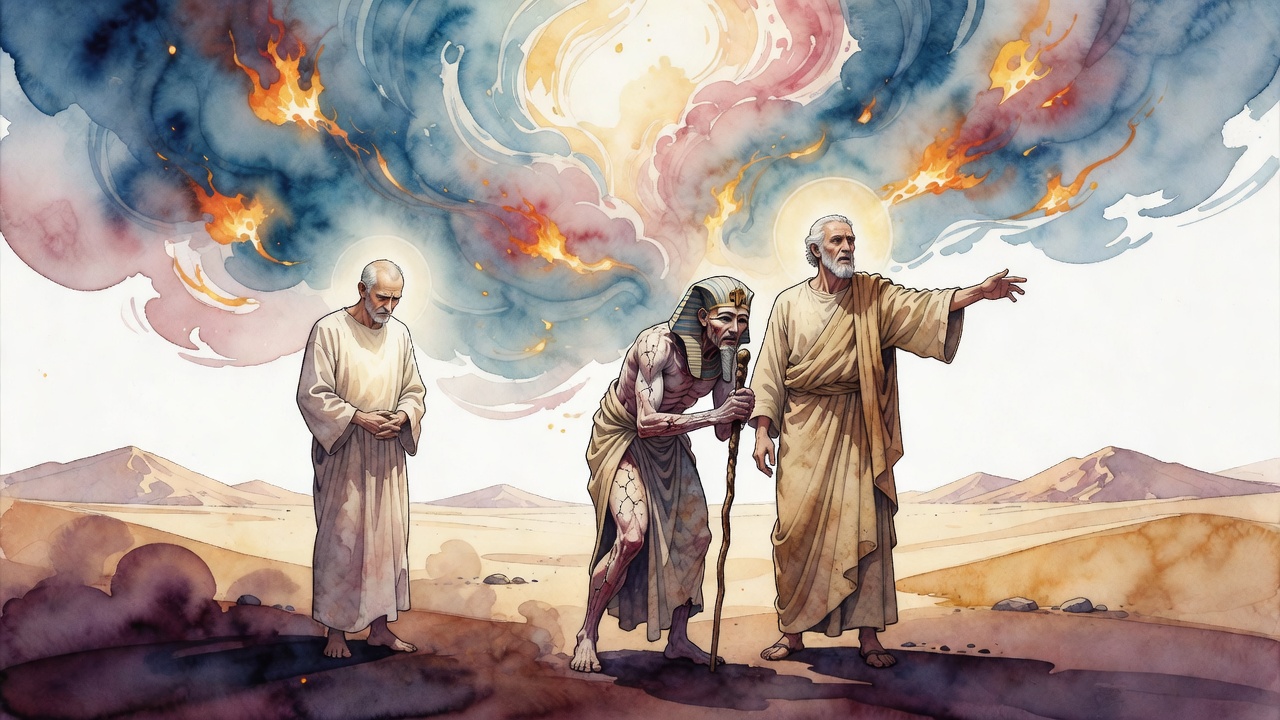
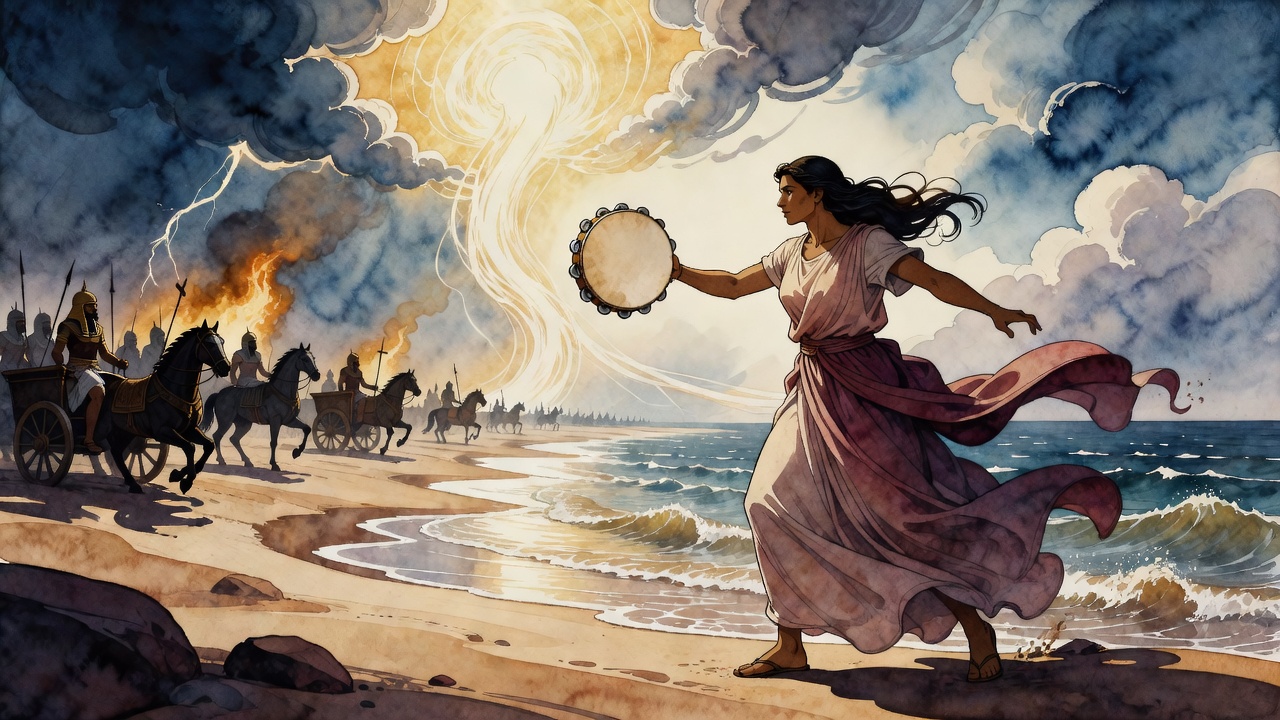
Decades passed. The boys who survived grew into the people who walked out of Egypt in a single night, and Pharaoh's chariots came thundering after them to the edge of the water. The sea stood open in two walls. Israel passed between them on dry ground.
Then the walls came down. The same Nile-water logic Balaam had handed the court closed over the heads of Egypt's army, the riders and the horses and the captains, the whole machine of the kingdom that had thrown infants into a river. The element that could not be used against Egypt, because God had sworn off floods, drowned Egypt to the last man. The river had taken the sons. The sea collected the fathers. The advice had been sound. It had simply been a debt, and the water always knew whose name was on it.
← All myths