Jonah Sank to One Depth, the Egyptians Sank to Two
The army at the water could not agree. Some wanted the gold and no killing. Some wanted the killing and no gold. The third group wanted both at once.
Table of Contents
 Click for full size
Three Arguments on the Shore
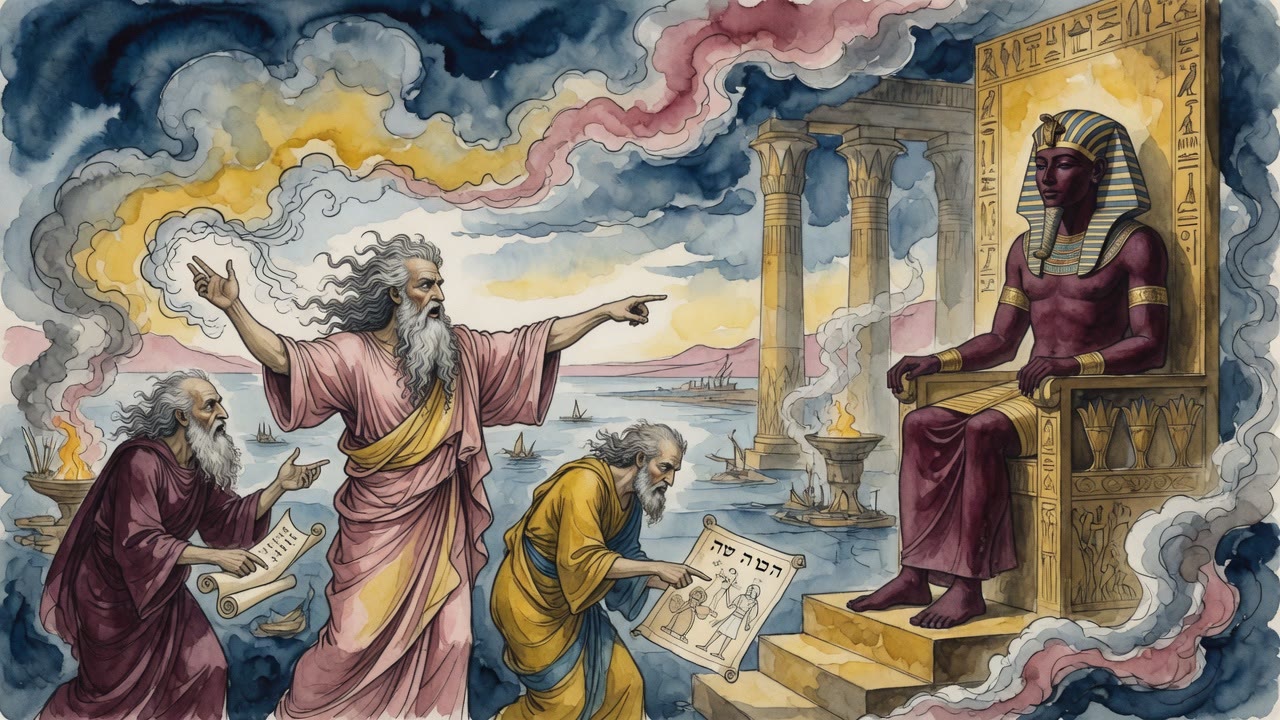
The chariots came up to the water and stopped, and the drivers stood in them looking at a thing that should not have been there: a dry lane running out into the sea between two standing walls of water, with the last of the slaves still walking down it.
Then, with the horses stamping and the lane open in front of them, the army fell to arguing about what it had come for.
One group wanted the property. Take their money, they said, and do not kill them. Everything Israel had carried out of Egypt was on their backs and around their necks, the silver cups and the bracelets and the good cloth, and once it was off them they could go wherever they liked. These were not sentimental men. They simply preferred a live debtor stripped bare to a corpse with nothing on it.
The second group wanted no gold at all. Kill them, they said, and take nothing. To these, an escaped slave walking free with the sun on him was an insult that money could not settle. They wanted the bodies on the sand and they wanted to leave the jewelry where it fell.
The third group listened to both and wanted the whole of it. Kill them and take their money. Strip the dead. That group was the worst thing standing on that beach.
Pharaoh Had a Line for Each of Them
Pharaoh was not going to lose an army to a disagreement about motive, so he gave every faction its own sentence and let each man hear his own.
To the ones who wanted the goods: I will divide the spoil. Loot counted out into waiting hands, share by share, the way a campaign is supposed to end.
To the ones who wanted blood: my soul shall have its fill of them. Nothing about payment in that one. A hunger with no price on it.
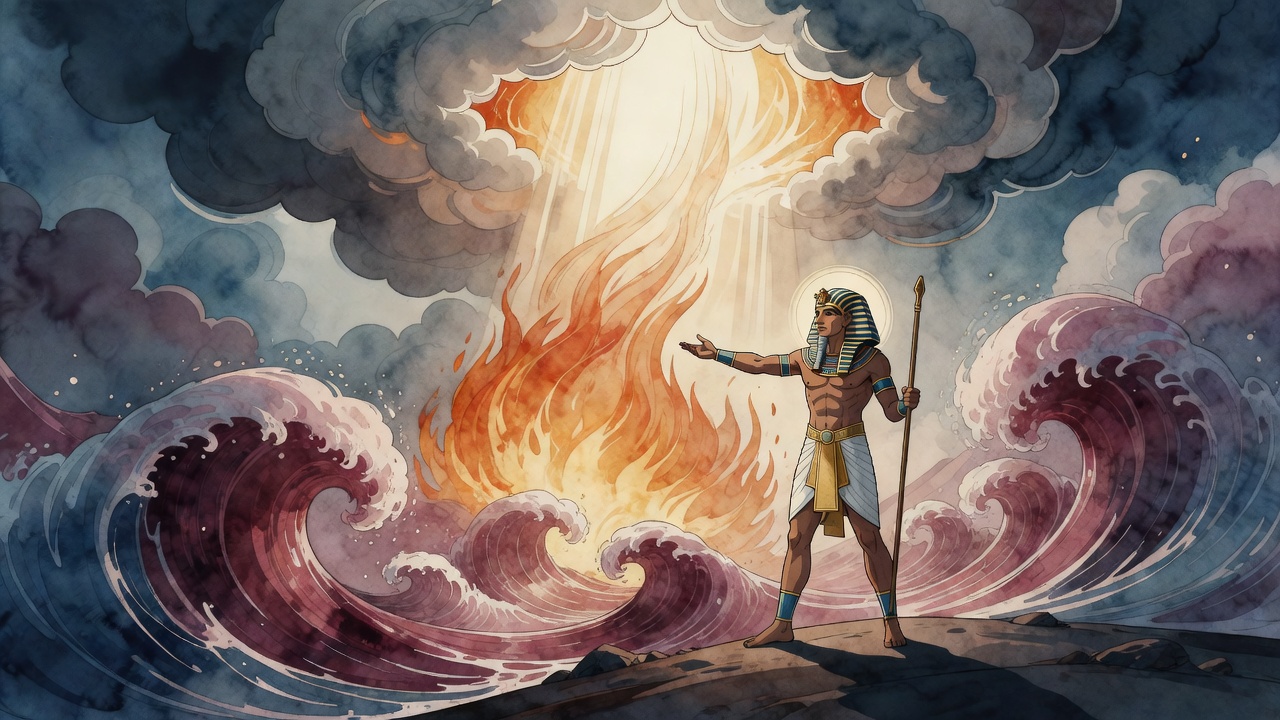
The third group heard both halves of the boast and took both as addressed to them, and the whole force went down into the lane together, six hundred chosen chariots and everything behind them, driving between two walls of standing water on ground that had been sea bottom an hour earlier.
The Walls Let Go
The water came back.
It did not come back the way a wave comes in. The walls that had been holding themselves upright simply stopped, and the whole weight of the sea arrived at once from both sides on men who were still whipping their horses forward.
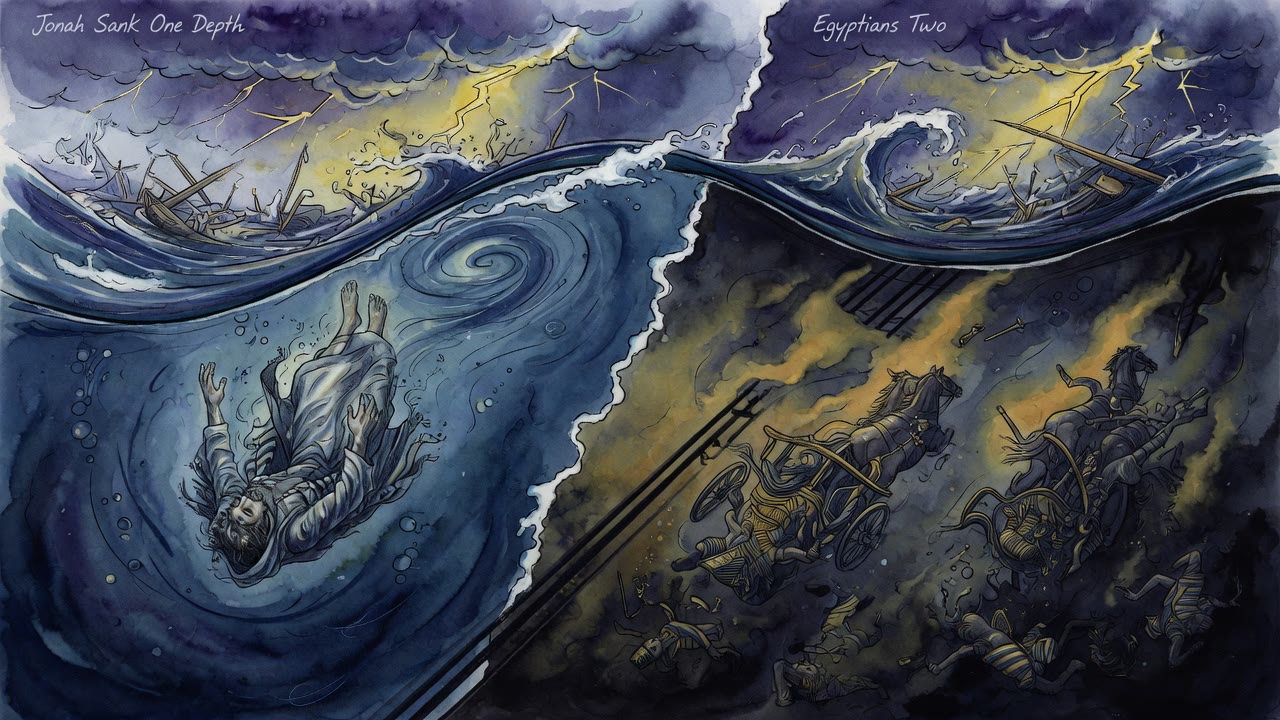
The depths covered them. Not the deep. The depths, more than one, stacked. A man who goes down in open water falls through one dark and lands. These fell through one and kept going. Each turning column handed them to a deeper one underneath it, and there was nothing at the bottom of any of them, because the bottom kept moving further down.
The gold-takers and the blood-takers and the ones who had wanted both went into the same churning water together, and the sea did not sort them out. It took them at the same speed, in the same direction, which was down.
A Stone Into Raging Waters
They sank like a stone.
A stone thrown into rough water does not fight it. It does not turn over and look for the surface. It does not open its mouth. It goes straight through everything in its way and keeps going and does not come up, and that was the last picture anyone kept of Pharaoh's chariotry: hurled into the whirlpools like a stone into mighty water, gone through the churn with nothing to say on the way down.
Their pursuers, the prayer says, You threw into the depths.
Jonah Touched the Bottom and Prayed Up
Centuries later a crew on a merchant ship picked a man up by the arms and legs and threw him over the side, weeping while they did it, because he had told them to.
Jonah hit the water and went under. The surface closed and shrank to a coin of grey light and then to nothing. Cold got in at the ribs. Weed came around his head and wrapped it. He went down through one great turning column of water, one deep closing on one man, and he kept going down past where the light had any business being until he touched the roots of the mountains and stopped.
There was a floor. He reached it.
Then something enormous opened in the dark and took him in whole, and he sat inside it in the heat and the stink and counted his own heartbeats, and out of that place, with the weeds still on his head, he started sending words back up.
← All myths