Pharaoh's Heart Cooked Hard and Would Not Bend
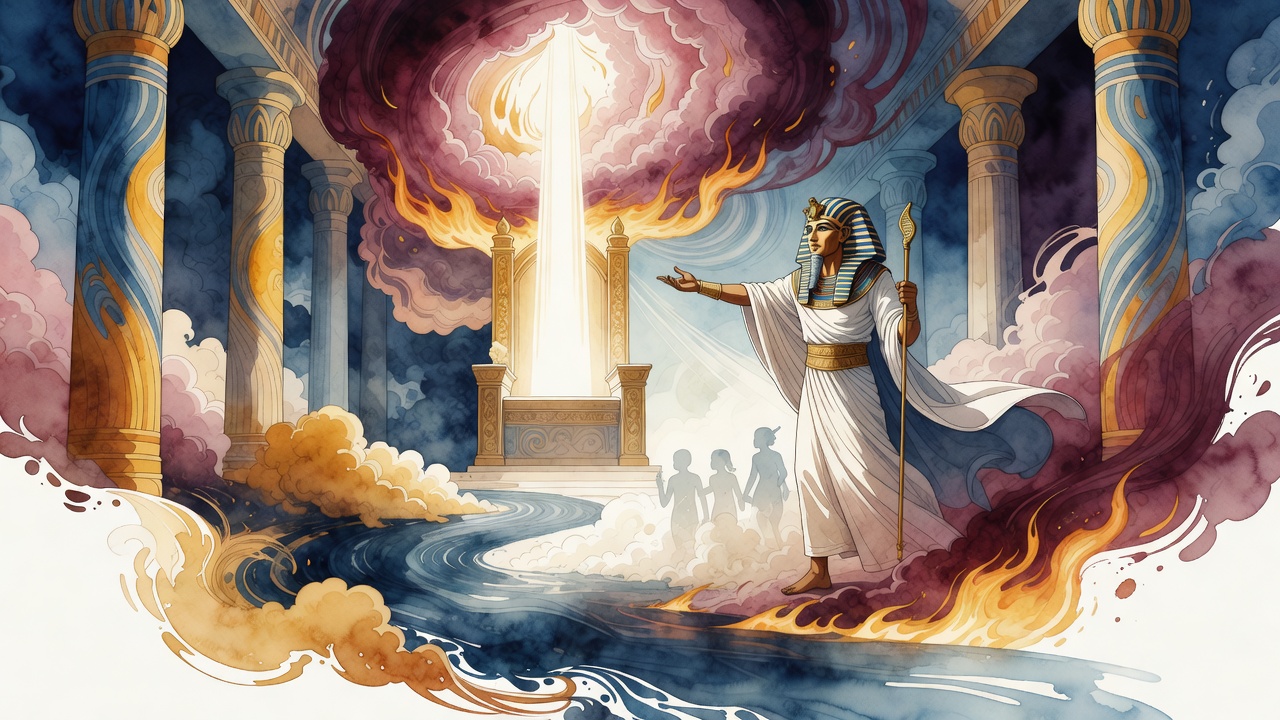
Warning after warning strikes Egypt, and Pharaoh hardens himself first. Heaven cooks his heart like twice-boiled liver, while Bitya lives by an old kindness.
Table of Contents
 Click for full size
Five Warnings Before the Lock
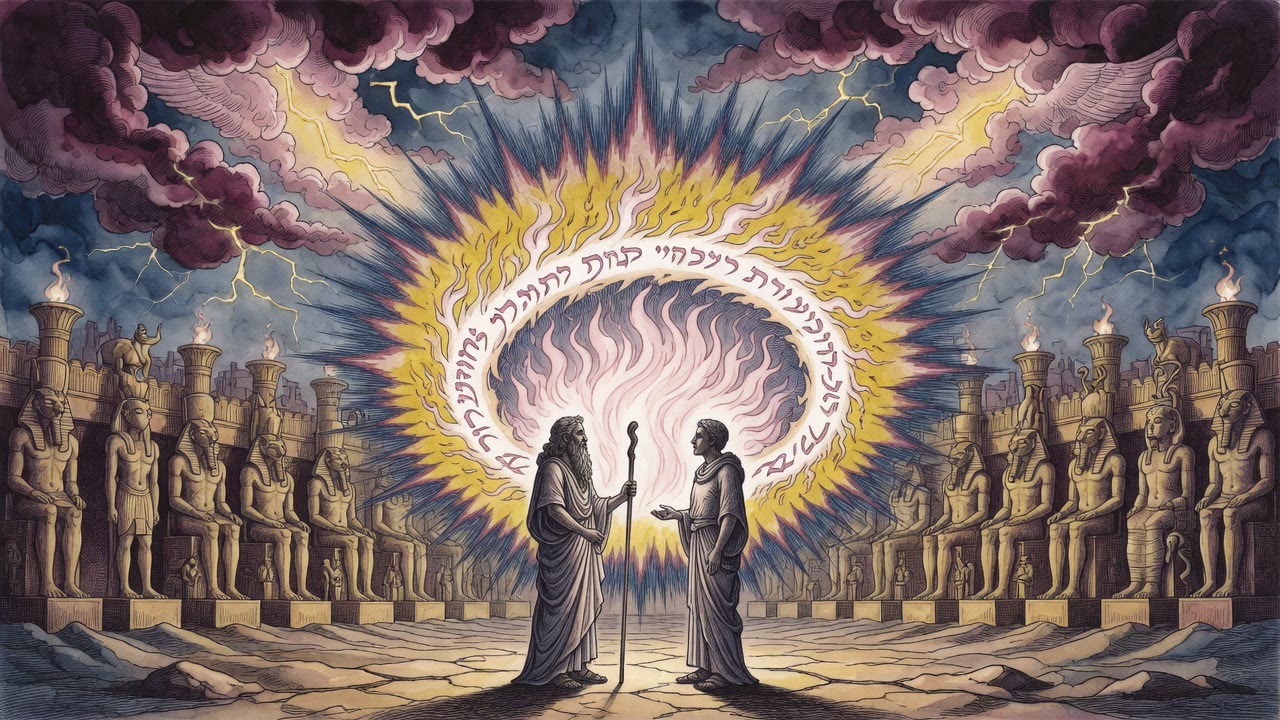
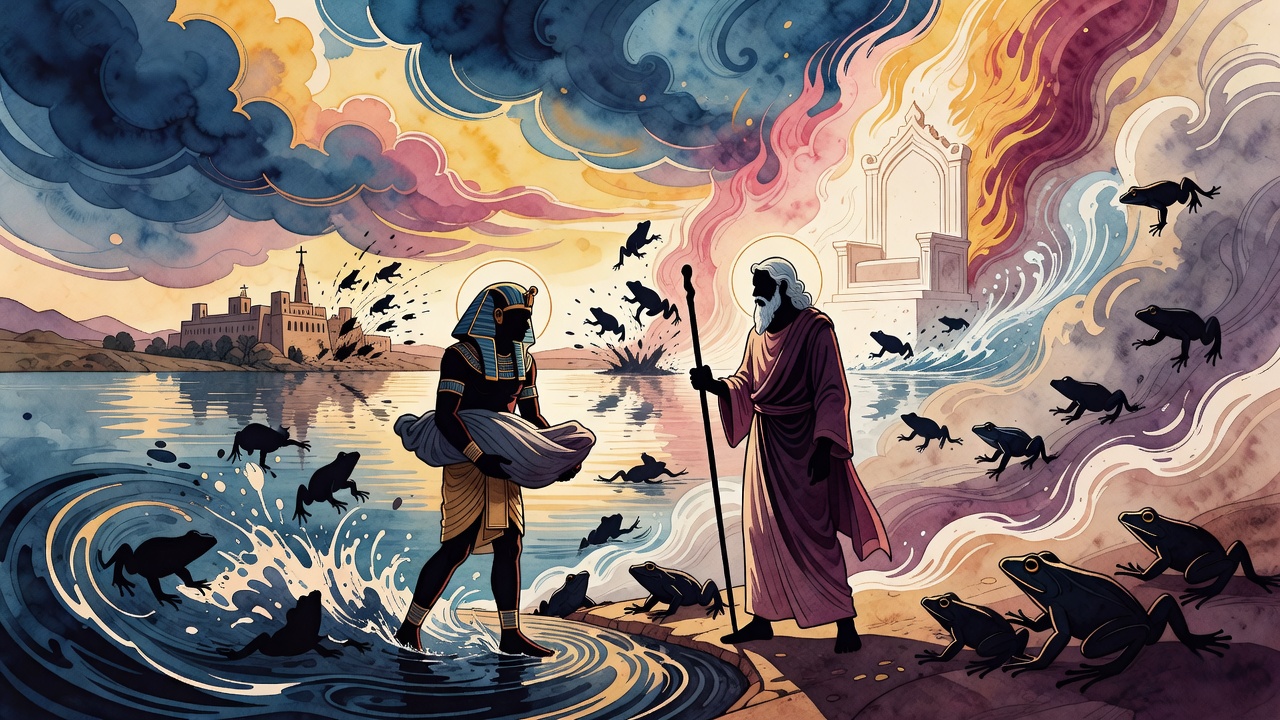
Pharaoh heard Moses and Aaron enough times to learn the pattern. Plague. Plea. Promise. Reversal when the sky cleared and the frogs stank in heaps. Rabbi Shimon ben Lakish refuses the heretic's shrug that God never gave the king a chance. Heaven warns once, twice, three times. Pharaoh took five and still scorned, jaw set, mouth full of empire. Only then did the Holy One add hardness to hardness, impurity to impurity, locking a heart that had already locked itself from the inside.
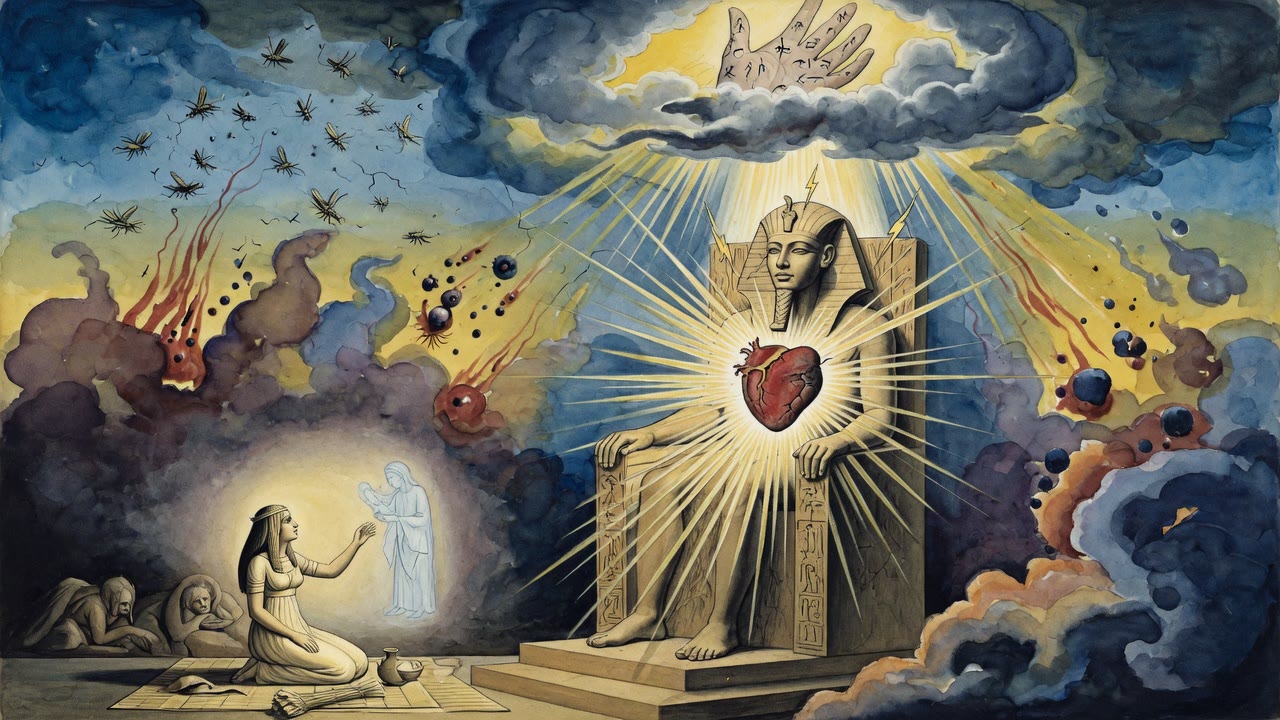
The image is kitchen-crude and exact. A liver cooked twice turns tough beyond chewing. Pharaoh's will, seared by his own refusals, became meat that would not take salt. "I have hardened his heart" names a consequence, not a puppet string pulled on day one while the king still might have opened the gate.
Moses watched the change the way a man watches a door swell shut in wet weather. Pushing harder no longer moved the frame.
Foremen Under the Lash
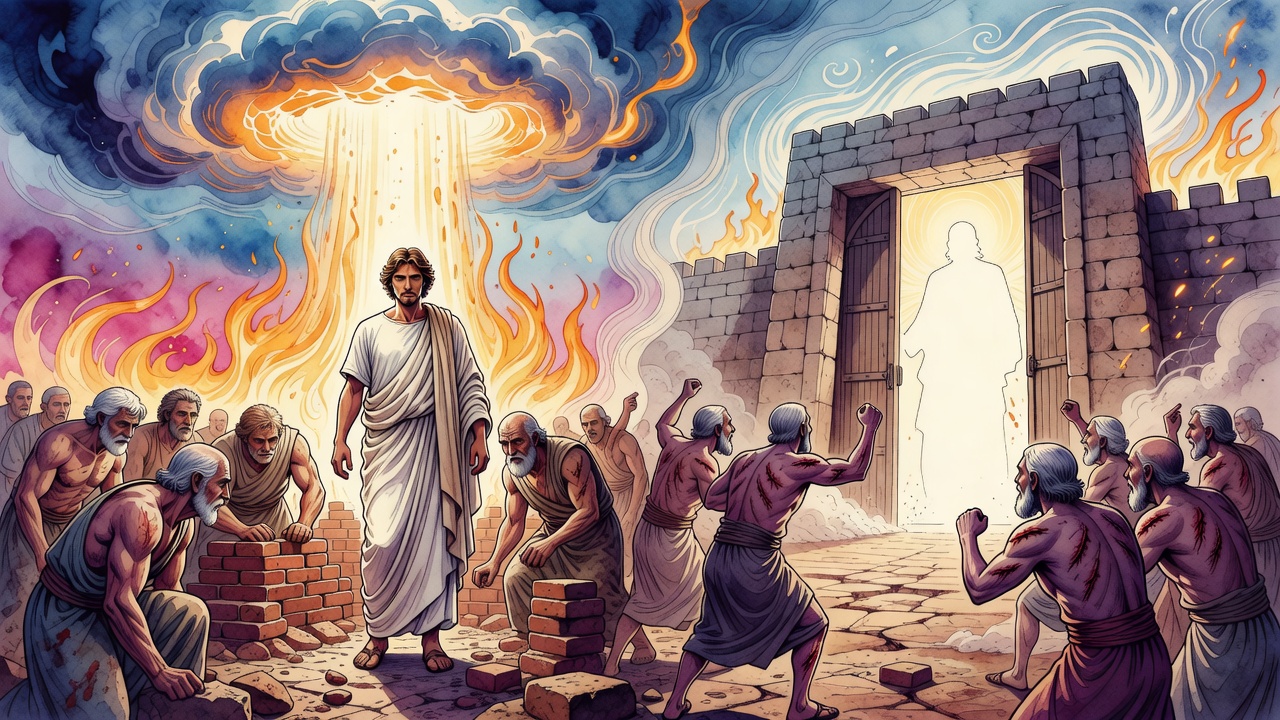
While the king stiffened, Israelite foremen took beatings so the laborers might breathe. They stood between taskmasters and brick quotas, backs open, upright enough that the midrash later sees them chosen for the seventy elders' spirit. They cried to Pharaoh about straw and bricks and went out empty, throats raw. They met Moses and Aaron in the road and some, Datan and Aviram among them, stood and cursed the men who had made the work heavier by speaking freedom too soon.
Pressure cooked more than one heart. Some broke toward prophecy and the willingness to take blows for others. Some broke toward a rebellion that would wait for the wilderness and open earth. Egypt was a furnace with many pots on the fire, and not every pot held the same stew.
The foremen's bruises were a different midrash of hardness: flesh that absorbs violence so someone else can stand.
Midnight and Every Firstborn
When the last plague came, it was at midnight, and no house lacked a dead. Not only the man's first and the woman's first, but every first potency in the tents of Ham, a harvest of heirs cut down in their beds. The scream that rose was national, a single sound made of thousands of throats. Dogs that had been silent for Israel had nothing to do with this noise. It belonged to Egypt alone.
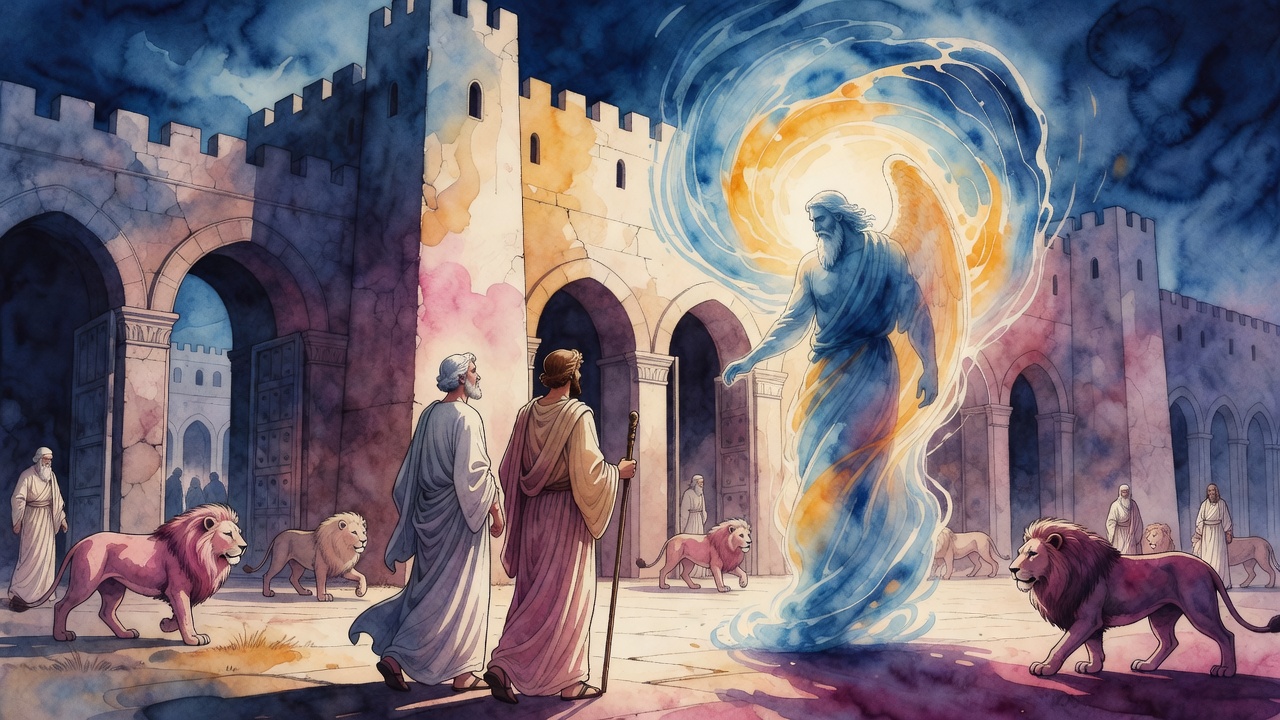
In that dark, one Egyptian name stayed upright. Bitya, Pharaoh's daughter, lived because she had once seen a basket in the Nile and judged the child good. Solomon's proverb of the woman who perceives her merchandise is good and whose lamp does not go out at night finds her rising in that same midnight, shielded by an old act of seeing. Moses, the good she had drawn from water, became her advocate without standing in the room. Kindness reached across years and ranks and spared a princess while her father's house howled.
Blood marked Israelite doors. Memory marked Bitya's life. Two different protections in one hour.
The Door That Would Not Open Inward
Pharaoh's mouth would still move after midnight. He would chase. He would drown between walls of water that stood like judgment made visible. The twice-cooked heart does not mean he stopped speaking. It means turning no longer lived in him as a live option. Free will had been real on the early mornings when he could have let them go and did not. By the end, heaven's hardening and his own were the same brick wall, sun-baked and sealed.
Moses left through a night smelling of blood and bread. Behind him a king chewed a will that would not soften. Ahead, a sea would open for a people whose foremen had once taken lashes in their place. The liver stays tough in the telling on purpose. Soften it, and the plagues become a puppet show. Leave it hard, and every refused warning still matters, every lash on a foreman still counts, every midnight scream still answers a door that would not open when opening was still possible.
Aaron's staff had already swallowed lesser staffs. The river had already run red. Boils, hail, locusts, darkness you could feel with your hands: each was a door Pharaoh could have used. He used none. Advisors who still had soft organs behind their ribs began to mutter that Egypt was being destroyed, but a twice-cooked heart does not take counsel from soft organs. It takes only its own toughness as proof of strength.
Moses stopped being surprised. Surprise belongs to the early plagues. By the end he was a man delivering a sentence already written by refusal, and Bitya's spared life was a footnote of mercy in a chapter of locked doors, proof that heaven can still read old kindness while judging new stubbornness.
← All myths