Amram Remarried Jochebed So Israel Would Live
When Hebrew men divorced their wives to spare unborn sons from the Nile, Amram remarried Jochebed in public so despair would not erase Israel.
Table of Contents
 Click for full size
Divorce as a Policy of Despair
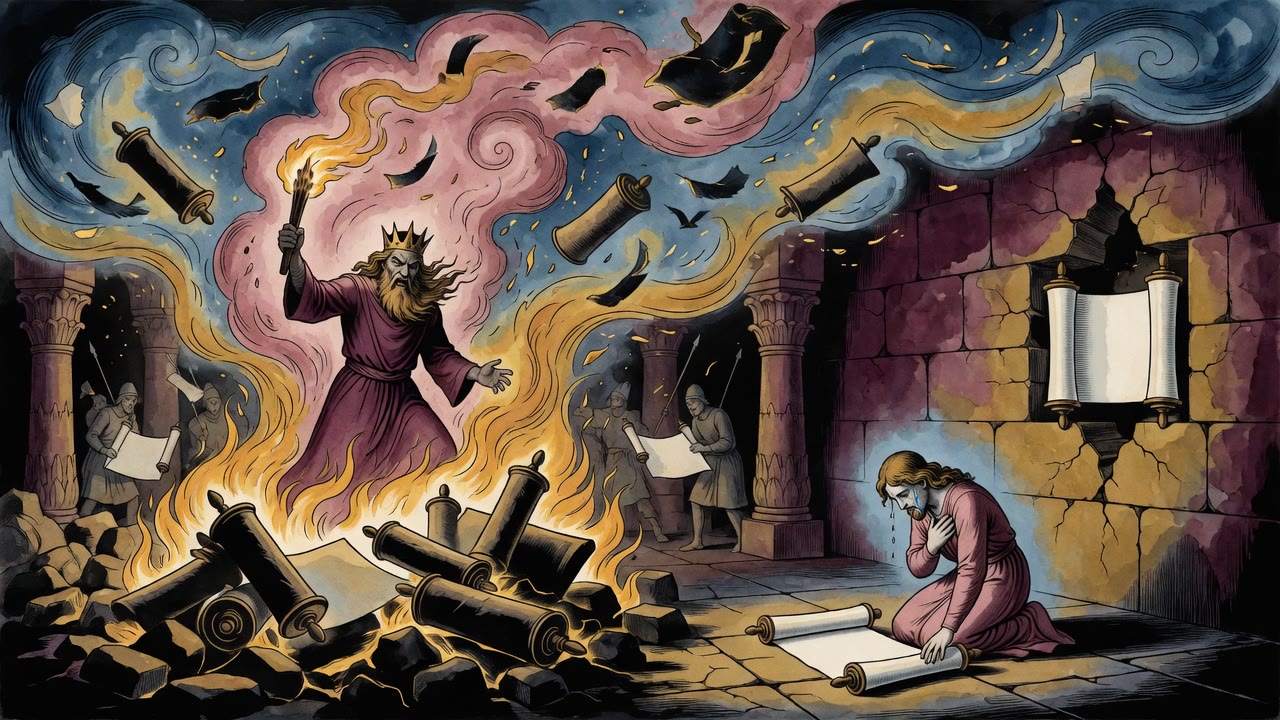
Pharaoh's decree made the Nile a grave for Hebrew boys. Men of Israel, including Amram, answered with a second death. They divorced their wives so no new sons would meet the water. The logic sounded merciful. It was extinction wearing pity's face and calling itself wisdom.
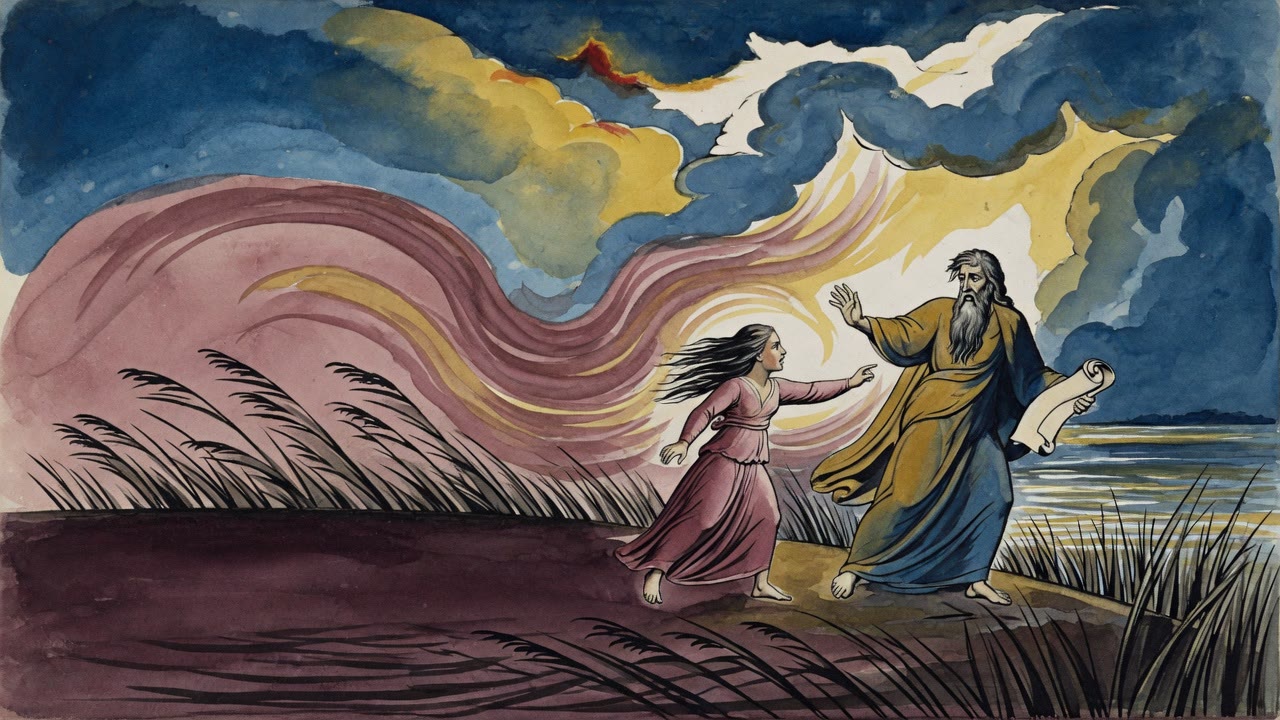
Jochebed and young Miriam confronted him. Pharaoh killed sons. Amram's decree killed sons and daughters and the whole future. The leader of the generation had outrun the tyrant in damage, and he heard it without hiding.
In the brick yards the quotas did not pause for Hebrew theology. Men staggered home to empty rooms and called the emptiness safety. Miriam refused that vocabulary. Water already killed enough without help from Hebrew divorce writs written in fear.
The Sanhedrin Forced to Follow
He went to the Sanhedrin (the high court of elders). "It was thou that didst separate husbands and wives," they told him, "and from thee should go forth the permission for re-marriage." Amram remarried Jochebed so other men would watch hope reenter a house and feel ashamed of empty beds.
Jochebed, though aged, was restored to the beauty of youth. Pregnancy followed. Amram prayed under the weight of what a boy-child would mean under Pharaoh. God answered in a dream. The child the Egyptians dreaded would be Amram's own, hidden by heaven.
Miriam's courage became part of the chain. A daughter's mouth corrected a father's strategy. The house that would produce Moses first had to listen to its women when despair wore the mask of protection and called the mask mercy.
The Twenty-First of Nisan in Two Directions
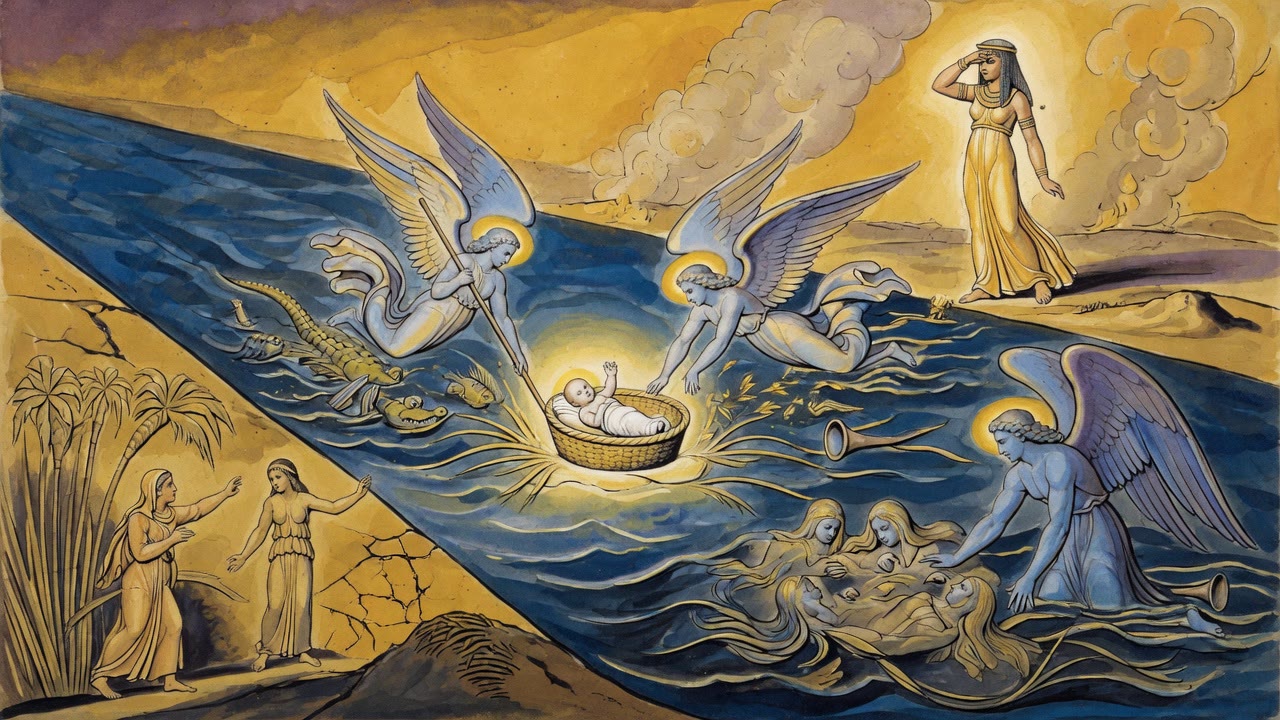
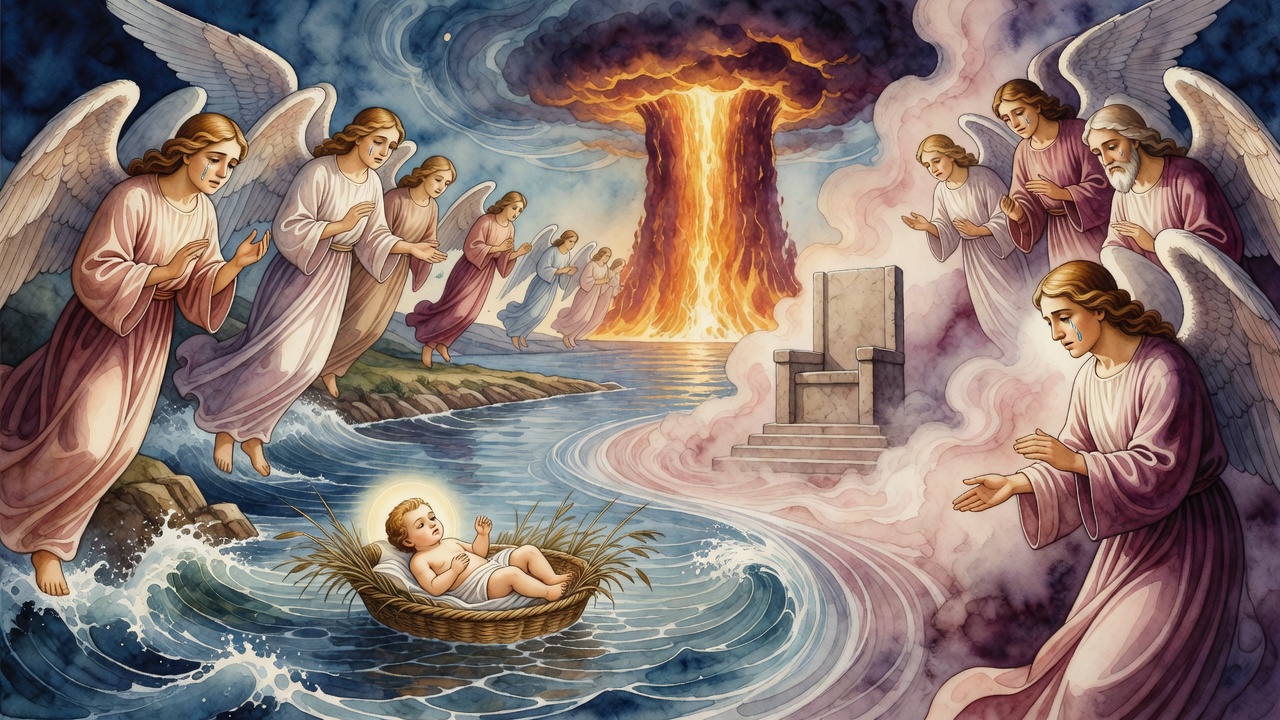
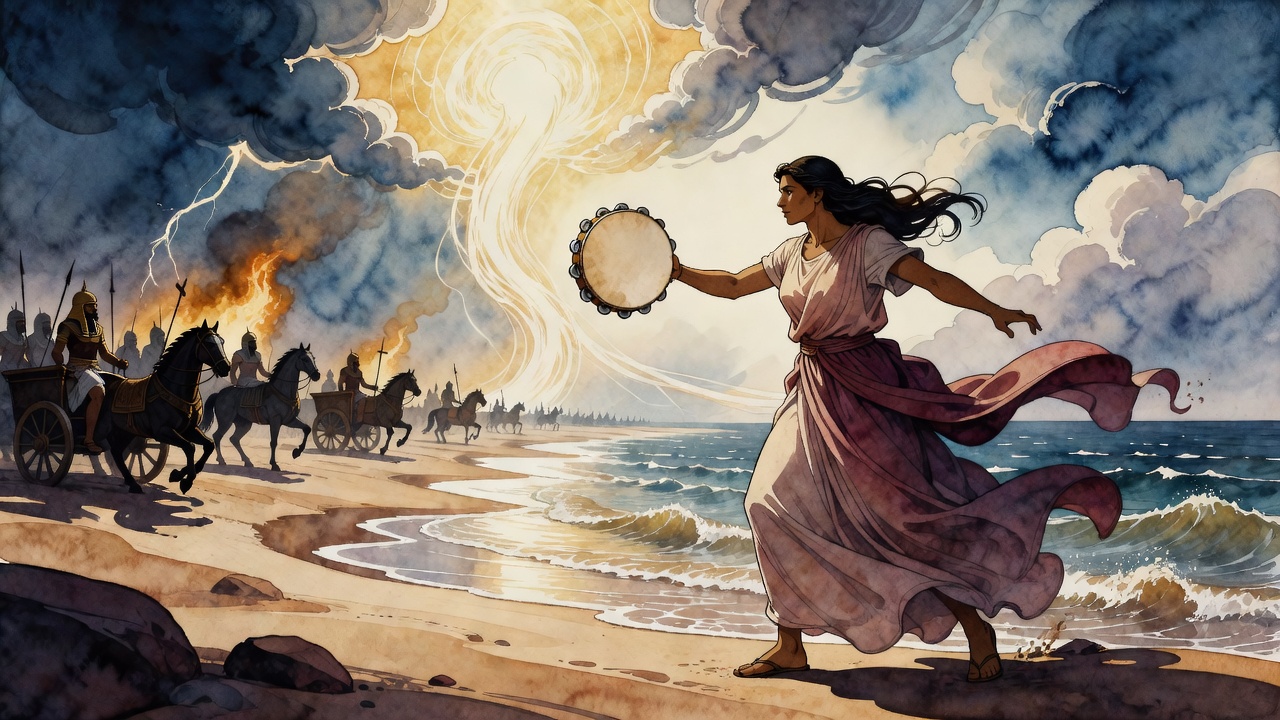
Moses was born on the twenty-first of Nisan, the same calendar day on which, years later, Israel would sing at the sea after the waters split. Angels saw the infant set toward the Nile and cried out. Would the one destined to praise God for rescue from the sea drown in water first?
God answered that cunning malice does not rewrite counsel, and that trust in peril is carried to unlooked-for happiness. Six hundred thousand Hebrew boys born into that night's terror are remembered as saved by Moses' merits in the long memory of the legends.
Birth and song share a date so the story can refuse coincidence. The basket on the river and the path through the sea become twin waters of the same day, one threatening, one redeeming, both marked on one calendar stone.
Many Names for One Hidden Child
For two years the child stayed hidden under many names. Amram called him Heber, because a son reunited him with his wife. Jochebed called him Jekuthiel, hope returned from God. Miriam called him Jered, for her descent to watch the Nile. Aaron and others layered titles until the boy was a catalogue of fear and gratitude.
Each name was a small midrash over a cradle that could not be shown in the street. A people under genocide names a baby the way sailors name a light they refuse to let go out when storms erase the shore.
When the basket met the river, the remarriage had already done its first work. Israel still had mothers willing to conceive. The leader who once legislated despair had legislated courage by taking his wife back under the eyes of the court that had followed him into emptiness.
← All myths