Parshat Shemot5 min read

Amram Laid One Brick While Jochebed Hid the Babes

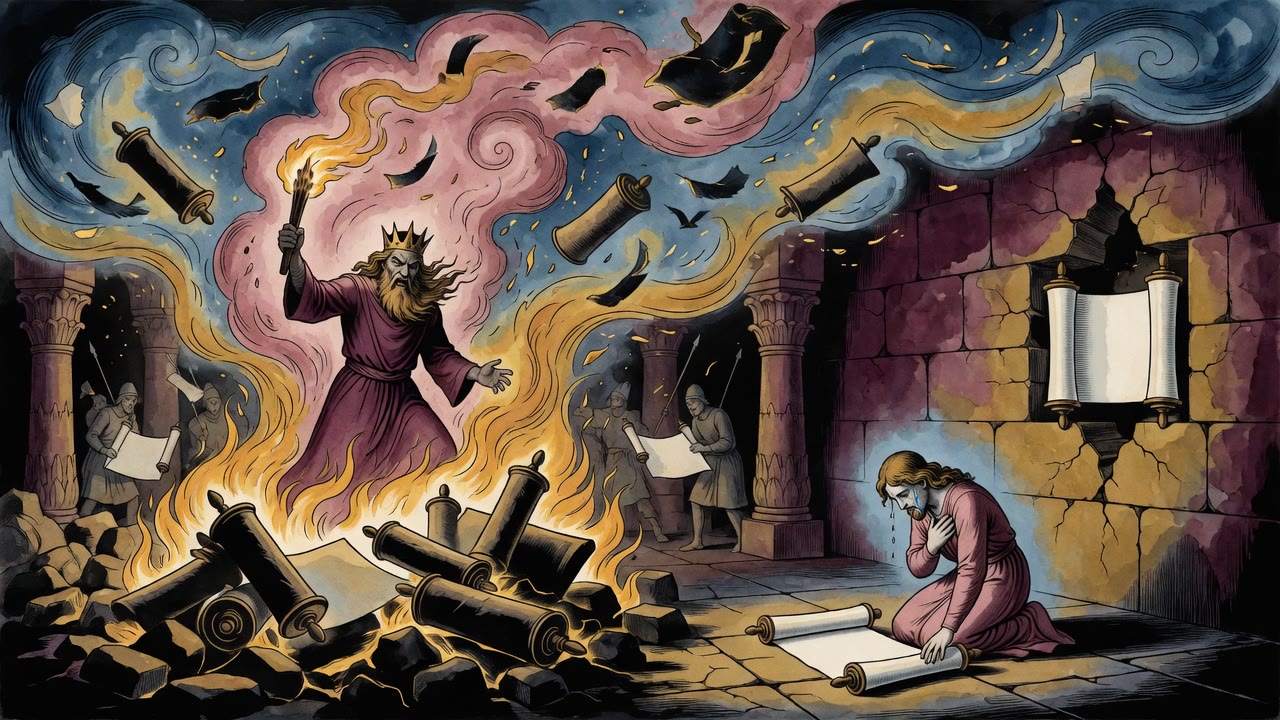
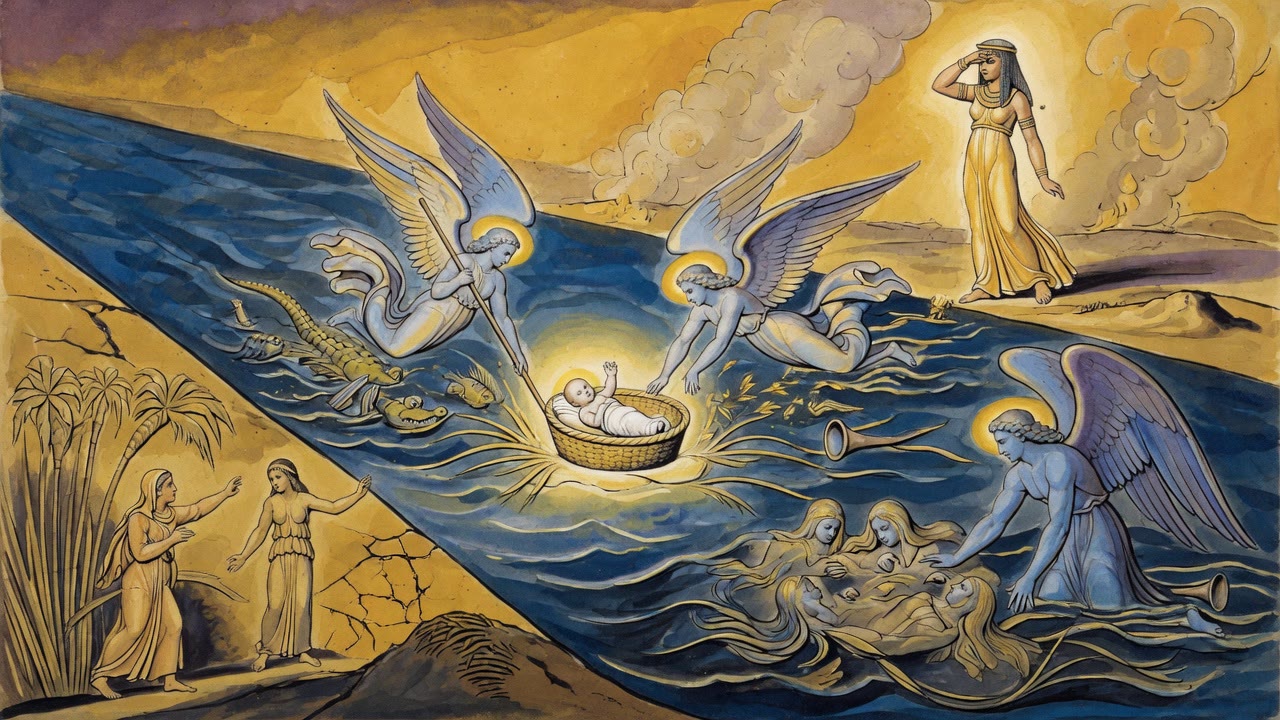
Pharaoh sent men to kill Jochebed and her daughter Miriam. God made the women invisible, and the killers found nobody. Jochebed's newborn walked that day.

Curated by Arthur · Told by Maggid ·
Table of Contents
  1. The Shekel That Enslaved a Nation
  2. A Wife Named Divine Splendor
  3. Teachers Who Lost to a Child
  4. The Arabian Portrait and the Ugly Truth
  5. One Brick, One Light, One Will
Amram Laid One Brick While Jochebed Hid the Babes Click for full size

The Shekel That Enslaved a Nation

Egypt did not begin with naked force. Overseers offered a shekel for every brick, and the prospect of money drove Hebrew hands into superhuman pace. Later the wages vanished. The quota remained the number made when pay still glittered. Only Amram slipped the trap. He had been satisfied with a single shekel a day and therefore had made only a single brick a day. When unpaid labor began, Egypt could demand from him only that one brick as the measure of a day's work. Sagacity walked beside piety. While others had written their own future burden in ambitious stacks, Amram's restraint became a legal shield no taskmaster could argue past.

The scheme was elegant and cruel. First, buy exhaustion with coin. Second, keep the exhaustion and cancel the coin. Amram never signed the first contract with his body. His daily one brick looked small beside towers of clay. In the long year of slavery it became the only honest unit left.

A Wife Named Divine Splendor

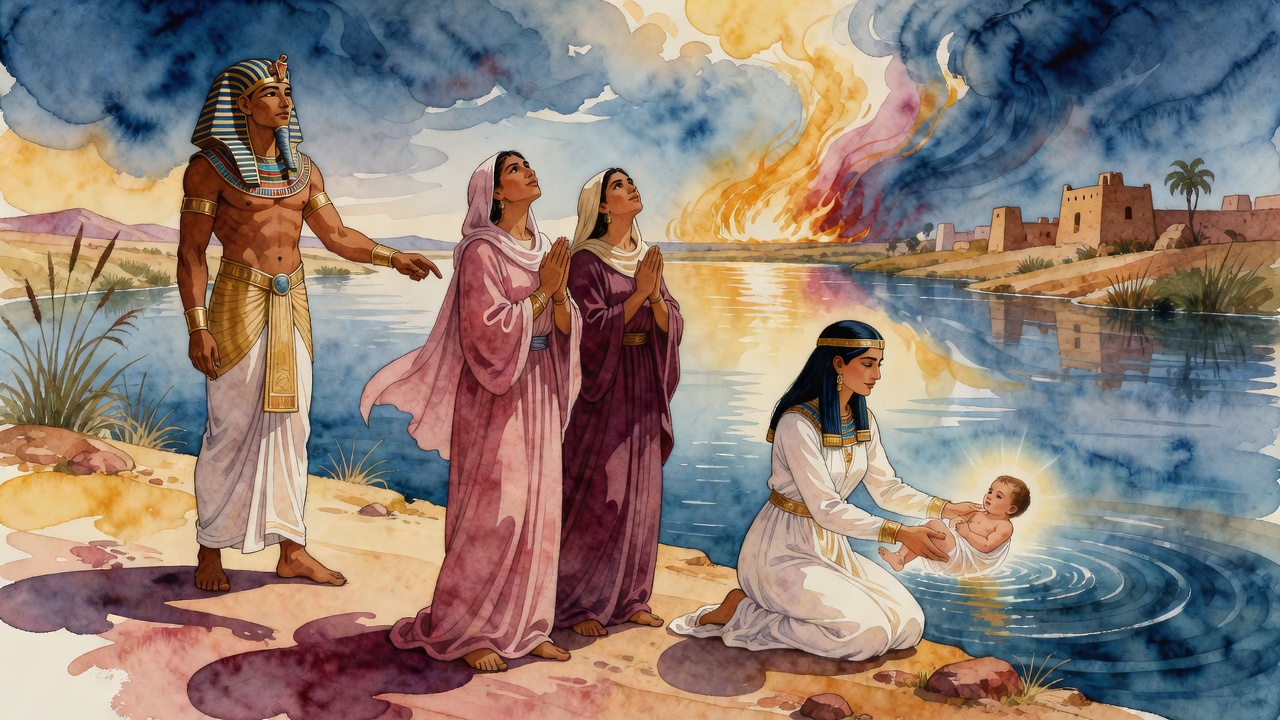
Amram took as partner his aunt Jochebed, born the same day as he. Daughter of Levi, she bore a name that meant Divine Splendor because celestial light radiated from her face. She stood among the midwives who risked death to keep Hebrew infants alive. When Pharaoh sent hangmen for Jochebed and her daughter Miriam, God made the women invisible. The bailiffs returned empty. The house that would shelter Moses was already a house that heaven had hidden from murderers.

In pregnancy Jochebed felt no pain. In birth she felt none. Pious women, the legends say, stand outside Eve's curse of sorrow in conception and childbearing. At the child's appearance the whole house filled with radiance equal to sun and moon. Before a day had passed the infant walked and spoke with his parents. Like an adult he refused milk from his mother's breast. Greatness announced itself before the Nile basket, before the palace, before the staff. Light on a midwife's face and light in a birth room answered the dark of Pharaoh's decree.

Teachers Who Lost to a Child

At great cost instructors came from neighboring lands to educate Moses. Some came unasked, drawn by rumor of the boy. He excelled them. Learning felt like recollection. When scholars disagreed, he chose the true view by instinct; his mind refused to store what was false. Strength of will outranked even that gift. He later confessed that nature had given him an evil disposition and that discipline had turned it into a noble character. Capacity without will would have left a clever villain. Will without capacity would have left a stubborn fool. He held both reins and drove them toward service rather than court vanity.

Egypt paid for teachers who left humbled. The child of the invisible midwife sat among foreign sciences and sorted truth from error as if sorting grain. Palace education could not erase the light that had filled the house at his birth. It could only give that light more languages to refuse lies in.

The Arabian Portrait and the Ugly Truth

After the exodus a king of Arabia sent an artist to paint Moses so the likeness of the divine man might stand before the throne. The painter returned. Experts in physiognomy read the canvas and named a villain, covetous, haughty, sensual, loaded with ugly traits. The king raged at their science. They blamed the painter for a false portrait. The artist swore the work matched the face. Unable to decide, the king traveled to see Moses in the flesh. Canvas and man agreed. The science was not empty. The holiness was not a birthright of bone.

Moses answered without shame. "If my fine qualities were a product of nature, I were no better than a log of wood, which remains forever as nature produced it at the first." By nature he possessed the reprehensible traits the wise men read, perhaps worse. He had mastered the impulses with strong will. Character acquired through severe discipline had become the opposite of the disposition of birth. Honor on earth and in heaven rested on that change, not on a forehead that fooled no physiognomist. The portrait told the truth about the raw material. The life told the truth about the labor.

One Brick, One Light, One Will

Amram's single brick, Jochebed's hidden midwifery, the infant's early speech, and the adult's confession of mastered nature form a single household theology. Egypt tried to buy exhaustion with coins and then keep the exhaustion without coins. Amram refused the first bargain and survived the second. Pharaoh tried to kill the midwives and the boys. Heaven hid the women and filled a birth room with light. Foreign kings later tried to read Moses as a fixed face. Moses insisted a face can be rewritten by will.

Redemption's staff grew in that soil. A father who would not stack bricks for a false wage. A mother who glowed while defying a throne. A son who walked early and later admitted every dark trait the portrait showed, then pointed to the labor that unmade them. The exodus needed more than miracles of water. It needed a family that already knew how to resist a system one measured act at a time. One brick a day. One hidden midwife. One will strong enough to contradict a face.


← All myths

From the tradition

Sources

5 sources

The texts behind this telling. Some cards carry a translation of the source; others are our own retelling of it, and each card says which. Every card links out to the original.

Legends of the Jews 4:39Legends of the Jews

Retold in our words. Read the original at the link below.The Legends of the Jews by Louis Ginzberg (1909) · Public Domain

The Egyptians didn't just use brute force to control the Hebrews. They were clever. Insidiously so. They started with tempting promises. Imagine this: a shiny shekel – a unit of currency – for every brick made. A powerful incentive. It drove people to push themselves beyond their limits, fueled by the promise of financial reward.

As you might suspect, this generosity didn't last. The Egyptians, masters of manipulation, soon stopped paying altogether. Yet, there was a catch. Even without wages, they demanded the same output, the same number of bricks, as when they were paying. The Hebrews were trapped. They'd been lured in by the prospect of wealth and now found themselves working tirelessly for nothing.

Everyone, that is, except for Amram. What made him different?

Amram saw through the Egyptians' scheme from the start. He recognized the trap for what it was. He wasn't seduced by the promise of quick riches. He understood something fundamental about value, about work, about freedom. And so, he chose a different path.

He accepted only a single shekel a day and, consequently, made only a single brick a day. A seemingly small act of resistance, but with profound implications.

And here’s where Amram's wisdom truly shines. When the Egyptians switched to unpaid labor, they couldn't force him to make more than one brick. His previous output became his shield. Because he hadn't been greedy, because he hadn't fallen for their trickery, he was now protected. The Egyptians had to accept his single brick as the measure of his daily work.

It's a story about more than just bricks and wages. It's a story about foresight, about self-control, about resisting the seductive power of immediate gratification. Amram's tale, preserved in the tradition of Jewish legend, serves as a timeless reminder: sometimes, the greatest strength lies not in chasing the biggest reward, but in discerning the true value of things. His example is a beacon, urging us to consider the long-term consequences of our choices and to resist the allure of empty promises. What "bricks" are we being tempted to make today, and at what cost?

Full source
Legends of the Jews 4:40Legends of the Jews

Retold in our words. Read the original at the link below.The Legends of the Jews by Louis Ginzberg (1909) · Public Domain

Sometimes, it's in the most unexpected places, like a marriage built on shared destiny and defiance.

Amram, a name whispered with reverence in Jewish history, chose as his life partner none other than his own aunt, Jochebed. But this wasn't just any union. According to Legends of the Jews, she was born on the very same day as him. A match seemingly written in the stars.

Her name, Jochebed, meaning "Divine Splendor," was no accident. A celestial light radiated from her face. Can you imagine? She was the daughter of Levi, carrying within her a lineage of faith and strength. But her worth extended far beyond her birthright.

Jochebed was more than just a pretty face. She was a ezer kenegdo, a true helpmeet, a partner in every sense of the word. The kind of woman who wasn't afraid to risk it all for what she believed in. she was one of the midwives who, defying Pharaoh's cruel decree, risked their own lives to save the Hebrew children. Faced with the ultimate power, she chose compassion. She chose life.

As Ginzberg's retelling in Legends of the Jews makes clear, their courage didn't go unnoticed – not by Pharaoh, and certainly not by God. Pharaoh, enraged by their disobedience, sent his henchmen to bring them to justice. But God, in His infinite wisdom, intervened. He made Jochebed and her daughter Miriam invisible. Just like that! The king's men returned empty-handed, their mission thwarted by divine intervention. About the power of faith, the strength of women, and the miracles that can happen when we choose to stand up for what's right, even when the odds are stacked against us.

So, the next time you hear the name Jochebed, remember her not just as Amram's wife, but as a beacon of light, a defiant spirit, and evidence of the power of choosing compassion over cruelty. A true legend,.

Full source
Legends of the Jews 4:51Legends of the Jews

Retold in our words. Read the original at the link below.The Legends of the Jews by Louis Ginzberg (1909) · Public Domain

Legends of the Jews turns to Moses and Adam of Jochebed.

Here's something truly amazing: Jochebed experienced no pain throughout her pregnancy. None! And even more incredibly, she felt no pain during childbirth. Why? Because, This idea of righteous women being spared the pain of childbirth is found elsewhere in Jewish tradition too.

The miracles didn’t stop there. Oh no.

The moment Moses was born, the entire house, and I mean the entire house, was filled with a radiant light, a light so intense it rivaled the sun and the moon!

And then, an even greater miracle occurred. This newborn, not even a day old, began to walk. And not just walk, but to speak with his parents! He conversed with them as if he were a grown adult.

But here’s the kicker: He refused to drink milk from his mother’s breast. Why? Perhaps, even from the moment of his birth, he was set apart, destined for something beyond the ordinary, something so sacred that even the most basic human needs were different for him. The Legends of the Jews And what signs might we miss if we aren't paying close enough attention?

Full source
Legends of the Jews 4:81Legends of the Jews

Retold in our words. Read the original at the link below.The Legends of the Jews by Louis Ginzberg (1909) · Public Domain

The young Moses, raised in Pharaoh's court, becomes a student. But not just any student. According to Legends of the Jews by Ginzberg, teachers were brought in from all over to educate him in everything from the sciences to the liberal arts. And get this – he surpassed them all! It wasn't just rote learning, either. It was like he was remembering knowledge, not just acquiring it. When scholars disagreed, he instinctively knew the truth. His mind,

It wasn’t just his intellect that was remarkable. It was his character. Legends of the Jews suggests that Moses actually had an "originally evil disposition" that he transformed into something noble. The man who led the Israelites out of slavery, the man who received the Ten Commandments, had to actively fight against his own inner demons. He himself acknowledged this transformation later in life. That acknowledgement alone is enough to show the world that anyone, even someone with such a heavy destiny, can overcome their base nature and aspire to good.

The story doesn't end there. After the Exodus, a king of Arabia, wanting to honor Moses, sent an artist to paint his portrait. When the painting was done, the king gathered his wise men, particularly those skilled in physiognomy – the art of judging character from facial features. He presented the portrait and asked for their opinions.

Here's the kicker: they all agreed that the portrait depicted a man who was covetous, haughty, sensual – a villain! The king was furious. How could they say such a thing about Moses, the holy man? They defended themselves, claiming the painter must have failed to capture Moses' true essence. But the artist swore his work was accurate.

What are we to make of this? Is it a commentary on the limitations of art? A reflection on the subjective nature of perception? Or perhaps, a deeper truth about the complexities of Moses himself? Maybe even a hidden commentary on the nature of leadership. That even the most virtuous leaders may seem, in certain lights, to be flawed. That even the most flawed people, with enough self-awareness, can become great leaders.

Full source
Legends of the Jews 4:82Legends of the Jews

Retold in our words. Read the original at the link below.The Legends of the Jews by Louis Ginzberg (1909) · Public Domain

There's a fascinating story in Ginzberg's Legends of the Jews that tackles this very question, and it involves none other than Moses himself.

An Arabian king commissions a portrait of Moses, the great leader of the Israelites. He also consults with experts in physiognomy, that's the ancient practice of judging character from facial features. These experts, poring over the portrait, paint a rather unflattering picture of Moses's character. They see all sorts of negative traits supposedly written on his face.

When the king finally meets Moses in person, he's astounded. The man before him is the very image of the portrait! The likeness is undeniable. This throws the king into a quandary: who is. The portrait, or the experts' reading of it?

He turns to Moses, relaying the whole bizarre situation and his utter confusion. And Moses's response? It's pure gold.

He acknowledges that both the artist and the experts are skilled in their respective fields. Then he drops a bombshell. "If my fine qualities were a product of nature," he says, "I were no better than a log of wood, which remains forever as nature produced it at the first." In other words, if Moses's goodness was just something he was born with, it wouldn't be anything special.

But here's the kicker: Moses confesses, "By nature I possessed all the reprehensible traits thy wise men read in my picture and ascribed to me, perhaps to a greater degree even than they think." Wow. He admits that, by default, he was prone to all those negative qualities.

But, and this is a HUGE but, he didn't let nature dictate his destiny. Moses continues, "But I mastered my evil impulses with my strong will, and the character I acquired through severe discipline has become the opposite of the disposition with which I was born." Moses is saying that through sheer willpower and self-discipline, he transformed his character. He actively fought against his negative inclinations and forged himself into the leader, the man, we know from the Torah.

And the reward for this incredible effort? "Through this change, wrought in me by my own efforts, I have earned honor and commendation upon earth as well as in heaven."

This story isn't just a quirky anecdote about Moses. It's a powerful message about our potential for change. It challenges the idea that we're simply prisoners of our nature or our circumstances. It suggests that, with conscious effort and unwavering determination, we can reshape our character and become the people we aspire to be. It shows us that tikkun (spiritual repair) atzmi, personal rectification, is always possible.

Perhaps it's a reminder that we all have the capacity to overcome our flaws and cultivate virtues. Maybe it's an invitation to examine our own "evil impulses" and consider how we can master them. Or perhaps it's simply a comforting thought that even the greatest among us, like Moses, had to struggle and strive to become the best versions of themselves.

Full source