5 min read

Pharaoh Weighed Egypt Against a Small Goat

Pharaoh saw all Egypt weighed against a tender kid, and the kid sank the scale. Balaam turned the dream into a decree against Israel.

Curated by Arthur · Told by Maggid ·
Table of Contents
  1. The Scale Made the Palace Small
  2. Balaam Named the Child
  3. The Cities Rose From Fear
  4. The King Who Became the Example

Pharaoh woke before dawn with the weight of a small animal still pressing on his kingdom.
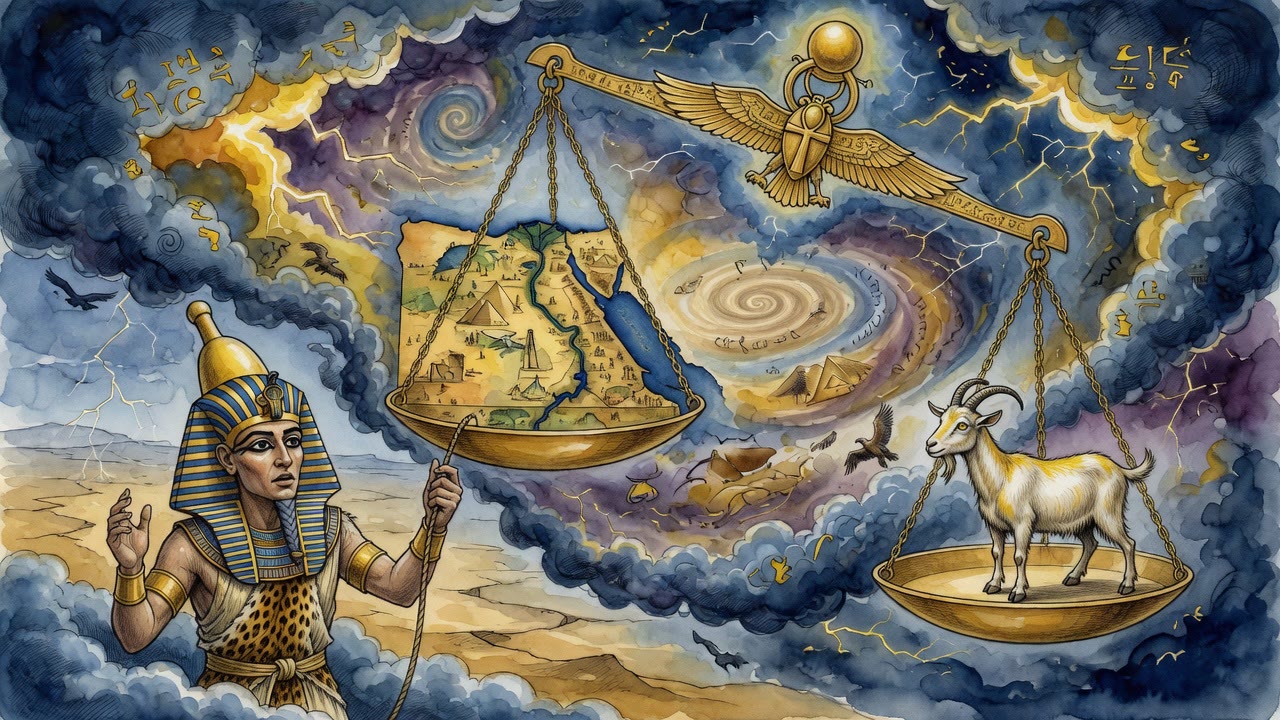
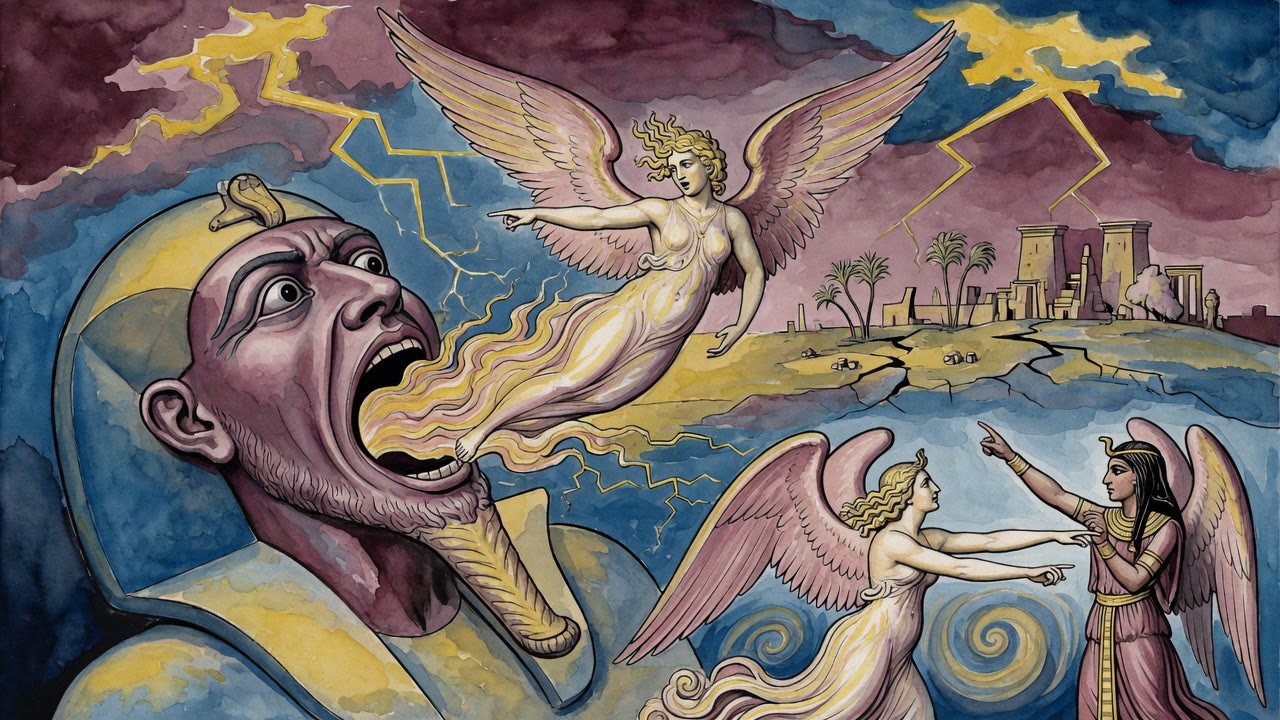
In the dream an old man had stood before him holding a balance scale. The old man gathered Egypt's elders, nobles, and great men, tied them together, and set them in one pan. Rank after rank of power went down into the metal bowl: counselors, commanders, priests, men who spoke in the throne room and expected servants to tremble.

Then the old man placed a tender kid, a young goat, in the other pan.

The goat outweighed them all.

The Scale Made the Palace Small

A dream can make a king sweat harder than a battle. Pharaoh had armies. He had storehouses. He had scribes who could turn his will into stone. He had the Nile, the cities, the forced labor, and the habit of being obeyed before a command was finished.

None of it mattered on the scale.

The pan holding Egypt rose. The pan holding the goat went down. A small, soft, living thing carried more destiny than the men who kept Pharaoh's world upright. That was the terror. The dream did not show Egypt crushed by another empire or invaded by chariots from the desert. It showed a child-sized weakness, a life too young to fear, heavier than the whole court.

So Pharaoh summoned his wise men. The palace filled with men trained to turn omens into policy. They looked at the king, at one another, at the memory of the scale. Nobody wanted to say the thing too early.

Balaam Named the Child

Balaam stepped forward.

He did not flatter the dream into harmlessness. A child would be born among Israel, he said, and that child would destroy Egypt and bring the slaves out with a mighty hand. The goat was not livestock. It was a warning. The small life outweighed the elders because the future had already entered the room in miniature.

Fear hardened while he spoke. Pharaoh did not hear the dream as a chance to repent. He heard it as an enemy still in the womb. If a child could overturn Egypt, then Egypt would turn against children. If one Hebrew infant could sink the scale, the court would make war on Hebrew infants before the child could stand.

That is how an image from sleep became a decree.

The Cities Rose From Fear

The fear did not stay in Pharaoh's bedroom. It went out into Goshen wearing the uniform of administration. Taskmasters appeared. Quotas hardened. Israelite backs bent under bricks for Pithom and Raamses, and the walls of Egypt rose from the same panic that had shaken the king awake.

Pharaoh told himself he was being wise. The Israelites had grown numerous. Their faces and hearts turned toward Canaan. If war came, they might join Egypt's enemies and leave the land. The king called slavery prudence. He called cruelty statecraft. He called the breaking of a people a way to secure a border.

But the dream had already shown the truth. Egypt was not being endangered by Israel's strength. Egypt was being exposed by its fear. A kingdom that can be panicked by a goat has already confessed what it knows about itself.

The King Who Became the Example

When Moses finally stood before him, Pharaoh tried another sentence of mastery. He did not know the Lord. The God of the Hebrews had no place in his archive, no entry among the powers his scribes could name. Pharaoh spoke as if ignorance could become armor.

God turned that ignorance into a stage.

The king who refused to know would be made known. His river, his animals, his fields, his houses, his firstborn, his chariots, all the places where Egypt believed itself solid, would become the language of divine power. The old dream had weighed Egypt against a tender kid. The plagues would weigh Pharaoh against the God he dismissed, and the pan would drop the same way.

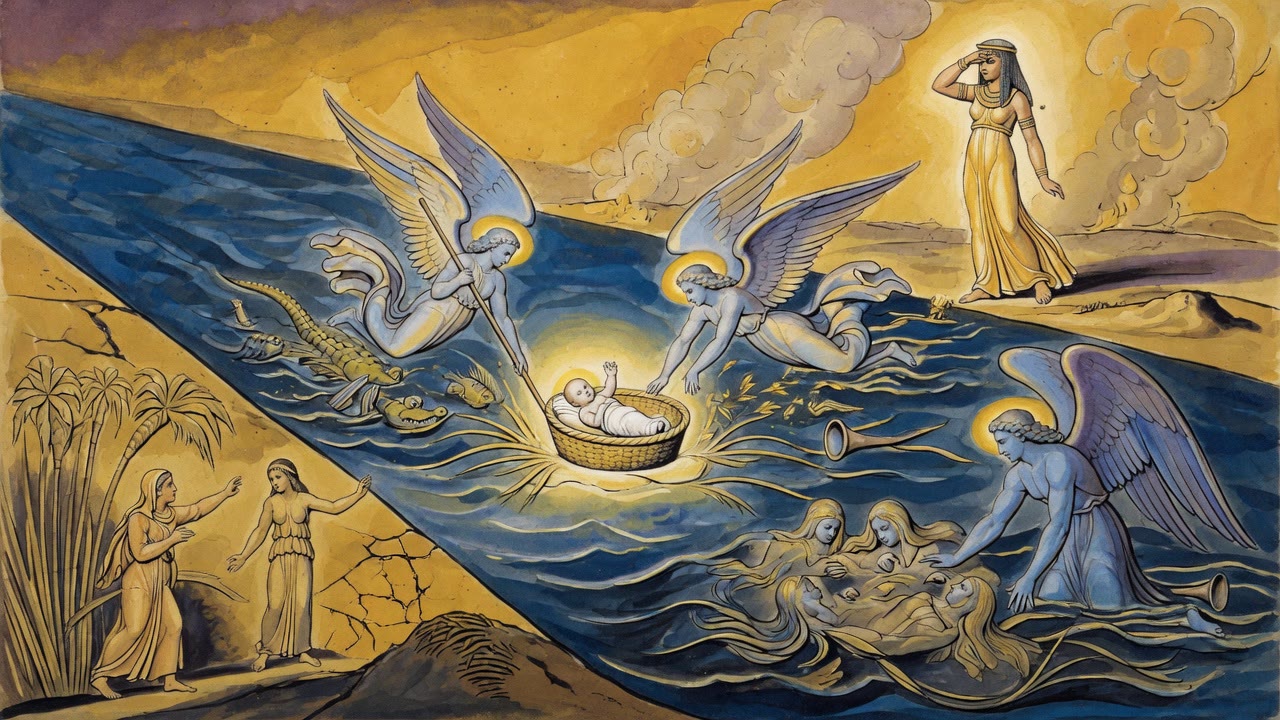
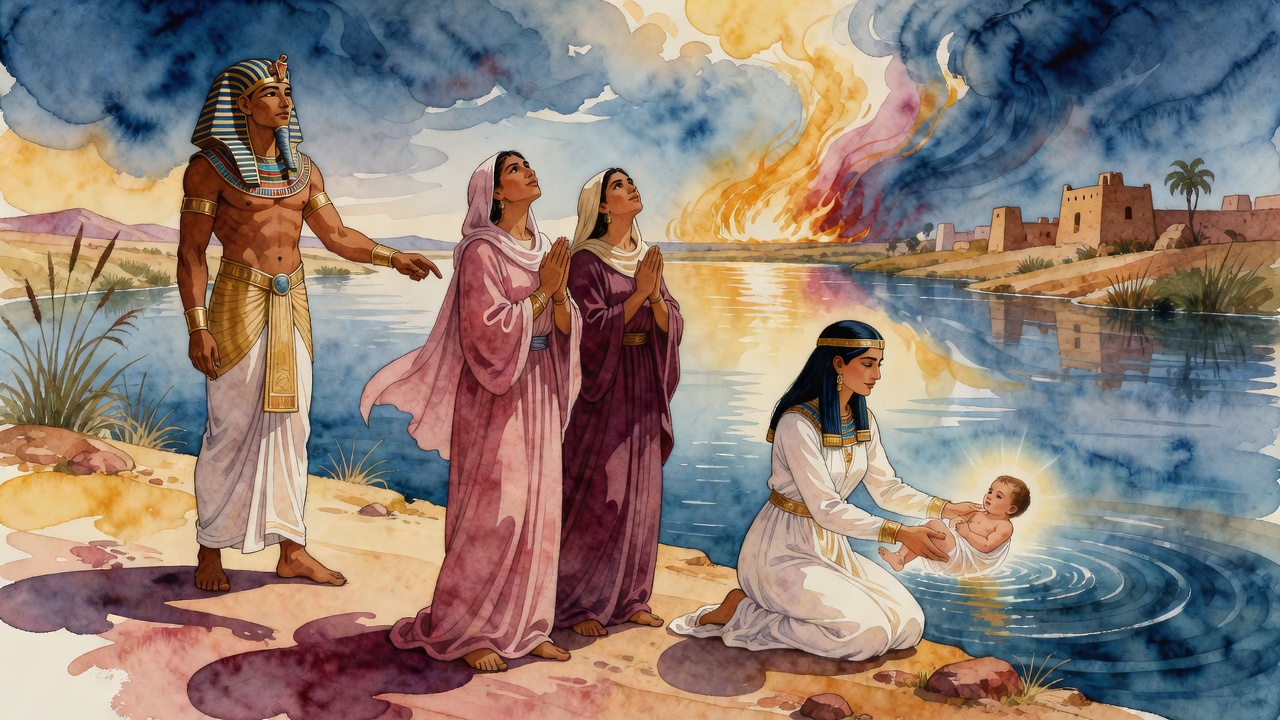
The kid was small because Moses began small. A child in danger. A baby hidden from a decree. A life floating where Egypt had ordered death. Pharaoh's dream had been accurate. He only mistook the warning for permission to become more afraid.


← All myths
From the tradition

Sources

4 sources

The texts this telling draws on, in full. Open a card to read inline, or expand it for a wider, quieter read.

Legends of the Jews 4:24Legends of the Jews

It all started 130 years after the Israelites went down to Egypt. Pharaoh, in his dream, saw an old man standing before him. This old man held a balance scale. He watched as the old man gathered all the elders, the nobles, the great men of Egypt, tied them together, and placed them in one scale.

Then, he put a tender kid – a young goat – in the other scale.

Can you picture it? The weight of all those powerful Egyptians…and then this tiny, innocent kid. But here’s the thing: the kid’s side went down. It outweighed them all!

Pharaoh woke up shaken. He immediately summoned his servants and wise men. He needed someone to interpret this terrifying vision. They were, understandably, afraid. What did it mean?

That’s when Balaam, son of Beor, stepped forward. Now, Balaam is a fascinating figure in Jewish tradition, often portrayed as a diviner, a prophet of sorts, though not of Israel. He had a reputation, let's just say.

Balaam, in this account, doesn't mince words. "This means nothing but that a great evil will spring up against Egypt," he declared. “For a son will be born unto Israel, who will destroy the whole of our land and all its inhabitants, and he will bring forth the Israelites from Egypt with a mighty hand.”

Talk about a buzzkill.

Balaam’s interpretation? This dream wasn't just some random subconscious burbling. It was a prophecy. A dire prophecy. A Hebrew child would be born who would bring Egypt to its knees and lead the Israelites to freedom.

And his solution? "Now, therefore, O king, take counsel as to this matter, that the hope of Israel be frustrated before this evil arise against Egypt." In other words: nip this problem in the bud. Before this child is even born, find a way to crush the Israelites’ hopes and dreams.

Think about the implications. This dream, and Balaam’s interpretation, set in motion a chain of events, a paranoia that fueled the oppression of the Israelites for generations. It's a powerful reminder of how fear, fueled by prophecy and interpreted through a particular lens, can lead to terrible consequences. But could Pharaoh have chosen a different path? Could he have seen the dream as a warning rather than a threat, an opportunity for reconciliation instead of repression? Maybe, just maybe, history could have been different.

Full source
Book of Jubilees 46:24Book of Jubilees

It comes from the Book of Jubilees, specifically chapter 46.

The Book of Jubilees, for those who aren't familiar, is an ancient Jewish text that retells the stories of Genesis and Exodus, but with a unique perspective and extra details. It fills in gaps, offers interpretations, and sometimes, well, it gets So, what’s chapter 46 all about? It plunges us right into the heart of the Egyptian enslavement of the Israelites. But it doesn't just say, "Pharaoh enslaved them." Oh no. It digs into the why.

This teaching paints a picture of Pharaoh, gripped by fear. A fear of the Israelites growing too numerous, too powerful. The passage reads, "Come and let us deal wisely with them before they become too many, and let us afflict them with slavery before war come upon us and before they too fight against us; else they will join themselves unto our enemies and get them up out of our land, for their hearts and faces are towards the land of Canaan."

Can you feel the paranoia oozing from those words? Pharaoh isn't just being cruel; he's acting out of what he perceives as self-preservation. He believes that if he doesn’t control the Israelites, they will rise up, ally with his enemies, and drive the Egyptians out. Their hearts, the text says, are set on Canaan.

This fear, according to Jubilees, leads to a brutal crackdown. "And he set over them taskmasters to afflict them with slavery; and they built strong cities for Pharaoh, Pithom and Raamses, and they built all the walls and all the fortifications which had fallen in the cities of Egypt. And they made them serve with rigour."

We see the Israelites forced into hard labor, building cities and fortifications for their oppressors. This detail, the construction of Pithom and Raamses, lines up with what we find in (Exodus 1:11). It’s a stark reminder of the physical and emotional toll of slavery.

Now, what’s interesting here is the motivation ascribed to Pharaoh. It's not just about economic gain, although that was surely a factor. Jubilees emphasizes the fear of the "other," the anxiety of losing control. It's a theme that resonates throughout history, doesn’t it? How often have we seen fear used to justify oppression?

This passage from Jubilees 46 is more than just a historical account. It's a cautionary tale. A tale about the dangers of fear-mongering, the seductive power of prejudice, and the devastating consequences of dehumanizing an entire group of people.: Pharaoh's fear, his desperate attempt to maintain control, ultimately led to the Exodus, to the very thing he was trying to prevent. Sometimes, the very act of trying to suppress a people only strengthens their resolve, solidifies their identity, and fuels their desire for freedom.

So, as we reflect on this ancient text, let's ask ourselves: what fears are driving our actions today? Are we building walls – literal or metaphorical – out of fear, rather than building bridges of understanding? And what will the long-term consequences of those choices be? The story of Pharaoh and the Israelites reminds us that fear can be a powerful motivator, but it's rarely a wise guide.

Full source
Legends of the Jews 4:248Legends of the Jews

The story of his confrontation with God, as told in Legends of the Jews (Ginzberg), is a masterclass in divine clapback. Pharaoh, the most powerful ruler on earth, puffed up with ego, declaring, "I know not the Lord." Can you imagine the audacity? It wasn't just a denial; it was a challenge. He was saying, "Your God? Never heard of him. Doesn't exist, as far as I'm concerned."

God, as we learn, doesn't take kindly to such pronouncements. According to Legends of the Jews, God Himself responded directly to Pharaoh's arrogance. He essentially said, "Oh, you rascal! You tell my ambassadors you don't know my power? I will make you stand as an example, to demonstrate my power and make my name known throughout the entire world."

It's like a cosmic mic drop. God isn't just correcting Pharaoh; he's setting the stage for the entire Exodus story. He's saying, "You think you're in control? Watch what happens next."

The story goes even further. Pharaoh, not content with his initial declaration of ignorance, actually consulted his wise men. He pulled them in and asked, "Hey, ever heard of this 'God of the Hebrews'?"

And what did his wise men tell him? "We've been told that He is a son of the wise, the son of ancient kings." Hmm, a son of the wise? Interesting, but clearly not enough to impress Pharaoh.

God, however, was far from impressed with them. He responded to their… limited… understanding, saying, "Oh, you fools! You call yourselves wise men, but you call Me only the son of the wise. I will set at naught all your wisdom and your understanding."

Ouch. That’s a stinging rebuke.

This isn't just about a name or a title. It's about recognizing the source of all wisdom and power. It's about acknowledging the divine presence in the world. And Pharaoh, blinded by his own ego and the shallow wisdom of his court, completely missed the point.

What's so compelling about this little exchange is the sheer audacity of Pharaoh and the immediate, powerful response from God. It's a reminder that true wisdom lies not in dismissing what we don't understand, but in recognizing the forces that are greater than ourselves. It sets the tone, doesn't it? For the plagues, the Exodus, and the entire narrative of liberation that follows. It's a powerful lesson, even today, about humility, acknowledgment, and the consequences of willful ignorance. Maybe, just maybe, we all have a little Pharaoh in us sometimes. The trick, perhaps, is to recognize it before the plagues start coming.

Full source
Legends of the Jews 4:145Legends of the Jews

Apparently, the old king didn't go peacefully. According to Ginzberg's Legends of the Jews, he died in utter shame and disgrace, a repulsive figure to everyone. They buried him in the royal tombs in Zoan, Egypt, but there was a problem. Usually, they'd embalm their kings. Not this guy. His body was so… well, gone bad, that no one could even get close enough to perform the embalming. Imagine the stench! They had to bury him in a hurry. The text says, "Thus the Lord requited him with evil for the evil he had done in his days to Israel." Harsh. After a long and terrible reign of ninety-four years, he met a terrifying end.

Then there's his son, ADIKAM.

Adikam, a mere twenty years old, took the throne. Now, the Egyptians, they just called all their kings "Pharaoh," like it was a title. But his wise men had a different name for him: AKUZ. In Egyptian, akuz means "short." And apparently, Adikam was quite the awkward, undersized fellow.

Don't let his stature fool you. Adikam quickly proved to be even worse than his father, which, let’s be honest, is a pretty low bar. He really cranked up the oppression of the Israelites. He went to Goshen, where they were slaving away, and basically said, "No more slack! Get those bricks made!" He intensified their labor.

Here's where it gets truly horrific.

He put officers from among the Israelites in charge of the labor, and over them, he put Egyptian taskmasters. It was a system designed to break them. And then came the truly unspeakable part. Pharaoh set a quota for bricks that had to be made every single day. According to Legends of the Jews, whenever they fell short – and they always fell short – the taskmasters would do something unimaginable. They would go to the Israelite women and take their infants. The number of babies they took corresponded to the number of missing bricks.

And what did they do with these innocent children? They put them into the buildings instead of the missing bricks. Can you even imagine that?

The taskmasters forced the Israelite men to put their own children in the walls. Picture this: a father, weeping uncontrollably, placing his own son into the brickwork, covering him with mortar, his tears mingling with the dust. This, according to the legend, is the depth of depravity that ADIKAM, this “short” Pharaoh, sank to. The weight of that image. It’s not just a story from a book. It's a stark reminder of the unimaginable cruelty that humans are capable of, and the enduring power of stories to keep these memories. And warnings, alive. It makes you wonder, doesn't it? How far will power go? And what are we doing to stand against such darkness?

Full source