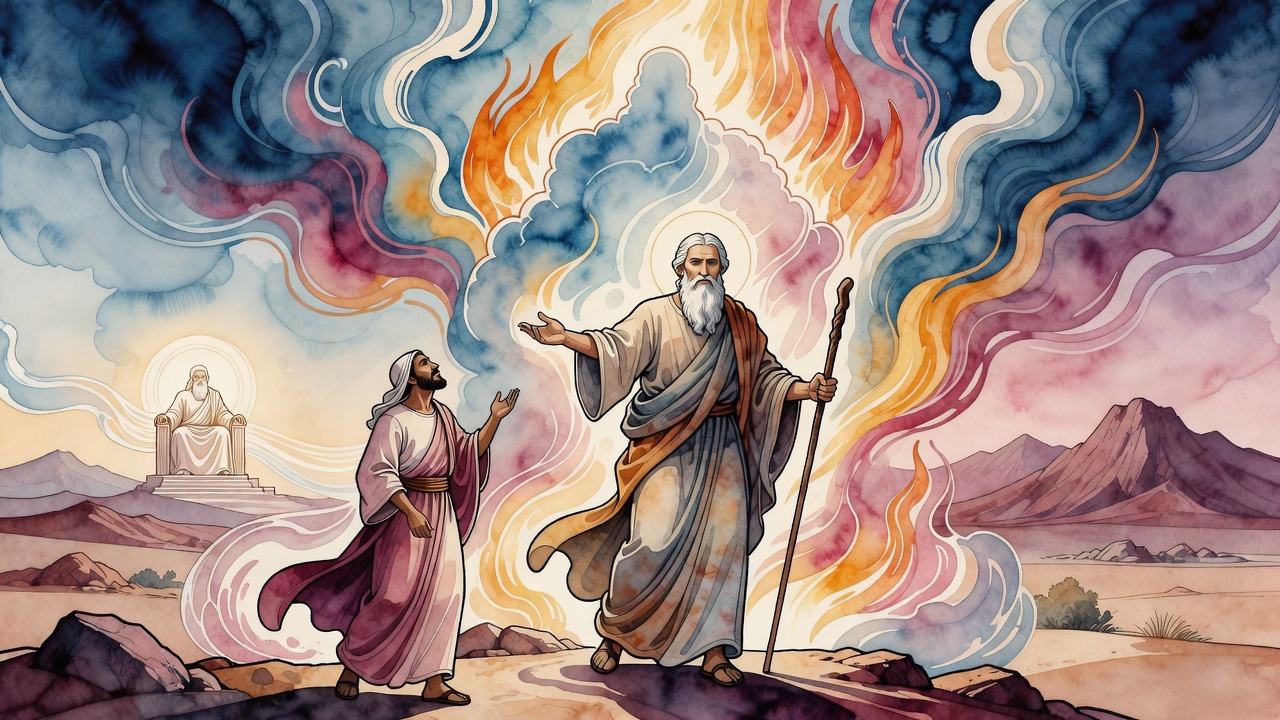
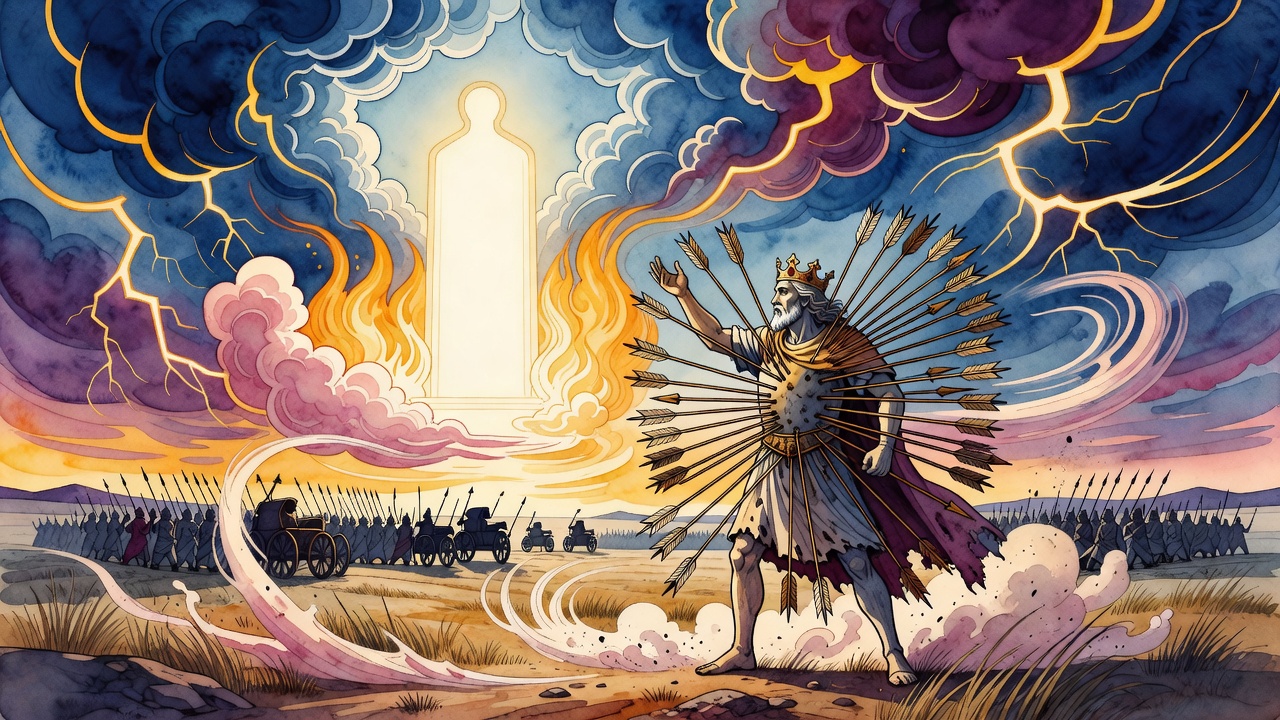
Moses Killed the Father of the Man Who Cursed God
An Egyptian hid behind a ladder in Goshen before the husband left. Years later that woman's son stood in the camp and cursed the Name.
Table of Contents
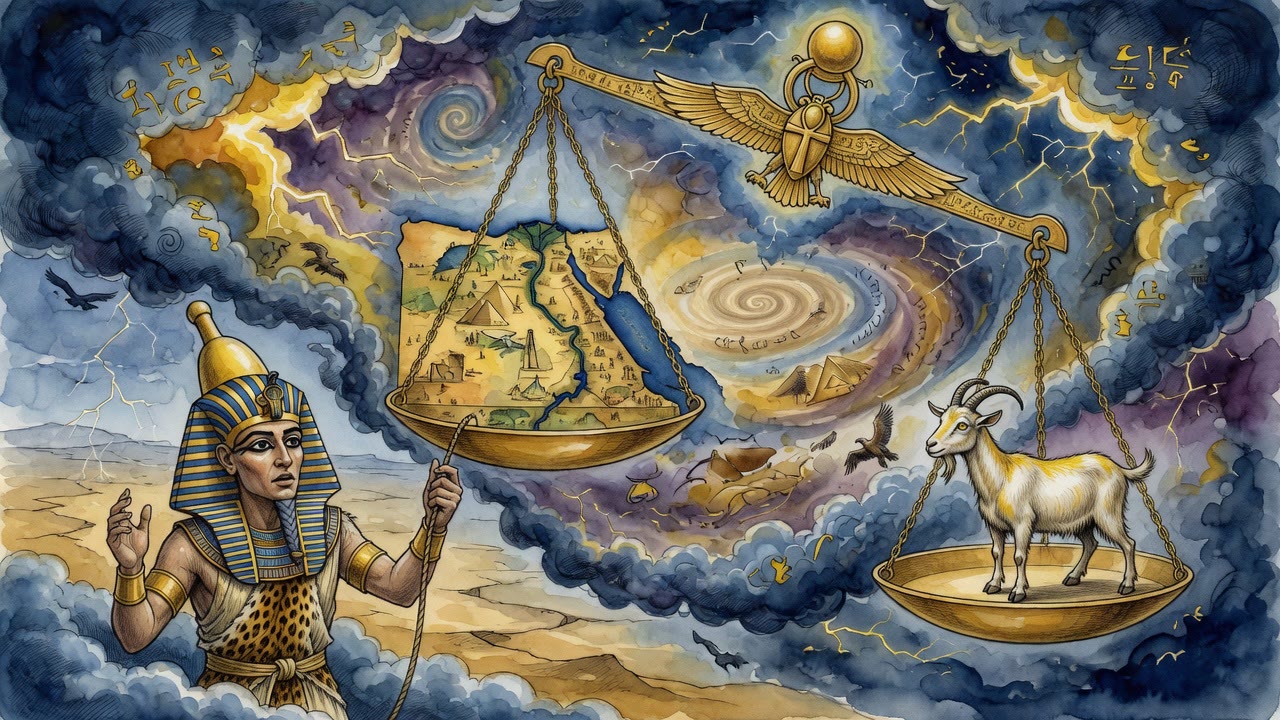
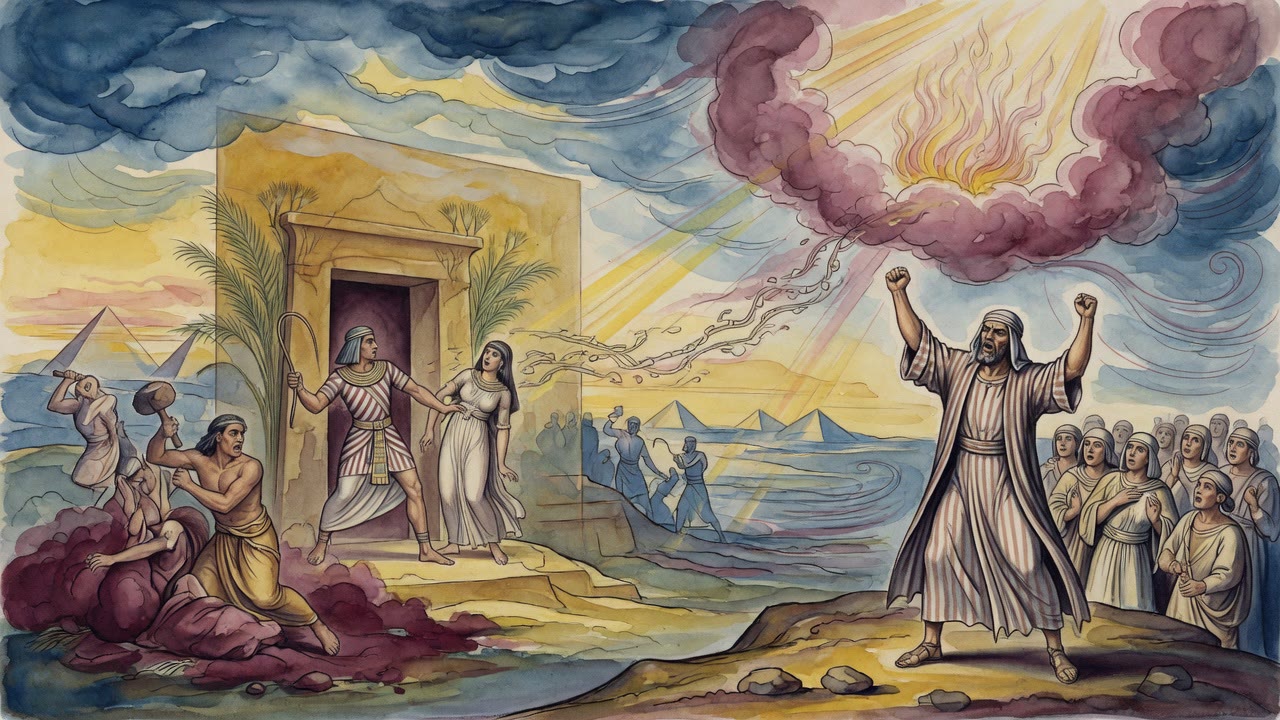
The Egyptian came to the foreman's house before the husband had gone to the fields. He had watched the wife. He had counted the hour. Pharaoh's taskmasters ran Israelite foremen, and the foremen ran crews of ten, and the whole machine was built to wear Hebrews down before they could grow into a people. This taskmaster belonged to that machine, and he wanted more than labor.
 Click for full size
Behind the Ladder
He told the husband to go gather his group. Then he hid behind the ladder. When the man left, the Egyptian came out and took Shelomith.
The husband turned back. He saw the Egyptian coming out of his own door. The taskmaster knew he had been seen, so he dragged the husband into the field and beat him the rest of the day. "Work well, work well," he said, while he meant to kill him. He had already taken the house. He meant to finish the man.
Moses Looked Both Ways
Moses went out to his brothers and saw an Egyptian striking a Hebrew (Exodus 2:11). He looked this way and that. He saw the house and he saw the field. He saw the adultery and the beating meant to bury it. He saw no one standing up to be zealous for the Name.
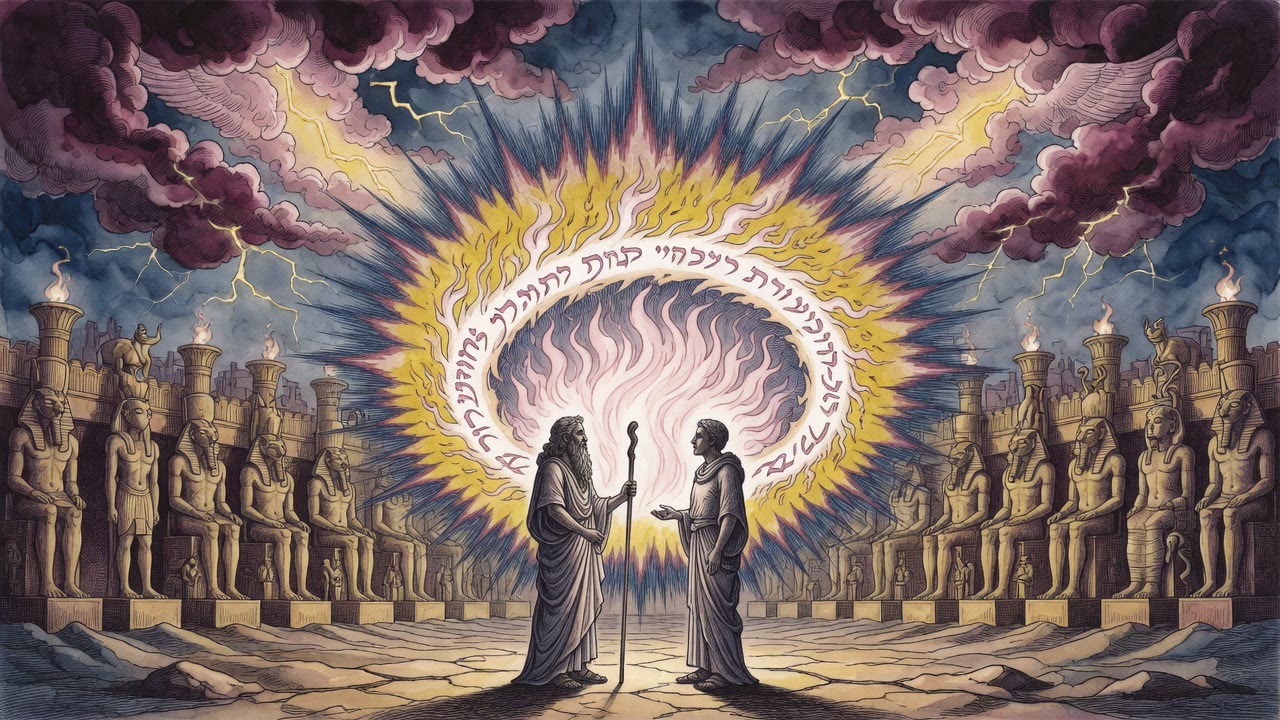
Some say he saw no hope coming from that Egyptian, not from his sons, not from the sons of his sons, to the end of the generations. Moses struck. Rabbi Levi said he struck with the secret of Israel, the hidden Name. He hid the body in the sand.
The beaten foreman went home. He told his wife he would divorce her. A man of Jacob's house, he said, does not stay with a woman who has been defiled. She told her brothers. The brothers wanted the husband dead, and he fled. The secret was already walking.
The Sand Did Not Hold
The next day Moses found two Hebrews fighting. He tried to pull them apart. One of them threw the killing in his face. "Do you mean to kill me as you killed the Egyptian?" (Exodus 2:14).
The man did not say do you seek to kill me. He said do you omer, do you speak. He had heard the Name. Moses had used words to drop a body into sand, and the sand had not kept them. "The matter is known," Moses said. He fled Egypt with the Name still in his mouth and a corpse under the dunes.
No Flag for Shelomith's Son
Years later, in the wilderness, Israel pitched its standards. Tribes took their places. Thousands of tents found a flag. One man could attach himself to none of them. He was the son of Shelomith, daughter of Divri, of the tribe of Dan, and of an Egyptian father. The Egyptian was the taskmaster Moses had killed.
He had grown up in the camp with a mother's name and no father's place. Rabbi Levi called him a mamzer without softening it. The rabbis argued the technical point, because the father had been a gentile, not a married Israelite. The camp did not argue. It left him outside the rows of tents.
He went out among the Israelites and fought with an Israelite man (Leviticus 24:10). The fight was not only fists. It was a man with no flag hitting a man who had one.
He Cursed the Name
The son of the Israelite woman blasphemed the Name and cursed (Leviticus 24:11). He opened his mouth on the Name Moses had used to kill his father. The same letters. The same secret. He threw it at Heaven in public.
They brought him to Moses. Moses had hidden a body in sand for this man's father, and now the son stood in front of him with the Name ruined on his tongue. Israel had heard angry mouths before. It had not had to lead blasphemers out past the flags like this. They took him beyond the tents. Moses had already publicized the origin when he said to take him out.
A morning behind a ladder in Goshen. A beating in a field. A Name spoken over an Egyptian. A boy who could not pitch a tent. A curse shouted in the wilderness. The chain did not break. It only changed mouths.
← All myths