Parshat Shemot5 min read

Job of Uz Told Pharaoh to Kill the Hebrew Boys

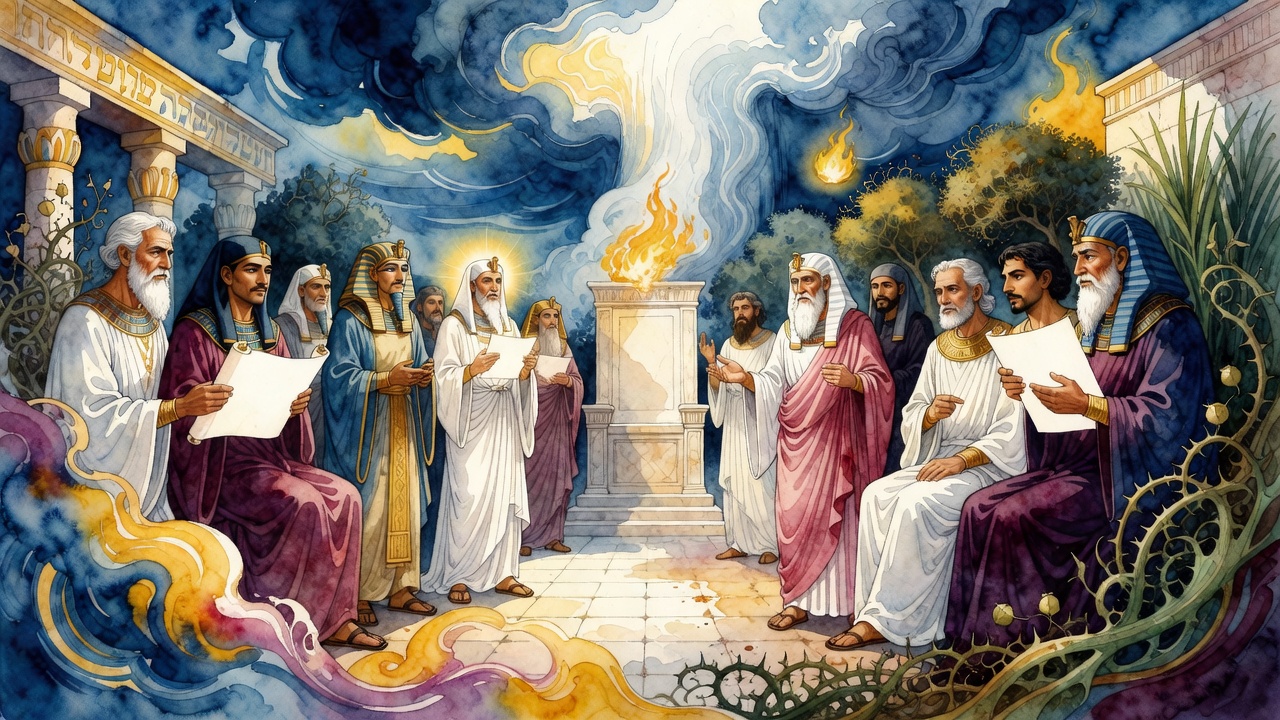
When Israel multiplied like underbrush, Pharaoh asked his counselors for a plan. Job of Uz stepped forward and proposed death for every newborn Hebrew son.

Curated by Arthur · Told by Maggid ·
Table of Contents
  1. The Counselor from the Land of Uz
  2. The Part That Needed Hands
  3. How That Throne Had Been Filled
  4. The Name Moses Asked For

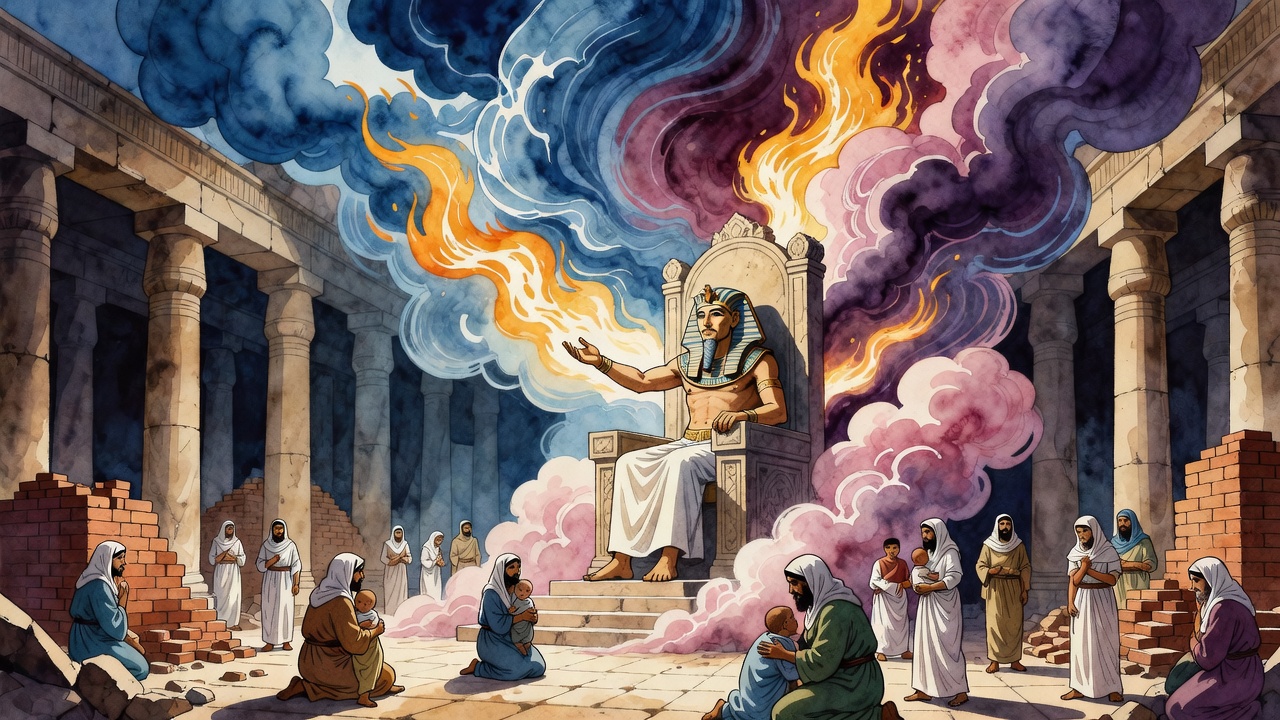
The Egyptians came back to Pharaoh a second time, and they were sweating. The Hebrews had gone on multiplying under the hard labor instead of thinning out under it, until the land was as full of them as a field is full of thick underbrush, because the women were bearing several at a birth. "They are everywhere," the Egyptians said, "and all this work is not slowing them down."
Job of Uz Told Pharaoh to Kill the Hebrew Boys Click for full size

Pharaoh had nothing. He had spent his one idea on the bricks, and now his own men were standing in front of him waiting, so he turned to his counselors and asked them what they thought. A king who has to ask that question in a full room is a king in trouble.

The Counselor from the Land of Uz

One man rose. He had come from Uz, in Aram-naharaim, and his name was Job.

He opened by praising the plan that had failed. The burden of work the king invented was good in its time, he said, and it should go on being carried out from here forward. Nobody in the room had to lose face. Then he named the thing under the complaint, which was not bricks at all but a war. If fighting came, the Hebrews were numerous enough to overwhelm Egypt and chase the Egyptians out of their own land.

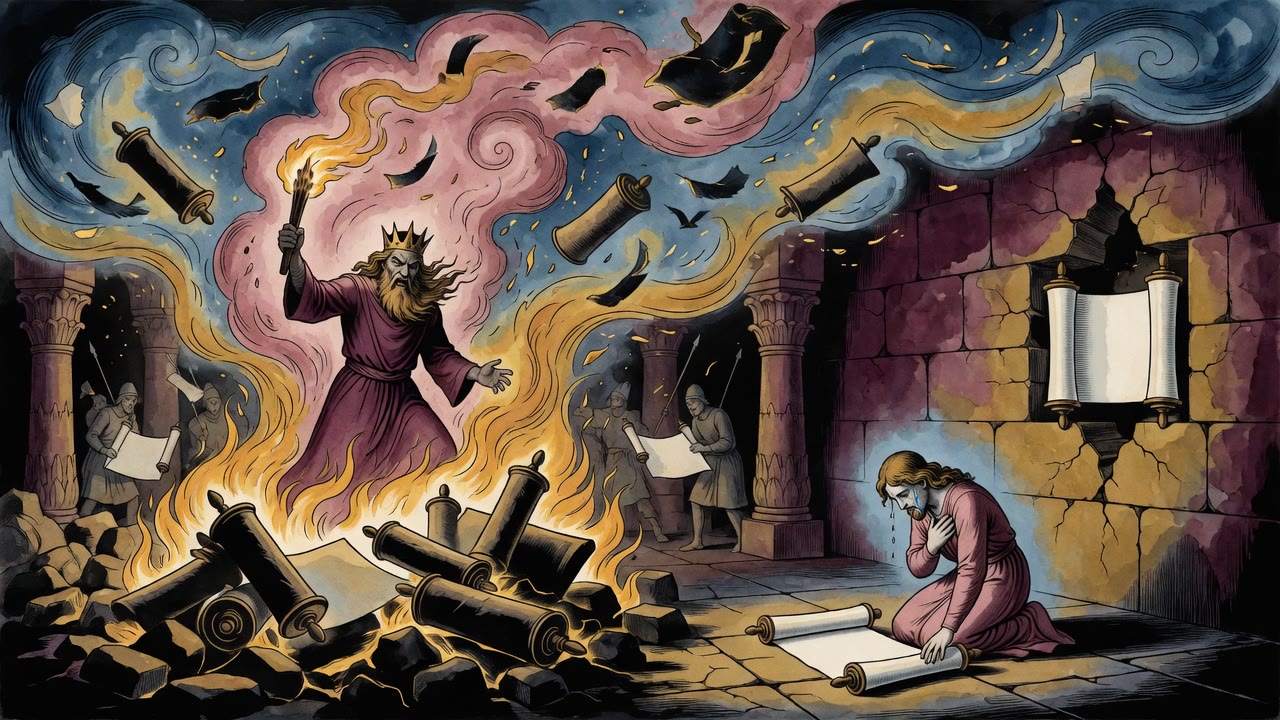
Then he said the rest of it. Let the king issue a decree that every male child of the Israelites shall be killed at his birth.

Nobody interrupted. Pharaoh had walked into that room without a plan and was walking out with one, and relief is quicker than arithmetic, so the relief arrived before the sentence did. Boys only. No soldiers in the quarter, no burning, nothing that would stop the brick count for a single day. The girls would grow up under Egyptian roofs, and in twenty years there would be no arm in that whole people to lift a spear.

The Part That Needed Hands

Job was not finished, because a decree is only a sentence until somebody carries it. Now let the king summon the Hebrew midwives, he said, and let him command them in accordance with this plan.

So the entire weight of it came down on two pairs of hands, and the hands belonged to women who were not in the room and had not been asked. A counselor can draft the end of a generation in four sentences. He cannot reach into a birthing room and make a woman's fingers close.

How That Throne Had Been Filled

Egypt understood exactly what it was proposing, because Egypt counted its own sons with enormous care.

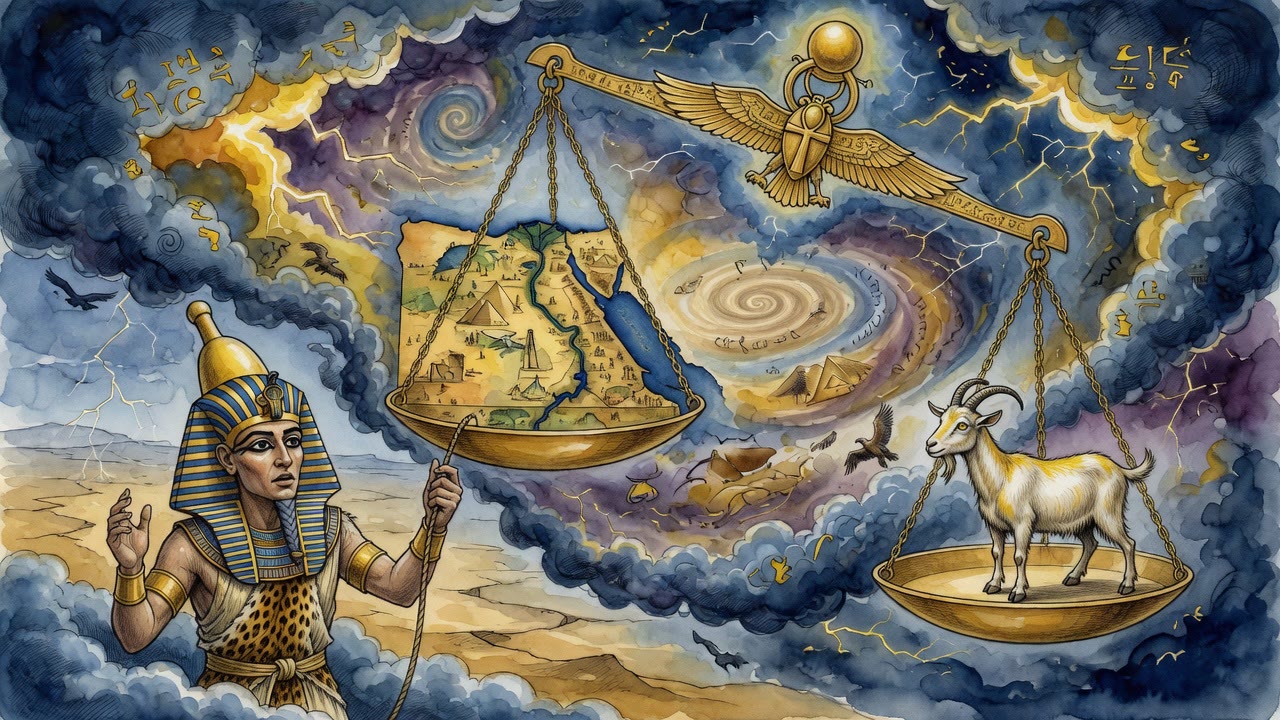
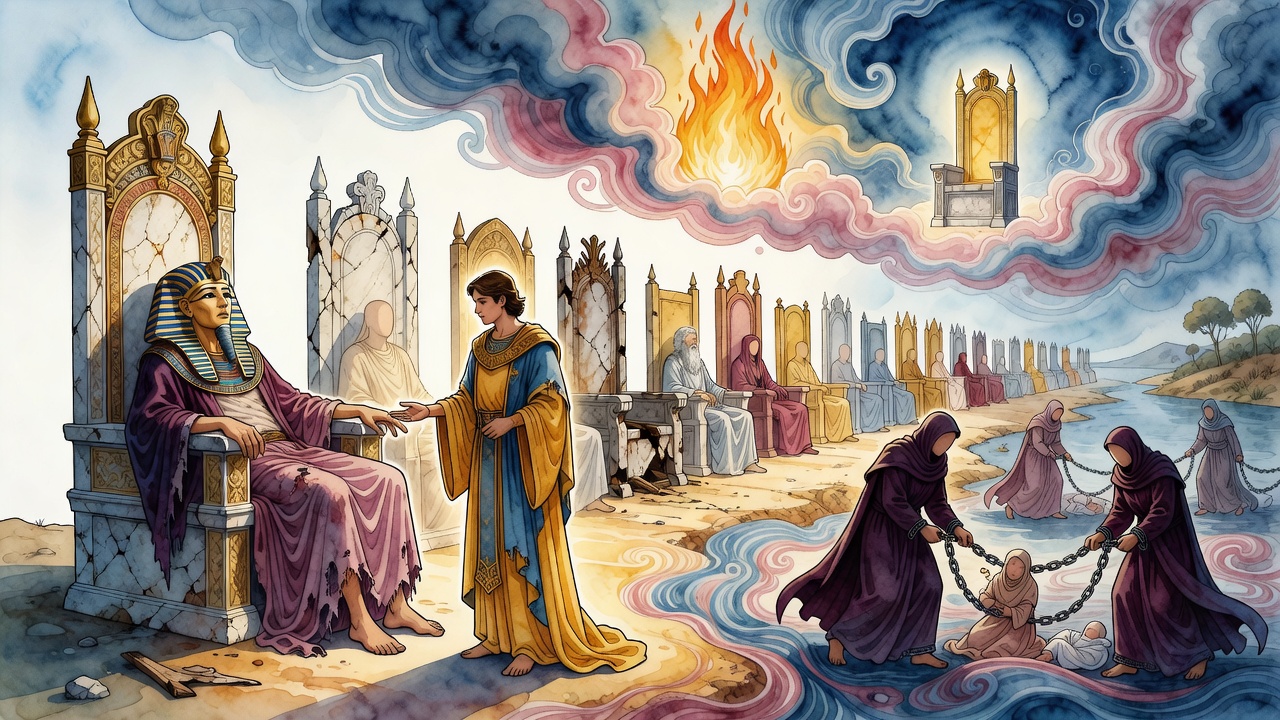
An earlier king of that land lay dying while his flesh gave off a stench like a carcass thrown into a field in the heat of summer. He had made his arrangements years before. His second son, Adikam, had been given a wife at ten years old, Gedidah the daughter of Abilat, and she bore him four sons; then Adikam took three more wives and got eight more sons and three daughters off them. So when the sickness finally seized the old king by the throat, there was no gap for the crown to fall through. He sent for the boy, and they made him king over the land in his father's place.

That was the machinery of the house that heard Job speak. Wives assigned, sons stacked up, a crown carried across a sickroom before the body cooled. Men who arrange their own next generation that carefully know the value of what they are taking when they empty another man's house of its boys.

The Name Moses Asked For

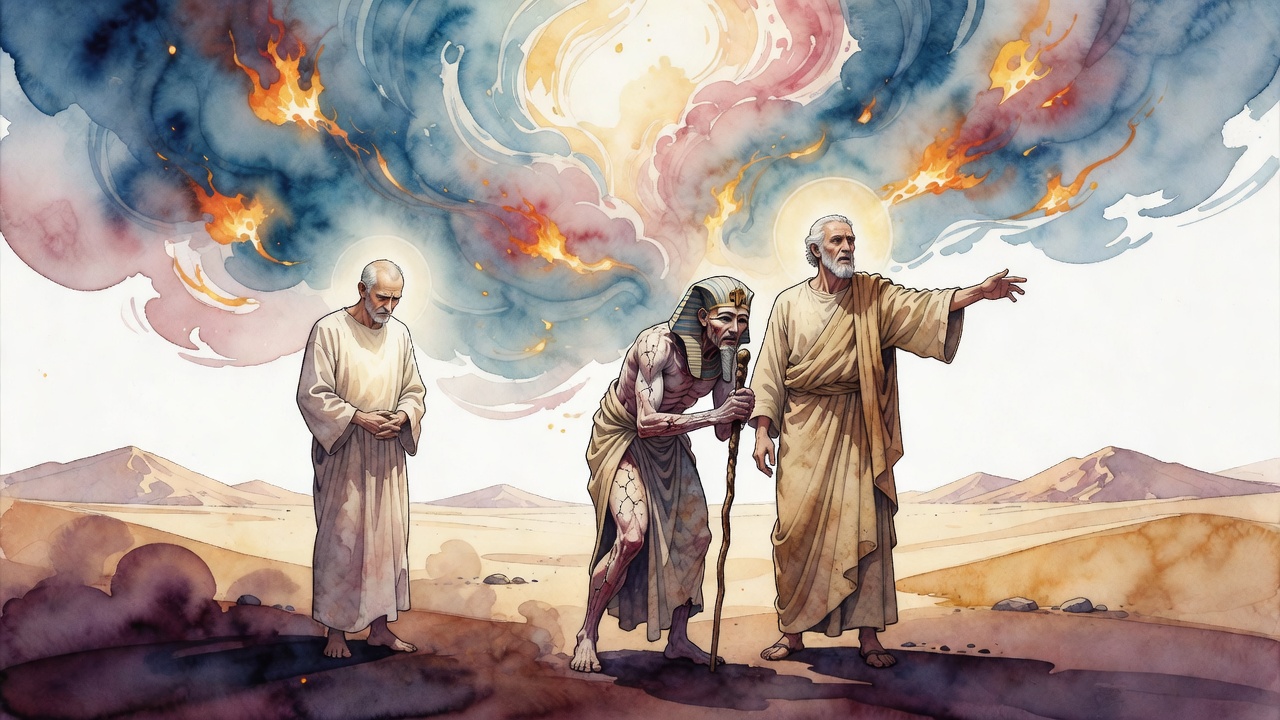
Years later a man who had run away from that same throne stood in front of a bush that burned and would not go out.

Moses had one request before he would go back. He wanted the Great Name, because he knew the children of Israel were going to ask him who had sent him, and he did not want to be standing in front of a nation of slaves with nothing in his mouth.

What he got was not a password. "My Name is according to My acts," God told him. When I judge My creatures I am called Elohim. When I rise up to do battle against sinners I am Lord of hosts. When I wait with long patience for the improvement of a sinner, My name is El Shaddai. When I have mercy upon the world, I am Adonai.

Then the answer turned away from the palace entirely and pointed at the slave quarters. But to the children of Israel, God said, you shall say that I am He that was, that is, and that ever will be, and He that is with them in their bondage now, and He that shall be with them in the bondage of the time to come.

Moses had asked for a name big enough to carry into Pharaoh's court. He was handed one that already knew there would be another bondage after this one.


← All myths
From the tradition

Sources

3 sources

The texts behind this telling. Some cards carry a translation of the source; others are our own retelling of it, and each card says which. Every card links out to the original.

Legends of the Jews 4:16Legends of the Jews

Retold in our words. Read the original at the link below.The Legends of the Jews by Louis Ginzberg (1909) · Public Domain

The Israelites, despite all their hardships, weren't just surviving; they were thriving. They were multiplying so rapidly that the land was "full of them as with thick underbrush." And the Egyptian leadership? They were starting to sweat. They saw these growing numbers, not as a blessing, but as a potential threat.

So, the Egyptians, filled with anxiety, went to Pharaoh. “What do we do?” they pleaded. “They’re everywhere, and all our hard labor isn’t slowing them down!” Pharaoh, clearly not the creative type, turned to his advisors. “Ideas, people! I need ideas!”

One of these counselors, a man named Job from the land of Uz – yes, that Job, the one from the Bible – stepped forward. "Your Majesty," he said, "your idea of hard labor was a good start, and we should definitely keep that up. But… what if there’s a war? All those Israelites could turn against us! We'd be overwhelmed."

Here's where the story takes a truly dark turn. Job, in a moment of what he probably thought was strategic brilliance, suggested a chilling solution. "Let the king decree," he proposed, "that every male child born to the Israelites shall be killed at birth. Then we won't have to worry about them in case of war."

The sheer brutality of the suggestion?

"Now," Job continued, ever the pragmatist, "let the king summon the Hebrew midwives and command them to carry out this plan."

So, a decree was proposed. A decree that would forever alter the course of history, setting the stage for heroism, defiance, and ultimately, liberation. What happened next? Well, that's a story for another time, but it all starts with this moment of fear, prejudice, and the chilling proposal to extinguish a generation. How often does fear drive us to make decisions that we later regret? How easily can a simple story, a simple fear, become a legend steeped in both sorrow and hope?

Full source
Legends of the Jews 4:201Legends of the Jews

Retold in our words. Read the original at the link below.The Legends of the Jews by Louis Ginzberg (1909) · Public Domain

Your name is tied to your identity, your reputation. But what about God’s name? What does that tell us?

The story goes that Moses, finally convinced he had to be the one to lead the Israelites out of Egypt, had one big question. He was about to face Pharaoh, the most powerful man on earth. He was about to rally a nation enslaved for generations. He needed to know: What name should he invoke? What name would carry the weight of God's authority?

He entreated God to reveal His Great Name. Moses, standing before the burning bush, pleading for this vital piece of knowledge. He knew the Israelites would ask. He had to be prepared.

God, in His infinite wisdom, gave an answer that is both profound and a little… slippery.

"Thou desirest to know My Name?" God responded. "My Name is according to My acts." The idea here is that God's name isn't a static label, but rather a reflection of His actions and attributes. God continued, "When I judge My creatures, I am called Elohim, 'judge'." The very name we use when speaking of God's power to bring justice reflects that specific quality. When I rise up to do battle against the sinners, I am Lord Zebaot, 'the Lord of hosts'." Here, God's name embodies strength, might, and divine armies ready to fight for what's right. When I wait with longsuffering patience for the improvement of the sinner, My name is El Shaddai." A name that evokes nurturing, provision, and the capacity to endure even when we falter. "When I have mercy upon the world, I am Adonai." Showing us the compassion and grace that define so much of the divine.

Each name, a facet of the divine. Each name, a lens through which to understand God's relationship with the world.

But then comes the kicker. "But unto the children of Israel," God instructs Moses, "shalt thou say that I am He that was, that is, and that ever will be, and I am He that is with them in their bondage now, and He that shall be with them in the bondage of the time to come."

Did you catch that?

It’s a bit of a paradox. On the one hand, God is giving all these different names, each tied to a specific quality or action. On the other hand, He's saying, "Just tell them 'I am.'"

What does it mean?

Maybe it's that God's essence transcends any single name or definition. That He is both the stern judge and the compassionate provider. That He is present in our suffering and promises a future of redemption. That, ultimately, God is beyond our full comprehension, but always with us, in every moment.

Remember Moses at the burning bush, and the powerful, many-sided answer he received. And remember that even though we can’t fully grasp the divine, we can connect with it through faith, action, and, yes, even through names.

Full source
Legends of the Jews 4:143Legends of the Jews

Retold in our words. Read the original at the link below.The Legends of the Jews by Louis Ginzberg (1909) · Public Domain

Our story focuses on a king – unnamed in Ginzberg's Legends of the Jews from which this tale is drawn – facing his own mortality. He decides it’s time to name an heir. And who gets the nod? Adikam, his second son.

Adikam wasn't exactly a seasoned ruler at this point. He was, in fact, only ten years old! To secure his future, the king arranged a marriage for him with Gedidah, the daughter of Abilat. And Gedidah? She delivers the goods, bearing him four sons. But Adikam wasn't done there. Oh no. He went on to take three more wives, adding eight more sons and three daughters to the royal mix.

Back to the king. His health was failing rapidly. And I mean really failing. Yikes.

Faced with this grim reality, the king knew the end was near. So, he summoned Adikam, his chosen successor. And right then and there, he officially made him king over the land in his place. The transfer of power was complete.

What does this all mean? We see a glimpse into the world of ancient succession, where even a child could be king, and where royal lineage was everything. But it also shows us the very human side of power. The dying king, desperate to secure his legacy. Adikam, thrust into leadership at a tender age, surrounded by a rapidly expanding family. A reminder that even in the grandest of legends, the most basic human dramas are always playing out. What kind of king will Adikam be? And how will he manage such a large and complex family? Well, that's a story for another time…

Full source