6 min read

Job Stayed Silent When Pharaoh Sought a Cure in Blood

Leprous Pharaoh asked how to heal. Balaam said bathe in Israelite blood. Job disapproved, said nothing, and heaven marked the silence for a year of pain.

Curated by Arthur · Told by Maggid ·
Table of Contents
  1. The Advice That Emptied the Room
  2. What Silence Cost
  3. While Egypt Tightened the Bricks
  4. When Pain Finally Touched Pharaoh's Skin

Job stood in Pharaoh's court and watched a cure get named that would fill the Nile with children.
Job Stayed Silent When Pharaoh Sought a Cure in Blood Click for full size

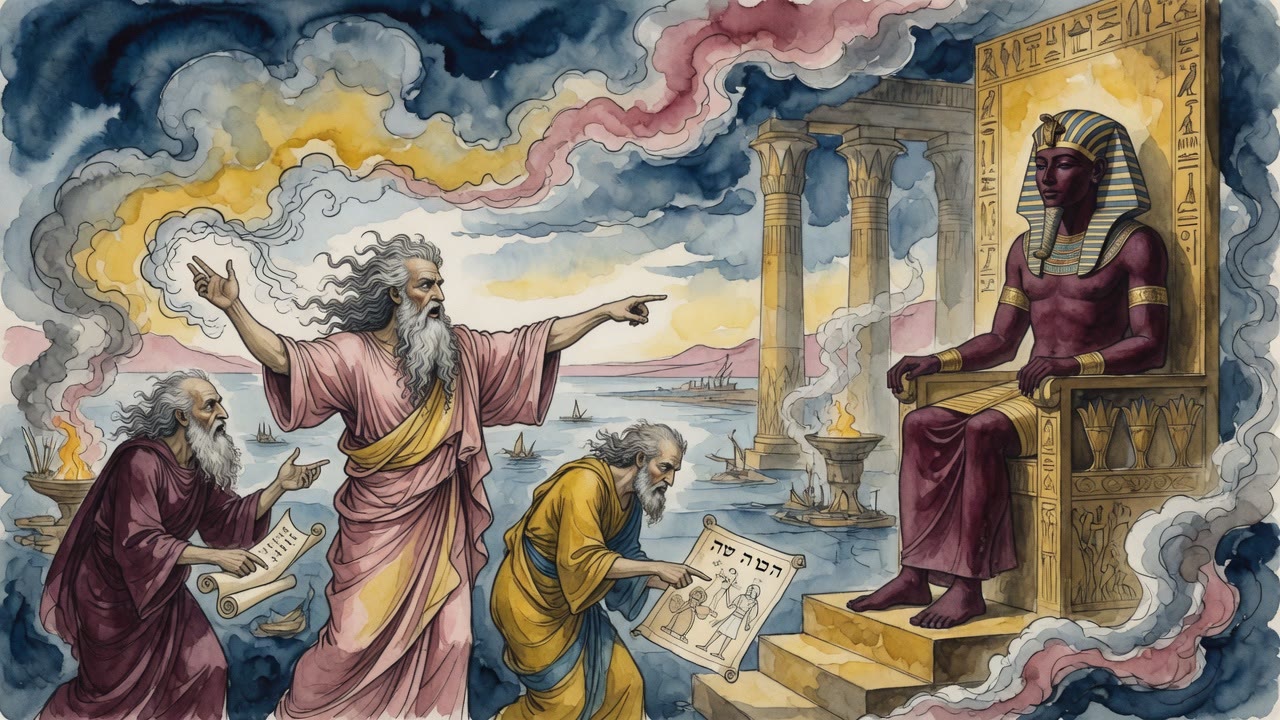
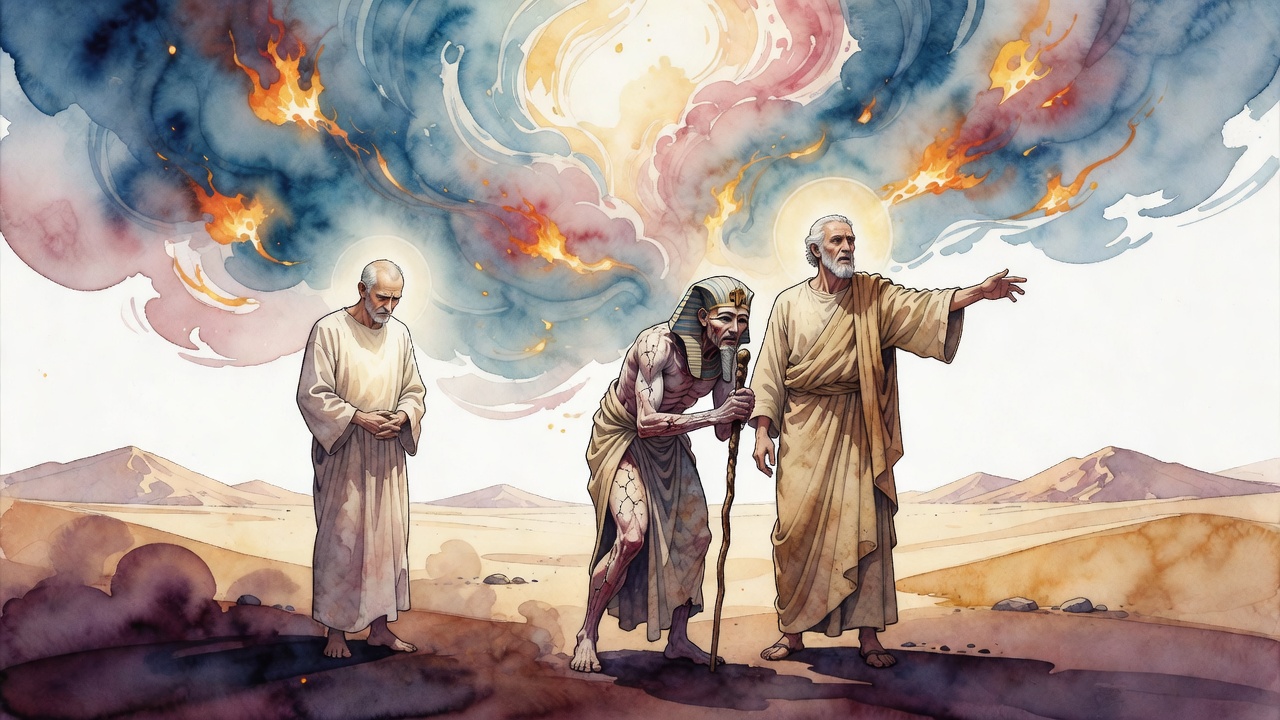
Pharaoh was rotting. Leprosy covered him from scalp to heel, and the more he punished Israel the worse his skin became, until the palace stank of salves and fear. Bandages yellowed. Courtiers held their breath when he passed. He called three counselors and made them look at what was left of his body. Balaam spoke first. Jethro stood second. Job stood third, a righteous man from among the nations, known for a clean name and a careful tongue.

The Advice That Emptied the Room

Balaam did not hedge. Slaughter Israelite infants, he said, and bathe in their blood. The disease will leave.

The words hit the tiles and stayed there. No one moved to sweep them up. Jethro's face closed as if a door had slammed from the inside. He left the court that day, quit Egypt, and ran for Midian rather than share air with the plan. Job felt the same horror rise in his throat. Heat climbed his neck. His hands hung useless at his sides. He did not speak the protest. He did not strike the table. He did not follow Jethro out the door. He stood, disapproved in the quiet of his chest, and let the session end without a protest on the record.

Heaven counted that silence as a kind of speech.

What Silence Cost

The year that followed broke Job open. Loss stacked on loss until the man who had kept his tongue clean in a murderous room learned what it meant when God marks a withheld word. Flocks gone. Children gone. Skin gone to sores. Friends arrived with speeches that did not help. The same traditions that damn his quiet also refuse to throw him away. When the suffering ended, wealth and years returned to him in this world, poured out so a righteous gentile would take his payment here and hold no claim on the world to come for a virtue that stopped at the teeth.

He had not swung the knife. He had also not stopped the hand that would. Between those two facts the silence hardens into a sentence that follows him longer than any plague mark on Pharaoh's arm.

While Egypt Tightened the Bricks

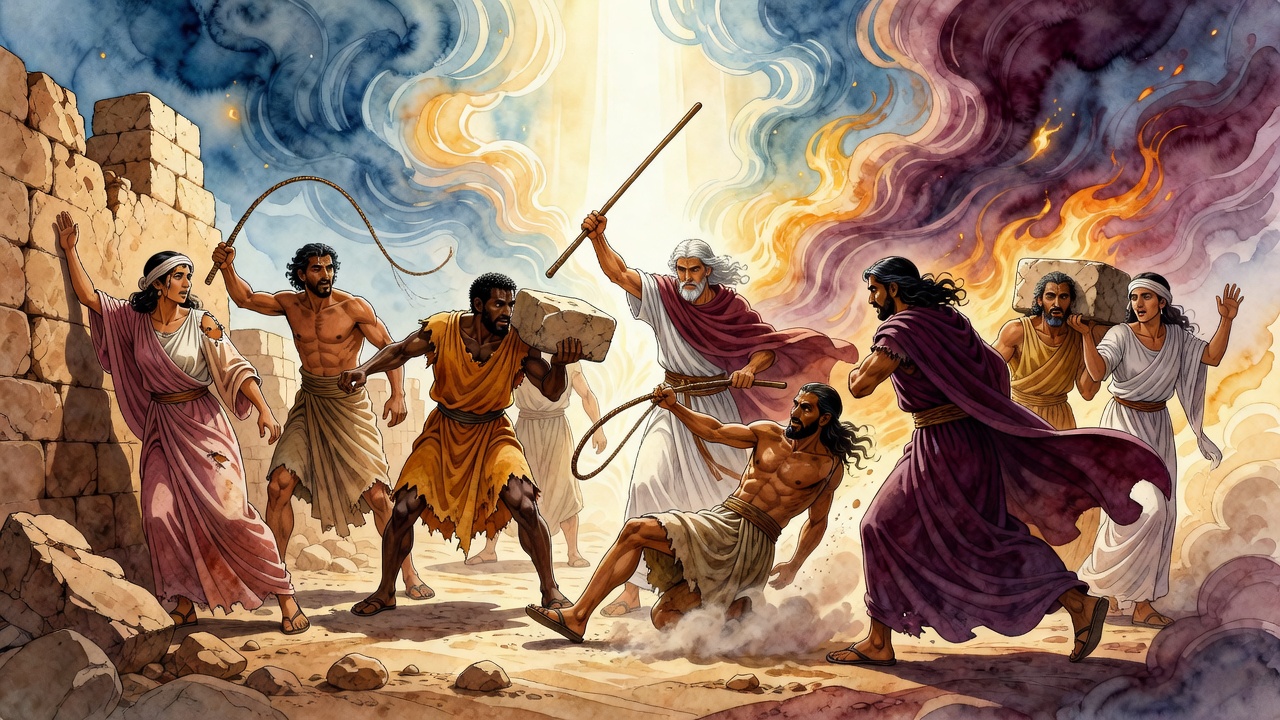
In those same worst years, Israel staggered under a six-month choke. Work quotas rose. Corpses went into walls when the tally of bricks fell short. The stench of death stuck to the work gangs and rode home on their clothes. Mothers stopped asking which child would be next for the river. They already knew the answer could be any of them.

Moses had already tried once to stand as a leader and been shoved back by Dathan and Abiram, men who preferred the Pharaoh they knew to a redeemer who might make the palace angrier. Moses fled to Midian for two more years and tended sheep that did not argue about timing. When God finally drove him back from the bush at Horeb, the people were thinner and the officers meaner, and the memory of infant blood was still wet in the kingdom's habits.

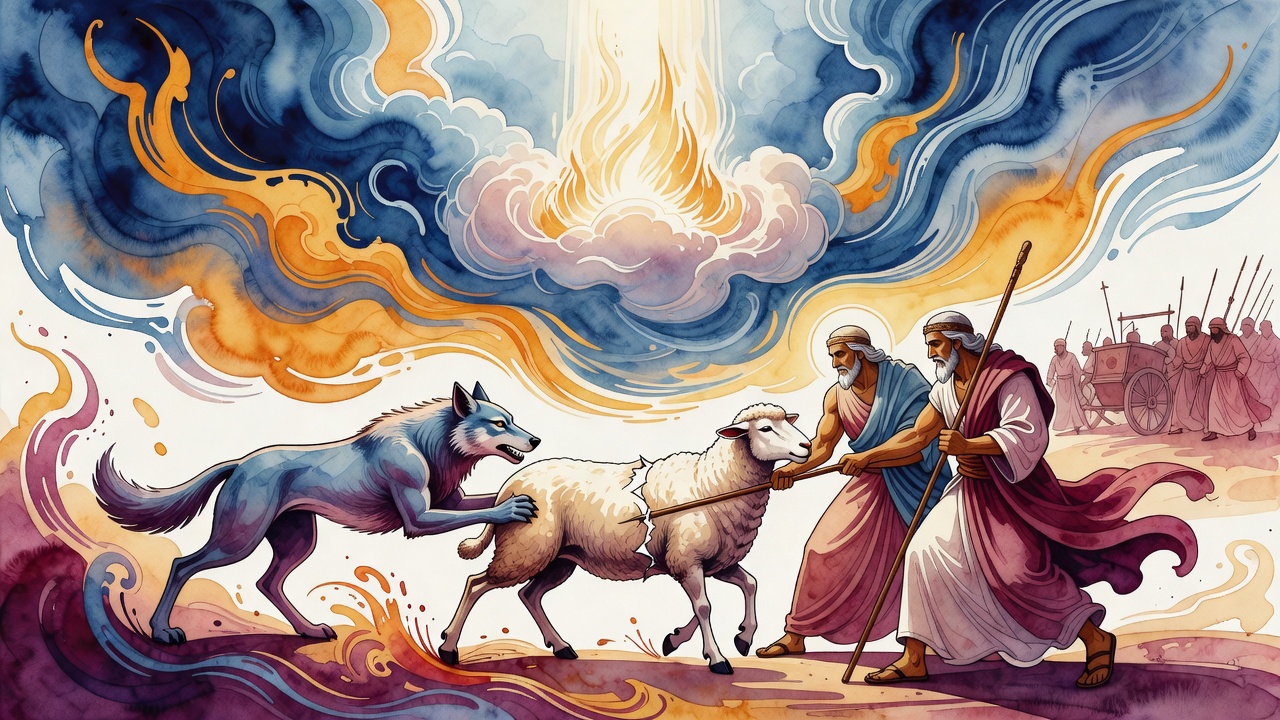
Moses returned with Aaron at his side. Two Israelite officers met them without a blessing. If you are truly God's ambassadors, they said, let God judge between us and Pharaoh. If you came on your own account to force a redemption, let God judge between you and Israel. Before you arrived, they said, Egypt only suspected we wanted out. Now the suspicion is proof, and the proof is paid in bodies pressed into brick.

Then came the image that stuck in Moses' ear for the rest of the mission. Israel is a poor sheep in a wolf's jaws. Pharaoh is the wolf. You two are shepherds who grab the other end. The sheep tears in half between the rescue and the teeth, wool and blood and no clean winner.

Moses had no clean answer. He had a staff and a brother and a Name he was still learning how to carry into a palace that already knew how to kill children for a bath.

When Pain Finally Touched Pharaoh's Skin

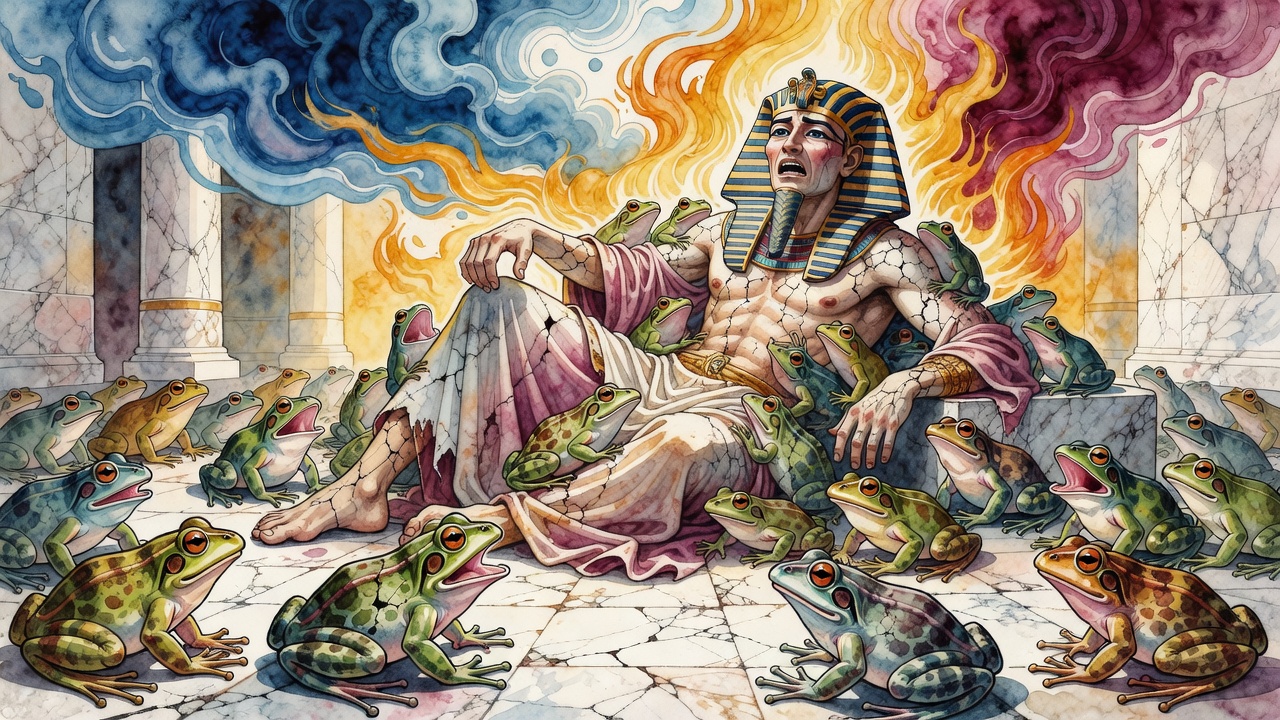
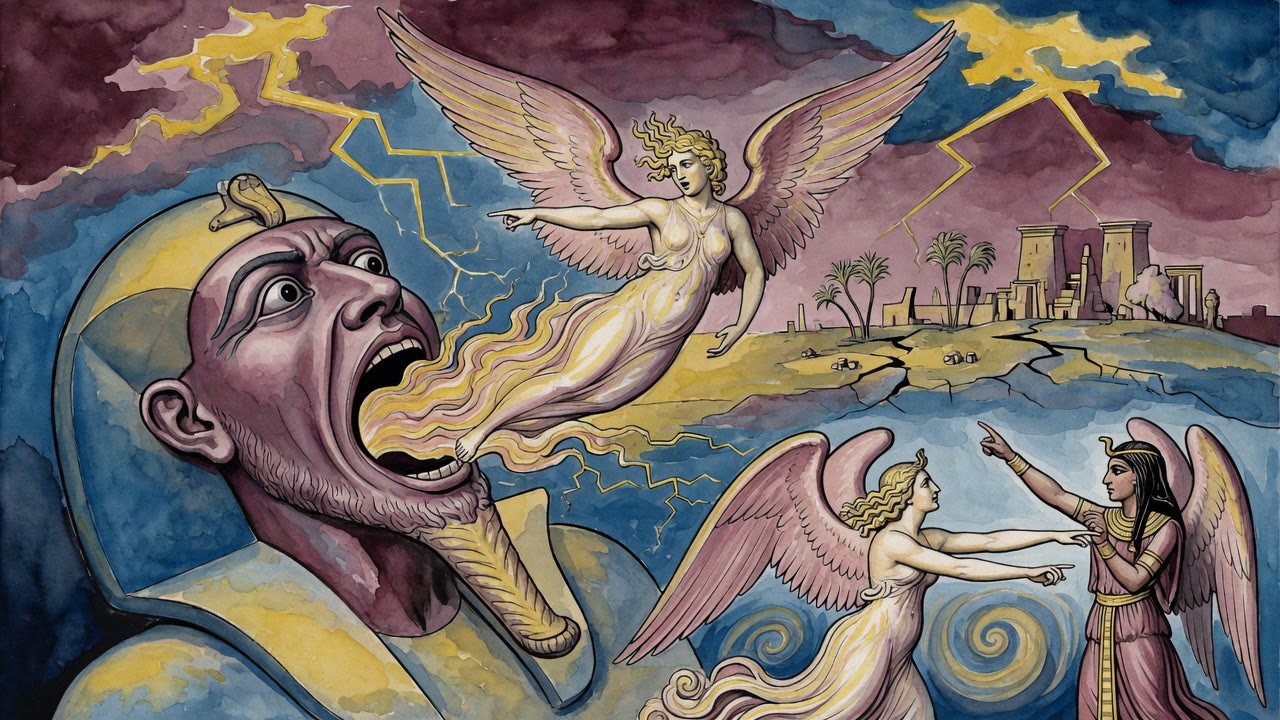
Blood in the Nile was spectacle. It ruined water and still left Pharaoh's body alone. He could order servants to dig new wells and keep his own cup full. The frogs were different. They climbed his bed, his ovens, his clothes. They found the places a king thinks private. They pressed cold bodies against warm skin until even a leper-king could not pretend the judgment was someone else's problem. He bargained then, promised release if Moses would only pray the plague off, and Moses made him wait until the fixed span of the plague had run, because even mercy keeps time. When the frogs died they did not crawl home. They stacked in heaps, four piles for every Egyptian who had to shovel them, and the land reeked until men gagged in the streets.

The frogs knew the doorways. They filled Egyptian markets and turned aside from Hebrew thresholds. Judgment had learned the difference between the house that held the knife and the house that held the victims.

Joseph, generations earlier, had fed Egypt through famine with a good eye and buried treasure for a later day, gold under sand near seas and rivers for the righteous who would come after. The land that once lived on his grain now lived on Israelite backs. The counselor who would not speak when blood was proposed had already shown what righteousness looks like when it refuses the last inch of courage. Moses walked into that inheritance with the officers' sheep still bleeding in his mind and Pharaoh's skin still waiting for a pain sharp enough to make a tyrant flinch.

Job's silence sat behind all of it like a closed door. Somewhere a man of clean reputation had chosen not to become Jethro, and the children paid first, and the frogs came later, and none of that order was an accident.


← All myths
From the tradition

Sources

4 sources

The texts behind this telling. Some cards carry a translation of the source; others are our own retelling of it, and each card says which. Every card links out to the original.

Legends of the Jews 4:137Legends of the Jews

Retold in our words. Read the original at the link below.The Legends of the Jews by Louis Ginzberg (1909) · Public Domain

Legends of the Jews turns to Dathan and Abiram Rejected Moses When He First Tried to Lead.

Can you blame Moses for turning right around and heading back to Midian? He spends another two years there before God finally appears to him at Horeb and gives him the direct command: "Go and bring forth My children out of the land of Egypt."

Let's not forget what life was like for the Israelites in those final years of bondage. Things were rough. Really rough.

These were the worst years. Why? Because God, in an attempt to punish Pharaoh for his cruelty, afflicted him with a terrible plague – leprosy that covered him from head to toe. You'd think that might make someone reconsider their life choices. Nope. Not Pharaoh. He doubled down.

Instead of repenting, Pharaoh remained "stiffnecked," and desperately sought a cure. And here's where the story gets truly dark: he consulted his advisors – Balaam, Jethro, and Job – on how to be healed.

Balaam's advice? Slaughter Israelite children and bathe in their blood.

I know, it's horrific.

Jethro, horrified by the suggestion, immediately fled to Midian. Good for him! But what about Job?

Well, Job disapproved, but he stayed silent. He didn’t actively participate, but he also didn't protest. in the story, God punished Job with a year of suffering for his silence.

But here's the twist: God later showered Job with blessings, granting him wealth, happiness, and a long life. Why? So that this righteous gentile would receive his reward in this world, and not have a claim on the rewards of the world to come. That acts of goodness deserve recognition, even if the motivations are complex, and that God’s justice plays out in ways we might not always understand.

What does this all tell us? Perhaps it's a reminder that leadership is rarely easy. That even when we're doing what we believe is right, we might face suspicion and opposition. And maybe, just maybe, it's a reflection on the complexities of morality, choice, and consequence – and the idea that even silence can have a profound impact.

Full source
Legends of the Jews 4:254Legends of the Jews

Retold in our words. Read the original at the link below.The Legends of the Jews by Louis Ginzberg (1909) · Public Domain

That feeling, that impossible tension, isn’t new. The Israelites felt it acutely during their enslavement in Egypt, and their frustration boiled over in a truly heartbreaking way.

Egypt is at the height of its power, and the Israelites are enduring a horrific period of intensified suffering. According to Ginzberg's retelling in Legends of the Jews, this lasted a full six months. Moses, thinking he was doing the right thing, leaves Aaron in Egypt and heads to Midian. When Moses finally returns – at the tail end of this reign of terror – he and Aaron are confronted by two Israelite officers. And these men aren't exactly offering a heroes' welcome.

They lash out, blaming Moses and Aaron for making things worse, not better. Their words are like a punch to the gut. "If ye are truly the ambassadors of God," they say, "then may He judge between us and Pharaoh." But then comes the real sting: "But if you are seeking to bring about the redemption of Israel on your own account, then may God judge between you and Israel!"

Ouch.

They accuse Moses and Aaron of being responsible for the unbearable stench of death, of Israelite corpses used as bricks when their work quotas couldn't be met. It’s a gruesome image, and it emphasizes the absolute despair of the situation. Before Moses and Aaron arrived, the Egyptians only suspected the Israelites were yearning for freedom. Now, as these officers bitterly point out, the Egyptians are fully aware of it. And their response is brutal.

The officers then deliver a devastating analogy. They describe Israel as a "poor sheep that has been dragged away by a wolf." Pharaoh is the wolf, of course. But here’s the twist: Moses and Aaron, the would-be shepherds, aren't necessarily helping. "The shepherd pursues the robber, catches up with him, and tries to snatch the sheep from his jaws, and the wretched victim, pulled this way by the wolf and that way by the shepherd, is torn to pieces. Thus Israel fares between you and Pharaoh." image for a moment. The well-intentioned shepherd, trying to rescue the sheep, actually exacerbates the animal's suffering. The sheep is torn apart by the competing forces. It's a brutal assessment, born of profound pain and a sense of utter powerlessness.

What do you do when the very people trying to help you are, in your eyes, making things worse? It's a question that resonates far beyond the ancient story of the Exodus. It speaks to the complexities of leadership, the unintended consequences of even the noblest intentions, and the agonizing reality that sometimes, the path to freedom is paved with unimaginable suffering.

Full source
Legends of the Jews 4:295Legends of the Jews

Retold in our words. Read the original at the link below.The Legends of the Jews by Louis Ginzberg (1909) · Public Domain

A reader can think of them as just escalating horrors, but sometimes the sequence itself holds a clue. the story turns to the plague of the frogs, the second of the ten, and see what we can uncover.

Pharaoh, stubborn as ever, had witnessed the Nile turn to blood, but it hadn't really touched him personally. According to Legends of the Jews, by Ginzberg, it was the plague of frogs that finally got his attention. Why? Because, unlike contaminated water, these frogs caused him actual, physical suffering. Picture it: frogs everywhere, hopping, croaking, invading every space. It's one thing to hear about a problem; it's another to have it literally underfoot.

In desperation, Pharaoh declared he'd let the people go if only Moses would get rid of the slimy invaders. Moses, ever the negotiator, agreed to intercede with God. But here's a fascinating detail: Moses couldn’t just snap his fingers. He told Pharaoh he would pray for him the following day. Why the delay? Apparently, the divinely ordained seven-day period for the plague hadn't yet run its course. There's a sense of cosmic timing at play, even in the midst of this chaotic event.

What happened to all those frogs? They didn't just hop away. They all died. And not gradually, either. They perished swiftly, so quickly that they couldn't even retreat to the water. The result? An unimaginable stench. We're told that the Egyptians gathered the dead frogs into massive heaps – four heaps per person! Can you imagine the scale of that?

But here's where the story gets even more interesting. According to the legends, these frogs, these instruments of divine wrath, seemed to know who their targets were. They filled the marketplaces, stables, and dwellings of the Egyptians, but they retreated before the Hebrews. As Ginzberg puts it, they distinguished between the two nations, knowing "which of them it was proper to abuse, and which to treat with consideration. Even in chaos, there's a sense of divine order and discrimination.

And the frogs didn’t just spare the Hebrews within Egypt; they also respected the boundaries of the land itself. They didn't encroach on neighboring nations. In fact, the legend goes that they even helped settle a long-standing border dispute between Egypt and Ethiopia! The extent of the frog invasion became the definitive marker of Egyptian territory. Wherever the frogs appeared, that was Egypt. Anything beyond that line belonged to Ethiopia. Who would have thought that a plague of frogs could be used as a land survey marker?

It's more than just a bizarre episode in the Exodus narrative. It shows us that even in moments of divine intervention, there's timing, order, and even a strange kind of... respect? The frogs, despite being a plague, seemed to operate within certain boundaries, both physical and ethical. And sometimes, the most unlikely of creatures can play a part in shaping history and defining borders.

Full source
Legends of the Jews 1:348Legends of the Jews

Retold in our words. Read the original at the link below.The Legends of the Jews by Louis Ginzberg (1909) · Public Domain

Legends of the Jews turns to Joseph's Vision of Egyptians.

Joseph earned the title "the God-fearing one", an honorific he shared with only a few other luminaries like Abraham, Job, and Obadiah. Why? Because of his incredible kindness and generosity. According to Legends of the Jews, Joseph had a truly ayin tovah, a "good eye," a liberal spirit, in all his dealings. When he gave to his brothers, he gave abundantly. It wasn't just enough bread to stave off hunger; it was enough for the children to play with, to crumble as kids do (Ginzberg).

Joseph's kindness wasn’t limited to his family. He was a provider for the entire world during the devastating years of famine. We can picture him, a shepherd to his flock, ensuring everyone had enough to eat. The Egyptians, it's said, initially hoarded grain, enraging the people. But Joseph? He made sure the grain was sold to all who came seeking it, and for this, he was blessed (Ginzberg).

Here's where it gets interesting. Joseph became incredibly wealthy through these sales, but the price increases weren't his doing; they were imposed by the Egyptians themselves. What did he do with all that wealth? According to the legends, he buried a vast treasure of gold, silver, and precious stones in four secret locations: near the Red Sea, on the banks of the Euphrates, and in two spots in the deserts near Persia and Media.

The story continues that Korah, a figure known for his rebellion against Moses, discovered one of these hiding places. Later, Antoninus, the Roman emperor, found another. But the remaining two? They remain lost, hidden by God, reserved for the righteous in the days of the Mashiach, the Messiah (Ginzberg).

As for the rest of his wealth, Joseph gave it away, partly to his brothers and their families, ensuring their prosperity, and partly to Pharaoh, who added it to his royal treasury. It's a fascinating picture: wealth earned, wealth shared, and wealth hidden away for a future, more righteous time. What would you do with that kind of abundance?

Joseph's story, as told in the Torah and amplified by the legends, isn't just about a man who rose to power. It's about a man who embodied generosity, kindness, and a deep sense of responsibility for others. It makes you wonder: what kind of legacy are we building? What treasures, both material and spiritual, are we leaving for the future?

Full source