Israel Was Torn Between Wolf and Shepherd
Officers told Moses that Israel was a sheep pulled by Pharaoh the wolf and by rescuers until the body tore, while Egypt planned total erasure.
Table of Contents
 Click for full size
Six Months of Worse
Egypt stood at full height, and Israel's suffering sharpened for six full months. Moses left Aaron in Egypt and went to Midian, thinking the path was right. When he returned at the tail of that terror, two Israelite officers met him without welcome and without the patience of men who still believe speeches can stop blood.
They did not ask for comfort. They accused. If Moses and Aaron were truly ambassadors of God, let God judge between them and Pharaoh. If they sought redemption on their own account, let God judge between them and Israel. The stench of death hung in their words: Israelite corpses used as bricks when quotas failed. Before the brothers arrived, Egypt only suspected a hunger for freedom. After them, Egypt knew, and answered with worse. The officers spoke as men who had carried bodies and still had quotas due at dawn.
Sheep, Wolf, Shepherd
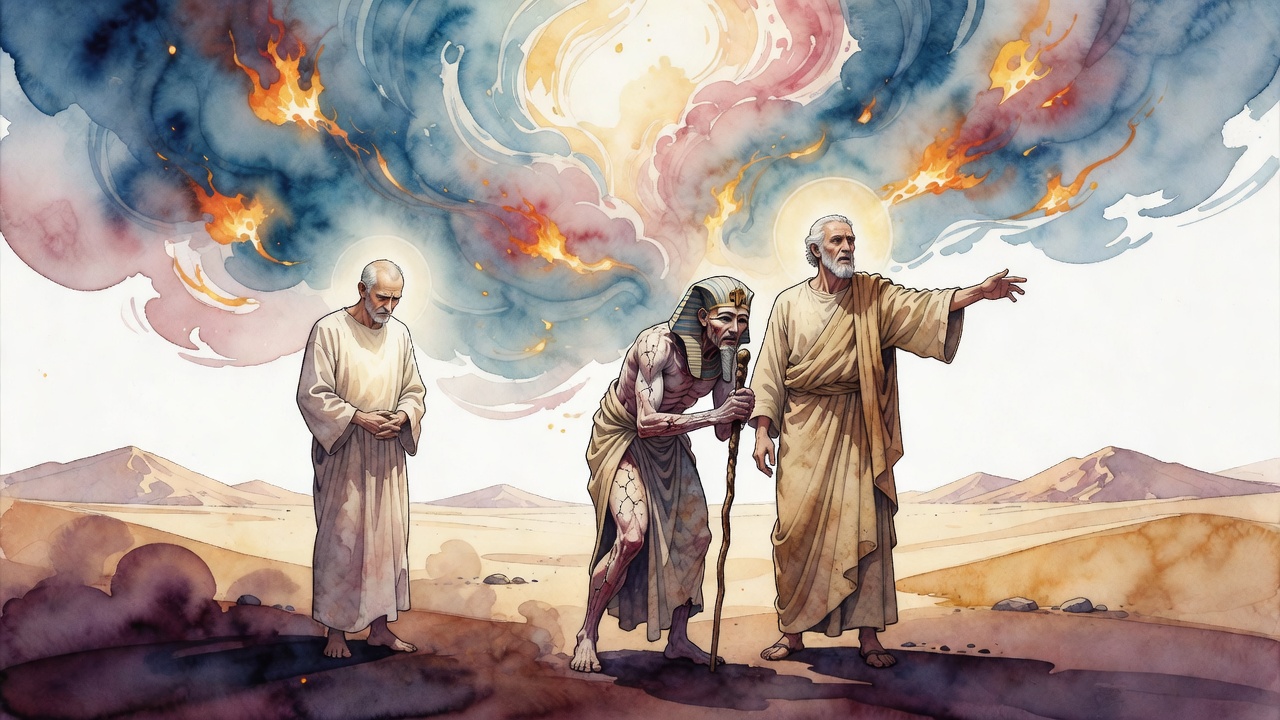
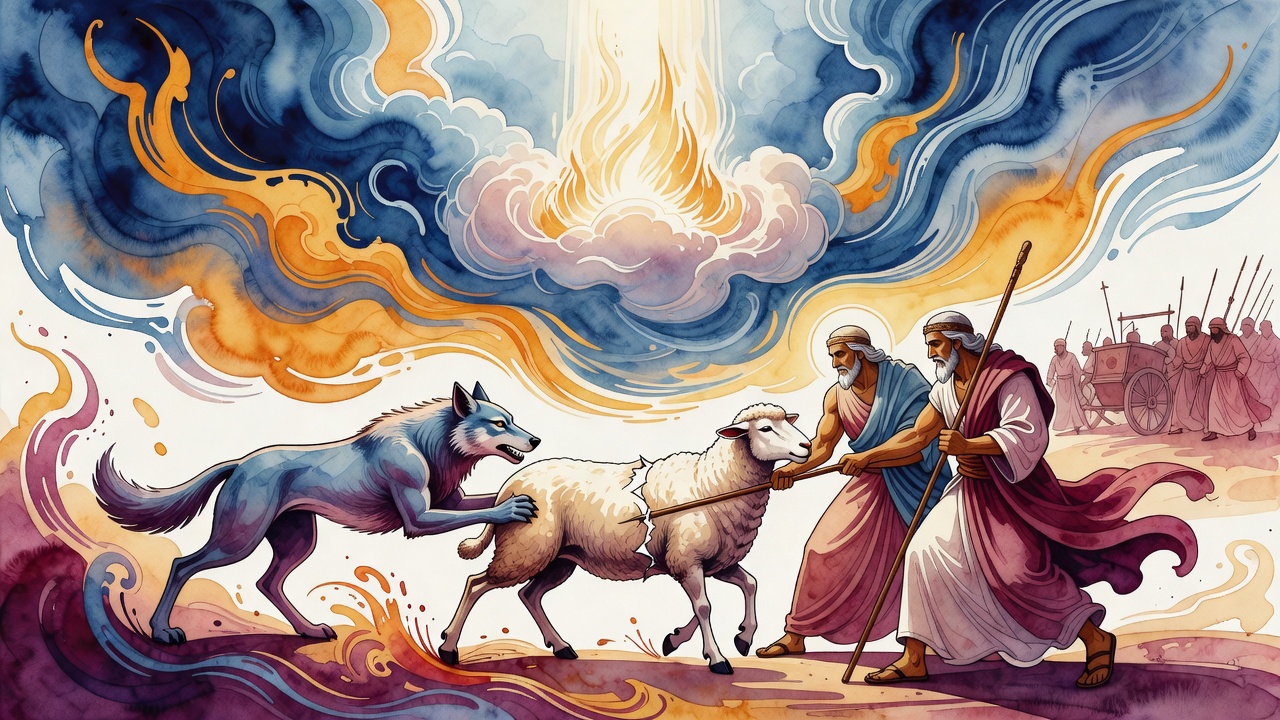
The officers gave a picture that still cuts. Israel was a poor sheep dragged by a wolf. Pharaoh was the wolf. Moses and Aaron came as shepherds to snatch the sheep from the jaws. Pulled one way by the wolf and the other by the shepherd, the wretched victim tore to pieces between teeth and rescue.
"Thus Israel fares between you and Pharaoh," they said. Rescue, from inside the jaws, can feel like another set of teeth. The path to freedom ran through a body already stretched past screaming. The parable did not deny that Pharaoh was the wolf. It denied that the sheep could celebrate the shepherd while still being ripped.
Good intentions do not numb a wound when the wound is still open and the quota still stands.
Annihilation, Not Labor
The legends say Egypt's chase was never only about cheap work returned. The obsession was total erasure: every man, woman, and child of Israel gone. God let their war omens run smooth at first. Every preparation pointed to Pharaoh's glory. Horses were ready. Magicians smiled. The trap for the pursuer looked like a road of favor paved for a winner.
Pharaoh the magician foresaw doom for Israel in the wilderness: Moses lost, a generation dying in waste places. He told Dathan and Abiram that Moses led them without knowing where, and that the congregation would lift its voice and be destroyed. He hurried toward what he thought was their end. The end waiting was his own army under water. Certainty blinded him more efficiently than any plague.
Idols in the Camp of the Slaves
When Moses named Nisan as the month of freedom, the people answered with doubt instead of song. Egypt overflowed with their idols. What good had they done to deserve a miracle? They saw their own compromises standing in the houses of their masters, small gods of survival that had kept them company in the brick pits.
Moses answered with a hard mercy. God desires redemption. He pays no heed to the idols. He passes them by. He does not look upon the evil deeds, but upon the good deeds of the pious among them. Freedom would not wait for a perfect slave camp. It would take the spark that still burned and leave the clay gods uncounted in the ledger of that night.
Out With Matzah and Maror
When the nation finally moved, the picture flipped from torn sheep to a people on the road: six hundred thousand families, children on horses, a mixed multitude caught in the current of departure. They followed Moses into the wilderness without stocked rations, carrying leftover matzah and maror from the hurried Pesach meal, unwilling to leave even the taste of the night behind as if forgetting the meal would unmake the freedom.
Snakes and scorpions, the legends say, lay down before them for a time. Trust walked first. Murmuring would come later when water failed and memory shortened. For a stretch of days, the sheep that had been torn between wolf and shepherd became a flock that simply moved, still bruised from the jaws, still following the shepherd who had been blamed for the tearing.
The officers' parable stayed true until the sea closed. Only then did the wolf drown, and only then could the sheep stop feeling every pull as a tear.
Six months of worse taught Israel that a shepherd's arrival can raise a wolf's appetite. The officers were not philosophers of leadership. They were men who smelled death in the brick and still had to face taskmasters at dawn. Their parable of the torn sheep was less poetry than a report from the jaws.
When the mixed multitude and the six hundred thousand finally walked out with matzah crumbs and bitter herbs, the wolf still believed the wilderness would finish what slavery began. Pharaoh's vision of Israel dying without Moses was a half-true map glued to the wrong victim. The sea would grade his homework.
← All myths