Joseph Bound His Brothers to the Pakod Password
Dying in Egypt, Joseph makes his brothers swear the bones and the nation wait for one phrase. Moses later carries the password into Pharaoh's court.
Table of Contents
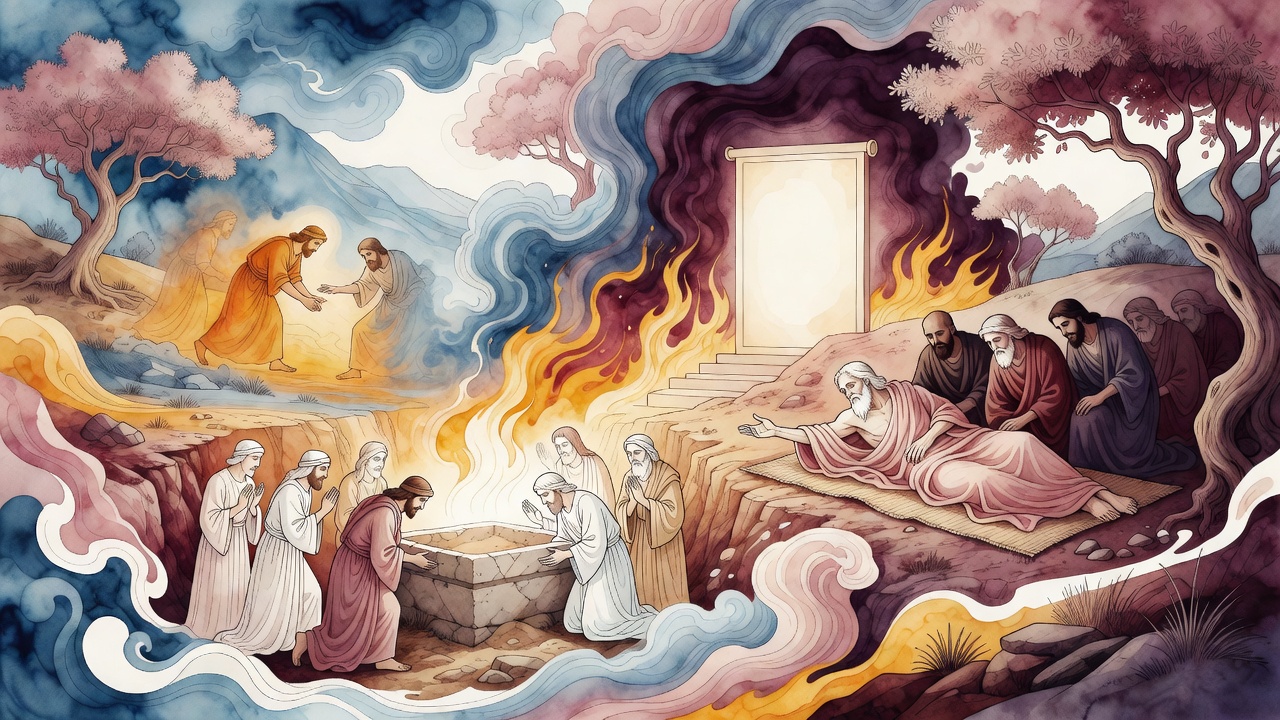
Joseph sat up on the bed with Egyptian linen still on his shoulders and the Land of Israel locked behind his eyes. The palace that once made him second only to Pharaoh smelled of oil and dust. Outside, his sons managed granaries and titles. He did not call them for the oath.
 Click for full size
He called his brothers.
They filled the room the way men fill a threshold they once sold a child across. Joseph's breath came short. He made them swear two things, not one. First, when God visited them, they would carry his bones up from Egypt. Second, they would not leave until a redeemer stood among them and spoke a password older than any of their scars.
The Oath on Their Shoulders
Joseph knew Egypt. A viceroy's sons might be told the wish was too large, too foreign, too much like stealing a national treasure from the river kingdom. Egyptians would remember how he buried Jacob with honor and argue that only a man of that rank could demand another return. His brothers carried no Egyptian rank. The oath sat on their shoulders like a load of stone.
He pressed harder. They must not rise from bondage on a rumor. They must wait for the words pakod pakadeti, "I have surely visited you." Joseph had not invented the phrase. He had taken it from Jacob, who took it from Isaac, who took it from Abraham. Four generations had kept a sentence ready for a night no one yet lived through.
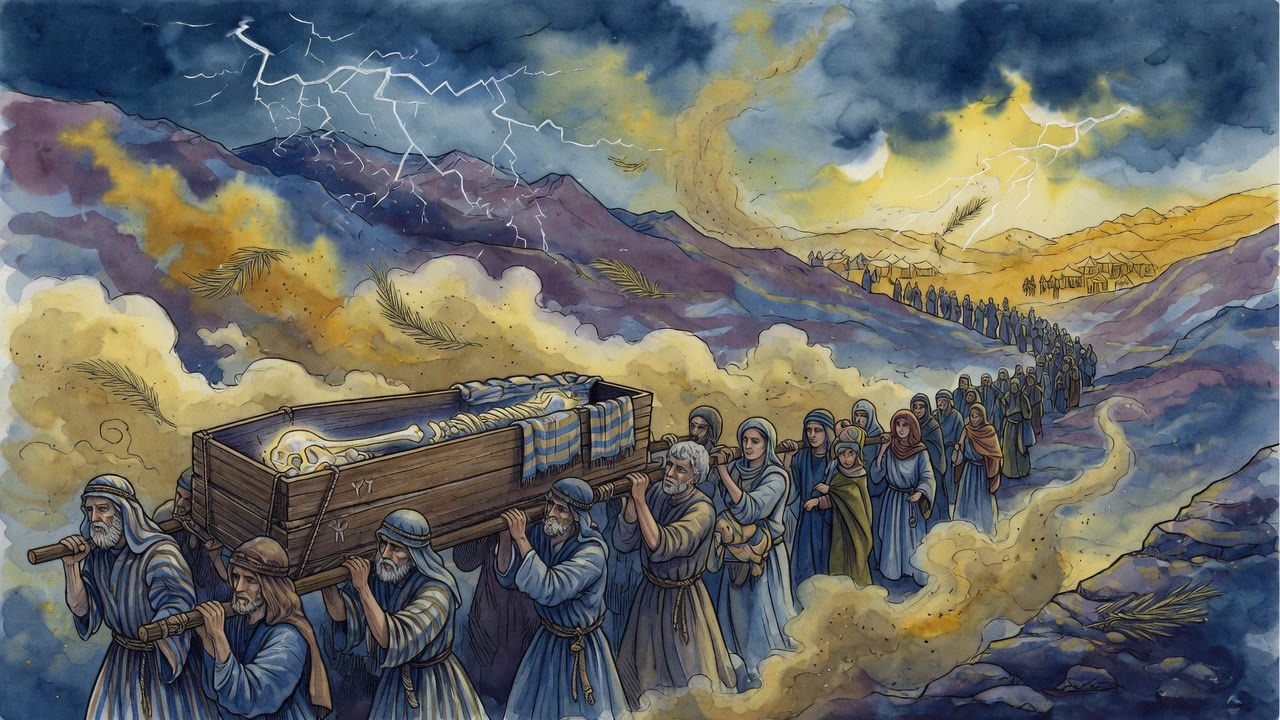
Joseph died with that chain closed around the family's throat. His body went into a coffin. The password stayed awake. Brothers left the death room slower than they had entered it, as if the oath had weight they could feel in the knees. Outside, Egyptian guards watched a Hebrew funeral without understanding that the real cargo was a sentence, not a corpse.
The Name That Changes With the Act
Centuries later a man stood before a bush that burned without ash and asked for a name strong enough to face a throne. Moses had already tried to refuse the mission. Now he asked what he should say when Israel demanded proof.
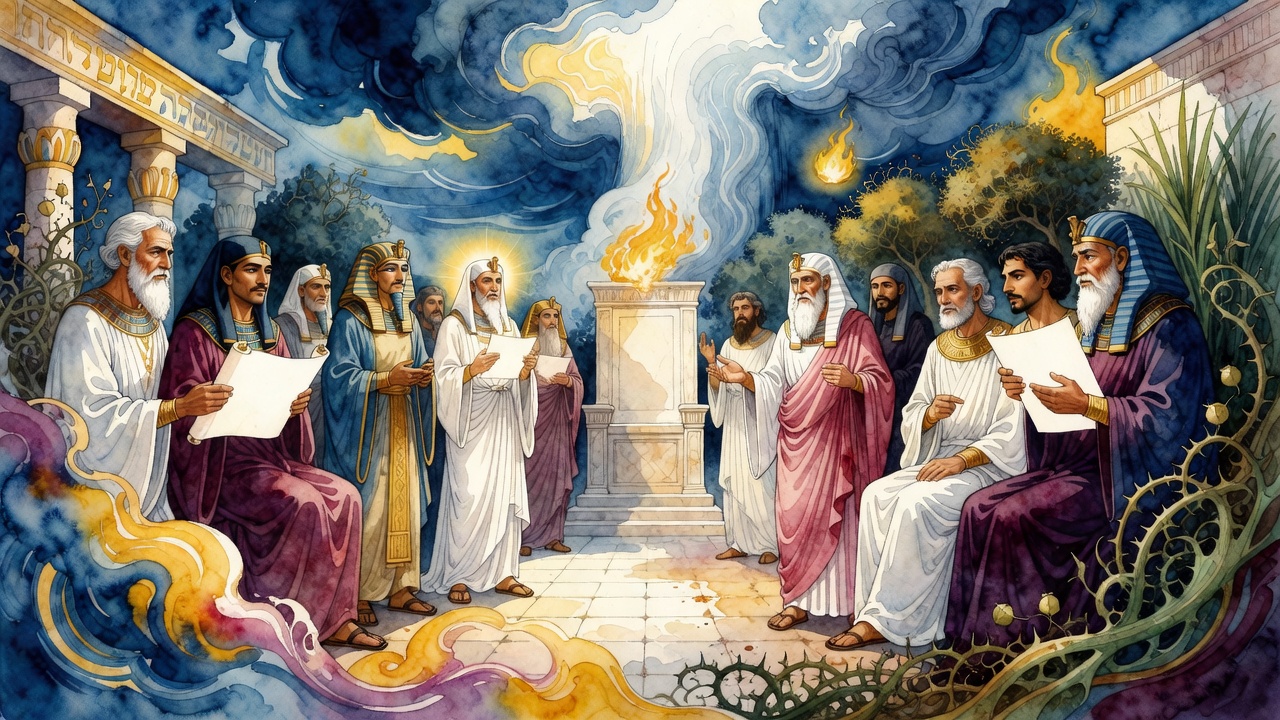
God answered that the Name moves with the deed. In judgment, Elohim. In war against the guilty, Lord of Hosts. In long patience with a sinner still unfinished, El Shaddai. In mercy on the world, Adonai. Names were not labels pinned to a fixed face. They were how heaven arrived in a given hour.
For the children of Israel the answer tightened further. Moses was to say that God was, is, and will be, and that God is with them in this bondage and will be with them in every bondage still ahead. Heat from the bush still seemed to sit in his palms when he turned toward Egypt. The password Joseph had planted met a Name that refused to leave the brick pits empty. Moses left the mountain carrying both: a phrase the elders would test, and a presence that claimed the present tense of slavery as its own address. He walked with a staff that had not yet learned to bite, and with a mouth already loaded with words no brickmaker had heard in generations.
The Rod That Bit and Became Wood
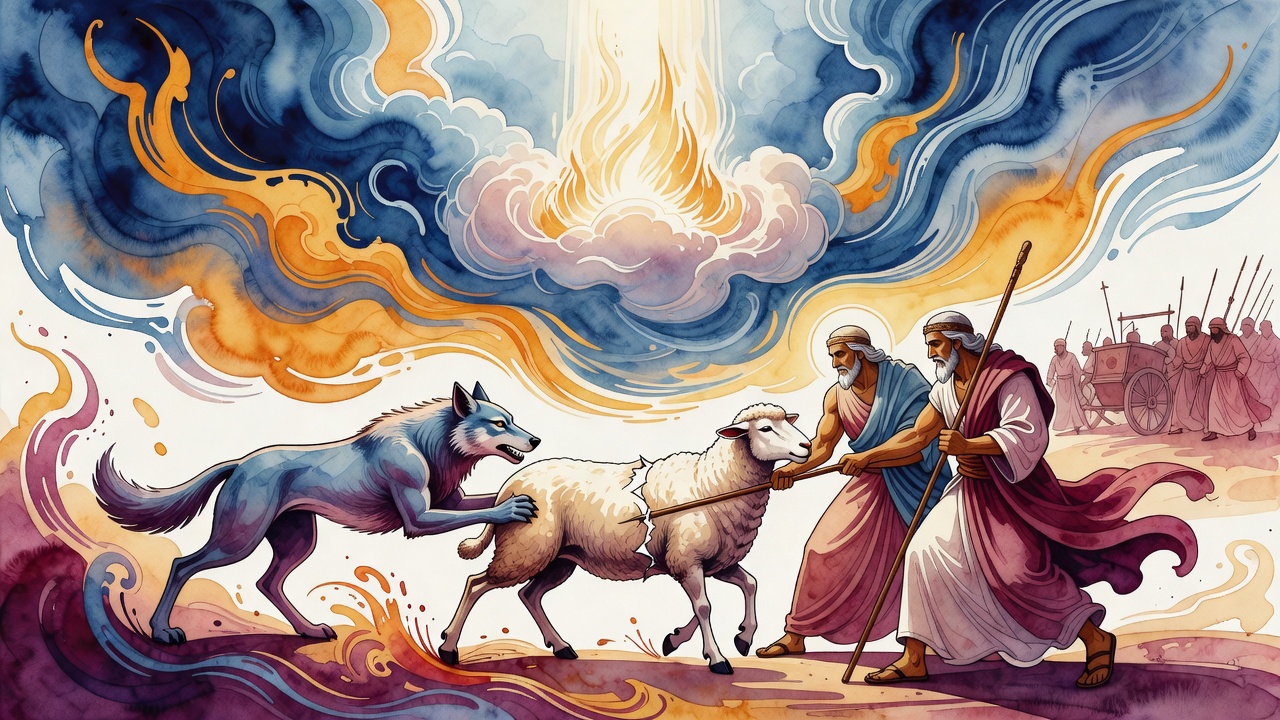
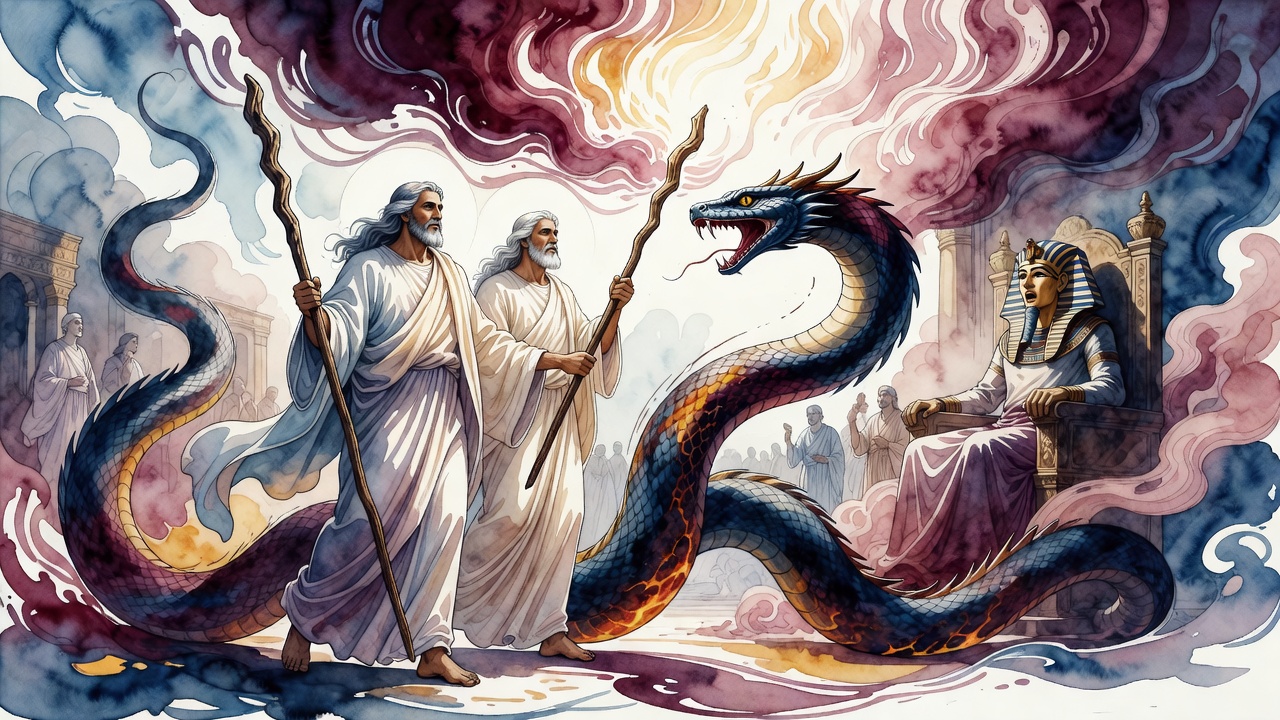
God told Moses to cast his staff on the ground. The wood twisted, thickened, and opened a mouth of scales. A serpent lay where a shepherd's tool had been.
The double meaning cut two ways at once. When Moses spoke ill of Israel, he borrowed the serpent's venom. Slander of the people was not strategy. It was a bite aimed at the wrong body. At the same time the serpent pointed toward Pharaoh, the great dragon lying in Egypt's rivers, hacking at Israel with imperial teeth. When the serpent stiffened back into wood in Moses's hand, the image promised that even a fanged empire could become a stick without power to bite.
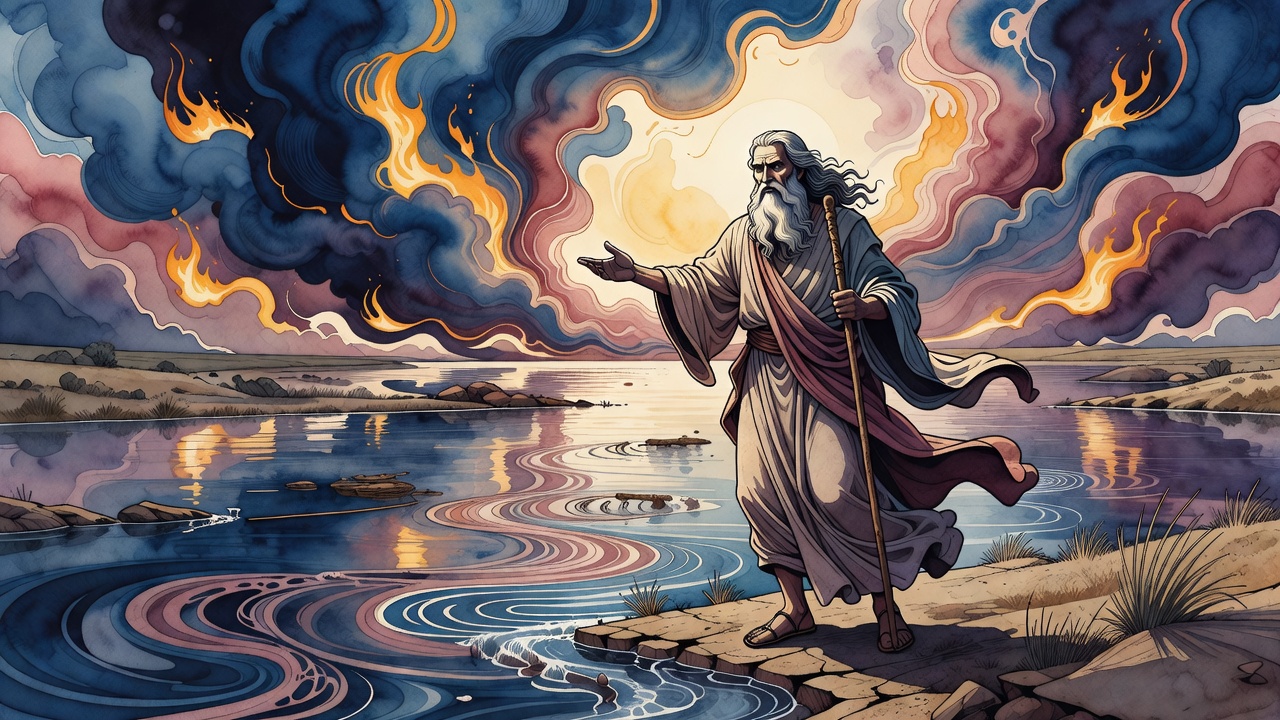
Moses gripped the rod until the heat of the change left his palm. Scales became grain. Grain became staff again. He would need both warnings. He would need a tongue clean of contempt for the slaves, and a hand steady enough to turn a river-dragon into lumber. When he lifted the wood, it was only wood, and that was the point: power can be unmade in the same grip that once feared it.
Nisan and the Idols Still Standing
When Moses finally announced that Nisan would be the month of freedom, the people did not cheer cleanly. Egypt was thick with their own borrowed gods. They asked what good they had done to deserve a road out. The shame of compromise filled the air harder than the smell of brick.
Moses answered with a severity that was also mercy. God desired their redemption. God paid no heed to the idols lining the streets. God did not weigh only their failures. God looked at the good deeds of the pious among them and let that merit pull a whole people toward the door.
The password Joseph had forced into his brothers' mouths had always been about recognition, not perfection. When the visitor finally came, Israel would still be stained, still half-bound to Egypt's images, still arguing with its own unworthiness. The oath did not require clean hands. It required the right words in the right mouth, and a God willing to walk past idols on the way to the firstborn of Egypt.
Joseph's coffin waited under Egyptian sand. The brothers' oath waited in the nation's blood. Moses raised a rod that had been a serpent and spoke a Name that refused to abandon the brick. Elders tested the visitor with the old phrase until the mouth matched the chain. Somewhere between those two men the password closed its circle, and the road out of Egypt began to harden under bare feet still marked with the dust of someone else's gods.
← All myths