Parshat Vaera5 min read

Moses Staff Became a Serpent Before Pharaoh

Pharaoh made the two old Hebrews wait while lesser kings finished their bows. Seventy secretaries were writing the empire in seventy languages. Pens stopped.

Curated by Arthur · Told by Maggid ·
Table of Contents
  1. Birthday of a Man Who Called Himself World-King
  2. The Rod Hits the Floor Twice in Meaning
  3. When Wood Remembers It Was Wood
  4. Speech That Bites and Speech That Heals
Moses Staff Became a Serpent Before Pharaoh Click for full size

Birthday of a Man Who Called Himself World-King

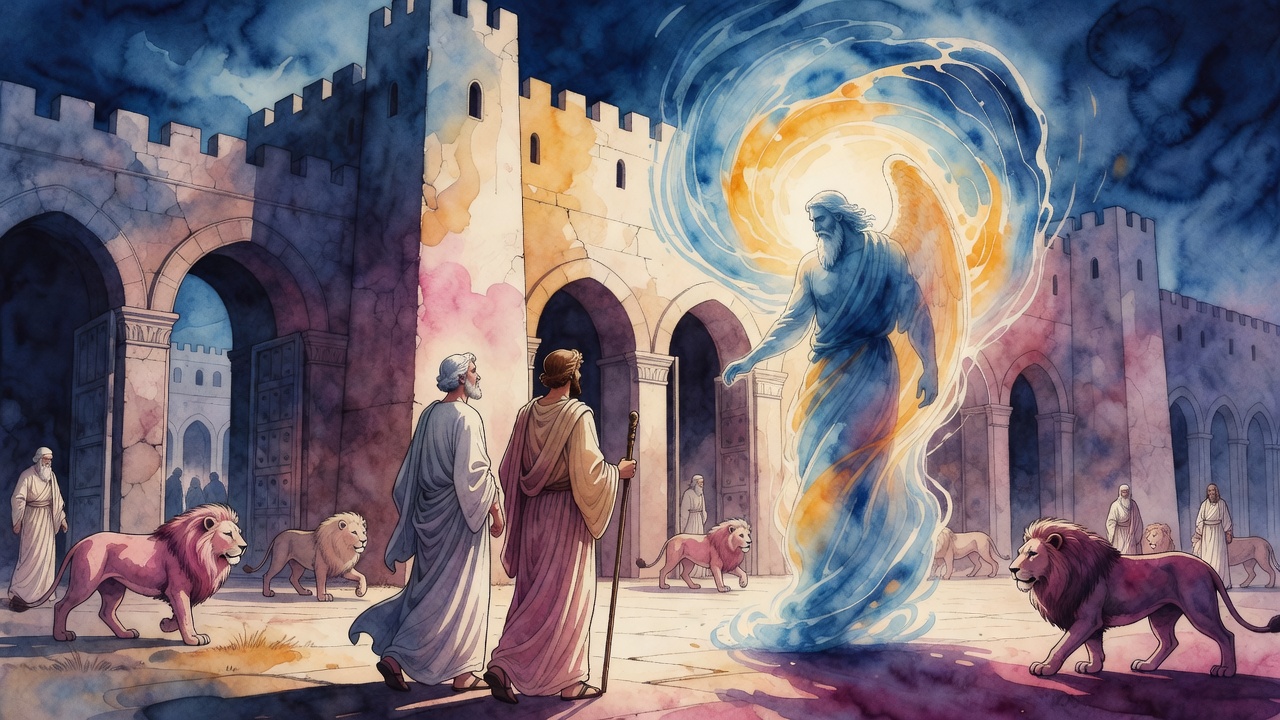
Pharaoh kept a birthday as if the calendar itself bowed. Kings brought homage. Crowns traveled the hall on the heads of men who wanted to keep their thrones. Music and gift and calculated flattery filled the air like perfume that could choke. Into that noise came word that two old Hebrews stood at the door. Pharaoh asked if they had brought him crowns. They had not. He ordered them kept waiting while lesser kings finished their bows. Power likes an audience before it meets a prophet. Delay itself was a kind of speech: the world-king would not interrupt the parade of the small for the arrival of the strange.

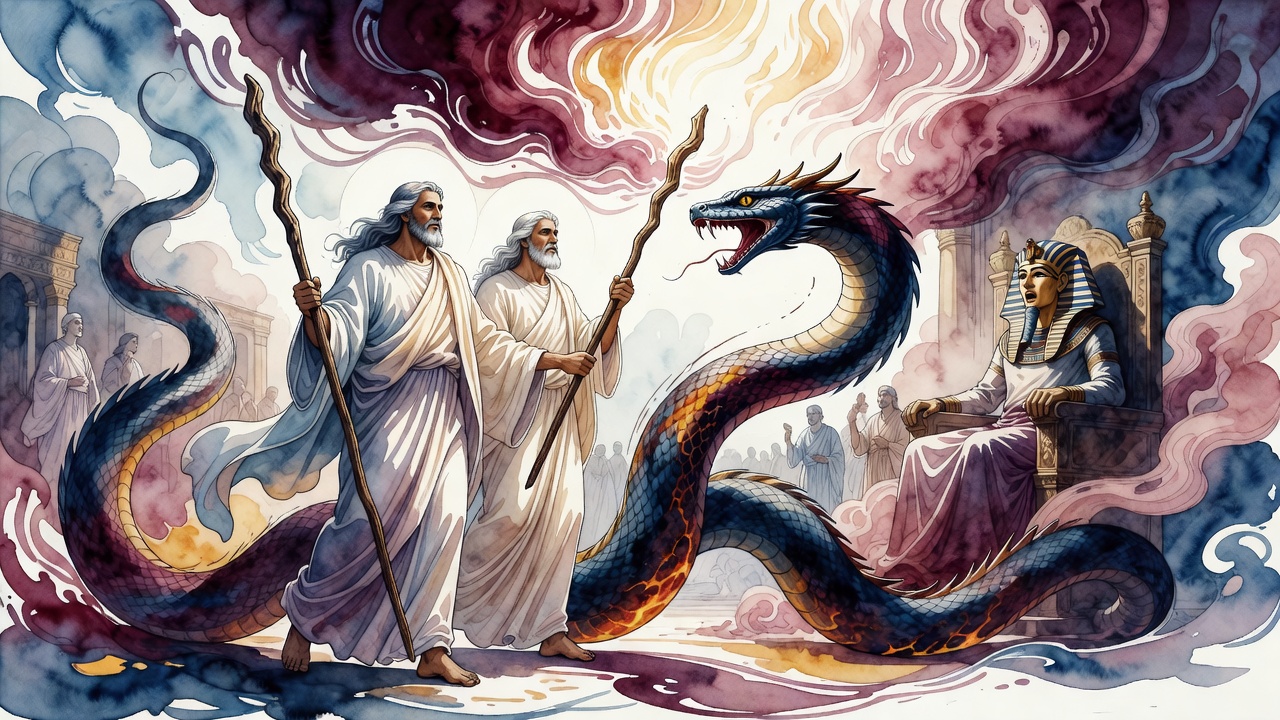
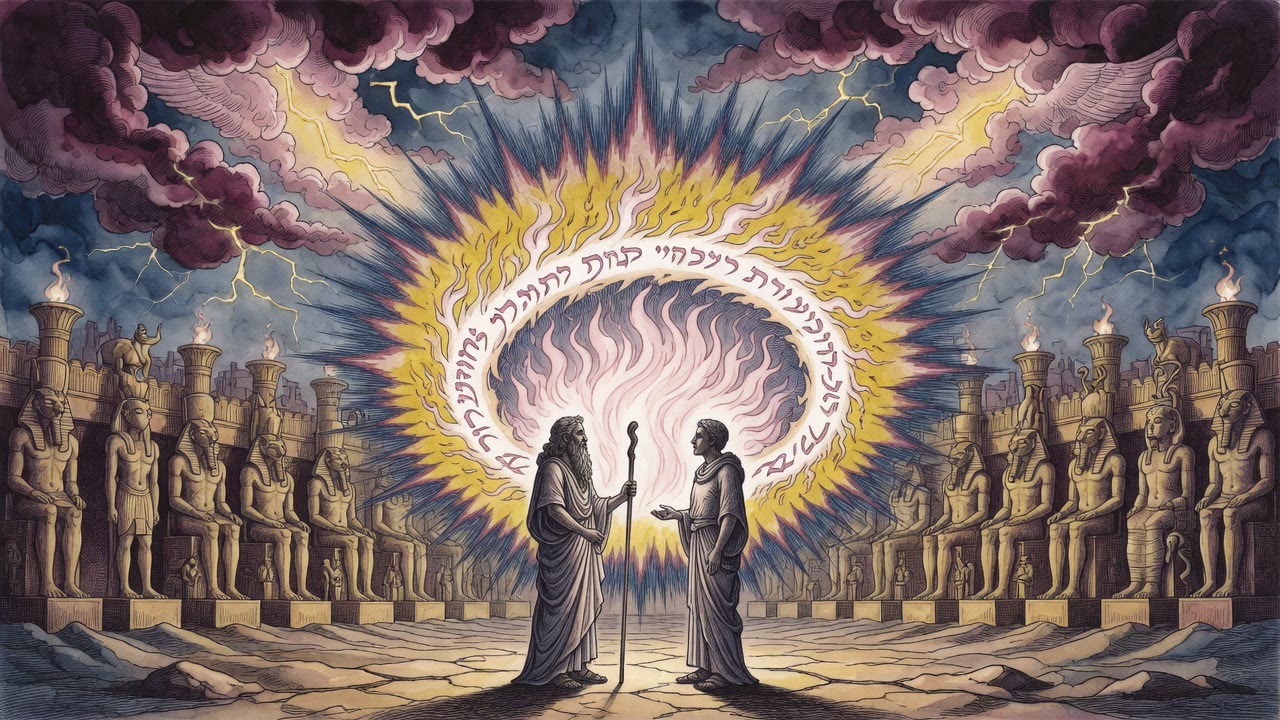
When Moses and Aaron finally entered, seventy secretaries were already at their tables, writing the empire in seventy languages. Pens stopped. Paper slid. The brothers looked, the legends say, like angels: tall as cedars of Lebanon, faces bright as the sun, eyes like the morning star, beards flowing like palm branches. When they spoke, flame seemed to leap from their mouths. Hardened clerks threw themselves to the floor. Bureaucracy met something that did not file under ordinary threat. The gatekeepers of correspondence became the first witnesses, not the last.

The Rod Hits the Floor Twice in Meaning

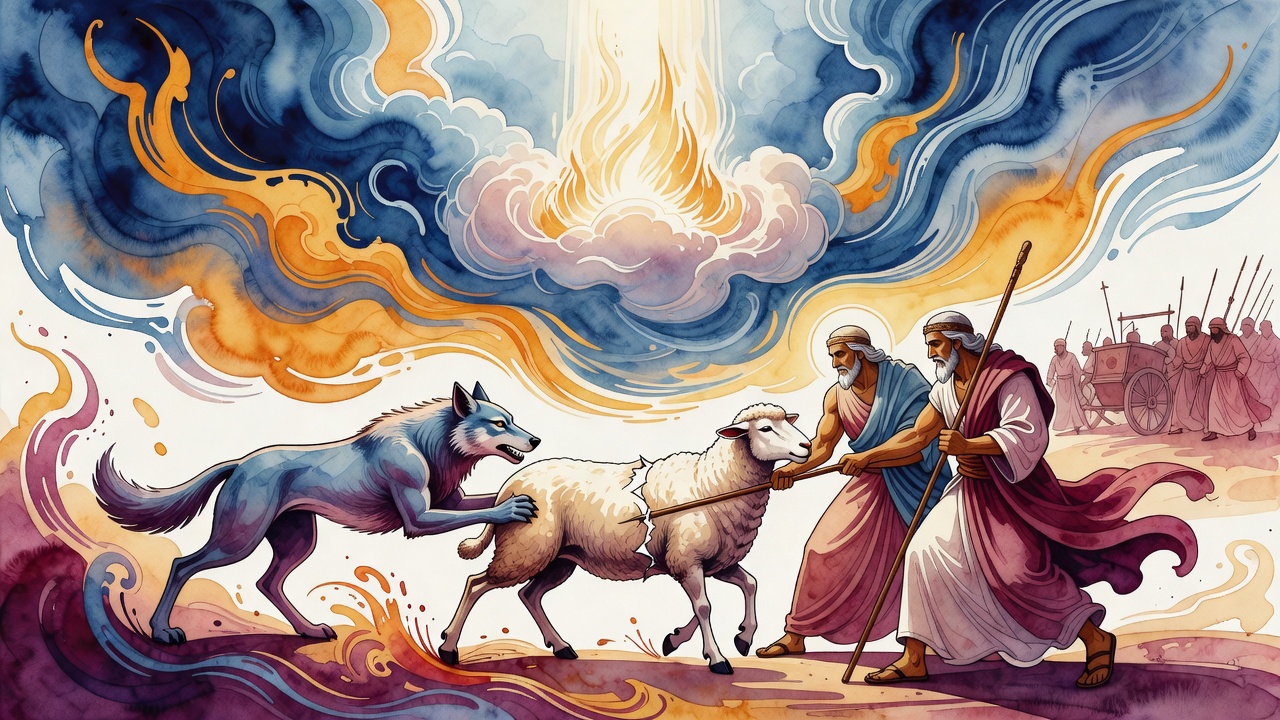
God had already told Moses to cast his rod to the ground. It became a serpent. The transformation was not a carnival trick for a bored court. Ginzberg calls it a double meaning, and the double edge cuts both ways. First, the serpent stands for those who speak venom against Israel. When Moses himself spoke ill of his people, he wore the posture of that creature, tongue sharp, faith thin. The sign rebuked the prophet as well as the king. A leader who names his nation as hopeless feeds the very bite he claims to fear.

Second, the serpent is Pharaoh, "the great dragon that lieth in the midst of the rivers of Egypt," hacking at Israel with his teeth. The same sign promises that the dragon will become wood again, a staff without a bite. What looks invincible in the river can be lifted by a shepherd's hand and lean harmless against a wall. Terror and hope travel in one coil of scales. The court sees a miracle. The prophet is meant to see a mirror and a promise at once.

When Wood Remembers It Was Wood

Moses took the serpent by the tail, and it stiffened into a rod. The court saw a cycle the king did not want to understand. Soft flesh of empire, hard staff of command, soft again, hard again. Authority that comes from heaven can be displayed and withdrawn. Authority that comes from bricks and whips only knows how to stiffen until it cracks.

The secretaries who had fallen on their faces carried the story out of the hall faster than any decree. Appearance mattered that day because appearance was already a judgment. Two men without crowns outshone a room full of them. The birthday of the world-king became the day the world-king learned his invitations did not control who entered with light. Crowns had been offered all morning. Light had not asked to be invited.

Even the waiting outside the door returned as an insult reversed. The men held back like beggars had entered like a weather system. Protocol had tried to manage heaven. Heaven had not read the protocol.

Speech That Bites and Speech That Heals

The double meaning does not leave the scene once the rod is quiet. It follows Moses into later arguments with God and with Israel. A leader who speaks of his people as if they were already lost feeds the serpent. A leader who holds the rod as a promise that the dragon will be disarmed feeds hope. The miracle in the throne room is therefore also a grammar lesson. Words can inject poison. Words can also pick up the tail of fear and turn it back into a tool for walking through a wilderness that has not yet begun.

Pharaoh would harden after this as after other signs. Hardness is not the same as not having seen. He saw. The secretaries saw. The kings with crowns saw. The staff had said, in the only language the court respected, that the river-dragon's bite was temporary. Temporary is a word tyrants hate more than defeat, because temporary means the tale is not finished under their name.

Years later, when blood and frogs and darkness would stack their proofs, some in Egypt would remember the birthday when two brothers without crowns made seventy pens fall. The first sign had already told the whole plot: the dragon can be lifted by the tail. Everything after was only the king refusing to believe a plot he had already watched on his own floor.


← All myths
From the tradition

Sources

3 sources

The texts behind this telling. Some cards carry a translation of the source; others are our own retelling of it, and each card says which. Every card links out to the original.

Legends of the Jews 4:210Legends of the Jews

Retold in our words. Read the original at the link below.The Legends of the Jews by Louis Ginzberg (1909) · Public Domain

The Torah is full of these kinds of startling transformations, and the story of Moses' rod is a perfect example. It’s more than just a cool magic trick; it’s a lesson about power, perception, and the fate of a nation.

God tells Moses to throw his rod onto the ground. Simple enough. But then, bam! It transforms into a serpent. Why a serpent? What's the message here?

Well, according to Legends of the Jews, this wasn't just a random act of prestidigitation. It was a powerful symbol with a "double meaning," as Ginzberg puts it.

First, the serpent represents those who speak ill of Israel. When Moses speaks negatively about his own people, he's essentially emulating the venomous serpent, slithering around and spreading negativity. Ouch.

But there's more. Remember the "great dragon that lieth in the midst of the rivers of Egypt"? That's Pharaoh, in all his oppressive might. He’s "hacking into Israel with his teeth," as Ginzberg vividly describes. The serpent-turned-rod is a promise that even this terrifying dragon, this seemingly invincible force, will ultimately become harmless, just like a simple, powerless piece of wood. The rod, has no power to bite.

So, the transformation of the rod is a double-edged sword. It's a warning to Moses about the dangers of speaking negatively about his own people, and it’s a promise of future redemption. It says, "Yes, things look bleak now, but the oppressor's power is an illusion. It can be broken."

This little episode with Moses’ rod isn’t just an isolated miracle. It speaks to a larger theme in Jewish thought: the potential for transformation, the dangers of negative speech, and the unwavering hope for redemption, even in the face of seemingly insurmountable odds.

Full source
Legends of the Jews 4:243Legends of the Jews

Retold in our words. Read the original at the link below.The Legends of the Jews by Louis Ginzberg (1909) · Public Domain

Not just some dusty throne room, but a bustling hub of Egyptian power. The scene is almost comical – seventy secretaries, scribbling away, managing Pharaoh's correspondence in seventy different languages!

The moment Moses and Aaron step into the room, everything changes. According to Ginzberg's retelling in Legends of the Jews, these weren’t just any messengers. They were… well, they were otherworldly.

The secretaries, these seasoned bureaucrats accustomed to the daily grind of running an empire, were utterly awed. Why? Because Moses and Aaron looked like angels.

Ginzberg tells us they were as tall as the cedars of Lebanon – imagine that! Their faces shone like the sun itself, their eyes sparkled like the morning star, their beards flowed like palm branches. And when they spoke? Flames seemed to leap from their mouths. What a sight!

It's no wonder the secretaries panicked. Pens and papers flew. These hardened officials, the gatekeepers of Pharaoh's power, threw themselves to the ground, prostrating themselves before Moses and Aaron. for a second. These weren't warriors. These weren't magicians performing illusions. They were just two brothers, standing on the strength of their faith, emissaries of the Almighty. And yet, their presence alone was enough to inspire such profound fear and reverence.

What was it about them? Was it simply their physical appearance, the radiant light described in such vivid detail? Or was it something deeper, something that resonated with the very souls of those who witnessed them? A recognition of the divine spark within them, perhaps?

What would we do if we encountered such a presence? Would we, too, be overcome with awe? Or would we try to explain it away, to rationalize the impossible?

Perhaps the most profound lesson in this image isn't just about the power of Moses and Aaron, but about our own capacity to recognize the holy – even, and especially, when it appears in unexpected forms.

Full source
Legends of the Jews 4:240Legends of the Jews

Retold in our words. Read the original at the link below.The Legends of the Jews by Louis Ginzberg (1909) · Public Domain

The scene: Pharaoh's birthday. A huge deal. He's not just any king, remember – according to Legends of the Jews, he fancied himself ruler of the entire world. The book, compiled by Louis Ginzberg, is an absolutely treasure trove of midrashic (rabbinic interpretive commentary) and aggadic lore, drawing from centuries of Jewish tradition. And it paints a vivid picture.

So there he is, Pharaoh, surrounded by kings bowing before him, offering homage. A real power play. And then comes the announcement: Moses and Aaron are here.

Pharaoh, being the shrewd and arrogant ruler he was, doesn't immediately jump to attention. Nope. He’s got to maintain appearances. He asks his attendants if these two old men have brought him crowns. Like, seriously?

The answer, of course, is no. Moses and Aaron weren't there to bring earthly trinkets. They had something far more powerful in mind.

And Pharaoh's response? He orders that they be kept waiting. He's not about to interrupt his birthday parade of subservient kings just because a couple of Hebrews showed up. He’d see to all the others first.

Talk about a power move. Talk about setting the stage for a clash of titans! It's a moment dripping with tension, a pregnant pause before the storm really breaks. A moment that makes you wonder just how much Pharaoh truly understood about the forces he was about to unleash. What do you think he was really thinking?

Full source