Parshat Vaera5 min read

Boils Reached the Throne and Hail Turned White

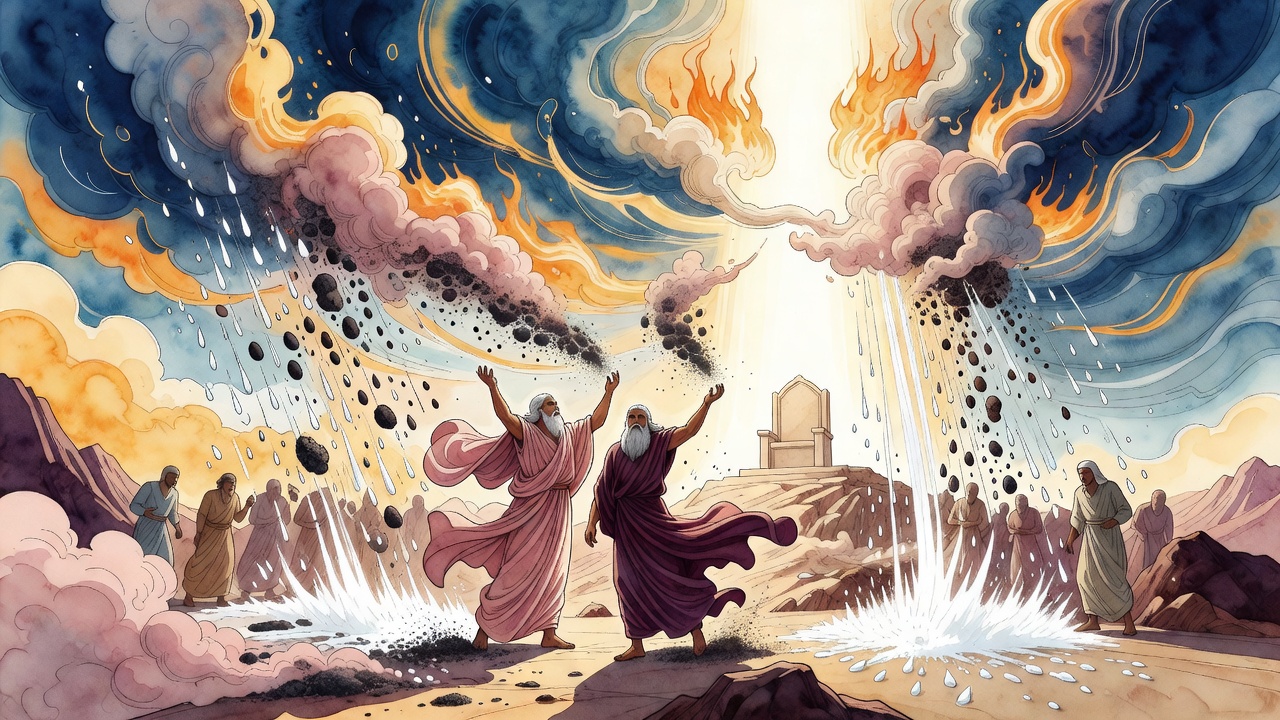
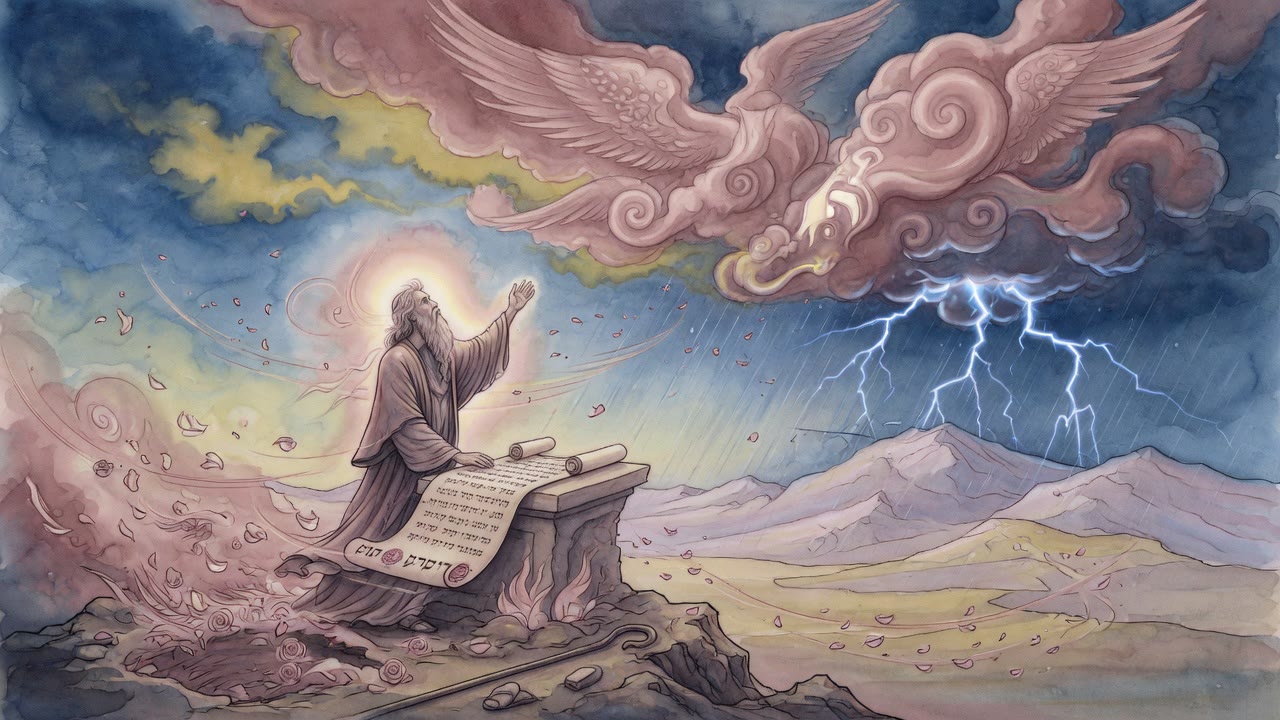
Moses and Aaron each took a handful of ash from the brick furnace. Moses held both heaps in one hand and threw them at the sky. The dust reached the throne.

Curated by Arthur · Told by Maggid ·
Table of Contents
  1. Ash That Touched the Throne
  2. Hail With a Warning Built In
  3. The Fourth Plague Announced at the River
  4. Four Portions of Ten Punishments
  5. Color, Dust, and a King at the Nile
Boils Reached the Throne and Hail Turned White Click for full size

Ash That Touched the Throne

The sixth plague required both brothers. Moses and Aaron each took a handful of ashes from the furnace. Moses then held both heaps in the hollow of one hand and cast them toward heaven. The dust rose until it reached the Divine throne, then fell across Egypt for four hundred square parasangs. Small ash became leprosy on Egyptian skin and blains soft within, dry on top. Brick kilns that had baked Hebrew labor now supplied the powder that unmade Egyptian flesh. The throne did not stay clean of that dust. Judgment traveled the full vertical of the world before it spread horizontally over fields and cities.

One hand holding two handfuls already preached partnership. Neither brother alone flung the sixth blow. The furnace, symbol of forced labor, became the arsenal of release. What Egypt had used to harden clay, heaven used to open sores. Kiln dust that once rose from Hebrew backs now rose all the way to the Throne before it fell as judgment.

Hail With a Warning Built In

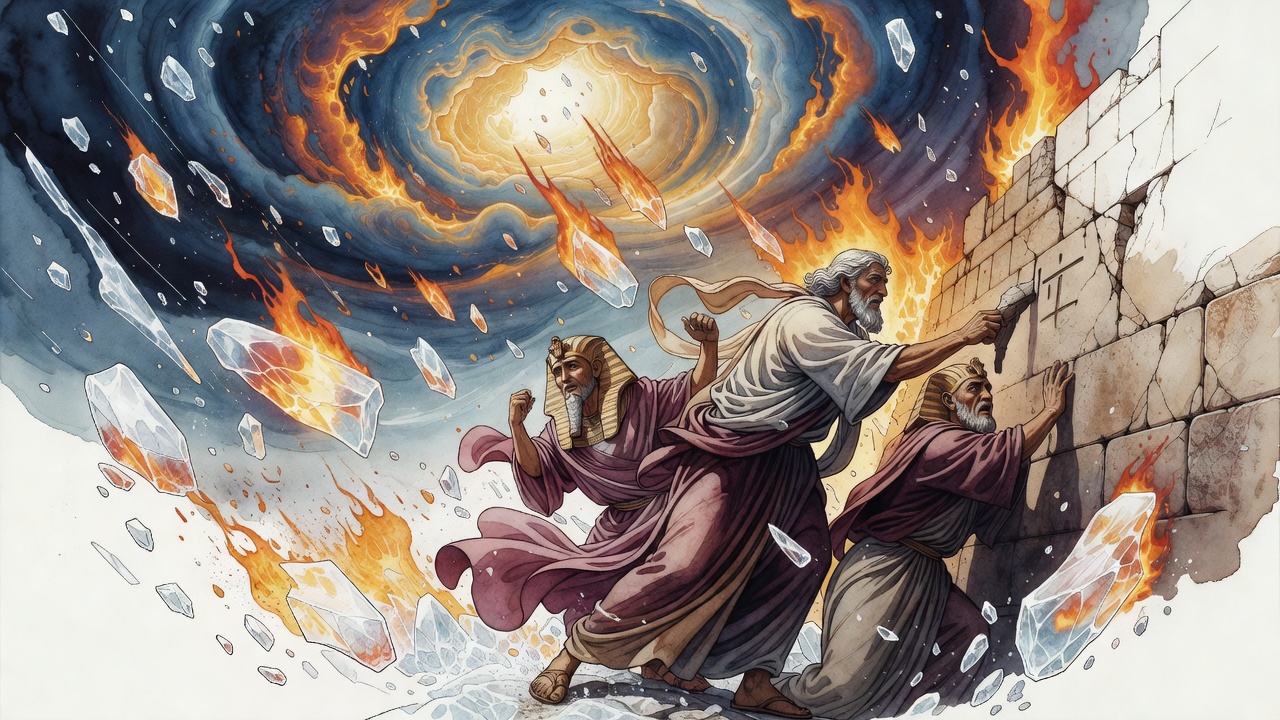
Even in wrath, lovingkindness shaped the hail. God's chief aim was vegetation, not corpses. Moses was told to admonish Pharaoh to hurry cattle and field property to shelter. The warning fell on heedless ears. Only Job took it to heart among those who heard. Pharaoh and his people disregarded the word. Therefore hail struck man and beast as well as herbs and trees, a wider blow than first intended. Mercy offered a door. Stubbornness widened the storm.

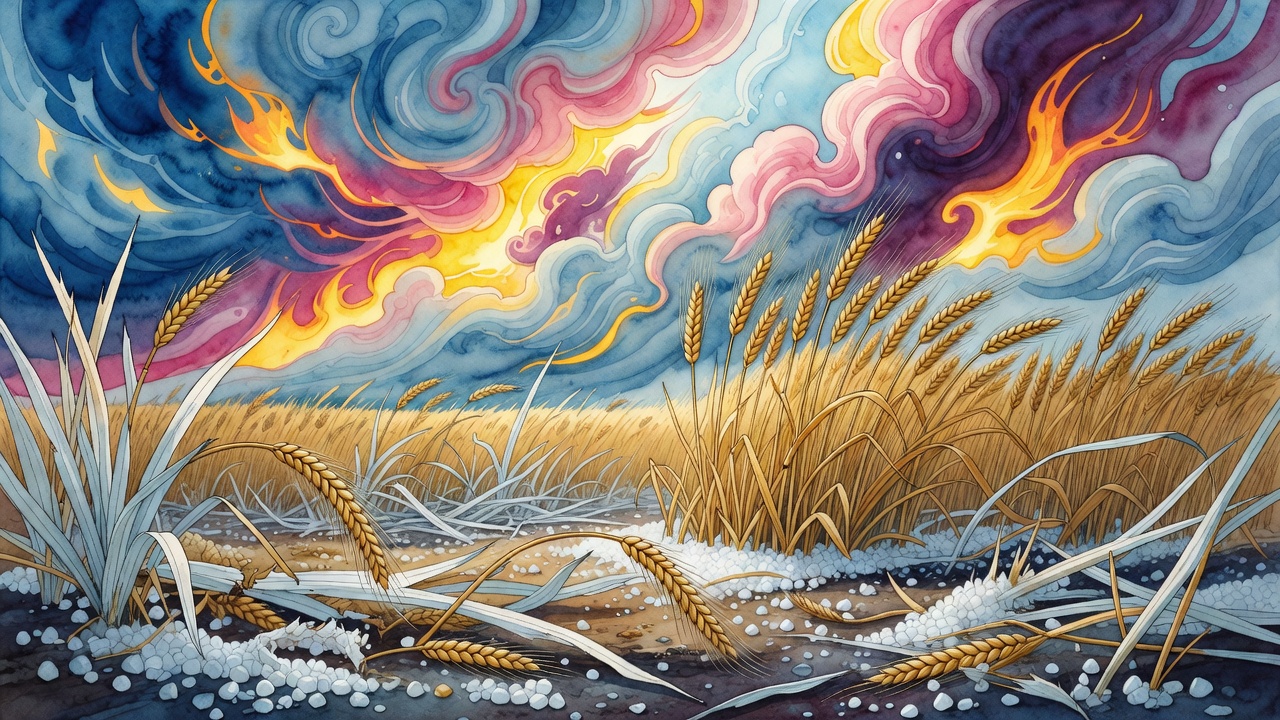
White hail carried a verdict in its color. It would take vengeance on Egyptians who had desired to destroy a nation whose sins would be made white. Locusts came as God's great army against those who tried to destroy the nation called His hosts. Darkness, divided from light, came against those who tried to destroy the nation on which the light of the Lord shone while gross dark covered other peoples. Elements arrived as prosecutors with matching briefs. Color, swarm, and shadow each signed a different count in the same case.

The Fourth Plague Announced at the River

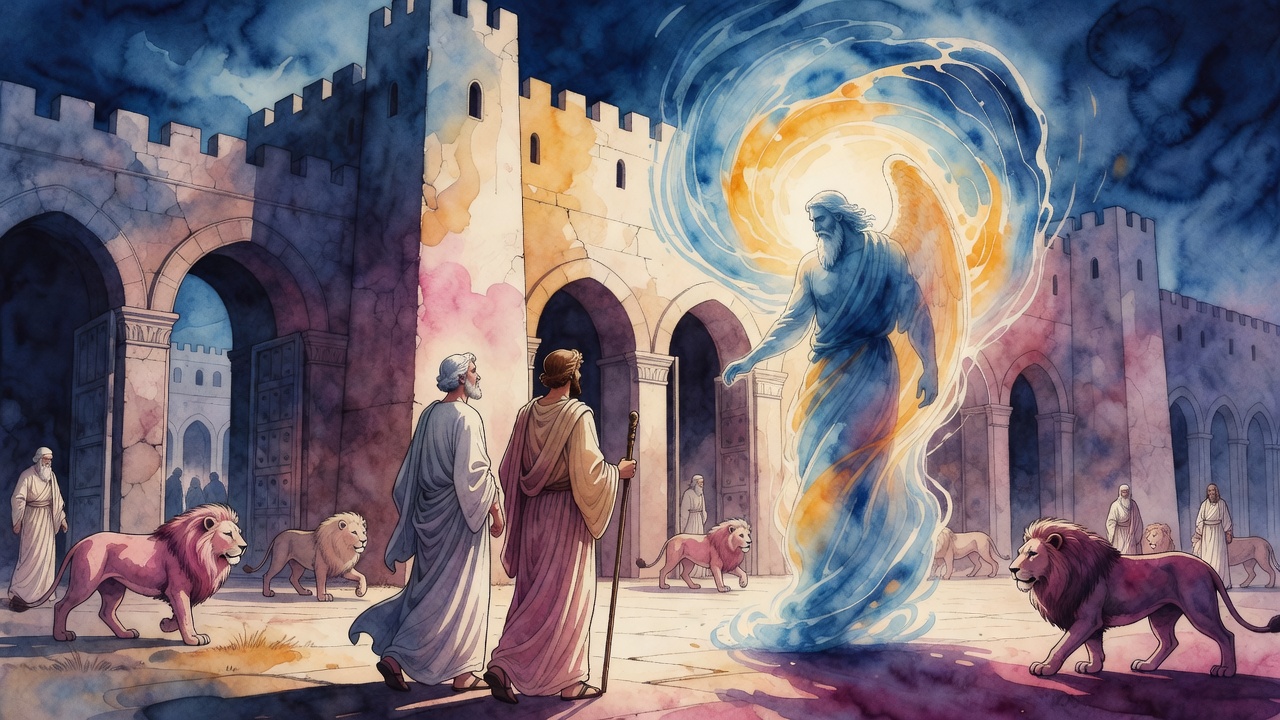
After three plagues Pharaoh's heart stayed hard. God told Moses the fourth would be much worse. Warn him early, by the river's brink. Pharaoh went there regularly as one of the magi who needed water for enchantments. Moses' morning visits annoyed him. He left the house early, hoping to dodge his monitor. God, who knows thoughts, sent Moses to the exact moment of the king's going forth. Magic's water schedule became the stage for a warning the king could not outwalk.

The Nile that once hid a basket and once ran red still served as Pharaoh's workshop of spells. Moses met him there before the fourth plague, worse than the three already endured. Escape routes of habit failed. The prophet's timing matched the magician's thirst for river power.

Four Portions of Ten Punishments

God divided the ten punishments into four parts. Three plagues went to Aaron, three to Moses, one to both brothers together, three God kept. Aaron handled those from earth and water, elements of more solid parts from which corporeal things are shaped. Moses handled those from air and fire, elements most prolific of life. Boils, born of furnace ash thrown skyward by both, fit the shared commission. Hail, a sky-born blow, fit the upper register of force. The map of agency taught Egypt that neither brother freelanced and that heaven did not outsource every strike.

Solid and fluid under Aaron. Living air and fire under Moses. Shared ash at the middle. Reserved blows in God's own hand. The campaign had departments. Chaos was the Egyptian reading. Design was the Israelite one.

Color, Dust, and a King at the Nile

Furnace dust at the throne, white ice on green fields, a fourth plague worse than three, and a division of labor among Moses, Aaron, and God turn the plagues into a designed campaign rather than random horror. Pharaoh's river walk could not escape the messenger. Job's single obedience could not redeem a court that would not shelter its own cattle. The nation Egypt tried to erase was named white, hosts, and light-bearing, and the weapons that answered were chosen to rhyme with those names.

When boils broke soft and dry on Egyptian skin, the kilns remembered. When hail whitened the air, the future whitening of Israel's sins was already entered as evidence. A king who needed Nile water for spells met a prophet who needed only a handful of ash and a word timed to a doorway. The elements kept the minutes of the case with a clerk's patience and a warrior's force. Soft blain and hard ice, early river warning and late swarm, brothered ash and reserved thunder all belonged to one ledger written across Egypt until the throne itself wore furnace dust.


← All myths

From the tradition

Sources

5 sources

The texts behind this telling. Some cards carry a translation of the source; others are our own retelling of it, and each card says which. Every card links out to the original.

Legends of the Jews 4:306Legends of the Jews

Retold in our words. Read the original at the link below.The Legends of the Jews by Louis Ginzberg (1909) · Public Domain

The Torah itself describes the plague of boils in stark terms (Exodus 9:8-12). But the Legends of the Jews, that magnificent collection of rabbinic lore compiled by Louis Ginzberg, really fleshes it out. It's not just a plague; it's a cosmic event, practically.

So, how did it happen? According to Ginzberg's retelling, Moses and Aaron didn't just wave their hands and poof, boils. They teamed up for a truly miraculous act. First, each of them took a handful of ashes from a furnace. Now, picture this: Moses then takes both handfuls, combining them into one. He holds this mound of ash in the palm of his hand.

Then?

Then he sprinkled those ashes… toward heaven.

But here's where it gets epic. This wasn't just a toss. The ashes flew so high that they reached the kise hakavod, the Divine Throne itself! This seemingly insignificant handful of ash, making its way all the way to the very seat of God's glory?

Then, the ashes turned around, returning earthward. And they didn't just fall locally. Oh no. They scattered across the entire land of Egypt, covering an area of four hundred square parasangs. Now, a parasang is an ancient unit of distance, and four hundred of them? We're talking a vast, vast area. That’s a lot of ash!

And what happened when these ashes landed? Leprosy. And a particularly nasty kind of blain, soft inside but dry on top. A truly unpleasant affliction. The small dust of the ashes produced leprosy upon the skin of the Egyptians, and blains of a peculiar kind, soft within and dry on top.

Why this level of detail? Why this almost unbelievable expansion of the biblical account? Perhaps it's to emphasize the sheer power at play, the complete and utter helplessness of the Egyptians against the will of God. Or maybe it's to show the thoroughness of the Divine judgment. No corner of Egypt was spared. No Egyptian escaped the plague.

Whatever the reason, it's a reminder that these stories, these aggadot (the interpretive stories that expand on the Torah) aren't just simple tales. They're rich, layered, and filled with meaning, inviting us to ponder the depths of the Exodus story and its enduring power. And it all started with a handful of ash.

Full source
Legends of the Jews 4:310Legends of the Jews

Retold in our words. Read the original at the link below.The Legends of the Jews by Louis Ginzberg (1909) · Public Domain

Legends of the Jews turns to God's Mercy Shone Through Even in the Plague of Hail.

The fourth plague, hail, is a great example. God, in His fury, is about to unleash a devastating storm. Hailstones big enough to cause real damage, not just a little icy inconvenience. But, as Legends of the Jews, that incredible compilation of rabbinic lore by Louis Ginzberg, points out, even in this moment of anger, God’s lovingkindness shines through.

His initial intent, surprisingly, wasn't to wipe out people and animals. The primary target? The vegetation, the crops in the fields of the Egyptians. God wanted to cripple their food supply, to show Pharaoh the error of his ways, without necessarily causing mass death.

So, what does God do? He gives a warning. He tells Moses to tell Pharaoh: "Send and hasten in thy cattle and all that thou hast in the field!" Basically, "Get your animals and people under cover, now!" It's an act of mercy baked right into the plague itself.

But here's the heartbreaking part: Pharaoh and his people mostly ignored the warning. They scoffed. They didn't believe. Only Job, who was dwelling in Egypt at the time, took the warning seriously and heeded the word of the Lord. (Legends of the Jews)

And because of their stubbornness, because they "regarded not the word of the Lord," the hail did strike both man and beast. It was no longer confined to just the fields. The Egyptians' arrogance and denial amplified the devastation.

God offers a way out, a chance to mitigate the suffering. But it requires humility, a willingness to listen, and a readiness to act. The story of the hail plague isn't just about divine power; it's about human choice. And the consequences that follow when we choose to ignore the warnings, the opportunities for mercy, that are offered, even in the midst of a storm.

Full source
Legends of the Jews 4:283Legends of the Jews

Retold in our words. Read the original at the link below.The Legends of the Jews by Louis Ginzberg (1909) · Public Domain

A reader can see them as simply divine punishments, but the ancient texts hint at a deeper, more symbolic layer.

Let's take the plague of hail, for instance. We read in Legends of the Jews, that God sent hail upon the Egyptians, explaining, "the white hail shall take vengeance upon the Egyptians for having desired to destroy a nation whose sins shall be white." Now, isn't that fascinating? White hail, avenging a nation whose sins are also "white." What does it mean? Some commentators suggest that "white" here symbolizes purity or innocence – ironic, considering the context of sin. Perhaps the hail, a destructive force appearing pure, was meant to highlight the Egyptians' hypocrisy: their desire to extinguish a people who, despite their flaws, were destined for greatness.

Then there were the locusts. According to Legends of the Jews, God proclaimed, "the locusts, which are My great army, shall take vengeance upon the Egyptians for having desired to destroy the nation that is called My hosts." Here, the locusts aren't just a plague; they are God's ARMY. They are divine retribution unleashed upon those who dared to threaten God’s chosen people, the very nation referred to as "My hosts." There's a powerful image here: the sheer, overwhelming force of nature acting as an extension of divine will.

Finally, we have the plague of darkness. A darkness so thick, so complete, that it could be felt. "Darkness," God declared, "which is divided from the light, shall come and take vengeance upon the Egyptians for desiring to destroy the nation upon which shineth the light of the Lord, while gross darkness covers the other peoples." This plague is particularly striking. The Egyptians sought to extinguish the light of Israel, the spiritual light that God shone upon them. The punishment? To be plunged into a darkness so profound that it separated them from that very light, while the Israelites, presumably, remained illuminated. It's a stark contrast, a physical manifestation of the spiritual chasm they created through their actions.

These aren't just random acts of divine power. They're targeted, symbolic, and deeply resonant. They speak to a profound sense of justice, of measure for measure. The plagues weren't just about freeing the Israelites; they were about revealing the moral bankruptcy of the Egyptians, and the consequences of trying to extinguish the light of faith and justice in the world. What does it say about us, about the choices we make, and the darkness or light we choose to embrace?

Full source
Legends of the Jews 4:300Legends of the Jews

Retold in our words. Read the original at the link below.The Legends of the Jews by Louis Ginzberg (1909) · Public Domain

Moses is pleading with Pharaoh to release the Israelites from slavery, and things are… not going well. Three plagues have already hit Egypt, each one worse than the last. You'd think Pharaoh would get the hint. Nope.

"Pharaoh's heart was hardened," the verse says. And then God speaks to Moses, laying it out plain: "This wicked fellow remains hard of heart, in spite of the three plagues. The fourth shall be much worse than those which have preceded it. Go to him, therefore, and warn him.."

The sheer audacity! God is literally sending plagues, and Pharaoh is still digging in his heels.

Here’s where it gets interesting. The fourth plague is announced to the king "early in the morning by the river's brink." Now, why the river? Ginzberg, in Legends of the Jews, offers a fascinating detail: Pharaoh wasn't just taking a morning stroll. He was a magus, one of the royal magicians, and needed water for his enchantments.

And, as we find in Midrash Rabbah, Moses' daily morning visits were starting to get under Pharaoh’s skin. He was trying to avoid Moses! He left the house early, hoping to dodge his divine messenger. Pharaoh, the all-powerful ruler of Egypt, sneaking out of his palace like a teenager trying to avoid chores.

But, of course, you can't outsmart God. "God, who knows the thoughts of man, sent Moses to Pharaoh at the very moment of his going forth." So, there's Moses, waiting for him by the river, ready to deliver yet another warning.

What makes someone so resistant to change, so unwilling to acknowledge the truth, even when faced with overwhelming evidence? Was it simply stubbornness? Pride? Or something deeper, a fundamental inability to see beyond his own limited perspective?

Whatever the reason, Pharaoh’s obstinacy sets the stage for even more dramatic events to come. And it serves as a powerful reminder that sometimes, the greatest obstacles we face are not external forces, but the walls we build within ourselves.

Full source
Legends of the Jews 4:262Legends of the Jews

Retold in our words. Read the original at the link below.The Legends of the Jews by Louis Ginzberg (1909) · Public Domain

It wasn’t just a random act of divine anger. According to Jewish tradition, there was a method to the madness, a specific reason why certain plagues were assigned to certain people – or even directly by God. ten plagues, each a devastating blow against the Egyptians. But who was responsible for unleashing them? The Torah tells us about Moses and Aaron, but there’s more to the story than meets the eye.

Legends of the Jews, that incredible compilation of rabbinic lore by Louis Ginzberg, sheds some light on this. It tells us that God strategically divided the ten punishments into four groups. Three plagues were unleashed by Aaron, three by Moses, one by both of them together, and the final three reserved for God Himself.

Why this division? What was the reasoning behind it?

Here’s where it gets interesting. Aaron was given the plagues that came from the earth and the water – things like the plague of blood and the plague of frogs. These elements, the earth and water, are seen as being composed of more solid, tangible parts. They're the building blocks of corporeal entities, of everything we can touch and see.

Moses, on the other hand, was responsible for the plagues that originated from the air and fire. Think of the plague of hail, or the plague of locusts. Air and fire are considered more volatile, more associated with life and energy. They're dynamic, powerful forces.

So, what does it all mean? It's tempting to think that Aaron, as the elder brother and high priest, would get the "better" plagues. But this isn't about better or worse. It’s about the nature of the plagues themselves, and how they reflect the different aspects of God's power.

Perhaps this division of labor highlights the many-sided nature of divine judgment. Aaron, connected to the earth and water, represents a more grounded, foundational kind of power. Moses, with his connection to air and fire, embodies a more dynamic, transformative force.

And those plagues that God reserved for Himself? Well, that’s a whole other level of power, a direct expression of the divine will that goes beyond even Moses and Aaron.

This legend adds a layer of depth to the Exodus story.

Remember the division of labor, the elements involved, and the deeper meaning behind it all. It’s just one small piece of the vast and fascinating world of Jewish legend.

Full source