The Word Behold Framed Moses's Praise and Then Sealed His Death
Moses begged for more life with the same word that once framed his praise of heaven. God answered with that word, cold and exact, and closed the border.
Table of Contents
"Behold, your days approach that you must die."
 Click for full size
Moses knew that word. He had opened his praise of heaven with it, in front of the whole camp, with his voice up: "Behold, the heaven and the heaven of heavens are the Lord's." So when the sentence arrived wearing the same word, he did not lower his head and take it. He said it back out loud, the way a man repeats a figure to a merchant he thinks has cheated him. "With behold I began Your praise, and with behold You seal my death."
God answered without any softness in it. "A wicked man in his envy sees only his neighbor's profits, never his expenditures."
The Word He Had Already Spent
The accounting went back further than Moses wanted to look. Forty years earlier, when the mission was first put to him at the bush, he had answered with the same syllable he was now defending. "Behold, they will not believe me." He had used it to get out of the work, so it came back to him carrying the other half of its meaning. "Therefore I said, Behold, your days approach that you must die."
He had argued this voice down before. When Israel danced around the calf and heaven meant to finish them, he had put himself in the way and said, "Pardon, I pray Thee, the iniquity of this people," and the pardon came. Since one refusal had never ended a conversation between them, he tried another door.
The Egyptian in the Sand
"Was it I who counseled You to slay the Egyptian?"
He meant the taskmaster, the man he had struck down for beating a Hebrew, the body he pushed under the sand before he ran for Midian. That killing was the one stain anybody could name on him, so he put it on the table himself rather than wait for it to be used against him. If a single Egyptian was the charge, he wanted the charge said plainly.
"You slew all the firstborn of Egypt," God said. "Shall I die on account of one single Egyptian that I slew?"
Moses opened his mouth, because he had an answer for most things.
"Are you My equal? I slay and I restore to life. Can you bring back the dead?"
The wind kept moving across the ridge. Moses turned the question over looking for a handhold, some verse, some precedent, some forty-year-old promise he could pry at, and there was nothing there to take hold of. He had opened a sea and he had never once raised a dead man, so the case he had been building since the first word stopped, not because heaven shouted him down but because he could not honestly finish the sentence.
The List of Honors
Then the voice changed, and the change was worse than the refusal.
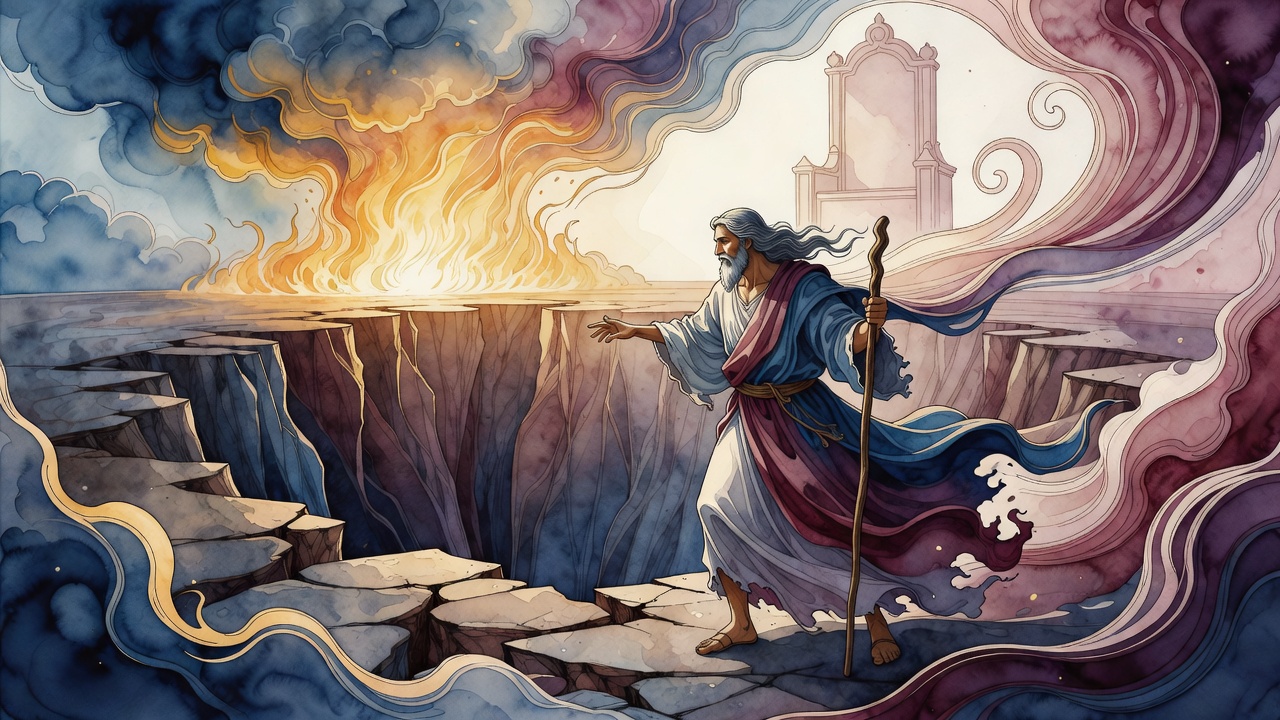
God set out to comfort him, and the comfort came as an accounting of everything he had been given. "You said to Me, Arise, and I arose. You said, Turn about, and I turned about." The order of the world had been inverted for his sake, because heaven's work is to send down rain and earth's work is to bring up bread, but Moses had asked for it the other way, so bread fell out of the sky and water came up out of the ground. He had said that if the earth opened its mouth and swallowed the rebels the people would know who sent him, and the earth opened its mouth. The Torah belonged to God, though God had named it after Moses instead. Israel belonged to God, and God had called them by Moses's name.
"I gave you the two tables of stone," the list went on, "which you broke."
Every item was true, and every item shut a door behind him. He had been heard more than any man alive had been heard, and he was being told so in detail at the exact hour the one thing he was asking for was refused.
The Ash That Went Up to the Throne
There was one he could have added himself.
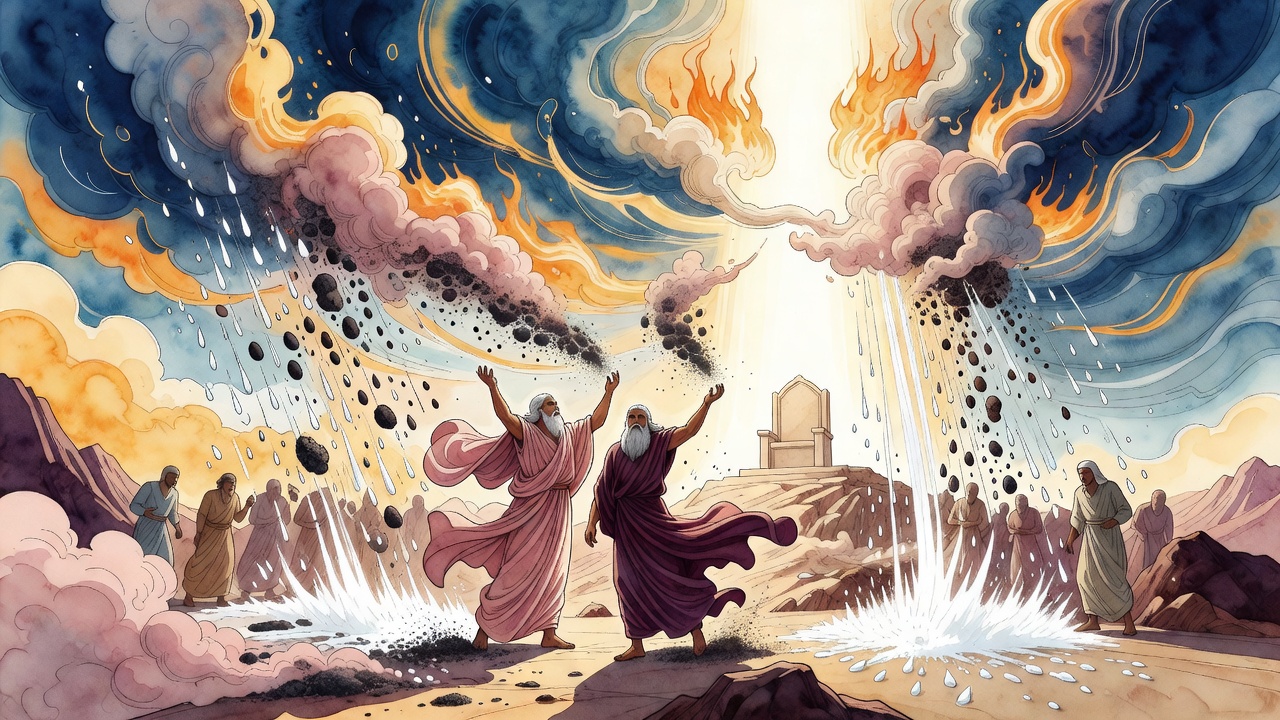
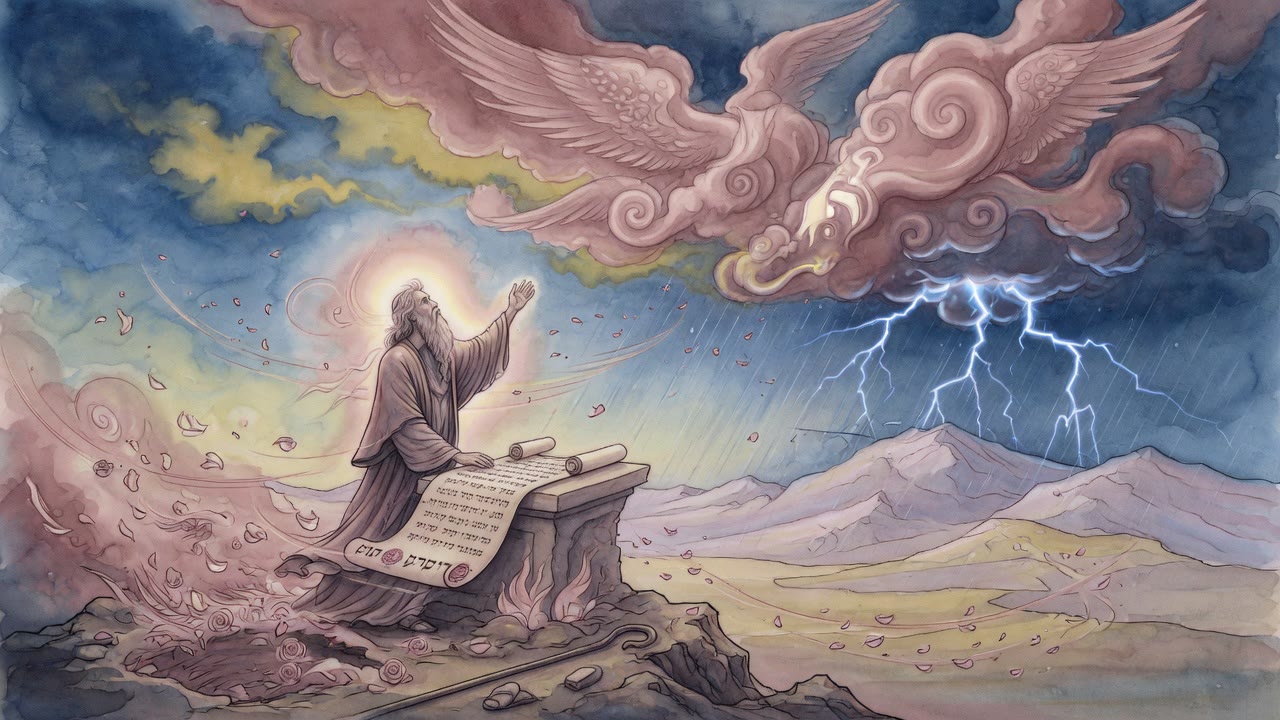
In Egypt, at the sixth plague, he and Aaron had each taken a handful of ash out of a furnace, and Moses had held both handfuls in the hollow of one palm and thrown them up at the sky. The ash did not scatter. It climbed until it reached the Throne of Glory, and only then it turned and came down over the whole of Egypt, four hundred square parasangs of it, and where the small dust settled the skin of Egyptians broke out in blains that were soft within and dry on top.
A handful of furnace ash had gone from his hand to the seat of glory because he threw it. That was the partnership he was remembering while he argued on the ridge. But the dust had gone up on an errand heaven wanted, and his petition was not one.
The Words He Threw at the Sons of Levi
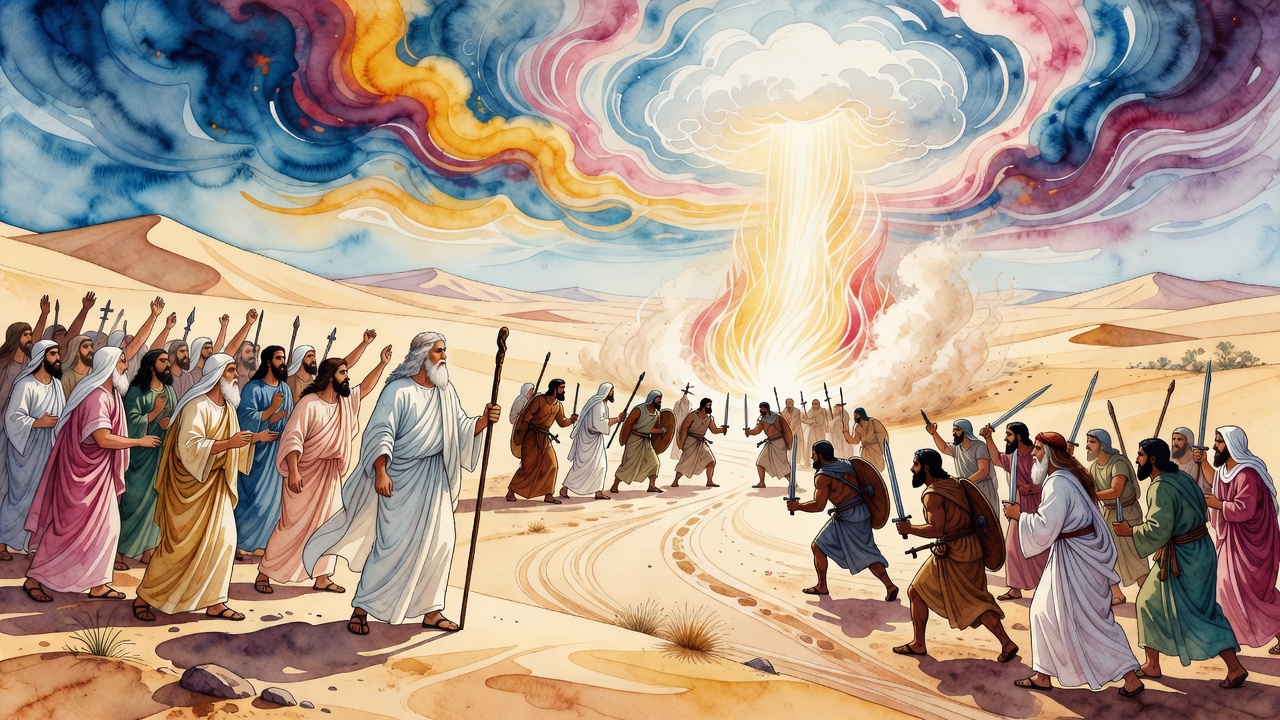
Years before, when the sons of Levi came to him asking forgiveness, Moses had cut them off. "Enough. You take too much upon you, you sons of Levi." He had said it in heat, in front of witnesses, and afterward he had forgotten it the way a man forgets a hard word he felt entitled to.
Heaven had not forgotten it.
"Let it suffice you. Speak no more to Me of this matter."
It was his own sentence, in his own construction, handed back with nothing left to appeal to. He had spent his life teaching Israel that what a man says is counted, and the counting had come around to the man who taught it, and the arithmetic was exact. He closed his mouth.
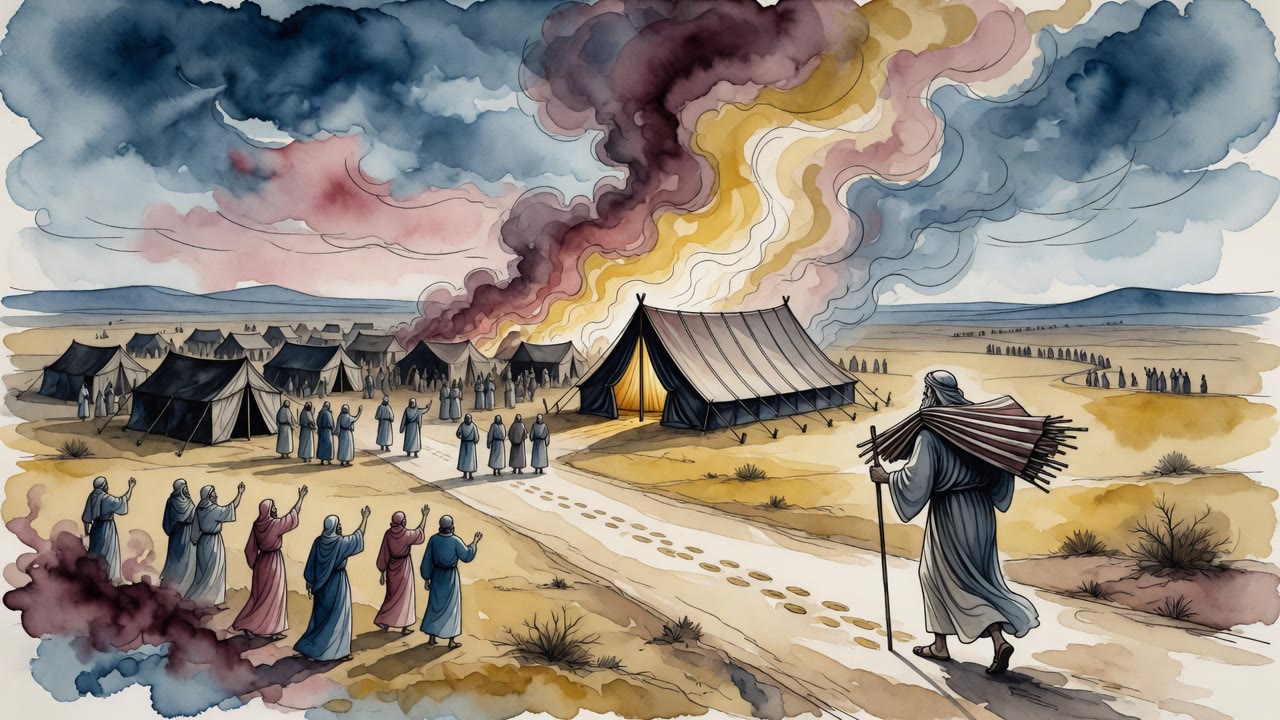
Below him the camp was already loading carts for a river he would not cross. Above him nothing further was said. Moses stood on the ridge with behold at both ends of his life, the one he had thrown up in praise and the one that had come down on him, and the land stayed exactly where it was, visible the whole time.
← All myths