5 min read

Israel Craved Egypt's Lawless Ease, Then Edom Barred the Road

They waited in groups for Moses to leave the house of study, then poured out blame. He had led them from a fruitful land into thirst.

Curated by Arthur · Told by Maggid ·
Table of Contents
  1. Not the Menu, the Freedom from Law
  2. Behold as Praise and as Ending
  3. Messengers at Edom's Gate
  4. A War Heaven Already Forbade
  5. Two Refusals on One Journey
Israel Craved Egypt's Lawless Ease, Then Edom Barred the Road Click for full size

Not the Menu, the Freedom from Law

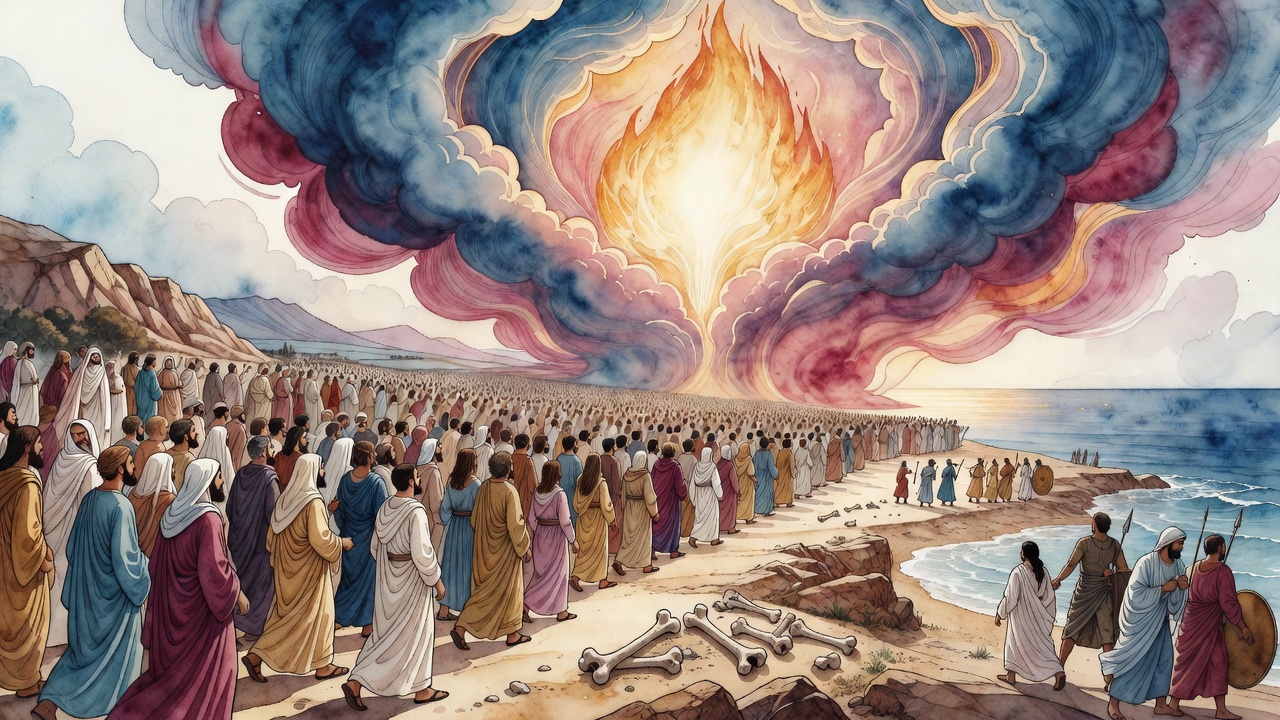
The march out of Egypt looks clean in a child's mind: chains off, songs on, road open. The legends gathered by Ginzberg show a harder hunger. Israel did not miss gourmet pots. The taskmasters had not fed them well, and straw for bricks had already been a cruelty. What they missed was the absence of the new yoke of commandments. In Egypt they had lived without the full weight of Jewish law. After Sinai, marriages once common were forbidden, and families were ordered to separate from unions the Torah would not carry forward.

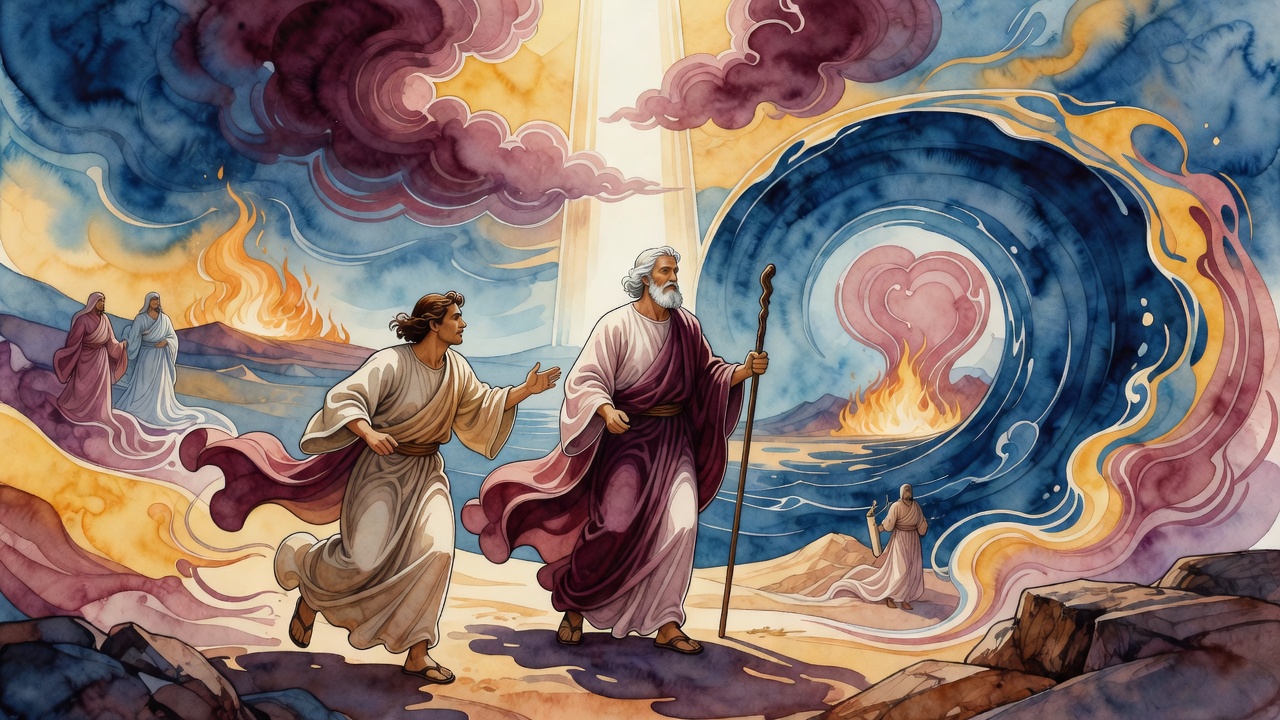
They waited in groups for Moses to leave the house of study and then poured out blame. He had led them from a fruitful land into thirst and the terror that manna might stop. One brave voice tried to recall God's help and only made the shouting louder. Discontent became a public fire. God burned at the camp's noise, and Moses, instead of pure intercession, complained of the people who would not let him lead them to the land he had been charged to reach. He asked to be relieved. He asked for meat for the crisis in front of him. Freedom had arrived, and with it a law that felt, to many, like a second Egypt of rules.

Behold as Praise and as Ending

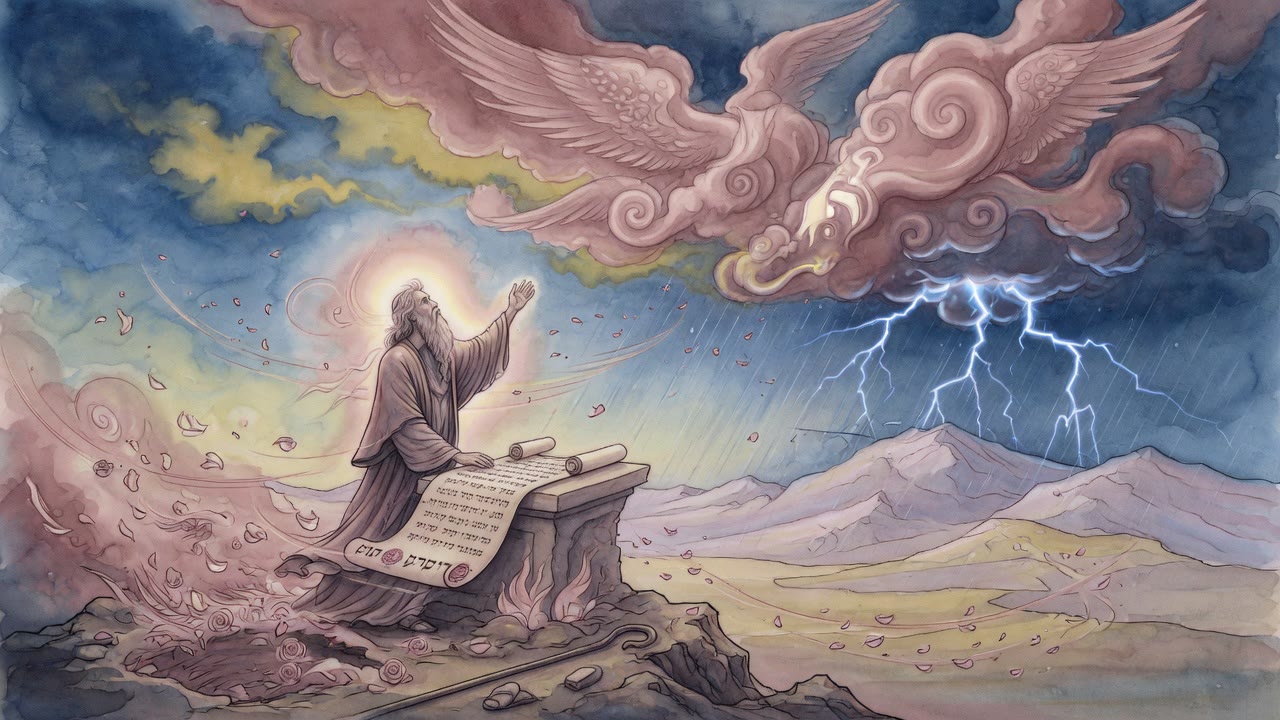
Elsewhere the same tradition hears the word "behold" seal both Moses' praise and the approach of his death, a reminder that the leader who endures their mutiny will not cross with them forever. The man who must absorb the camp's nostalgia is also the man whose end is already marked in the language of revelation. Leadership in this telling is not endless applause. It is a corridor between rebellion and a border he will not pass.

Messengers at Edom's Gate

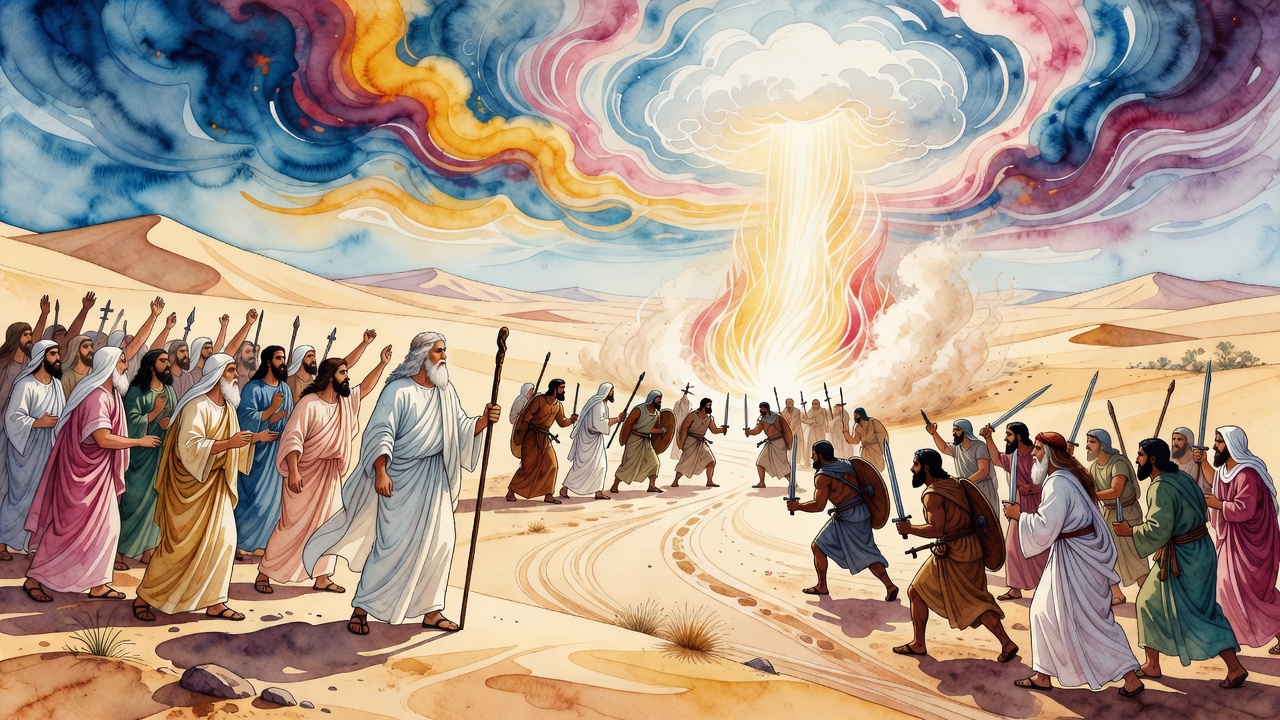
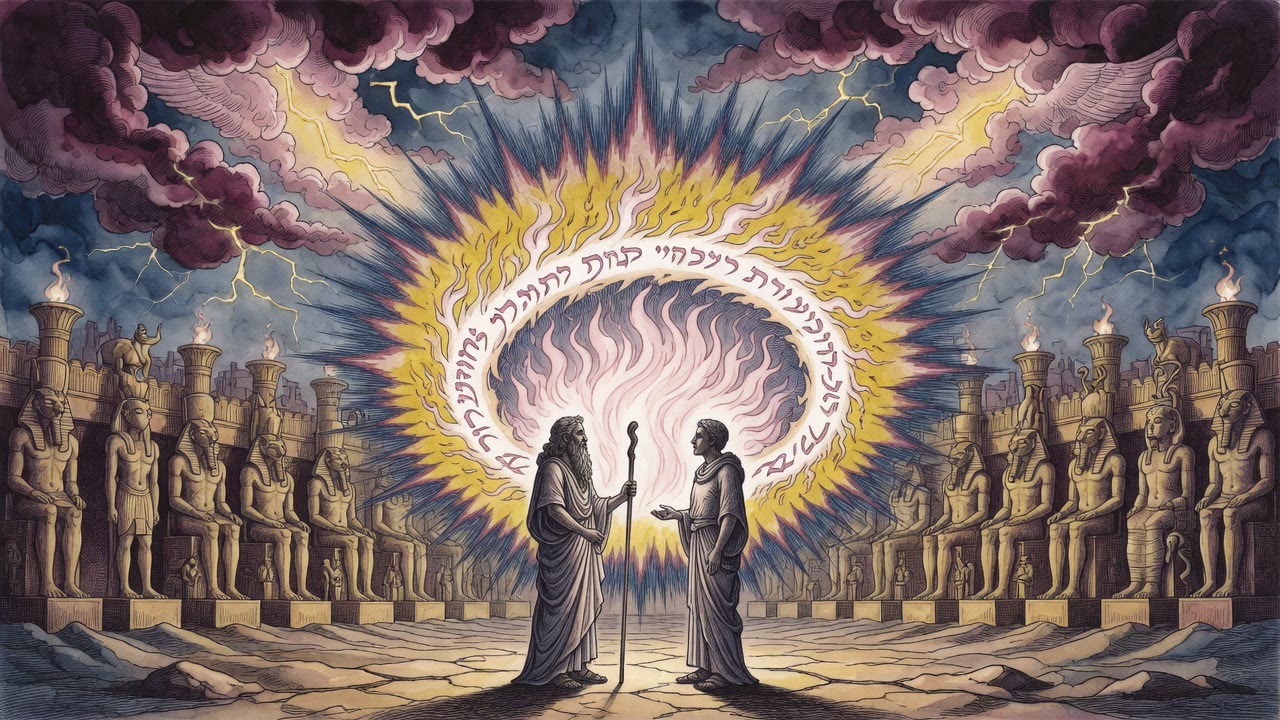
Years later the people near the promise again, and Edom sits across the short road. Moses sends messengers, not an army. He promises no plunder. He has told Israel to show wealth so they will not look like penniless fugitives begging a path. He offers to muzzle the cattle so they will not graze Edomite grass. "To the right and to the left of thy land may we pillage and slaughter, but in accord with God's words, we may not touch thy possession." Diplomacy under a ban: fight others if you must, but not this brother-nation.

Edom answers with a threat, not a toll. You rely on "the voice of Jacob." We rely on "the hand and sword of Esau." Kinship becomes a choice of weapons. The road closes. Israel must turn.

A War Heaven Already Forbade

The sting is sharper than a simple refusal. God had already forbidden Israel to attack Edom before the embassy returned. The detour was not only fear of swords. It was obedience to a ban older than the insult. Voice against sword, and the people of the voice are ordered not to answer sword with sword here. Patience becomes policy. The long way around is not a failure of nerve. It is the map heaven insisted on.

Two Refusals on One Journey

First Israel refuses the sweetness of law and pines for Egypt's loose days. Then Edom refuses the courtesy of a road and brandishes Esau's hand. Moses stands in both scenes: accused by his own, rejected by a cousin king, limited by a divine "no" that prevents the clean military solution. The desert is not empty. It is full of memories that pull backward and borders that push sideways.

The drama ends without a parade through Edom's markets. It ends with a people learning that liberation is not the right to rewrite the commandments when they sting, and kinship is not a free pass through another nation's fields. Egypt's ease was a trap. Edom's road was a test. Between them walks a leader who will be praised and finished under the same prophetic "behold," still trying to move a camp that keeps looking over its shoulder.

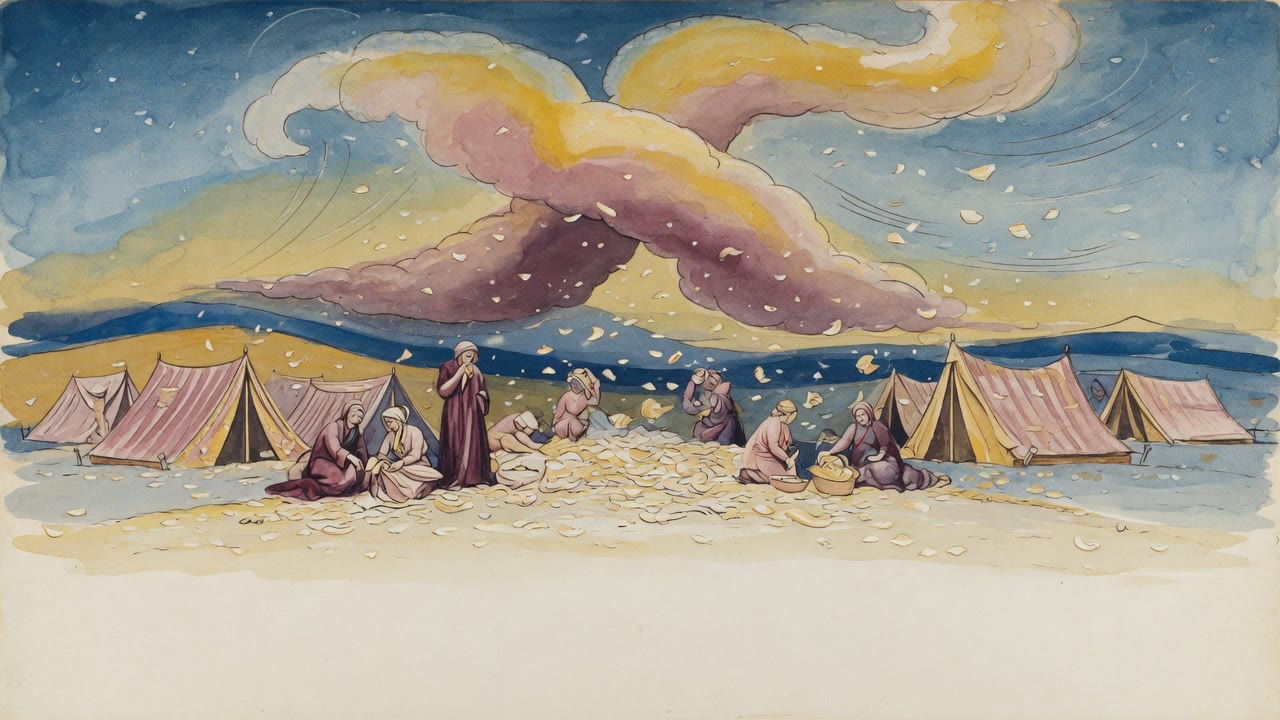
Nostalgia for Egypt is a special kind of blindness. It forgets the lash and remembers the absence of Sinai's demands. The legends make that blindness loud enough to shout down a defender of Moses. Leadership frays. The man who split the sea asks to be released from the people who will not walk as free people under law. Meat becomes the immediate plea because hunger is simpler than holiness, and the camp prefers the simple crisis to the long obedience.

Edom later offers a different simplicity: fight or turn. Moses chooses the embassy, the promise of muzzled cattle, the display of means so Israel will not look like thieves. Esau's children answer with sword theology. God answers before the messengers return by forbidding the war that would make the short road cheap. The people who wanted Egypt's lawlessness must now accept a detour commanded by the same God who gave the law they resented. Both episodes punish the fantasy of an easy map.

Between mutiny and blocked border stands Moses under the word "behold," praised and already pointed toward death. He will not become a permanent crutch. They must learn to travel without turning every hard commandment into a reason to praise Pharaoh's memory, and without turning every closed gate into a license to ignore a divine ban. The desert educates by refusal: refusal of slave habits, refusal of cousin roads, refusal of a leader who lasts forever.


← All myths

From the tradition

Sources

3 sources

The texts behind this telling. Some cards carry a translation of the source; others are our own retelling of it, and each card says which. Every card links out to the original.

Legends of the Jews 4:59Legends of the Jews

Retold in our words. Read the original at the link below.The Legends of the Jews by Louis Ginzberg (1909) · Public Domain

The familiar picture has a triumphant march, but the reality, according to Jewish tradition, was far more complicated.

A reader can imagine them yearning for the "good old days" – even though, let's be honest, those "good old days" involved brutal slavery! But according to Legends of the Jews, by Louis Ginzberg, it wasn't necessarily the food they missed. After all, their Egyptian taskmasters weren't exactly serving up gourmet meals. They weren't even giving them enough straw to make bricks! So what was it, really?

Ginzberg suggests that what they craved was the lack of restrictions. In Egypt, they lived without the weight of Jewish law, the halakha. And those new laws, fresh from Sinai, were proving to be a tough adjustment. According to Ginzberg, the Israelites had been accustomed to marrying close relatives, and the new laws demanded they separate from these unions.

So, picture this scene: The people, in family groups, anxiously waiting for Moses to emerge from the bet midrash, the house of study. As he passes, they erupt in a chorus of complaints. It was his fault, they claimed, for leading them away from a fruitful land. Now, instead of enjoying the promised riches, they were wandering in misery, parched with thirst, and terrified of starvation if the manna – that miraculous bread from heaven – ever stopped falling.

Amidst the uproar, one brave soul stepped forward, urging the people not to forget all the good Moses had done, not to lose faith in God's help. But instead of calming the crowd, it only fueled their anger, intensifying their shouts and accusations against Moses.

This collective discontent, this public display of resentment, sparked God’s wrath. But here's where it gets really interesting: Moses, instead of pleading for his people, instead of playing the role of intercessor, began to complain about their treatment of him!

He basically threw his hands up in the air. He reminded God that he was originally tasked with bringing them to the Promised Land, no matter what. But how could he do that, he asked, when they were constantly rebelling? He begged God to relieve him of his leadership role. He asked God to help him now, in this immediate crisis, to satisfy their demand for meat.

What would you do in Moses' shoes? How much can one person take? And what does this all tell us about the challenges of leadership, the fickleness of followers, and the enduring human struggle between freedom and responsibility? It seems those questions are as relevant today as they were in the desert so long ago.

Full source
Legends of the Jews 5:49Legends of the Jews

Retold in our words. Read the original at the link below.The Legends of the Jews by Louis Ginzberg (1909) · Public Domain

Legends of the Jews turns to Edom Refuses Israel and Blocks the Desert Road.

After all those years wandering in the desert, the Israelites, led by Moses, were finally approaching the land promised to them by God. There was just one problem: the land of Edom lay directly in their path. To avoid conflict, Moses sent messengers to the king of Edom, seeking peaceful passage. And this wasn't just a simple request.

Moses, ever the diplomat, sweetened the deal. He assured the Edomites that the Israelites had no desire to plunder their land. In fact, as Ginzberg retells it in Legends of the Jews, Moses had even encouraged the people to be generous with their money, so the Edomites wouldn't think they were just a bunch of penniless former slaves. He wanted them to see that, despite their time in Egypt, Israel was actually a wealthy nation. Moses even promised to muzzle their cattle so they wouldn't graze on Edomite lands! A gesture of goodwill. His message to the king, as recorded in Legends of the Jews, was this: "To the right and to the left of thy land may we pillage and slaughter, but in accord with God's words, we may not touch thy possession." Basically, "We promise to behave ourselves and stick to the path."

All of Moses’s prayers and pleadings were in vain. Edom's response, unfortunately, wasn't a friendly "Welcome!" or even a polite "No, thank you." It was a threat. The Edomites essentially said, "You rely on your connection with God, ‘the voice of Jacob,’ but we rely on our strength, ‘the hand and sword of Esau.’" They would meet them with force.

Think about the weight of that statement for a moment. A reliance on divine favor versus a reliance on brute strength.

So, Israel had to abandon their direct route through Edom. But here’s a fascinating twist: it wasn't out of fear of the Edomites. the verse says, God had already forbidden them from attacking Edom, even before the embassy returned with the bad news.

Why? Why would God prevent them from fighting for passage through Edom's territory? Perhaps it was a test of faith. Or maybe a lesson in patience. Or possibly a deeper understanding of divine timing. We aren't explicitly told why, but the implication is clear: even when the path seems blocked, there's a reason, even if we can't see it at the time.

And that the detours in life, even the frustrating ones, might just be leading us exactly where we need to be.

Full source
Legends of the Jews 6:127Legends of the Jews

Retold in our words. Read the original at the link below.The Legends of the Jews by Louis Ginzberg (1909) · Public Domain

It's a poignant reminder that even the most righteous figures in our tradition weren’t perfect, and that their flaws shaped their destinies.

The scene: Moses, nearing the end of his life, is pleading with God. He's recalling his own words of praise, starting with "Behold" – "Behold, the heaven and the heaven of heavens is the Lord's." But now, he’s facing his own mortality, sealed with that same word: "Behold, thy days approach that thou must die." Ouch.

Moses is, understandably, upset. He's pointing out the irony, the seeming unfairness of it all.

God, in this particular retelling, isn't exactly overflowing with sympathy. He throws it right back at Moses: "A wicked man in his envy sees only the profits, but not the expenditures of his neighbor." A harsh statement. What’s God getting at?

God reminds Moses of his initial reluctance to lead the Israelites out of Egypt. Remember that? Moses, when first approached, also used the word "Behold" to express his doubt: "Behold, they will not believe me." He questioned God's plan, doubted his own abilities. And now, God seems to be saying, that hesitation, that lack of faith, is coming back to haunt him.

It’s a tough pill to swallow. It implies that our past actions, even those seemingly small moments of doubt or resistance, can have significant consequences.

But the exchange doesn’t end there. God continues, drawing another parallel. Moses, in a moment of frustration with the sons of Levi, had told them, "Enough, ye take too much upon ye, ye sons of Levi." Now, God uses similar language to deny Moses' plea for more time: "Let it suffice thee; speak no more unto Me of this matter."

It’s a powerful echo, a reminder that the words we speak, the judgments we make, can often come back to us in unexpected ways. It speaks to the concept of measure for measure, a core principle found throughout Jewish thought, where the consequences of our actions often mirror those actions themselves.

What are we meant to take away from this difficult conversation? It's not simply about punishing Moses. Instead, it's a complex reflection on responsibility, consequence, and the enduring power of our choices. It forces us to consider the weight of our words, the impact of our doubts, and the interconnectedness of our actions and their repercussions. Even for a leader as monumental as Moses, there are no free passes.

So, the next time you find yourself facing the consequences of your past actions, remember this exchange. It’s a reminder that even in the face of divine judgment, there’s an opportunity for reflection, for growth, and for a deeper understanding of ourselves and our place in the world. It’s a sobering thought, but also a strangely comforting one. After all, if Moses, the great lawgiver, faced such challenges, what hope is there for the rest of us? Perhaps, the hope lies not in perfection, but in striving to learn from our mistakes and to live a more conscious and meaningful life.

Full source