God Led Israel Away From the Short War Road
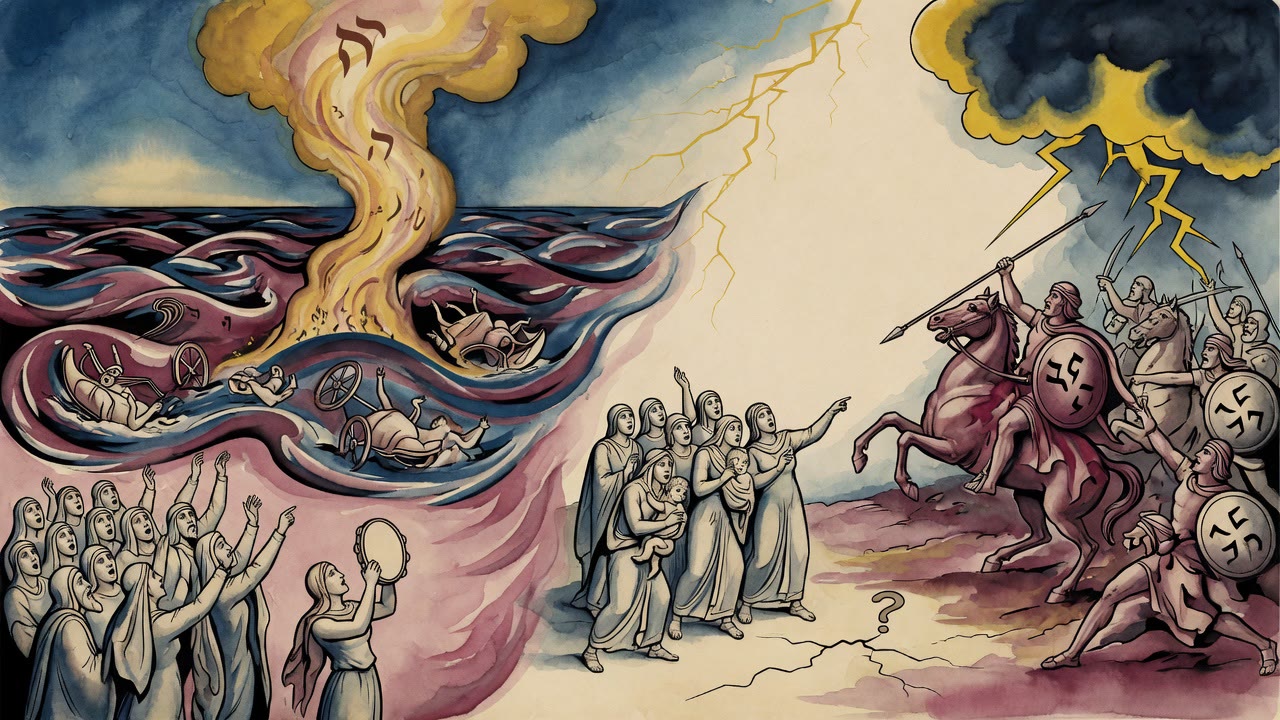
The coastal road was shorter. Along it lay Philistine war and Ephraimite bones. God took the people the long way so they would not turn back.
Table of Contents
 Click for full size
The Road That Looked Like Mercy
Egypt fell behind. Freedom smelled like dust and sea wind. The short road ran up the coast through Philistine country, days fewer than the desert arc, markets and wells already marked by caravans. Any general would have taken it. God did not.
"For the Lord said: Lest the people bethink themselves when they see war, and they return to Egypt" (Exodus 13:17). The verse names the fear before the people feel it. War on the near road. A second thought. A reverse march back into brick and the familiar whip.
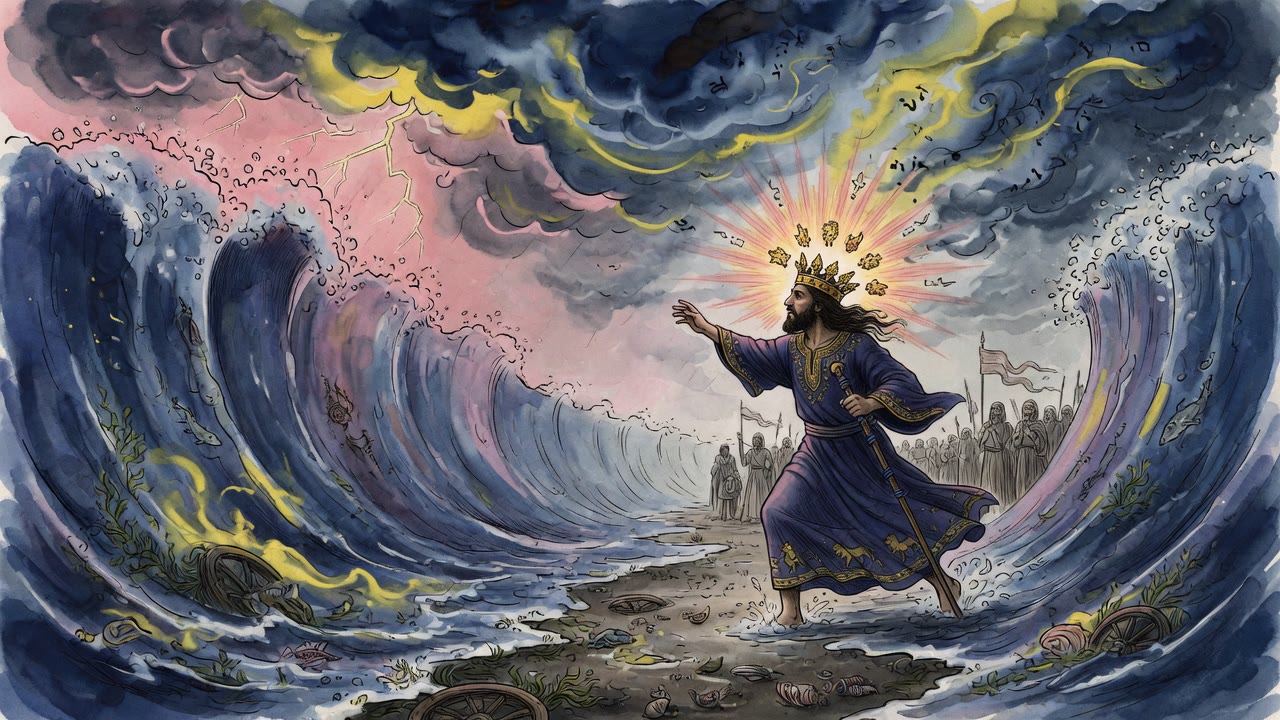
So the pillar turned them into the wilderness of the Sea of Reeds, a longer path that looked, at first, like the wrong kindness. Boots that wanted speed got sand. Eyes that wanted home got horizon without cities.
Mercy sometimes lengthens the map on purpose.
Amalek Waiting in the Calendar
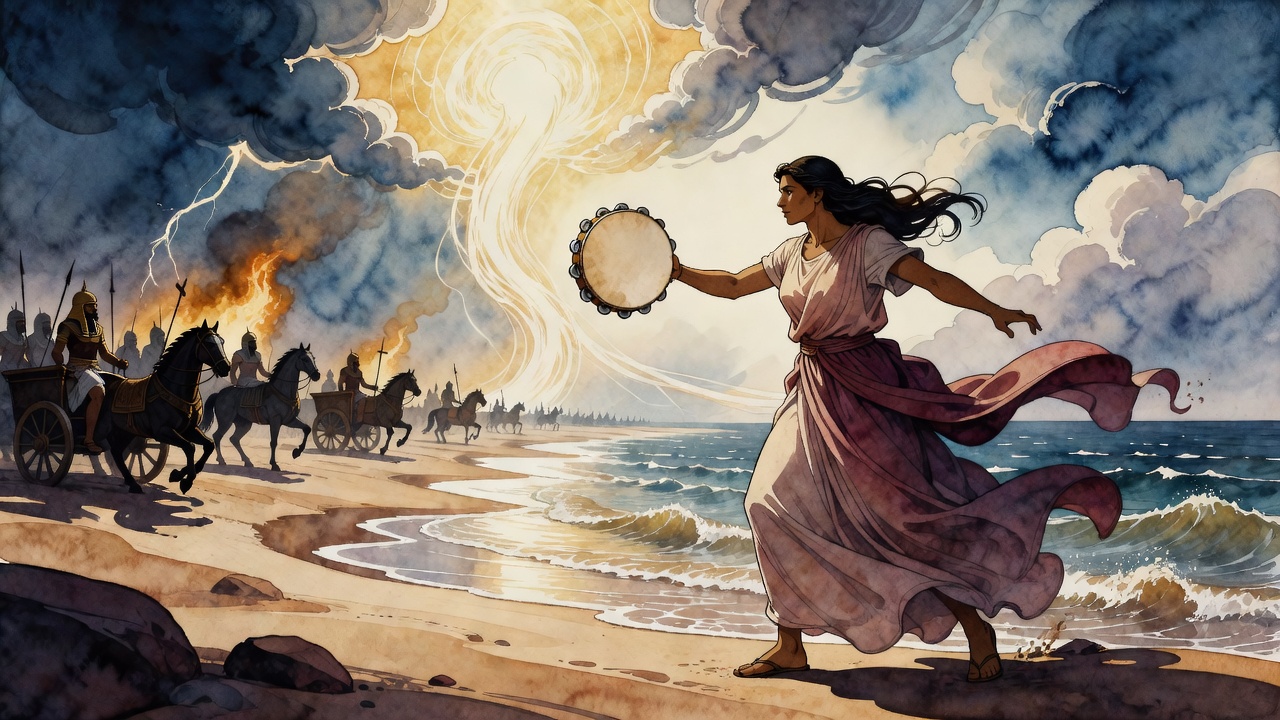
One reading in the Mekhilta identifies the feared war with Amalek, the assault that would later strike Israel from behind, targeting the weak and the straggling. Ingrate against ingrate, another strand says: let Amalek the ungrateful come and exact payment from a people who can forget favors. The desert would hold that battle in its own time, under raised hands and a sun that would not set until the fight allowed.
On the coastal road the same violence might have met them too soon, while their legs still remembered Egypt's stew and their courage still wore slave memory like a second skin. The Holy One delayed the collision until manna and covenant had begun to rewrite the nerves.
Timing is a kind of rescue. Not every enemy should be met on the first free morning. Some enemies need a people who have already learned to walk as free for a few hard weeks.
Amalek would come. The calendar, not the shortcut, would choose when.
The Bones of the Sons of Ephraim
A second reading is colder. The sons of Ephraim had miscalculated the hour of redemption. They left Egypt early, breaking both the appointed time and the oath bound to Joseph's bones: "God will surely remember you, and you shall carry up my bones" (Genesis 50:25). They would not wait for the remembering. They made their own.
They marched out before the hour. They were cut down. Their bodies lay strewn in the land of the Philistines, a field of premature freedom. Chronicles keeps the genealogy of their fall (I Chronicles 7:20-21). The psalm remembers the archers of Ephraim who turned back in the day of battle (Psalms 78:9).
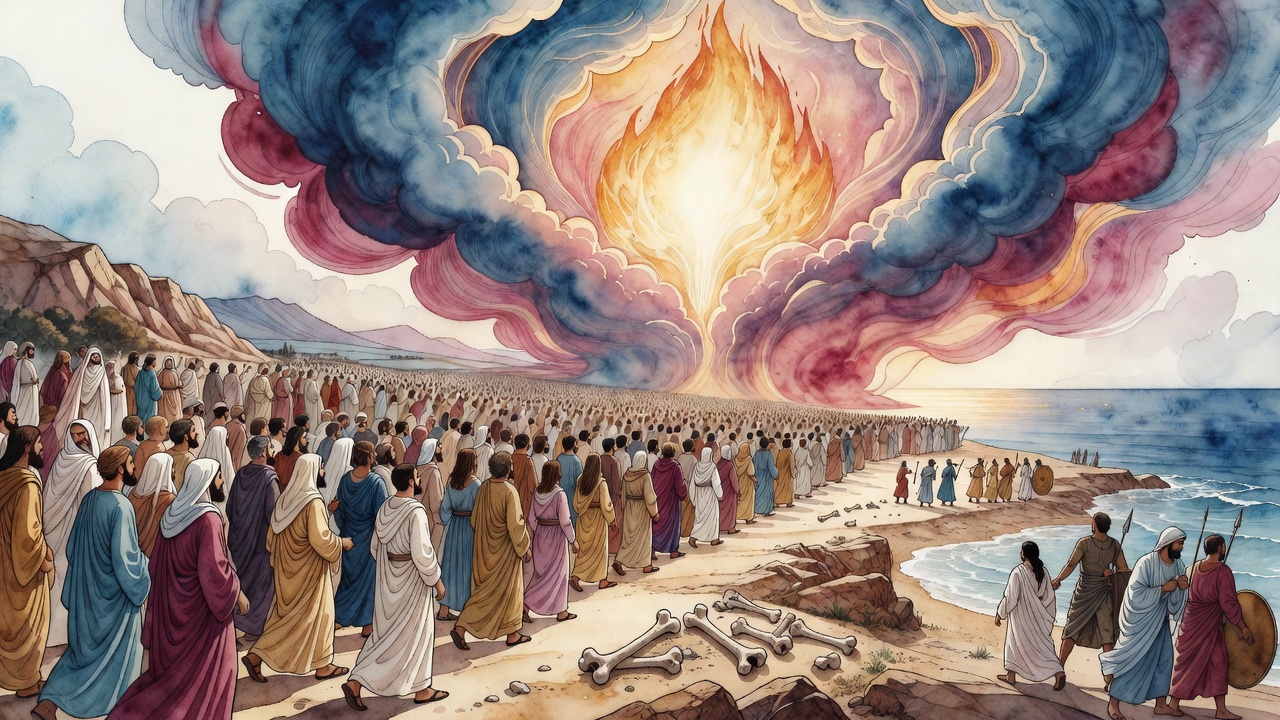
God steered the nation away from that route so they would not see the bones of their slain brethren and, in despair, turn back to Egypt. The short road was a cemetery of cousins. One look at a familiar skull could undo a sea that had already split.
Sight can be a weapon against hope. Heaven refused to hand that weapon to a people still learning how to hope.
If Even the Long Way Bred Panic
The Mekhilta seals the point with an argument from the lesser to the greater. Even on the long, circuitous path the people later cried, "Let us appoint a chief and return to Egypt" (Numbers 14:4). How much more readily would they have fled had He led them by the direct road past the field of the dead?
Freedom is fragile in its first weeks. Sight can undo a miracle faster than hunger. A skull by the roadside can outweigh a split sea in a fearful mind. The Mekhilta does not romanticize the generation. It protects them from a vista they were not ready to survive.
Therefore the detour was not cruelty. It was triage of the imagination. Better extra miles of sand than one mile of cousin bones under a Philistine sky.
They would panic anyway, later, over grapes and giants. At least they would not panic over the proof that leaving early kills.
What the Long Road Taught the Feet
On the desert arc Israel would meet water that turned, bread that fell, a mountain that burned, and a war with Amalek that required raised hands. None of that is gentle. All of it is paced. Each trial arrives after the previous one has begun to rewrite what a free people can bear.
The short road offered speed and corpses and Philistine spears. The long road offered delayed enemies and time for a slave people to learn how to walk as a free one. Moses led them where the calendar of redemption, not the map of merchants, said to go.
Whenever a generation asks why deliverance took the hard path, this verse answers with a coastal road not taken and bones not shown. The pillar of cloud is also a editor of scenery. It hides what would send them running home to the bricks.
Egypt is behind. War is ahead, but not yet. Between them, sand enough to become a people.
← All myths