Nachshon Walked Into the Sea and Judah Took the Crown
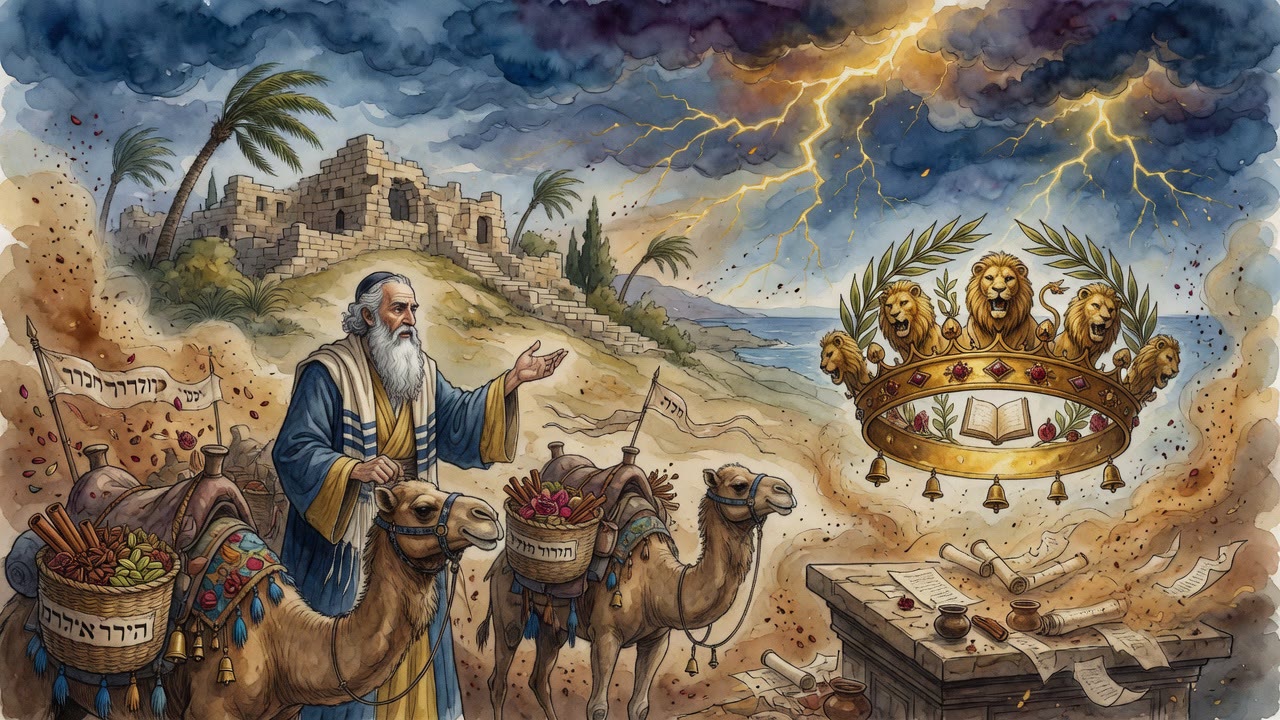
Before a single wave moved, one man waded into the crashing sea up to his throat, and that step decided who would rule Israel.
Table of Contents
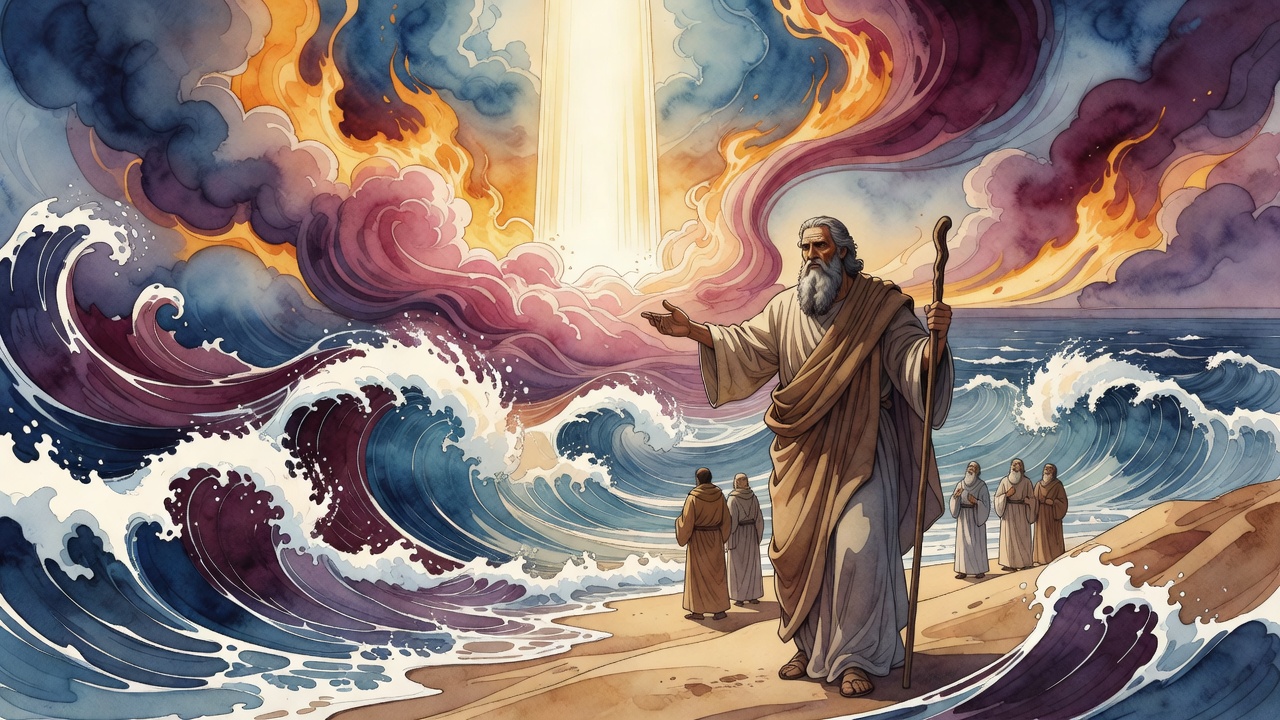
The water had not moved. That was the unbearable part. The sea stood there flat and ordinary, the way water always stands, and behind the people the ground was beginning to shake with the weight of horses. Dust rose on the horizon like a second sea, a brown one, rolling toward the shore where the freed slaves of Egypt stood with the salt wind in their faces and nowhere left to put their feet.
 Click for full size
Four Crowds On One Shore
They did not panic as one body. Fear split them the way a dropped jar splits, into separate pieces that no longer fit. One crowd turned toward the water itself and said, "better to walk in and drown than feel an Egyptian hand on the neck again." Another turned back toward the dust and said, "we should kneel now, before they reach us, and beg to be slaves again, because slaves at least breathe." A third tightened their fists and looked for stones and broken cart-poles and anything that could be swung, ready to die fighting. The fourth simply screamed at the sky, a wall of noise with no plan inside it.
Moshe stood among them and answered each crowd in turn. To the ones edging into the surf he said, "stand still and watch what God will do" (Exodus 14:13). To the ones facing Egypt he said, "the Egypt you see today you will never see again." To the ones gathering weapons he said, "God will fight for you." And to the screamers he said the hardest thing of all (Exodus 14:14): "be silent." Four answers, and not one of them was move. The sea did not part for any of them. It stayed shut, gray and indifferent, and the horses came on.
One Man Steps Off The Sand
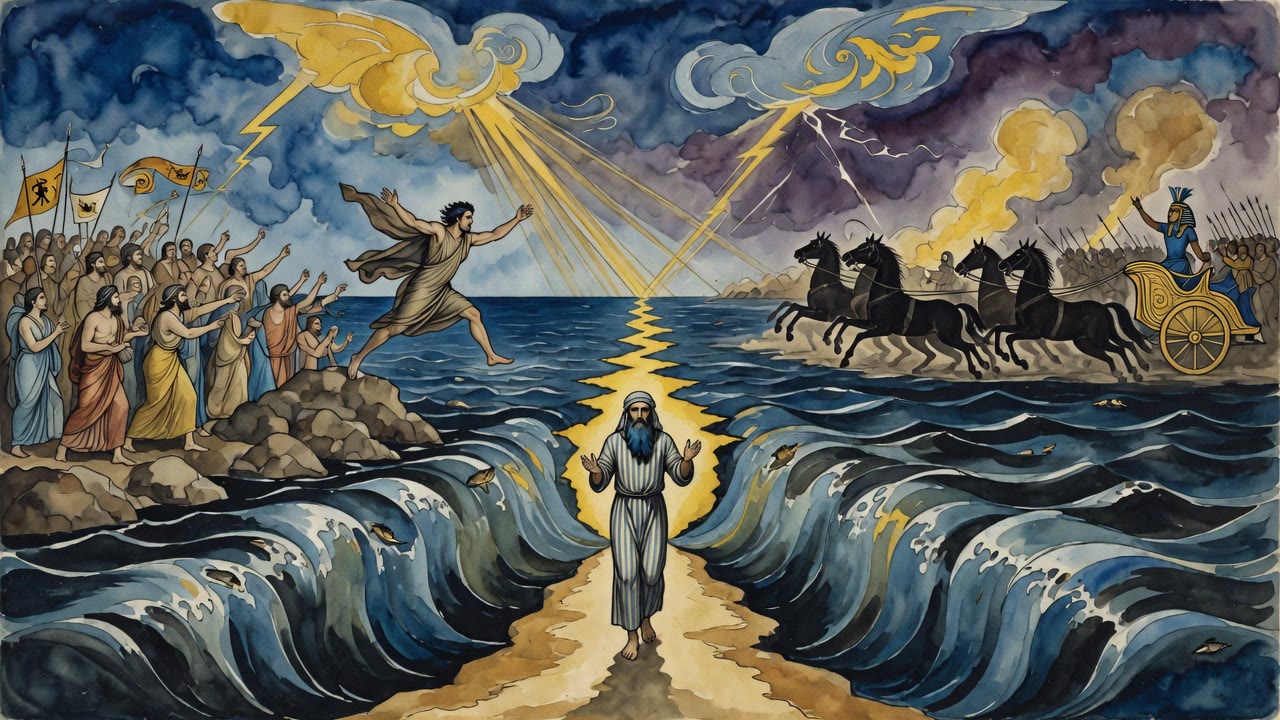
Then a man from the tribe of Judah did the thing no answer had told him to do. Nachshon ben Aminadav walked off the dry sand and into the water.
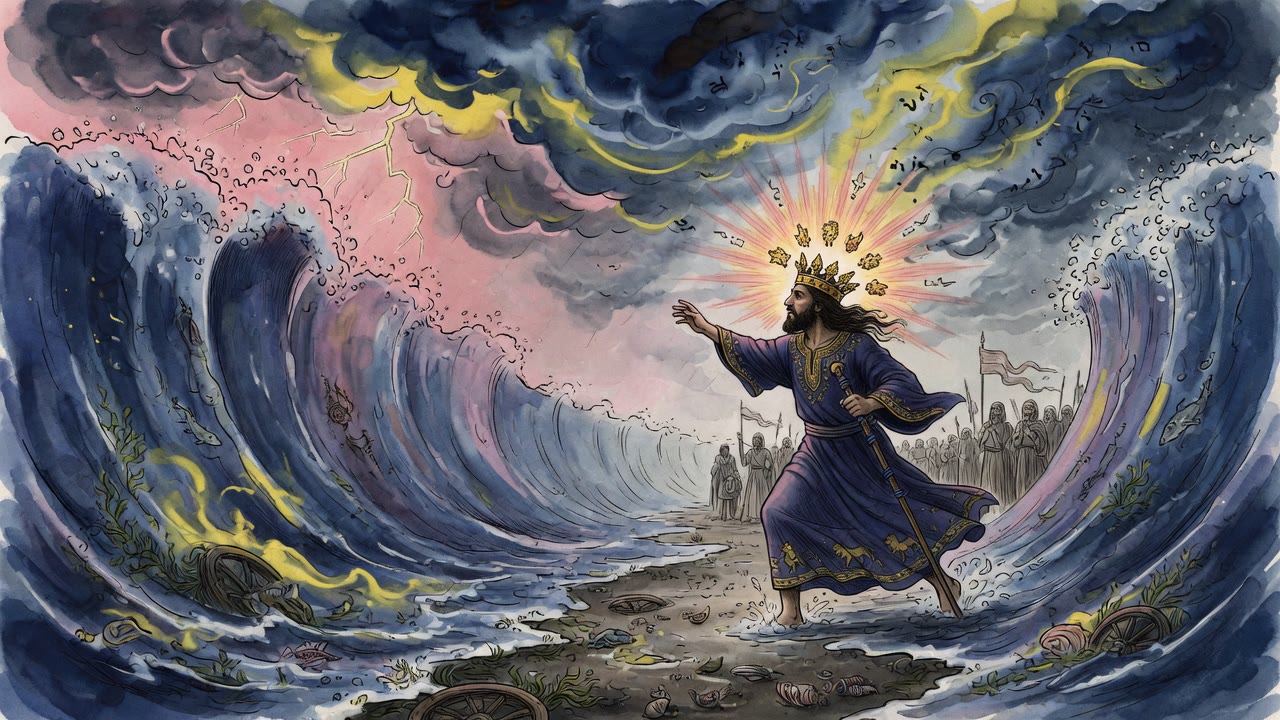
No wind opened a path for him. No corridor of standing water rose up on either side. He waded into a sea that was still only a sea, cold around his ankles, then dragging at his knees, then pulling at his waist with the slow heavy pull that water has when it does not want to let a body pass. He did not stop to see if anyone followed. The waves slapped his chest and then climbed toward his throat, and still he went forward, because he had decided that the God who brought them out of Egypt was more solid than the ground he had just left, even when every visible thing said otherwise.
That was the act. Not a battle won, not a wall scaled, not a clever word. A man choosing to trust where there was no evidence to trust, in front of the whole nation, with his mouth almost in the water. The sanctification of the Name, kiddush Hashem, the lifting up of God in plain sight of everyone, looked like one stubborn figure walking deeper into a sea that had not yet agreed to open.
The Tribes Pour In Behind Him
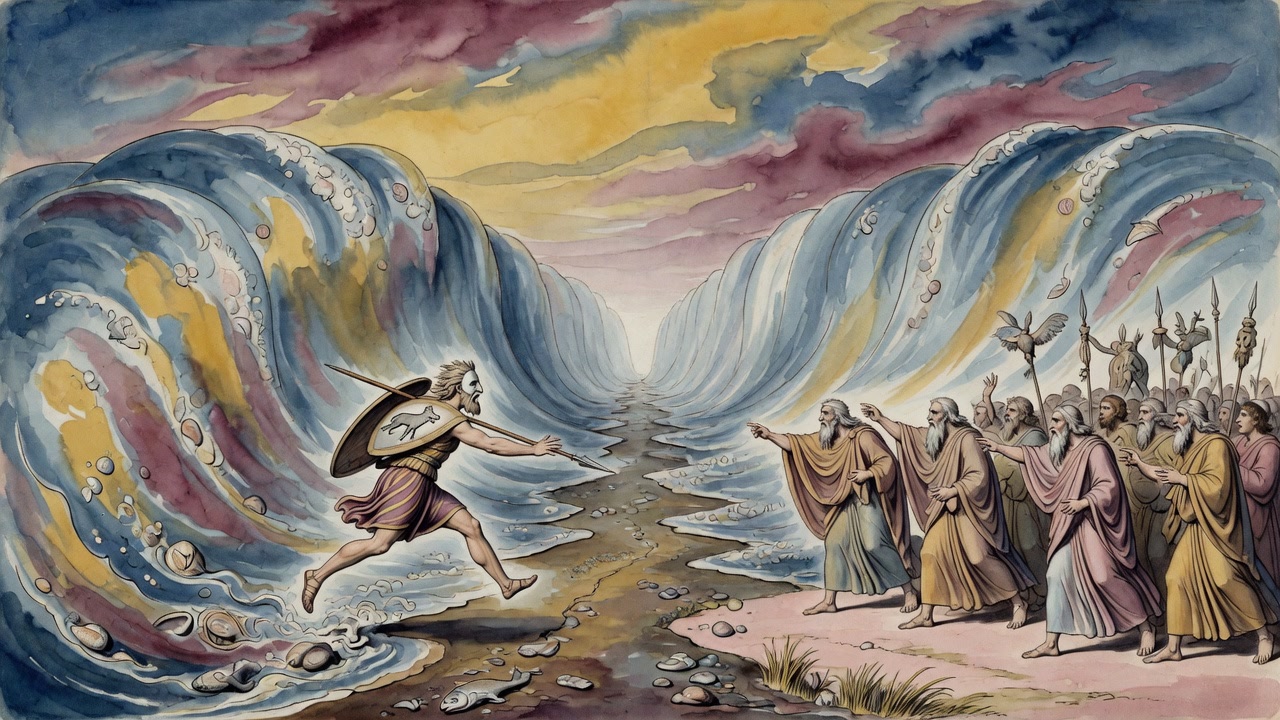
What happened next the tribes told about each other for generations, and they did not all tell it the same way. In one telling, the tribe of Benjamin caught fire from Nachshon's nerve and rushed down into the water first among the tribes, hungry to be early, like the wolf that tears at dawn (Genesis 49:27). In that same telling the men of Judah, furious that anyone had crowded ahead of them, hurled stones to drive Benjamin back from the front. Tribes shoving and stoning each other in rising surf, while behind them the Egyptian chariots thundered toward the same shore.
However the order fell, the water finally answered. It heaped up. It stood. It opened a dry road through the middle of itself, and the whole frightened, quarreling nation walked across the floor of the sea between two trembling walls. Behind them the road closed again over Pharaoh's horses and chariots and drowned the brown sea into the gray one.
God Hands Out The Rewards
On the far shore, dry and alive, the accounting began, and God paid each tribe for what it had done in the water.
To Benjamin, for going down early and unafraid, came the resting place of the Presence, the spot where the holy house would one day stand, the beloved one upon whom God would settle securely (Deuteronomy 33:12). To Judah came something else. To the tribe that walked in first, or stoned its way to the front, or sanctified the Name with Nachshon's throat in the water, came the right to rule. The princes of Judah were named with a word that means kingdom, the same root that dressed Daniel in royal purple and a golden chain and set him third in the kingdom (Daniel 5:29). The crown of Israel was being assigned, and it was sliding toward Judah.
The principle came out plainly, in God's own mouth, with the salt still drying on everyone's skin: "let the one who sanctified My Name at the sea come and rule over Israel." Kingship was not handed to the strongest arm or the oldest bloodline. It went to the tribe whose man had stepped off solid ground first.
Why The Crown Sat On Judah
And it kept paying out, down the generations. The same God who opened the water for Judah and Benjamin opened a later rescue for Zebulun and Naphtali, who went up the mountain with Deborah and Barak and broke an army that had nine hundred iron chariots (Judges 4:6-7). The pattern held. Those who walked first into the danger got the reward that fit the danger, and the man who first wet his face in an unparted sea bought, for his whole tribe, the kingdom of Israel.
So the throne of David traces back, past every palace and battle, to a single moment on a beach. A flat sea. Closing dust. Four crowds doing four useless things. And one figure from Judah, water at his lips, refusing to stop.
← All myths