Pharaoh Watches the Shadow Crawl Toward Hail
God scratches a mark on Pharaoh's wall and times the hail to a moving shadow. The stones that batter Egypt wait later for Sennacherib and the last war.
Table of Contents
 Click for full size
A Scratch Becomes a Clock
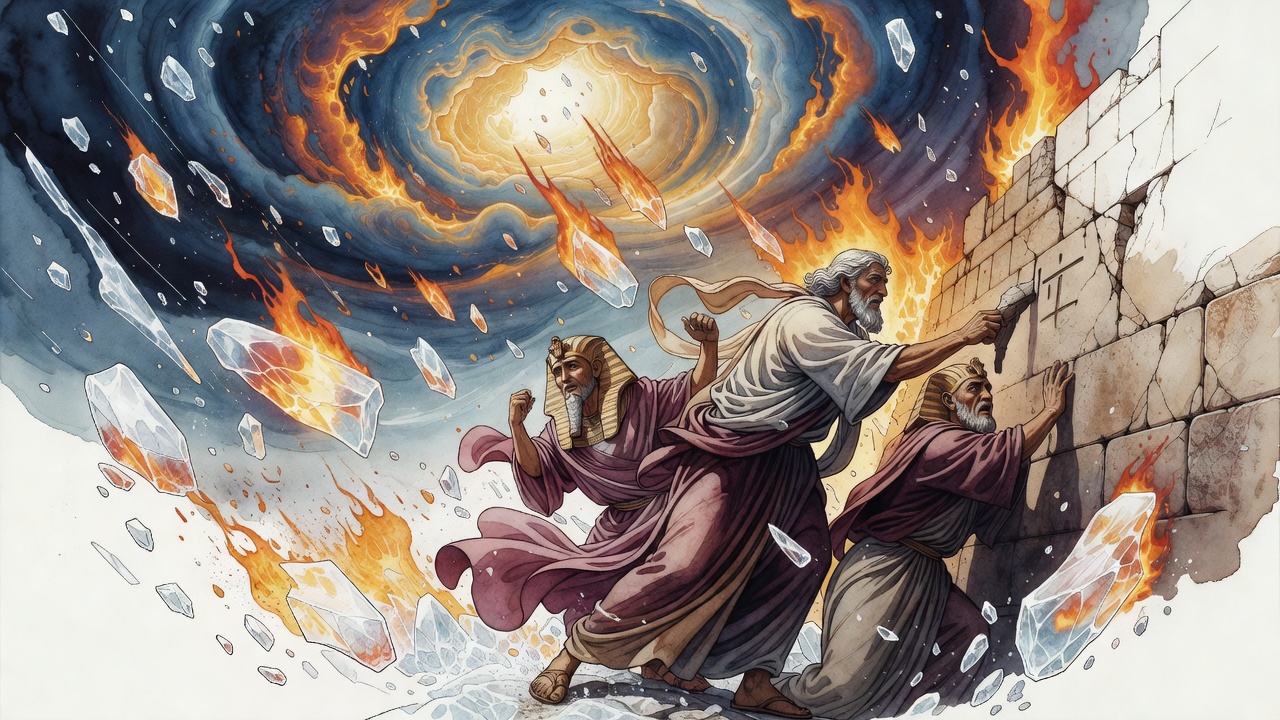
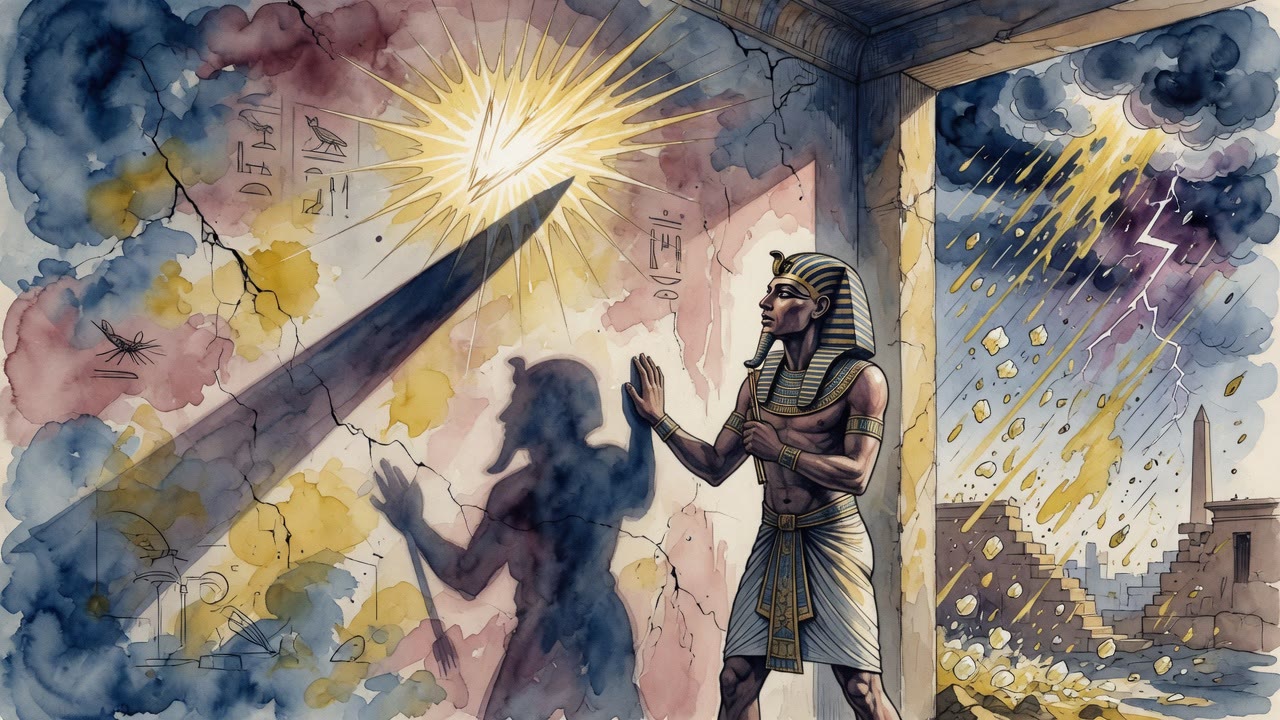
Pharaoh woke to a warning with a measurement on it. "At this time tomorrow I will rain down hail" (Exodus 9:18). God did not leave the hour vague. Zavdi ben Levi taught that the Holy One scratched a single mark upon the wall and said: tomorrow, the moment the sun's shadow touches this line, the hail will fall. A scratch became a doomsday clock. Pharaoh could watch light crawl toward his ruin like a finger on a throat.
He had already filled his heart with dread of Israel. "When a war occurs, they will be added to our enemies and go up out of the land" (Exodus 1:10). So he pressed them into dust until David, ages later, could still hear the shape of that abasement: our soul is bowed down to the dust. From that dust the cry rose: Arise, be a help to us. The deeper the abasement, the nearer the arising. Pharaoh did not hear that part. He heard only a labor force that might one day stand with his enemies.
Shame Poured Into a Crown
When the Lord sent Moses to rise at dawn and stand before Pharaoh, the Psalmist's cry walked with him: set a morah over them. Morah is the flush of shame that reddens a tyrant's face, and the spirit of folly poured into the proud until their schemes turn to nonsense. Nations grasp at lordship and drape themselves in titles fit only for Heaven. The Lord answers by making them feel a Master above them all.
Hiram of Tyre had swollen until he declared, "I am a god." The Holy One answered not with thunder first but with a mirror: I cast you to the ground; before kings I set you, that they might stare. Stripped of pretension, the would-be deity showed as mortal flesh. Let the nations know they are but mortal man. Pharaoh's crown sat on the same clay skull. The shadow on the wall was already teaching him that.
Hail With a Future Tense
Scripture said the hail would be such as has not been the like of it. The sages heard a hidden tense in those words. The like of it had not yet been, but it was destined to be. The plague over Egypt was only a rehearsal. The full storm was being held in reserve.
For whom? Rabbi Simon said it was prepared for the arrogant nations, for Sennacherib, who would one day march against Jerusalem. Rabbi Hanina said it was stored up for the last war, the plague of Gog and Magog, as Ezekiel foretold: torrential rain and hailstones (Ezekiel 38:22). The same stones that battered flax and barley in Egypt are the Lord's standing arsenal, measured out by a mark on a wall, kept ready for every tyrant until the end of days.
When the Line Is Touched
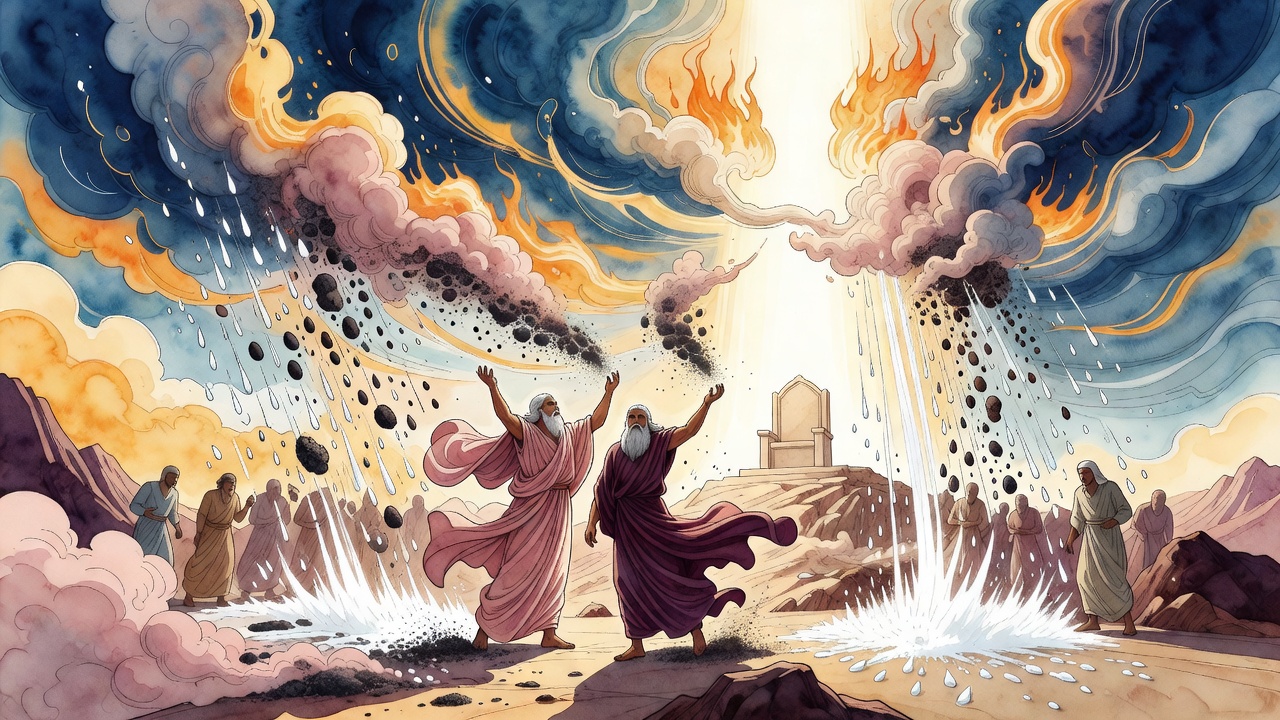
The shadow reached the scratch. Ice and fire fell together, a weather that should not exist, beating men and beasts who had not taken shelter at Moses' word. Pharaoh's mouth, which had begun with "I do not know the Lord," would later be forced to other sentences. Enemies cower. Proud tongues become witnesses against themselves. The denier turns into the doorman who finally says Go.
Still the leftover hail waits somewhere past history's next arrogant camp. Egypt was the demonstration. The inventory remains. A king who feared slaves might join his enemies learned that Heaven had already joined the argument with ice, and had not spent the whole magazine in one afternoon.
Mortal Men in God Costumes
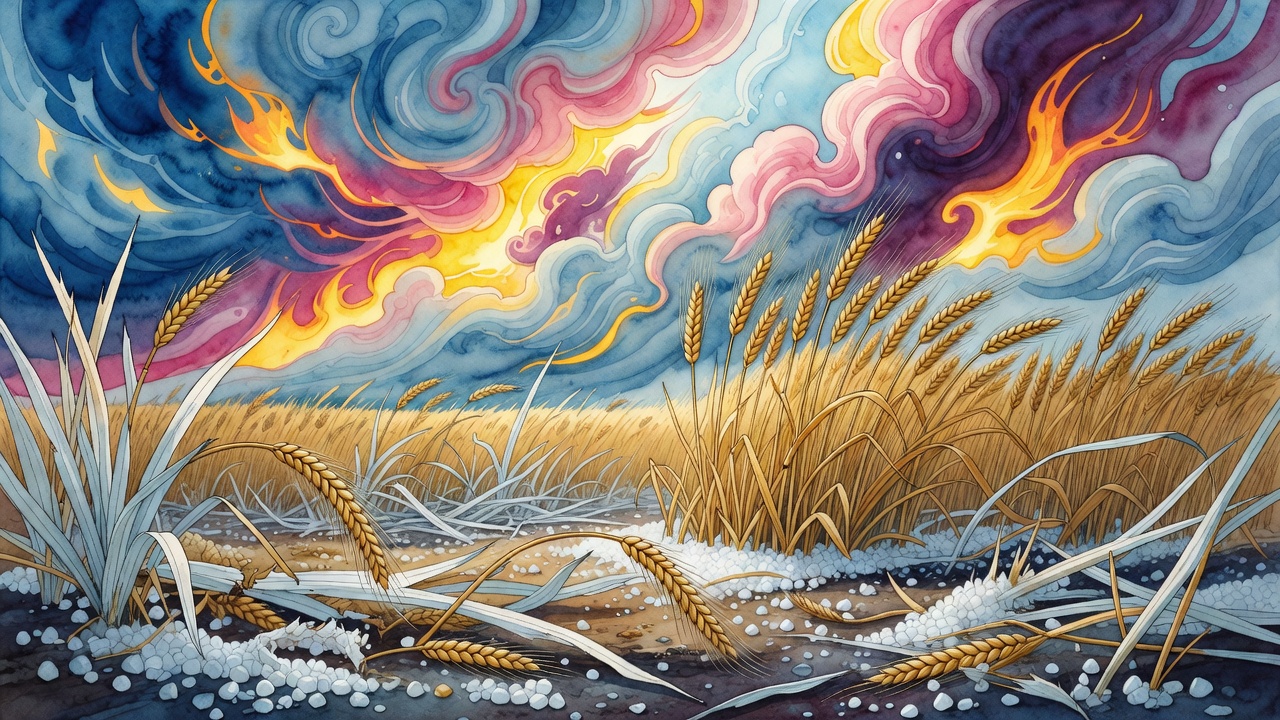
Pharaoh's fear of Israel joining his enemies was a strategist's fear. It still misread the board. The real alliance forming was not Hebrew slaves with foreign armies. It was Heaven with a schedule scratched into plaster. While he calculated troop loyalty, the light moved. Servants who had taken Moses at his word hurried livestock under roofs. Servants who trusted the crown left flax standing for the ice to find.
Hiram's later boast and Pharaoh's present stubbornness share one anatomy. A chest puffed with divinity. A skull full of bone. Morah is what happens when God makes the flush rise and the plot turn foolish. Hail is what happens when the flush is not enough and the sky itself becomes argument. The leftover stones, waiting for Sennacherib and for Gog, mean Egypt was never the last customer. Tyrants keep arriving. The inventory does not expire.
When the line of shadow finally kissed the scratch, the rehearsal began. Fire and ice in one storm taught a lesson no court magician could rephrase. Pharaoh would still harden, still bargain, still break and re-form. But the wall had already told the truth: his hours were measured, his flesh was mortal, and somewhere beyond his dynasty the same cold waited for the next man who thought himself more than man.
← All myths