Parshat Bo5 min read

God Struck Egypt at Midnight So Moses Would Not Seem a Liar

Moses told Pharaoh the blow would fall at about midnight, and God kept the servant's wording so the trusted messenger would not seem to lie.

Curated by Arthur · Told by Maggid ·
Table of Contents
  1. About Midnight, Not After
  2. My Servant Is Trusted in All My House
  3. An Angel Named Him, God Confirmed Him
  4. Distress, Cry, and Memory
  5. The Hour That Belonged to a Mouth
God Struck Egypt at Midnight So Moses Would Not Seem a Liar Click for full size

About Midnight, Not After

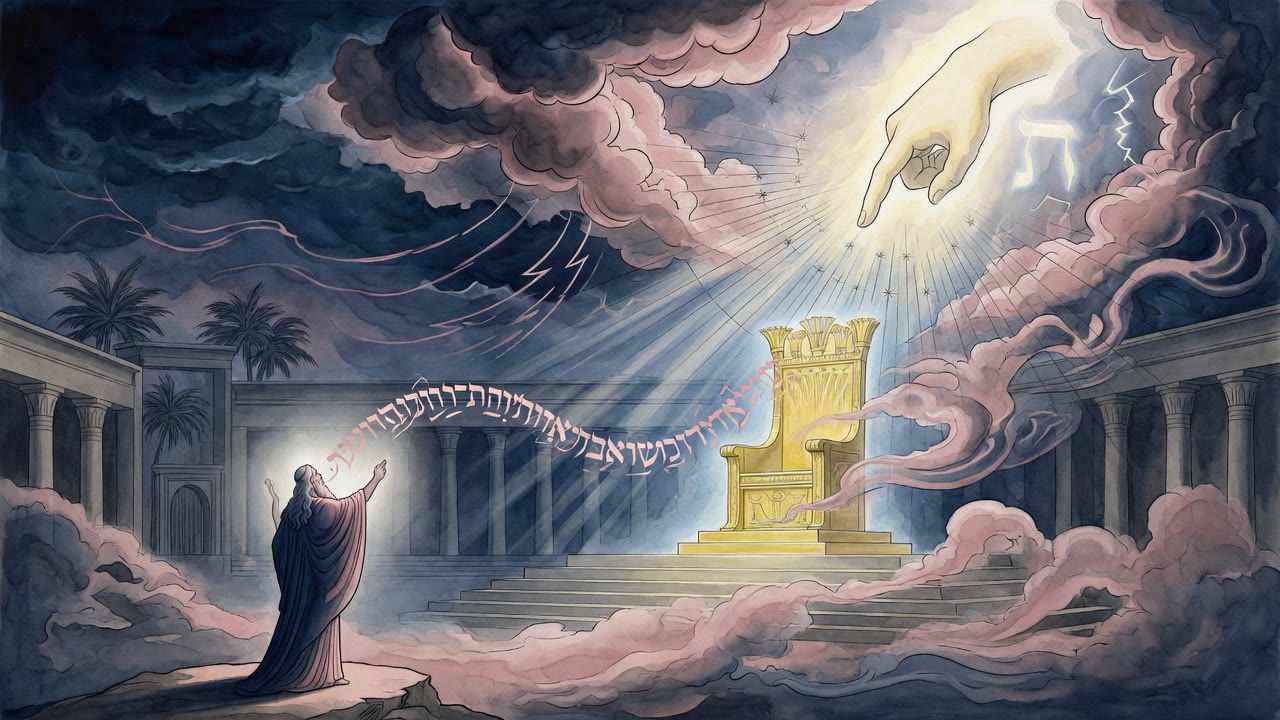
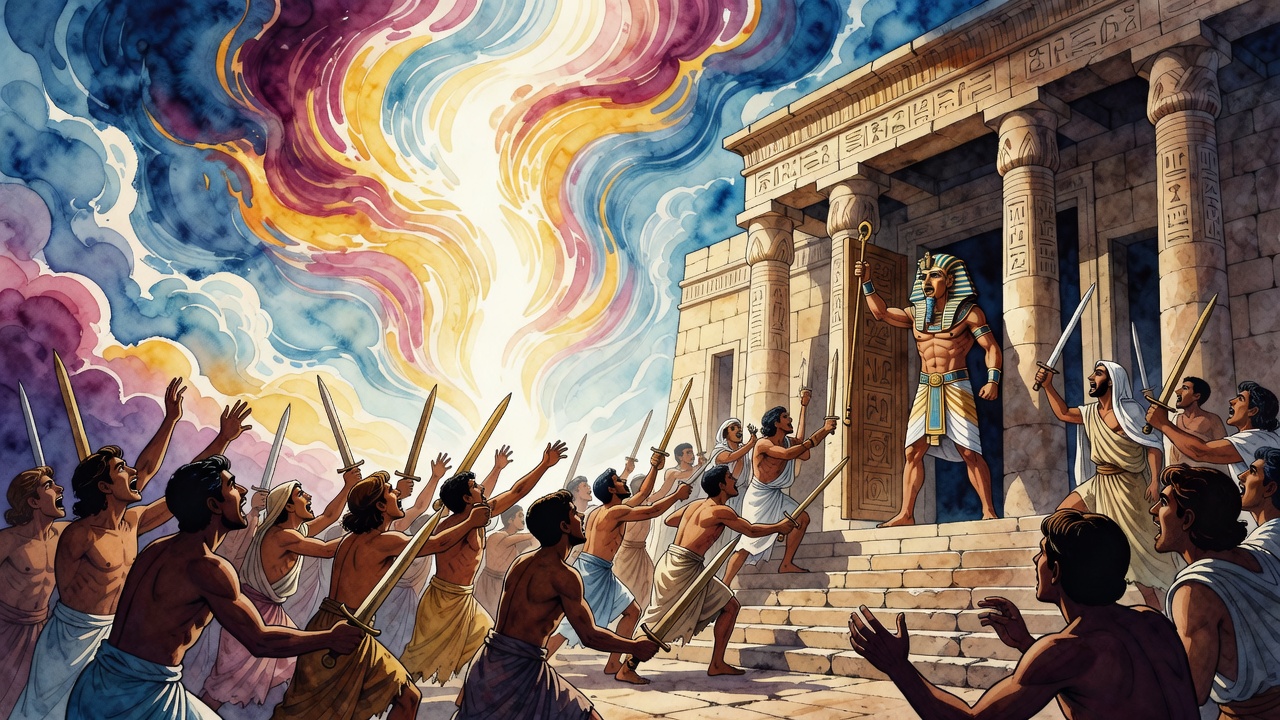
Moses stood before Pharaoh with a threat that could not afford a wrong hour. God had said He would pass through Egypt in this night (Exodus 12:12). Moses said to the king, Thus says the Lord: About midnight I will go out into the midst of Egypt (Exodus 11:4). One word, kechatzot, about the middle of the night, changed the shape of the blow.

Astrologers in the palace could argue edges. Exact midnight on whose water clock? Which bowl, which star, which priest's count? Moses refused to hand them a wedge. He softened the edge of the hour so that if their instruments erred by a breath, the prophet would not be called a liar. Care with language became part of the plague's delivery system.

Then the Holy One looked at His own earlier speech and at His servant's mouth.

My Servant Is Trusted in All My House

God had already said of Moses, He is trusted in all My house (Numbers 12:7). Shall My servant Moses be like a liar, a kazvan? Rather, whatever Moses said, about midnight, I will do about midnight. Therefore it was at midnight that the Lord struck (Exodus 12:29).

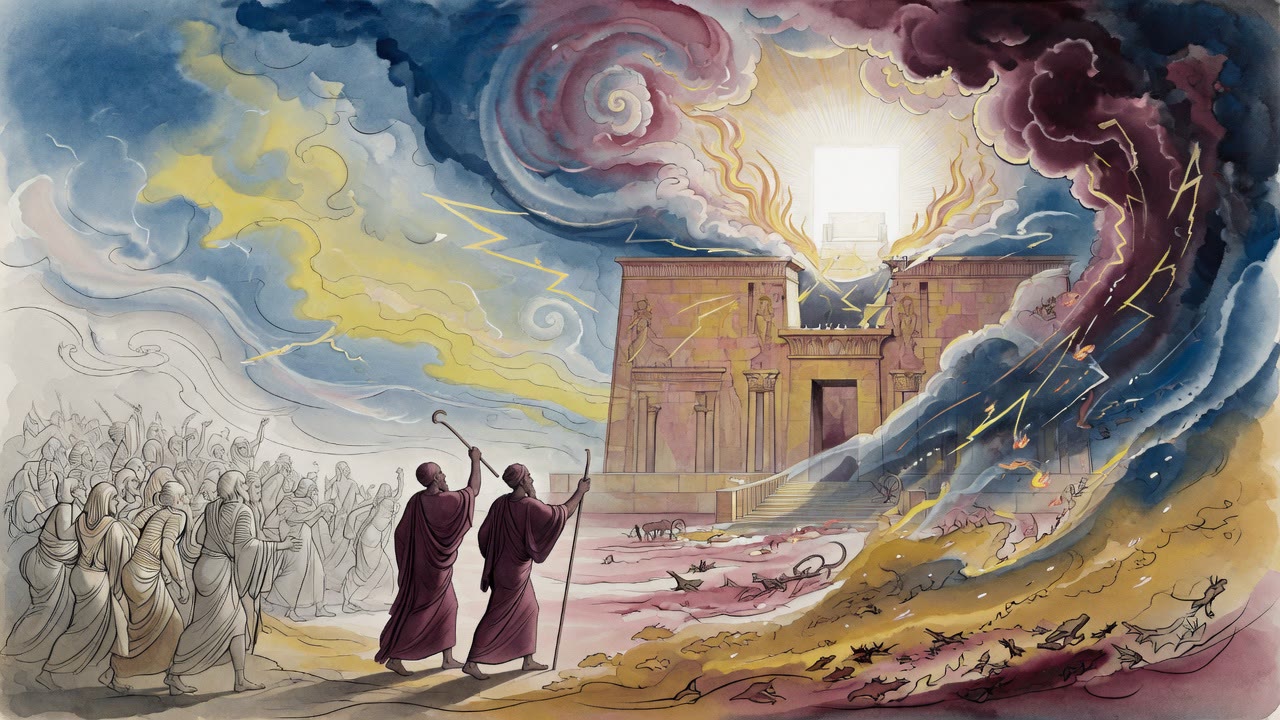
Heaven moved its clock to match a human sentence. The firstborn died under an hour Moses had framed. Blood on the doorposts met a night that honored the messenger as much as the message.

In the lanes of Goshen, families chewed the roasted lamb with shoes on and listened for cries beyond the blood line. Parents checked doorposts twice. Children asked why they must stand ready at an hour no one could point to on a wall. The midrash later hears in that night not only judgment but loyalty: God keeps the wording of the one He sent, even when that wording is more cautious than the first divine draft.

An Angel Named Him, God Confirmed Him

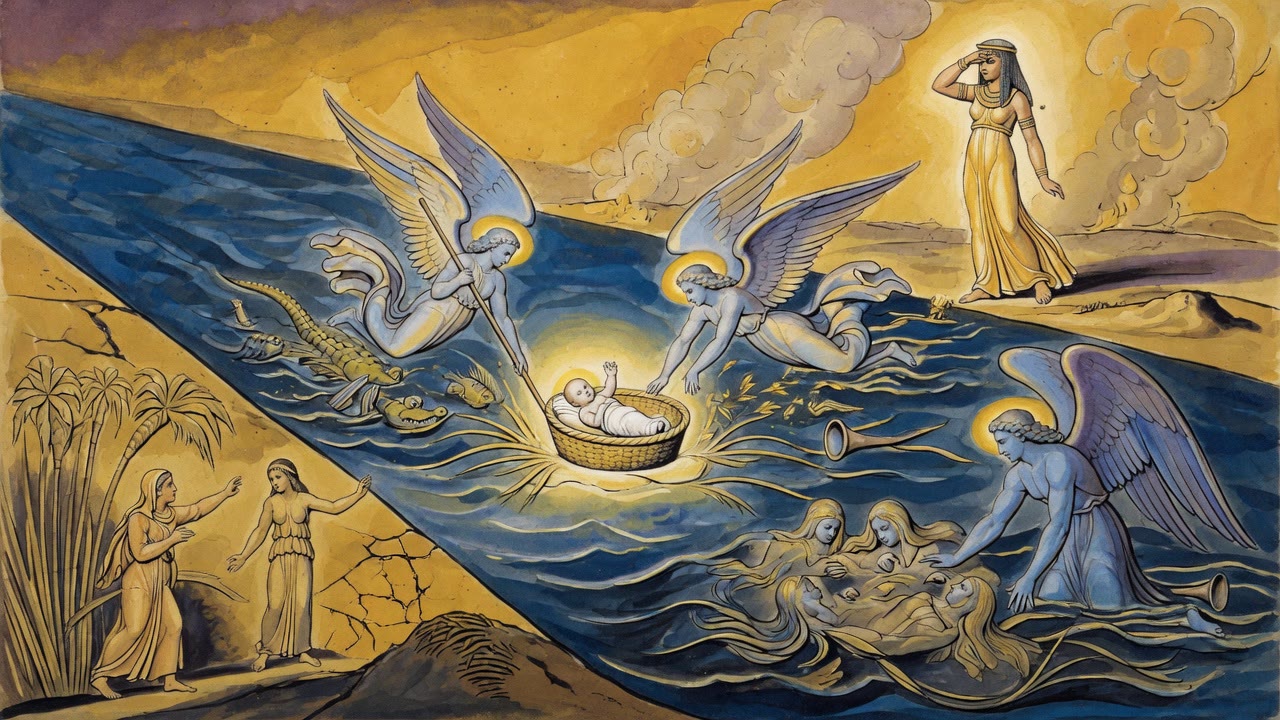
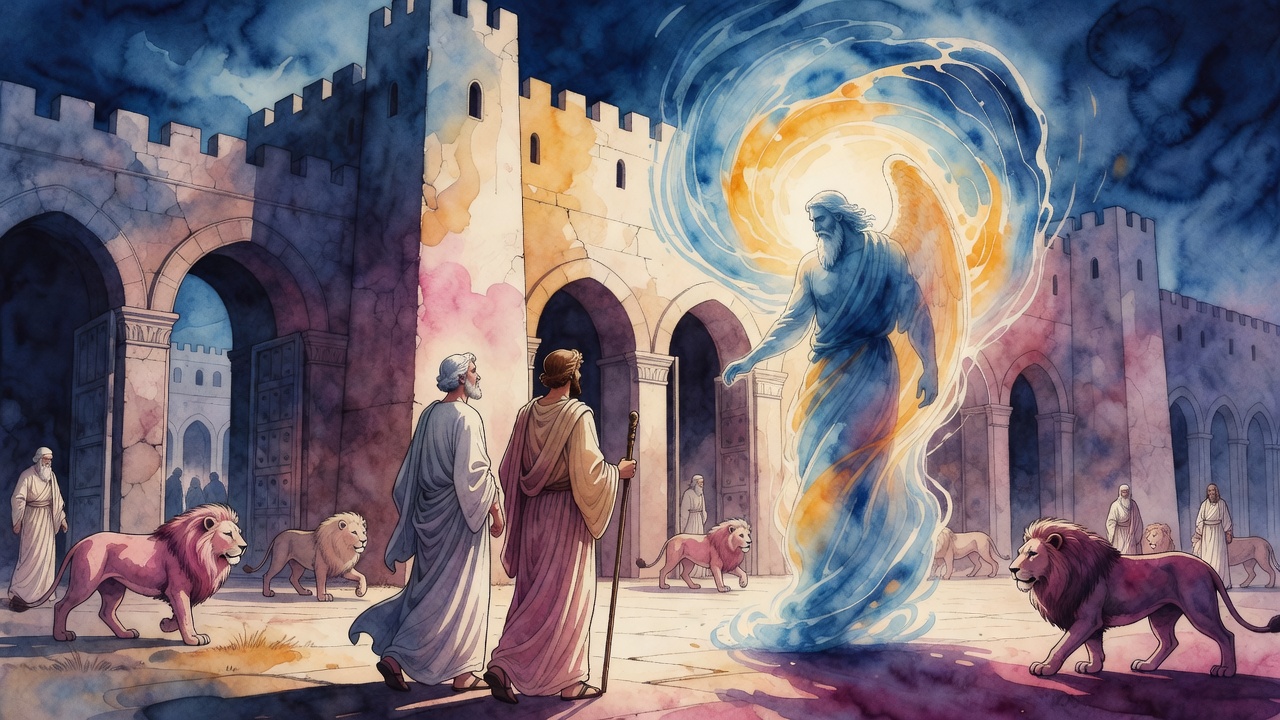
The same teaching chain remembers Jacob at the ford. An angel wrestled him and said his name would no longer be Jacob but Israel (Genesis 32:28). Later God Himself appeared and repeated the name change (Genesis 35:10). Why twice? To confirm the word of the messenger. If God stands behind an angel's decree, how much more will He stand behind all the prophets who swear that Jerusalem will be inhabited again (Isaiah 44:26).

Moses is called both servant and messenger in that reading. Confirm the word of His servant. Perform the counsel of His messengers. The midnight plague becomes one more place where heaven refuses to let its agents look foolish in public.

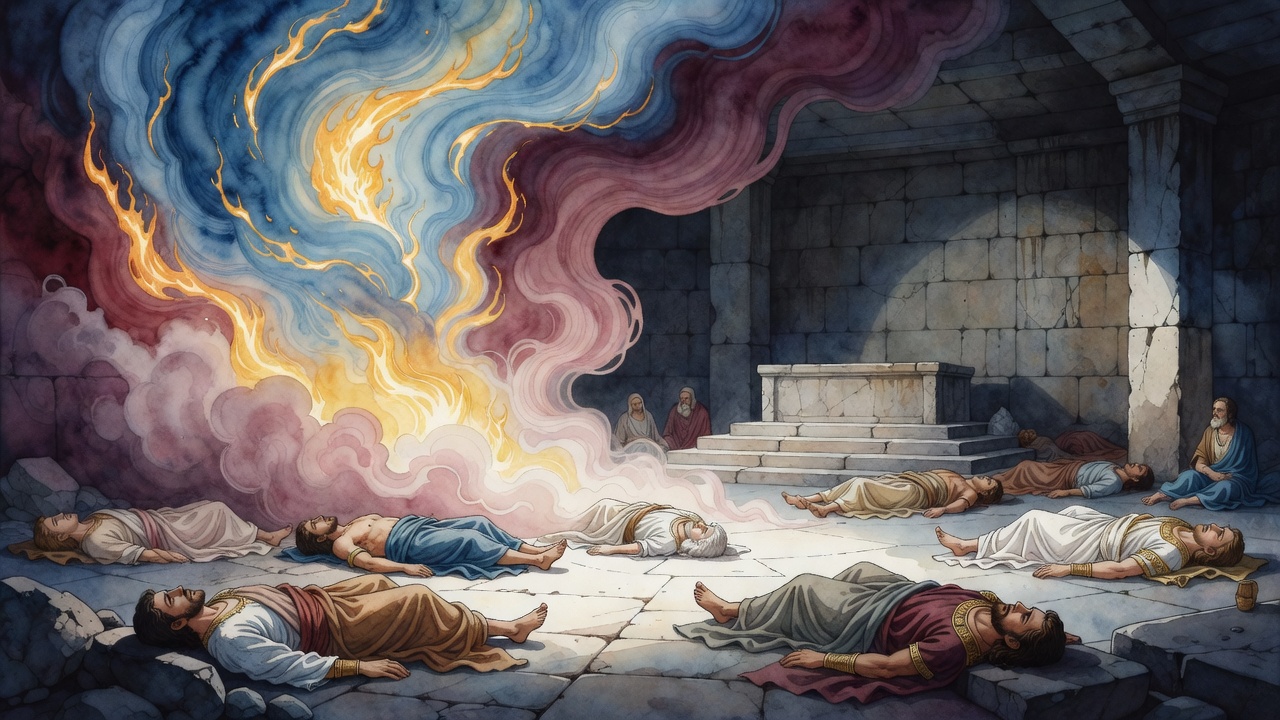
Pharaoh's dead learned the confirmation the hard way. Israel's living learned that a prophet's careful speech is not smallness. It is craft under pressure.

Distress, Cry, and Memory

Rabbi Elazar, reading a later psalm, lists what draws salvation: distress, prayer, the merit of the fathers, repentance, and the appointed time. He saw that they were in distress when He heard their cry (Psalms 106:44). Egypt was the workshop where those five first burned together.

Midnight was the appointed edge. The cry had already risen from mud and bricks. The covenant with Abraham, Isaac, and Jacob was already old. Moses' mouth, trusted and careful, became the hinge on which the hour turned.

A child waking to the sound of Egyptian grief did not know the midrash of kechatzot. He only knew the door held and the night kept its promise. That was enough to walk out at dawn.

The Hour That Belonged to a Mouth

Years later, when teachers wanted to show that God confirms prophets, they did not begin with abstractions. They began with a man who said about midnight and a God who refused to embarrass him by a different stroke of the clock.

Empires still hire astrologers. Prophets still choose words that leave no honest crack for mockery. The God of Israel, in this telling, would rather move the plague than let Moses look untrue.

The lamb bones were burned. The people left with dough that had not risen and with a story about midnight that would outlive every Egyptian clock. Somewhere behind them, a water clock in Pharaoh's house still dripped, useless, past an hour heaven had already claimed for a servant's sentence. Trust, in this telling, is not only Israel trusting God. It is God refusing to let Moses look untrue before a court of mockers.

Rabbi Elazar's five gates of salvation (distress, cry, fathers' merit, return, and time) all stood open that night. The matched hour was the gate of time swinging on a hinge Moses had carved with one careful word: about. About midnight was enough for death to find the right houses and for prophecy to keep its name clean.


← All myths
From the tradition

Sources

2 sources

The texts behind this telling. Some cards carry a translation of the source; others are our own retelling of it, and each card says which. Every card links out to the original.

Pesikta DeRav Kahana 7:3Pesikta de-Rav Kahana

Translation of the source text.Sefaria-hosted English translation · CC-BY

[3] "He confirms the word of His servant and fulfills the counsel of His messengers; who says of Jerusalem, 'It shall be inhabited,' and of the cities of Judah, 'They shall be rebuilt, and I will raise up its ruins'" (Isaiah 44:26). Rabbi Berekhiah in the name of Rabbi Levi: He who confirms the word of His servant and fulfills the counsel of His messengers, do we not know that He says of Jerusalem, "It shall be inhabited," and of the cities of Judah, "They shall be rebuilt"? Rather, one angel was revealed to our father Jacob and said to him, "What is your name?" And he said, "Jacob." And he said, "Your name shall no longer be called Jacob, but Israel" (Genesis 32:28, 29). The Holy One, blessed be He, was revealed to our father Jacob to confirm the decree of that angel, and God said to him, "Your name is Jacob," and so forth (there, 35:9, 10). Jerusalem, concerning which all the prophets prophesy that it will be rebuilt, all the more so.

Another interpretation: "He confirms the word of His servant" (Isaiah, there), this is Moses, "Not so My servant Moses" (Numbers 12:7). "And fulfills the counsel of His messengers" (Isaiah, there), this is Moses, "And He sent a messenger and brought us out of Egypt" (Numbers 20:16). The Holy One, blessed be He, said to Moses: Go, say to them, to Israel, "And I will pass through the land of Egypt on this night" (Exodus 12:12). Moses went and said to Israel, "Thus says the LORD: About midnight I will go out into the midst of Egypt" (there, 11:4). The Holy One, blessed be He, said: I have already assured Moses and said to him, "Not so My servant Moses; in all My house he is faithful" (Numbers 12:7); shall My servant Moses be as a liar? Rather, just as Moses said "about midnight," so too I will act about midnight. Therefore, "And it came to pass at midnight" (Exodus 12:29).

Full source
Midrash Tehillim 106:9Midrash Tehillim

Retold in our words. Read the original at the link below.Rabbi Mike Feuer, Jerusalem Anthology · CC-BY

A collection of rabbinic teachings on the Book of Psalms, there are five key elements that can bring about Israel's – and perhaps our own – salvation. Rabbi Elazar lays it out for us, drawing from (Psalm 106:44), "And He saw that they were in distress when He heard their cry."

First, there's distress itself. It might sound counterintuitive, but Rabbi Elazar sees distress as a catalyst. "And He saw that they were in distress," the verse reminds us. It's when we hit rock bottom, when we're truly vulnerable, that readers often open ourselves up to something greater. That feeling of being broken can actually be the first step towards being rebuilt.

Then comes prayer. "When He heard their cry." That cry, that raw, unfiltered plea from the heart – that's what connects us. It's not about fancy words or perfect rituals; it's about genuine connection. It’s the unvarnished truth of our needs reaching out to the Divine.

What about those who came before us? The merit of the fathers, zechut avot, plays a vital role. "And He remembered His covenant with them." Our ancestors, their struggles, their faith – it all echoes down through the generations, a legacy of strength and resilience. We stand on their shoulders, benefiting from their devotion.

Next, we have repentance, teshuvah (repentance). The text references, "He was appeased by my great kindness." This isn't just about saying sorry. It's about turning away from old patterns, making a conscious effort to change. It’s about recognizing that we have the power to shape our own destinies and choosing to do better.

Finally, there's "the end," which Rabbi Elazar interprets as the Messianic era. "Save us, O Lord our God, and gather us from among the nations," (Psalms 106:47). It's a vision of a future where everything is set right, a world of peace and harmony. This hope for the future, this belief in a better tomorrow, fuels our perseverance today.

Even Moses, that towering figure of Jewish history, seemed to encapsulate these five elements in a single verse. As (Deuteronomy 4:30) states, "When you are in distress and all these things have come upon you.." It's a reminder that these themes are interwoven, interconnected, and always relevant.

And what of that simple word, "Amen"? Rabbi Elazar, quoting Rabbi Yose ben Zimra, reveals its profound significance: "'Amen' is an oath, 'Amen' is acceptance," alluding to (Psalm 41:14). It's more than just a closing remark. It's a declaration, a commitment, a collective affirmation of faith and hope. It's like saying, "Yes, I believe. Yes, I accept. Yes, I'm in."

Remember that even in the depths of despair, there is always hope for redemption. Remember the power of prayer, the legacy of our ancestors, the possibility of change, and the promise of a brighter future. And when you say "Amen," say it with conviction, knowing that you're joining a chorus that has echoed through the ages.

Full source