Pharaoh Pounded on Moses' Door at Midnight
Kings do not rise before the third hour. This one was out in the dark asking strangers where to find the man he had thrown out of his hall.
Table of Contents
 Click for full size
The King Went House to House
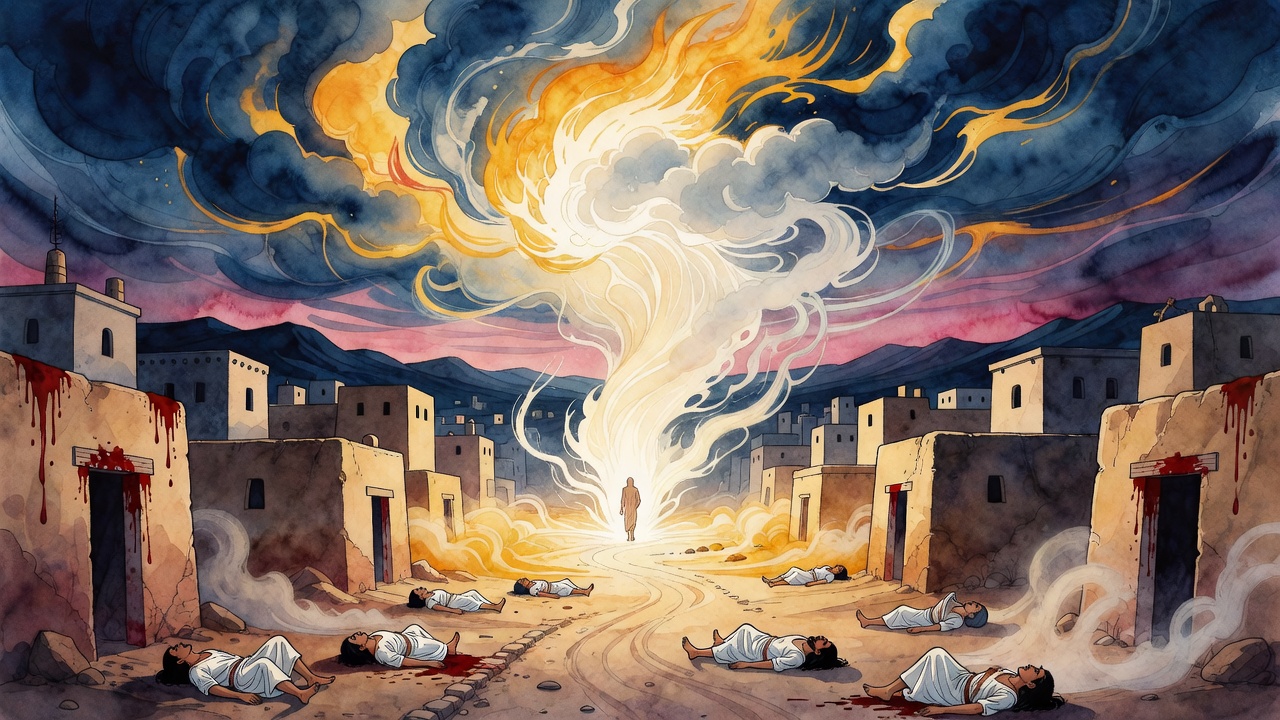
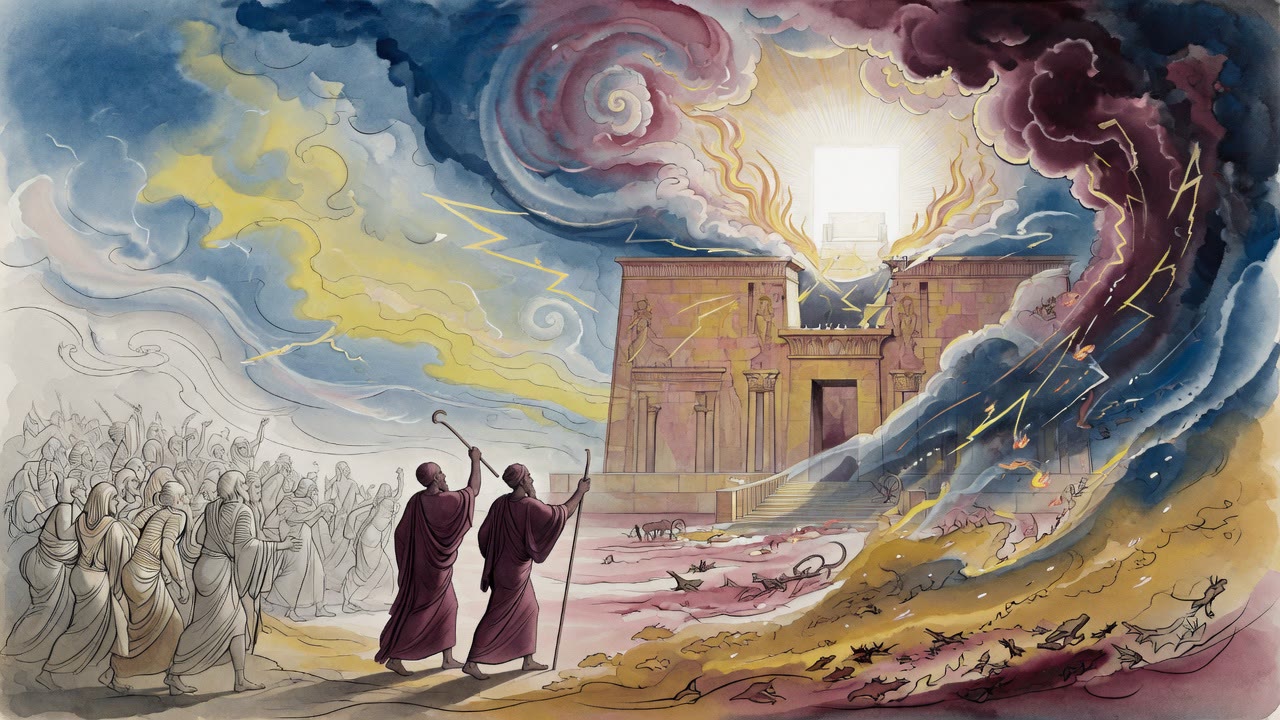
It was past midnight when the screaming started. Pharaoh was out of bed at an hour no king keeps. He did not send a runner. He went himself, from his officers' houses to the houses of ordinary Egyptians, standing each household up out of its place to see whether the thing was true on every street.
It was. The cry went up over the whole country, exactly as Moses had promised, and there was not a house without a dead man in it.
His feet, unused to night streets, learned the map of his own country one doorway at a time.
The Statues and the Dogs
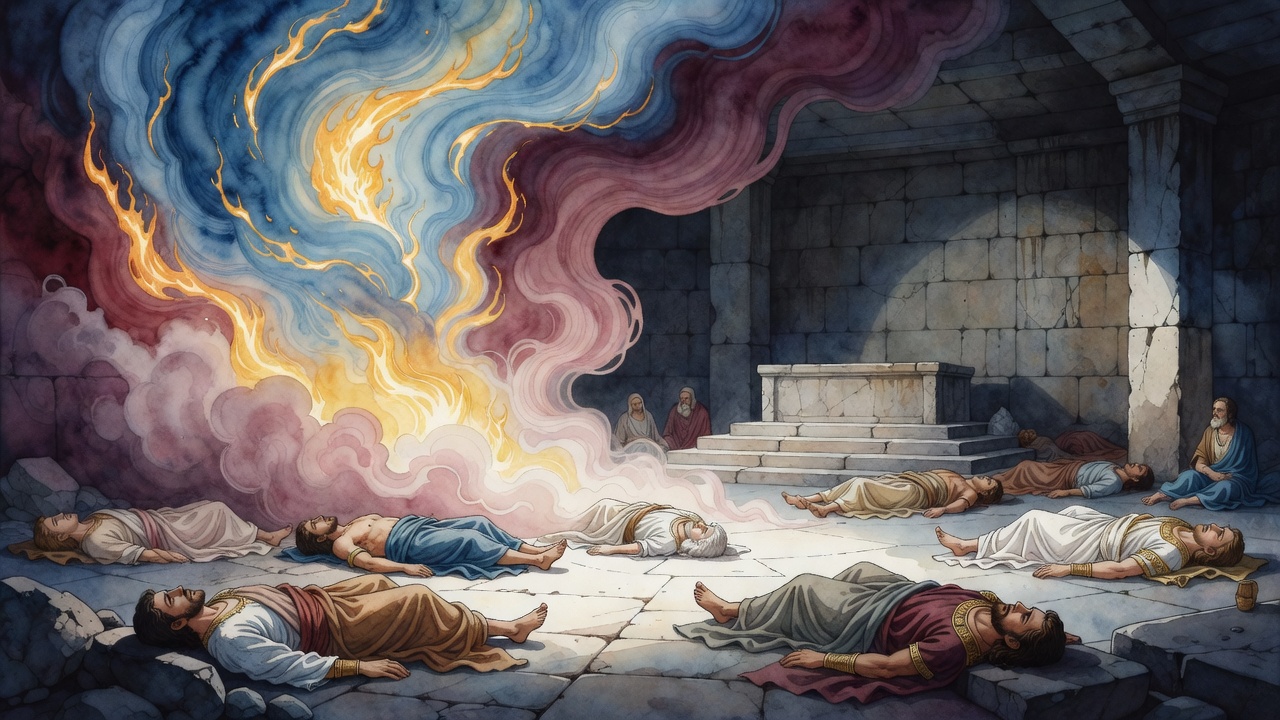
Not every house held a firstborn to lose. Those houses lost one anyway. When an Egyptian family buried a firstborn, they carved his likeness and stood it in the room where they ate, and that night every one of those figures was ground down, crushed, and scattered across the floor. Women who had folded away their mourning years earlier woke to a day as hard as the day of the burial.
Egyptians buried their dead inside their own walls. The dogs came in through the burial niches, dug the firstborn out, and dragged them through the rooms, worrying the bodies like meat. Twice in one night a household buried the same son.
Where Does Moses Live
Pharaoh went looking for the man he had thrown out, and he did not know the address. He crossed Egypt asking strangers in the dark. Where does Moses stay. Where does Aaron stay. Somebody finally pointed.
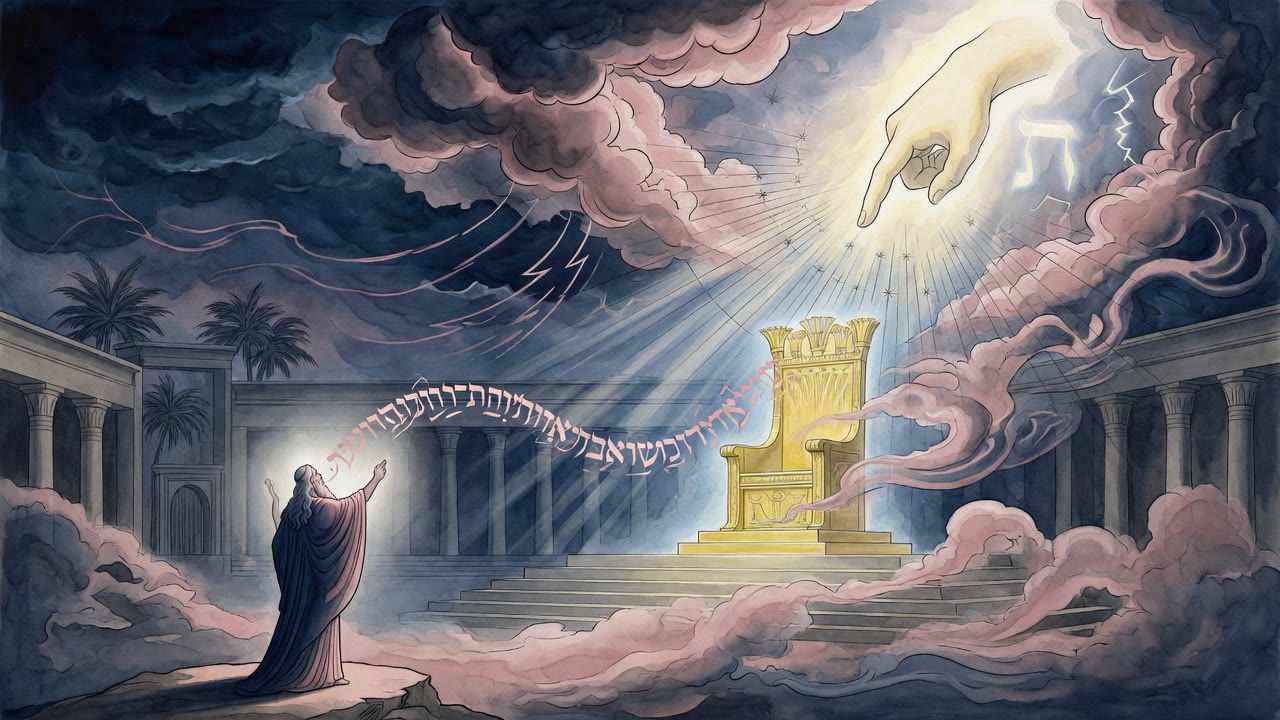
He had once stood in his own hall and told Moses to get out of his sight and never look at his face again. "You have spoken well," Moses had answered. "You have spoken at the right time." Then he had promised that Pharaoh's servants would come down and bow and beg Israel to go. Servants. Moses knew perfectly well who would come first, and he said servants anyway, because a crown is owed something even while it is being broken.
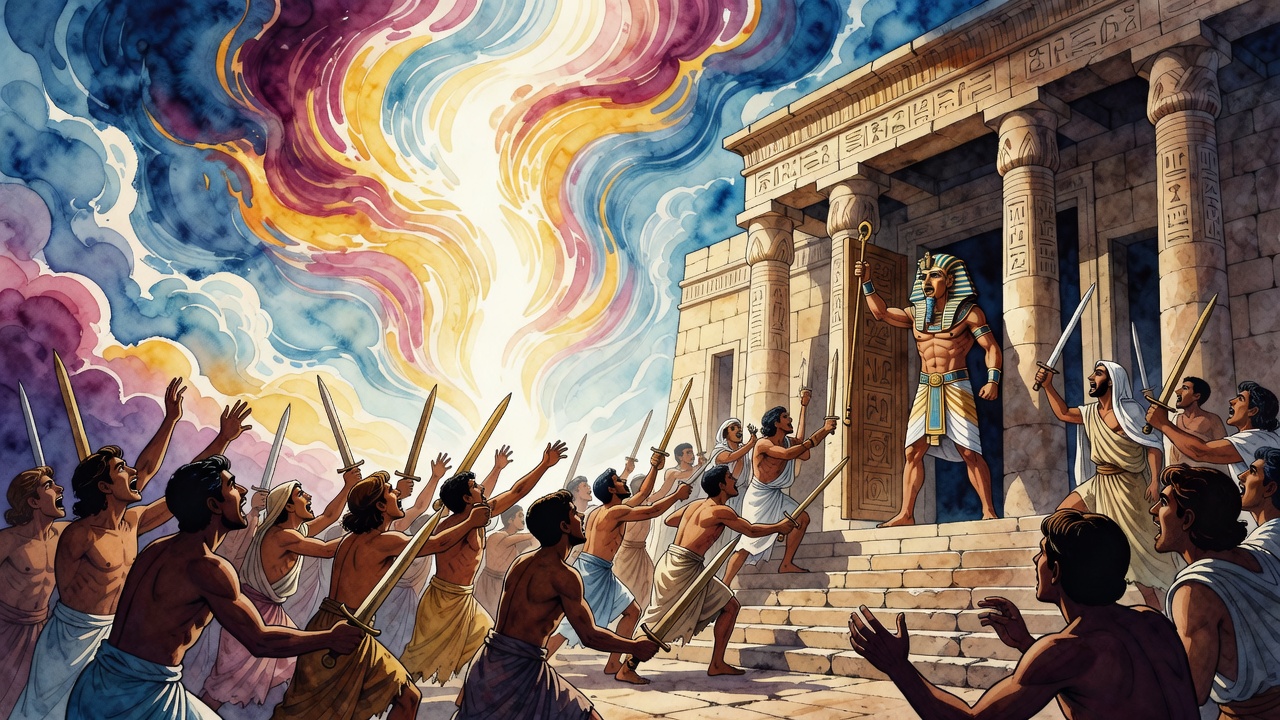
Now the king himself stood at a Hebrew door, pounding on it with his fist.
Are We Thieves
"Rise, go out," Pharaoh said.
Moses and Aaron did not move. "Fool. Do we leave at night?"
"Rise, go out."
"Are we thieves, to slip off in the dark? We go out in the morning, in the open, where the whole country can watch us do it."
"All Egypt is dead," Pharaoh said.
"Then if you want the plague off your back, say it out loud. Say we belong to ourselves. Say we are servants of the Holy One."
So the king of Egypt stood in a doorway before dawn and shouted it into the street. Once you were my slaves. Now you are free men, in your own authority, and the praise you owe belongs to the Holy One, whose servants you are.
Everything he had refused in the throne room he surrendered in one breath. He had demanded to know exactly who was going; take the young and the old. He had ordered the flocks and herds left behind; take the flocks, take the herds. He had refused to hand over animals for offerings; take what you asked for and go. Then came the last of it, the sentence no tyrant should have to say. "And bless me too. Pray for me, so this lifts off me."
Outside, Egyptians shoved at the Israelites all night to hurry them through the gates, crying that they were all dying men. They had expected to lose the firstborn only, so a father of five sons expected to bury one. Whole houses emptied instead. Their wives had gone with other men, and the boys they counted as second and third sons were each some bachelor's firstborn. What those households had done behind closed doors was read out that night in the street.
Woe for the Timber He Sold Cheap
Think of a man with a pile of cut timber he never troubled himself over. He sold the lot for a handful of coins. The buyer carted it away and made chests of it, and cupboards, and a hundred useful things, and the seller walked past the workshop one morning, looked in, and felt his stomach turn over. Woe to that man. Look what he sold.
For generations Israel had stood in Pharaoh's courtyards with clay to the elbow, and not once had he looked at them and seen a nation. Then they walked out. At the edge of the sea they formed up tribe by tribe under their banners, ranked and ordered and unmistakable, and Pharaoh came out and saw what had gone through his hands.
The cry he made then was not for his son.
← All myths