Parshat Bo5 min read

God Alone Walks Through Egypt at Midnight

At the hairsbreadth of midnight, no angel takes the blow. God walks Egypt alone while firstborn fall and blood marks the doors.

Curated by Arthur · Told by Maggid ·
Table of Contents
  1. The Hour No Mouth Can Pin
  2. Firstborn Beg for Their Lives
  3. I, and Not an Angel
  4. The Stroke at the Hairsbreadth
  5. Dawn and the Open Road
God Alone Walks Through Egypt at Midnight Click for full size

The Hour No Mouth Can Pin

Moses stood before Pharaoh and would not name the exact center of the night. He said "about midnight," not because heaven is vague, but because a human tongue cannot split darkness the way the One who made the hours can. Egyptian astrologers watched the sky for a slip. If Moses fixed a false second, they would call him a liar and the whole chain of plagues a bluff. So he left himself a margin, and the world waited for a blow only God could time.

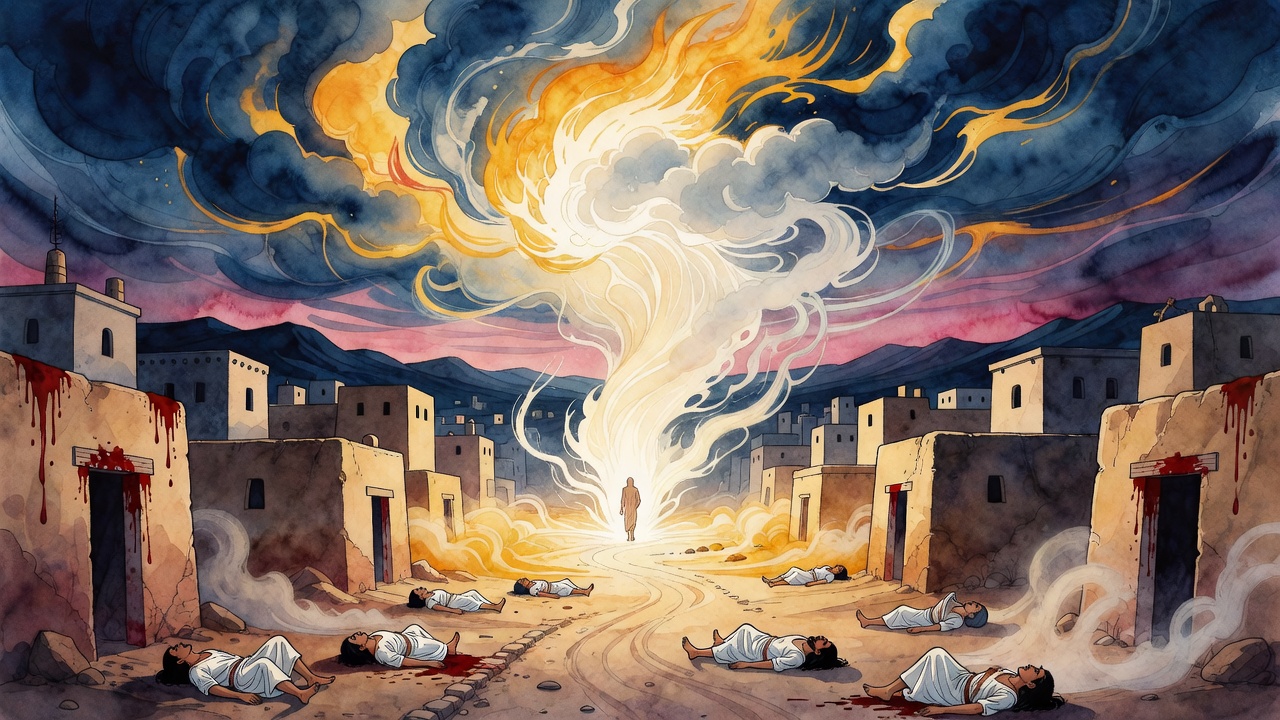
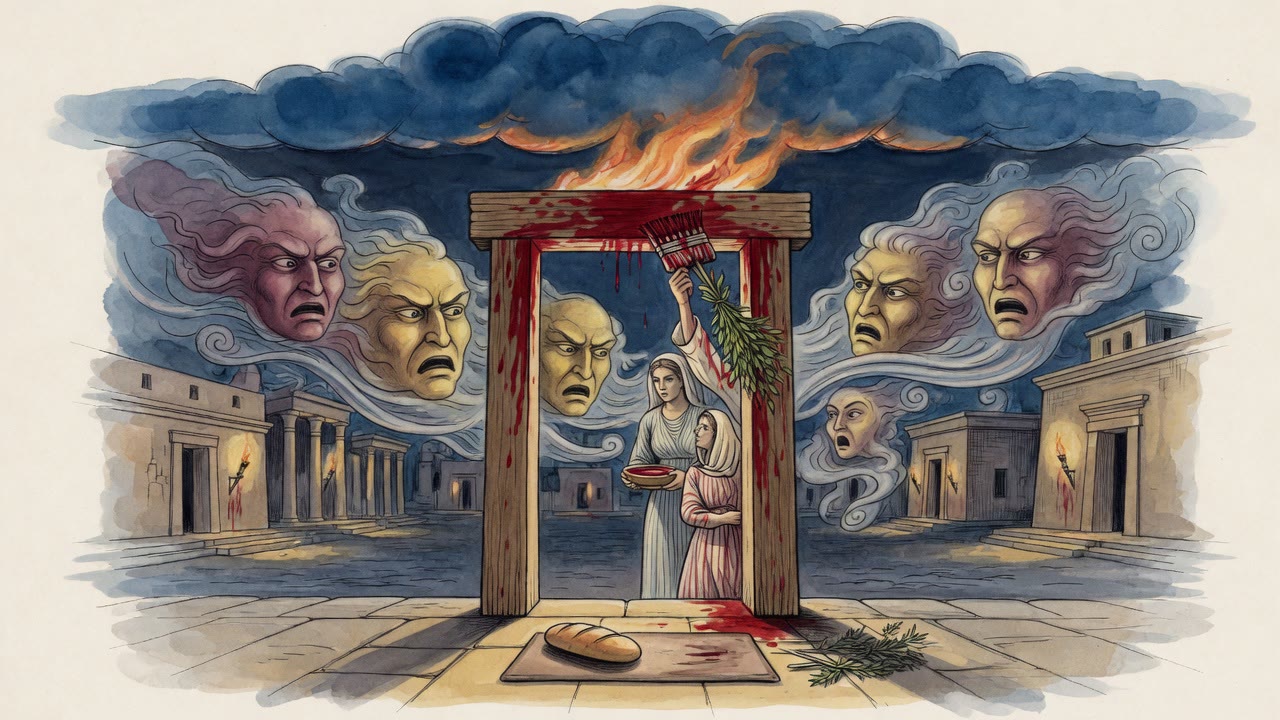
In the Hebrew houses, lambs had already been slaughtered. Blood stood on the doorposts and on the lintels, sticky in the heat that still clung to brick after sundown. Two commandments had been pressed into a people who had few merits left to spend: the paschal offering, and the mark of the covenant in the flesh. Redemption, the old tellings insist, was not a free drift on pity. It was bought with obedience at the edge of terror, while the empire next door still believed its firstborn were immortal.

Children asked why the door looked wounded. Mothers answered without poetry. Stay inside. Eat. Do not open until morning finds you.

Firstborn Beg for Their Lives

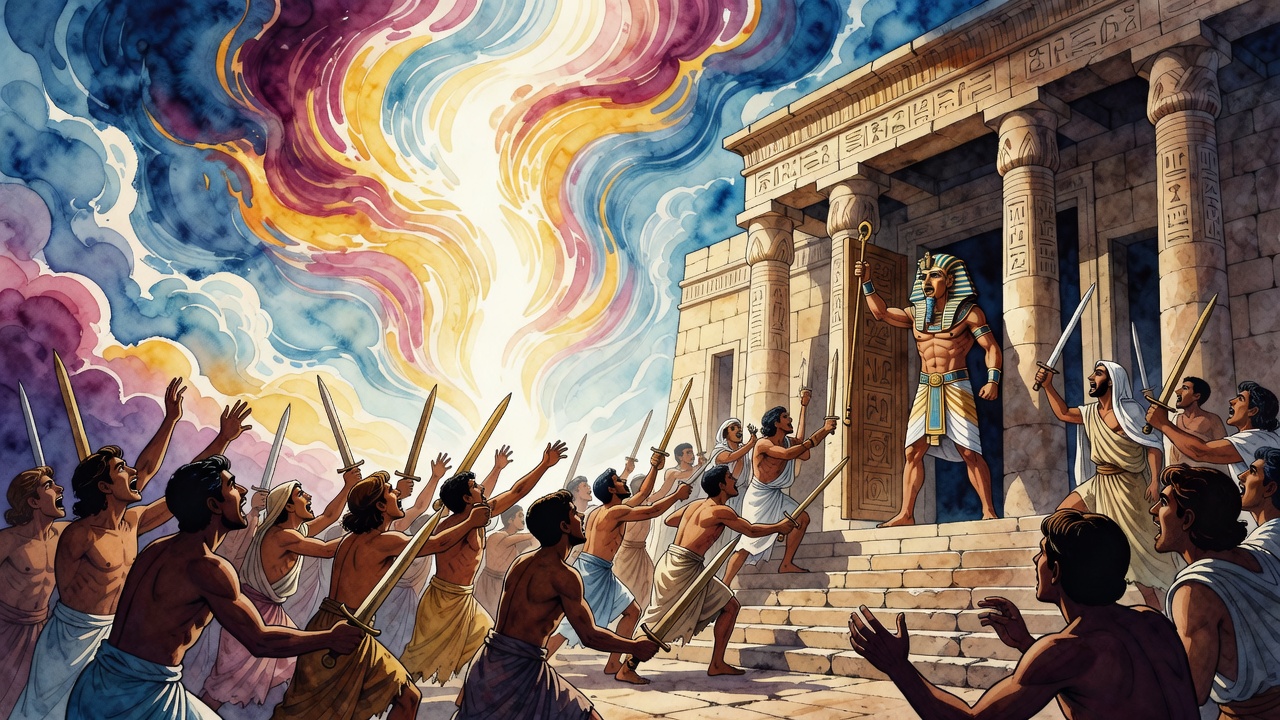
Before the plague fell, firstborn sons ran through Egyptian streets and begged their fathers to release the Hebrews. The fathers refused. The sons climbed to Pharaoh, himself a firstborn, and found rage instead of mercy. He ordered legs broken rather than slaves freed. In one hard tradition, sixty myriads of fathers fell under the hands of their own children before heaven moved at all. Egypt had already begun to devour itself, and the river that once held Hebrew babies now listened to Egyptian sons scream in courtyards.

Captives in prisons waited without hope, some of them men who had cheered every cruel decree against Israel from behind bars. Distant firstborn of Egypt, scattered in other lands, slept under foreign roofs and thought themselves safe by miles. Even the firstborn of surrounding peoples, children of Ham and Cush, lay in the same night. The blow would not be local. It would be total. Animals in stalls shifted and snorted, unknowing that comfort for idolaters would die with them too.

I, and Not an Angel

Some imagined an emissary. A destroying angel. A force sent at a distance, the way Sodom burned under messengers and the wilderness later knew serpents and storms. But the verse will not allow the handoff. "And I shall smite every firstborn" (Exodus 12:12). The weight sits on the word I. "And the Lord smote every firstborn" (Exodus 12:29). Not an angel. Not a messenger. Not a hired wrath with a badge and a quota.

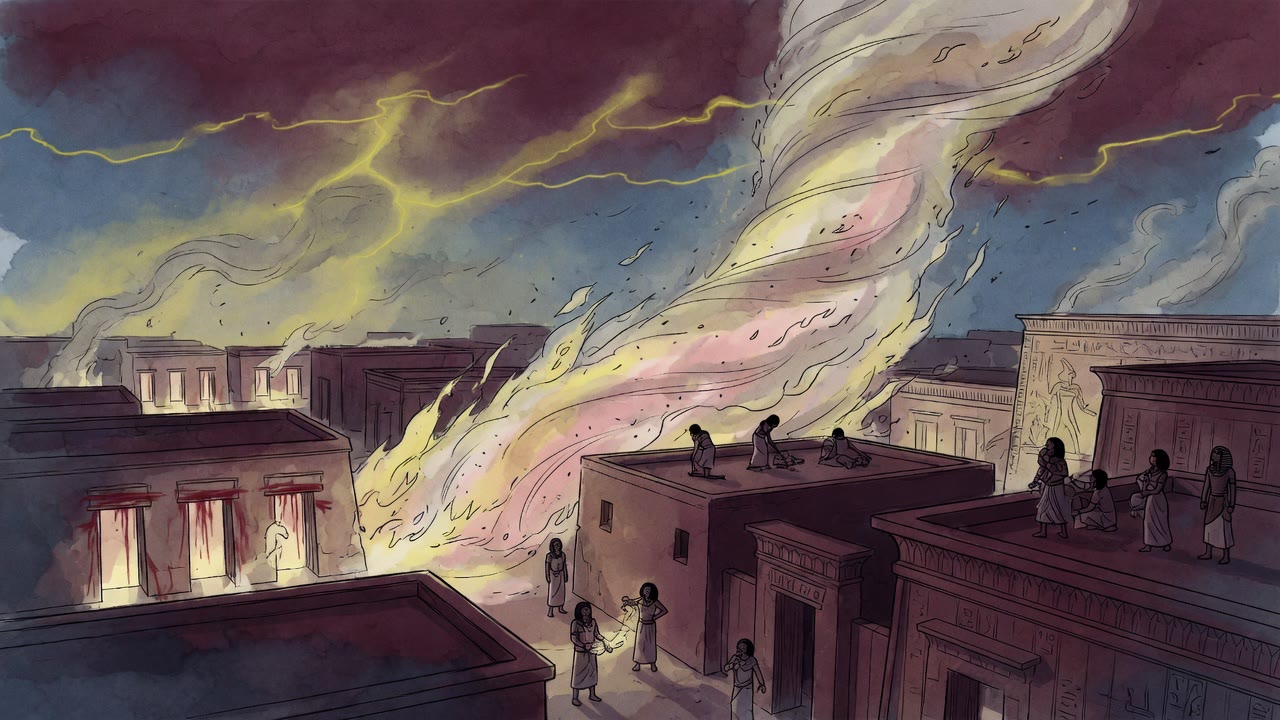
On that night God passed through Egypt personally. No chain of command. No buffer between the Divine and the doorframes of Goshen. Where other judgments work through nature or servants, the tenth plague demanded the presence of the King Himself. The doors with blood were not theater for the neighbors. They were a boundary God had agreed to honor with His own feet. Every unmarked threshold became a claim that Egypt still owned the night. Every marked threshold became a refusal.

Moses, trustworthy in all God's house, had refused to overclaim the clock. Heaven would keep that trustworthiness intact when the stroke landed on the hairsbreadth.

The Stroke at the Hairsbreadth

At the exact center of the night, the firstborn fell. Only the One who measures every season can cut a night so cleanly. That precision was itself a signature, louder than any trumpet. Pharaoh was spared, though he was firstborn, so the world would still have a living witness to the power that broke him and would break him further at the sea. Animals died so no one could claim an idol had outlasted the blow. Those who had cheered Israel's pain from prison walls did not go free of the reckoning. Distance did not save. Rank did not save. Only blood on the wood, and the God who chose to notice it.

Inside the marked houses, no destroyer entered. Outside, every claim that some god still stood firm answered with a corpse. Egypt learned, in one hour, whose hand had moved. The empire that had counted Hebrew sons for drowning now counted its own for burial.

Dawn and the Open Road

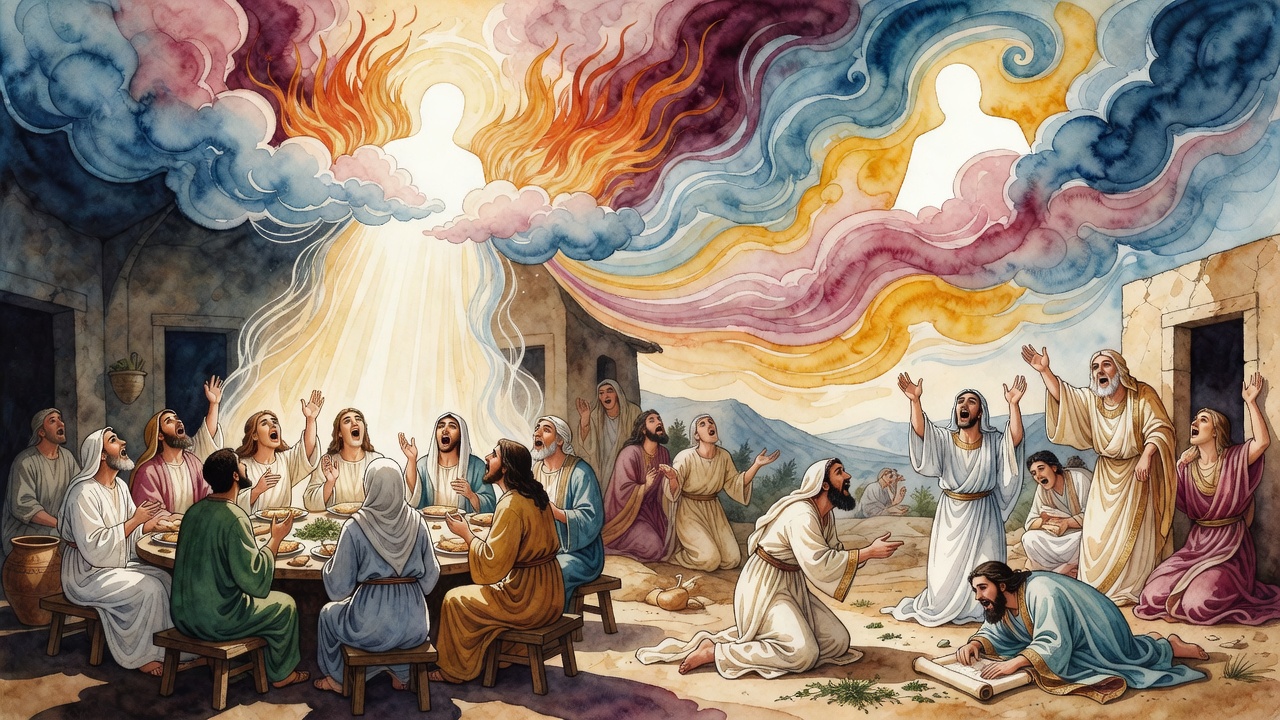
Redemption began in the dark and finished in the day. The night protected; the morning marched. Dough that had no time to rise rode on shoulders still shaking. Moses had left the exact second to God, and God had kept the prophet's word from becoming a mockery in the mouths of court magicians. The people who had nothing left but blood and obedience walked out under a sky that had just proven it was not shared with Egypt's gods.

What remains of that night is not a theory of plagues stacked in a list. It is a picture: a God who will not outsource the hardest mercy, a prophet who will not lie about a second he cannot own, and a people who sleep behind painted doors while the empire next door learns the cost of a hard heart. Midnight still belongs to the One who can split it. Everyone else only waits, and rises when the waiting ends.


← All myths
From the tradition

Sources

4 sources

The texts behind this telling. Some cards carry a translation of the source; others are our own retelling of it, and each card says which. Every card links out to the original.

Mekhilta Tractate Pischa 13:4Mekhilta DeRabbi Yishmael

Retold in our words. Read the original at the link below.Mechilta, translated by Rabbi Shraga Silverstein · CC-BY

The Mekhilta, the tannaitic midrash on Exodus, addresses a question that cuts to the heart of the Passover story: who actually killed the firstborn of Egypt? The verse states simply: "And the Lord smote every firstborn" (Exodus 12:29). But the rabbis consider an alternative, perhaps God delegated the task. Perhaps an angel carried out the slaughter, or some other celestial emissary.

The Mekhilta rejects this possibility with force. It points to an earlier verse where God Himself declared: "And I shall smite every firstborn" (Exodus 12:12). The emphasis falls on the word "I." Not an angel. Not an emissary. Not a destroying force sent at a distance. God Himself.

This is one of the most theologically distinctive claims in the entire Exodus narrative. In many of the Torah's other interventions, the destruction of Sodom, the battles in the wilderness, the plague of serpents, God works through intermediaries. Angels deliver messages. Natural forces execute judgments. But the tenth plague was different.

On the night of the firstborn, God passed through Egypt personally. No delegation, no chain of command, no buffer between the Divine and the human world. The Mekhilta insists on this point because it defines what made the Exodus unique among all of God's acts in history. He came Himself. That is what made it the night above all nights.

Full source
Yalkut Shimoni on Torah 208:4Yalkut Shimoni on Torah

Translation of the source text.Torat Emet (Yalkut Shimoni) · CC-BY-NC

"And it was at midnight" (Exodus 12:29). Their Creator divided it. Why is this said? Because elsewhere it says, "And Moses said, Thus says the LORD, About midnight" (Exodus 11:4). But is it possible for flesh and blood to determine the exact middle of the night? Rather, from here we learn that their Creator divided it. Rabbi Judah ben Beteira says: He who knows His hours and His times divided it. Rabbi Eliezer says: "Night" is stated here and "night" is stated elsewhere; just as the night stated here is until midnight, so the night stated elsewhere is until midnight. "And the LORD struck." I might understand by means of an angel or by means of a messenger; therefore Scripture says, "And I will strike every firstborn" (Exodus 12:12), not by means of an angel and not by means of a messenger. "And the LORD struck every firstborn." Even the firstborn of Egypt who were in other places, from where do we know? Scripture says, "To Him who struck Egypt through their firstborn" (Psalms 136:10). The firstborn of Ham, Put, Cush, and Lud, from where? Scripture says, "And He struck every firstborn in Egypt, the first of their strength in the tents of Ham" (Psalms 78:51). "From the firstborn of Pharaoh." Scripture comes to teach you about Pharaoh, that he himself was a firstborn. Or perhaps Scripture comes only to teach about his son, that he was a firstborn? When it says "who sat on his throne," his son is already mentioned; so what does Scripture teach by "from the firstborn of Pharaoh"? It comes to teach about Pharaoh, that he himself was a firstborn, and he was spared from among all the firstborn, and concerning him Scripture says, "But for this very purpose I have raised you up" (Exodus 9:16). Baal Zephon was spared from among all the objects of worship, in order to entice the heart of the Egyptians; concerning it He says, "He makes nations great and destroys them" (Job 12:23). "To the firstborn of the captive." But what sin had the captives committed? Rather, so that the captives would not say, "Their object of worship brought the punishment upon them; mighty is our god that it stood by itself, mighty is our god that the punishment did not rule over us." This teaches you that whatever decrees Pharaoh decreed against Israel, the captives rejoiced in them; and concerning them Scripture says, "He who rejoices at calamity shall not go unpunished" (Proverbs 17:5), and it says, "When your enemy falls, do not rejoice," and so forth (Proverbs 24:17). And it is written, "Son of man, because Tyre said against Jerusalem, Aha" (Ezekiel 26:2), what does it say? "Behold, I am against you, O Tyre, and I will bring up nations against you" (Ezekiel 26:3). And not only captives, but even male and female slaves, as it is said, "to the firstborn of the maidservant" (Exodus 11:5). "And every firstborn of beast." But what sin had the beast committed? Rather, so that the Egyptians would not say, "Our object of worship brought the punishment upon us; mighty is our god that it stood by itself, and the punishment did not rule over it."

Full source
Yalkut Shimoni on Torah 186:8Yalkut Shimoni on Torah

Translation of the source text.Torat Emet (Yalkut Shimoni) · CC-BY-NC

"And Moses said, Thus says the LORD, About midnight I will go out into the midst of Egypt" (Exodus 11:4). What is the meaning of "about midnight"? If you say that the Holy One, blessed be He, also said to him "about midnight" -- is there any doubt in heaven? Rather, He said to him: tomorrow at midnight exactly as now; and Moses came and said "about midnight." And David, how did he know? David had a sign: a harp hung above David's bed, and so on. Rabbi Zeira said: in truth Moses surely knew, and David also surely knew; but why did David need a harp? To wake himself from sleep. And as for Moses, the reason he said "about midnight" is that he thought, perhaps Pharaoh's astrologers will err and say Moses is a liar, for the master said: train your tongue to say "I do not know," lest you be caught in a falsehood. Rav Ashi said: Moses our teacher was standing at the half of the night of the thirteenth as it became the fourteenth, at midnight, and thus Moses said to them, Tomorrow, exactly as now, I will go out into the midst of Egypt.

This is what Scripture says: "He confirms the word of His servant" (Isaiah 44:26) -- this is Moses, of whom it is written, "Not so My servant Moses" (Numbers 12:7). "And performs the counsel of His messengers" -- [this is Moses], of whom it is written, "and He sent an angel and brought us out of Egypt." The Holy One, blessed be He, said to Moses: Go, say to Israel, Thus says the LORD, About midnight I go out. The Holy One, blessed be He, said: I have already written and said, "My servant Moses is faithful in all My house" (Numbers 12:7), and shall Moses appear as a liar? Rather, he said "about midnight," so too I will act about midnight. David said, "At midnight I will rise to give thanks to You because of Your righteous judgments" (Psalms 119:62) -- for the judgments You brought upon Egypt and for the kindness You did with our fathers in Egypt, who had no commandments by which to be redeemed, and You gave them two commandments, the blood of the Passover and the blood of circumcision. Rabbi Shimon ben Yochai taught: Moses, who does not know the times and moments of the night exactly, therefore came and said "about midnight"; but the Holy One, blessed be He, who knows the times and moments of the night, therefore entered at the precise hairsbreadth of midnight.

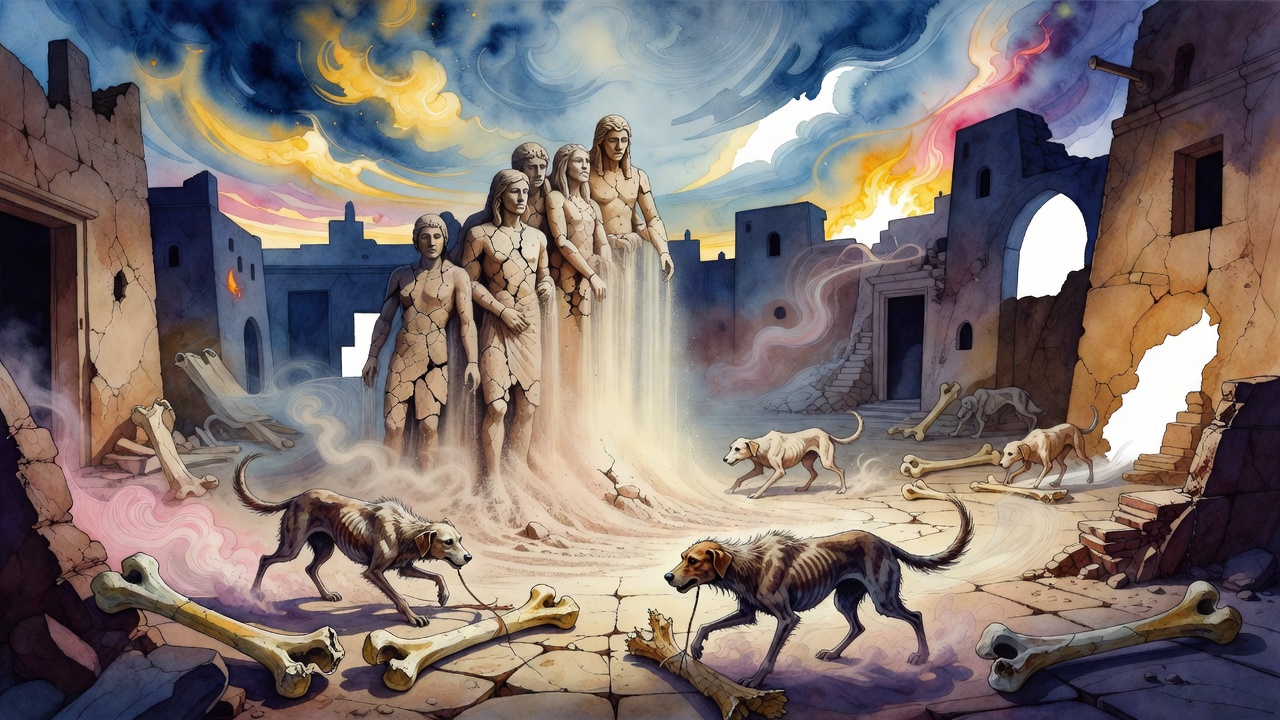
"And every firstborn shall die" (Exodus 11:5): the firstborn of a man, the firstborn of a woman, the firstborn male, the firstborn female. How so? One man came upon ten women and they bore ten sons; all of them are found to be firstborn of women. Ten men came upon one woman and she bore ten sons; all of them are found to be firstborn of men. Consider the case where there is no firstborn at all, neither of a man nor of a woman -- and how do I fulfill "there was not a house where there was not one dead" (Exodus 12:30)? Rabbi Abba bar Acha said: the head of the household died, as it is said, ["the eldest, for he was not] a firstborn, yet his father made him head." It was taught in the name of Rabbi Natan: on the day the firstborn of one of them died, his portrait was painted within the house, and on that day it was crushed and ground and scattered, and it was as grievous to them as if they had buried him that very day. Rabbi Yudan said: because the Egyptians used to bury within their houses, the dogs would enter through the openings and drag out the firstborn and feed on them, and it was as grievous to them as if they had buried them that very day.

"From the firstborn of Pharaoh": this tells that Pharaoh was a firstborn. And all the firstborn went to their fathers and said to them: Because Moses said, every firstborn shall die, and everything Moses has said against this people has come upon them. So come, let us bring out these Hebrews from among us; and if not, these people will die. They said: ten sons belong to each one of us; let one of them die, but we will not bring out these Hebrews. They said: rather, the remedy of the matter is, let us go to Pharaoh, who is a firstborn; perhaps he will have pity on himself and bring out these Hebrews from among us. They went to Pharaoh and said to him: Because Moses said, every firstborn shall die, and everything he has said against this people has come upon them, therefore rise and bring out these Hebrews from among us; and if not, these people will die. He said: Go and break their legs! I say, whether my life or the life of these Hebrews, and you say, let the Hebrews go! Immediately the firstborn went out and killed sixty myriads of their fathers.

Rabbi Avin in the name of Rabbi Yehudah ben Pazi: Batyah the daughter of Pharaoh was a firstborn; by what merit was she saved? By the prayer of Moses, as it is said, "her lamp does not go out by night" (Proverbs 31:18) -- it is written "by leil (night)," as you say, "a night of watching" (Exodus 12:42). "Until the firstborn of the maidservant": Rav Huna in the name of Rabbi Acha in the name of Rabbi Eliezer the son of Rabbi Yose the Galilean: even the maidservants who were sold to the mill would say, We desire our enslavement, and let Israel remain in their enslavement. Rabbi Yehudah ben Pazi said: it is a tradition of aggadah that when Sarah went down to Egypt they bound her to the mill. "And every firstborn of beast": Rav Huna said, if a person sinned, what did the beast sin? Rather, because the Egyptians worshipped the lambs, so that the Egyptians should not say, Our deity is strong, for it brought punishment upon us; our deity is strong, for it stood up for itself; our deity is strong, for no punishment ruled over it.

Rabbi Zechariah the son-in-law of Rabbi Levi said: the Master of mercy does not touch lives first. From whom do you learn this? From Job: "the oxen were plowing," "the Chaldeans formed three bands," and only afterward, "and he took a potsherd to scrape himself with." So too with Machlon and Chilyon: first their horses and camels died, and afterward he himself died, "and Elimelech died," and afterward they died, as it is said, "and they both died as well." And so too the plagues that come upon a person: first it begins with his house; if he repents, it requires removal of stones, "and they shall remove the stones" (Leviticus 14:40); if he does not repent, it requires demolition, "and he shall break down the house" (Leviticus 14:45); and afterward it begins with his garments; if he repents, they require tearing, "and he shall tear it out of the garment" (Leviticus 13:56); and if he does not repent, it requires burning, "and he shall burn the garment" (Leviticus 13:52); and afterward it begins with his body; if he repents, he repents, and if not, "he shall dwell alone; outside the camp shall his dwelling be" (Leviticus 13:46). So too in Egypt: first the attribute of justice struck their property, "and He struck their vines and their fig trees, and gave their cattle over to the hail," and afterward, "and He struck all the firstborn in their land."

Full source
Legends of the Jews, IV. Moses In Egypt, The First PassoverLegends of the Jews

Retold in our words. Read the original at the link below.The Legends of the Jews, Louis Ginzberg (1909–1938) · Public Domain

As the time approached for the Israelites' redemption from Egyptian slavery, a dilemma arose. They hadn't accumulated enough good deeds to merit their freedom! So, what did God do? He gave them two commandments: to sacrifice the paschal lamb (the Passover lamb), and to circumcise their sons.

There’s more. With the paschal lamb came the Jewish calendar, its year beginning with the month of Nisan, in which Passover is celebrated on the fifteenth day. The computations, however, were so complex that Moses couldn't grasp them until God revealed the movements of the moon to him. Ginzberg's retelling highlights that the intricacies of the calendar weren't the only thing that required divine intervention. Compounding the holy anointing oil, constructing the candlestick in the Tabernacle, and distinguishing between permitted and prohibited animals also needed God's direct teaching.

The determination of the new moon, the Rosh Chodesh, warranted special attention. God, as the story goes, appeared to Moses in a fringed garment, instructed Moses to stand at His right and Aaron at His left, and questioned the angels Michael and Gabriel about the appearance of the new moon. Then, God told Moses and Aaron, "Thus shall My children proclaim the new moon, on the testimony of two witnesses and through the president of the court."

When Moses told the Israelites that their redemption would occur in the month of Nisan, they were skeptical. "How can we be redeemed when Egypt is full of our idols, and we have no good deeds to our name?" they asked. Moses reassured them, saying, "God desires your redemption, and He pays no heed to your idols. He passes them by. Nor does He look upon your evil deeds, but only upon the good deeds of the pious among you."

The key, it seems, was abandoning idol worship. That's why God commanded them to sacrifice the paschal lamb. This act was a clear renunciation of Egyptian idolatry, particularly the worship of the ram. According to the lore, they were instructed to select their sacrificial animal four days before the offering and publicly designate it, a bold statement that they no longer feared the Egyptians.

The Egyptians watched, hearts heavy, as the Israelites prepared to sacrifice the very animals they worshipped. Yet, they dared not interfere. And when the time came, the Israelites, emboldened by days of unchallenged preparation, performed the ceremonies without fear.

Another act of defiance involved the blood of the lamb. The Israelites openly put it on the doorposts and lintels of their houses. This wasn’t just any ritual; it was a public declaration. Moses conveyed the laws of the Passover sacrifice to the elders, who then shared them with the people. The elders were praised for their early support of Moses, their faith inspiring the entire nation to follow him. God recognized their role, saying, "I will reward the elders for inspiring the people with confidence in Moses…They shall lead the people to the Passover sacrifice, and through this the redemption will be brought about."

The symbolism of the Passover sacrifice is rich. The blood on the doorposts, according to Ginzberg, was a reminder of Abraham, Isaac, and Jacob. The bunch of hyssop used to sprinkle the blood symbolized Israel's humble position among nations, yet their unity and preciousness to God, just like the tightly bound hyssop.

The paschal sacrifice also presented Moses with an opportunity to persuade the Israelites to undergo circumcision, a commandment many had resisted. God intervened with a divine fragrance. A wind carried the sweet scents of Paradise toward Moses' lamb, drawing crowds from all over Egypt. When they desired to partake in the offering, Moses declared, "This is the command of God, 'No uncircumcised person shall eat thereof,'" leading them to embrace circumcision.

Finally, when God passed through Egypt, He blessed every Israelite for fulfilling the commandments of the paschal sacrifice and circumcision.

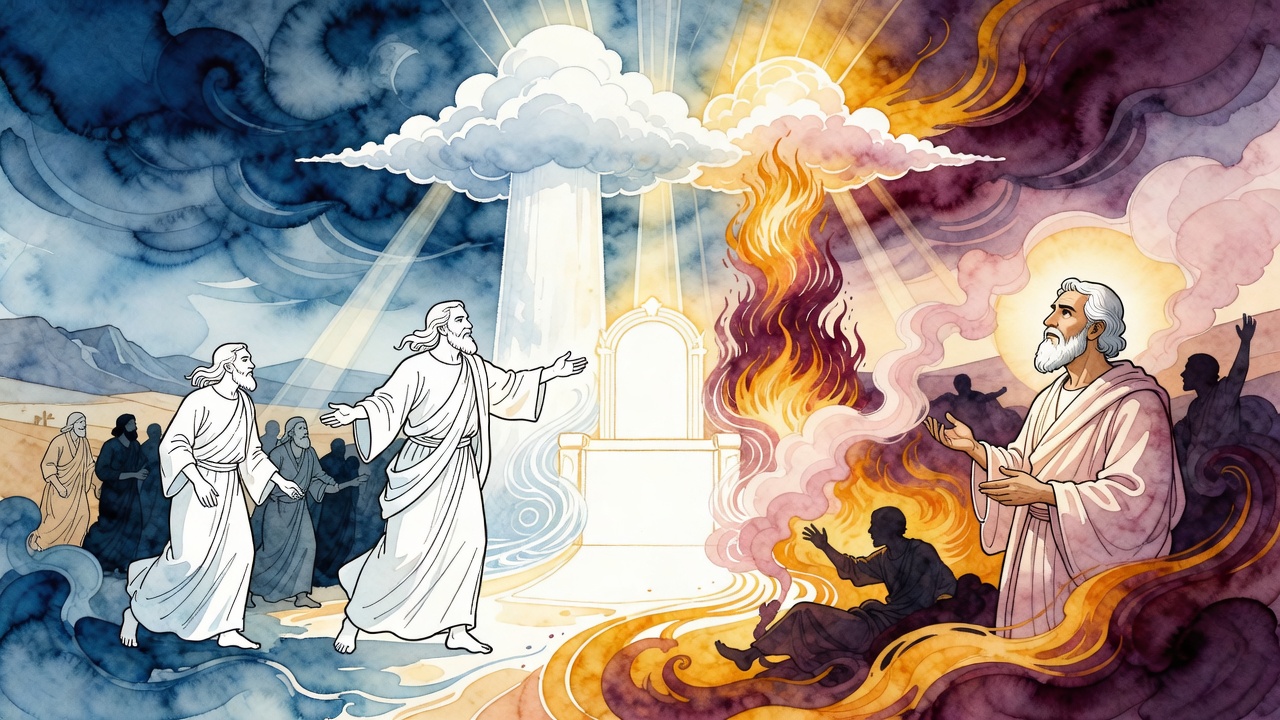
And there’s a final, almost unbelievable detail. As no sacrifice is to be eaten outside the Holy Land, God performed a miracle: transporting all the Israelites to the Holy Land on clouds to partake in the sacrifice, and then returning them to Egypt in the same manner.

So, what does this all mean for us today? The story of the first Passover is more than just a historical event; it's evidence of faith, courage, and the power of divine intervention. It reminds us that even when we feel unworthy or surrounded by challenges, God can create opportunities for redemption. It challenges us to consider what "idols" we need to abandon in our own lives and what acts of faith we can embrace to move closer to freedom and purpose.

Full source