Parshat Bo5 min read

Egyptian Houses Tasted Death Without a Firstborn

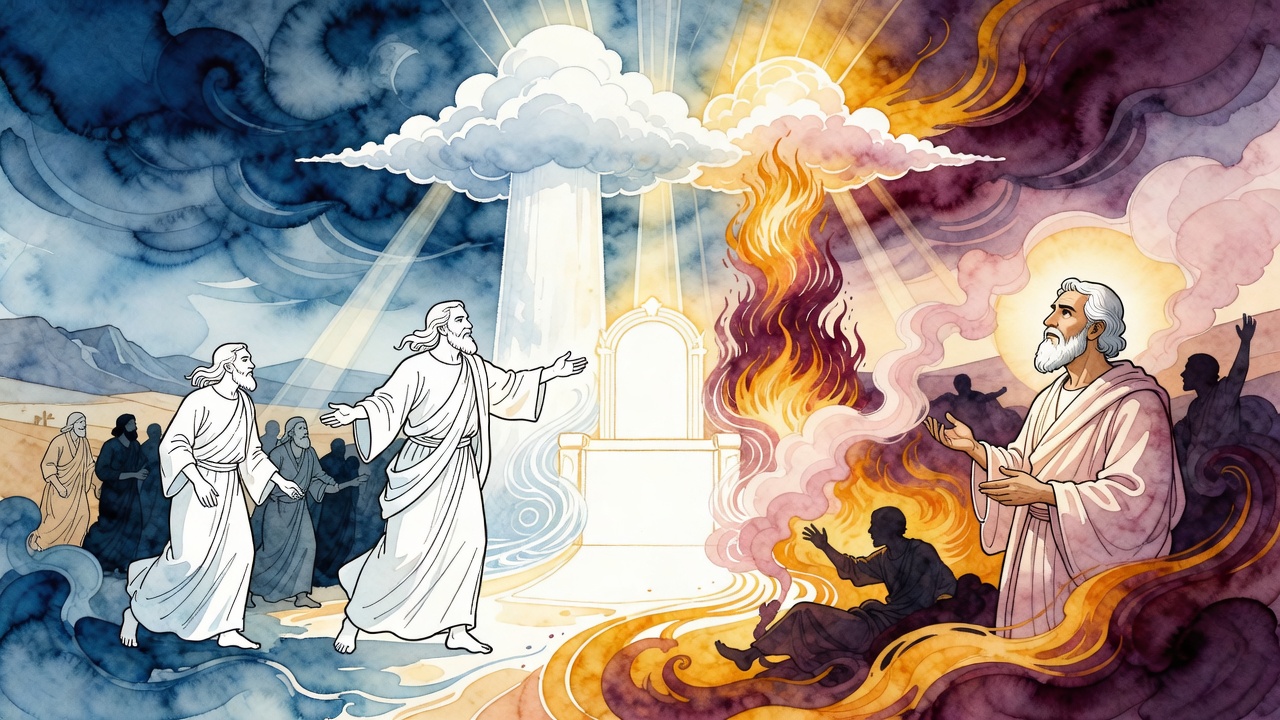
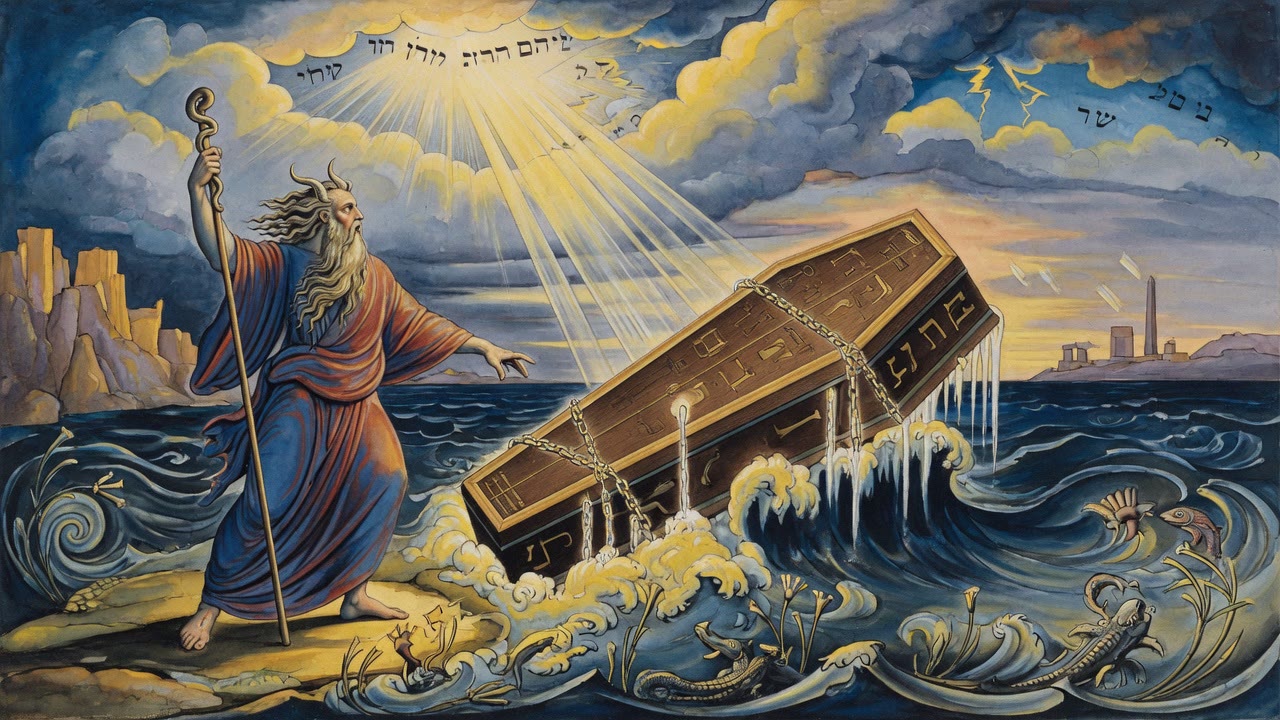
On the tenth plague night, clay images of dead sons crumbled to powder and house-dogs dragged old bones into the courtyards of Egypt.

Curated by Arthur · Told by Maggid ·
Table of Contents
  1. The Verse That Would Not Soften
  2. The Image on the Shelf
  3. Dogs at the House Tombs
  4. Israel's Night of Drawing Forth
  5. Why Heaven Prefers the Dark for Judgment
  6. The Cry That Still Carries
Egyptian Houses Tasted Death Without a Firstborn Click for full size

The Verse That Would Not Soften

There was no house where there was not one dead (Exodus 12:30). The cry rose from Egypt like a single animal stretched across brick and river. Still the question sat hard in the study of the sages. What of the house that had never held a firstborn son living under its roof? What of the widow whose only boy had already gone into the ground years before? How could the verse keep its teeth?

Rabbi Nathan refused to sand the words down. If Torah said every house, then every house must taste death, even the ones that thought they had already paid the full price of a firstborn's funeral.

The Image on the Shelf

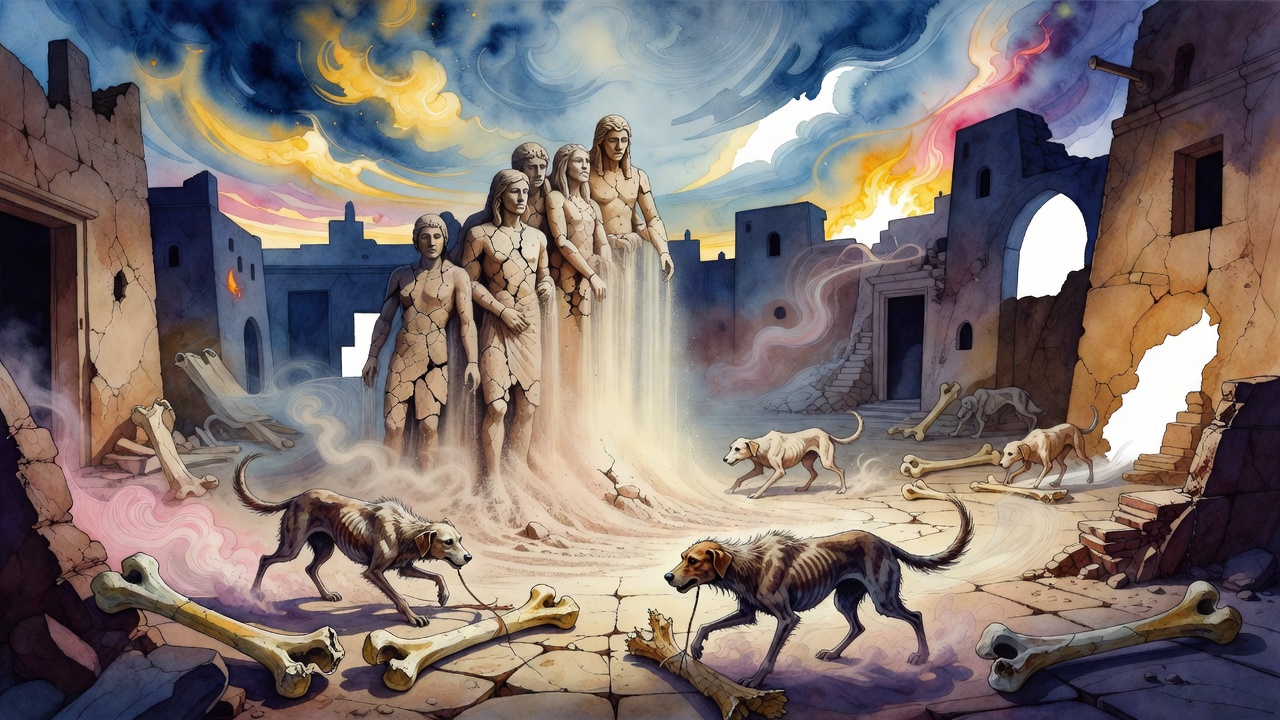
Some Egyptians had lost a firstborn years before the night of the tenth plague. Grief does not leave a room empty. They fashioned images of the dead boys, faces and shoulders meant to keep a presence near the hearth. Mothers set bowls before the clay. Fathers touched the painted hair before sleep, as if pigment could answer. The figure stood for the son the Nile or fever or a falling beam had already taken.

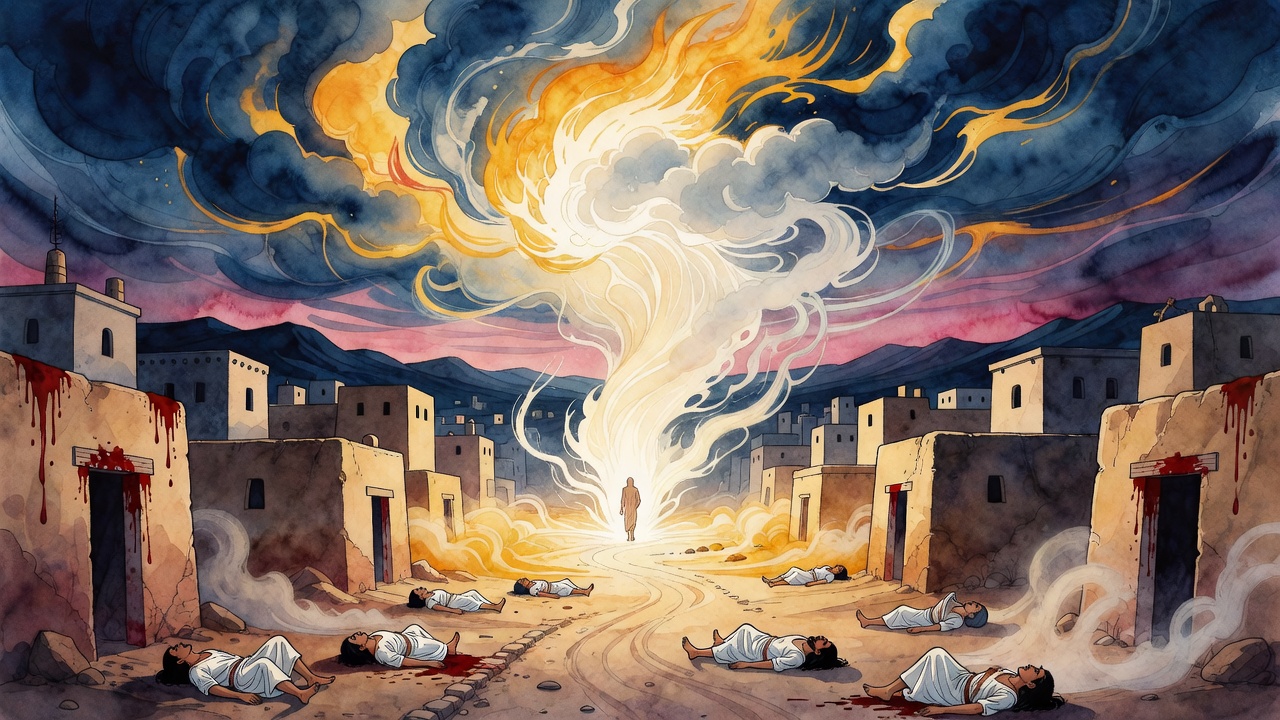
At midnight the Destroyer moved through Egypt under a decree older than any charm. Where a living firstborn breathed, the breath stopped in the bed. Where only an image stood, the clay cracked without a hand touching it. Powder sifted onto the floor like dry bone meal. A nose broke. An eye went blank. The household woke to the sound of a face collapsing in the next room.

Fresh anguish struck them as sharp as the day they had buried the real boy. Neighbors heard the same wail from houses that had no youth left to lose. So a house without a living firstborn still met death in the dark, and the verse did not lie.

Dogs at the House Tombs

Rabbi Nathan added a second picture, colder than powder. Many Egyptians buried their dead inside the house itself, under floors, in side chambers, close enough to visit without leaving the compound. The dead stayed in the family geometry. Firstborn bones rested under the same roof that once heard their first cry.

On that night the dogs of Egypt went hunting. They gnawed into crypts, tore at sealed earth, and dragged the corpses of long-dead firstborn into open courtyards. Limbs and cloth and old linen spilled under a moon that did not look away. Parents who had finished mourning years ago found themselves staring at torn bodies they thought the ground had kept. Children saw grandfathers' firstborn brothers pulled into the light like refuse.

The horror matched burial day again. Either reading of Rabbi Nathan holds the verse upright. No house escaped a new taste of the grave. Death did not need a fresh birth certificate. It only needed a threshold.

Israel's Night of Drawing Forth

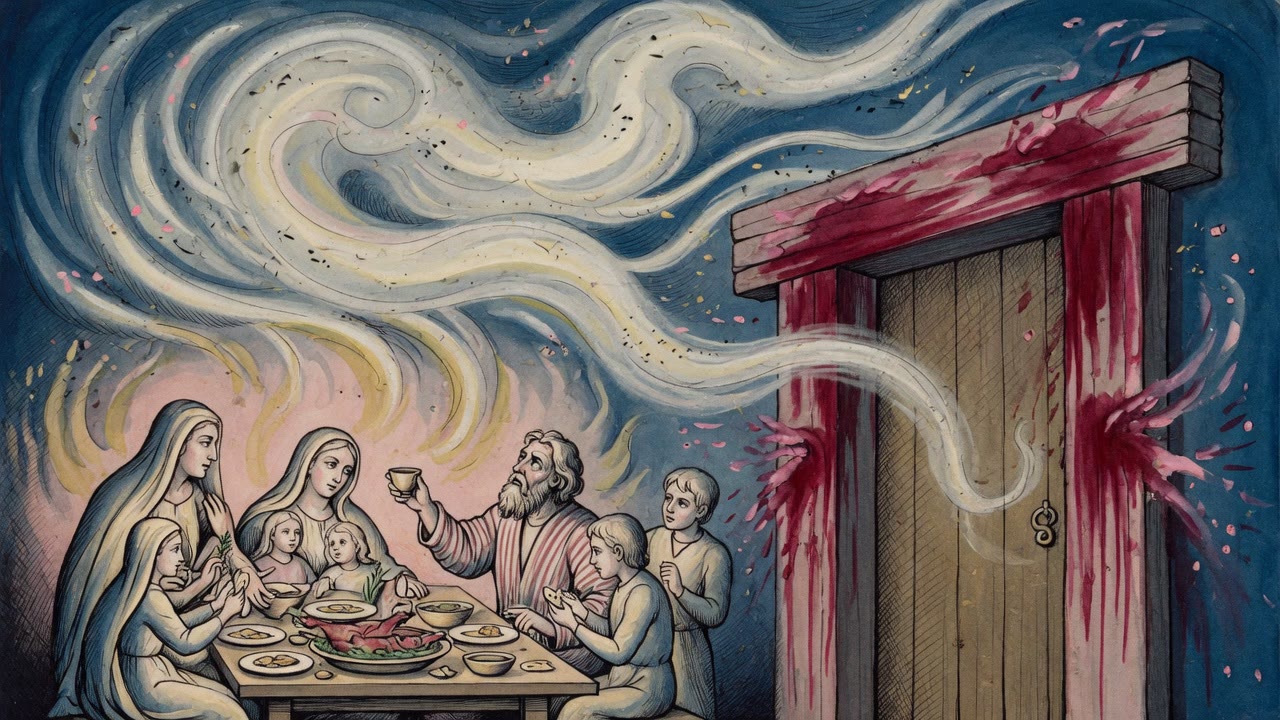
Across the land of Goshen, another work was underway under the same sky. "Draw forth and take for yourselves" (Exodus 12:21). Pull the lamb from the flock if you own one. Acquire one if you do not. The poor and the rich met at the same command. No household of Israel would face midnight without a shared meal and a marked door.

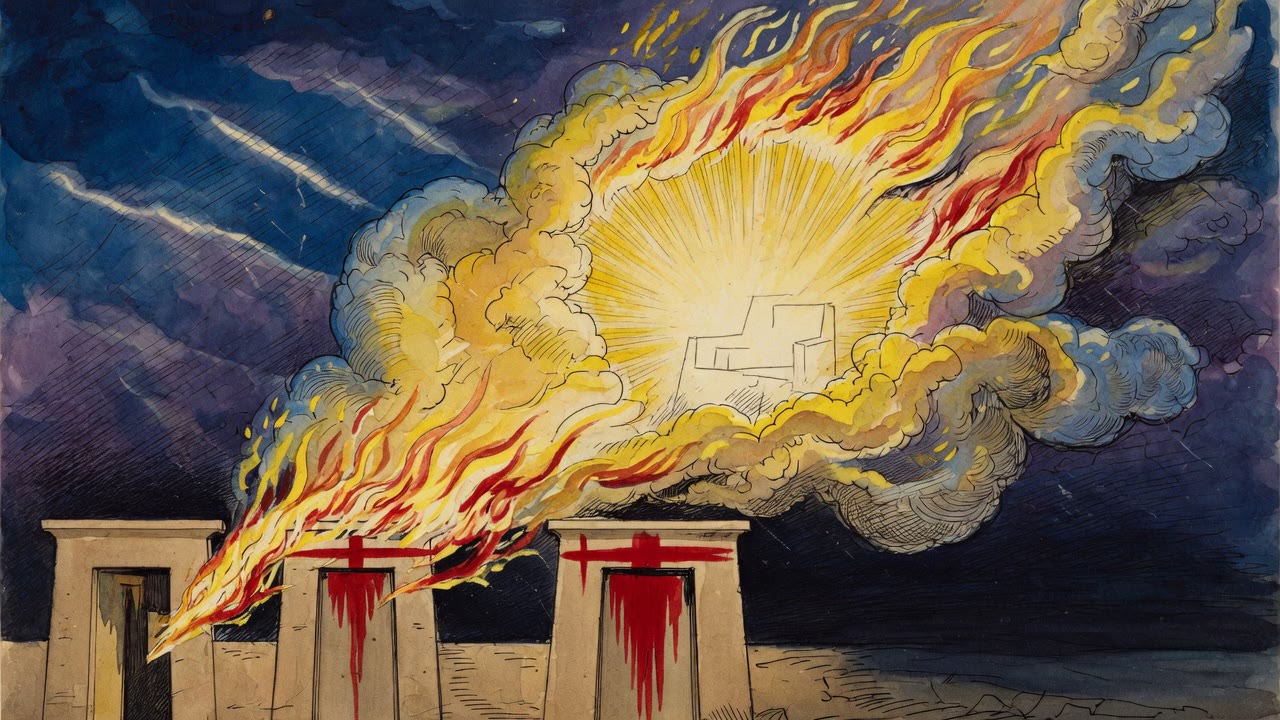
Rabbi Yossi the Galilean heard a second order under the first. Draw away from idol worship and cleave to the commandments. The same night that powdered Egypt's memorials was the night Israel pulled free of Egypt's gods. Blood marked the posts. Meat roasted in haste. Sandals stayed on feet that would not sleep again in those houses. While Egyptian shelves lost their clay sons, Israel held a living meal and a living Name.

Why Heaven Prefers the Dark for Judgment

The midrash gathers the nights into one rope. God came to Laban at night and stopped a chase with a dream sharp as a blade. God came to Abimelech at night and stopped a taking before it became a crime. Abraham struck by night when the kings thought the dark was theirs. The firstborn of Egypt fell at midnight. Balaam, generations later, would hear leave to ride only after dark, and even that leave would turn against his mouth.

Retribution for Israel and rescue for Israel share the same clock. Egypt learned it first and loudest. A kingdom that measured power by firstborn sons discovered that memory itself could be broken. The living died. The dead were disturbed. The images that tried to cheat absence turned to dust on the boards.

The Cry That Still Carries

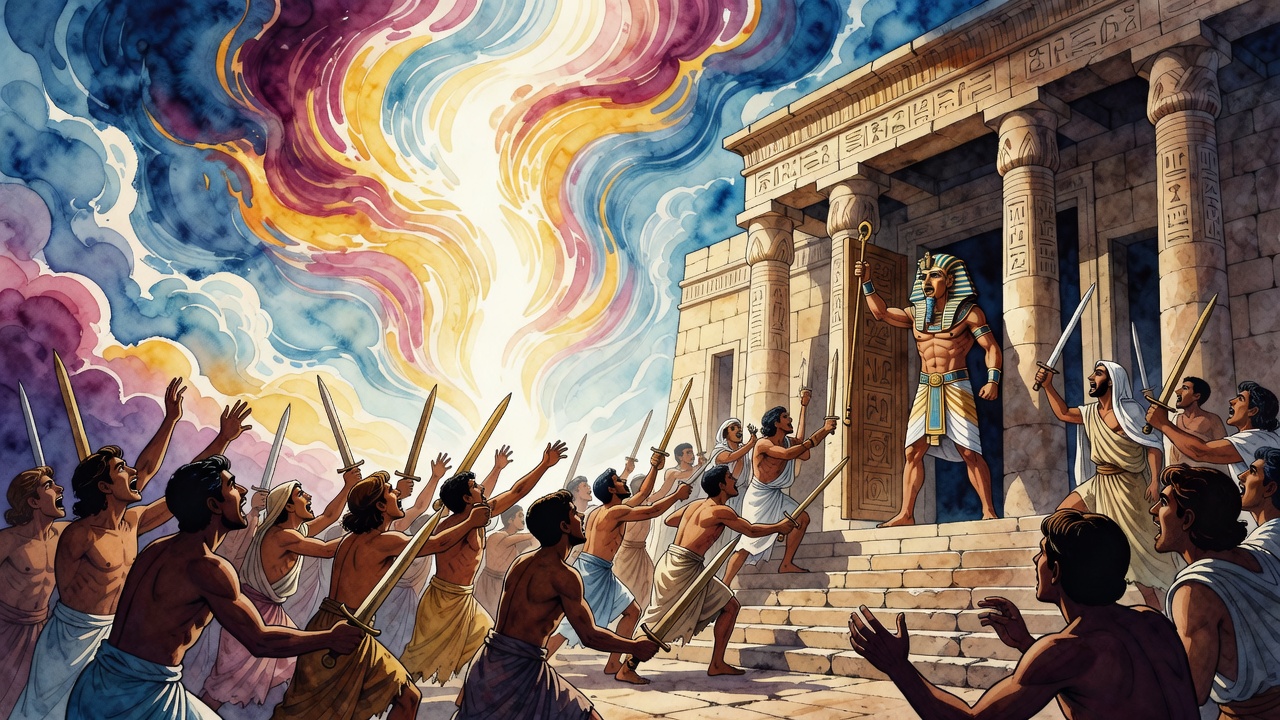
Pharaoh rose in the night, he and all his servants and all Egypt, and there was a great cry (Exodus 12:30). He did not ask for theology. He asked for Israel to leave before the sun could find more names. The powder on the shelves and the dogs in the courtyards never made the court chronicles. They made the cry complete. Every threshold had something to bury again, even if the body had been buried once before.

Israel walked out under a sky still black enough to remember. Behind them, houses counted their dead by more than one arithmetic, and the night kept its receipts.


← All myths
From the tradition

Sources

3 sources

The texts behind this telling. Some cards carry a translation of the source; others are our own retelling of it, and each card says which. Every card links out to the original.

Mekhilta Tractate Pischa 13:13Mekhilta DeRabbi Yishmael

Retold in our words. Read the original at the link below.Mechilta, translated by Rabbi Shraga Silverstein · CC-BY

Describing the night of the tenth plague, the Torah says "there was no house where no one had died" (Exodus 12:30). R. Nathan, a sage of the Mekhilta DeRabbi Yishmael, raises the difficulty: surely there were Egyptian houses that had no firstborn at all, so how could every single house suffer a death?

His first resolution turns on Egyptian grief and superstition. When a family had already lost a firstborn son in earlier years, they would fashion an image of him and keep it in the house, hoping in this way to preserve his memory or his presence. On the night of the plague, that very image disintegrated and was scattered like powder. The collapse of the figure struck the household with fresh anguish, as grievous to them as the day of the boy's burial. So even a house with no living firstborn knew death that night.

R. Nathan adds a second, grimmer image. The Egyptians often buried their dead within their own houses. On that night the dogs came, gnawed their way into the crypts, and dragged the corpses of long-dead firstborn out from the ground, mutilating the bodies. The horror of seeing their dead disturbed and torn was, again, as bitter as the day of burial. By either reading, the verse holds true literally: no house was spared a fresh taste of death.

Full source
Midrash Tanchuma, Balak 8Midrash Tanchuma

Retold in our words. Read the original at the link below.Townsend 1989 translation of Midrash Tanhuma, S. Buber Recension · CC-BY

(Numb. 22:20:) “Then God came unto Balaam at night.” This text is related (to Exod. 12:42), “That was for the Lord a night of vigil.” All miracles which were done for Israel and which involved exacting retribution for them from the wicked took place at night: (Gen. 31:24:) “And God came unto Laban the Aramean in a dream at night.” And it is written (in Gen. 20:3:) “But God came unto Abimelech in a dream at night.” And it is written (in (Gen. 14:15), “And he deployed at night.” And it is written (in Exod. 12:29), “And it came to pass in the middle of the night.” And so [it was with] all of them. Another interpretation: Why did he reveal himself to Balaam by night? He was not worthy of [receiving] the holy spirit [except at night]. Since He speaks at night with all the prophets of the nations, as stated (in (Job 4:1)3), “In opinions from night visions.” And so Eliphaz says (in (Job 4:1)3), “In a dream, a vision of the night,” about [Balaam’s] speaking with him at night. (Numb. 22:20, cont.) “If these men have come to invite you, arise and go with them.” From here you learn that in the way that a man wants to go, in it is he driven. As at first it was said to him (in Numb. 22:12), “Do not go with them.” As soon as he had become defiant, he went. As so is it written about him (in Numb. 22:22), “But God's anger was kindled because he was going.” The Holy One, blessed be He, said to him, “I do not desire the death of the wicked. [But] in as much as you want to be obliterated from the world, ‘arise and go with them.’” And it is written (in Numb. 22:20, cont.), “but only the thing [that I tell you are you to do].” [These words are] to teach you that he went with a warning. Immediately he got up early in the morning, as stated (in vs. 21), “So Balaam arose early in the morning, saddled his she-ass, [and went with the princes of Moab].” Did he not have a male or female slave [to saddle his donkey]? It was simply that his hatred for Israel was so great that he beat [his servant] to it and arose quickly all by himself. The Holy One, blessed be He, said to him, “You wicked man! Their ancestor Abraham has already anticipated you at the binding of his son Isaac,” as stated (in Gen. 22:3), “So Abraham arose early in the morning, saddled his he-ass.” (Numb. 22:21, cont.) “And went with the princes of Moab.” [These words are] to teach you that he was as glad at the tribulation of Israel as they were. (Numb. 22:22:) “But God's anger was kindled because he was going, and the angel of the Lord took a stand [in the road as his adversary (satan)].” He was an angel of mercy, but to [Balaam] he had become an adversary (satan). And so he said [unto] Balaam, “You have caused me to practice a craft that is not my own, as stated (Numb. 22:32), “here I have come out as an adversary (satan).” (Numb. 22:22, cont.) “And two of his servant boys were with him.” This is customary for one going out on the road. It is necessary for two to attend him. Then in turn they attend each other. (Numb. 22:23:) “Now the she-ass saw the angel of the Lord and a sword was drawn in his hand.” Was not the angel able to breathe on him and take away his spirit unless he drew his sword? And look at what is written about Sennacherib (in II (Kings 19:35) = Is. 37:36 // II Chron. 32:21.), “the angel of the Lord went out and smote [one hundred and eighty-five thousand] in the camp of Assyria.” [It is also written (in Is. 40:24),] “he blows on them and they wither.” However, he said to him, “[Skill with] the mouth was given to Jacob, as stated (in Gen. 27:22), ‘The voice is the voice of Jacob.’ And [skill with] the hands to Esau, as stated (in Gen. 27:40), ‘Upon your sword shall you live.’ All the nations all live by the sword. Now you are trading off your craft and coming against them with their [craft]. I also am coming against you with your own [craft].” (Numb. 22:24:) “Then the angel of the Lord stood in a lane between the vineyards.” Could he not have gone after him into the field? It is simply that this is the nature of the Holy One, blessed be He. When a king of flesh and blood sends an executioner to kill a particular person, he goes after him for many days, so that this person who has incurred the penalty of death [continues] eating and drinking, while the executioner goes after him from place to place. With the Holy One, blessed be He, however, it is not like that. Rather the executioner is in his place and whoever has incurred the penalty of death comes to him of his own accord. So that the angel would not be bothered with going after Balaam, he simply went ahead of him on the road, for it is so written (ibid.), “Then the angel of the Lord stood in a lane between the vineyards.” He said to him, “Shall the vineyards (i.e., Israel) be given over to the foxes?” (Numb. 22:24, cont.) “With a wall on one side and a wall on the other side.” You cannot prevail against them, because in their hand (according to Exod. 32:15) are tablets of stone, written [on both their sides], on the one side and on the other side they are written. (Numb. 22:25-26:) “When the she-ass saw the angel of the Lord, she was pressed [against the wall and pressed Balaam's foot against the wall; so he struck it again]. Then the angel of the Lord moved forward again [and stood in a place so narrow that there was no room to turn aside to the right or to the left].” What reason did he have to go ahead of him three times? He showed him here symbols of the [three] patriarchs. When he stood before him the first time, there was space on one side and on the other, [as stated] (in Numb. 22:23), “so the she-ass turned aside from the road.” On the second occasion she could only move to one side. On the third occasion (according to Numb. 22:26) “there was no room to turn aside to the right or to the left.” So what do the symbols mean? If he ever sought to curse the Children of Abraham, he would find the Children of Ishmael and the Children of Keturah on one side and on the other. [If] he sought to curse the Children of Isaac, he would find the Children of Esau on one side, and (according to Numb. 22:25) “she was pressed against the (one) wall.” In the case of the Children of Jacob, however, he found among them no residue through which to touch them. It is therefore written about the third occasion (in vs. 26), “in a narrow (‘zar) place.” This is Jacob, as stated (in Genesis 32:8), “Jacob was very frightened and [it] distressed (ye‘zer) him.”

(Numb. 22:26:) “There was no room to turn aside to the right or to the left.” As there was no residue in any of his sons. (Numb. 22:27:) “When the she-ass saw the angel of the Lord, she lay down under Balaam, [so Balaam's anger was kindled, and he struck the she-ass with a stick (mql)],” because of the shame with which she had shamed him.

Full source
Mekhilta Tractate Pischa 11:5Mekhilta DeRabbi Yishmael

Retold in our words. Read the original at the link below.Mechilta, translated by Rabbi Shraga Silverstein · CC-BY

"Draw forth and take for yourselves": "Draw forth", he who possesses his own; "and take" (i.e., acquire), he who does not possess his own. R. Yossi Haglili says (The meaning is:) "Draw away from idol worship and cleave to mitzvoth (commandments)." R. Yishmael says: Scripture here comes to apprise us that one may number himself for (the eating of) the Paschal lamb, and he may "depart" from it, until it is slaughtered, so long as it is not left as is (i.e., without any owners.) R. Yitzchak says: Scripture (here) comes to teach us that a small beast is acquired by (the act of) "drawing forth." "and slaughter the Pesach (Passover): It is a mitzvah to slaughter it as a Pesach offering. If he does not offer it as such, he transgresses the mitzvah. I might think that in the above instance) it is, nevertheless kasher. It is, therefore, written (Ibid. 27) "It is a Paschal sacrifice to the L–rd." Scripture repeats it to render it unfit (in the above instance.) From here it was ruled: All sacrifices which were slaughtered not "as such" are kasher, but they are not accounted to the owners as the fulfillment of an obligation, except for the Pesach and the sin-offering, (which are not kasher.)

Full source