Pesach6 min read

God Passed Through Egypt Himself on Passover Night

Most people assume God sent an angel to Egypt on Passover night. The Torah says otherwise, three times. The midrash explains what that presence meant.

Curated by Arthur · Told by Maggid ·
Table of Contents
  1. The Night No Intermediary Was Sent
  2. What Happened at Midnight
  3. The Hyssop and What It Bound Together
  4. The Firstborn Who Were Spared

The Night No Intermediary Was Sent

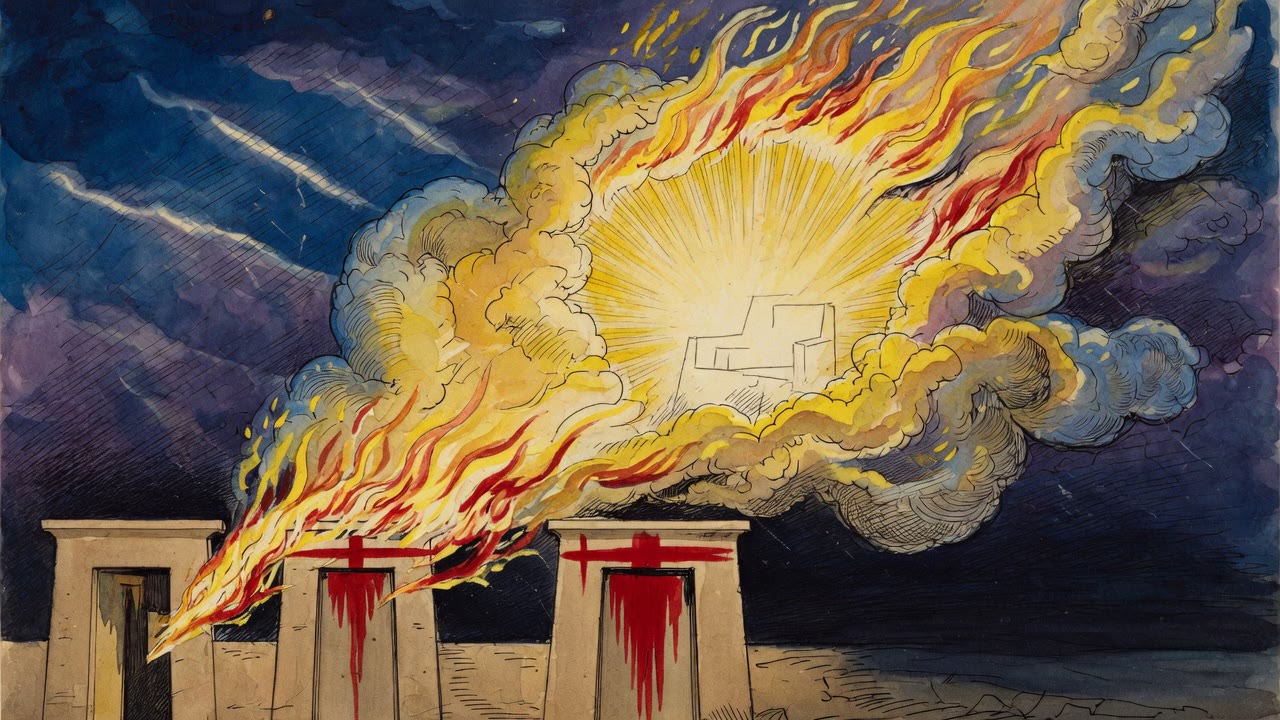
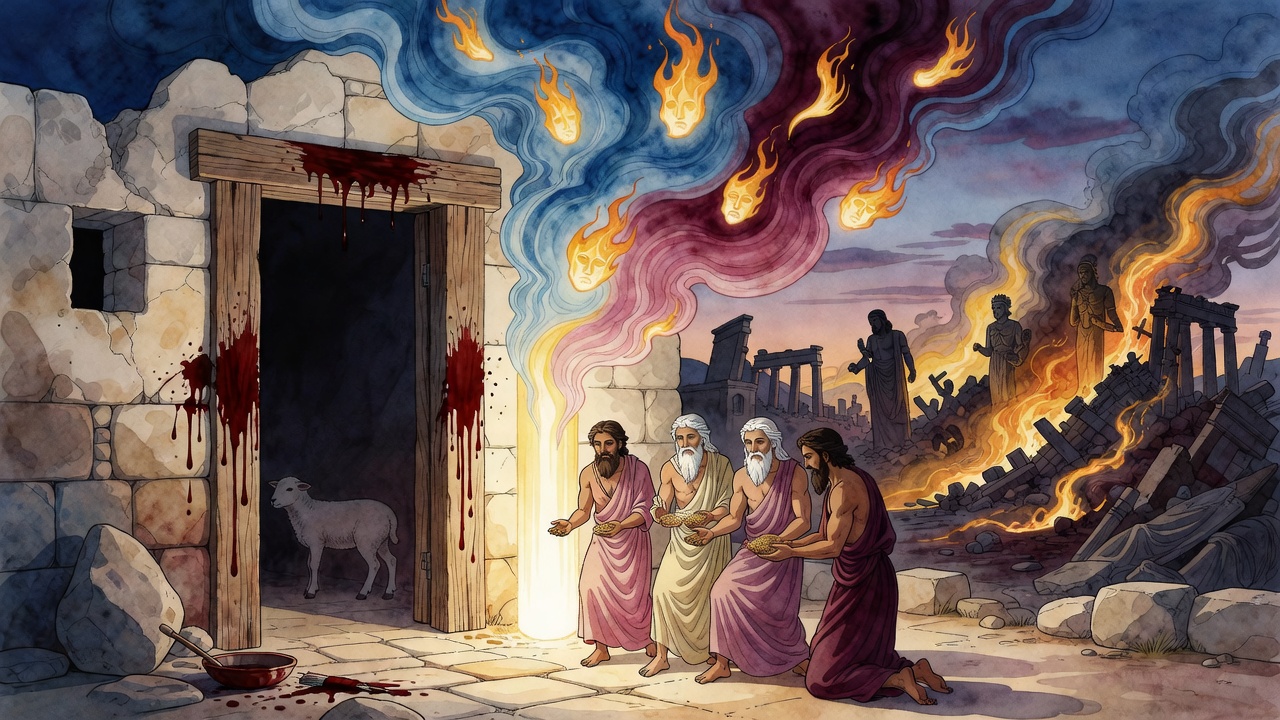
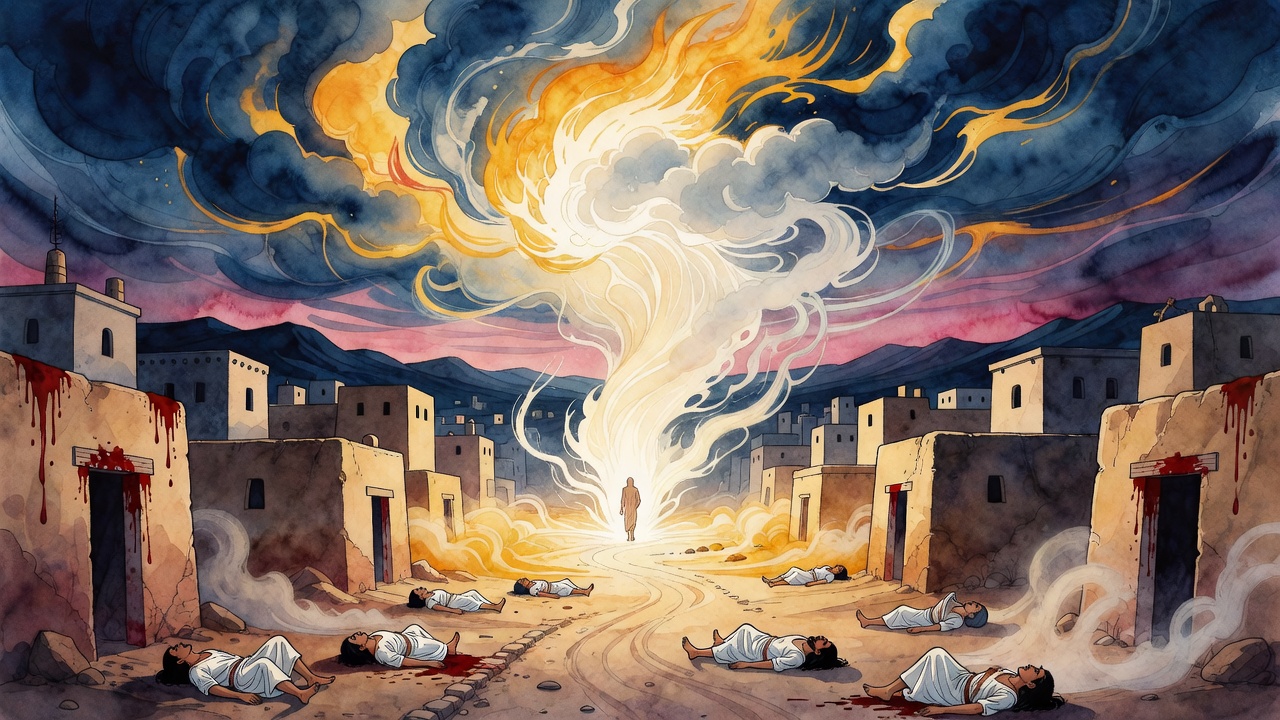
The text of Exodus says it three times, and each repetition was deliberate. I will pass through the land of Egypt that night. I and not an angel. I will smite all the firstborn. I and not a seraph. I and not a messenger. The tradition read the triple repetition as a correction of any assumption that on the night of the tenth plague, as on every other night of the plagues, God had worked through agents. On this night, He worked alone. Whatever passed through Egypt in the darkness, entering every house where the doorpost was not marked, taking the firstborn of man and beast, was not a representative. It was the source.

One of the midrashic readings of the night makes this concrete by describing the problem Pharaoh created for himself. He had instructed his household that he would not be seen attending to bodily functions in public, claiming divine status that placed him above such things. He went to the Nile before dawn so that no one would see him. God told Moses to go to the Nile at that hour and confront him there, forcing Pharaoh to encounter the messenger of the God he denied while performing the human function he was pretending not to have. The plagues were designed to dismantle specific pretensions, not merely to punish a nation.

What Happened at Midnight

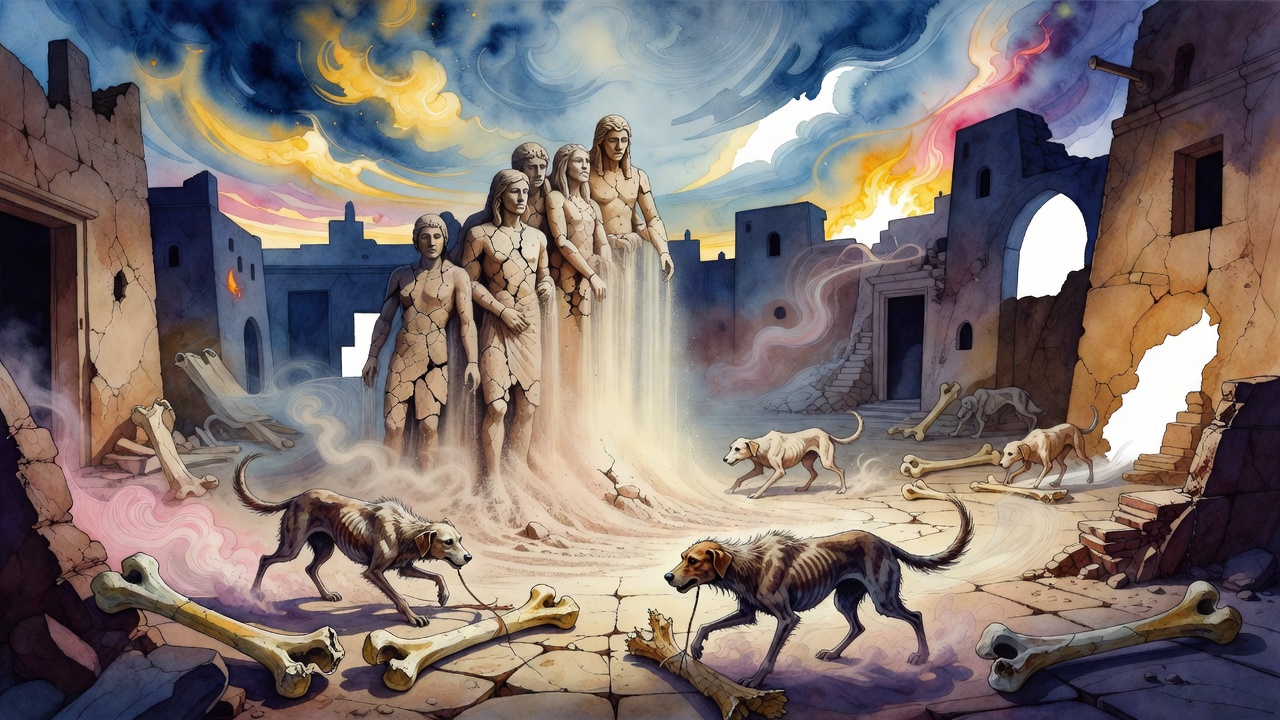
The Egyptians had tried to prepare. When Moses announced that the firstborn would be struck, some Egyptian parents took their firstborn sons out of their own homes and hid them in the houses of neighbors, thinking the curse applied to the building rather than the person. Those children died in the houses where they were hidden. Some Egyptian firstborn sons tried to escape by hiding in Israelite homes, because the blood of the Passover lamb was marked on the doorposts and they thought the marking would protect anyone inside. Those children died in Israelite homes. The protection followed the household of Israel wherever it was located. It did not extend to the Egyptians who sheltered under it. Every house in Egypt that did not belong to an Israelite family was shaken by death that night, from the firstborn of Pharaoh on his throne to the firstborn of the prisoner in the dungeon pit.

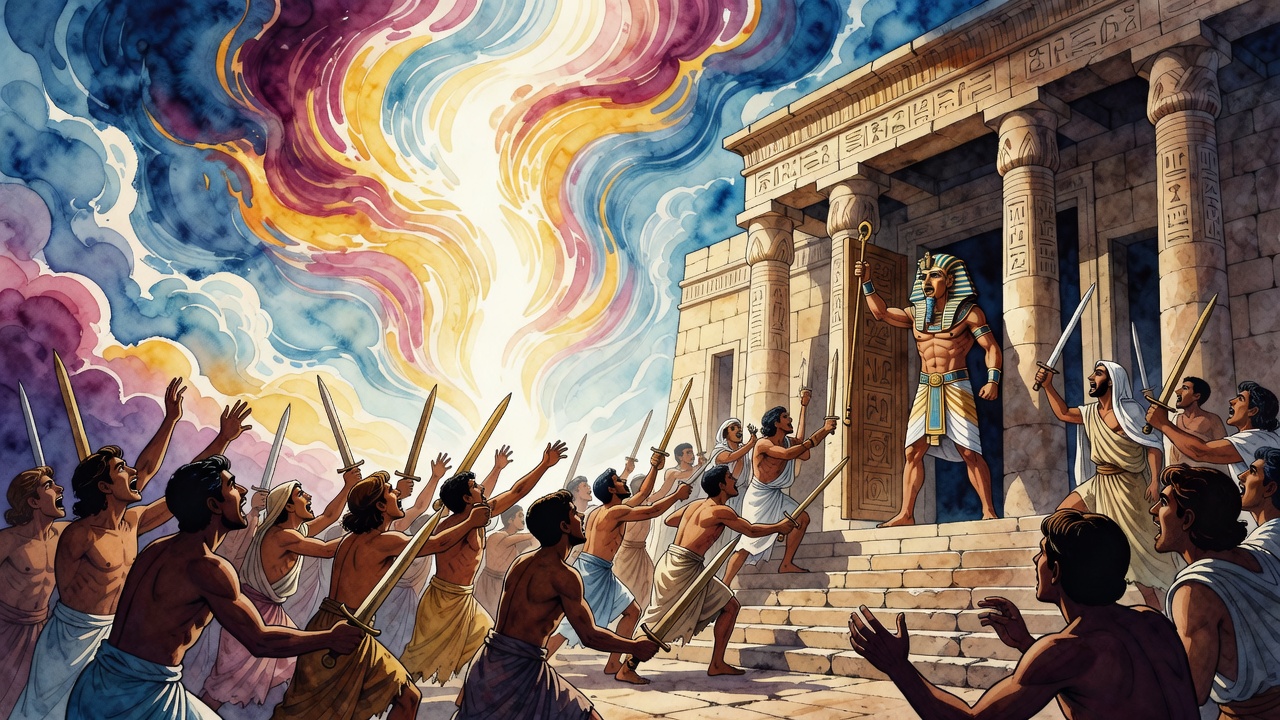
The Egyptian firstborn who were still alive when the night ended were themselves transformed by what they had survived. They went to Pharaoh and demanded that he release Israel. When he refused, they went into the streets and began killing their own compatriots, Egyptian firstborns striking down Egyptians who were not firstborn, in a frenzy of grief and rage at what had been permitted to happen to them. The text in Psalms that says God struck the Egyptians refers, in this reading, partly to what surviving Egyptians did to each other after the night was over.

The Hyssop and What It Bound Together

God's instruction for marking the doorposts specified hyssop, a small, unremarkable plant. The midrash read the choice of hyssop as intentional commentary. Hyssop was the humblest plant in Israel's botanical vocabulary, the lowest growing, the least impressive. Cedar was the most impressive. The ritual of the red heifer used both. The purification from leprosy used both. Whenever cedar and hyssop appeared together in a rite, the message was the same: greatness requires its counterweight. The cedar that towers must remember the hyssop at ground level or it has not understood what height is for.

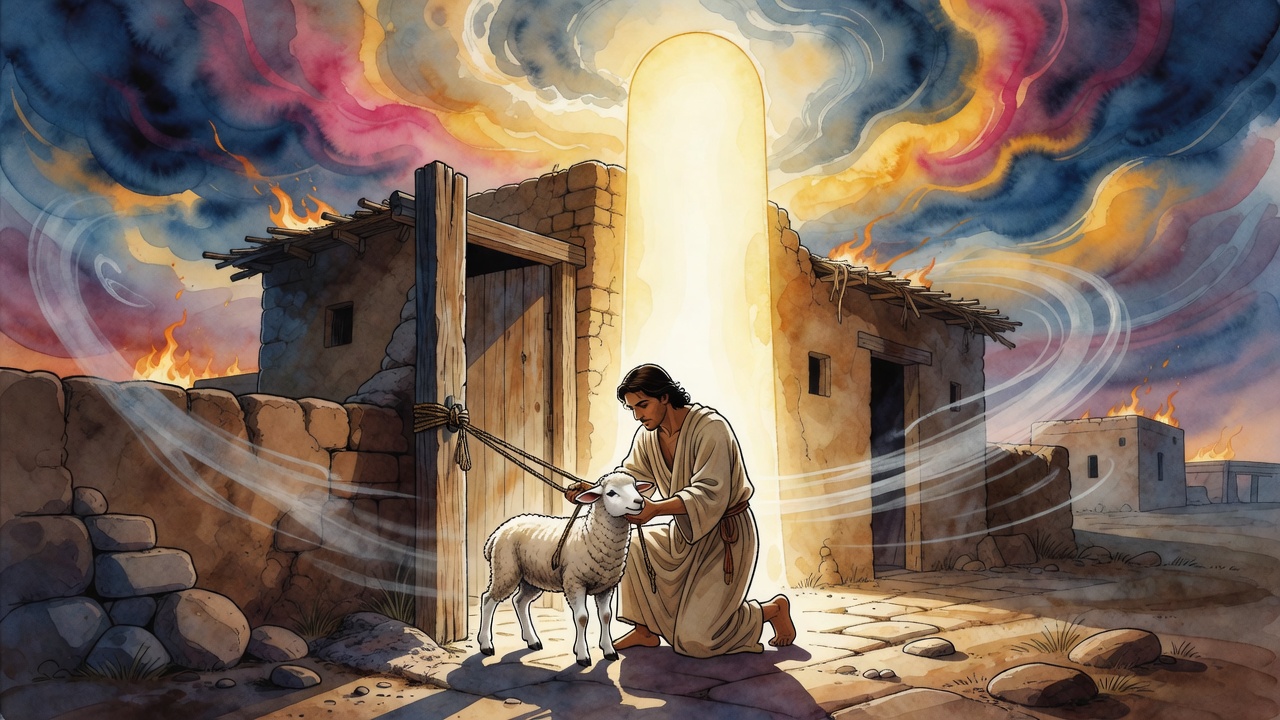
The Hebrew word for the bundle of hyssop, agudat, shares a root with the word for association or gathering. God tells Moses to take a bundle of hyssop. The midrash reads this as God saying, I will render you an association for myself. The physical act of binding the hyssop into a bundle, dipping it in blood, and marking the doorposts was also an act of binding the people to God in a new covenant of presence. The blood was the seal. The hyssop was the pen. The doorpost was the parchment. Every Israelite household that night was inscribed into a relationship that the plagues and the crossing of the sea and the revelation at Sinai would flesh out over the following months, but whose first inscription was made by a bunch of weeds dipped in lamb's blood.

The Firstborn Who Were Spared

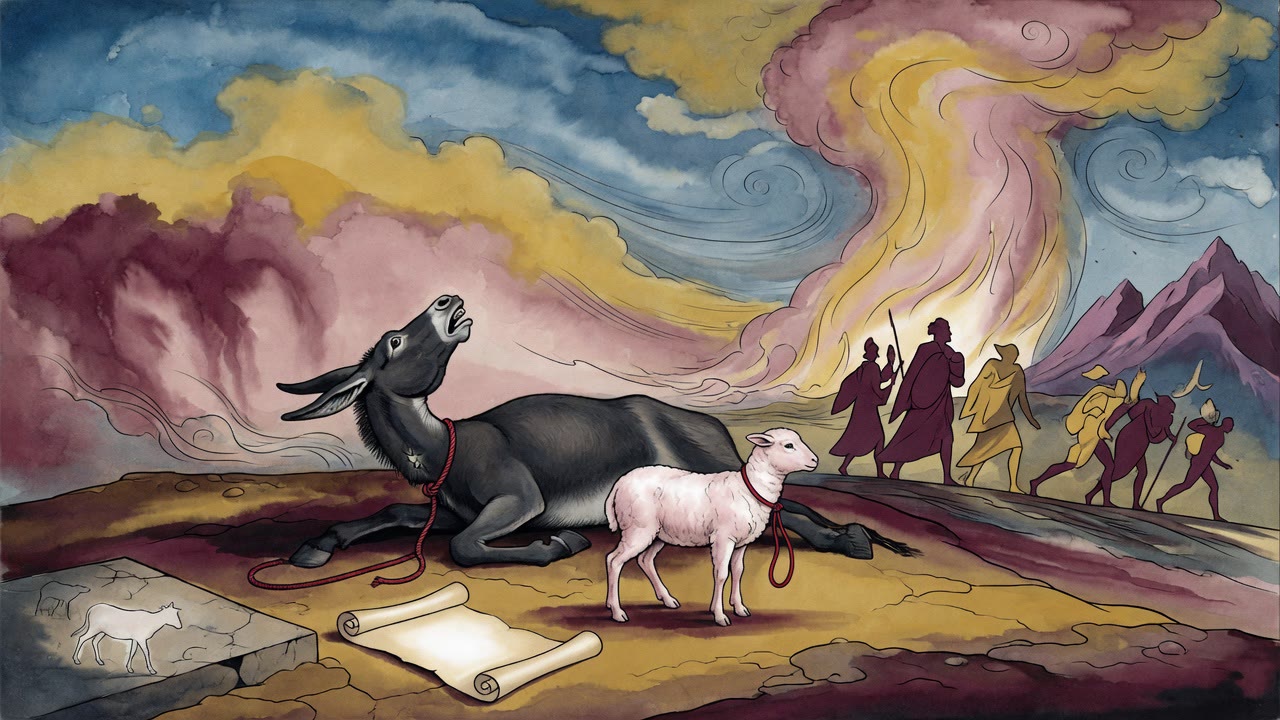
Not all firstborn Egyptians died. The tradition preserved in Shemot Rabbah, a Palestinian midrash from around the fifth century CE, records that any Egyptian firstborn who had shown kindness to an Israelite, who had given shelter or spoken against the oppression, was passed over in the night. The decree that swept through Egypt was not indiscriminate. The same hand that had protected Israel behind the blood on the doorposts recognized Egyptians who had aligned themselves, even silently, with the people being liberated. The night of the tenth plague was not a night of collective punishment. It was a night of precise accounting, and the precision moved in both directions.

There were Egyptians among the mixed multitude that left Egypt. People who had seen enough to want to follow. They are mentioned only briefly in the Exodus text and almost never in the telling of the story, but they were there, walking out with the Israelites into the desert, carrying their own reasons for leaving a country that had permitted what it had permitted.


← All myths

From the tradition

Sources

8 sources

The texts this telling draws on, in full. Open a card to read inline, or expand it for a wider, quieter read.

Shemot Rabbah 15:12Shemot Rabbah

The Shemot Rabbah, a classic collection of rabbinic interpretations on the Book of Exodus, offers a breathtakingly intimate perspective on that pivotal moment. Specifically, Shemot Rabbah 15 unveils a profound idea about the very first Passover. "This month shall be for you," God proclaims. Rabbi Meir, in a beautiful interpretation, hears God saying: "The redemption is for Me and for you." It's not just God acting on behalf of the Israelites; it's almost as if God, too, is being redeemed with them.

As the verse says, "Whom You redeemed from Egypt, the nation and its God" (II (Samuel 7:2)3). What does it mean to say that God was redeemed alongside the nation? It’s a radical thought. The text continues, "Establish this month for Me and for you, as I will see the blood of the paschal offering and it will atone for you." This idea of shared redemption, of God being invested in the fate of Israel as much as they are in God, is so powerful. It paints a picture of a covenant not just as a contract, but as a deep, intertwined destiny.

What about the Paschal lamb itself? The Shemot Rabbah doesn't miss a detail, diving deep into the symbolism of the lamb, connecting it to core narratives in Jewish tradition. The unblemished lamb, the text suggests, corresponds to Abraham's willingness to sacrifice Isaac. Remember when Isaac asks his father where the lamb is for the sacrifice? Abraham responds, "God will see to the lamb for Him…" (Genesis 22:8). It's a moment of immense faith, of trusting in the divine plan even when it seems impossible.

The lamb’s perfection, its being tamim, is connected to God’s own perfection, as the Torah states, "The Rock, His actions are perfect [tamim]" (Deuteronomy 32:4). It’s all interconnected, isn't it? These details, meticulously woven together by the Rabbis, reveal layers of meaning we might otherwise miss.

The Shemot Rabbah even explores the specifics of the Passover meal. "They shall take of the blood and place it on the two doorposts," mirroring God’s protection. The roasted meat eaten at night evokes Abraham’s rescue from the fiery furnace (see Bereshit Rabba 38:5). The unleavened bread? That recalls Sarah's hospitality, baking for the angels (see Genesis 18:6). And the bitter herbs? They represent Jacob's suffering, his constant pursuit by Esau. Each element of the Seder, the Passover meal, is a potent symbol, linking the Exodus to the entire sweep of Jewish history.

The text emphasizes the urgency and completeness of the Exodus. "You shall not leave any of it until morning," mirroring God’s complete destruction of the Egyptian firstborn. It’s a moment of absolute finality. The Shemot Rabbah then uses a powerful analogy: a king offering his sons a way to avoid judgment. God, in a similar way, offers Israel the blood of the Paschal offering and the blood of circumcision as atonement. This act of divine mercy, of haavara (transferring or passing over), is how God spares them from the severity of the Exodus judgment.

As it is written, "I will pass in the land of Egypt [on that night]…And I will smite all the firstborn in the land of Egypt, from man to animal; and against all the gods of Egypt I will execute judgments; I am the Lord" (Exodus 12:12). And just as God acts as a haven, so too does Israel proclaim: "The Lord also will be a haven for the oppressed, a haven for times of trouble" (Psalms 9:10). It's a cycle of protection and refuge, echoing through the generations.

So, what does this all mean for us today? Perhaps it's a reminder that redemption isn't a one-sided affair. It requires our participation, our willingness to engage with the story, to find ourselves within it. It means recognizing that even in our own struggles, God is with us, working towards a shared liberation. It’s an invitation to see ourselves not just as recipients of divine grace, but as active partners in the ongoing story of redemption.

Full source
Shemot Rabbah 18:2Shemot Rabbah

What Happened at Midnight When the Firstborn Died is the question behind this passage from Shemot Rabbah.

Here's the picture Shemot Rabbah paints: Moses, acting as God's messenger, announced the impending plague: “I will smite all firstborn” (Exodus 12:12). Understandably, this caused quite a stir. Some Egyptians, fearing for their sons' lives, came up with a desperate plan. They would take their firstborn sons to the homes of Israelites, begging them for protection. “Take this one,” they’d plead, “and let him stay the night with you.”

Can you imagine the scene? Egyptians, humbled by fear, entrusting their most precious possession to the very people they had enslaved. It speaks volumes about the desperation and the awareness, at least in some, that the God of the Israelites was a force to be reckoned with.

Here's where the story takes an even more remarkable turn. When midnight arrived, God, blessed be He, struck down all the firstborn in Egypt. But what about those Egyptian children sheltered in Israelite homes? This is where the "righteousness" of God's ordinances truly shines through.

The text explains that God, in His infinite wisdom, would "step between" the Israelite and the Egyptian child. He would take the soul of the Egyptian firstborn while leaving the Israelite unharmed. Picture it: a divine separation, a precise and unwavering act of justice carried out in the darkest hour.

The result? The Israelites would awaken to find a dead Egyptian child lying between them and their own sons, a stark reminder of God's protection. As it says in (Exodus 12:13), “I will pass over you, and there will be no plague upon you.”

This profound experience, this clear demonstration of divine justice and salvation, prompted the Israelites to proclaim: “At midnight I will rise to give thanks to You.” It was a moment of profound gratitude, recognizing not only their deliverance but also the unwavering righteousness behind God's actions. It was a time to give thanks "because of the ordinances of Your righteousness.”

So, the next time you hear about the significance of midnight in Jewish tradition, remember this story. It's a powerful reminder that even in the face of immense suffering, divine justice prevails, and that even in the darkest of nights, there is always reason to give thanks. It’s a time to reflect on the mishpatim, the judgments, and the tzedek, the righteousness, that guide the universe.

Full source
Shemot Rabbah 17:3Shemot Rabbah

Our story comes from Shemot Rabbah, a compilation of rabbinic interpretations of the Book of Exodus. Specifically, it focuses on the instruction to take a bunch of hyssop and dip it in blood.

"You shall take a bunch of [agudat] hyssop," the text reads (Exodus 12:22). Shemot Rabbah interprets this as God saying, "I will render you an association [aguda] for Myself." God chooses us, forms a connection with us, even though we might feel as lowly as the hyssop. As it says in (Exodus 19:5), "And you will be My treasure from all the peoples." It’s a beautiful image, isn't it? That even in our perceived insignificance, we are cherished and valued.

Why the blood? "And dip it in the blood that is in the basin." What was so important about protecting the Israelites with blood? Shemot Rabbah tells us that God wanted to evoke the blood of Abraham’s circumcision. It reminds us that the covenant between God and Abraham is a thread that runs through Jewish history, a source of enduring protection.

In fact, according to (Ezekiel 16:6), Israel was rescued from Egypt with two bloods: the blood of the paschal offering and the blood of circumcision. The verse states, "I said to you: With your blood, live; I said to you: With your blood, live." As the rabbis understood it, these two acts were fundamental to the Israelite’s redemption.

The hyssop was then used to touch the lintel and doorposts with the blood. "And touch the lintel… and on the two doorposts." According to this midrash, the lintel represented the merit of Abraham, while the doorposts represented the merit of Isaac and Jacob. The actions of the Patriarchs protected their descendants.

Through the merit of our ancestors, God will see the blood "and will not allow the destroyer to come to your houses to smite you," as (Exodus 12:23) tells us. This is more than just a historical event. It’s a reminder that we are protected, not just by our own actions, but by the legacy of those who came before us. We are part of a chain, a community, an aguda that stretches back to Abraham and beyond.

As Ginzberg retells this story in Legends of the Jews, these acts of faith and remembrance are what shielded the Israelites from harm.

So, what does this mean for us today? Perhaps it's a reminder that even when we feel small or insignificant, we are part of something much larger than ourselves. We are connected to a rich history, a covenant that stretches back millennia. And just as the blood on the doorposts protected the Israelites, our connection to that history, to our community, and to our faith can offer us protection and strength in the face of whatever challenges we may face.

Full source
Yalkut Shimoni on Torah 199:4Yalkut Shimoni on Torah

(Exodus 12:12) "And I will pass through the land of Egypt." Rabbi Judah says: Like a king who passes from place to place.

Full source
Shemot Rabbah 18:8Shemot Rabbah

Today's story comes from Shemot Rabbah, a collection of rabbinic interpretations on the Book of Exodus. It's a powerful reflection on God's role in the Exodus, and really, in all of our lives.

Rabbi Ḥalafta, a sage from the early centuries of the Common Era, kicks things off with a declaration: "May the name of the Holy One, blessed be He, be blessed, as there is nothing like His miracles and His wonders, and nothing like His might and His deeds!" He's not just being polite; he's setting the stage. He’s reminding us that God's power is unparalleled. Really let it sink in. It’s a bold statement, isn’t it?

He continues, "Great is our Lord, and very powerful" (Psalms 147:5). Ḥalafta paints a picture of a God who is both kadosh (holy) and tahor (pure), a God who confronts the impure. Why? What motivates this divine intervention?

Because, as Rabbi Ḥalafta emphasizes, God is "great and awesome." It's for the sake of Israel that God revealed His strength to the world. But why specifically for Israel? What's so special about them in this moment?

Here's where it gets personal. Rabbi Ḥalafta reminds us of God's promise to Jacob: "I will descend with you to Egypt [and I will take you up again]" (Genesis 46:4). This wasn't just a casual promise; it was a commitment. God wasn't going to abandon Jacob's descendants in their time of need. He was going to be right there with them, in the thick of it, and He would bring them out.

And that’s the key. God descends with us. He’s not just a distant observer. He's intimately involved in our struggles.

Rabbi Ḥalafta then draws a fascinating comparison. "One angel overturned Sodom, but here, 'The Lord will emerge as a warrior, He will arouse jealousy' (Isaiah 42:13)." One angel was enough to destroy Sodom. But the Exodus? That required something much more powerful. It required God Himself to "emerge as a warrior." The Hebrew here is striking: God will "arouse jealousy" or "zeal." This isn't just about physical strength; it’s about a passionate, unwavering commitment to justice and redemption.

What's the takeaway here? It’s not just a historical account of the Exodus. It’s a reminder that God is actively involved in our lives, fighting our battles, even when we can't see the path forward. The Exodus wasn't just a one-time event. It’s a model for how God operates in the world, a evidence of His unwavering commitment to His people.

So, the next time you're facing an impossible situation, remember Rabbi Ḥalafta's words. Remember the power of God, the promise to Jacob, and the image of God as a warrior. And maybe, just maybe, you'll find the strength to keep going, knowing that you're not alone.

Full source
Midrash Tanchuma, Bo 7Midrash Tanchuma

And it came to pass in the middle of the night, that the Lord smote all the firstborn in the land of Egypt (Exod. 12:29). The Creator of the night divided the night precisely. The Lord smote all the first born. It was the Lord Himself who smote the firstborn and not His emissary (Moses). In fact, even though a man was elsewhere, and his firstborn was in Egypt, he died. How do we know that the firstborn of the Cuthites, Puthites, and Ludites were also slain? It is said: And smote all the firstborn in Egypt, the first fruits of their strength in the tents of Ham (Ps. 78:51). Only the firstborn of the Pharaoh remained alive in fulfillment of the verse However, it was for this that I raised you up (Exod. 9:16). And Ba’al Saphon was the only idol remaining, to mislead them, in fulfillment of the verse He increaseth the nations, and destroyeth them (Job 12:23). Unto the firstborn of the captives (Exod. 12:29). Why were the firstborn of the captives punished? Because they had rejoiced in the decrees promulgated against Israel. Hence it is written: He that is glad at calamity shall not be unpunished (Prov. 17:5). You must not be of the opinion that only the captives reacted in that manner, for the slaves and handmaidens did likewise, as is said: Even unto the firstborn of the maidservants that is behind the mill (Exod. 11:5); that is, even those who were legally bound to the millers. Even their firstborn cattle were destroyed lest the people assert: “Our deities are powerful, and that is why punishment was imposed upon them (and not upon us).”

And Pharaoh rose up in the night (Exod. 12:30). Perhaps (he rose at) the third hour (9:00 a.m.), the time at which kings are accustomed to arise. (Therefore) Scripture says specifically in the night. Perhaps he was awakened by the princes and the princesses, (and therefore) the verse states he arose, to inform us that he went to the door of the servants’ quarters and aroused them. He went with them, calling out: “Where are Moses and Aaron resting?” as it is said: And he called for Moses and Aaron by night, and said: “Rise up, get you forth from among my people” (ibid., v. 31). Whereupon Moses replied: The Holy One, blessed be He, told us: And none of you shall go out of the door of his house until morning (ibid., v. 22). Are we thieves that we should steal away under the cover of night? No. We shall depart proudly, in full view of the Egyptians.

Why did Pharaoh and his servants approach him, saying: Get you? The time Pharaoh told him: Get thee from me, see my face no more (ibid. 10:29), he (Moses) insisted: But we shall not leave until all these servants shall come down unto me (ibid. 11:9), to escort us from this place. This verse indicates that Moses paid homage to royalty, since he did not say to him: “You and all your servants.” In fact, the Holy One, blessed be He, had previously charged Moses and Aaron to be respectful to royalty, as it is said: And the Lord spoke unto Moses and Aaron, and gave them a charge unto the children of Israel, and unto Pharaoh king of Egypt (ibid. 6:13). Joseph was respectful to royalty when he said: It is not in me; God will give Pharaoh an answer of peace (Gen. 41:6). Jacob was respectful to royalty; and Israel strengthened himself, and sat upon the bed (ibid. 49:2). Elijah paid homage to royalty, as is said: And the hand of the Lord was on Elijah (I (Kings 18:4)6). Hananiah, Mishael, and Azariah also were respectful to royalty, and so was Daniel.

Go serve the Lord, but who are they that shall go? (Exod. 10:8), he asked, and you replied: We shall go with our young and with our old. Then I say to you: Arise up, get you forth from among my people, both ye and the children of Israel (ibid. 12:31), only let your flocks and your herds remain (ibid. 10:24). You answered: Our cattle also shall go with us, there shall not a hoof be left behind (ibid., v. 26). Then take both your flocks and your herds, as ye have said, and be gone (ibid. 12:32). Would that you had already departed. Then you added: Thou must also give into our hands sacrifices and burnt-offerings (ibid., v. 28). Take whatever you wish and depart, and bless me also (ibid., v. 32); said Pharaoh.

Full source
Yalkut Shimoni on Torah 206:5Yalkut Shimoni on Torah

"And the LORD will pass through to strike Egypt" (Exodus 12:23). Rabbi Yehudah says: like a king who passes from place to place.

Full source
Midrash Tanchuma Buber, Bo 18:1Midrash Tanchuma Buber, Bo

"And every firstborn shall die" (Exodus 11:5). All the firstborn gathered before their fathers. They said to them: "Everything that Moses said, he has brought upon us. Do you not wish that we should live? Rather, come and let us send these {servants} [Hebrews] out from our midst; and if not, behold, we are going to die." They answered them and said to them: "Even if all the Egyptians die, they shall not go out from here."

What did they do? All the firstborn gathered and went off to Pharaoh, and they were crying out to Pharaoh and saying to him: "We beg of you, send out this people, for on their account the evil will come {upon them and upon him} [upon us and upon you]." He said to his servants: "Go out and break the legs of these men." What did the firstborn do? Immediately they went out, and each and every one of them took up his sword and killed his father, as it is said: "To Him who smote Egypt through their firstborn" (Psalms 136:10). It is not written here "To Him who smote the firstborn of Egypt," but rather "To Him who smote Egypt through their firstborn."

After their fathers had been killed, the Holy One, blessed be He, revealed Himself [over them] and killed them, as it is said: "And the LORD smote every firstborn" (Exodus 12:29). If the firstborn of the Egyptians had sinned, in what had the captives sinned? Rather, it is that they were {saying and rejoicing} [rejoicing and saying]: "Let us be in bondage, but let Israel not go out from here." Therefore He killed them, "even unto the firstborn of the captive" (Exodus 12:29), and all the more so the firstborn of the maidservant, for they were enslaving them. And why the firstborn of cattle? Because the Egyptians were bowing down to lambs, so that they should not say, "Our object of worship is mighty, for the retribution did not rule over it", [therefore, "and all the firstborn of cattle"].

Full source