The Passover Night When Egypt Wept and Israel Sang
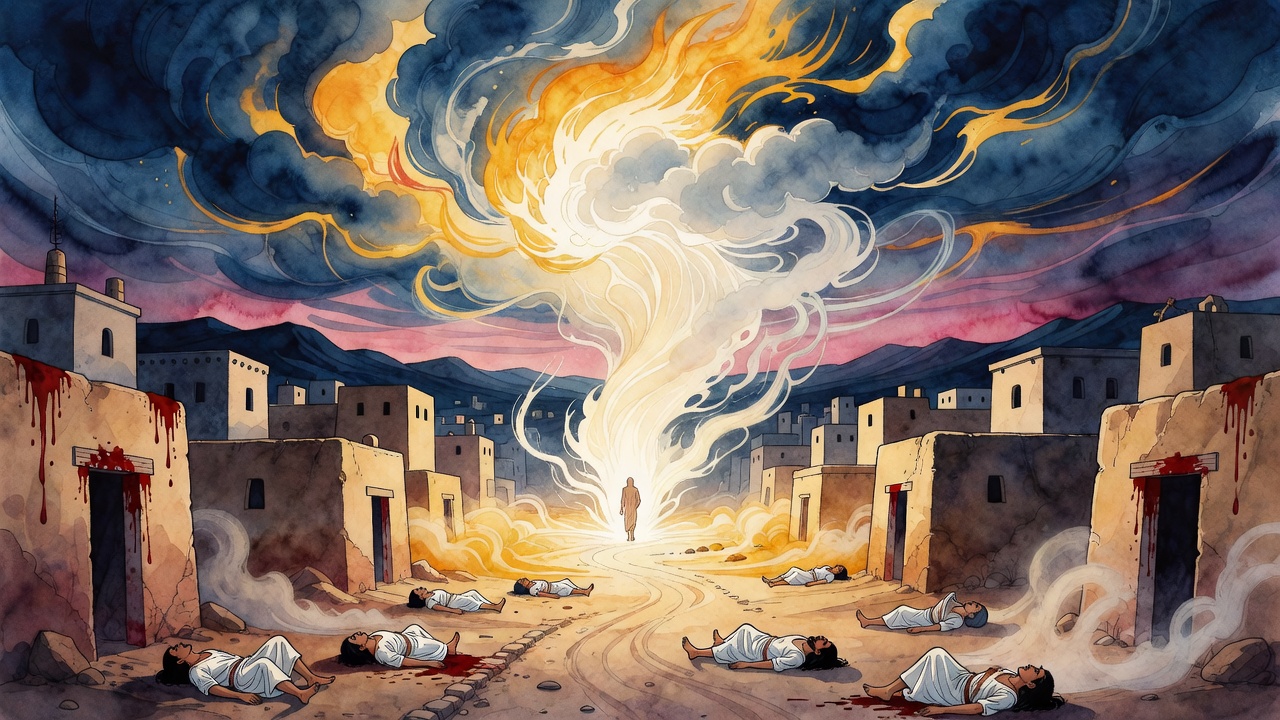
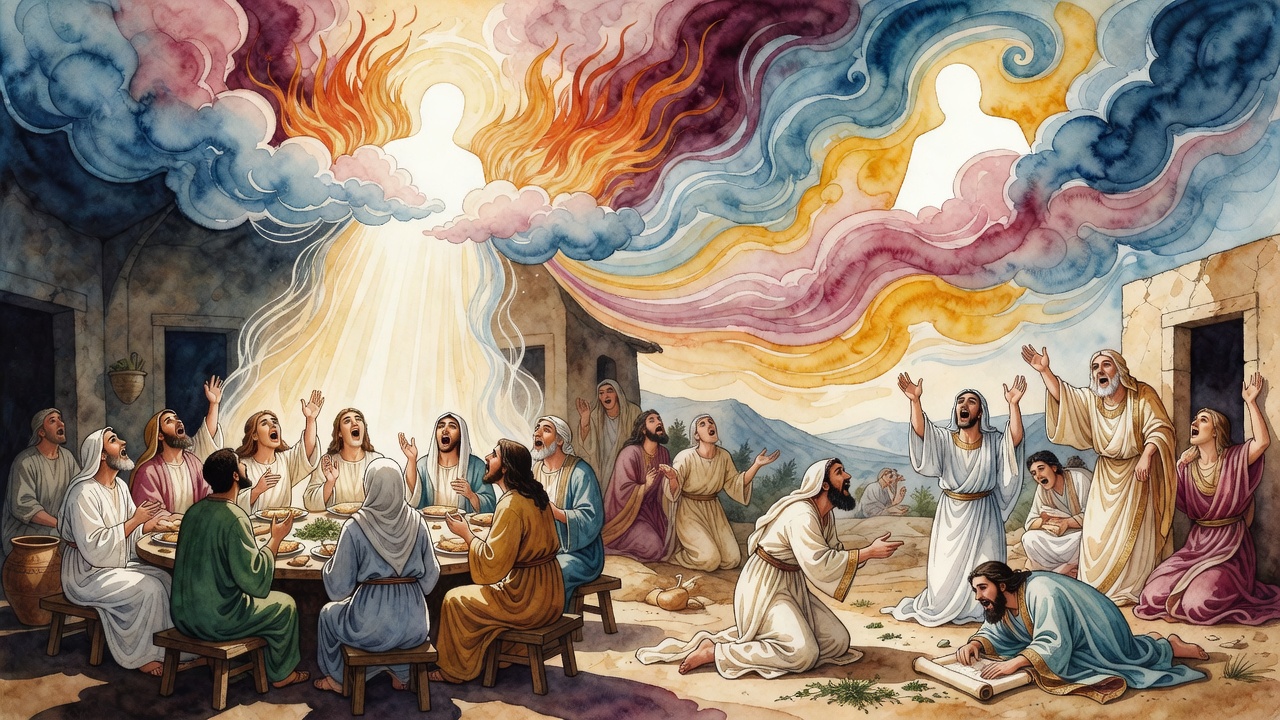
On the first Passover night, Israel ate and sang in their houses while Egypt screamed over the firstborn. The rabbis preserved both sounds at once.
Table of Contents
 Click for full size
Two Houses, One Night
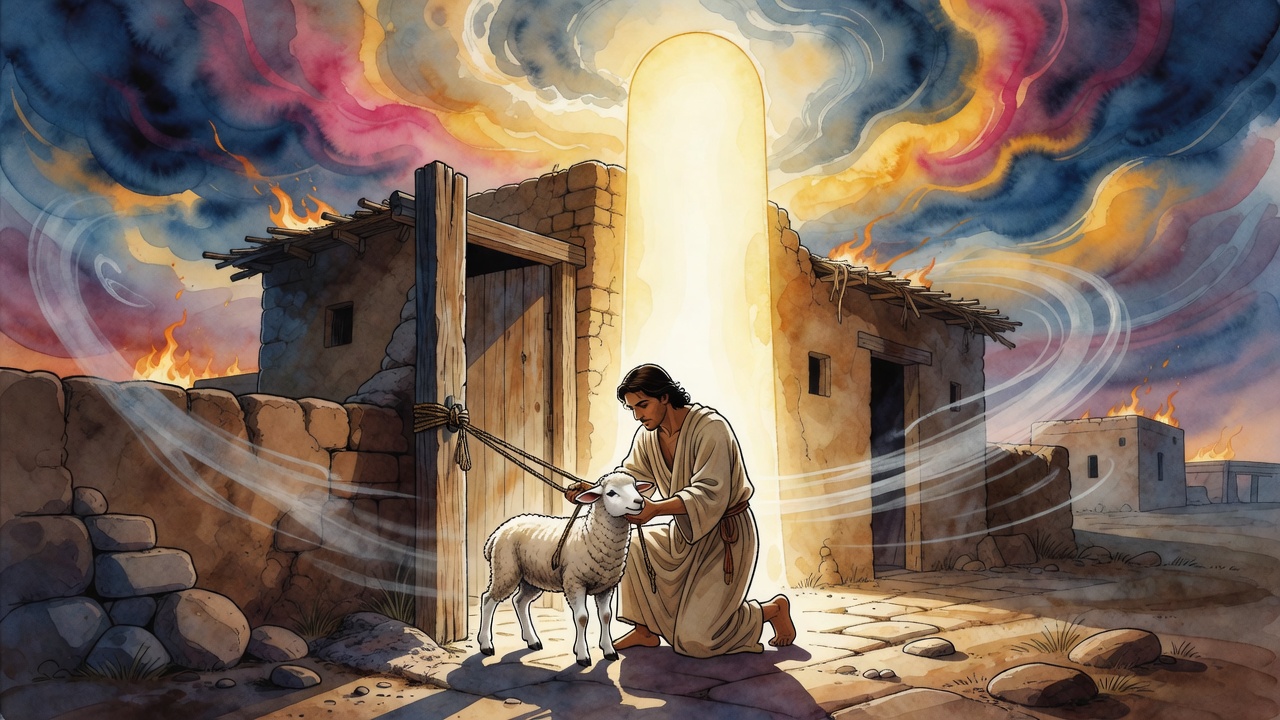
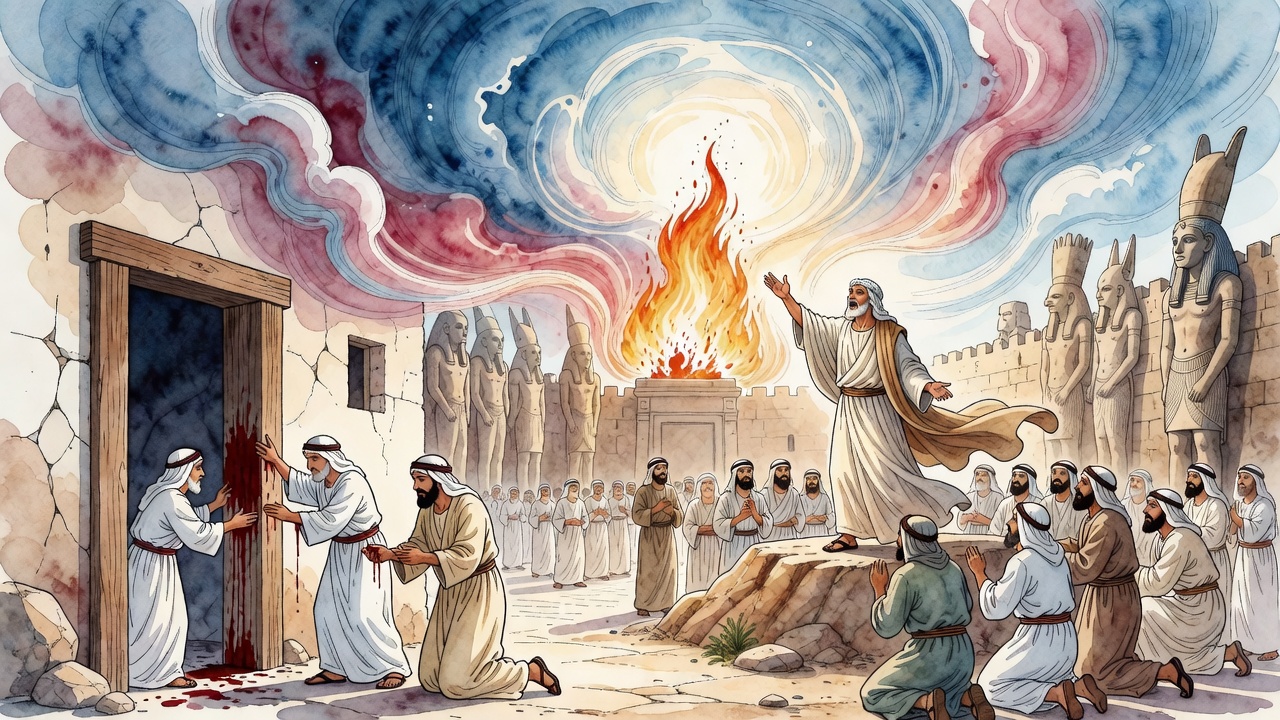
In one house they were eating lamb with unleavened bread and bitter herbs, dressed to travel, sandals on their feet, staff in hand. They had painted blood on the doorposts and the lintel. They were eating in haste. The night before them had the structure of departure.
In the next house, Egypt was burying the dead.
The rabbinic tradition refused to let either sound drown out the other. Freedom arrived that night, but it arrived alongside a catastrophe happening a few feet away. The tradition held both because the night itself held both, and a theology that kept only the song would be dishonest about what liberation cost.
The Word the Mekhilta Split in Two
The Mekhilta, the early rabbinic legal commentary on Exodus, found in a single Hebrew word the whole doubled scene. The word bakosharot, from Psalms 68:7, was read as two words pressed together: "these are crying, those are singing." Egypt is burying its firstborn dead, as Numbers 33:4 records. Israel hears the voice of song and salvation in the tents of the righteous, as Psalms 118:15 says.
The reading was midrashic rather than peshat, but what it preserved was true to the event: the same night contained both realities, and they were simultaneous, not sequential. Israel did not sing because it did not know about Egypt's grief. Israel sang while Egypt wept. The sound of the tambourine and the sound of weeping existed in the same air at the same time.
Rabbi Jose Heard the Whole Night
Rabbi Jose the Galilean saw the whole night spread before him. In Israel's houses, he said, all night they were eating and drinking and rejoicing and taking wine and praising their God with a loud voice. Songs. Psalms. Hymns. The full weight of gratitude that had been accumulating through ten plagues and decades of slavery.
And in Egypt's houses, through the same dark hours, the screaming of the bereaved. Pharaoh woke in the middle of the night. He went to check on his son and found him dead. He went through the palace calling out and found the same devastation in every chamber. He went into the street and the street was already full of the same sound. There was not a house in Egypt without its dead.
The destroyer who moved through that night had been given a specific command: do not cross the threshold of any house marked with the blood. The tradition was careful about the destroyer's nature. It was not that God's power passed over casually. The blood was a sign that caused the destroying force to skip that house deliberately, actively. The houses not marked had no such protection. The destroyer moved through them as it had been sent to do.
The Blood That Protected and the Blood That Did Not
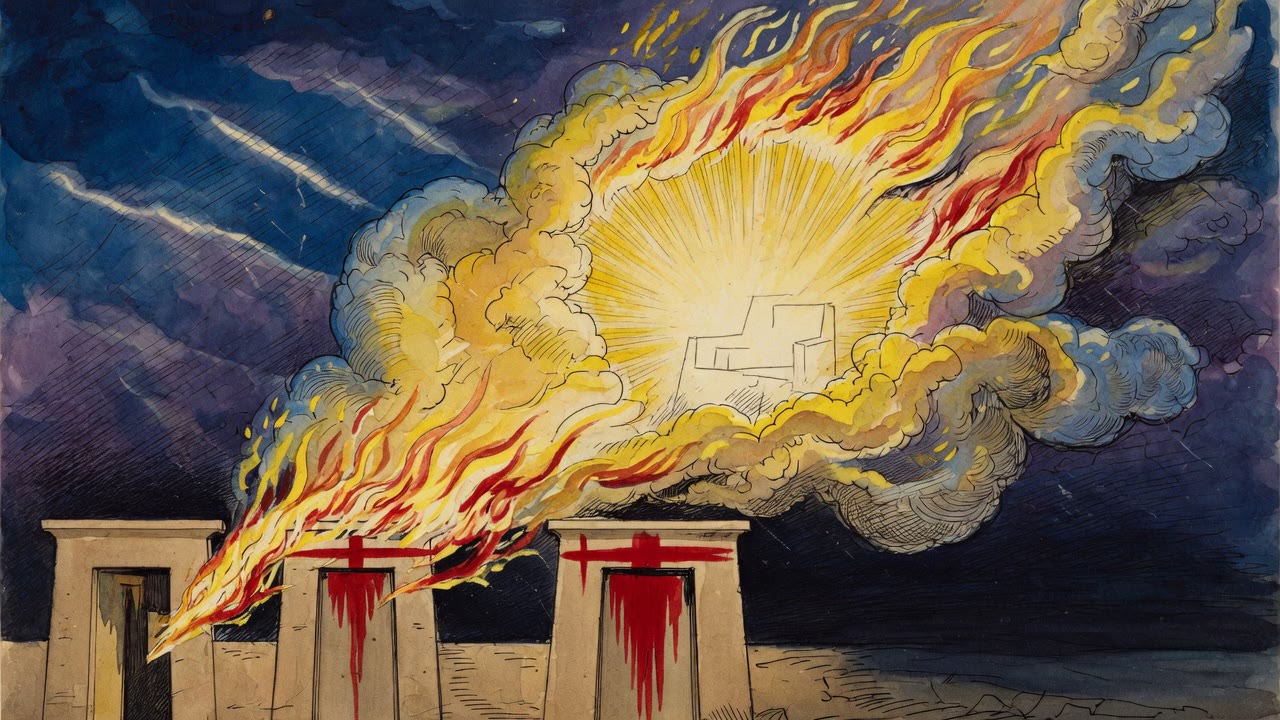
The night instruction was precise. Take the blood of the lamb and put it on the two doorposts and the lintel. When the LORD passes through to strike Egypt, He will see the blood on the lintel and the two doorposts and the LORD will pass over the door and will not allow the destroyer to come into your houses to strike. The protection was architectural: it was written on the doors.
The tradition added a detail about what the protection meant for the interior of the house. God, when passing over, covered the doorway with the divine wings, the way a bird covers its nestlings. The blood invited the covering. The covering held the destroyer outside. Inside the covered house, there was eating and singing and the preparation for departure. Outside, Egypt was not covered.
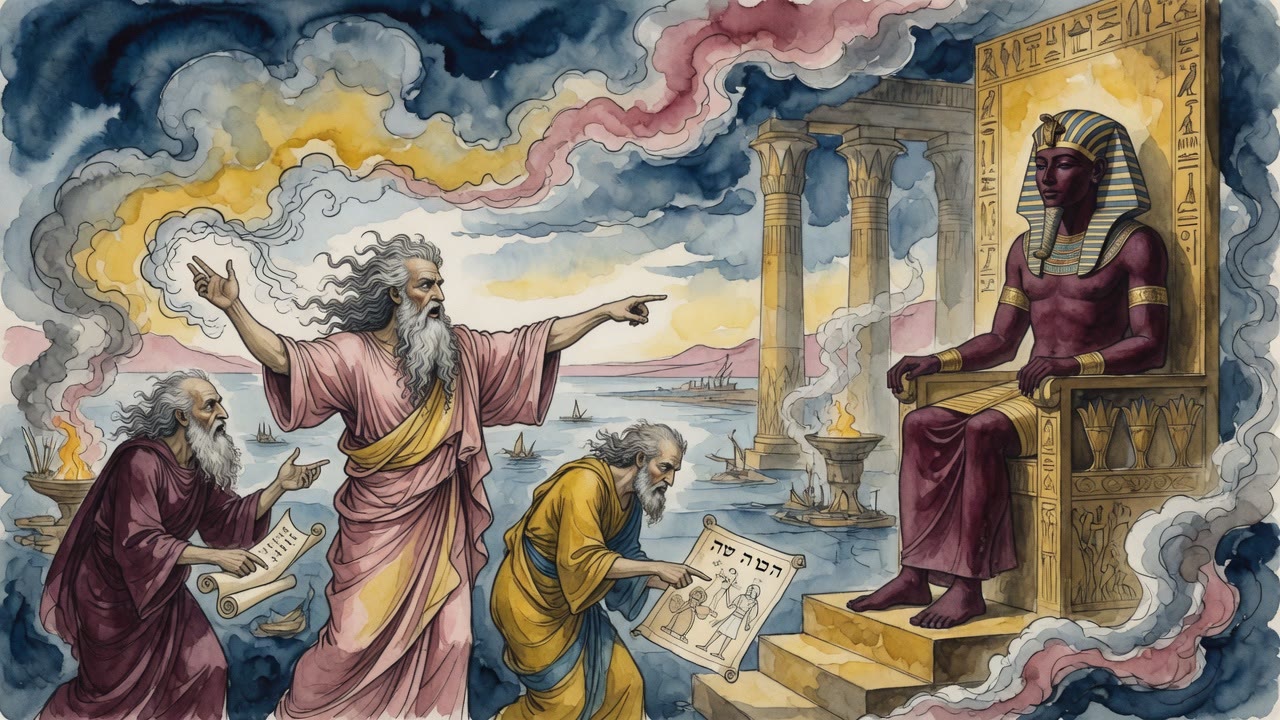
Moses had told Pharaoh what was coming. He had named the hour: "about midnight." The accuracy of the prediction was itself a statement about the nature of what was operating. This was not a plague in the natural sense. This was a predetermined event, announced in advance, arriving as announced, distinguishing between houses by means of a sign anyone could place on their door. Pharaoh could have painted blood on his own door if he had believed Moses. He had not believed Moses, and his firstborn died with the rest.
What Israel Carried Out of That Night
They left the next morning with the Egyptian silver and gold they had asked for and received, as if Egypt in its grief could not refuse anything the Israelites requested. They had been in Egypt four hundred and thirty years. They left in one night. Pharaoh called Moses and Aaron in the darkness while his son lay dead and told them to get out, "take your flocks and your herds, be gone, and bless me also."
The bless me also was the sound of a man who had finally understood who he was dealing with, asking for a share in the favor he had spent ten plagues trying to resist. The tradition heard it as Pharaoh's last act of the night: having watched Egypt destroyed, he reached for what Israel had. He could not have it. But he asked.
← All myths