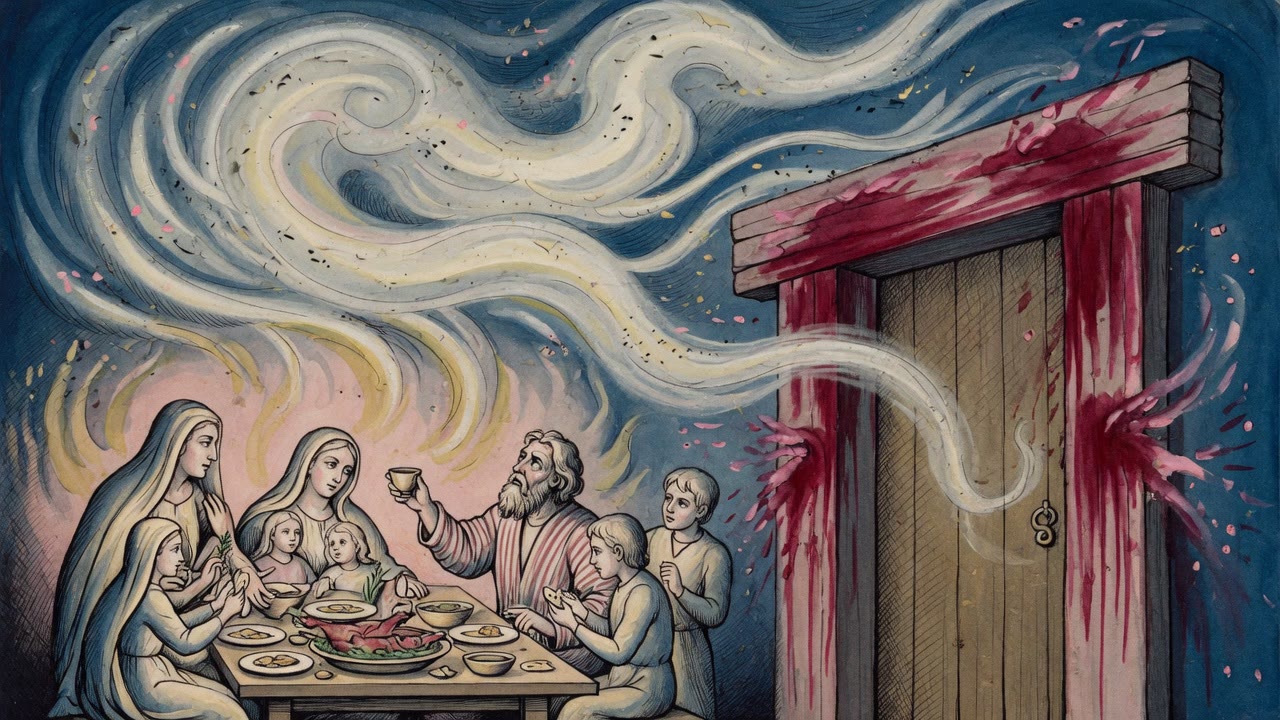
Pesach5 min read

Abraham Hurled Dust at Four Kings on Passover Night

When raiders dragged Lot off, Abraham chased four kings into the dark, and the dust he hurled turned to swords on Passover night.

Curated by Arthur · Told by Maggid ·
Table of Contents
  1. The Runner Brings Word of Lot
  2. The Chase Into the Northern Dark
  3. When Dust Turned to Swords
  4. The Night That Kept Its Promise

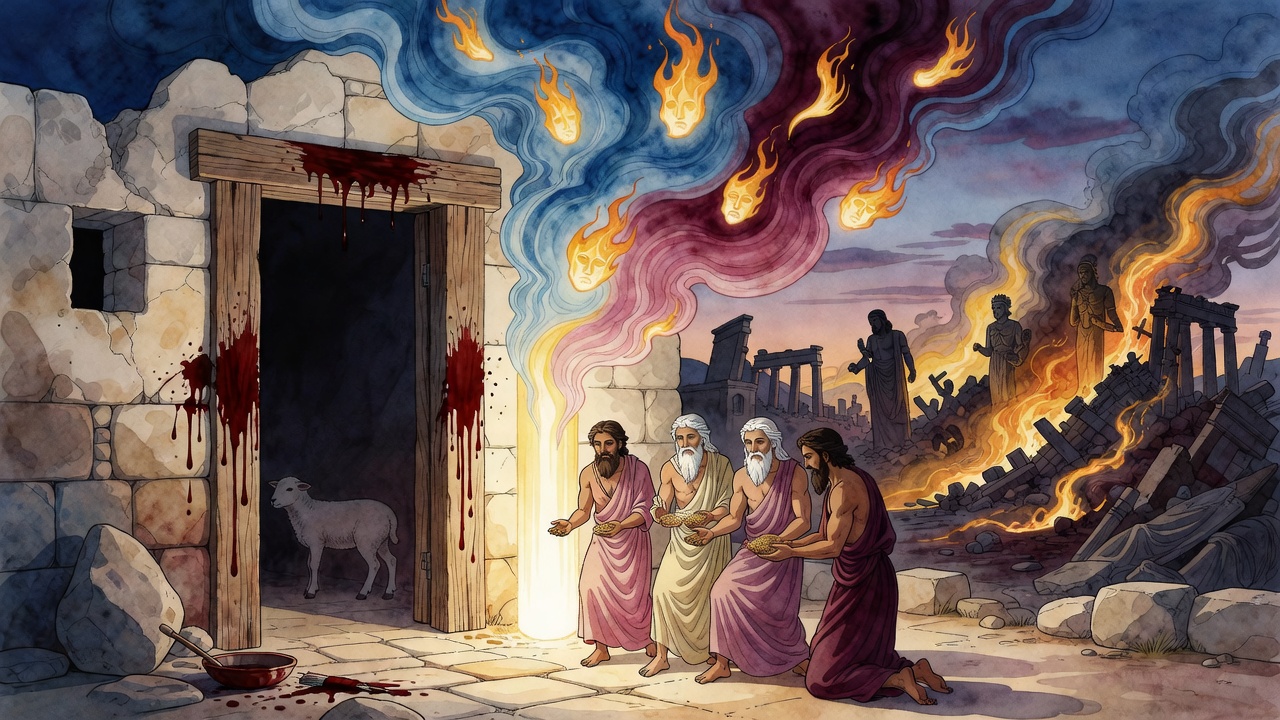
The runner reached the tents at dusk, lungs burning, and could barely get the words out. The cities of the plain had fallen. Sodom stripped, Gomorrah looted, the storehouses emptied into the carts of an army marching home. And Lot, taken. Bound with the rest of the captives and driven north with the plunder.
Abraham did not sit down to grieve. He stood, and the standing was already a decision. His nephew was somewhere in that column of spears, and the men who held him had just crushed five kings in a single afternoon.

The Runner Brings Word of Lot

Four kings had come down out of the east like a flood. Chedorlaomer of Elam led them, and three others rode at his side, and where they passed the fields were trampled and the wells were fouled. They had broken the armies of the plain and not even slowed their pace. They were veterans of slaughter. They counted their dead by the thousand and felt nothing.

Against this Abraham could raise three hundred and eighteen men, the trained fighters of his own household (Genesis 14:14). Servants. Herdsmen who knew the blade because the wilderness demanded it. By any honest reckoning of numbers and steel, the chase was a way to die beside Lot rather than a way to save him.

He went anyway. They armed in the dark and rode north through the night, and the sky above them was the sky of the fifteenth of Nisan, though no man among them knew yet what that night would come to mean.

The Chase Into the Northern Dark

They found the army camped near Dan, fires scattered across the slope, the captives roped together at the edge of the firelight. The kings had grown careless with victory. Why post a heavy watch? Who was left to come for them?

Abraham divided his handful of men and struck in the deep middle of the night, the hour when a sleeping camp is slowest to wake and quickest to panic. Therefore the noise itself became a weapon. Men stumbled from their blankets reaching for swords they could not find in the dark, and in their confusion they swung at shapes that turned out to be their own.

Something was loose in that camp besides Abraham's three hundred. The kings had been friends, allies, men who sent each other letters and gifts and shared the spoils of every season. Now suspicion moved through them like smoke. Each commander began to wonder whether the man beside him had sold them out, and the bonds that had made them an army came apart in the dark. The plot turned against the plotters. They fell into Abraham's hands because they could no longer hold together.

When Dust Turned to Swords

The enemy archers found their range and loosed. Abraham should have fallen there, pierced through, the rescue ending in a heap of bodies on a hillside. The arrows came for him and lost their will in the air. They wobbled, slowed, dropped harmless into the grass. Slung stones veered wide as though a hand had reached out and pushed them off course.

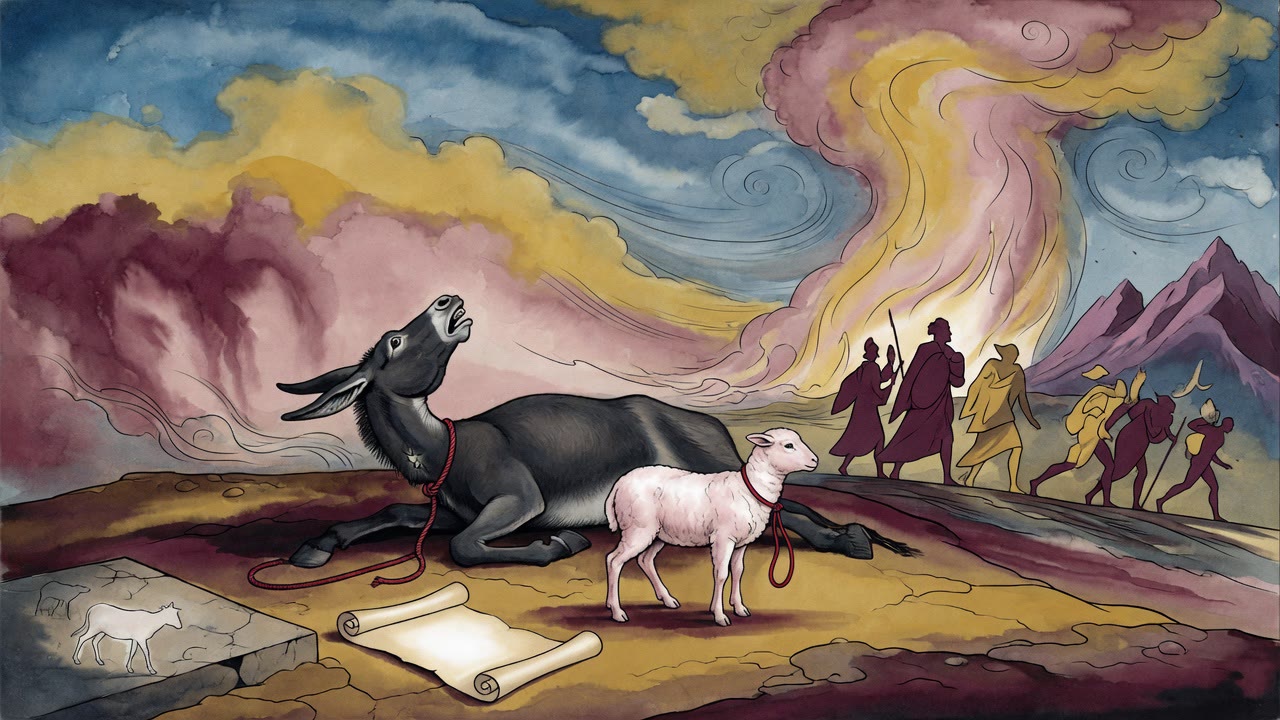
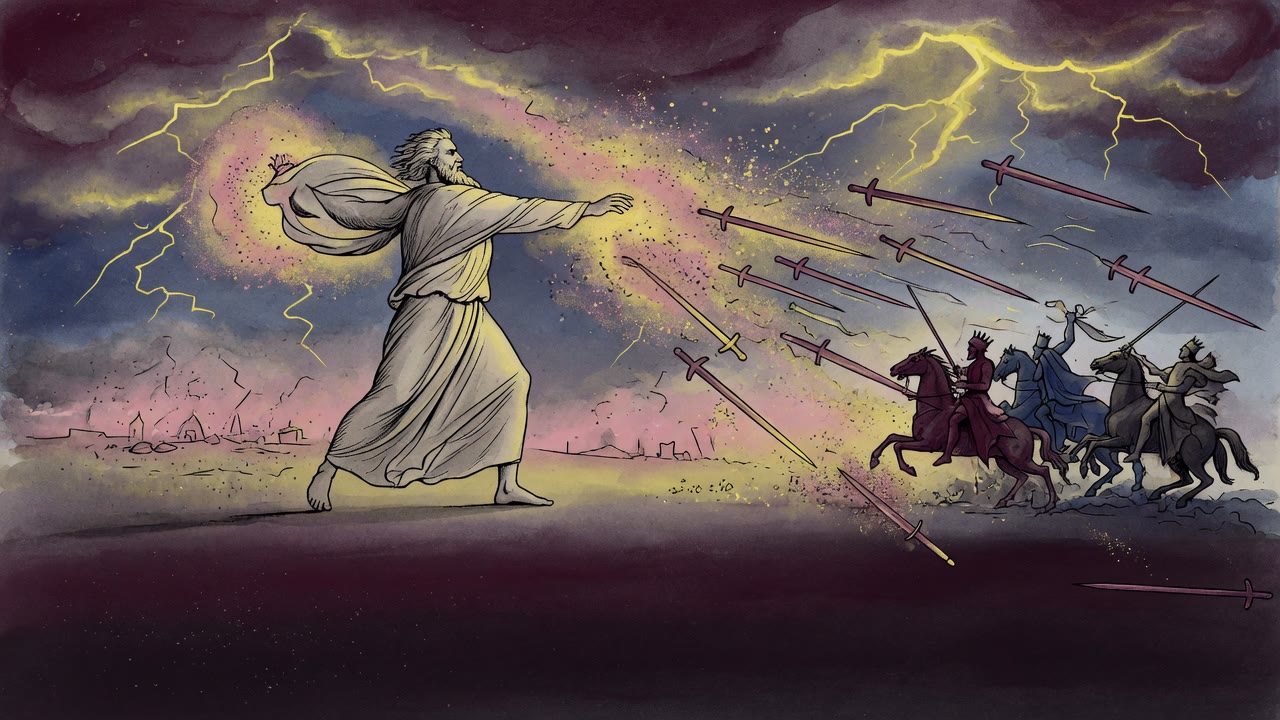
Then Abraham bent and took up a fistful of the ground itself, dust and chaff and the dry stubble of the field, and flung it at the men charging him. The dust did not scatter. It hardened in flight. Each grain found its edge, became javelin and sword, struck home through armor and bone. The chaff he threw cut like steel. The very earth he stood on rose up and fought on his side, and the four kings who had broken five armies broke instead against an old man and a handful of shepherds and a night that had turned against them.

Before dawn it was finished. The captives cut loose, the plunder reloaded, Lot alive and blinking in the firelight. Abraham gathered what had been stolen and turned the long road south for home.

The Night That Kept Its Promise

On the road he was met by Melchizedek, king of Salem, who brought out bread and wine and blessed him: "Blessed be God Most High, who has delivered your enemies into your hand" (Genesis 14:20). Abraham gave him a tenth of everything. The word for delivered carried more than rescue inside it. It carried the sense of a schemer outmaneuvered, of stratagems laid and sprung, of a quiet hand that had set the four kings quarreling so they would stumble into the trap of a smaller man.

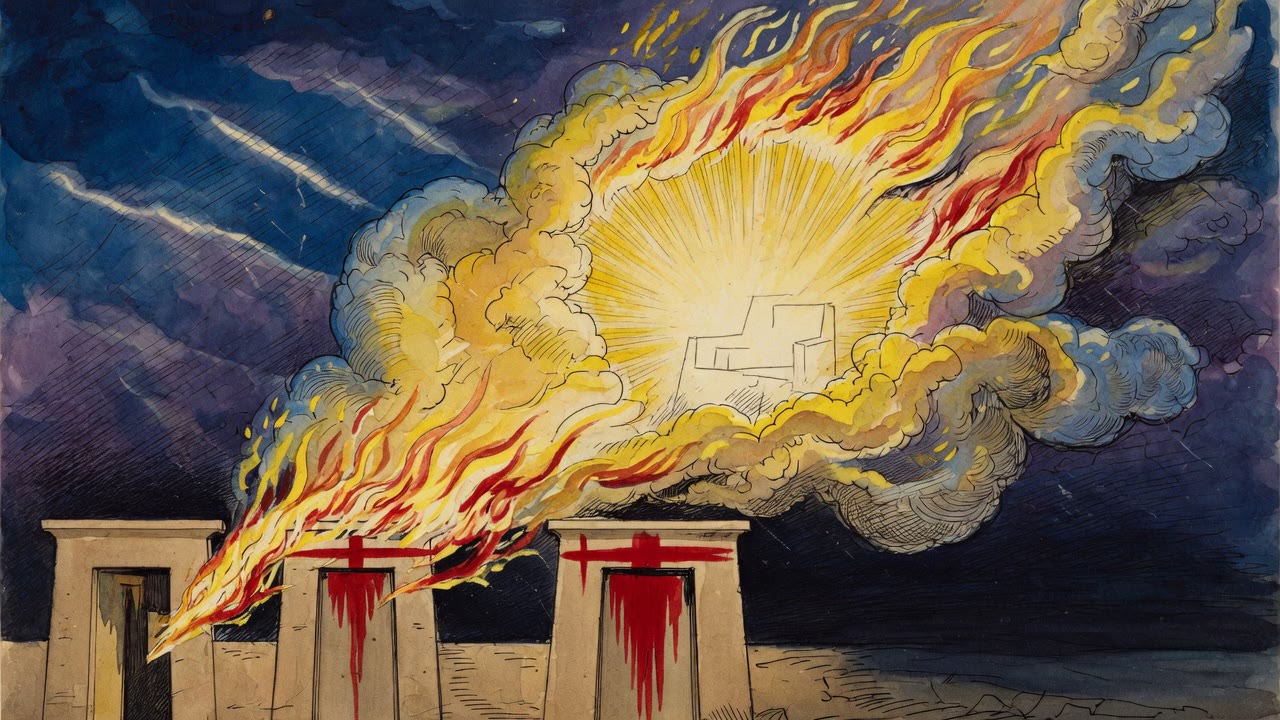
Abraham did not know it, but he had been the first to fight on this particular night and win the impossible. Fifteen hundred years on, the same date would come around again, and the firstborn of Egypt would die in the dark, and the sea would stand up in two walls of water, and a nation would walk out of slavery between them. The fifteenth of Nisan had been waiting a long time to become Passover. It started here, on a hillside near Dan, with dust that turned to swords and a man too stubborn to count the odds.


← All myths
From the tradition

Sources

4 sources

The texts this telling draws on, in full. Open a card to read inline, or expand it for a wider, quieter read.

Legends of the Jews 5:116Legends of the Jews

The familiar story is this: Abraham, the righteous one, goes to war to rescue his nephew Lot. But the Legends of the Jews, that incredible collection of rabbinic lore compiled by Louis Ginzberg, paints a picture of this battle that's, well, let's just say it's not your average skirmish.

In legend, this monumental battle took place on the fifteenth of Nisan – that's the very night destined for miracles, the night of Pesach (Passover), Passover! It was a night ripe for the impossible. And what was impossible? Well, try facing down a coalition of mighty kings with a comparatively small force.

These weren't just any ordinary arrows and stones flying through the air. The projectiles aimed at Abraham were rendered utterly useless, impotent. Instead, the dust of the ground, the chaff, even the stubble that Abraham threw at his enemies transformed into deadly weapons – javelins and swords, each finding its mark. The very earth fighting alongside him.

Abraham himself? He wasn't just a brave leader; he was a veritable giant. The text describes him as being as tall as "seventy men set on end" and consuming as much food and drink as them too! Can you picture that? A colossus striding across the battlefield.

Each of his steps, we’re told, measured four miles! He was a force of nature, relentlessly pursuing the kings until he overtook them and utterly decimated their armies. It’s a staggering image of power and divine assistance.

But there's a curious twist. Abraham’s advance stopped at a specific place: Dan. Now, Dan might seem like just another location, but in this context, it carries a heavy weight. Dan is where, much later in history, Jeroboam would erect the golden calves, leading the people of Israel into idolatry. This act is seen as a profound betrayal of God.

And it was at this very spot, laden with the ominous foreshadowing of future sin, that Abraham's strength began to wane. Why? What's the connection?

Perhaps the legend is telling us that even the most righteous among us, even someone as close to God as Abraham, is vulnerable to the echoes of future transgressions. That no matter how powerful or divinely protected, we are all, in some way, connected to the sins and struggles of generations to come. The shadow of Jeroboam's sin, even before it happened, seems to have cast a pall over Abraham’s divinely-granted strength.

It's a potent reminder that history, both past and future, shapes us, influences us, and even limits us. And it makes you wonder: how much of our own strength is influenced by the echoes of choices yet to be made?

Full source
Bereshit Rabbah 43:8Bereshit Rabbah

Our journey begins in (Genesis 14:20): “And blessed is God, the Most High, who delivered your enemies into your hand. He gave him a tithe of everything.” This verse is about Abraham giving a tithe to Melchizedek after a successful battle. But the Rabbis in Bereshit Rabbah, a classical collection of Rabbinic interpretations of Genesis, see so much more.

Rabbi Huna offers a clever play on words. The verse says God "delivered" (migen) your enemies. Rabbi Huna suggests reading migen as God "turned the plot" (mangenin) against your enemies. Rabbi Yudan takes it further, suggesting God employed numerous stratagems (mangenaot) to ensure Abraham's victory. Imagine God as a master strategist, subtly manipulating events to bring about the desired outcome! The Rabbis suggest that God fostered discord amongst the kings, so that they would fall into Abraham's hands. They had been fond of one another, exchanging letters and gifts.

Rabbi Yehuda bar Rav Simon says that this tithe, this act of giving "everything" (mikol), had profound ramifications for Abraham's descendants: Isaac and Jacob. He connects it to three verses. First, (Genesis 24:1), "The Lord had blessed Abraham with everything [bakol]." Then, (Genesis 27:33), where Isaac says, "And I partook of all [mikol]." Finally, (Genesis 33:11), where Jacob declares, "For God has graced me and because I have everything [kol]." The implication? Abraham's act of tithing created a spiritual reservoir of blessing that flowed down through the generations, ensuring that his descendants would also be blessed with "everything." It suggests a powerful link between generosity and divine favor, a theme that resonates throughout Jewish tradition.

The rabbis don't stop there. They ask: From where did Israel merit the Priestly Benediction (Numbers 6:23–26)? This is the blessing the priests recite over the people: "The Lord bless you and keep you; the Lord make His face to shine upon you and be gracious to you; the Lord lift up His countenance upon you and give you peace." Where did this powerful blessing originate?

Rabbi Yehuda, Rabbi Nehemya, and other Rabbis offer different answers, each connecting the blessing to a specific verse containing the Hebrew word "ko," meaning "so." Rabbi Yehuda links it to (Genesis 15:5): “So [ko] shall your descendants be.” Rabbi Nehemya points to (Genesis 22:5): “I and the lad will go to there [ko]." The Rabbis connect it to (Exodus 19:3): “So [ko] you shall say to the house of Jacob.”

Finally, Rabbi Eliezer and Rabbi Yosei bar Ḥanina weigh in. Rabbi Eliezer connects it to God's promise to increase Abraham's descendants like the stars, saying that God will reveal Himself through the word "ko." Rabbi Yosei bar Ḥanina links it to (Exodus 4:22), where God says, “So [ko] said the Lord: My firstborn son is Israel.”

What’s the takeaway? These Rabbis are showing us how deeply interconnected the Torah is. A single act of generosity by Abraham, a single word like "ko," can have ripple effects that extend for generations, shaping the spiritual destiny of the Jewish people. It’s a reminder that our actions, both big and small, have consequences that we may not even be aware of. And it invites us to look for those hidden connections, those echoes of meaning that enrich our understanding of the Torah and our own lives. What "tithe" can you offer the world, knowing that it might bless generations to come?

Full source
Yalkut Shimoni on Torah 73:4Yalkut Shimoni on Torah

Rabbi Yehudah and Rabbi Nehemiah differed. One of them said: Abraham would cast dust upon them and it became swords, straw and it became arrows. His colleague said to him: it is not written here "he gives dust," but "as dust" (Isaiah 41:2) [meaning] they were casting swords at Abraham and they turned to dust, arrows and they turned to straw. This is what is written, "He pursues them and passes on safely" (Isaiah 41:3). The strides of Abraham our father were miles long. Rabbi Yehudah bar Rabbi Simon said: a mile, as it is said, "a path his feet had never trodden" (Isaiah 41:3). Rabbi Nehemiah in the name of Rabbi Abbahu said: their feet were not even covered with dust, but it was like one going from his house to the synagogue.

"And he brought back all the goods, and also Lot his kinsman and his goods he brought back" (Genesis 14:16). Rabbi Yudan said: the men and the women he returned, but the children he did not return; they arose and converted. This is what is written, "And I will bring back the wicked of the nations" [reading the verse as the men of Sodom]. "And the men of Sodom were exceedingly wicked" (Genesis 13:13).

"And the king of Sodom went out to meet him" (Genesis 14:17). He began to wag his tail at him, saying, "Just as you went down into the fiery furnace and were delivered, I too went down into the bitumen and was delivered." "To the Valley of Shaveh [the Level Valley]": there all the nations were leveled in agreement and cut down cedars and set him [Abraham] upon them and exalted him (as above, reference 72).

Full source
Targum Pseudo-Jonathan on Genesis 14:15Targum Pseudo-Jonathan on Genesis

Targum Pseudo-Jonathan on (Genesis 14:15) turns Abram's night raid into a double operation with a prophetic shadow.

The Aramaic says Abram divided his forces in the night: a part were to engage with the kings, and a part were hidden to smite the firstborn of Egypt. This is the Targumist's telescopic vision at full stretch. The night battle in which Abram defeats the four kings is being linked, across centuries, to the night of the tenth plague in (Exodus 12:29), when the firstborn of Egypt will die. One part of Abram's company, in this reading, is detached for a task that will not actually occur for four hundred years. The division of forces is both tactical and prophetic.

Then the Targum drops an extraordinary phrase about where Abram pursued his enemies: unto (the place) of the memorial of sin which was to be in Dan. The Aramaic is remembering that Dan, the northern city where Abram stopped chasing the kings, is the same Dan where Jeroboam, first king of the northern kingdom, will set up one of his two golden calves (1 Kings 12:29). The Targumist is marking the ground.

The patriarch who rescues his nephew stops at the exact latitude where, generations later, his descendants will erect idolatry. Geography becomes moral memory. Abram's farthest northern reach is the place his people will farthest fall.

This is Targum Pseudo-Jonathan's peculiar gift. A single night's raid becomes a map of Jewish history, from Abram's rescue to the Exodus to the schism of the kingdoms. The ground remembers everything that will happen on it. When Abram halts at Dan, heaven remembers what Dan will become.

Full source