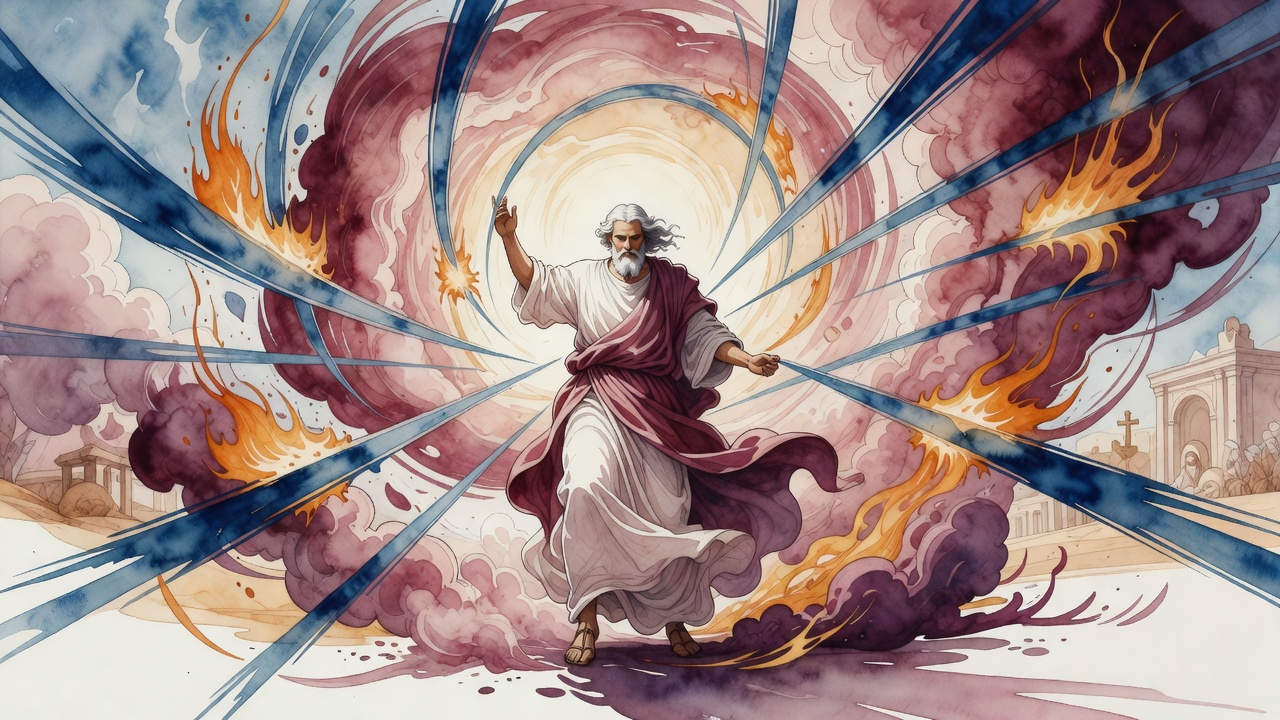
The Sea Splits Because of a Word Spoken at Beth-el
The sea did not split for the crying people at the water's edge. It split because of one word God spoke at Beth-el, long before.
Table of Contents
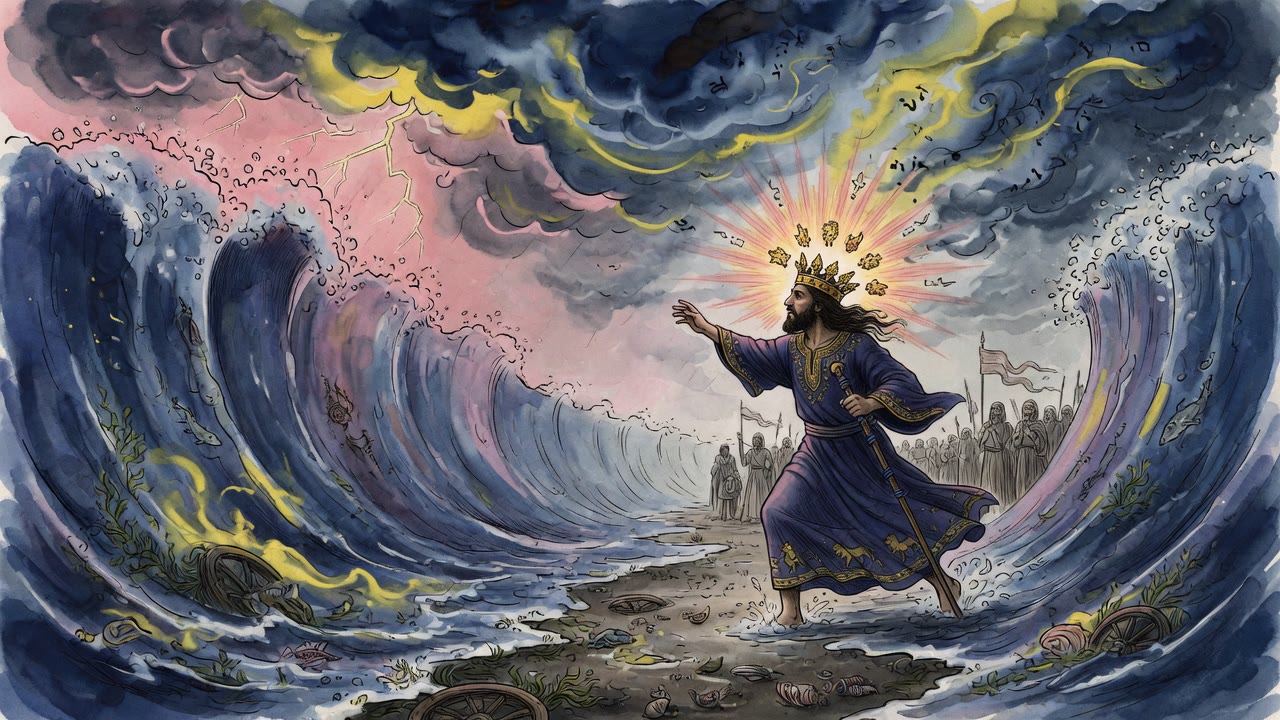
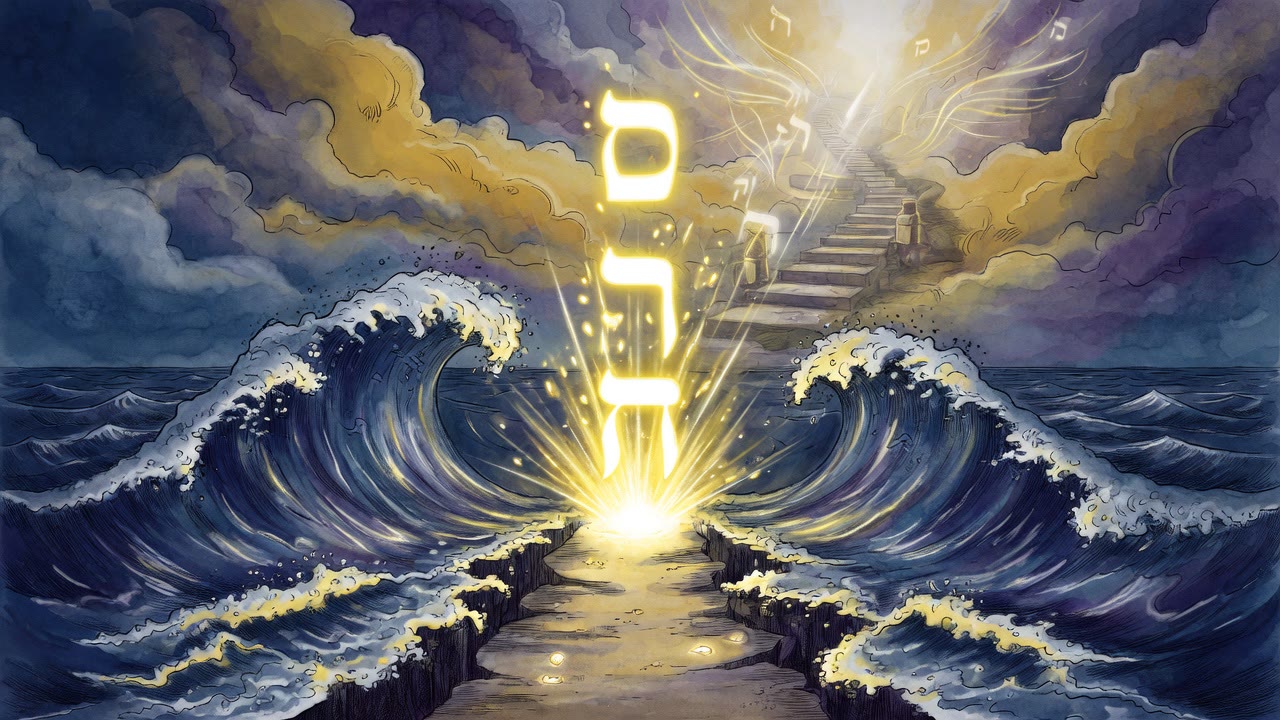
The water stood flat and dark to the horizon, and behind the people the ground was already shaking with chariot wheels. Children clutched at their mothers. Old men turned their faces toward the dust cloud rolling out of Egypt. Somewhere in the press of bodies a voice broke and began to wail, and the wail spread, because there was nowhere left to go. The sea in front, the army behind, the cliffs to either side. A trap with God's name signed across it.
 Click for full size
Moses stood at the edge with the spray on his face and the staff in his hand, and he lifted it because that was what he had been told to do. He did not lift it to make the miracle. The miracle had been made already. It had been waiting in the dark of the water for a very long time, the way a debt waits in a ledger for the day it comes due.
The Promise No One at the Water Remembered
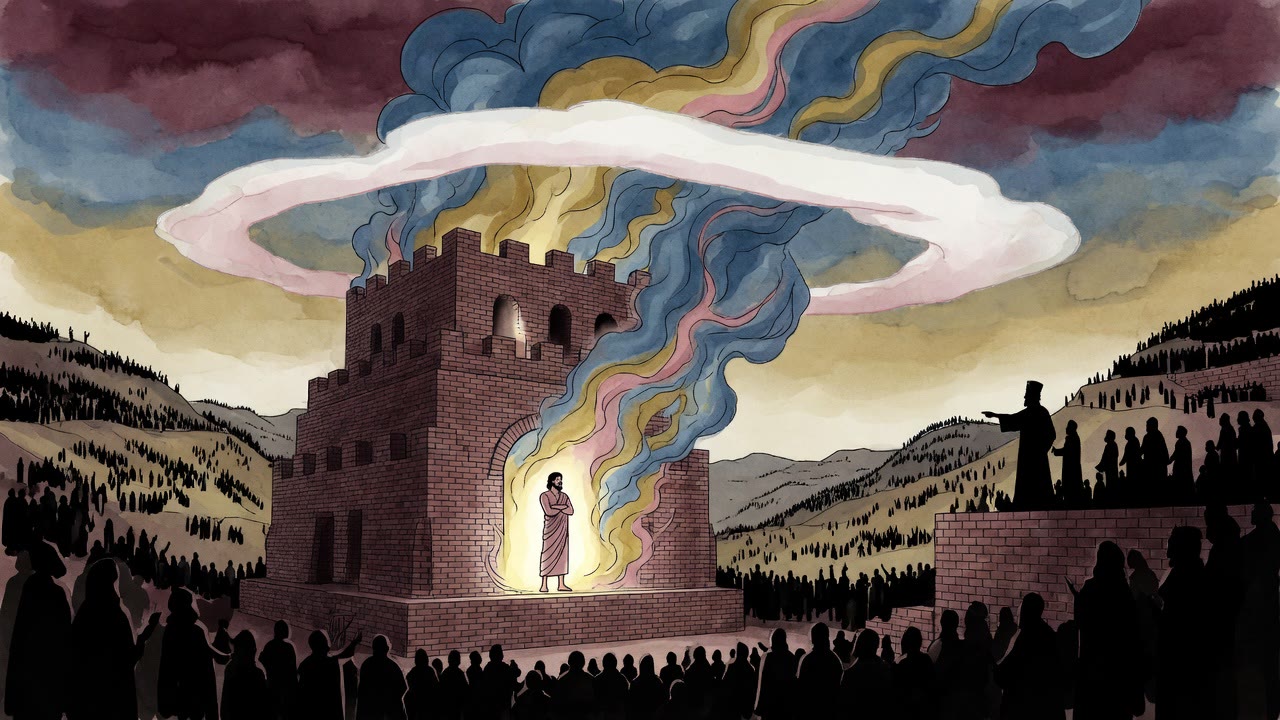
Centuries before, a man had slept on the open ground with a stone under his head and the sky had opened over him. That was Jacob, running for his life, alone, with nothing but the clothes on his back and the cold of the night. In the dream a voice came down to him and made him a promise about his children, about the dust of the earth, about the directions they would one day stretch toward. "And your seed shall be as the dust of the earth, and you shall break forth" (Genesis 28:14).
The phrase he heard was ufaratzta yamah. To break forth, westward. A blessing about land, about spreading out across the world like dust scattered by wind. Jacob woke and named the place Beth-el, house of God, and carried the words with him, and his children carried them, and his children's children, down into Egypt and down into bondage, until the words were almost forgotten under the weight of the bricks.
But the word yamah hid a second face. It meant westward. It also meant the sea. And ufaratzta, to break forth, to burst through, did not have to be a blessing about geography at all. Read with the second face turned up, the promise to Jacob said something else entirely. You shall break through the sea.
God Tells Moses the Account Is Already Settled
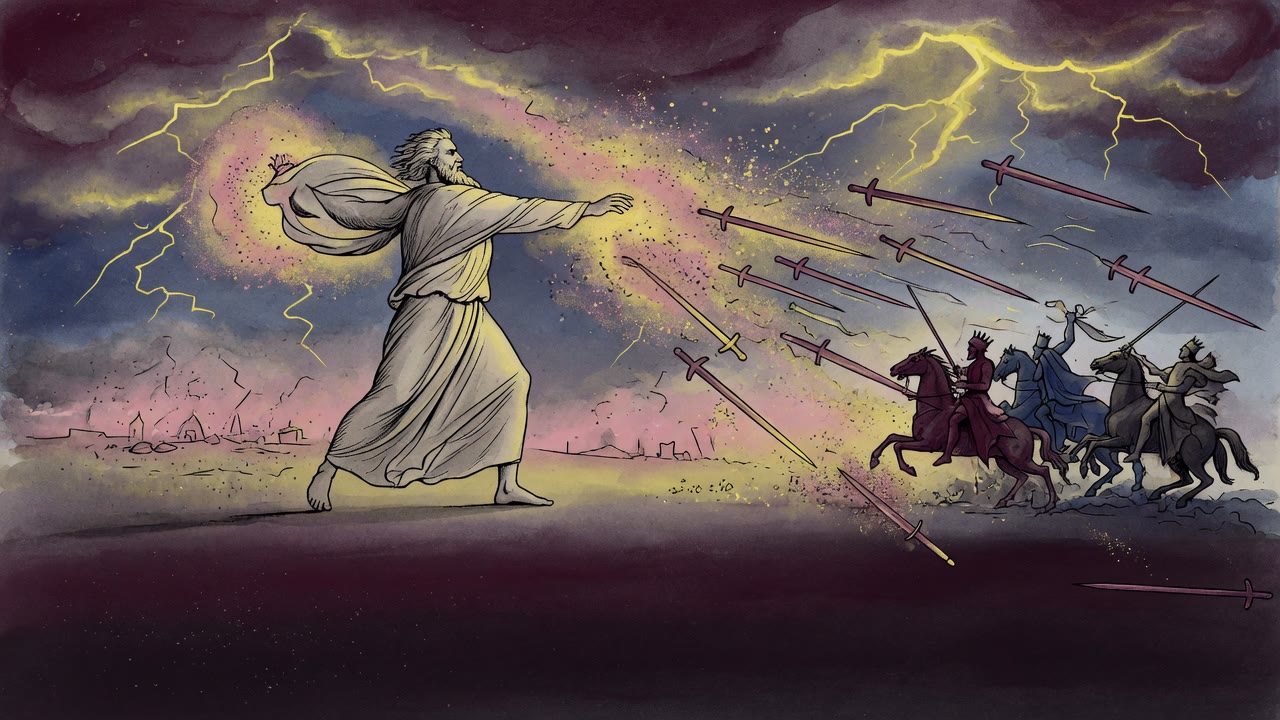
So when Moses stood at the shore and the people screamed behind him, the answer did not come as a fresh decision weighed in the heat of the crisis. Rabbi Yehudah ben Betheirah heard God's reply to Moses as a single devastating word: already. I have already fulfilled my promise to your father Abraham. Not I will rescue them now. Not I will decide their fate at this hour. It is done. It was done long ago, sealed into the covenant, and all that remains is for the water to catch up to a thing settled in heaven generations back.
Watch what the verses say, Rabbi Yehudah pressed. "And He made the sea into the dry land" (Exodus 14:21). Made it. The dry land was not invented in that instant out of panic and need. It was uncovered, like a coin found under dust that had been lying there all along. God had promised the fathers a land, and here was a strip of it, the seabed itself, rising into the light because the promise had reached down to touch it. And then, "And the children of Israel walked in the dry land in the midst of the sea" (Exodus 14:29). Walking on something that had been theirs before they were born.
For the Sake of a City Not Yet Built
There was another reading, harder and stranger, that looked not backward to the fathers but forward to a city that did not yet exist. Rabbi Ishmael asked the blunt question. Why split the sea at all for this fugitive, frightened crowd, slaves with nothing to their name? And his answer leapt clean over the moment of escape. In the merit of Jerusalem I will split the sea for them.
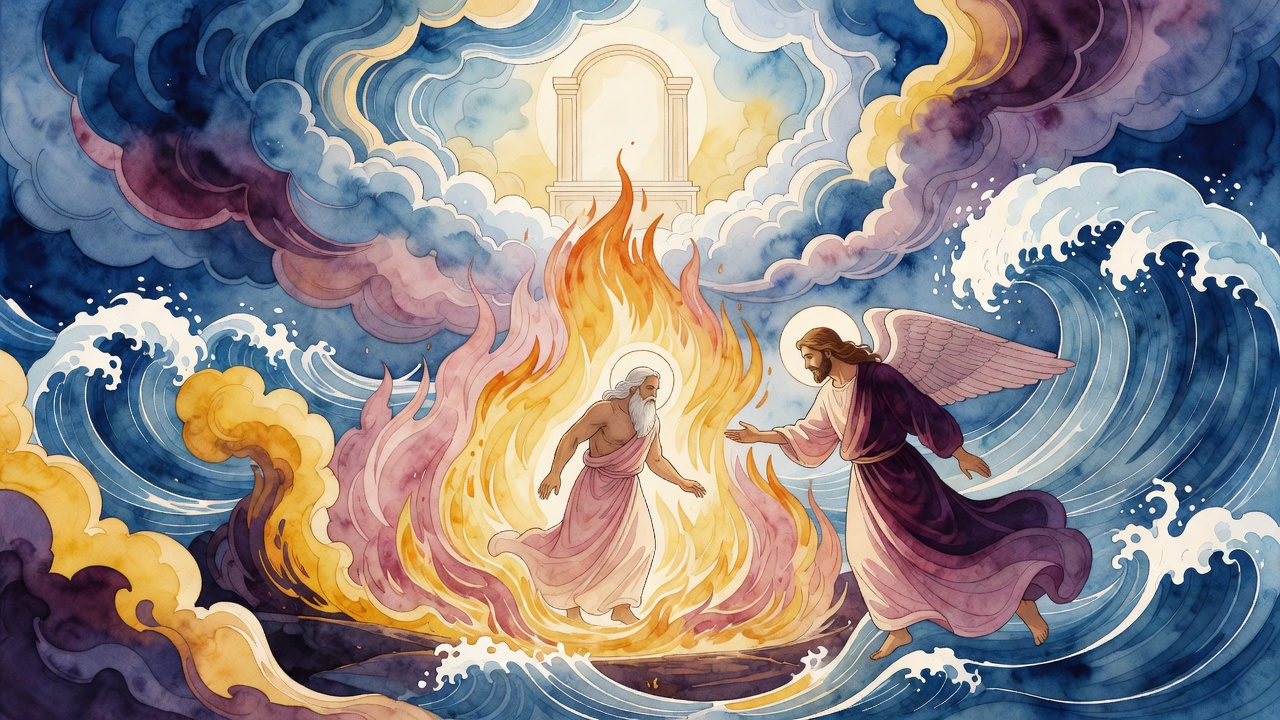
The same arm that would one day raise Zion into glory was already moving in the water. He heard it in the prophet's doubled cry, the summons repeated twice for emphasis, a great rousing of power. "Awake, awake, clothe yourself in splendor, O Zion. Don your robes of glory, O Jerusalem, holy city" (Isaiah 52:1). And matched to it, the same doubled call turned toward God's own strength: "Awake, awake, clothe yourself in splendor, O arm of the Lord. Awake as in days of old, as in generations of yore" (Isaiah 51:9). Days of old. Generations of yore. The arm that parted the water and the arm that would crown the city were one arm, stirring across the whole span of time.
The Water Catches Up to the Word
So the wind came down hard across the surface and the sea felt the old word reach it at last. The water did not so much obey as remember. It pulled back in two walls, and between them the ground that had been promised lay bare and dry, and the salt smell of the deep hung over a road that had no right to exist.
The people walked. They thought they were fleeing. They thought the staff in Moses' hand had torn the sea open in front of them by force, that morning, because they had cried loud enough at the edge. They did not know they were walking through the inside of a sentence spoken over a sleeping man under the stars, the dust of the earth crossing on dry land in the midst of the sea, breaking forth exactly as it had been told they would, westward and through.
← All myths