4 min read

Abraham Was Struck Ten Times and Still Rang True

The rabbis compared Abraham to a vessel struck by a potter. Ten times the tests hit him hard, and still his faith rang true.

Curated by Arthur · Told by Maggid ·
Table of Contents
  1. The Potter Lifted the Vessel
  2. The Tent Refused to Close
  3. The Stars Lost Their Power
  4. The Threefold Cord Tightened
  5. The Last Blow Had a Knife

The potter does not strike the cracked vessel.
He lifts the one that can bear the blow. He taps it with his knuckle and listens. If it rings, he knows what the fire has made. If it shatters, the test has only revealed a weakness that was already there.

That is how the sages pictured Abraham.

The Potter Lifted the Vessel

Abraham's life did not become easier after God chose him. Selection placed him under pressure. Leave your land. Leave your birthplace. Walk toward a country not yet handed to you. Survive famine. Stand before kings. Divide from Lot. Fight armies. Wait for a child long after the body has stopped expecting one.

The tests did not arrive as riddles written on parchment. They came as roads, hunger, family fracture, fear, and commands that asked Abraham to trust a promise while every visible thing argued against it.

Again and again, the vessel rang.

The Tent Refused to Close

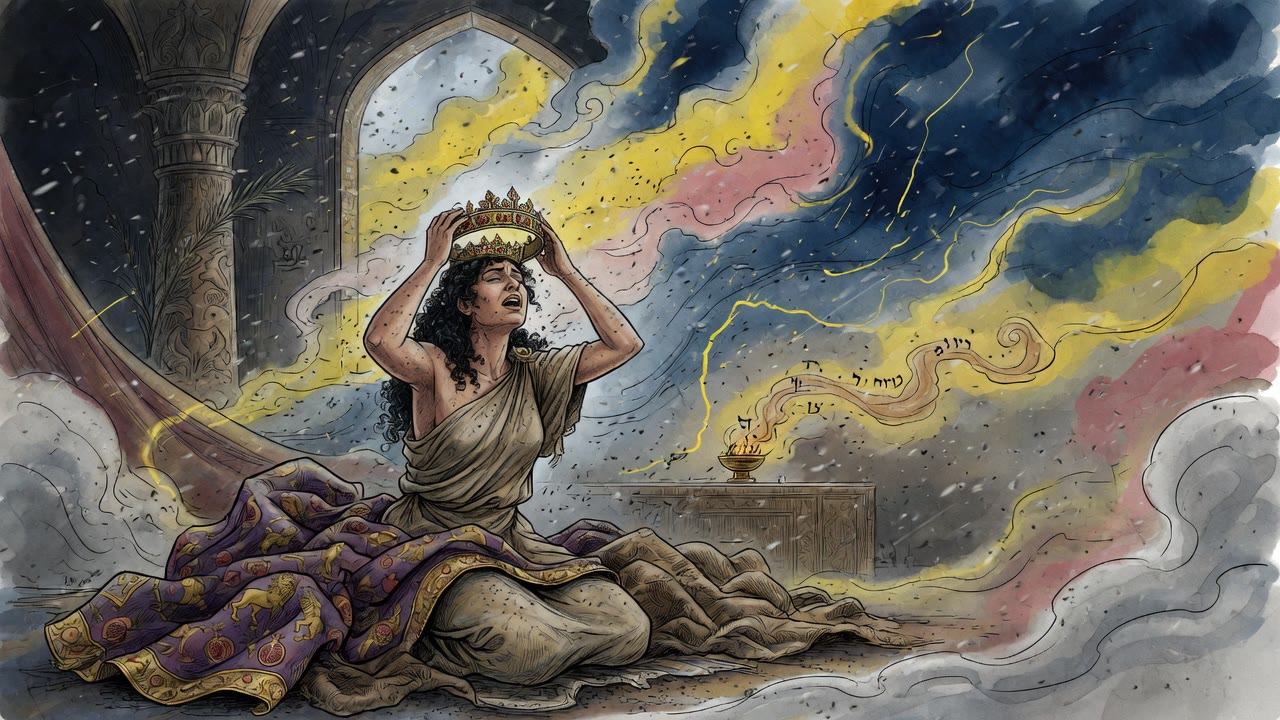
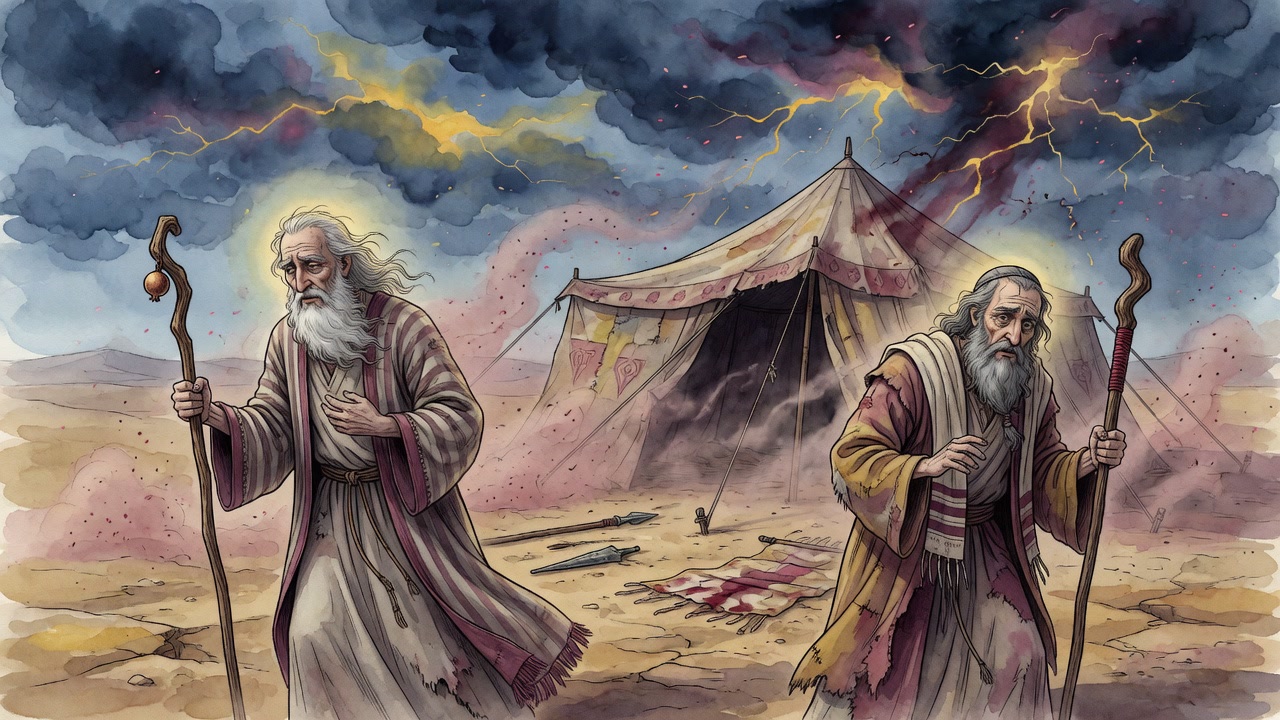
After Sodom burned, the roads emptied. Travelers stopped passing Abraham's tent. The storehouses were full, but no hungry guest arrived to receive what Abraham had built his life to give.

He could have accepted the silence as rest. The region had just seen fire fall from heaven. No one would blame an old man for staying where he was. But Abraham looked at the unused bread, the untouched supplies, the quiet entrance of his house, and refused to let kindness die because the world had grown dangerous.

He moved to Gerar and pitched his tent again.

The Stars Lost Their Power

After battle, Abraham could not stop thinking about blood. He had rescued Lot, defeated kings, and come home alive, but victory did not sit cleanly in his hands. He feared that merit had been spent. He feared that future children, if they came at all, might provoke judgment and suffer for promises made to him.

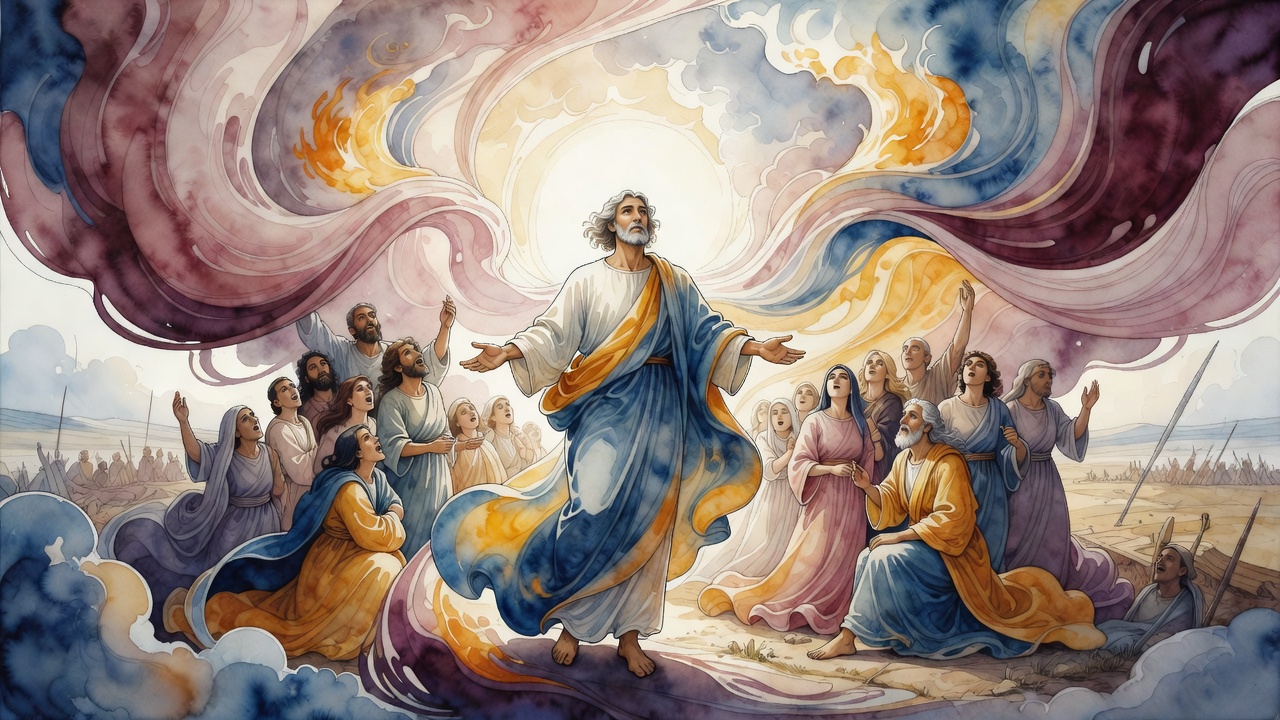
God lifted him above the stars.

From below, the stars had seemed like a verdict. Abraham had read there that he would have no child. From above, they became lamps hung beneath his feet. God told him he was a prophet, not a prisoner of astrology. Destiny did not rule the man who had been called out by the Creator of destiny.

The Threefold Cord Tightened

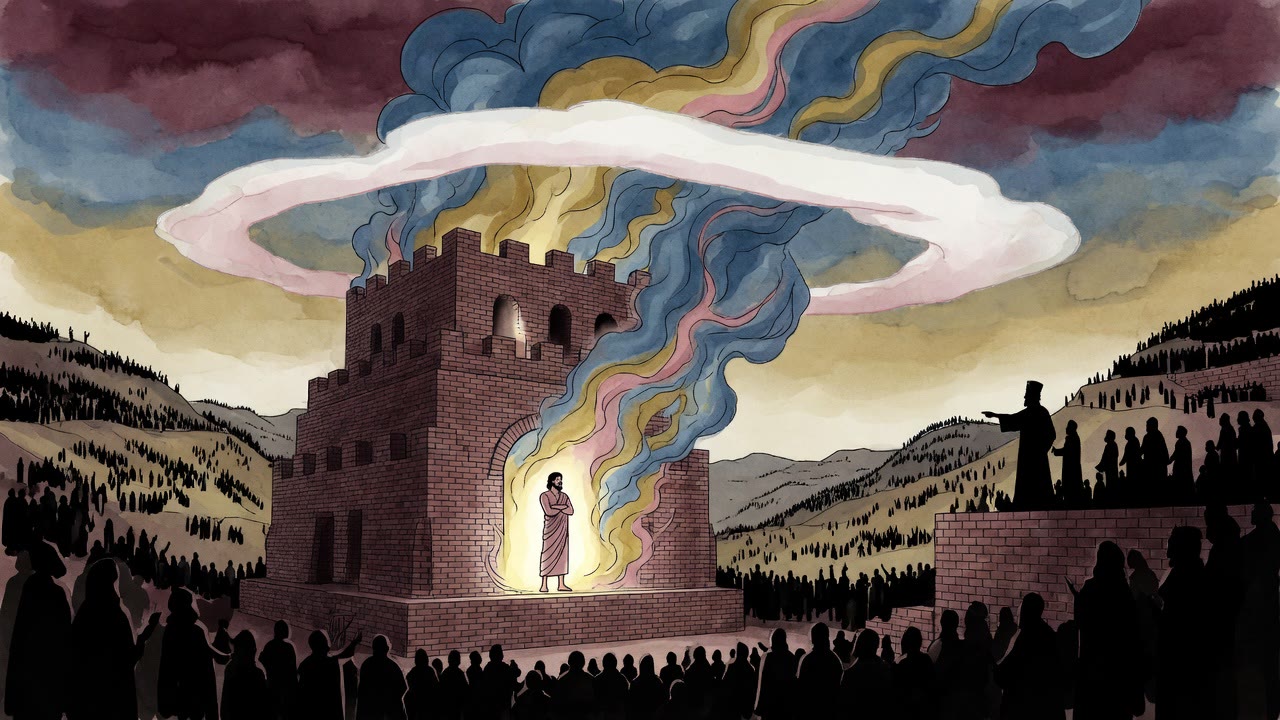
In the covenant between the pieces, Abraham brought animals three years old: heifer, goat, and ram. The number did not sit idle. It became a cord, a sign of strength, a hint of powers that would rise in stages against the land and against David's house.

Abraham stood at the beginning and saw pressure reaching far beyond his own body. His tests were not private exercises in spiritual toughness. They trained the first patriarch to carry a future people. Every road, famine, war, and promise struck him so that his descendants would inherit more than a name. They would inherit the sound of faith under impact.

The tradition counted ten tests because pressure needed a number. A single trial can be explained away as accident. Ten times makes a life. Abraham was struck in public roads and private rooms, through hunger, danger, family fracture, and impossible promise. Still the vessel rang true. Not because he never trembled, but because trembling did not make him drop the covenant.

Every test left a mark. The marks became evidence.

The Last Blow Had a Knife

The tenth test waited on Moriah. It did not ask Abraham to leave a place or feed a stranger or fight a king. It asked him to lift a knife over the son through whom every promise was supposed to live.

The potter's image becomes almost unbearable there. Strike too hard, and the vessel breaks. Strike rightly, and the sound travels into every generation after it. Abraham walked up the mountain with fire, wood, knife, and silence. He came down with Isaac alive, but not unchanged.

The vessel had rung. Heaven had heard it.

The tests also changed what others could see in him. Lot saw one version of Abraham. Sodom saw another. Kings saw another. Sarah, Isaac, and the servants on the road to Moriah saw the hardest version of all. Each witness heard a different strike against the same vessel.

Nothing in him stayed theoretical after that. Covenant had entered muscle, road dust, family grief, and blood.


← All myths

From the tradition

Sources

4 sources

The texts this telling draws on, in full. Open a card to read inline, or expand it for a wider, quieter read.

Bereshit Rabbah 55:3Bereshit Rabbah

The idea of being tested, especially by a higher power, is a central theme in Jewish tradition. And one of the most profound examples of this is the story of Abraham.

Bereshit Rabbah, a classical rabbinic commentary on the Book of Genesis, explores this very idea. It asks, “the Lord tests the righteous” – and immediately clarifies that this is referring specifically to Abraham. It's as if to say: even the most righteous among us will face trials.

The Rabbis of the Midrash (rabbinic interpretive commentary), those incredible interpreters of the text, don't just accept this idea passively. They wrestle with it. They question it. They ask: Is it fair?

Rabbi Avun begins with a powerful analogy, drawing on (Ecclesiastes 8:4), "Since governance is by the king’s word, and who can say to him: What are you doing?". Rabbi Avin expands on this, comparing God to a master who commands his disciple, "You shall not distort judgment.you shall not show preference.you shall not take a bribe.do not lend with usury" (Deuteronomy 16:19) – and yet, the master himself does all these things!

Imagine the disciple's confusion! "My master," he cries, "you tell me not to lend with usury, yet you do it yourself! Is it permitted for you and prohibited for me?"

The master responds, explaining that the rules apply differently. “Do not lend with usury to an Israelite, but you may lend with usury to an idolater, as it is written: “To a stranger you may lend with interest but to your brother do not lend with interest”’ (Deuteronomy 23:21). In each case, there was a logical explanation for his deeds.

This leads to a bigger question. According to the Midrash, Israel says before the Holy One, blessed be He: ‘Master of the universe, You wrote in Your Torah: “You shall not take revenge and you shall not bear a grudge” (Leviticus 19:18), yet You take revenge and You bear a grudge, as it is stated: “The Lord is vengeful and full of wrath; the Lord is vengeful to His foes, and bears a grudge against His enemies”’ (Nahum 1:2).

It’s a bold challenge! How can God command us to act one way, and then seemingly act differently Himself?

The Holy One, blessed be He, responds: ‘I wrote in the Torah: “You shall not take revenge and you shall not bear a grudge against the members of your people” (Leviticus 19:18), but I take revenge and I bear a grudge against idolaters: “Take the vengeance of the children of Israel [upon the Midyanites]” (Numbers 31:2).

And then comes the punchline: "You shall not test the Lord your God” (Deuteronomy 6:16) – yet “God tested Abraham.”

So, what’s going on here? The Rabbis aren't trying to diminish God, or find fault. Instead, they're confronting the complexities of divine justice and human understanding. They're acknowledging that sometimes, things aren't always as they seem. The rules that apply to us mortals might not apply to the divine, and vice versa.

Maybe, just maybe, these "tests" aren't about seeing if we'll fail. Maybe they're about giving us the opportunity to rise to the occasion, to grow, and to reveal the strength and faith we didn't even know we possessed. As Ginzberg retells it in Legends of the Jews, Abraham's trials were not arbitrary, but rather opportunities for him to demonstrate his unwavering devotion.

And that, perhaps, is the most comforting thought of all.

Full source
Bereshit Rabbah 52:3Bereshit Rabbah

Our story begins with Abraham. "Abraham traveled from there," the verse tells us (Genesis 20:1). But where was he going, and why? Bereshit Rabbah, a classic collection of rabbinic interpretations of Genesis, sees a deeper meaning in this seemingly simple statement.

"The wise-hearted will take mitzvot (commandments)," (Proverbs 10:8) teaches. And Bereshit Rabbah connects this to Abraham. the area of Sodom had just been destroyed. Travel in and out of the region had stopped. Abraham, a man known for his incredible hospitality, suddenly found himself with a surplus. He had plenty in his storage houses. He could have just hoarded it all, hunkered down, and waited for the world to sort itself out.

That wasn't Abraham. He thought, "Shall I allow the practice of benevolence to cease from my house?" He refused to let the destruction around him extinguish his commitment to kindness. Instead, "He went and pitched a tent for himself in Gerar," continuing to offer food and shelter to travelers. He understood that even – or especially – in times of crisis, the mitzvah, the good deed, must continue.

Let's contrast that with Lot. The same verse in Proverbs continues, "But one with foolish lips, he will be disgraced." And who does Bereshit Rabbah apply this to? You guessed it: Lot.

Lot, after escaping Sodom, found himself in a cave with his daughters. And, well, the story takes a dark turn (Genesis 19:30-38). The text implies that Lot should have spoken up, should have questioned the actions of his daughters. As Bereshit Rabbah puts it, "Are we going to perform the very act for which the world was stricken?"

Instead, "he will be disgraced." What did he cause to happen to himself? He brought upon himself disgrace upon disgrace. As it is stated elsewhere, regarding the Temple, “anyone impure may not enter” (II (Chronicles 23:1)9), so, too, here: “An Amonite or a Moavite shall not enter into the assembly of the Lord” (Deuteronomy 23:4). Lot's actions, or rather, his lack of action and words, had lasting consequences. His descendants, the Ammonites and Moabites, were forever barred from joining the Israelite community.

The contrast is stark, isn't it? Abraham, in the face of devastation, chooses to increase his acts of kindness. Lot, faced with a moral dilemma, remains silent and brings about lasting shame.

What does this tell us? Perhaps that true character isn't revealed in times of ease, but in moments of crisis. It's about choosing to be wise-hearted like Abraham, actively seeking opportunities for good, rather than being foolish of lip like Lot, and allowing darkness to take hold.

And it begs the question: when the world feels like it's crumbling, which path will we choose?

Full source
Legends of the Jews 5:122Legends of the Jews

The ancient texts tell us that after the dust settled from the battles described earlier in Legends of the Jews, Abraham was deeply troubled. He couldn't shake the thought of the innocent blood spilled (Ginzberg). He questioned whether he'd done the right thing.

Then, God revealed Himself. Think of it: direct communication, a divine pep talk designed to ease Abraham’s troubled spirit. God reassured him that his descendants would include pious, righteous individuals, people who, like Abraham himself, would serve as protectors for their communities.

It didn’t stop there. According to the legends, God offered Abraham something truly extraordinary: permission to ask for anything he desired. Can you imagine the possibilities? The rabbis teach that this was a rare privilege, granted only to a select few throughout history: Jacob, Solomon, Ahaz, and, significantly, the Messiah (Ginzberg).

So, what did Abraham ask for? He could have requested wealth, power, long life... But instead, he said, "O Lord of the world, if in time to come my descendants should provoke Thy wrath, it were better I remained childless." Wow. He was willing to sacrifice his own legacy to spare his future children from divine punishment. He even suggested that Lot, for whose sake he'd traveled far, should be his heir!

He even confessed, "Moreover, I have read in the stars, 'Abraham, thou wilt beget no children.'" According to the stars, it wasn't in the cards for him.

Now, that's some serious humility and concern for future generations.

God's response is particularly striking. He lifted Abraham above the sky itself – a image! – and declared, "Thou art a prophet, not an astrologer!" In other words, don't rely on astrology, Abraham; your destiny is guided by something far greater: your faith and your connection to Me.

Here's the really interesting part. Abraham didn't demand proof that he would be blessed with children. He didn't ask for a sign, a guarantee, a celestial wink. He simply believed. He trusted in God’s promise without reservation.

And for that simple, unwavering faith, Abraham was richly rewarded. He received a share in this world and a share in the world to come – olam ha-zeh (this present world) and olam ha-ba (the World to Come). But the ultimate reward, as Ginzberg tells us, would be the redemption of Israel from exile, a direct consequence of Abraham’s steadfast trust in God. That’s some return on investment in faith.

What can we take away from this? Perhaps it's the power of simple faith, the importance of considering future generations, or maybe it's the idea that even after battles and moral struggles, we can find solace and renewed purpose in our connection with the Divine. And sometimes, that unwavering belief is the most powerful request of all.

Full source
Pirkei DeRabbi Eliezer 28:5Pirkei DeRabbi Eliezer

A reader can skim over those details, but sometimes, buried within those numbers, are entire worlds of meaning. The source pulls on one of those threads, and see where it leads us.

This is a fascinating text, a kind of midrashic (rabbinic interpretive commentary) (interpretive) retelling of biblical narratives, traditionally ascribed to Rabbi Eliezer ben Hyrcanus, though scholars believe it was compiled much later. It’s filled with secrets and symbolism, just waiting to be unlocked.

So, (Genesis 15:9).. God tells Abraham to bring him a heifer, a goat, and a ram, each three years old. Why three years? Rabbi Acha ben Jacob offers a compelling explanation. He connects it to the verse in (Ecclesiastes 4:12): "And a threefold cord is not quickly broken." The number three, he suggests, signifies strength and might. It's not just about age, but about inherent power.

Here's where it gets really interesting. Rabbi Mesharshyah takes this idea of "three" and runs with it. He interprets the "three years old" as referring to a threefold dominion, a kind of triple threat, that will be unleashed upon the Land of Israel in the future. It's like a prophecy hidden in plain sight.

According to Rabbi Mesharshyah, this dominion will manifest in three stages. First, each of the three powers will rule individually. Think of it like separate skirmishes, individual tests of strength. Then, two of them will join forces, a more serious alliance that poses a greater challenge.

And finally? The third stage is all-out war. All three powers unite in a final, desperate attempt to overthrow the House of David, the lineage of Jewish kings. This ultimate confrontation is mirrored in (Psalm 2:2): "The kings of the earth set themselves, and the rulers take counsel together, against the Lord, and against his anointed."

Who are these three powers? The text doesn't explicitly say, leaving room for interpretation. Perhaps they represent internal struggles within the Jewish people, external enemies, or even different aspects of evil itself. The ambiguity is part of the beauty – it allows the reader to find resonance within their own experiences and understanding of history.

So, what do we take away from this? It’s a reminder that even the smallest details in the Torah can hold profound meaning. It encourages us to look beyond the surface, to seek deeper connections and hidden prophecies. And perhaps most importantly, it reminds us that even in the face of overwhelming odds, as symbolized by those three united powers, the House of David, the promise of redemption, will ultimately prevail. It's a message of hope, woven into the very fabric of our sacred texts.

Full source