Parshat Lech Lecha5 min read

Abraham and Shem Were Afraid of Each Other After the War

After his victory in battle, Abraham feared Shem's resentment. Shem feared Abraham's anger. Their meeting transmitted the secret of the Jewish calendar.

Curated by Arthur · Told by Maggid ·
Table of Contents
  1. The Two Who Stood Out Like Islands
  2. Why Abraham Feared Shem and Why Shem Feared Abraham
  3. The Meeting Between Them
  4. What the Calendar Carried

The Two Who Stood Out Like Islands

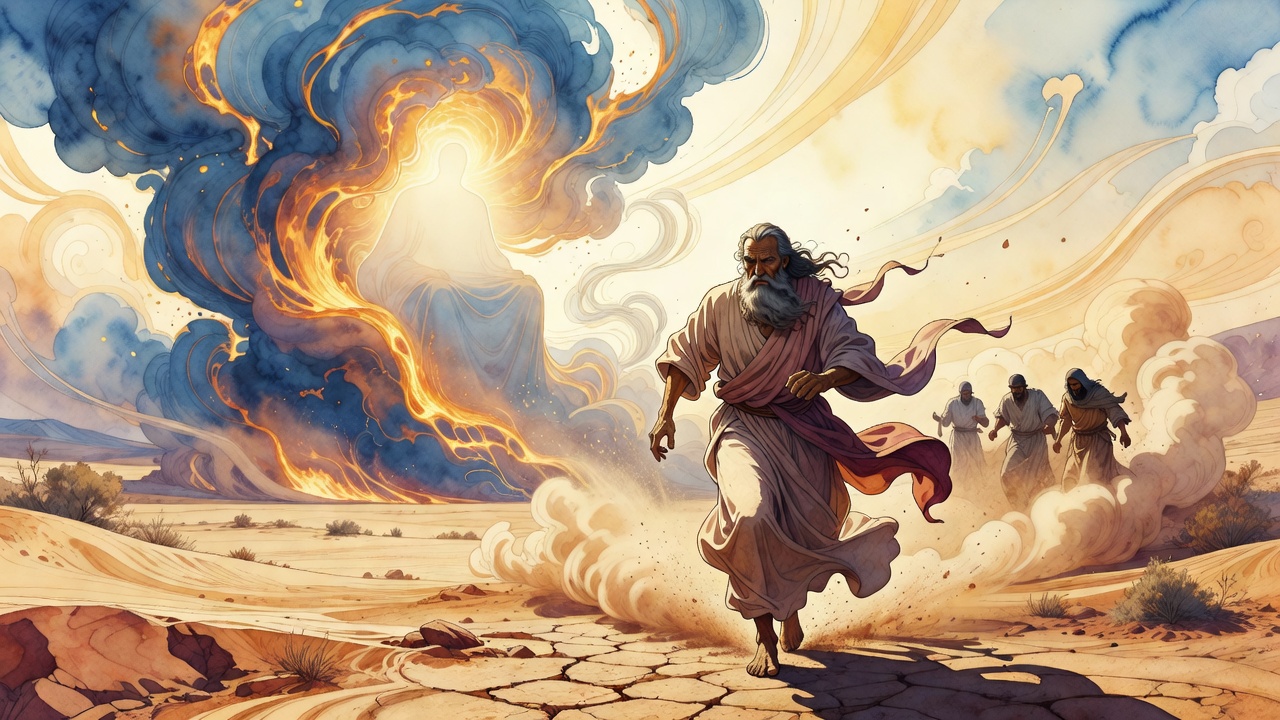
After the battle against the four kings, after Abraham had defeated Kedorlaomer of Elam and his allies, rescued his nephew Lot, and declined the King of Sodom's offer of the spoils, God came to Abraham with a reassurance: Fear not, Abram (Genesis 15:1). The reassurance pointed to something. Reassurances are given to people who are actually afraid.

The question the rabbis pressed was: afraid of what? Abraham had just won a battle against four kings with a force of three hundred eighteen trained men. He had negotiated with Pharaoh. He had survived famine and exile. He was not easily frightened. And God came to him with comfort.

Rabbi Berekhya, in Bereshit Rabbah, the foundational Palestinian midrash on Genesis compiled roughly in the 5th century CE, identified the source of Abraham's fear: he was afraid of Shem.

Why Abraham Feared Shem and Why Shem Feared Abraham

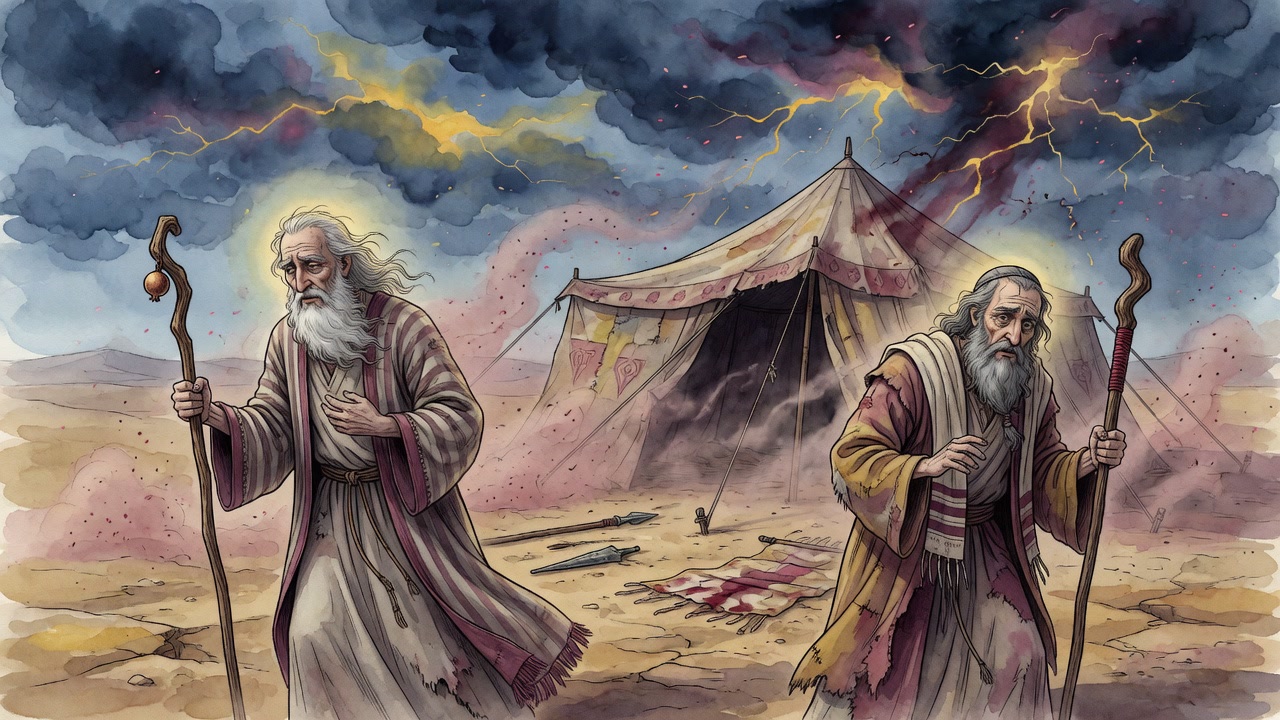
The fear ran in both directions, and the reason for each side was exact. Abraham had defeated Kedorlaomer, king of Elam. Elam was a son of Shem (Genesis 10:22). Abraham, in winning his battle, had killed or routed the descendants of Shem's own line. He feared that Shem would hold him accountable for the loss. He feared the resentment of a man who had reason to view Abraham's military victory as a family catastrophe.

Shem, in turn, feared that Abraham harbored ill feelings toward him for the wickedness of his descendants. Canaan was also among Shem's descendants, and the Canaanites had not distinguished themselves morally. Shem had fathered a line that had produced both high learning and deep corruption, and he was not certain how Abraham calculated that balance. The Isaiah verse that Bereshit Rabbah cited captured both sides: the islands saw and feared, the ends of the earth trembled (Isaiah 41:5). Just as islands stand out distinct in the sea, so did Abraham and Shem stand out in the world, and just as islands visible to each other across water feel the distance between them, these two great men felt the uncertainty that distance creates.

The Meeting Between Them

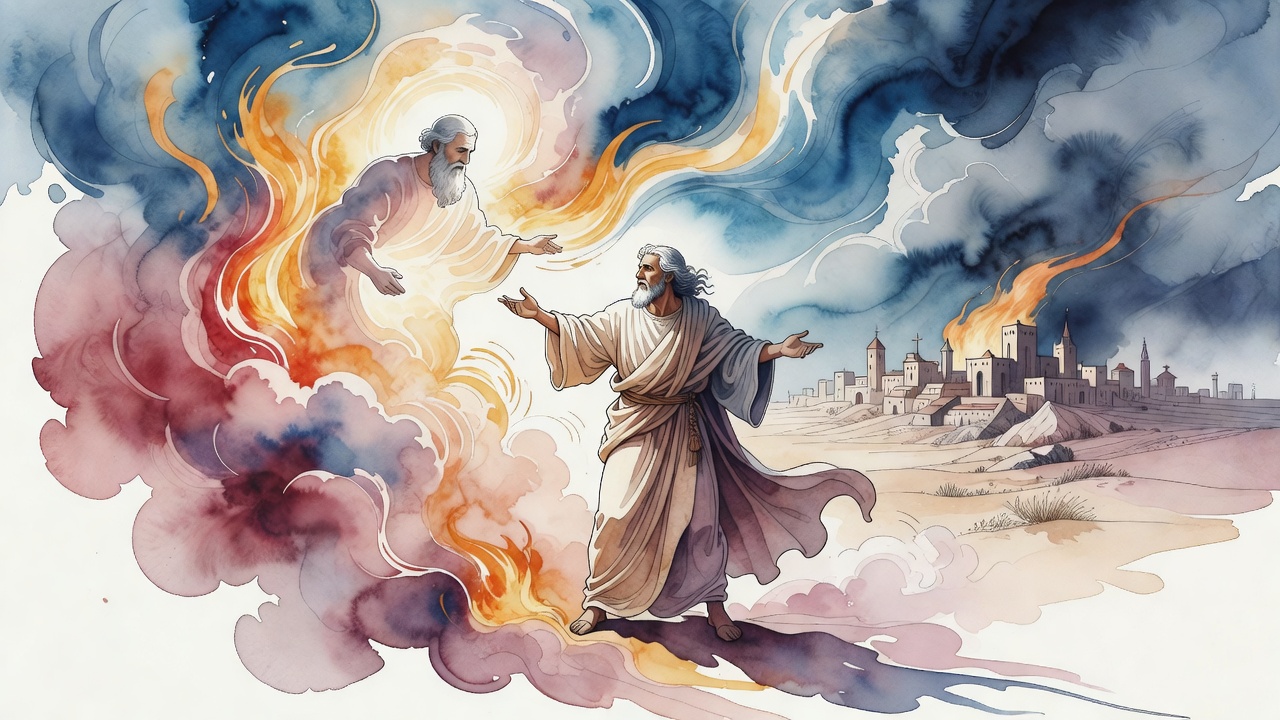
What the midrash describes next is not a confrontation. It is a transmission. The two men who had been separately afraid of each other met, and what passed between them was knowledge.

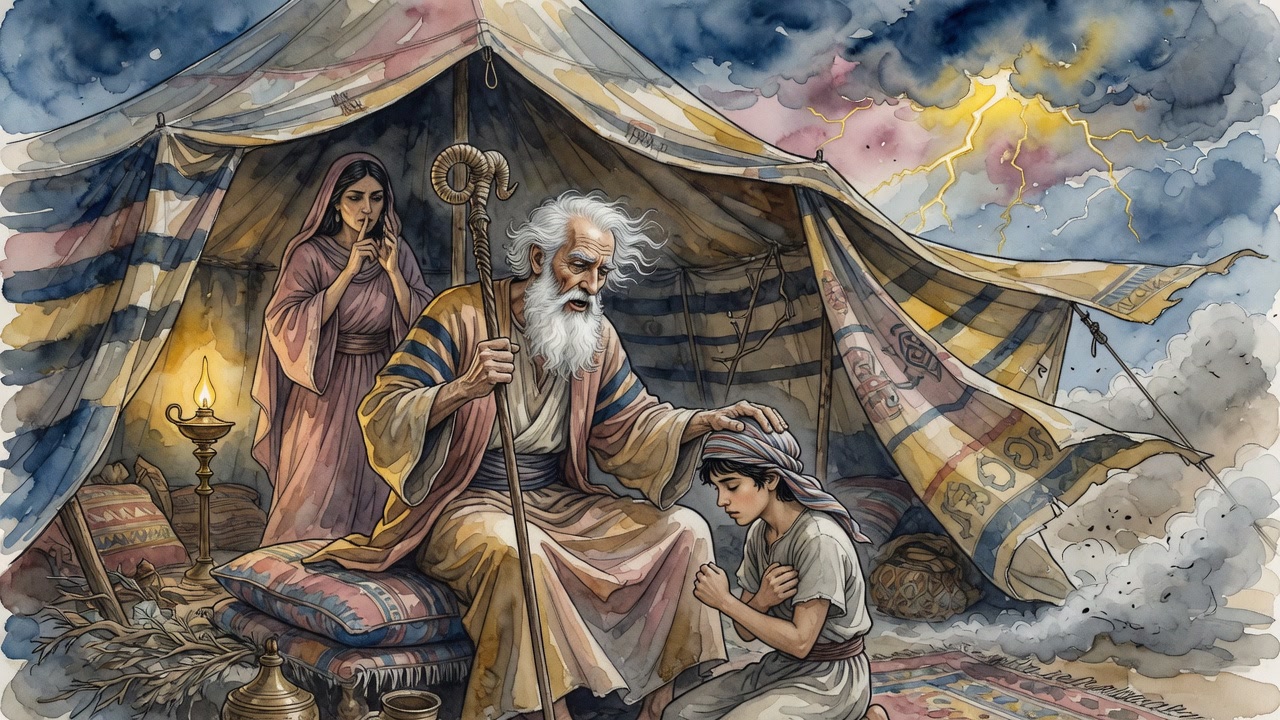
Pirkei DeRabbi Eliezer, the early medieval midrash compiled in the Land of Israel around the 8th or 9th century CE, preserved the account of what Shem held and what he shared. After the flood, Noah had given his son Shem the secret of intercalation, the mathematical knowledge required to align the lunar calendar with the solar year by periodically adding an extra month. The calendar was not a simple matter of watching the moon. It required the knowledge of when the seasons were drifting, how to measure the drift, and when to add the corrective month to bring the year back into alignment.

This knowledge came from observing the celestial bodies across time. The sun marked the days; the moon marked the months; their cycles were, as Pirkei DeRabbi Eliezer quoted, a promise that they shall not cease. But the alignment required a priest-mathematician who could work with both cycles simultaneously and know when they needed adjustment. Shem had been called a priest in Genesis 14:18, where he appeared as Melchizedek, king of Salem, priest of the Most High God. It was this priestly knowledge of time that Noah had transmitted to Shem, and that Shem now transmitted to Abraham.

What the Calendar Carried

The meeting between Abraham and Shem was thus a meeting between two people who had independently arrived at a relationship with God, and it produced a transmission of the most practical sacred knowledge: how to track time in a way that kept the sacred calendar from drifting away from the seasons. Without intercalation, Passover would gradually shift away from spring. Sukkot would move away from the fall harvest. The sacred calendar and the agricultural year would lose their alignment, and the commandments tied to specific seasons would become untethered from the natural world they were meant to sanctify.

The fear the two men had carried about each other dissolved in the transmission. Shem did not hold Abraham's military victory against him. Abraham did not hold Shem's wicked descendants against him. Between them they contained both the ancient knowledge of the flood survivors and the emerging covenant of the patriarchs, and the meeting was where those two streams of sacred knowledge joined.


← All myths

From the tradition

Sources

3 sources

The texts this telling draws on, in full. Open a card to read inline, or expand it for a wider, quieter read.

Bereshit Rabbah 44:7Bereshit Rabbah

God's reassurance to Abraham: "Fear not, Abram." But whom did Abraham fear? Rabbi Berekhya suggests it was none other than Shem himself. The passage then draws a parallel to (Isaiah 41:5): "The islands saw and feared, the ends of the earth trembled…" Just as islands stand out in the sea, so too did Abraham and Shem stand out in the world.

Why fear? Bereshit Rabbah paints a picture of mutual respect tinged with apprehension. Abraham, it says, feared that Shem held resentment towards him because Abraham had defeated Kedorlaomer, king of Elam (Genesis 14:1) – and Elam was a son of Shem (Genesis 10:22). He worried that Shem might hold him accountable for the loss of his descendants.

Shem? He, in turn, feared that Abraham harbored ill feelings towards him for fathering wicked offspring. Imagine the weight of that ancestral burden! They were giants, yes, but also individuals confronting the consequences of history and lineage.

The commentary continues, noting that Abraham and Shem were situated at opposite “ends of the earth,” yet they “approached and came” to one another (Isaiah 41:5). What does this “approaching” look like? It was a relationship built on mutual support. "Each man would help the other," the text continues, drawing again from Isaiah (41:6). Shem aided Abraham with blessings, as we see in the words of Melchizedek (who the Rabbis identify with Shem himself!): "Blessed is Abram to God, the Most High…" (Genesis 14:19). And Abraham reciprocated with gifts, giving Shem "a tithe from everything" (Genesis 14:20).

The passage then takes an intriguing turn, drawing parallels to craftsmanship: "The carpenter encouraged the smith" (Isaiah 41:7). Here, Bereshit Rabbah interprets the "carpenter" as Shem, the builder of the ark, a vessel of salvation. The "smith," on the other hand, is Abraham, who was refined by God in the fiery furnace, a trial by fire that forged his unwavering faith.

And then, "one who smooths with a hammer, one who strikes on the anvil." The Hebrew word for "anvil" here is pa'am, which can also mean "step" or "once." The Rabbis see in this a metaphor for Abraham's ability to persuade others to recognize and follow God, leading them on a path towards closeness with the Divine. Abraham’s “hammer,” then, was his divinely inspired ability to persuade and guide.

The commentary concludes with a powerful image: "Saying of the glue: It is good" (Isaiah 41:7). This "glue" represents the nations of the world, who, the text suggests, would prefer to adhere to the God of Abraham rather than to the idolatry of Nimrod. Abraham strengthened Shem in mitzvot (commandments), good deeds, and as a result, "It shall not topple" (Isaiah 41:7), referring to Abraham's enduring legacy.

So, what are we left with? A glimpse into the complex, human relationship between two towering figures. Fear, respect, mutual support, and a shared commitment to building a better world – all interwoven in this interplay of interpretation. It reminds us that even the most extraordinary individuals confront doubts and anxieties, and that true strength lies in collaboration and mutual encouragement.

Full source
Pirkei DeRabbi Eliezer 8:4Pirkei DeRabbi Eliezer

Pirkei DeRabbi Eliezer, a fascinating and sometimes enigmatic text, illuminates this very question. It tells us that the sun marks the days, and the moon the nights, their cycles an eternal promise: "they shall not cease." But it's not just about observing these celestial bodies; it's about understanding their movements, and aligning our calendar with them.

A secret, entrusted to a select few. Noah, after the flood, passed this knowledge to his son Shem. Shem, according to this tradition, was initiated into the principles of intercalation – adding an extra month to the calendar to keep it aligned with the seasons. Because of his knowledge and his service "by day and by night," Shem was called a priest, a Kohen (a priest), just as it says, "And Melchizedek king of Salem… was a priest of God Most High" (Genesis 14:18). Now, was Shem actually a priest? The text clarifies that it's because of his firstborn status and his dedicated service that he earned this title.

The story continues. Shem, in turn, passed this tradition to Abraham. He, too, mastered the art of intercalation and was also called a priest, as we find in (Psalm 110:4): "The Lord hath sworn, and will not repent, Thou art a priest for ever after the order of Melchizedek." The phrase "after the order of Melchizedek" is our clue, connecting Abraham back to Shem and the unbroken chain of knowledge.

Abraham entrusted this knowledge to Isaac, and after Abraham's death, Isaac continued the practice of intercalating the year. (Genesis 25:11) tells us, "And it came to pass after the death of Abraham, that God blessed Isaac his son," and the text explains this blessing as a direct result of Isaac's mastery of intercalation, a "blessing of eternity."

Finally, Isaac passed the tradition to Jacob. But here, we encounter a fascinating twist. Jacob, while outside the Land of Israel, attempted to intercalate the year. But the Holy One, blessed be He, stopped him! "Jacob! Thou hast no authority to intercalate the year outside the land," He said. As we read, "And God appeared unto Jacob again, when he came from Paddan-Aram, and blessed him" (Genesis 35:9). Why "again"? Because the first time, God prevented him. Only when he returned to the Holy Land could Jacob resume this sacred task.

This highlights a crucial point: the intercalation of the year, this vital act of maintaining the calendar, was intrinsically linked to the Land of Israel. Even when the Israelites were exiled to Babylon, they still relied on those remaining in the Land to determine the calendar. And when all were exiled, they intercalated in Babylon, a temporary measure.

Even Ezekiel, a major prophet, wasn't allowed to intercalate the year in Babylon when Ezra and the community returned to the Land. God tells him, "Thou hast no authority to intercalate the year outside the Land; behold, Israel thy brethren, they will intercalate the year," (Ezekiel 36:17).

This principle is emphasized: Even if the wisest and most righteous individuals are outside the Land, the authority to intercalate the year rests with those within it – even, the text somewhat shockingly says, with "the keeper of sheep and herds" or "the ignorant." Why? Because the connection to the Land is paramount. "Son of man, when the house of Israel dwell in their own land," Ezekiel states, "it is their duty to intercalate the year."

This passage from Pirkei DeRabbi Eliezer isn't just a historical account; it's a evidence of the enduring connection between the Jewish people, the Land of Israel, and the cycles of time. It reminds us that even in exile, our hearts and minds were always turned towards the Land, towards the possibility of return, and towards the restoration of our traditions in their rightful place. And it makes you wonder, doesn't it? What other ancient wisdom is waiting to be rediscovered, waiting to illuminate our understanding of the world and our place within it?

Full source
Midrash Tanchuma Buber, Lech Lecha 19:1Midrash Tanchuma Buber, Lech Lecha

[(Genesis 15:1:) "Fear not, Abram."] This is what Scripture says (Proverbs 28:14): "Happy is the man who fears always, but he who hardens his heart shall fall into evil." And it is written (Proverbs 14:16): "A wise man fears and turns away from evil." Who is this? Abraham. And of whom was he afraid? Of Shem, whose sons he had killed, Chedorlaomer king of Elam and his three sons, as it is said (Genesis 10:22): "The sons of Shem: Elam, and Asshur, and Arpachshad, and Lud, and Aram." So he was afraid, saying: I have killed the sons of a righteous man, and now he will curse me and I will die. What did he do? Shem went out to meet him to appease him, as it is said (Genesis 14:18): "And Melchizedek king of Salem." The Holy One, blessed be He, said: By your life, I will not curse you, but rather I will bless you, as it is said (Genesis 14:19): "And he blessed him and said: Blessed be Abram, etc." He said to him: Because you killed my sons, I bless you, as it is said (Genesis 14:20): "And blessed be God Most High, who has delivered your enemies into your hand, etc." What is the meaning of "who has delivered (magen) your enemies"? The Holy One, blessed be He, made a shield (maginnah) and cast them down before you. And our father Abraham would take dust and throw it upon them, and it became arrows and bows; and he would take straw and throw it upon them, and it became swords and spears, as it is said (Isaiah 41:2): "Who has roused up righteousness from the east, etc. [his sword makes them like dust, his bow like driven straw]." This is Abraham, of whom it is said afterward: "He pursues them and passes on in peace." This is the meaning of "who has delivered your enemies into your hand, etc." The Holy One, blessed be He, said: After these things are you afraid? "Fear not, Abram." Therefore it is said (Proverbs 28:14): "Happy is the man who fears always."

Full source