Abraham Ran Toward Three Strangers in the Heat
The third day after circumcision is the worst of them. God was at the tent door. Three men stood in the road in the heat.
Table of Contents
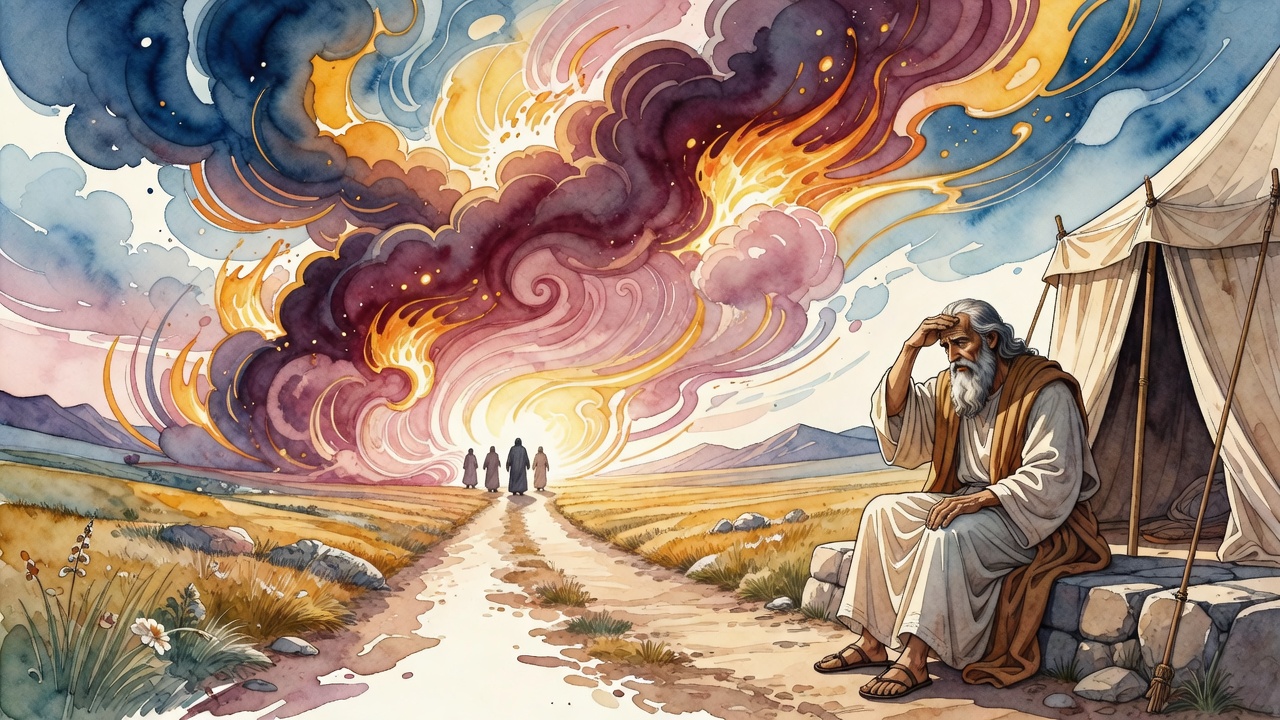
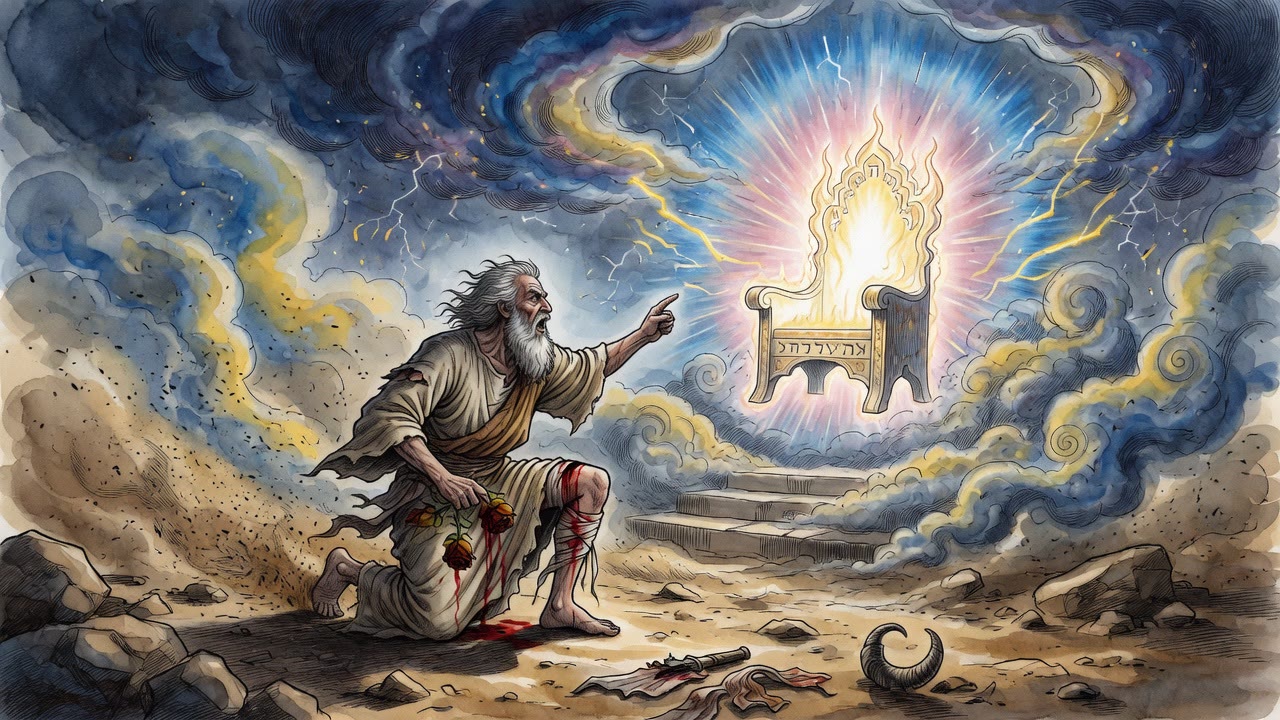
The third day is the worst. Abraham sat in the tent door at Mamre with the cut of his own circumcision pulling when he breathed. The afternoon had gone white. God was there with him in the heat.
 Click for full size
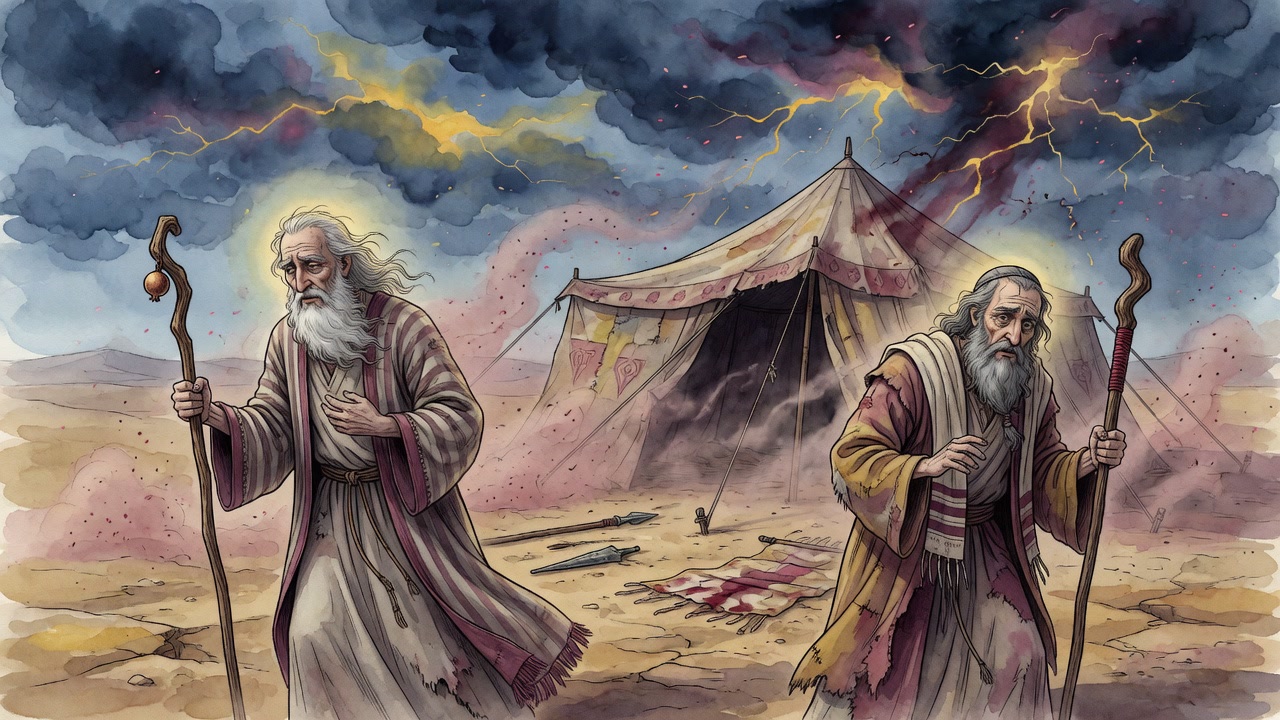
Three figures stood in the road. Dust on their feet. No names. The Torah calls them men, anashim (אנשים). Abraham did not ask what they were.
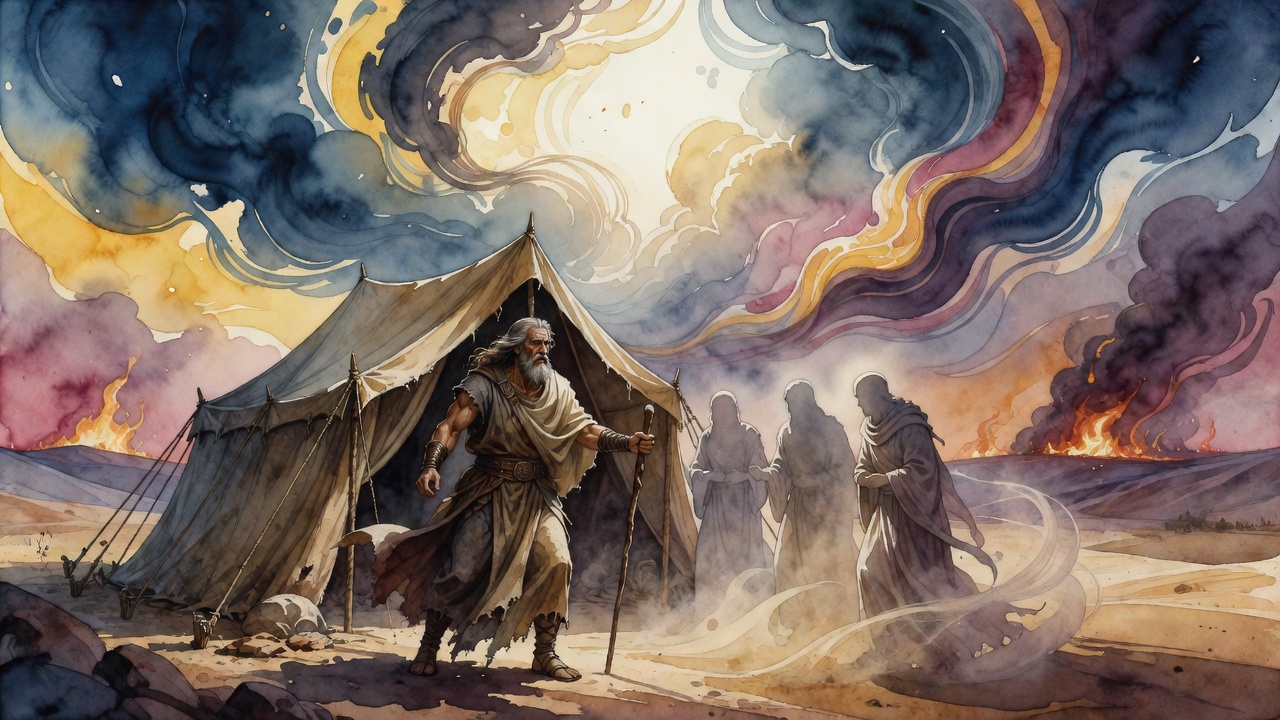
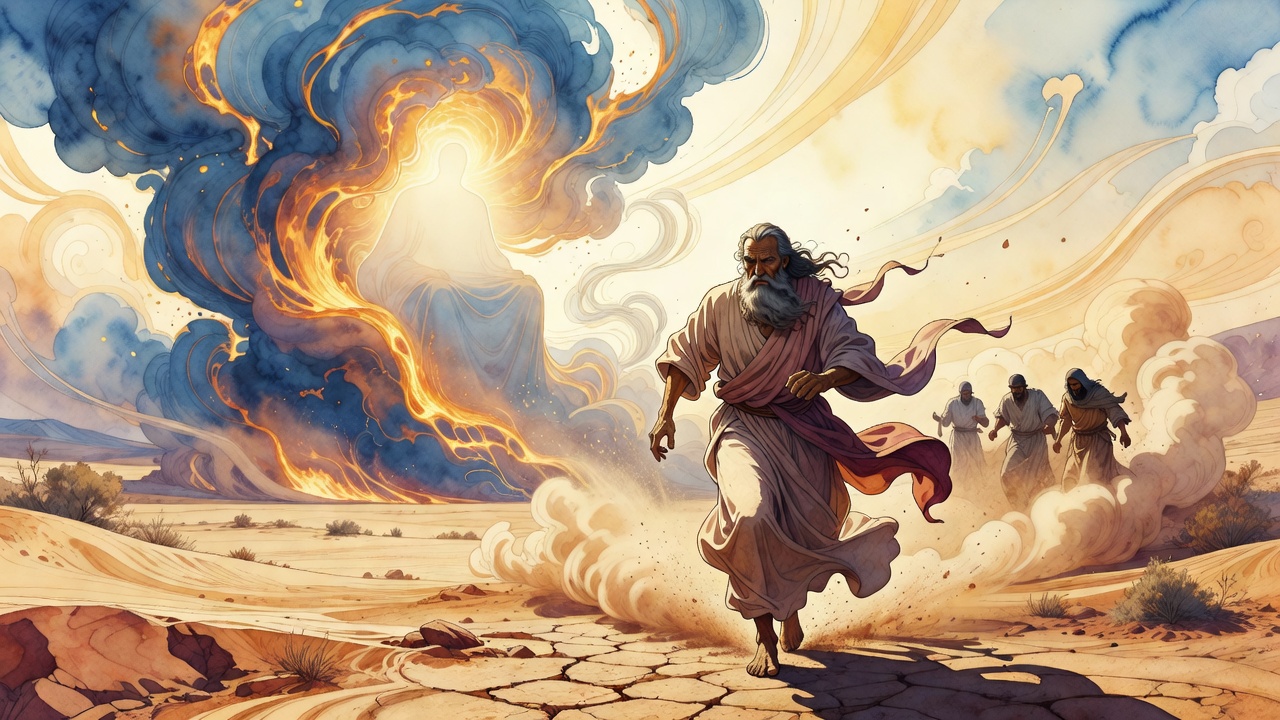
He got up. The wound lit. He ran anyway.
A Morsel, Then a Banquet
He bowed and called them lords and asked them not to pass by. What he offered sounded small. A little water to wash their feet. A morsel of bread. Rest under the tree. Then they could give thanks to God and go on, seeing they had chanced to pass at dinner time. That is what he said. Then he moved.
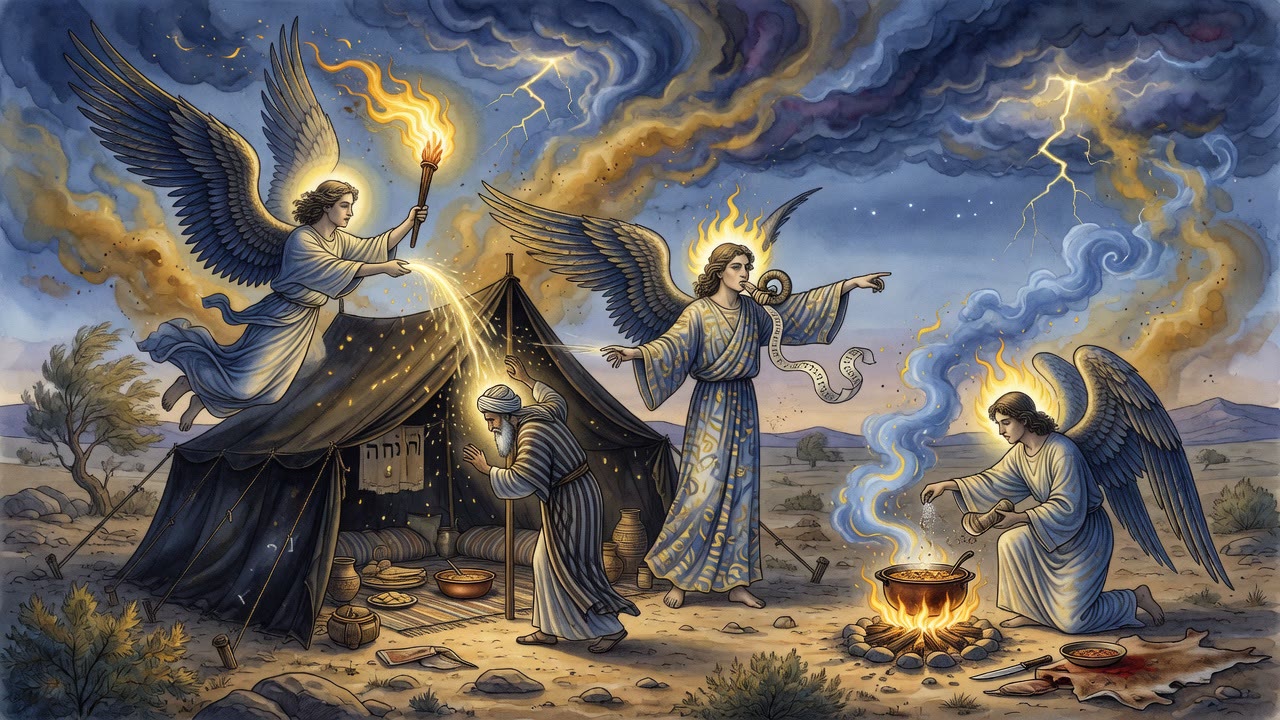
He hurried into the tent to Sarah. "Make ready quickly three seahs of meal, yea, fine meal. Knead it. Make cakes." He wanted the mitzvah on her hands, not a servant's. He wanted unleavened cakes, no hametz rising in dough meant for strangers. He ran to the herd himself and took not one calf but three, so that each guest could be set a tongue with mustard. He gave the calves to Ishmael to dress, to teach the boy how this house received anyone who appeared in the road.
He brought curds and milk alongside the meat and stood over them in the heat while they sat in the shade. He had promised a morsel. What came out of the tent was a royal banquet, past even Solomon at his most splendid. The righteous promise little and perform much. Abraham performed until the table was ridiculous.
The Cakes That Never Arrived
The bread did not come to the table. It had become unclean, and Abraham would not serve his daily bread in that state, not even in a rush, not even to guests he had nearly torn himself open to reach. He served what he could. It appeared to him that the three men ate.
They did not. A heavenly fire took the portions set before them. Abraham ate. Ishmael ate. Aner, Eshcol, and Mamre, his three friends, ate. The strangers sat and the meat before them went up as if a mouth of flame had been invited too. Abraham kept standing. He did not sit down with them. The wound in his flesh and the fire on the plates and the dust still on their feet were all in the same hour.
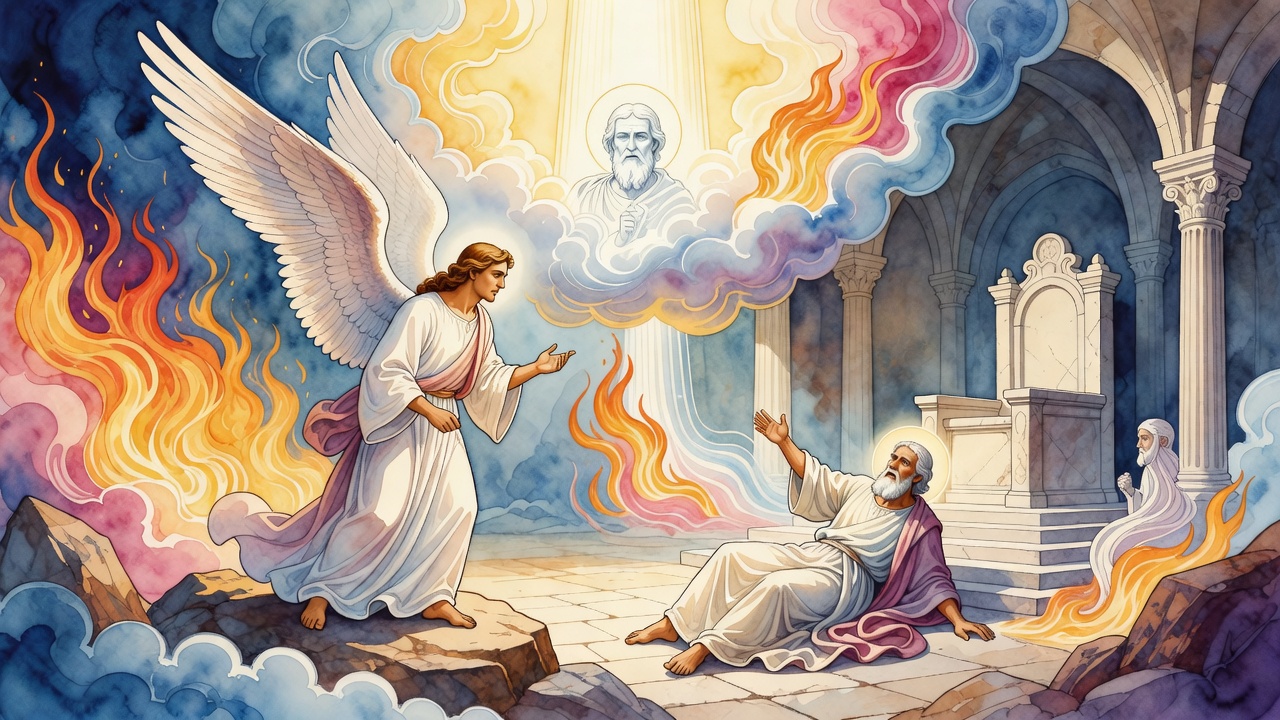
He had left God in the tent door to run toward this. Greeting them had outranked the visitation he was already in. He did not make a speech about it. He poured and carved and watched the fire eat what the angels would not.
Sarah Laughed in the Tent
They asked where Sarah was. "In the tent," Abraham said. Then one of them said the thing Abraham had not asked for. In a year's time, at this season, Sarah would have a son.
Sarah was ninety. Abraham was ninety-nine, three days into the covenant cut. She was behind the tent cloth and she laughed, not out loud at first, the laugh a body makes when it has already done the arithmetic. After I am withered, and my lord is old, am I to have this pleasure? God asked Abraham why she laughed. Is anything too hard for the Lord? At the appointed time I will return, and Sarah will have a son (Genesis 18:13-14).
Sarah denied it, because she was afraid. "I did not laugh." He said, "No, but you did laugh." The laugh stayed in the cloth. So did the year now sitting in front of her, a son where the heat and the wound and the three dusty men had been.
The House That Ran
Abraham had run from the tent door to the road. He had hurried to Sarah. He had run to the herd. A man in that much pain could have been forgiven for staying seated and letting the strangers pass. He did not stay. The righteous do not perform a commandment slowly. A guest who waits is a guest already half turned away.
Sarah's own hands were in the dough so the kindness would be hers. Ishmael's hands were on the calves so the boy would learn the speed. The three who sat under the tree carried more than hunger. They sat in Abraham's shade as if the house itself were a chariot parked in the heat, and what they left behind was not thanks. It was a year with a child in it.
By nightfall everything in that tent had changed. The plates were empty. The fire had taken the angels' share. God was still God. Sarah's laugh was still in the cloth, and the strangers were gone down the road with the dust they had brought, and the morsel Abraham had promised had become a son.
← All myths