Abraham Argued With God While His Wound Was Open
The cut was three days old. Abraham sat in the tent door in the heat. God came to the sick man before any stranger reached the road.
Table of Contents
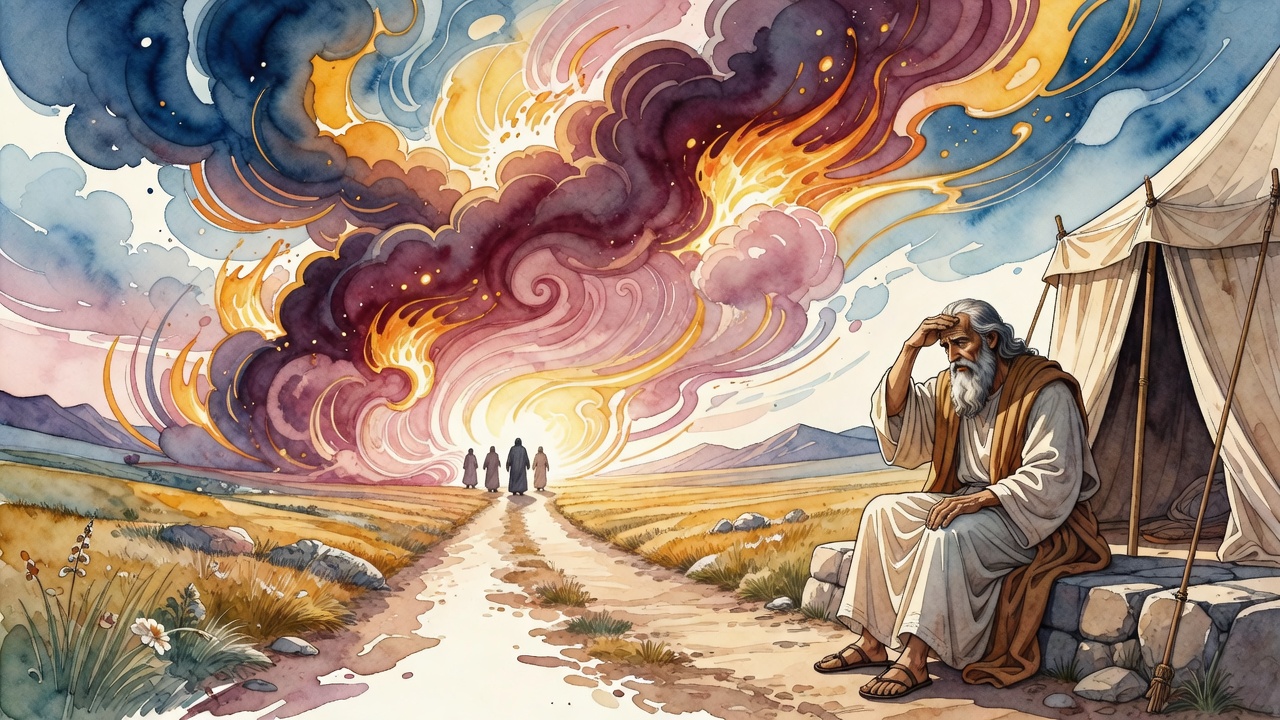
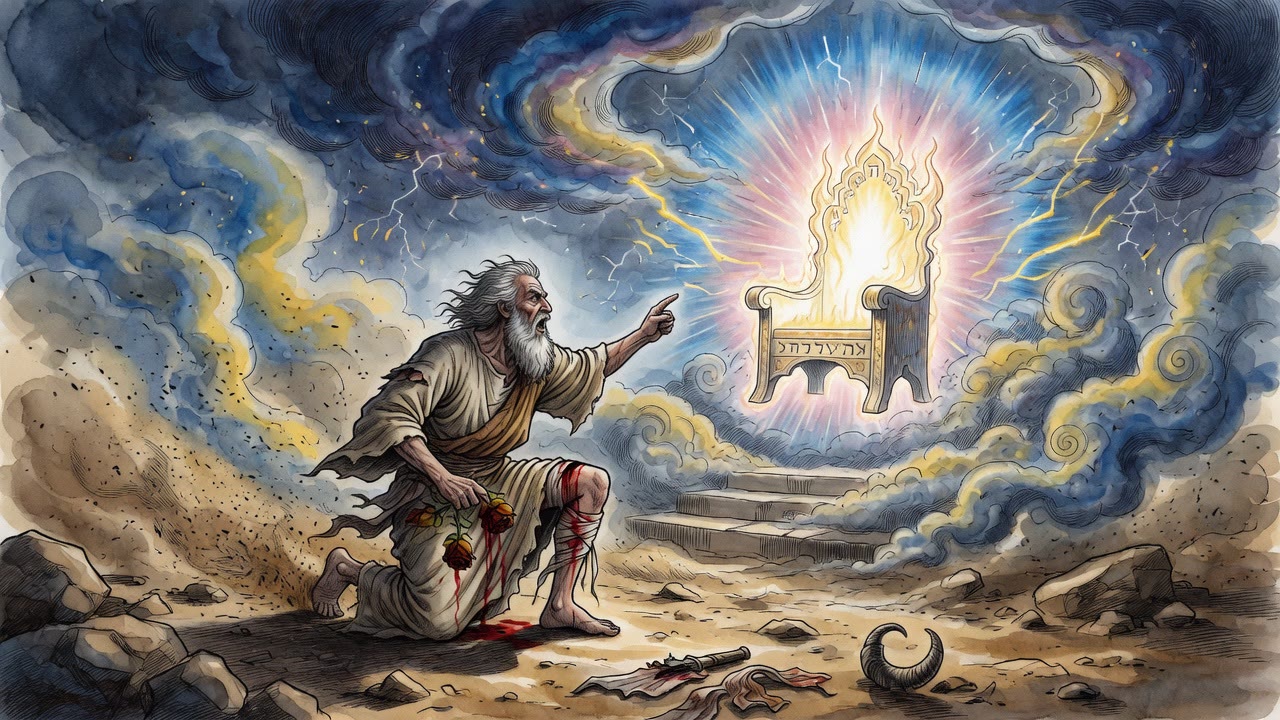
Abraham was still sore when heaven came to visit. Three days had passed since the knife. He was ninety-nine years old, seated at the tent opening in the heat of the day, the covenant still an open cut in his flesh. He had not delayed the command. He had taken it into his body late in life, and now he sat in the doorway because sitting was all the wound would allow.
 Click for full size
God Came to the Sick Tent
The home-born of his house numbered three hundred and eighteen, and the purchased many more. In one day he had taken the knife to himself, to Ishmael his son, and to every soul born or bought under his roof. The foreskins had been gathered into a mound inside the tent. A river of blood ran out from the doorway.
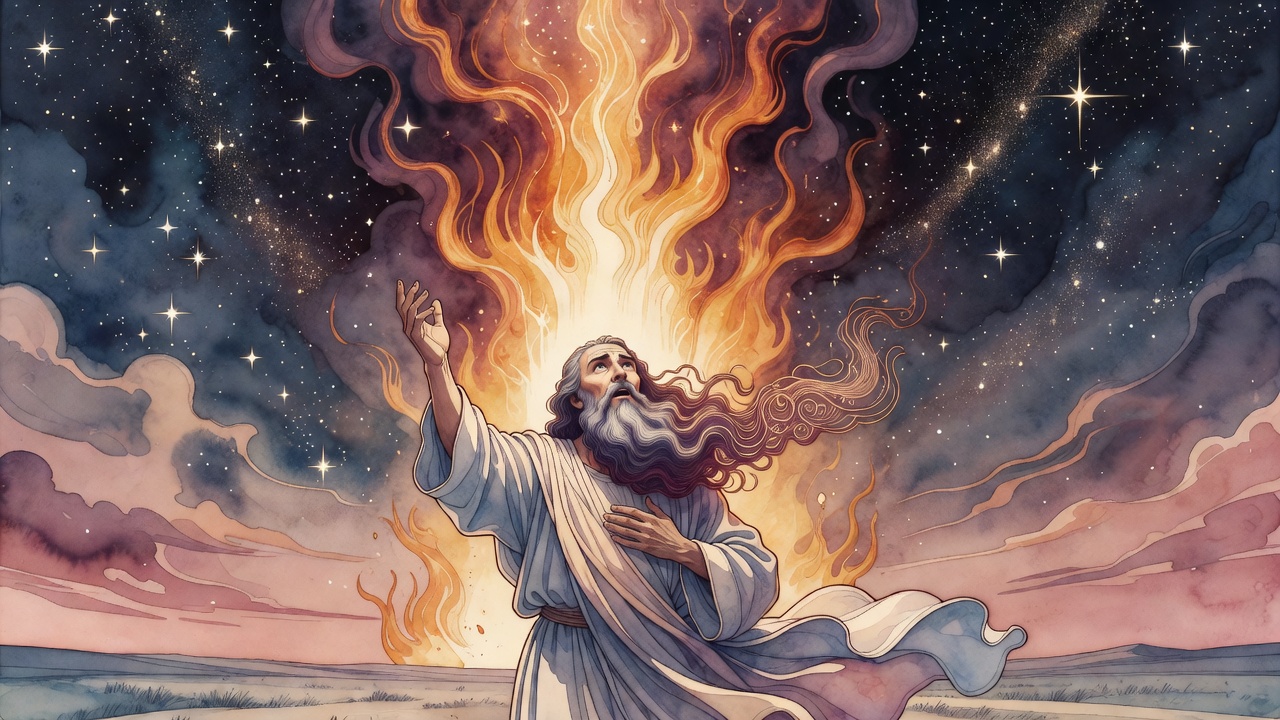
God summoned the angels. "Come, let us visit the sick one."
They hesitated. "What is man, that You go to a place of blood and filth?"
He answered them, "By your lives, the scent of this blood is sweeter to Me than myrrh and frankincense. If you will not go, I go alone."
So the Lord appeared to Abraham in the heat of the day (Genesis 18:1). The visit was not a spectacle. It was care. Abraham had trembled by obeying. He had not negotiated the wound away. God came to the doorway where he sat in pain, to the poor and afflicted spirit who takes a command into the body and does not wait for a better hour (Isaiah 66:2).
He Ran on the Cut
Then the strangers appeared on the road. Abraham ran. The wound went with him. A man three days after the knife, ninety-nine years old, moving with an urgency the cut should have forbidden. Hospitality moved through pain before it reached the table. Water. Shade. Bread. A calf. Curds. Milk.
He left the divine visit to serve travelers. The order matters. God had come to the sick man, and the sick man left that care to feed three bodies he did not know. The covenant did not make him withdraw from human need. It made him hurry toward it.
The tent became a crossing place between heaven and dust. Abraham received care, then gave care, before the ache had passed. He stood to serve while the cut was still open. That standing was the first argument of the day, though no one had named Sodom yet.
The Road Turned Toward Sodom
After the meal the road turned. God paused over a question. Should Abraham be told what was about to happen? The land had been promised to him. Sodom sat inside the gift. A king who gives land and then burns a city on it without speaking to the recipient looks faithless, even if the city deserves fire.
God called Abraham from the east and seated him near the right hand, not because God lacks knowledge, but because the promise had made Abraham's voice part of the matter. He was not a clerk receiving orders. He was a counselor allowed to speak. That seat is dangerous. A counselor near the throne cannot pretend innocence when judgment begins. If Abraham is close enough to be told, he is close enough to answer.
Nearness became responsibility. The strangers went on toward the cities of the plain. Abraham stayed in the road with God and with the smoke that had not yet risen.
Chalilah
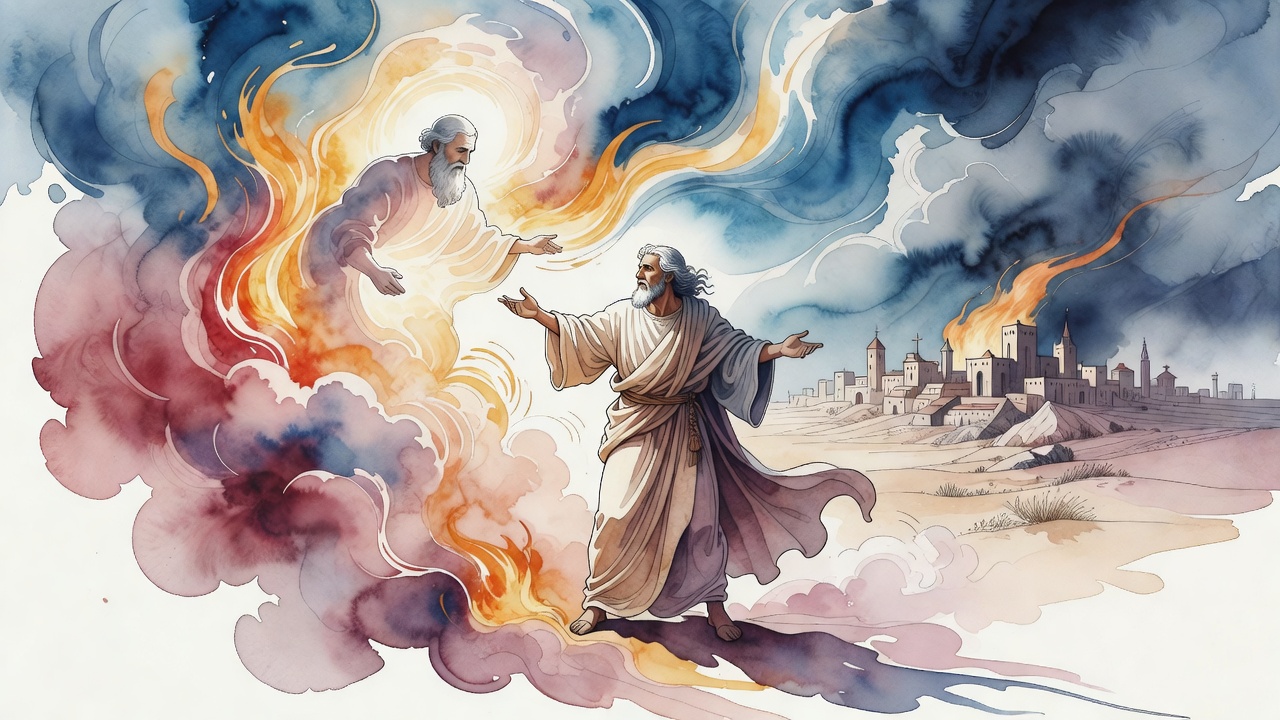
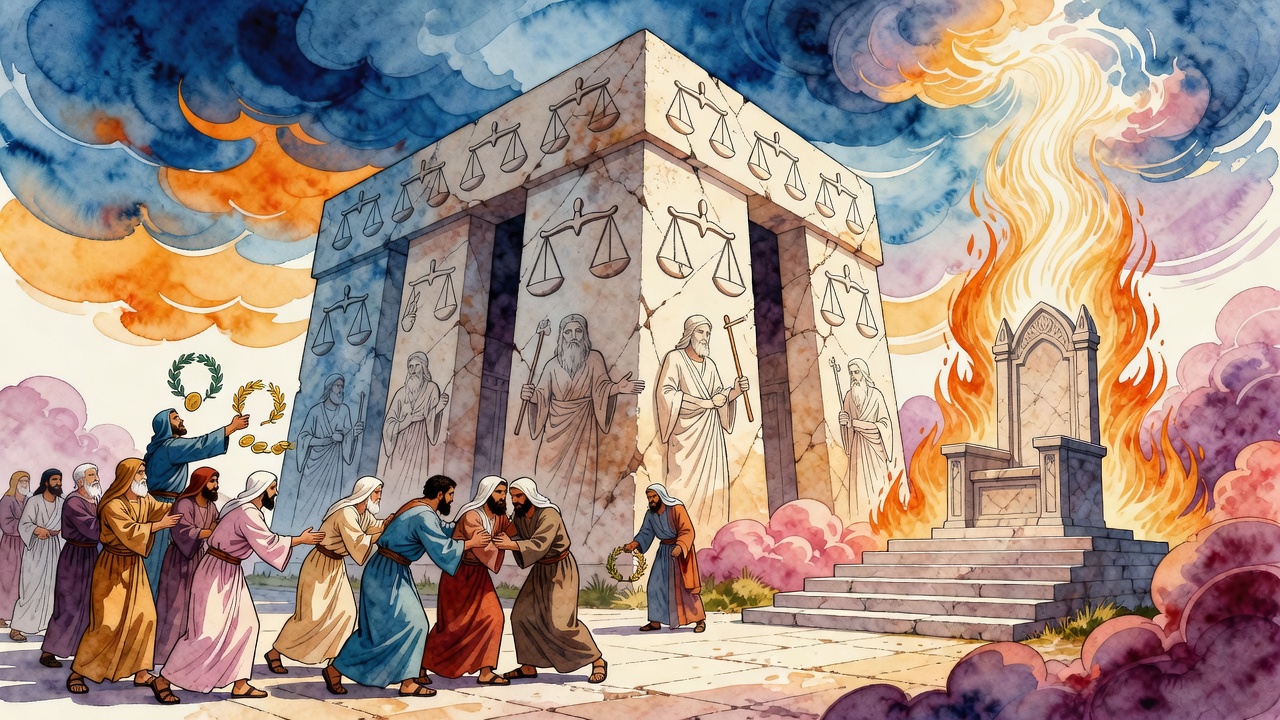
Abraham drew near. The phrase has the weight of combat. He stood between Sodom and the decree and said the word that strikes the whole scene: chalilah (חלילה). Far be it. Unthinkable. "Shall the Judge of all the earth not do justice?" (Genesis 18:25).
He did not whisper it. He did not flatter. The wound in his body was still fresh, and the covenant in that wound gave him courage to argue with the God who had commanded it. Fifty righteous. Forty-five. Forty. Thirty. Twenty. Ten. Abraham counted possible lives like a man gathering coals from a burning floor.
Each number lowered the room. Each answer from God kept the argument alive a little longer. Abraham was not bargaining for comfort. He was trying to find whether one righteous household could hold back an entire city's doom. Lot was somewhere below. Kinship stood in the smoke before the smoke had risen. Hospitality had taught Abraham to count faces, not populations.
Fire After the Vow of Water
Abraham remembered the vow after Noah. God had promised not to bring another flood upon the world (Isaiah 54:9). He pressed the logic until it burned. Water, no. But fire? Would heaven destroy by changing the instrument and call the promise intact?
"A flood of water You would not bring," he said. "A flood of fire You would bring? Heaven forbid You should kill the righteous alongside the wicked."
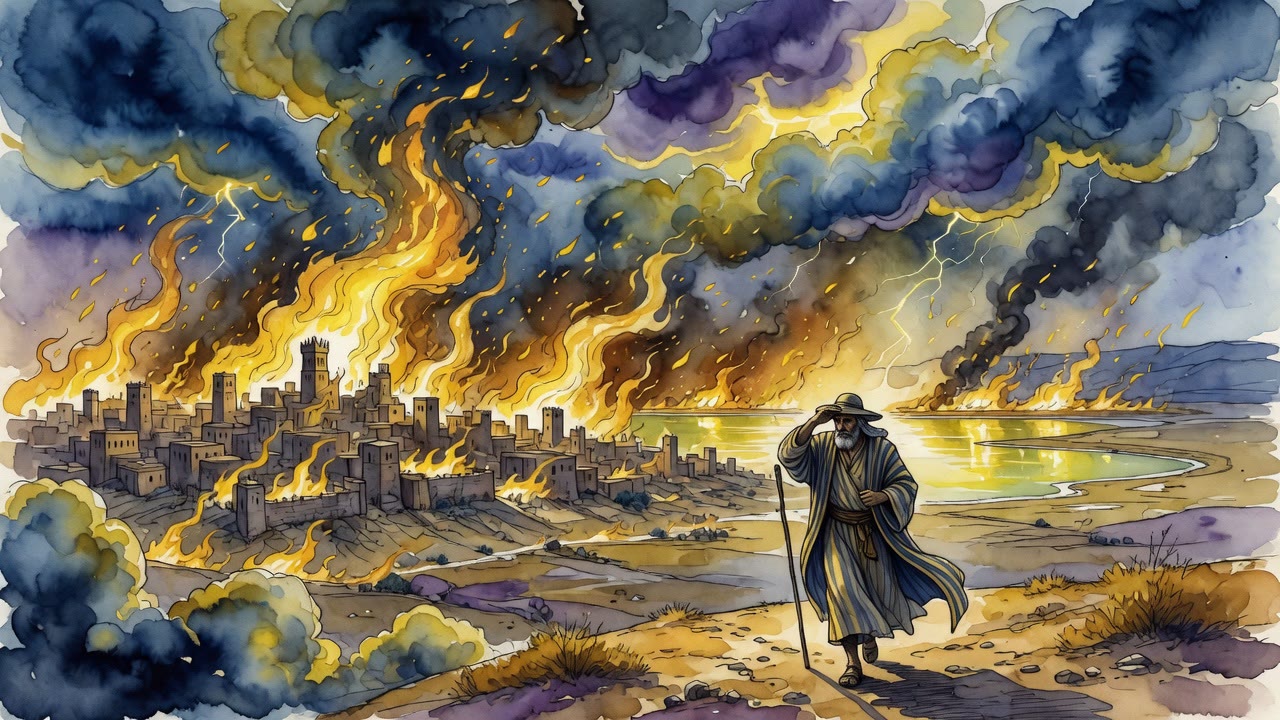
Sodom was not saved. The smoke rose the next morning like the smoke of a furnace. The numbers had run out. Ten righteous people could not be found. Abraham lost the case on the merits. He did not lose the right to bring it. A wounded man had hosted strangers, been drawn into counsel, and forced the question of justice into words before the fire fell.
Silence would have been easier. Fire would have fallen either way. Abraham's greatness is that he made heaven speak the justice of what it was doing before the smoke covered the plain. The tents of Abraham and the streets of Sodom remain opposed even after the fire. One opens to strangers. One closes against them. Abraham argued from the open door, with the cut still in him, and the door did not shut.
← All myths