Abraham Stood Between God and the Condemned Cities
Abraham accused God of slipping out of His own oath. God answered by offering to march every generation He had ever destroyed past him, one at a time.
Table of Contents
 Click for full size
The Man Who Came Ready for Battle or for Prayer
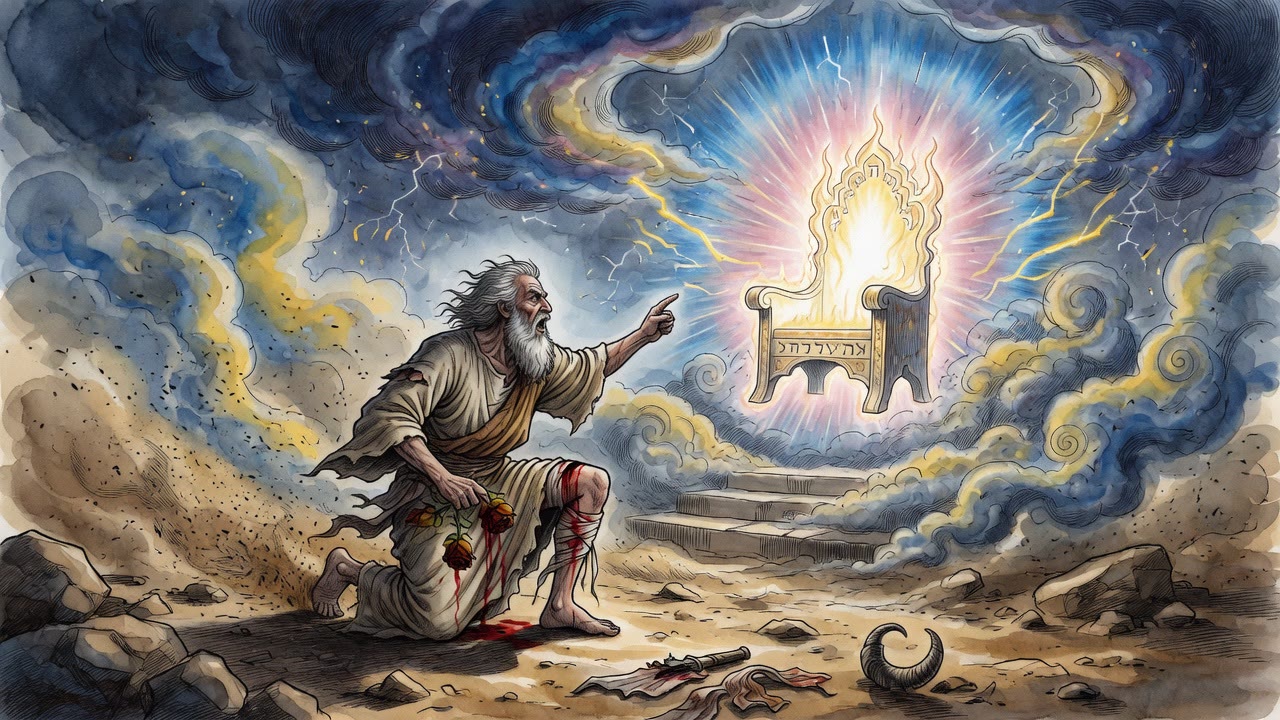
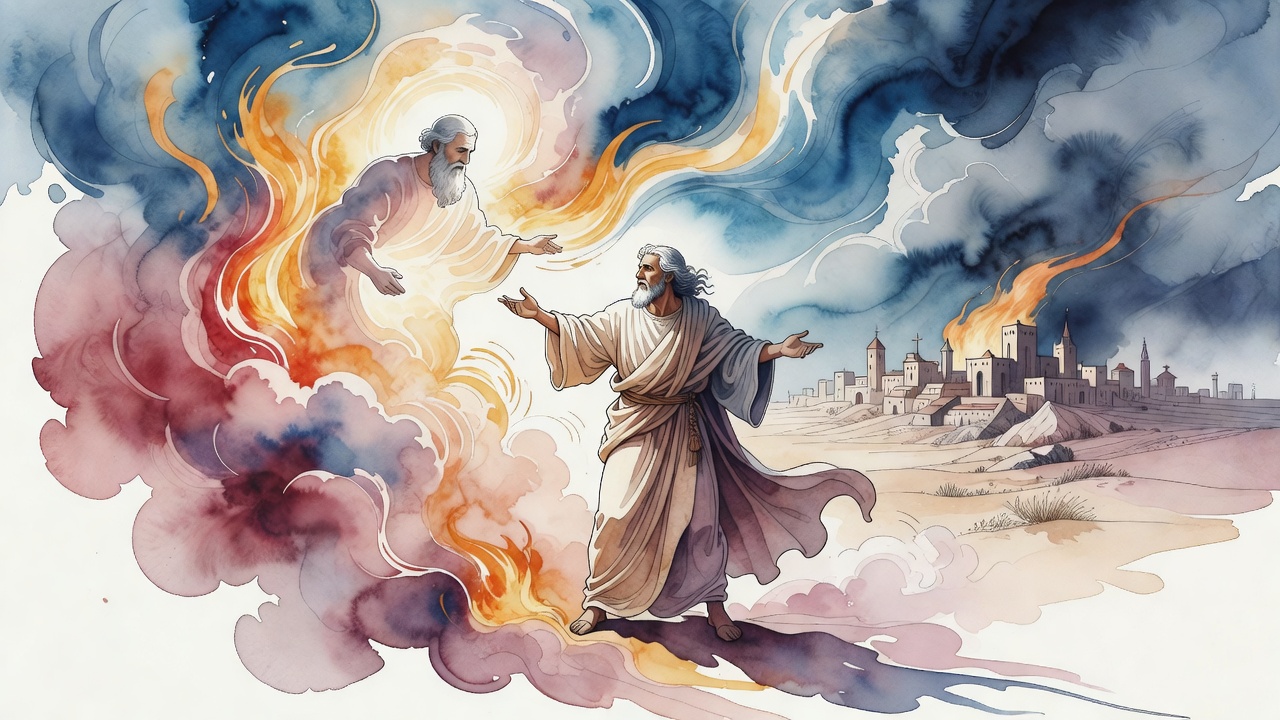
Abraham came toward God the way a commander comes toward a line he means to break. "If this is battle, I am coming," he said. "If it is conciliation, I am coming. If it is prayer, I am coming."
What he said next was not a plea.
"You swore that flesh would never again be cut off by a flood," he said. "Is it right that You should slip out of Your own oath and burn them instead? Shall the Judge of all the earth not do right Himself?"
He had the standing to say it. The five cities of the plain sat inside Canaan, and Canaan had been deeded to him and to his children after him. God would not knock down a man's inheritance behind his back. So the sentence on Sodom was read out to Abraham first, and God said plainly that He would not destroy the cities without Abraham's consent.
God let the accusation stand. "You take delight in defending My creatures," He said, "and you will not call them guilty. That is why I have spoken with no one but you in the ten generations since Noah."
Abraham pushed harder. "Far be it from You to kill the righteous along with the wicked, so that the people of the earth do not say, it is His trade. He wiped out the generation of Enosh, then the generation of the flood, then He scattered the tongues. He sticks to His trade."
Above the Dome, Where the Stars Can Be Trampled
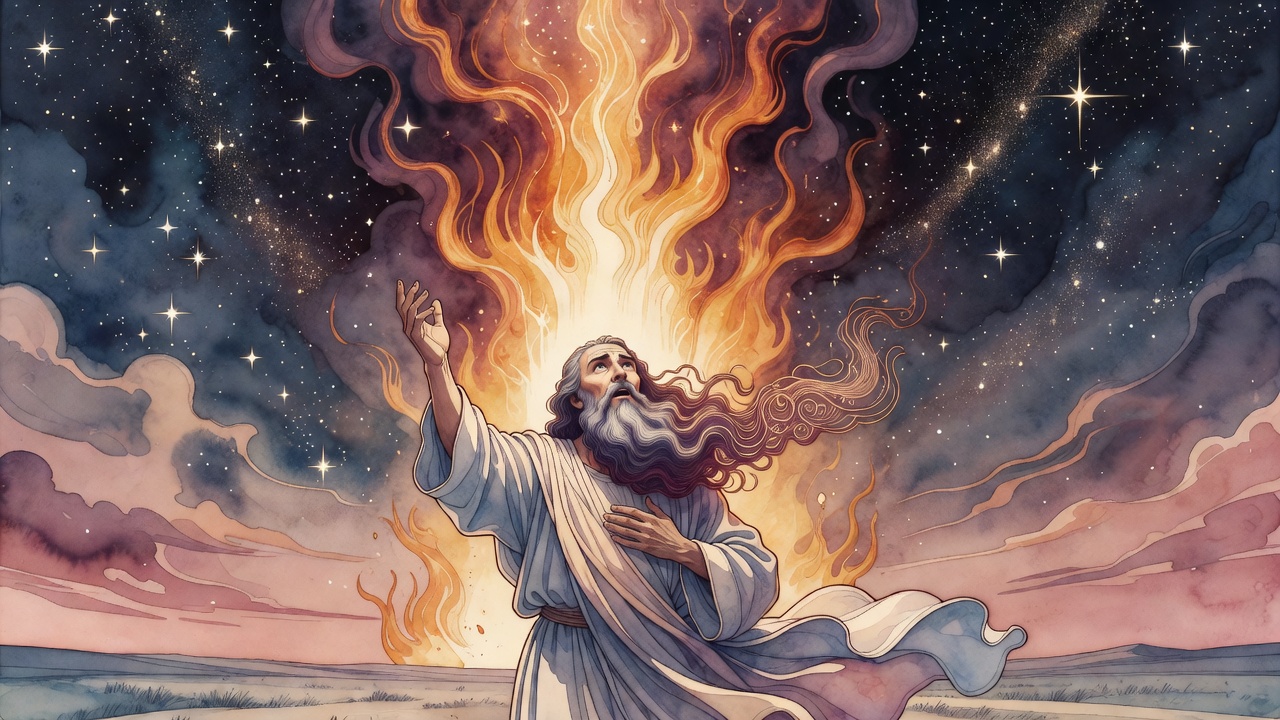
He had been argued into this boldness years before, on a night when God took him outside. Not outside the tent. Above the dome of the sky, high enough that he was looking down on the streets of heaven and the patterns the stars keep. Count them, God told him. Your children will be that many. Then, while Abraham was still up there: "You are a prophet, not an astrologer."
Rabbi Levi kept a proverb for that night. While your sandal is on your foot, trample the thorns. A man standing under the stars is afraid of them. A man standing above them puts his heel through them.
The other promise came with dirt on it. His children would be like the dust of the earth, blown from one end of the world to the other, and trodden like dust as well, laid down flat in the public squares while their enemies drove ploughs across their backs.
Abraham took all of it without a word of protest. Even when God promised him a son and he was a hundred and Sarah was ninety, he said nothing out loud. He said it in his mind. My body is finished with children, and still everything is possible to God, who can turn an old man young again. A thing said with the tongue can be held against you. A thing that stays in the mind cannot.
He had swallowed his astonishment about his own life. About other people's lives he opened his mouth.
The Parade of the Drowned
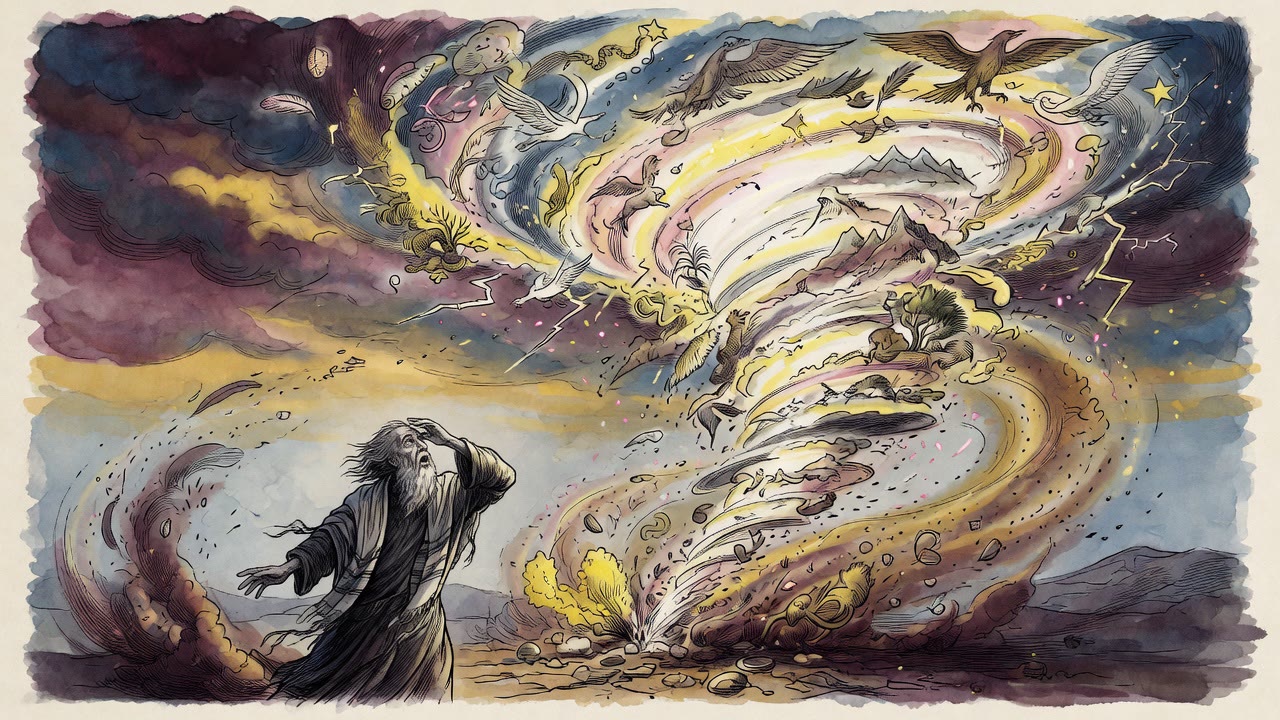
God answered the accusation with an offer. "I will let every generation I have destroyed pass in front of you, so that you can see for yourself that not one of them suffered the full punishment it had earned. And if you still think I did not act justly, then teach Me what I ought to do, and I will act by your words."
They went past him. The generation of Enosh. The generation of the flood. The builders who lost their tongues in the middle of a sentence.
Abraham watched the whole procession and had to admit it. Not one creature had been shorted of the justice due to it, in this world or the next.
He went on arguing anyway. "You have mastery over wrath," he said. "Wrath has no mastery over You. If You want a world to keep standing, You cannot hold to the strict line of justice. Insist on the right alone and there is no world."
He Stopped at Ten Because He Was Counting Lot's House
Fifty, God said. Find fifty righteous among them and the cities stand.
Abraham knew exactly what he was, standing there bargaining. "I have taken it on myself to speak to the Lord, I who would have been dust of the ground long ago at Amraphel's hands, and ashes at Nimrod's, if not for Your mercy." Then he started shaving the number. Suppose the fifty came up five short, and the five were missing from Zoar, the smallest of the cities. Would the whole town burn for want of five men?
Forty-five, God said. Then ten apiece in the four larger cities, with Zoar pardoned as a favor, its sins being fewer. Then thirty, ten in each of the three biggest, the two small ones forgiven with nobody's merit to cover them. Twenty. Then ten righteous men for all five cities together.
Abraham stopped there, and not from nerves. He had done the arithmetic. Eight righteous people had ridden out the flood in the ark, Noah and his wife and his three sons and their wives, and eight had not been enough to save anybody outside it. Ten was the smallest number he had any reason to trust.
Ten was also, exactly, the number he thought he already had. Lot. Lot's wife. Their four daughters. The four men those daughters had married.
What he did not know was that the best people in Sodom were nowhere near good.
The Cities Burned While He Was Still Praying
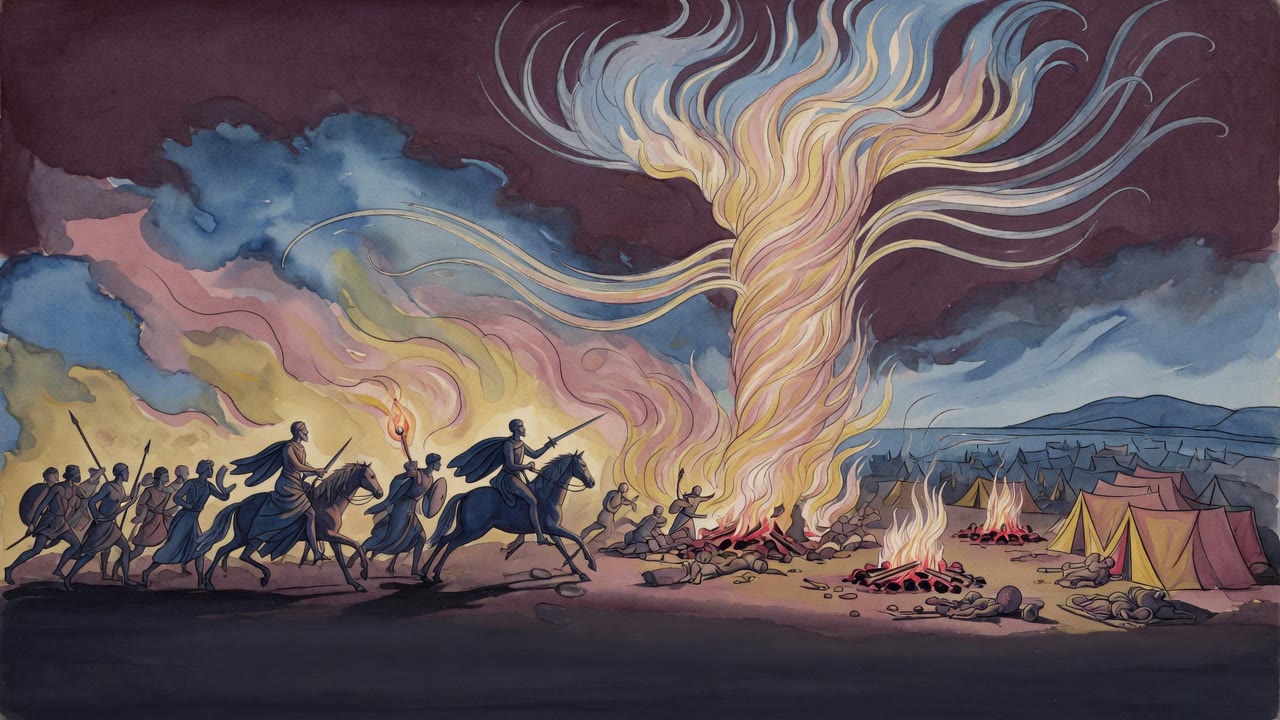
They had been warned for fifty-two years. God had shaken the mountains under them until the ground itself trembled, and they went on exactly as they were.
The Shekhinah (שכינה), the divine presence, lifted away from Abraham, and the hearing was over. He kept praying. He prayed for the sinners after the case had closed and the presence had gone, and none of it moved anything.
Lot was pulled out through his own doorway by the wrists. The fire came down on the plain and did not stop at the walls.
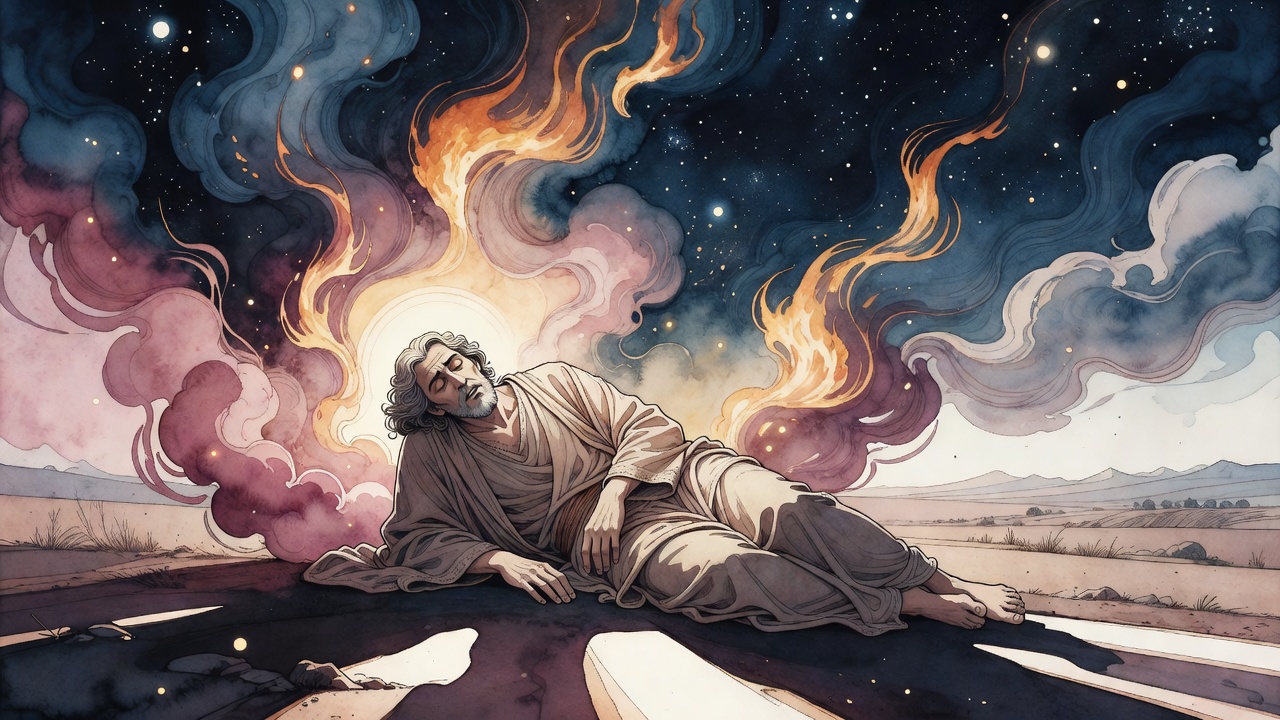
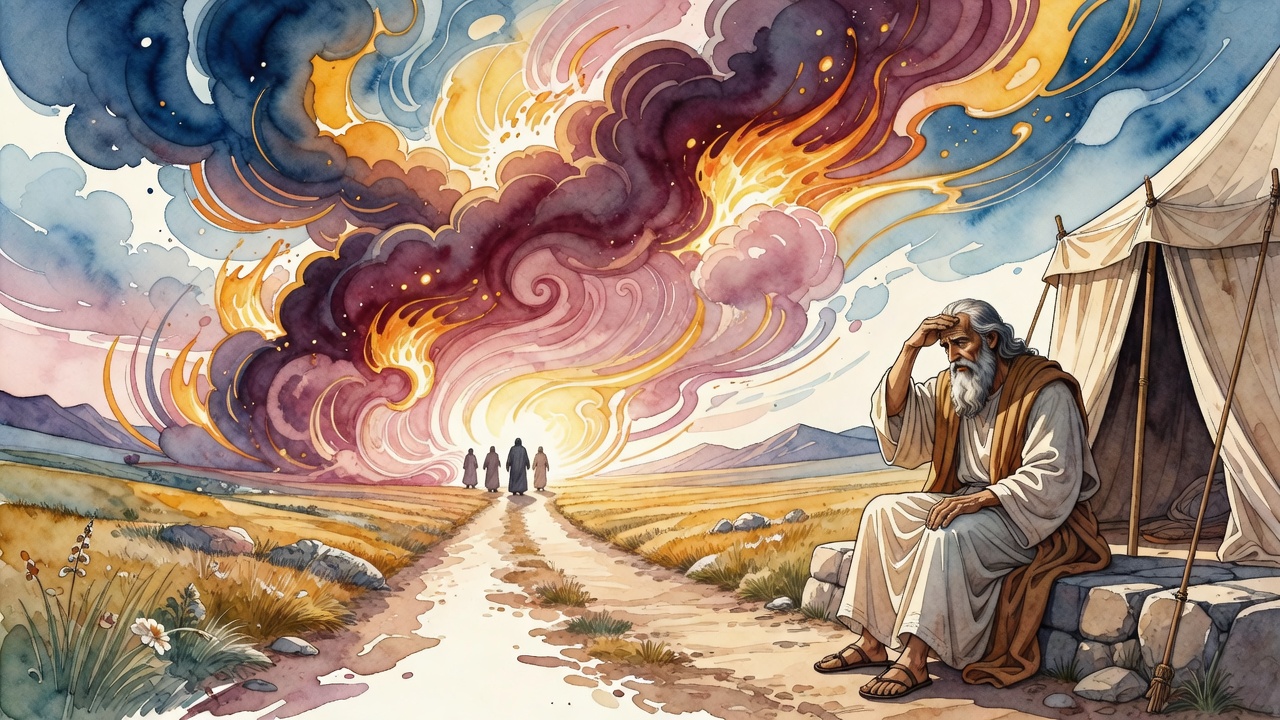
In the morning Abraham walked back to the place where he had stood and argued, and looked south, and the smoke of the country was going up like the smoke of a furnace.
← All myths