Abraham Left Sodom When Mercy Had No One Left
Abraham pitched his tent where Sodom's gates could still be smelled. Travelers reached him first. After the fire, he packed the ropes and moved.
Table of Contents
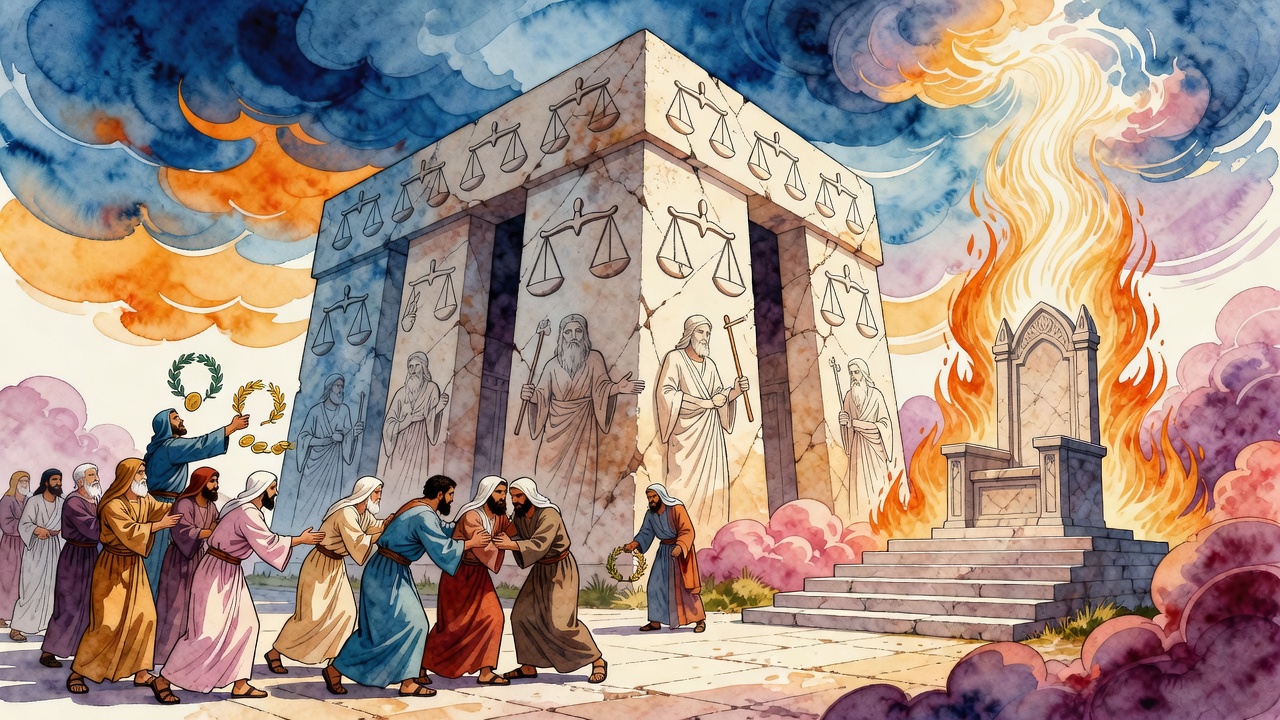
Abraham stayed close enough to Sodom to smell it. The city had gates, judges, guards, wealth, pasture, and the terrible confidence of people who had forgotten need. Travelers learned quickly what kind of place it was. A stranger could enter hungry and leave hungrier. A poor man could ask for bread and find the law itself turned against him. Inside those walls, mercy was treated like theft. So Abraham pitched himself near the edge of it, not because he loved the city, and not because its people pleased him. He stayed because the road still carried people past Sodom, and someone had to meet them before the gates did.
 Click for full size
The Tent Facing the City
Abraham's tent was cloth, rope, and open space set against a city that closed its doors. Sodom measured strangers by suspicion. Abraham ran toward them while they were still far off. Sodom let the hungry become a public nuisance. Abraham put food in front of them before questions could become humiliating. The flaps stayed up in the heat of the day, because a closed tent would have made him Sodom's neighbor in the only way that counted.
Lot had chosen the plain because it was green. He had looked toward Sodom and seen water, pasture, and prosperity. Abraham watched him go, and something in the family line loosened, because Lot was a nephew, nearly a son before Isaac was born, and his departure carried the ache of a future walking away. Abraham did not follow him into the city, but he did not abandon the road either. He sat where Sodom's cruelty could be interrupted. The city would still be wicked, and Lot would still live among its people, but no traveler had to believe Sodom was the whole world.
It grieved him in his heart that his brother's son had parted from him, for he had no children yet. In the year Lot was taken captive, God told Abraham to lift his eyes north and south and west and east, and promised him seed like the dust. The land opened in every direction. The nephew had already chosen the green that would burn.
The Mountain Fell in Fire
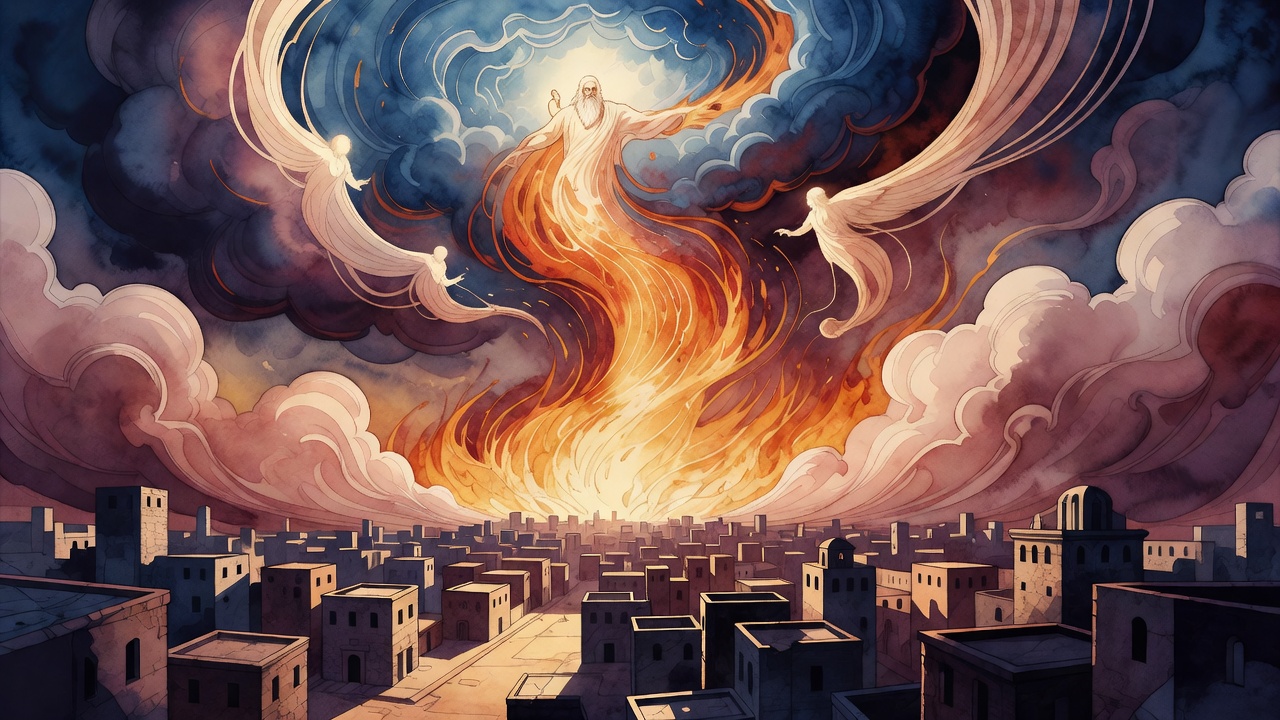
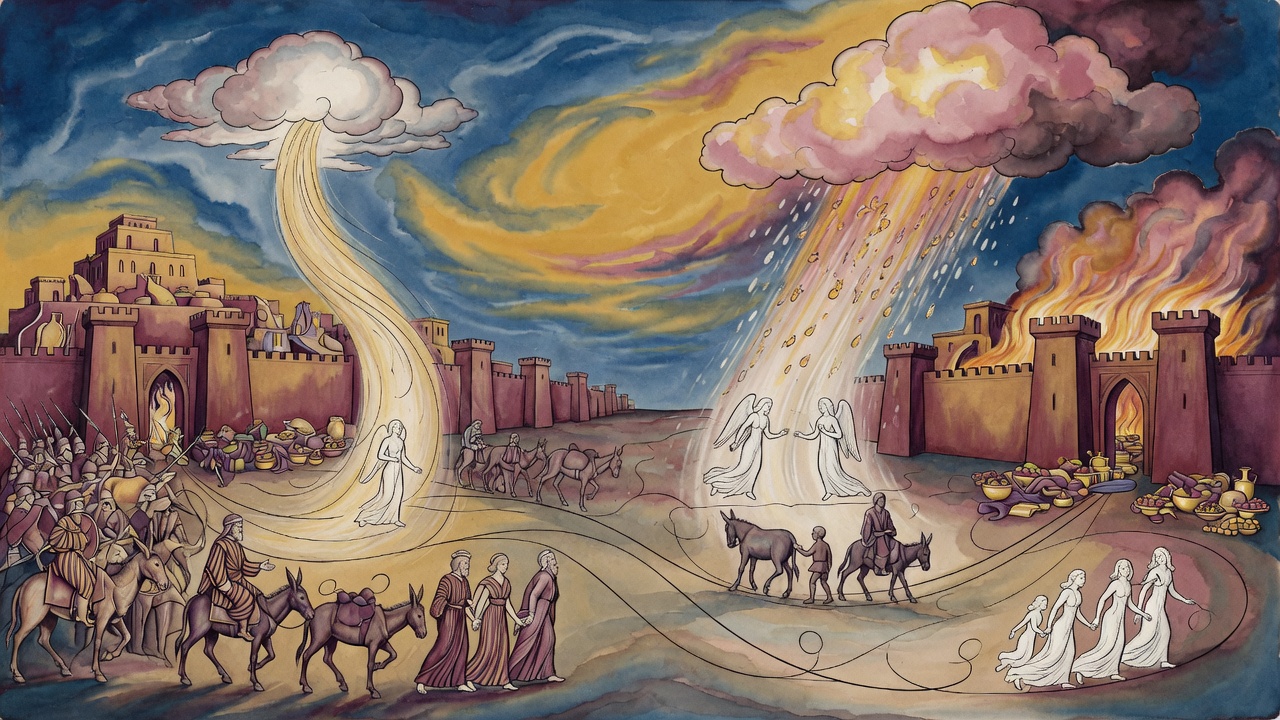
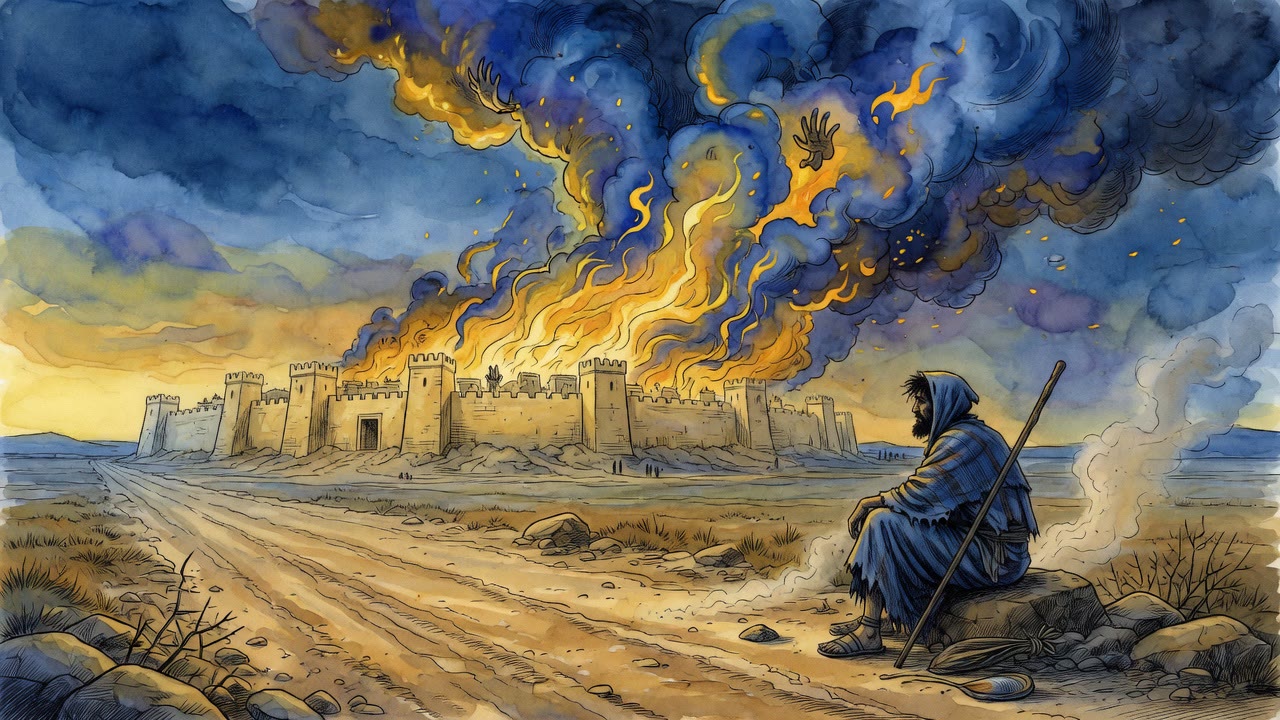
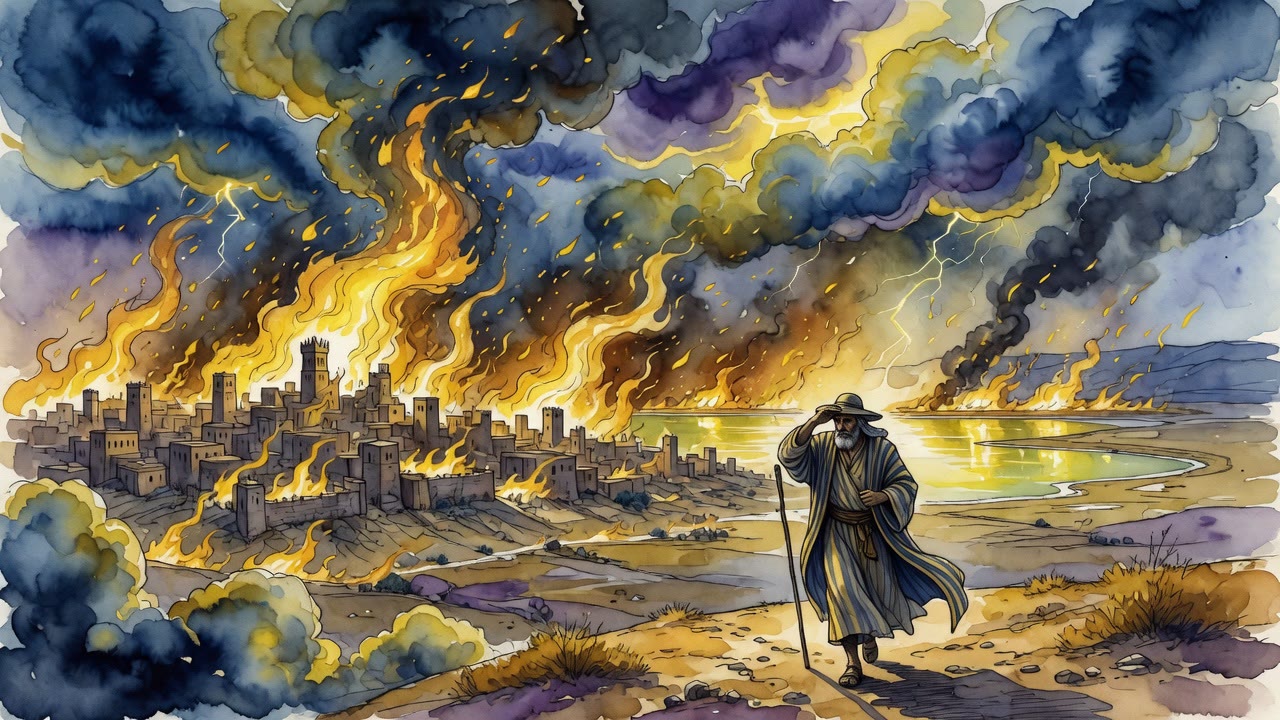
Then the sky changed, and the cities of the plain burned under fire and brimstone, so the green valley became smoke. Sodom's walls, laws, beds, tables, coins, and punishments all went into the same ruin, and they stayed ruined, because the judgment was written to last until this day. Abraham rose early and looked toward the place where he had pleaded for ten righteous people. The smoke went up like the smoke of a furnace.
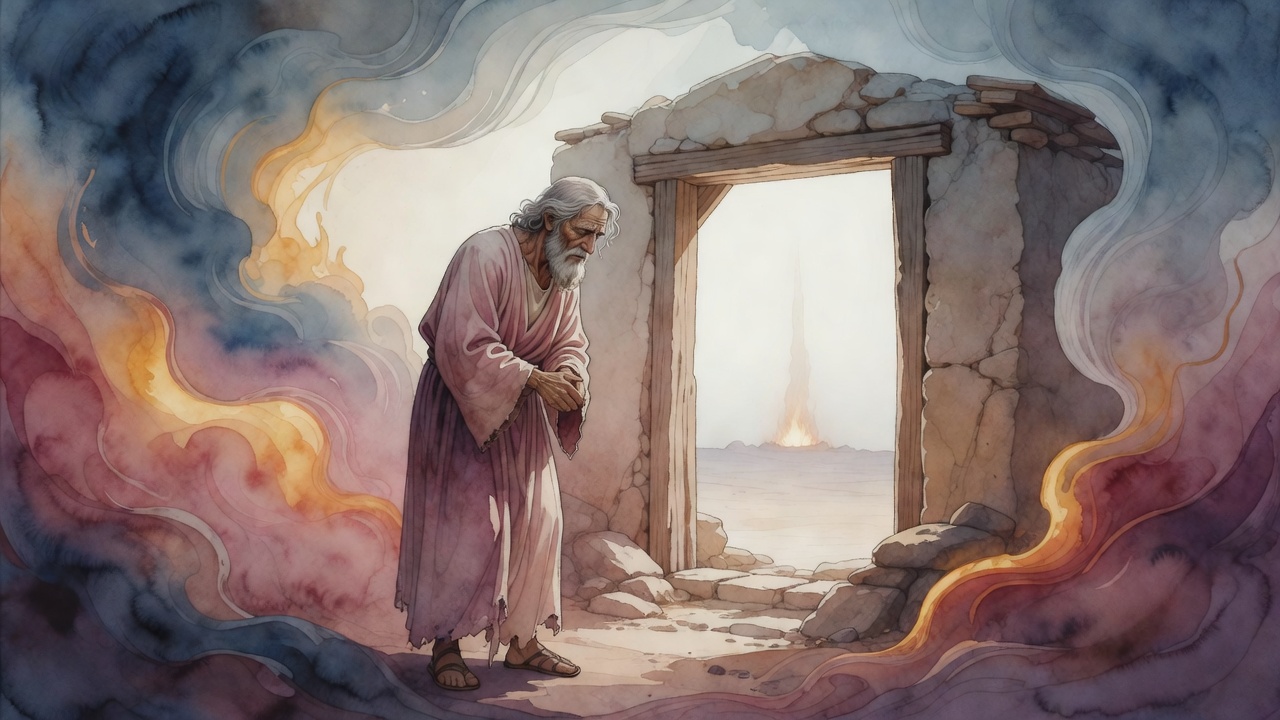
The road was still there, and the tent was still there, and Abraham was still Abraham, but the work that had kept him near that place had been consumed with everything else. He had stayed to rescue the stranger from Sodom's gate, but now there was no gate. He had stayed to be mercy beside a city that hated mercy, but now the city was ash. The mountain had fallen, so the rock moved from its place. Abraham packed the ropes and left, because a tent cannot feed ashes, and a host cannot welcome smoke.
Lot Was Afraid of the Wrong Mountain
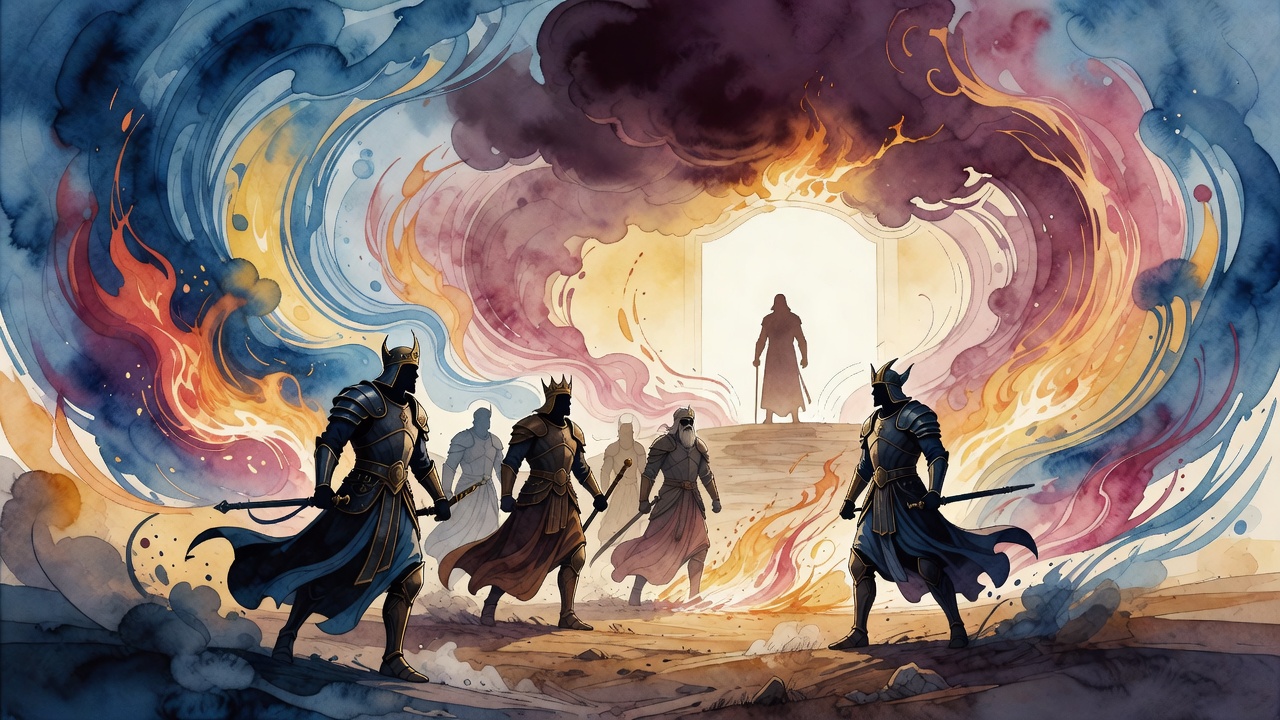
The angels told Lot to flee to the mountain, and the mountain meant Abraham. It meant the old tent, the old standard, the righteous kinsman who had once gone to war to rescue him and would have sheltered him again. Lot could not make himself go, though he knew exactly why. In Sodom, Lot could look decent. Set beside men who starved the poor and tortured guests, he could seem almost clean. Beside Abraham, the same life would look different, because the light would be harsher and his choices would have edges.
A man who can call himself righteous in a wicked city may fear a righteous house more than a burning one, so Lot asked for Zoar instead, smaller and nearer and easier. He survived, but he did not return to Abraham, though God had remembered Abraham when the fire came and had sent Lot out of the midst of the overthrow. The fire had stripped away Sodom's illusions, and still Lot chose distance from the man who would have shown him what survival required. He would not sit with the deceitful, Abraham later said of that parting, and he would not go with them. Lot and his daughters were already walking another road.
The Daughters in the Cave
Lot's daughters saw the smoke and believed the world had ended. That mistake carried them into the cave with wine and terror. They thought no men remained. They thought the human future had been reduced to one old father and two daughters hiding above a dead plain. Their plan was wrong, and the consequences ran for generations. Still, they were not trying to build a kingdom out of lust or conquest. They were trying, in their frightened way, to keep humanity from disappearing.
From that cave came Moab and Ammon. From Moab, much later, came Ruth, and from Ruth came David. The fire did not make the line pure, but it made the line complicated. Abraham had asked whether ten righteous people could save Sodom, but Sodom did not have ten. Two terrified women carried a future out of the ruin anyway, because ruin is not always the last word even when it is the last roof.
Abraham did not build a monument at the overlook, and he did not settle beside the ruins and make grief his dwelling. He packed the ropes and moved, because the road still needed him elsewhere. Somewhere beyond the smoke, another stranger would be walking under the heat of the day, wondering whether any door in the world opened from the inside. Mercy has to face someone. Once the city was gone, Abraham's work there was done.
← All myths