Lot Was Rescued from Sodom Twice and Went Back Both Times
Lot was saved from Sodom once in battle, once from fire. Both times he returned. The texts explain what the city offered him and what the return cost.
Table of Contents
 Click for full size
The Angelic Assignment
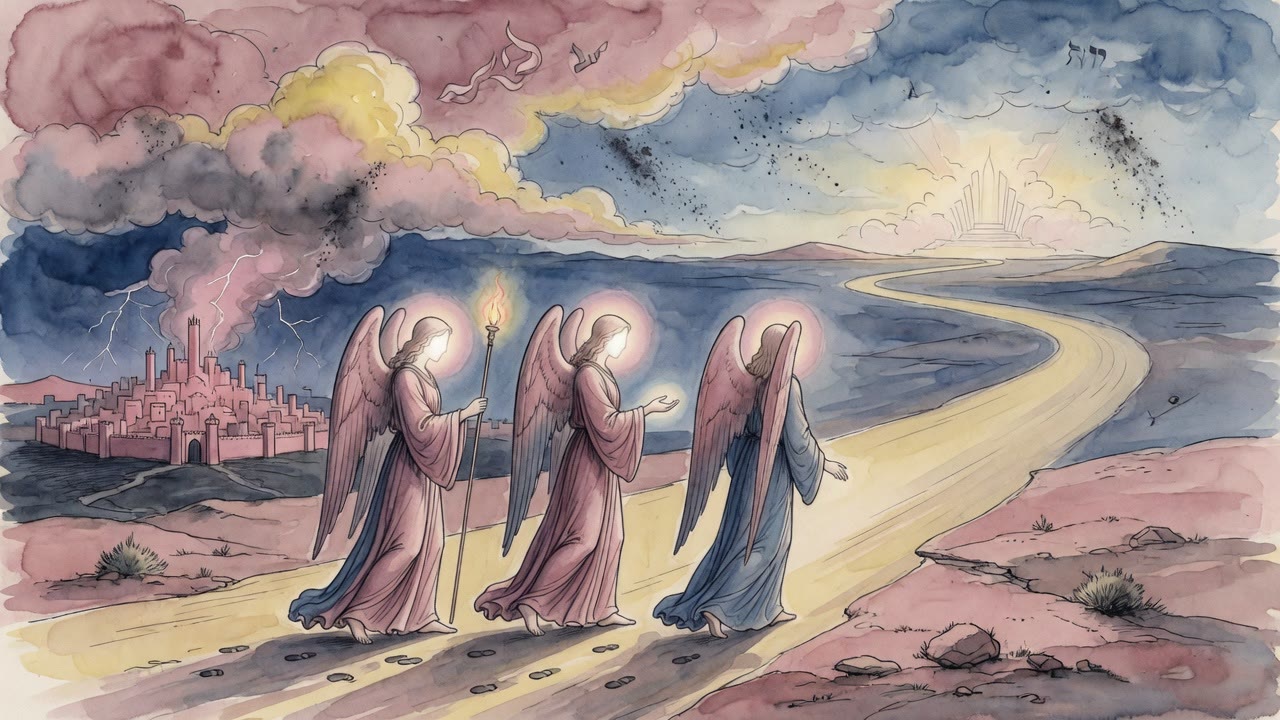
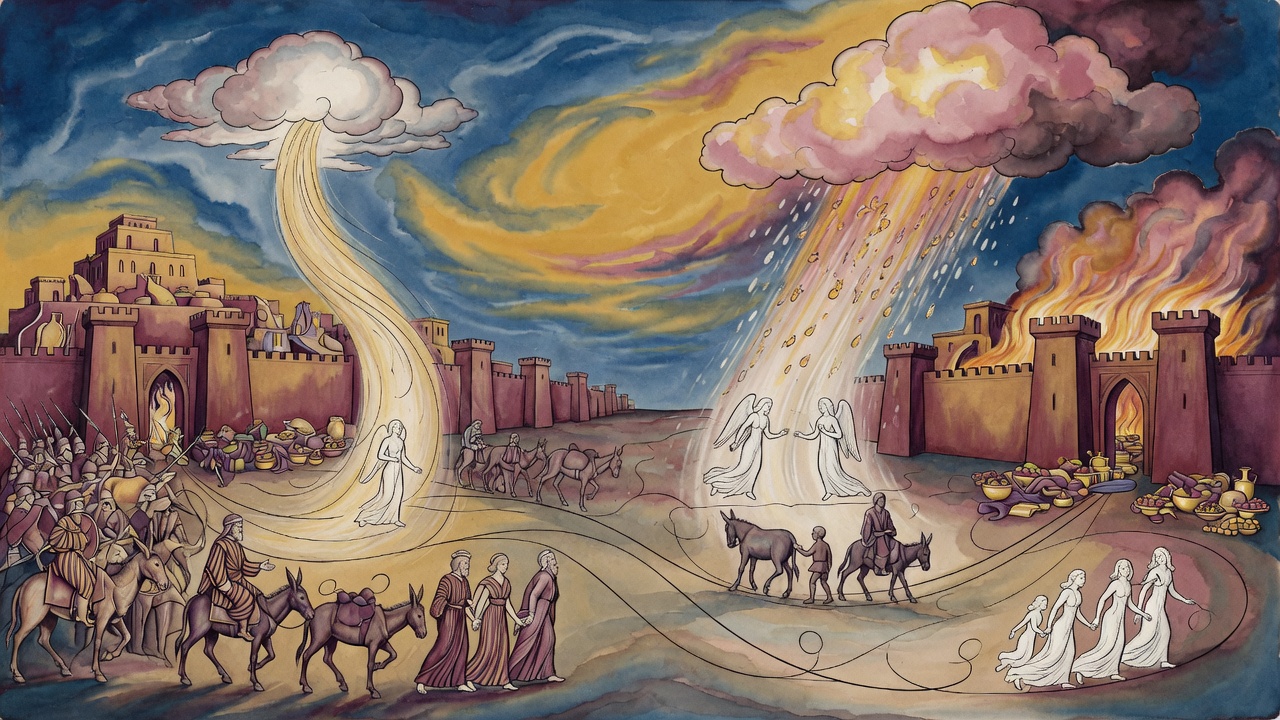
The tradition sends the angels toward Sodom with separate assignments. One goes to destroy the city. One goes to save Lot. The third, who had announced to Abraham that Sarah would bear a son, turns back to heaven because his work is done. The other two still have theirs to do.
This accounting of angelic assignments comes from the classical rabbinic tradition preserved in the Legends of the Jews. It frames Lot's rescue not as an afterthought to the city's destruction but as a parallel operation requiring equal divine attention. Destroying Sodom needed an angel. So did saving Lot. The two tasks are presented as morally equivalent in the demands they place on heaven.
A Man at the Gate of a Cruel City
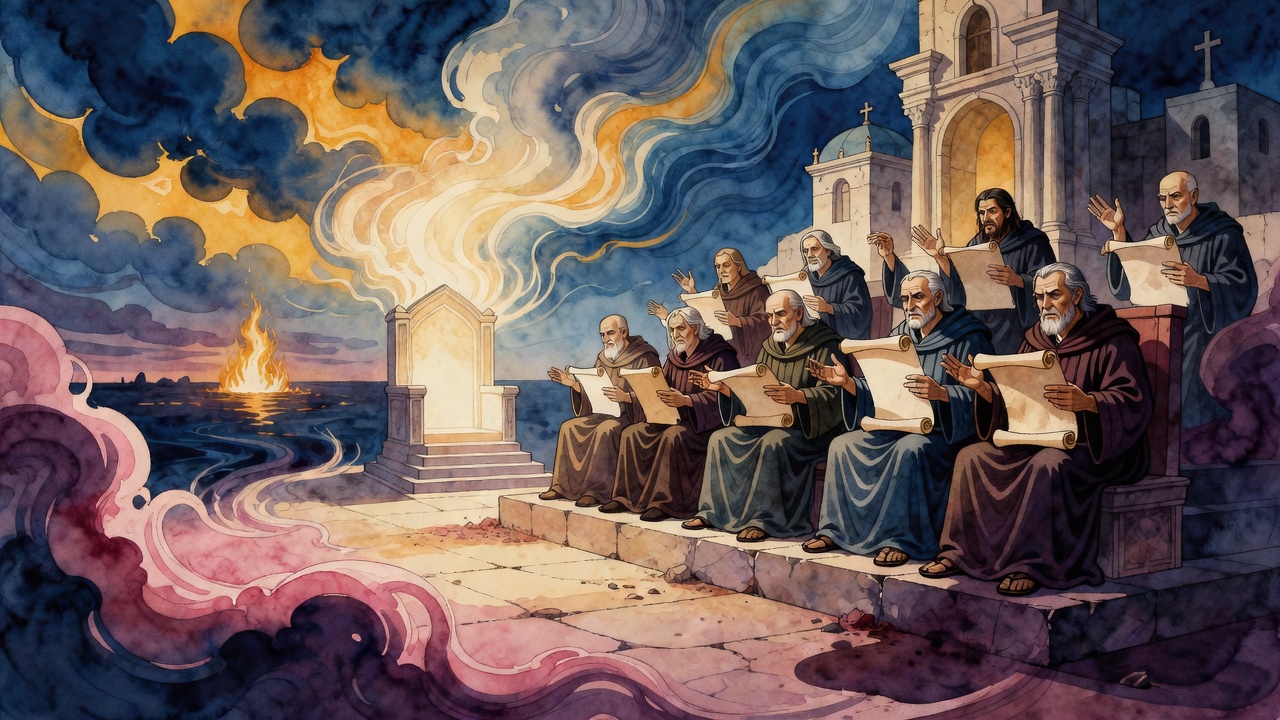
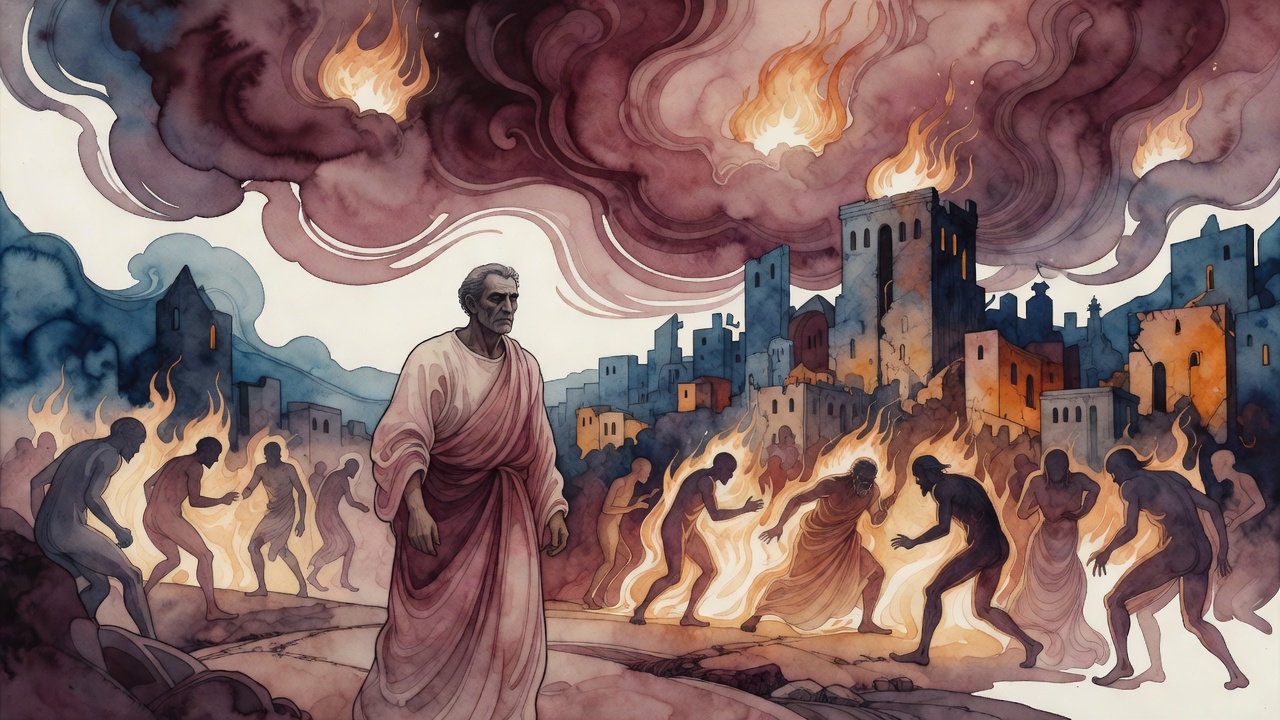
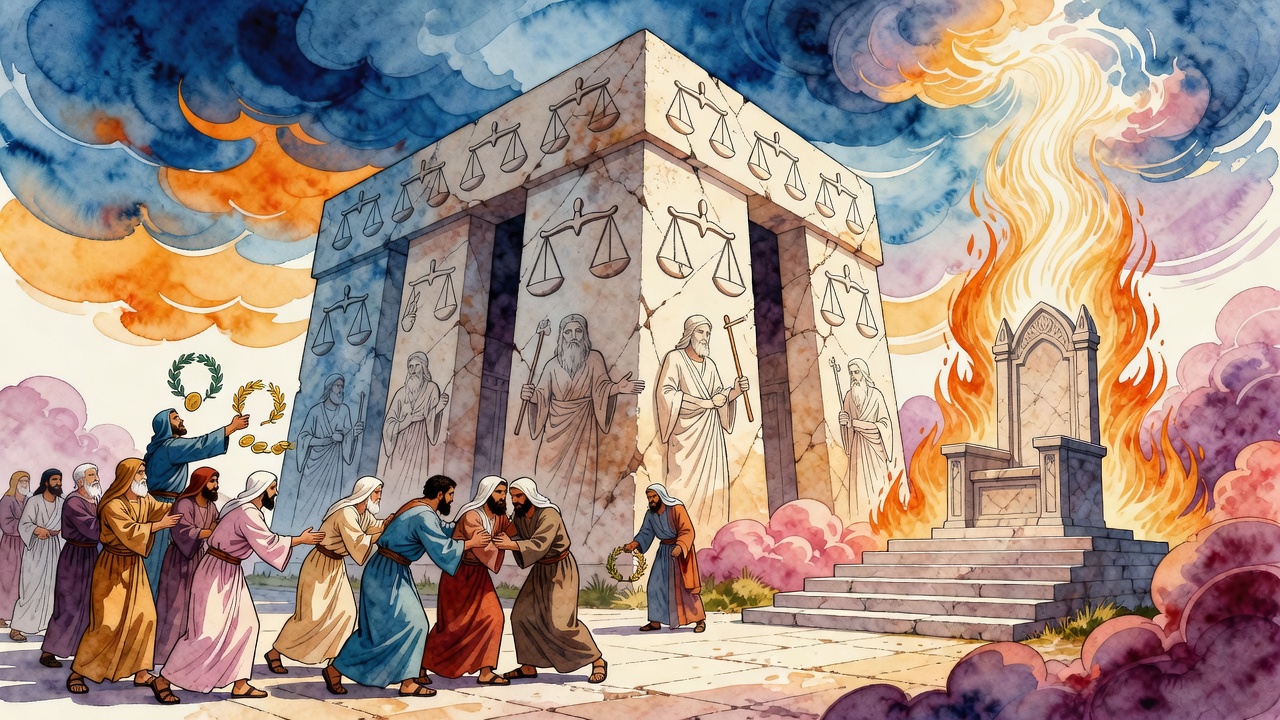
Lot had been living at the gate of Sodom when the angels arrived. Sitting at the city gate was the traditional position of a judge, an elder, a man of civic standing. He had built something there. The Ginzberg account presents Sodom as a city that had perfected the architecture of cruelty: beds that stretched or compressed strangers to death, laws that made mercy a capital crime, seasonal feasts in the valley where collective transgression was conducted as civic ceremony. Lot sat at the gate of all of this. He knew what went on inside. He stayed.
This is the second time Lot had been extracted from Sodom and its orbit. The first time, Abraham had ridden out at night after an army of eight hundred thousand to bring his nephew home. Lot had gone back to Sodom after that rescue. Now the angels were here for a second extraction, and this one would come with fire.
Why Lot Stayed in a City He Knew Was Condemned
The Book of Jubilees, written in the second century BCE, frames Lot's original choice to settle in Sodom as a departure not only from Abraham's household but from the God of Abraham. The lush, well-watered Jordan valley had drawn him away from a family of faith into a city of codified cruelty. Once inside, the logic of the place took over.
The Ginzberg tradition is not entirely harsh on Lot. He had retained something of what he had learned in Abraham's tent. When the angels arrived, only he stood up to greet them. He insisted they come to his house. He knew what the city square meant after dark for unprotected strangers. He led them through back alleys, by routes that avoided neighbors who might report a householder sheltering guests. The hospitality was real. The courage it required was real. But he had chosen to practice it secretly, in a city where it could get him killed, rather than somewhere he could have practiced it openly.
The Sons-in-Law Who Laughed
When the angels told Lot to flee with his household, he went to warn his sons-in-law. The men who had married his daughters heard him out and laughed. They thought he was joking. The midrashic sources read their laughter as a symptom: men fully absorbed into Sodom's culture could not imagine Sodom being destroyed, because for them Sodom was not a corrupt city but simply the world. The daughters who were betrothed but not yet married were saved. The ones already fully integrated into Sodom's households were not.
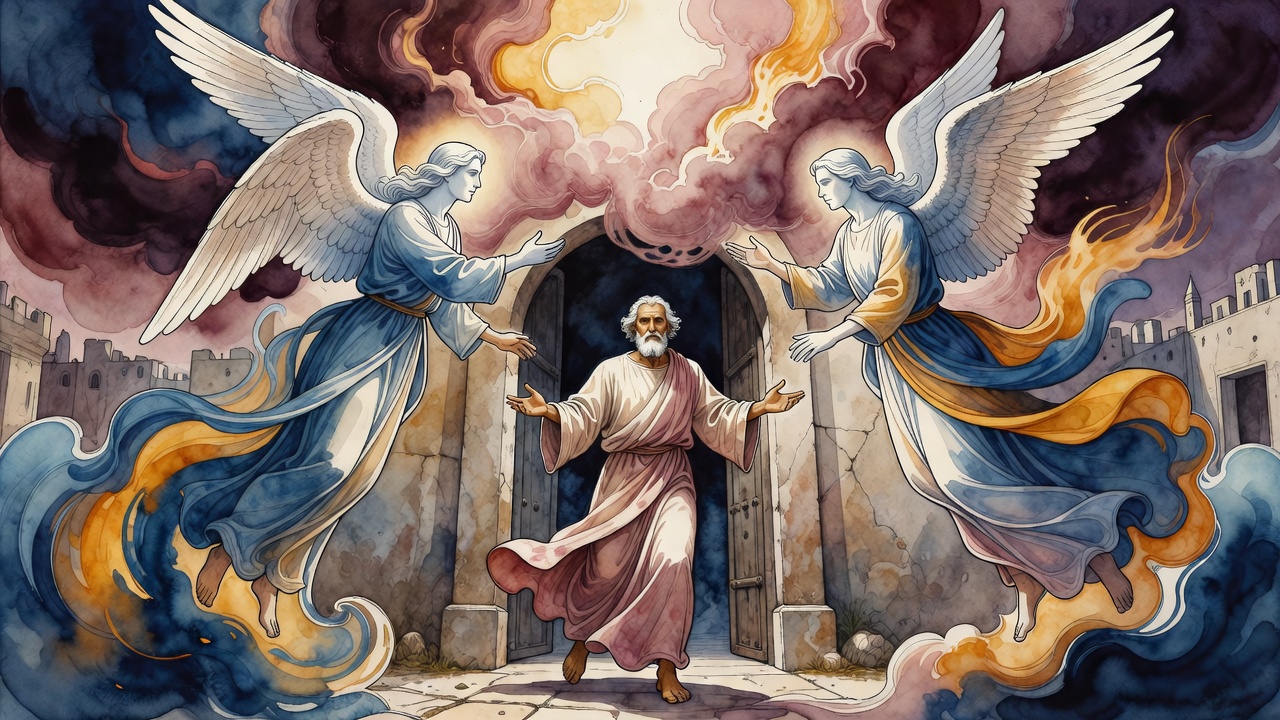
Lot himself lingered. The angels physically took him by the hand and led him out. He lingered again at the gate. He pleaded not to be sent to the hills, not back to Abraham, not toward righteousness, but toward a small nearby city called Zoar. Even fleeing destruction, he negotiated for proximity to the plain.
← All myths