Abraham Counted the Stars and Cracked the Alphabet
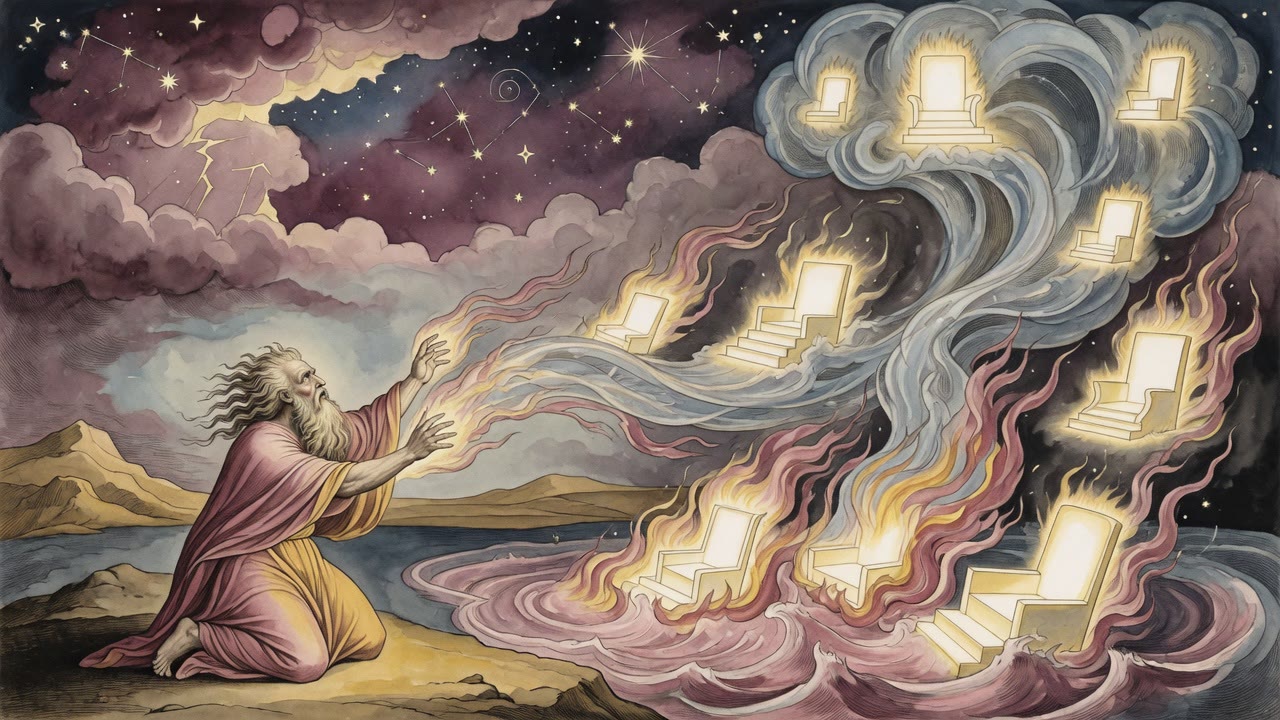
God took him outside on Passover night and told him to count the stars. Abraham looked up, then asked if heaven's troops had a limit.
Table of Contents
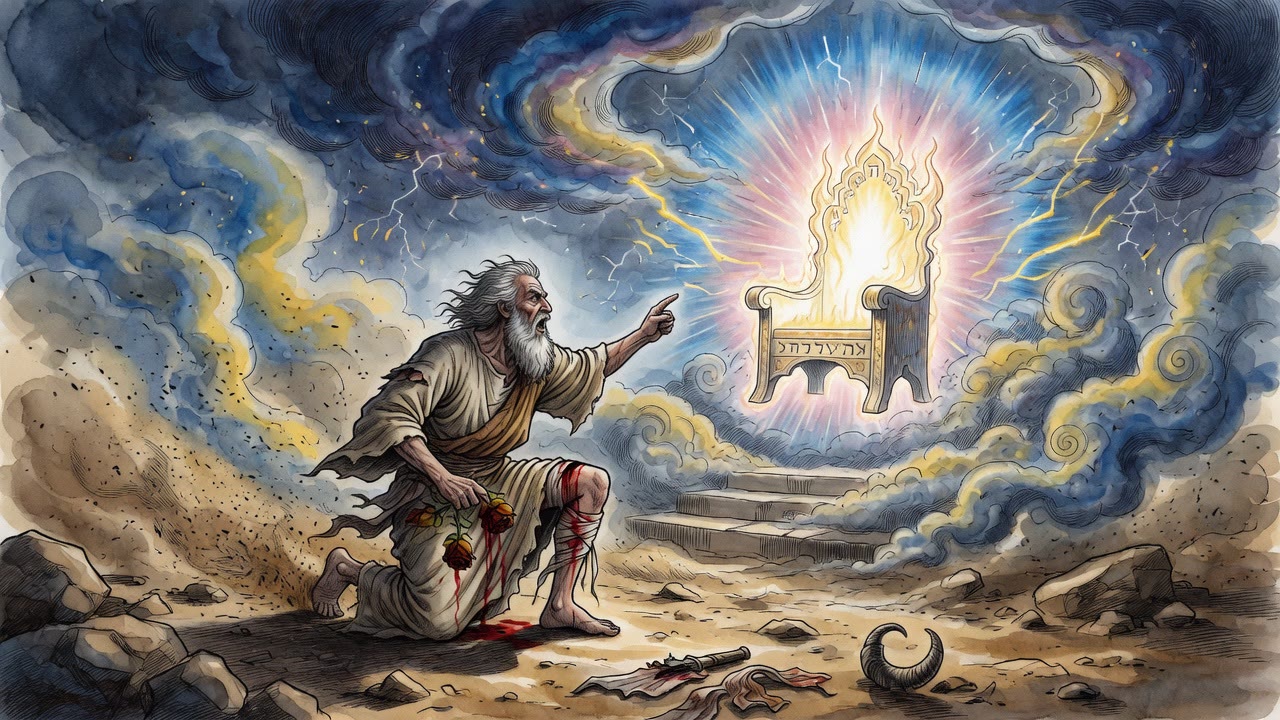
On the night of Passover, God took Abraham outside and told him to count the stars. There was no speech before it and no map, only the open dark and the order to number what no hand could hold.
 Click for full size
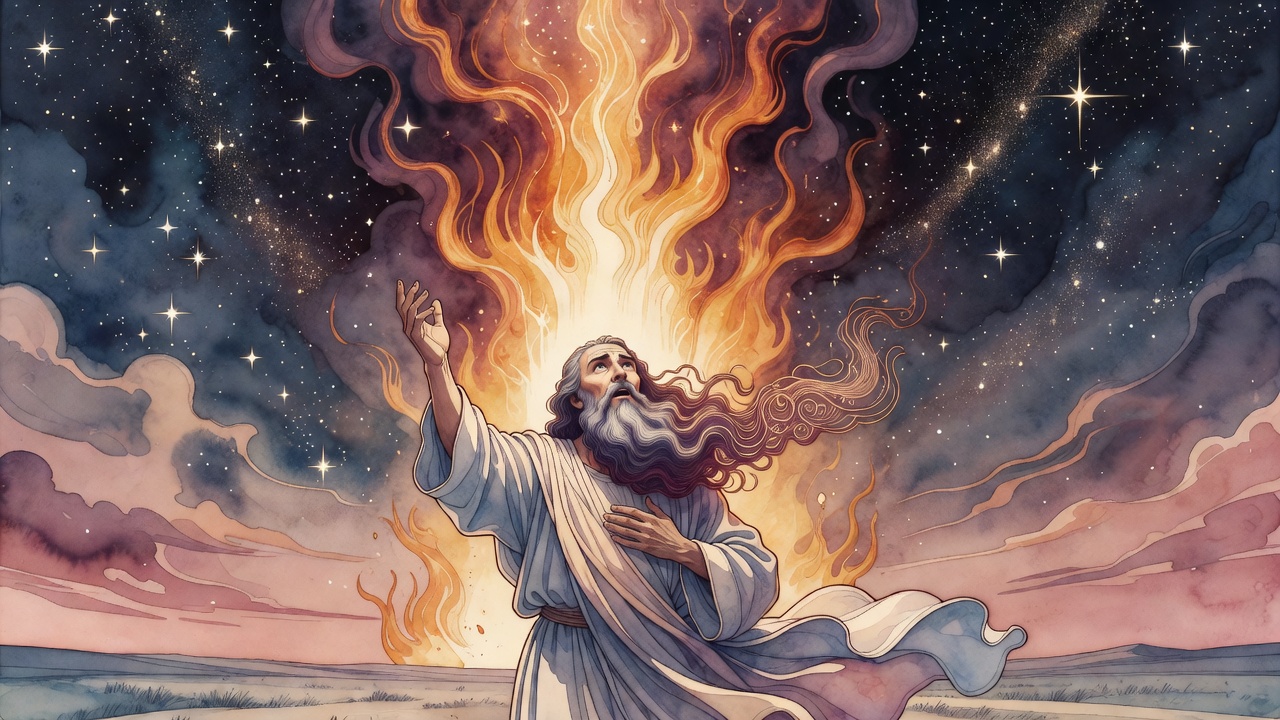
Abraham looked up. The sky was thick with them, more than fingers, more than any total a mouth could finish, so he did not start counting. He looked back at God.
"Sovereign of all worlds," he said, "is there a limit to Your troops?" (Genesis 15:5).
He Split the Animals and Waited
God told him to bring a heifer, a she-goat, a ram, a turtledove, and a young pigeon, so Abraham brought them. He split the beasts down the middle and laid the halves across from each other, but the birds he did not split.
Then he waited over the open carcasses while the sun moved toward evening. Birds of prey came down on the meat. He drove them off with his hands and stood there, because the covenant was not going to keep itself.
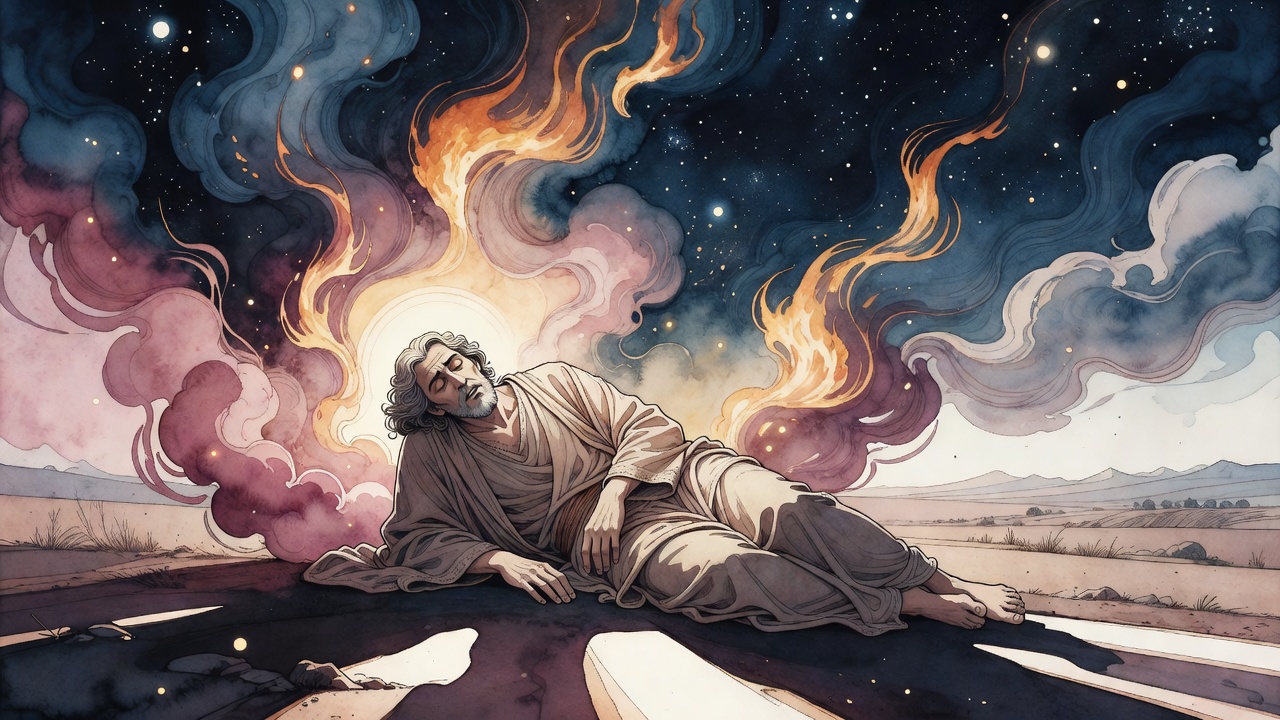
A dread fell on him as the sun went. In the dark a smoking furnace and a flaming torch passed between the pieces. That was when the vision entered him.
The heifer was Edom, the she-goat was Greece, and the ram was Persia, three powers that would grind over his children one after another, each taking what the last had not yet destroyed. Abraham stood inside the knowledge of all of it, the thrones and the exile roads, and he did not go down, though he held the weight until his legs shook.
The two birds were different, because the turtledove was Ishmael and the young pigeon was Israel, small, unsplit, hidden in the clefts of the rock. Under the vision a line from the Song of Songs moved: "O my dove, in the clefts of the rock, let me hear your voice, for your voice is sweet" (Song of Songs 2:14). Israel would be that bird, outnumbered and hidden, but called beautiful anyway.
God Had Not Spoken Since Noah
From the generation of the Flood until this night, God had not spoken directly to any human being. That silence had lasted generations of violence and forgetting. Whatever else the covenant night was, it was also a mouth opening after a long closed one.
"You love justice and hate wickedness," God said, "therefore God your God has anointed you above your fellows" (Psalm 45:8). Abraham loved justice, which meant he loved arguing for God's creatures even when they deserved the worst. He would stand before God and bargain down, not from fear, but from a refusal to let destruction go unanswered. He hated wickedness, which meant he hated having to condemn anyone.
That combination is why the silence broke for him and not for the men between Noah and this night. God told him so: from Noah until you I did not speak with any of them, but with you I have spoken first.
A Kiss Bound the Letters
When the covenant was confirmed, God gave Abraham something stranger than a headcount of descendants.
Abraham had already been working with the twenty-two letters. Not as a student copying a lesson. He had been designing, engraving, composing, taking the signs into his hands and turning them over to find what they held. The work of formation, yetzirah (יצירה), is making, not waiting.
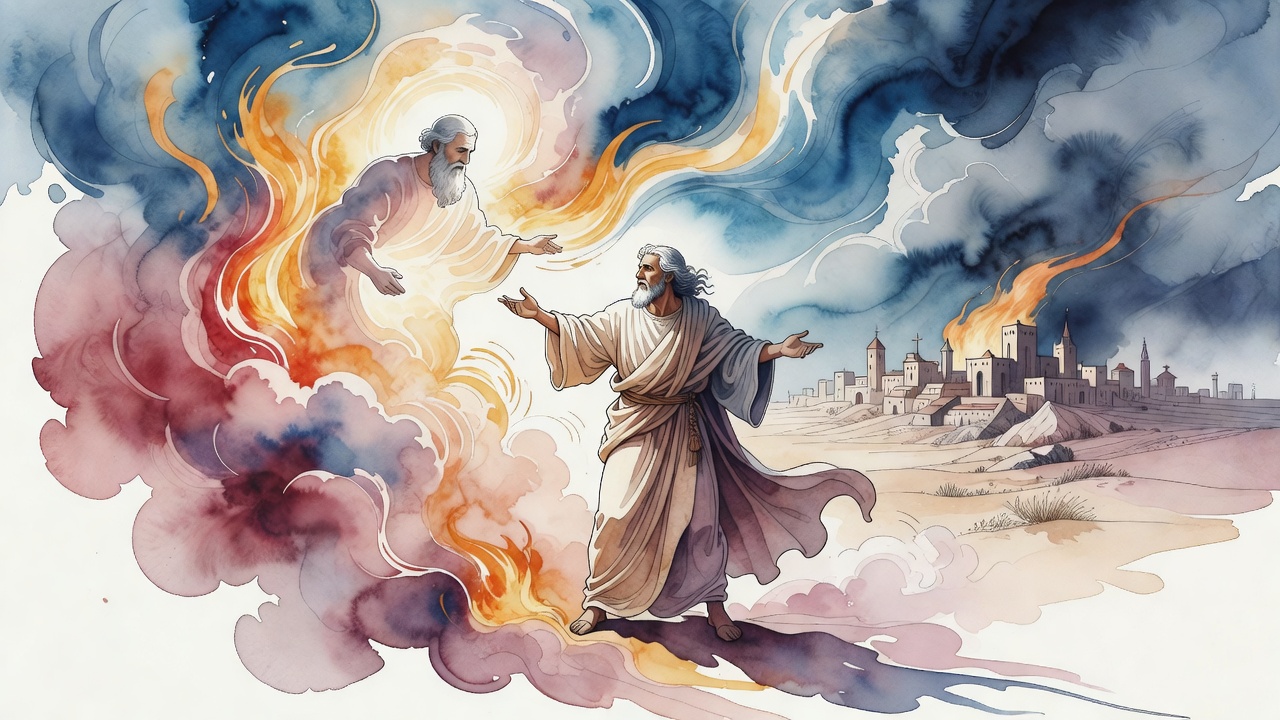
Then the Lord of all appeared to him, kissed his head, named him after His own name, and called him friend. He set a covenant between the toes of Abraham's feet, circumcision, and a covenant between the fingers of his hands, the tongue.
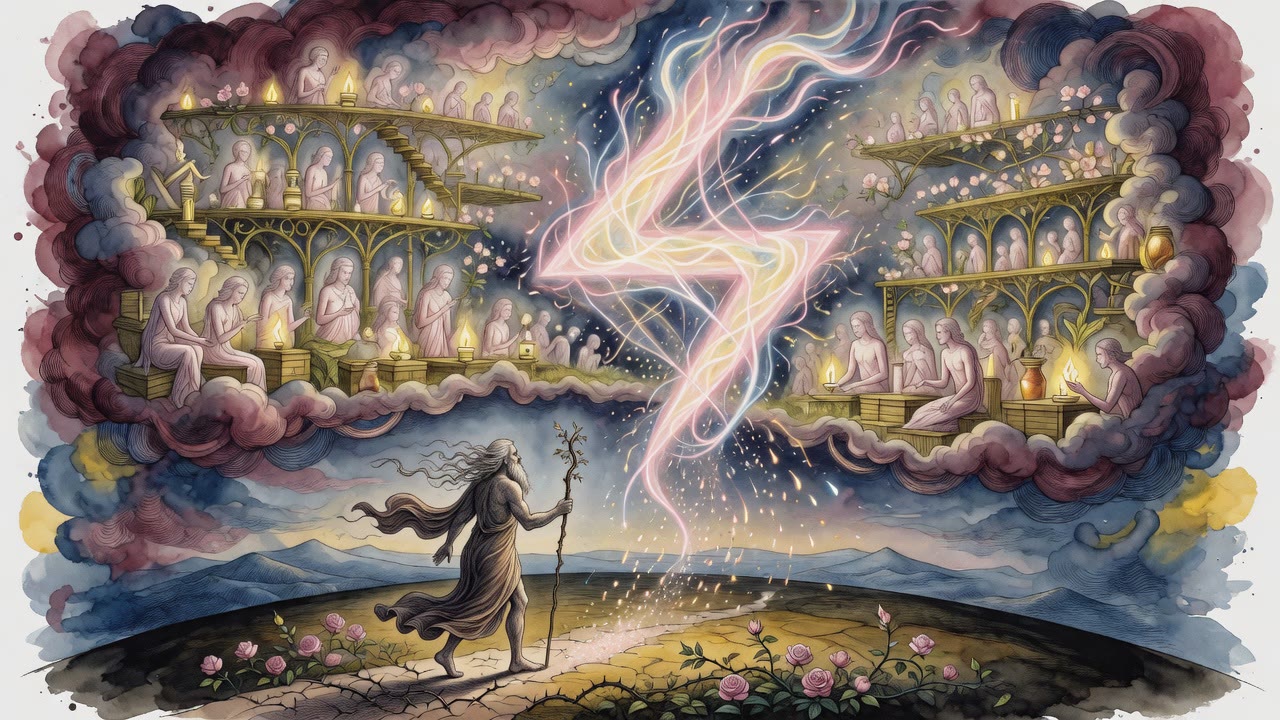
Then He bound the essences of the twenty-two letters of the alphabet on Abraham's tongue and showed him their secrets, because the letters were not decoration. Before there was a sky they had been the tools God used to build: stamped into storms of air, carried through water, borne through fire, set among the seven planets, and fixed along twelve constellations. Every structure Abraham had ever walked through was a rearrangement of those twenty-two signs.
This is what God offered in place of a simple count. Not a number, but a language, twenty-two letters cracked open in a living mouth. Abraham believed, and it was reckoned to him as righteousness (Genesis 15:6).
He Walked Back Still Unable to Count
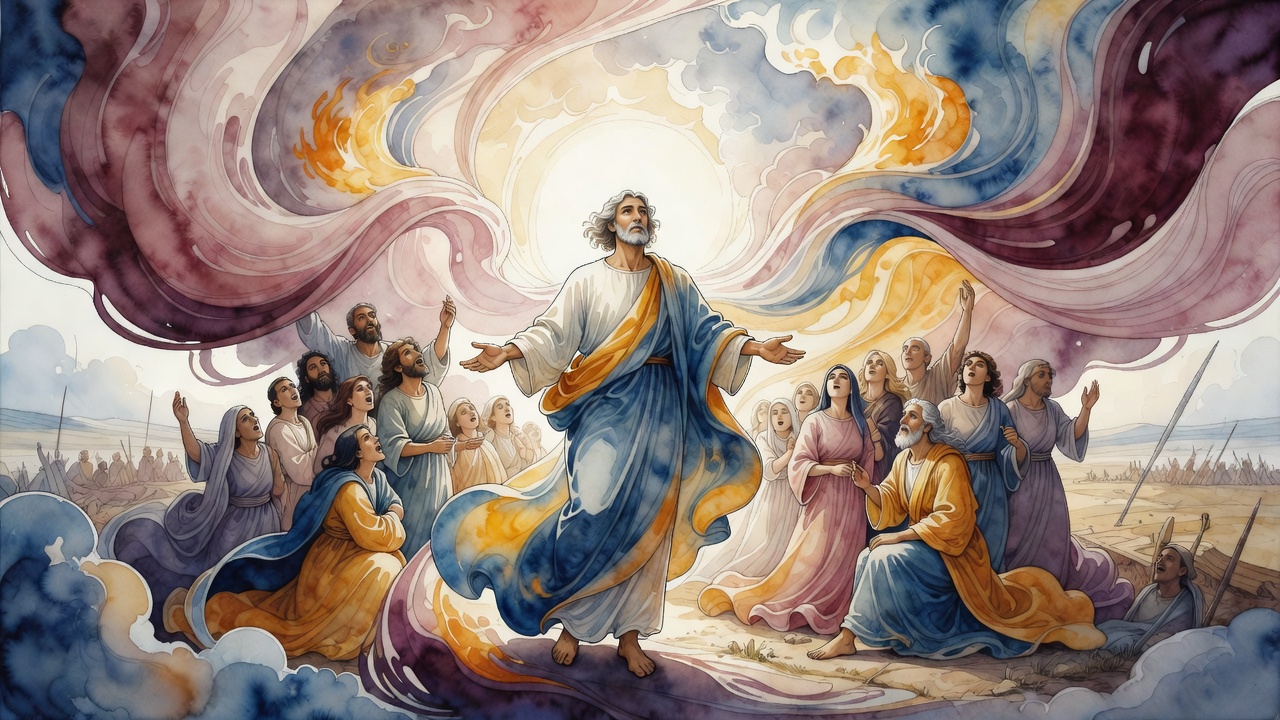
When Abraham walked back into his tent, he carried more than the promise that his seed would be as many as the stars. He had been shown the letters through which the heavens were formed. He had felt a mouth on his head. He had a tongue that now held what the world was made of.
Belief, for him, was not a guess in the dark. It was the recognition of a man who had seen how the world was built and found himself inside the building of it. He had counted the stars as God's troops. Now he knew the language the troops obeyed.
He still could not number them, but he knew their names. The furnace and the torch had passed, and the birds were gone. The halves of the heifer lay in the night behind him, and the sky over the tent was the same sky, only he could taste the letters of it.
← All myths