Abraham the Warrior and the Three Strangers at His Tent
He routed an army of eight hundred thousand, then begged three travelers to stop for bread. The same man did both, and that is the whole point.
Table of Contents
 Click for full size
The Quarrel Over Grass That Started a War
It began with herdsmen. Abraham's shepherds muzzled their flocks so they would not graze on land that was not theirs. Lot's shepherds did not bother, and when the two camps argued about it, the defense Lot's men offered was stunning in its cruelty. God had promised this land to Abraham's seed, they said, but Abraham was old and childless. Lot was the heir. The grass they were eating was already theirs.
Abraham heard that and made a decision without visible anger. He and Lot had to separate. Lot went east and chose the richest valley in sight, the well-watered Jordan plain, and settled near Sodom, the most corrupt city in the world. He did not merely leave his uncle. He walked toward everything his uncle stood against.
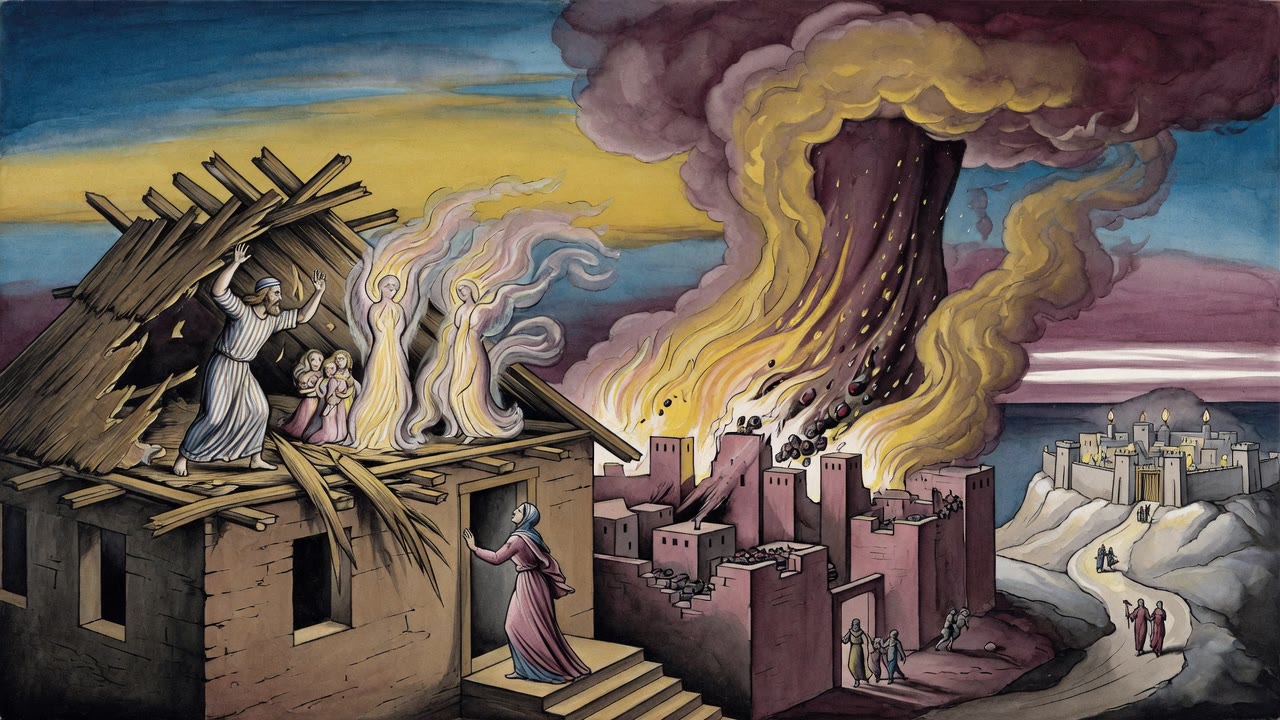
Then the kings came. Chedorlaomer of Elam had held the cities of the plain in tribute for twelve years. In the thirteenth year the cities rebelled. In the fourteenth, Chedorlaomer marched with three allies to collect what he was owed. They destroyed the Rephaim, the Zuzim, the Emim. They swept through Seir and Amalek and the Amorites. Five cities of the plain assembled against them in the Valley of Siddim and were defeated completely. Sodom fell. Lot was taken prisoner. Everything he owned was carried off with him.
The Man Who Strode Four Miles at a Step
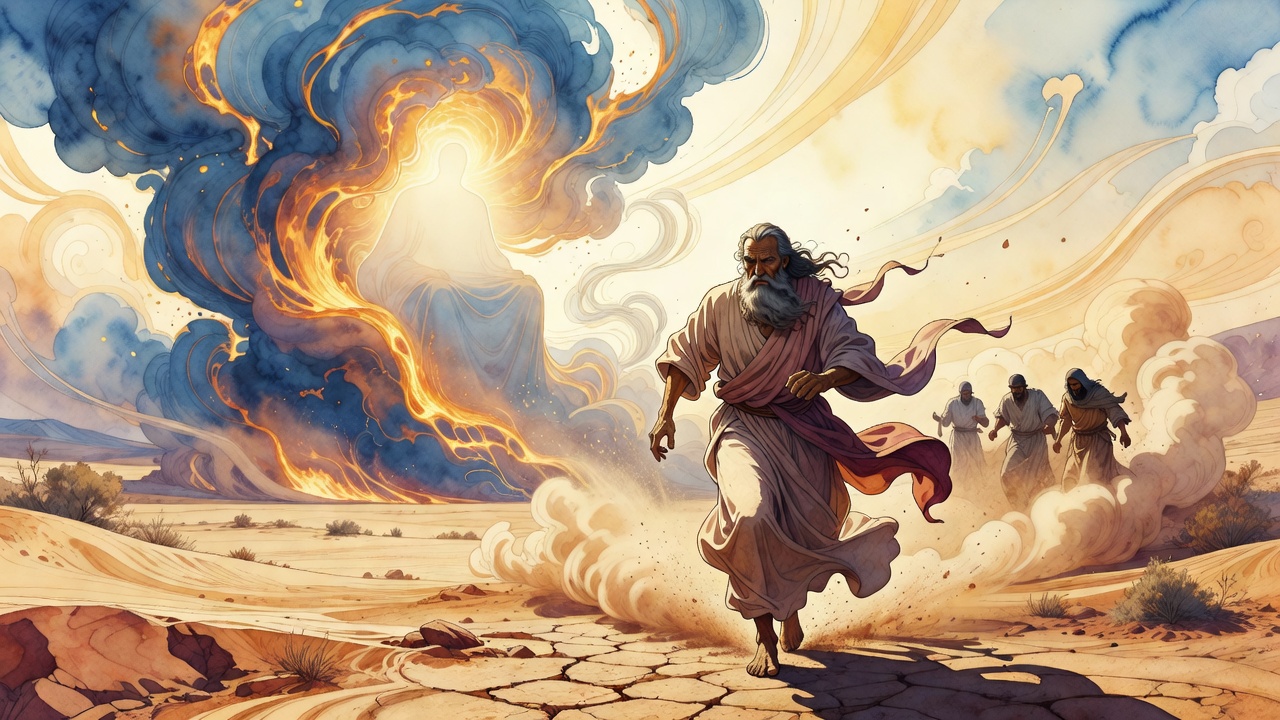
The legends remember Abraham as a man whose physical presence defied normal human scale. His height was that of seventy ordinary men. When he walked in pursuit of the kings, each step covered four miles of ground. The planet Jupiter burned ahead of him like a torch clearing the dark. He was not a quiet patriarch tottering after a retreating army. He was something closer to a force of nature wearing a man's face.
He took 318 men into battle. The rabbis examined that number and found a name in it: it was the numerical value of Eliezer, Abraham's chief servant, which meant Abraham marched with his one most faithful man and the moral weight of his entire household behind him. He pursued the kings to Dan, then to Hobah north of Damascus, and he struck them in the night and recovered Lot and all the captives and all the goods the kings had taken.
On the way home, the King of Sodom came out to meet him. He made an offer. "Keep the possessions," he said. "Just give me my people back." Abraham refused even that. He would take nothing. Not a thread, not a sandal strap. He had not fought this war for profit, and he would not let the King of Sodom say later that he was the one who made Abraham rich.
The Covenant Made in Darkness
Afterward, God spoke to Abraham in a vision and said: "Do not fear. I am your shield. Your reward is very great." And Abraham, the man who had just routed four kings, answered with a question about children. "What good is all of this," he asked, "when I am childless, and the heir of my house is a servant from Damascus?"
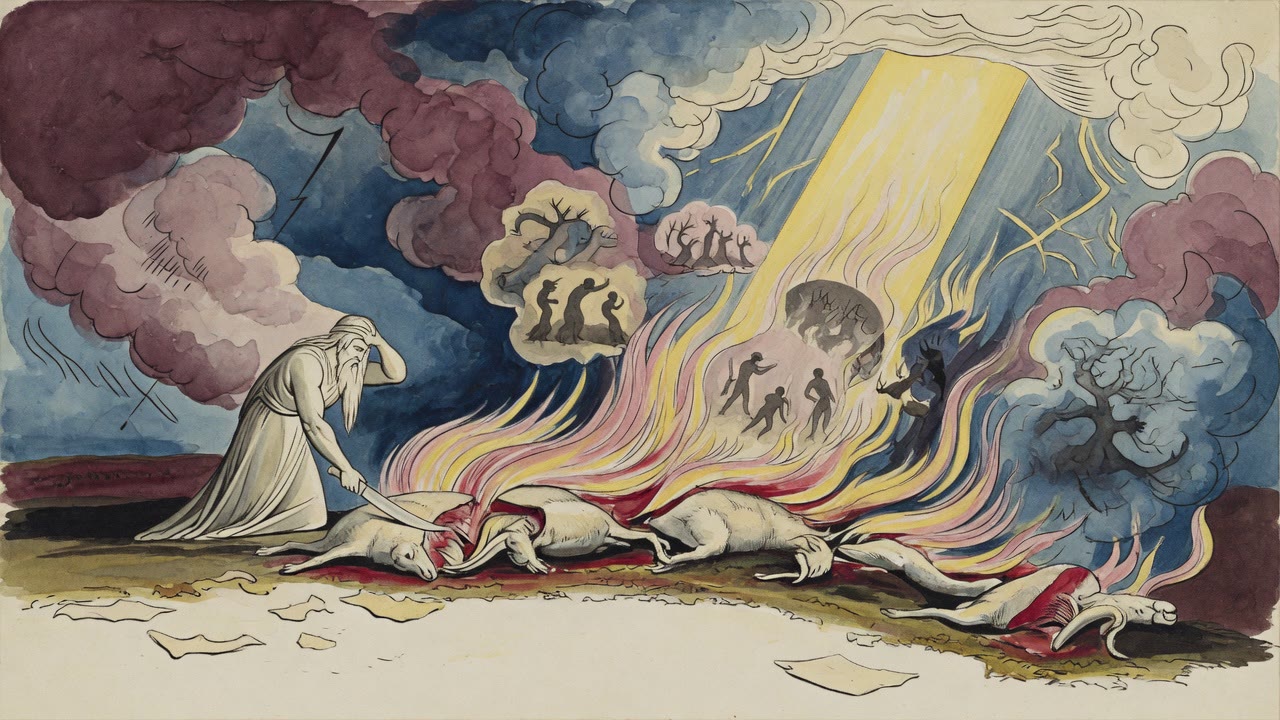
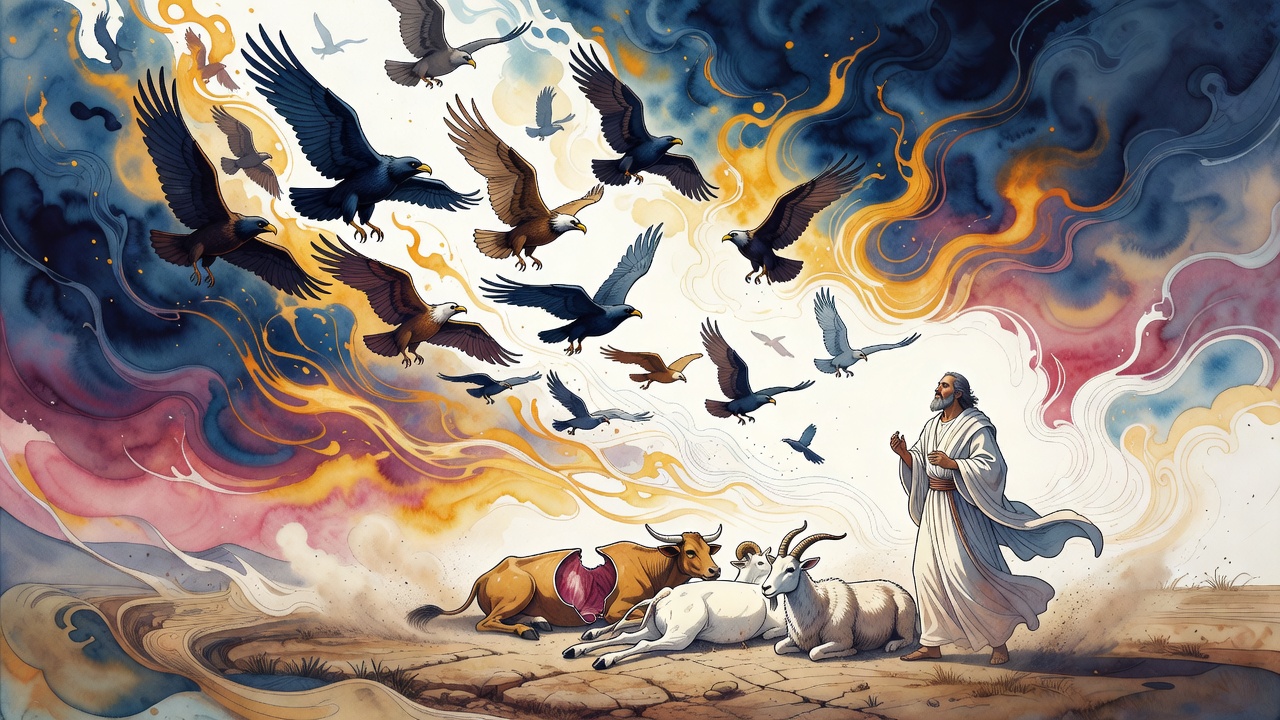
What followed was the covenant of the pieces, the night when God passed between the halves of the animals and swore an oath in smoke and fire. The sun set and a deep darkness fell, and in that darkness Abraham saw a smoking furnace and a torch of fire moving between the divided carcasses. God bound Himself, in that moment, to a promise about land and descendants. And Abraham slept through the binding, a deep sleep laid on him so that the covenant was made over his unconscious body, which is the most intimate possible way to say that what was being promised was not contingent on his performance.
Three Men in the Heat of the Day
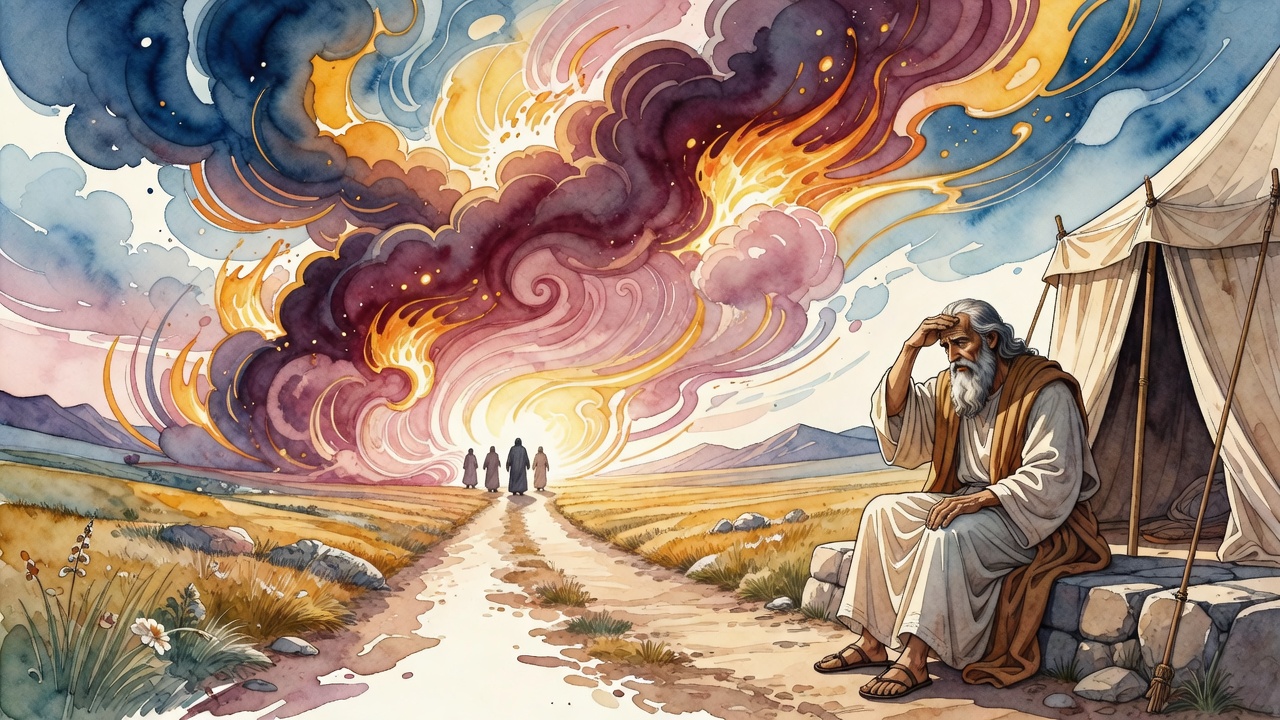
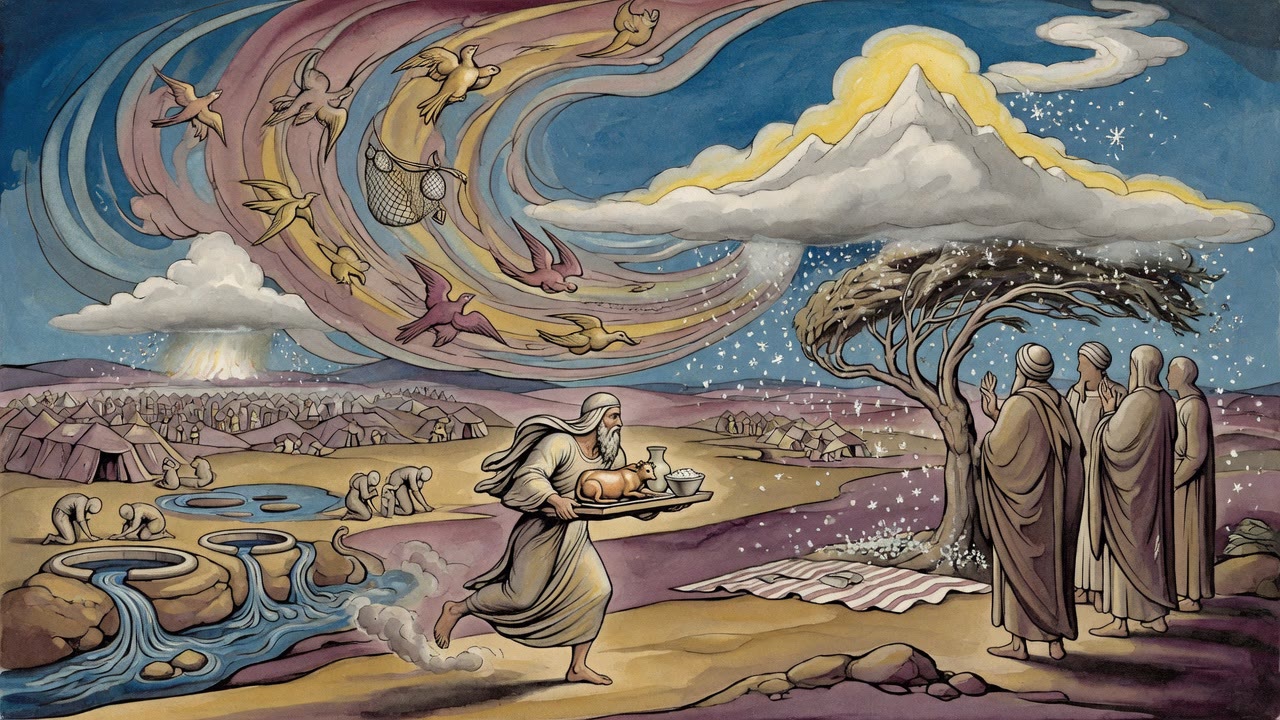
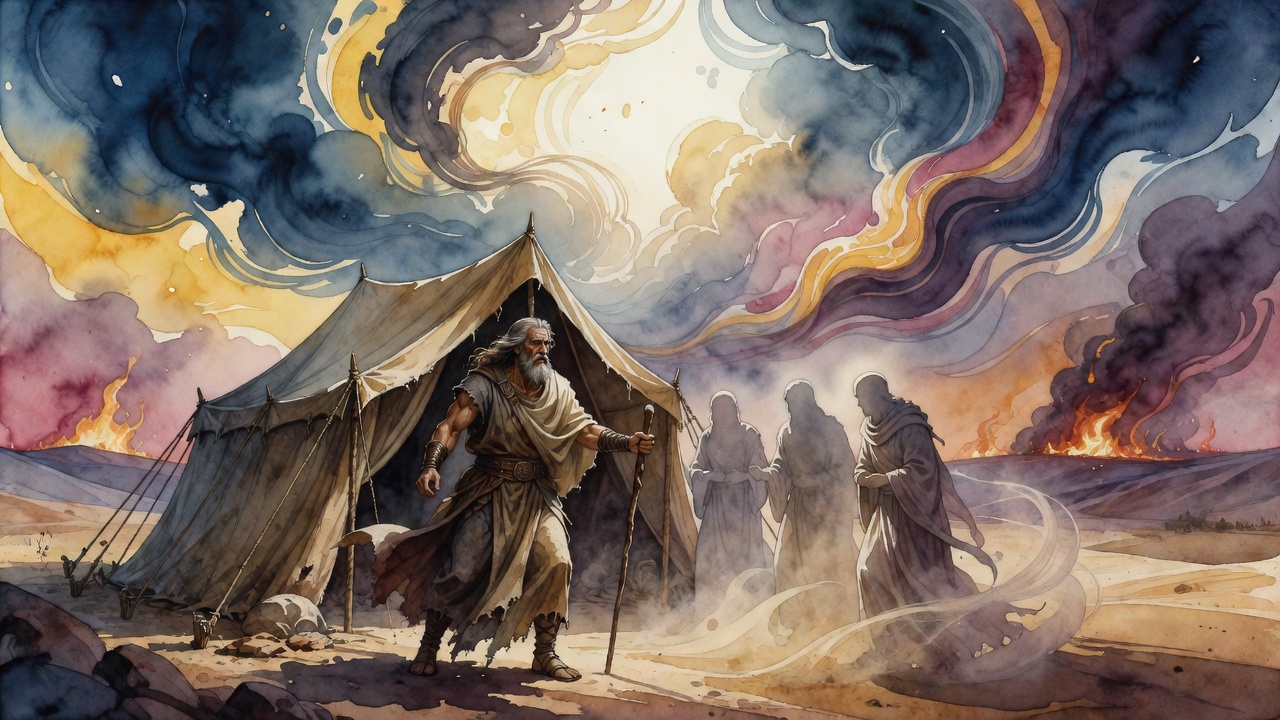
Three days after the covenant of the pieces, on the hottest day of the year, Abraham sat outside his tent, still recovering from his circumcision, and he looked up and saw three men standing at the edge of his camp. He ran to them. He bowed to the ground. He begged them to stay. His urgency was embarrassing for a man of his stature, almost frantic, as if the patriarch who had just defeated four kings was now afraid three strangers might walk past without stopping.
He gave them bread and curds and milk and a calf slaughtered and roasted while they waited. He stood under the tree while they ate, which is the posture of a servant, not a host. The angels, because that is what they were, ate everything. And one of them told Abraham what he had come to tell him. Sarah would bear a son. She laughed from inside the tent, and the man who could hear her laughing knew her name.
← All myths