The Birds That Descended on Abraham's Covenant Sacrifice
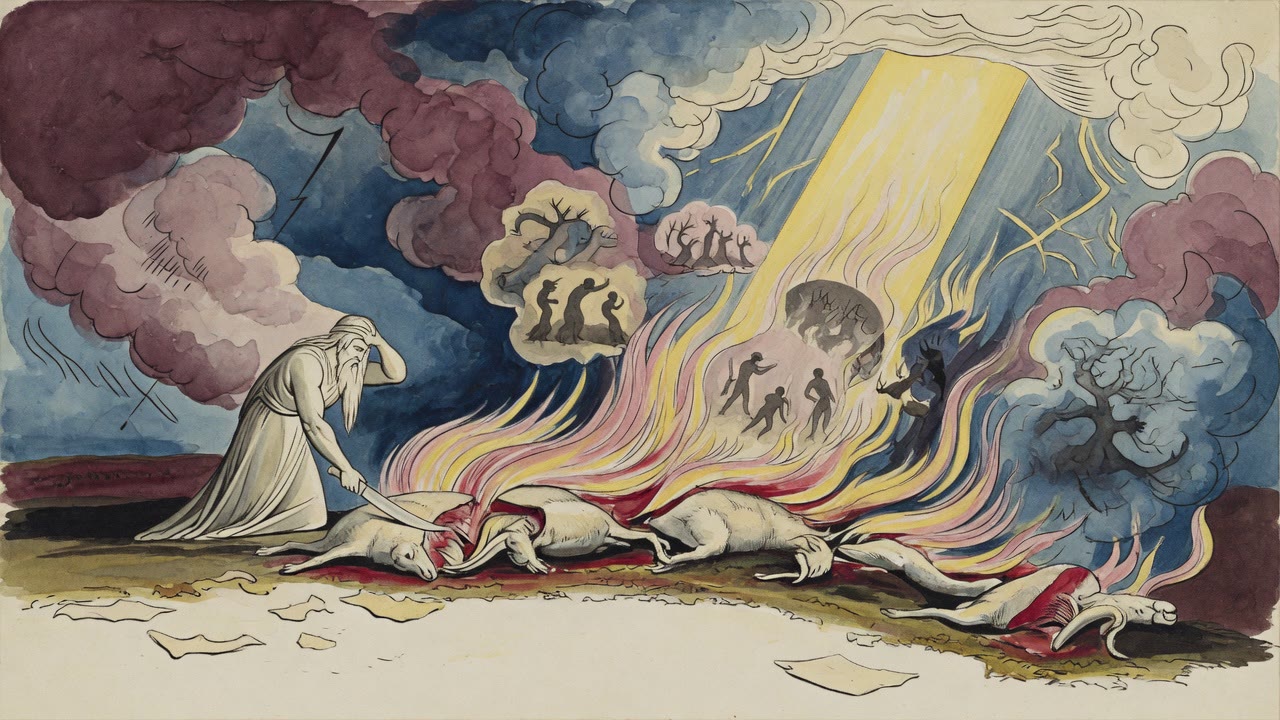
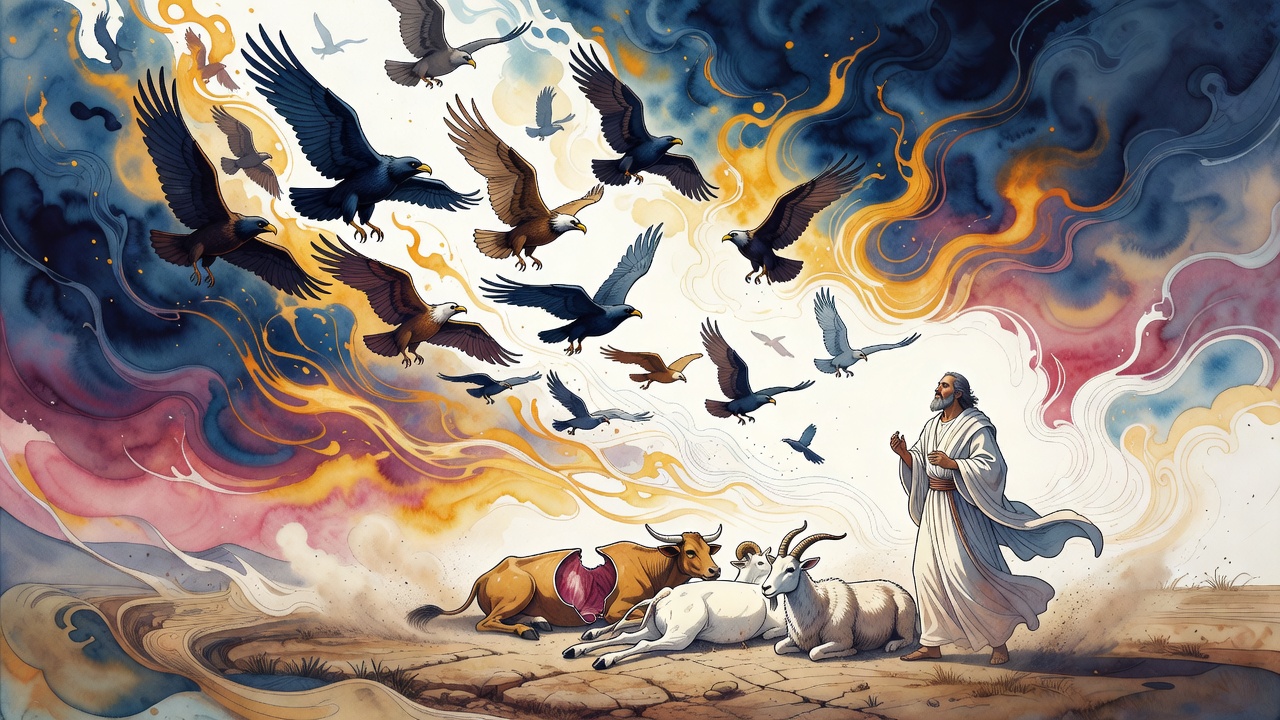
Abraham cut the heifer, the goat, and the ram and laid the halves facing each other. Then the birds came, and God had not yet passed.
Table of Contents
 Click for full size
The Halves on the Ground
Abraham laid the heifer's halves opposite each other and waited. A goat beside it, split the same way. A ram. The turtledove and the young pigeon he did not cut. He arranged everything, then stood in the open with the meat exposed, waiting for God to pass between the pieces the way a king accepts terms.
He had been at the altar all day. He offered first-fruits of the produce, not leftovers. The heifer, the goat, and the sheep went up as burnt offerings, each one an olah (עולה), consumed entirely. Wood stacked. Incense prepared. The air smelled of fat and frankincense and blood drying on dust.
This was the brit bein ha-betarim (ברית בין הבתרים), the covenant between the pieces. The promise that would name his descendants was lying on the ground in halves, waiting for the other party to arrive. Abraham had opened the animals. He had opened himself. He could not close the meat and still have a covenant. So he waited, unguarded, under the sky.
The Stick Did Not Work
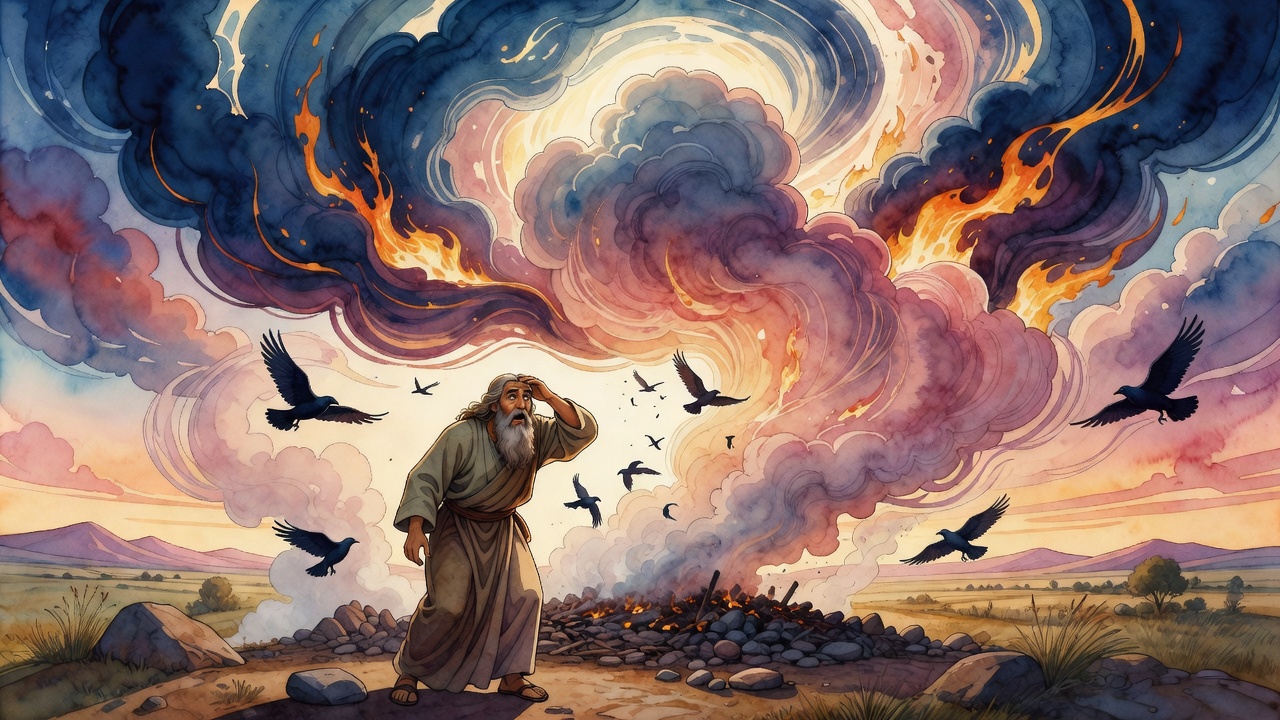
Then the birds came down on the carcasses (Genesis 15:11). Scavengers. Beaks. Wings beating over meat that was not theirs. Abraham took a stick and struck them. They would not yield. He struck again. The birds came back as if the blows were weather.
They came at the worst time, which was the only time they ever come: when the offering is lying open and the man who cut it has gone as far as he can go alone. Abraham was not guarded. He was waiting in trust. That is when a bird hunts.
He drove them anyway. Not by the stick. The stick had already failed. He drove them by standing his ground over the pieces, by not leaving, by not letting the halves be stolen while he still owed God a waiting. His righteousness sat over the meat like a shield. The birds were not only birds. They came down like unclean nations, idolatrous peoples with beaks, ready to steal a sacrifice that was not yet sealed. Abraham stayed. The pieces stayed his.
Terror After the Sun
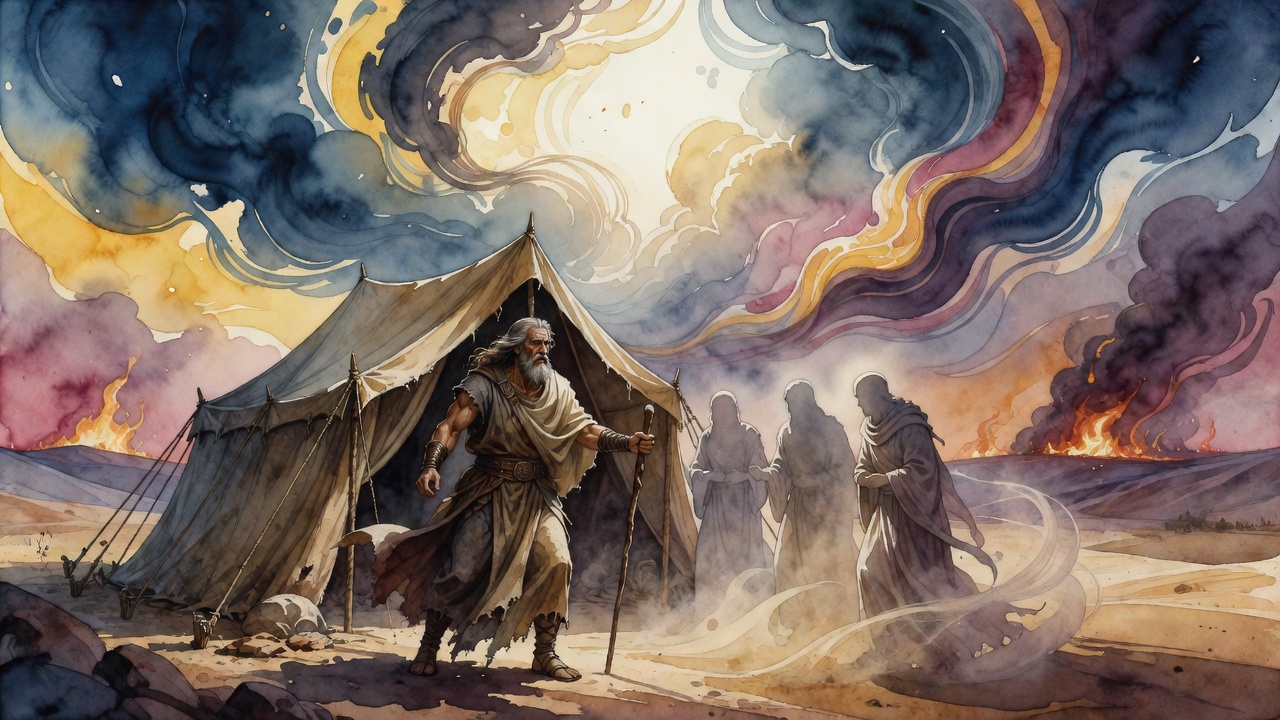
The sun began to go. A deep terror fell on him, and a great darkness (Genesis 15:12). He had killed in the war that came before this day. He had killed these animals. Blood was on his hands in more than one sense, and the anguish of it had been riding him. Now the sky went black over meat he had defended with a stick that did not work, and God spoke.
God came, in part, to ease that conscience. Innocent blood had been troubling Abraham. God did not pretend the blood had not been spilled. He stood in the darkness with the man who had spilled it and went on with the covenant anyway.
Then God did something given to very few: He told Abraham to ask for anything. Abraham did not ask for himself. He asked for the children who were not yet born. If they sinned, let them have a way back that was not destruction. Let there be offerings. Let the halves on this ground become a charter, so that a later altar could do what these pieces were doing now.
He Asked for His Children
God agreed. He bade Abraham bring the heifers, the goats, the rams, the dove, the pigeon, and in those animals He indicated the sacrifices that would one day be brought in the Temple, to atone for Israel and keep it. Abraham looked past the Temple in his mind, because he had already learned that buildings fall.
"What will become of my descendants after the Temple is destroyed?" he asked.
God said, "If they read the order of sacrifices as they will be set down in the Scriptures, I will account it unto them as though they had offered the sacrifices, and I will forgive all their sins."
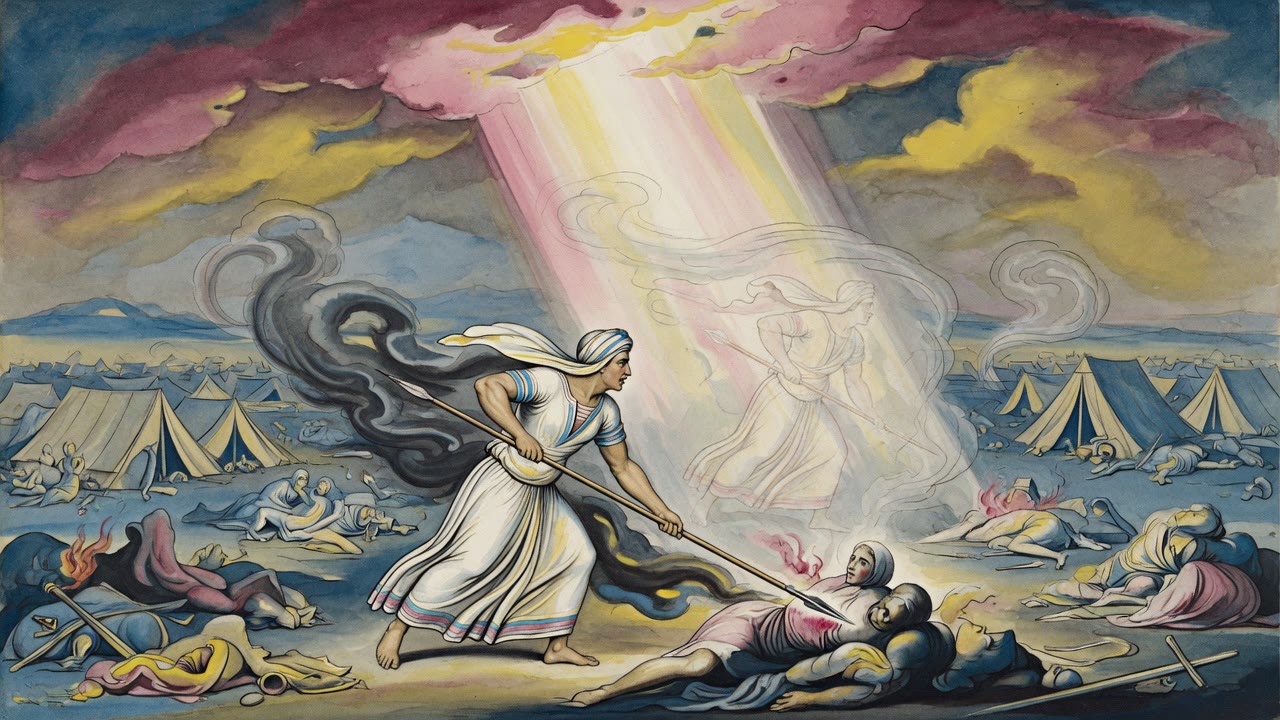
A smoking furnace and a burning lamp passed between the pieces (Genesis 15:17). The birds were gone. The terror was not. Abraham stood in the dark with a covenant that would govern children he did not yet have, and with a promise that even after the altar was gone, the reading of the altar would still count. The interruption of the birds had been small. What followed them was permanent.
← All myths