The Matzah Baked in Haste Fed Millions for Thirty Days
The manna did not fall the first day. Israel walked the wilderness for a full month on the bread they baked against their backs the night they fled.
Table of Contents
 Click for full size
Thirty Days Before the Bread Fell
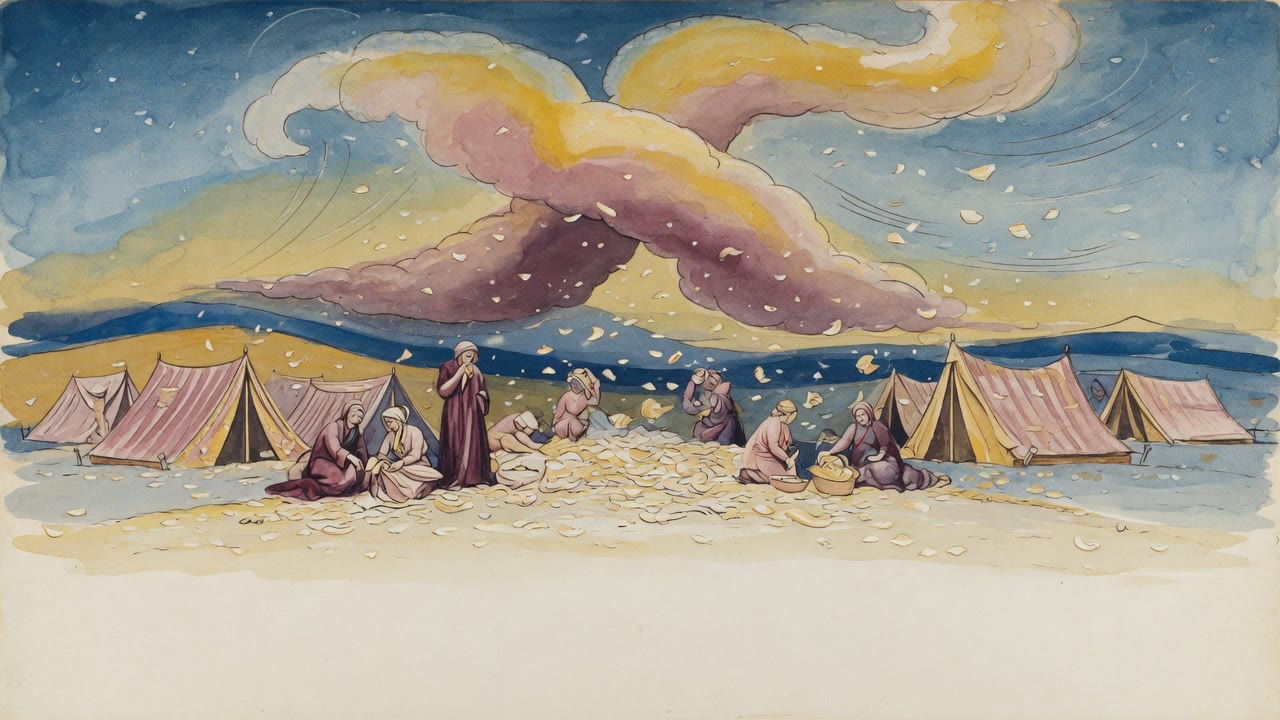
The manna arrived on the sixteenth day of Iyar, thirty days after the Exodus. Until that morning, there was no miraculous bread from heaven, no daily portion measured exactly to each family's need, no sweet taste that changed with the eater's desire. The people were in the wilderness, and they had only what they had carried out of Egypt.
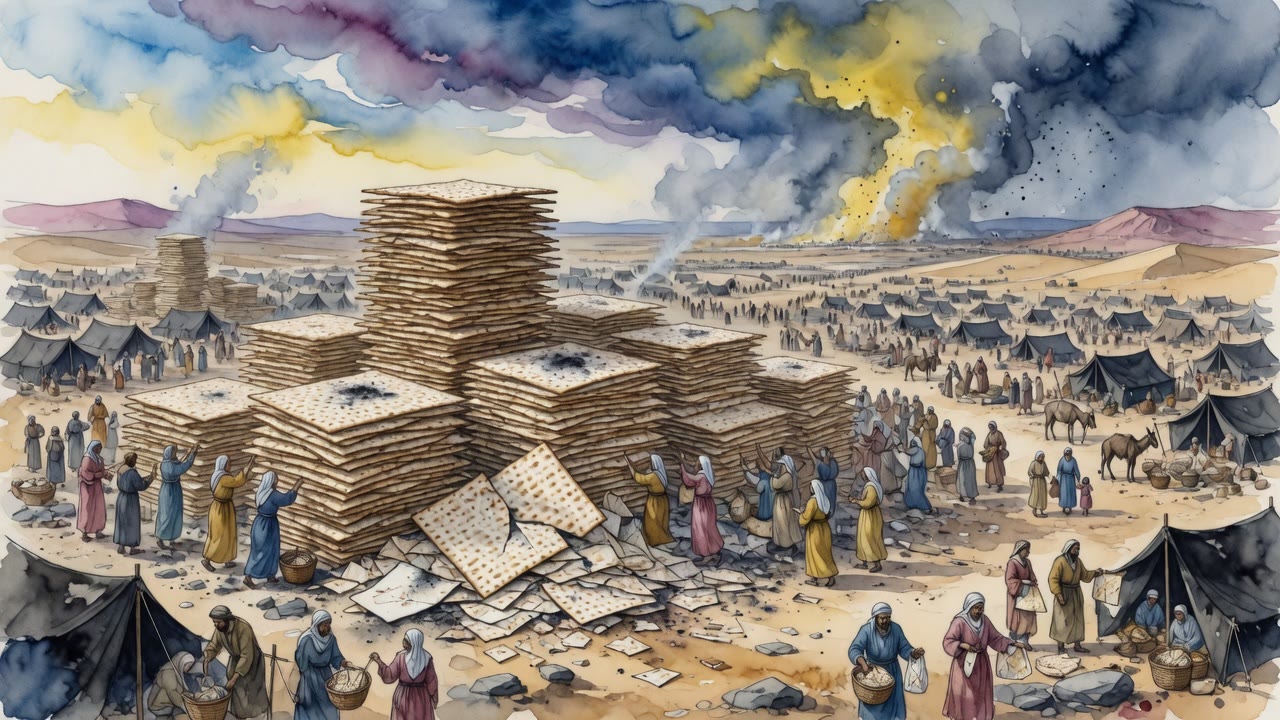
What they had carried was not much. When Pharaoh finally released them, there had been no time to prepare proper provisions. The Torah says they baked the dough they had brought with them because it had not risen, and they made flat cakes of unleavened bread (Exodus 12:39). They baked this food on their backs as they walked, under the desert sun, pressed against their bodies. The cakes came out thin and hard and simple.
What the Word Ugoth Means
The Mekhilta looked at the phrase ugoth matzoth in Exodus 12:39 and pressed on the word ugoth. Wafers. Thin flat cakes. The same word appears when Ezekiel was commanded to bake barley wafers (Ezekiel 4:12), and when the widow of Zarephath made a small uggah for Elijah (1 Kings 17:13). In all three cases: simple, flat, dense bread with no leavening and no excess.
Then the Mekhilta said something that changed the scale of what had happened. Those thin wafers, carried out of Egypt by a nation that had no time to plan, sustained the entire people for thirty days. Two million people, or however many the Exodus involved, fed for a full month on the bread they had baked against their skin in the hours before dawn on the night of the plagues.
The Miracle Nobody Names
The manna is famous. Everyone knows the manna. It came each morning for forty years and tasted like honey wafers and coriander seed and whatever you wished. The manna has been written about and wondered over in every generation.
But before the manna, there was the matzah. And the miracle of the matzah is quieter and stranger than the manna's miracle. The manna at least replenished itself daily. The matzah was a finite supply carried out in the confusion of a single night, multiplied by no visible mechanism, tracked by no daily accounting, simply lasting through thirty days of desert travel for a whole nation. The Mekhilta called this a great miracle performed through these humble wafers. It is the miracle that has no feast day, no poem, no special prayer. It happened in the gap between Egypt and the first morning manna fell.
The Thread Back to Abraham
Why did the manna come when it came? A midrashic tradition offered an answer that stretched the timeline back to the Akeidah. When God called to Abraham to sacrifice Isaac and Abraham said hineni, "here I am," that single syllable of absolute readiness earned a promise for all of Abraham's descendants. The manna was part of that promise. God was not simply responding to a hungry people's complaint in the wilderness. He was honoring a debt from the mountain where a father and son had stood together, the father willing to give everything.
The complaint came first. The people were hungry and said so. But the manna that came in response came because of something much older than the hunger, something from the mountain at Moriah, from a moment of trust so complete that it had been accumulating interest for generations. The matzah they carried was ordinary bread that lasted miraculously. The manna that followed was miraculous bread that worked ordinarily, day by day, like any other provision, except that it fell from the sky.
← All myths