Three Words in the Passover Law Pointed Back to the Promised Land
Three words hide inside the rules for the Paschal lamb. They point past the blood on the doorpost toward a land promised before a single plague fell.
Table of Contents
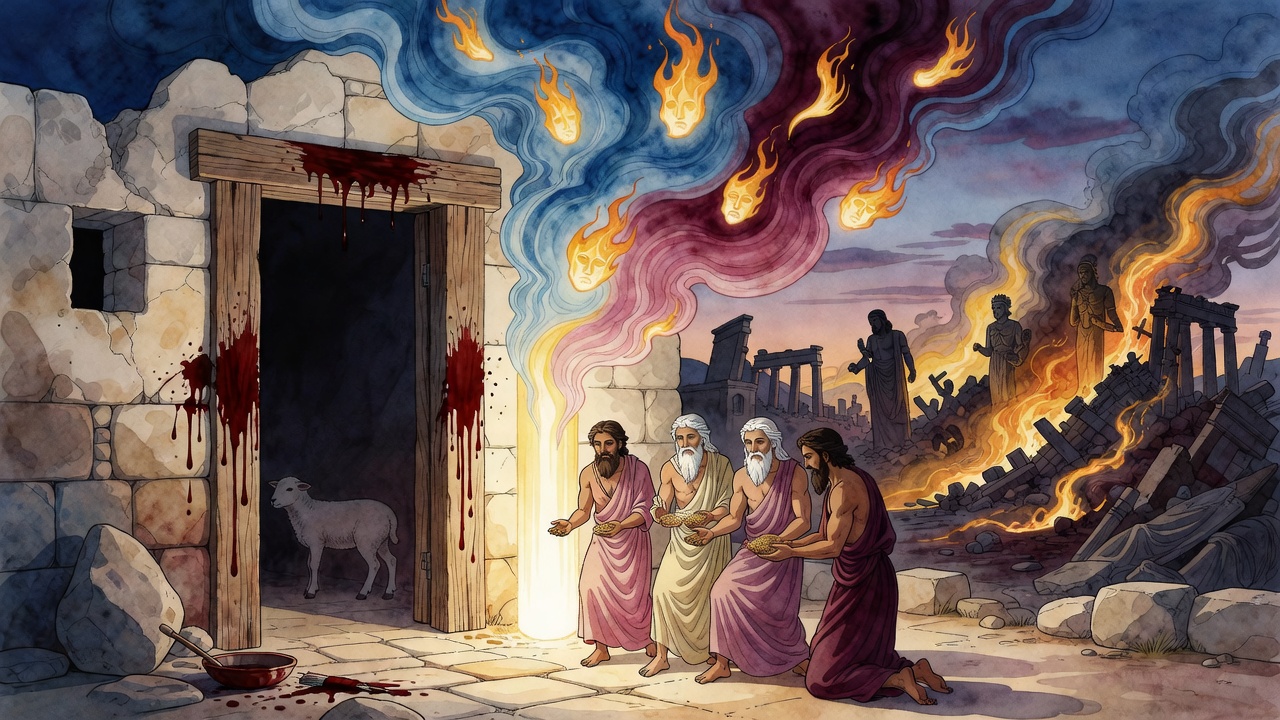
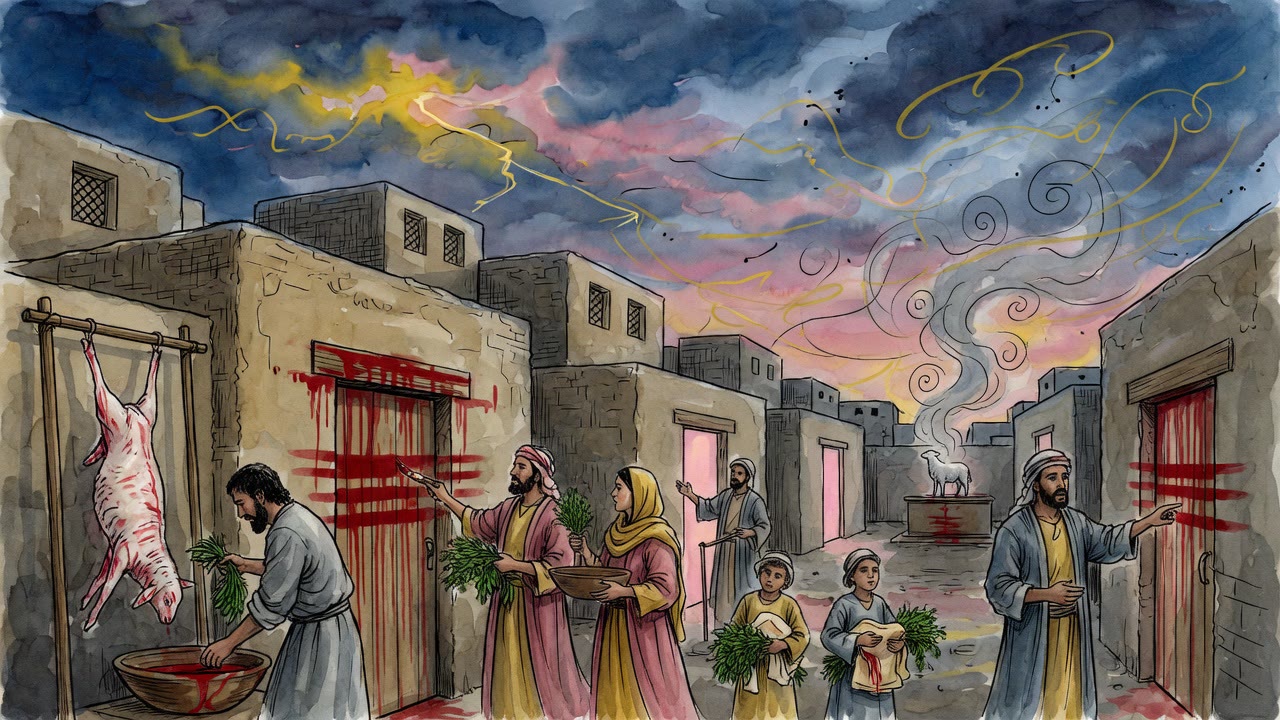
The lamb is already chosen, penned by the door, and the man's hands are shaking. He has heard the instructions twice and still he repeats them under his breath so he will not forget on the night that everything turns. Roast it whole. Eat it standing. Sandals on the feet, staff in the hand, belt cinched, nothing left over until morning. Smear the blood on the two posts and the lintel so the house is marked. He knows the shape of the night that is coming. He does not yet know what is folded inside the words.
 Click for full size
The Three Words He Almost Skips
In the middle of the orders comes a sentence that does not sound like an order at all. Moses says it plainly, and a man could let it slide past like every other clause about hyssop and haste. "And it shall be, when you come to the land that the Lord will give you, as He has spoken, that you shall keep this service" (Exodus 12:25).
When you come to the land. The man is still in Egypt. The bricks are still wet in the yards. No one has gone anywhere. And already the words assume a place on the far side of the night, a place with fields and borders, a place worth keeping a service for once the lamb in Egypt is only a memory. As He has spoken. Three words that act like a finger pointing backward. They claim a promise already made, a thing said before, a clause being cited the way a man cites a debt that is owed.
The Promise Buried Before the First Plague
The promise was not new. It had been spoken before the river turned to blood, before the frogs, before the first Egyptian woke to a dead child. It came in the great fourfold speech, when God told Moses what to carry to a people too crushed to listen. I will bring you out. I will deliver you. I will redeem you. I will take you to be a people. And then the fourth thing, the far thing: "And I shall bring you to the land which I raised My hand to give to Abraham, to Isaac, and to Jacob, and I shall give it to you for a heritage" (Exodus 6:8).
So the land was never a prize handed out after the escape, a bonus for surviving. It was set into the design before a single plague struck, named in the same breath as the deliverance itself. The blood on the doorpost and the soil of Canaan are not two separate things. They are one promise, opened that night and not closed until the boundary is crossed. The man smearing blood on his lintel is not only buying his children's lives until dawn. He is putting down a marker on a country he has never seen, sworn to fathers long dead.
The Voice That Crossed Forty Days in a Breath
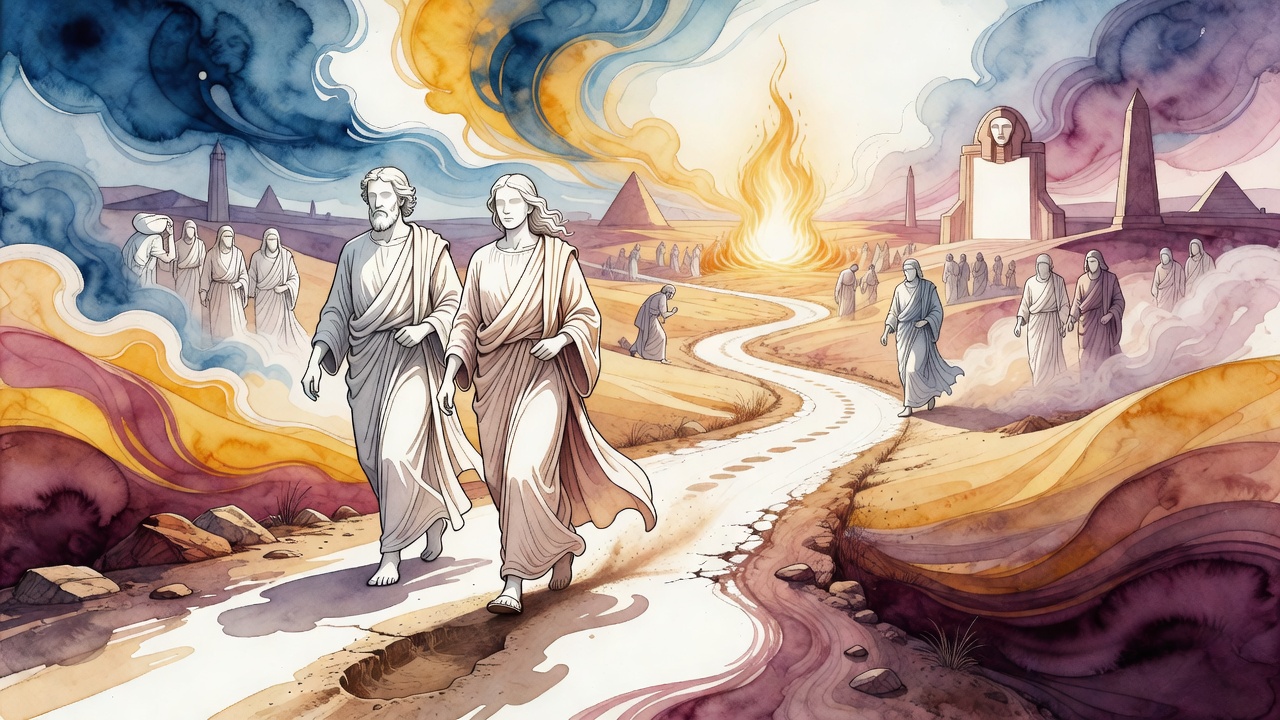
Then the night breaks and the houses empty all at once. "And the children of Israel journeyed from Ramses to Succoth" (Exodus 12:37), and the road between them is no short walk. Forty parasangs of dust and bodies, a march that should swallow a man's voice whole. How does a single man, standing at the head of one column, give the marching orders to a people stretched across a distance it takes forty days to cross? They cannot all see him. They should not all hear him. And yet they move as one, the whole length of the line stepping off together, as if one mouth spoke into every ear at once.
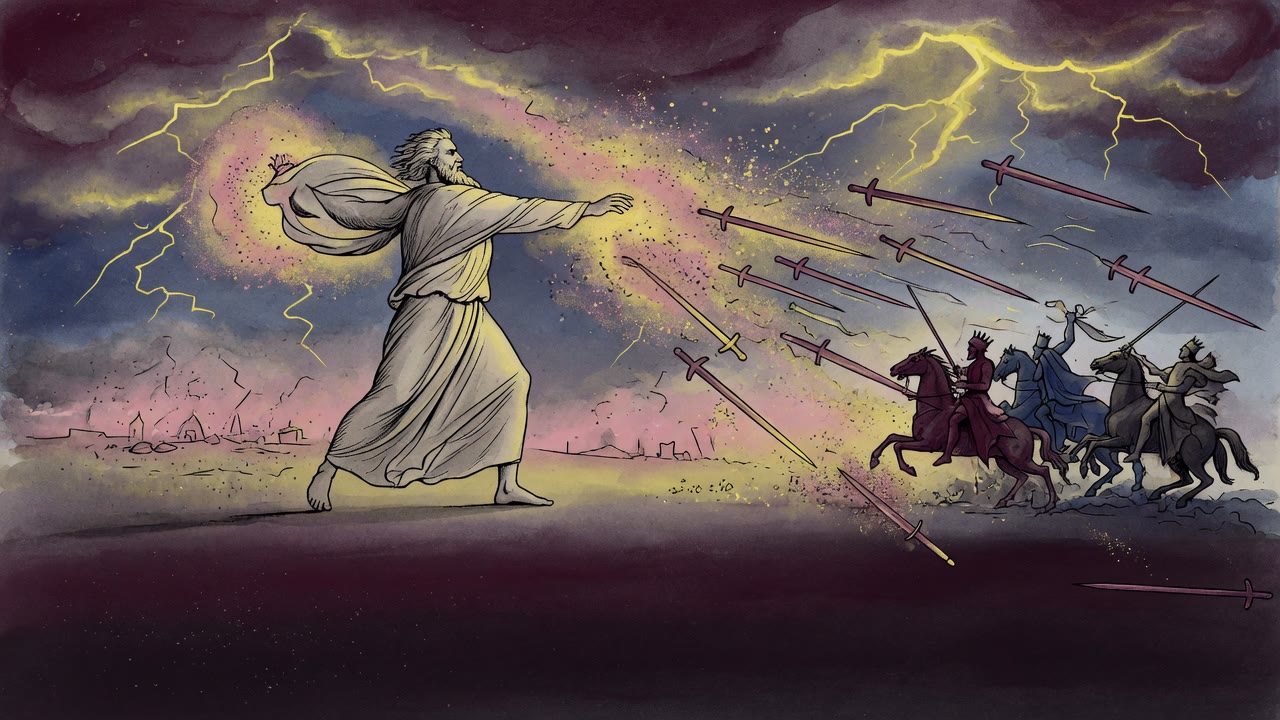
The answer comes by way of the soot. Remember the boils, when God told Moses and Aaron to take handfuls of furnace ash and throw it toward the sky, "and it shall become fine dust over all the land of Egypt" (Exodus 9:8-9). Dust is heavy. Dust wants to fall and lie still. By its own nature it settles and stays. And still that pinch of ash from two pairs of hands spread itself across the entire country, the same span of a forty-day journey, and every Egyptian and beast under that sky broke out in boils. Therefore reason from the heavy thing to the light one. If dead ash, which fights to fall, could carry across the whole land, then the voice of Moses, which by its nature rises and travels, surely carried farther still, the full forty days' distance, so that all Israel heard him as they set out.
The Door That Once Held Only Family
That first night, though, the marked door was a wall as much as a sign. The lamb was a family thing, and only that. "They shall take to them every man a lamb, according to the house of their fathers, a lamb for a household" (Exodus 12:21). Each house chose its own, slaughtered its own, ate behind its own bloodied posts. No neighbor at the table. No friend, no stranger, no mixed company. On that one desperate night a man ate the Pesach (Passover offering) with his own blood and no one else's, the household sealed inside against the thing passing over.
By the letter of that night, every Passover after it should have stayed locked the same way, blood relatives only, doors shut on the rest of the people forever. One more line breaks the lock open. "All the congregation of Israel shall keep it" (Exodus 12:47). Not the household now. The congregation. The whole people may gather around the lamb, friends and neighbors folded in, the sealed family door of Egypt swung wide for every year that follows. What was eaten in fear behind one man's threshold becomes the meal of a nation that has somewhere to go.
What the Lamb Was Always Pointing At
So the man with shaking hands held more than he knew. The lamb fed his children through the night. The blood turned the angel from his door. The three words he almost skipped reached past all of it, past the slaughter and the haste and the marked posts, toward a land sworn to his fathers and waiting on the far side of the sea. He ate standing, staff in hand, dressed to leave. He was already, in those three words, dressed to arrive.
← All myths