5 min read

The Four-Day Lamb That Broke Egypt's Fear

Israel tied Egypt's sacred ram in public, waited four days, then turned its blood into the first sign that slavery had lost its grip.

Curated by Arthur · Told by Maggid ·
Table of Contents
  1. The Ram Stayed at the Door
  2. Four Days Made Fear Visible
  3. The Old Pull Followed Them
  4. The Offerings Remembered the Wound
  5. Judges Guarded the New Land

The lamb had four days to breathe in front of the house.
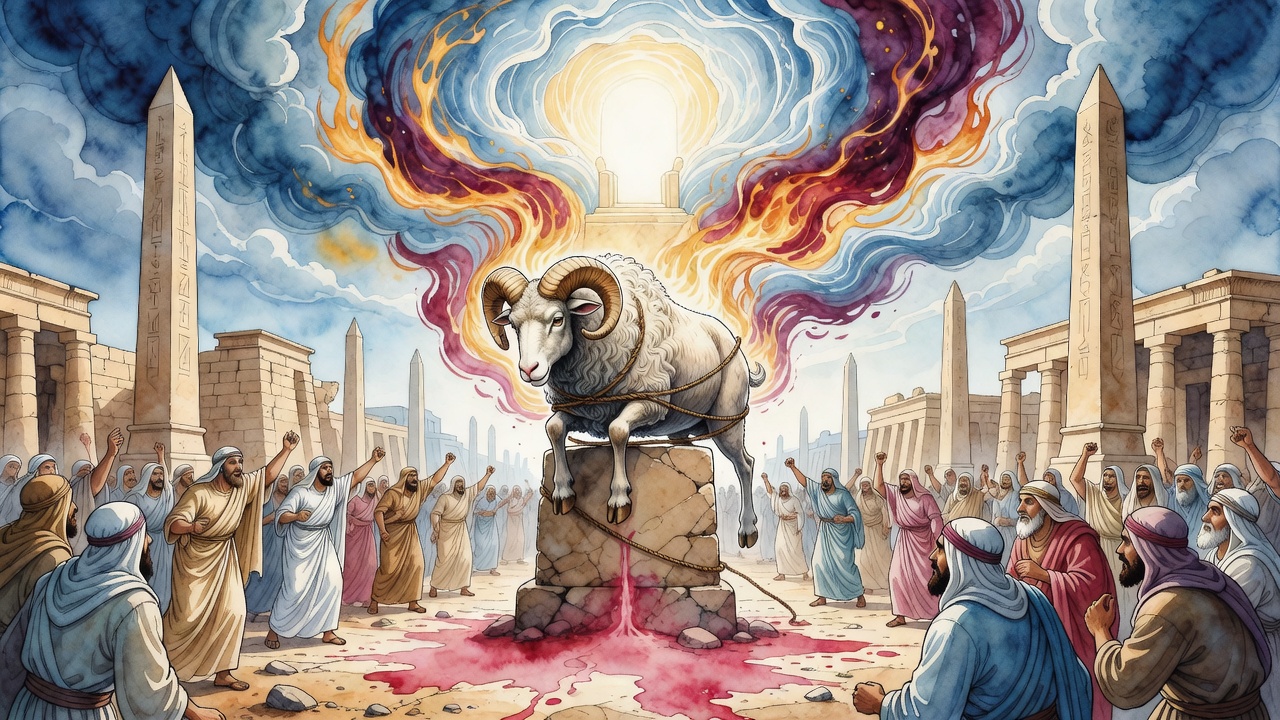
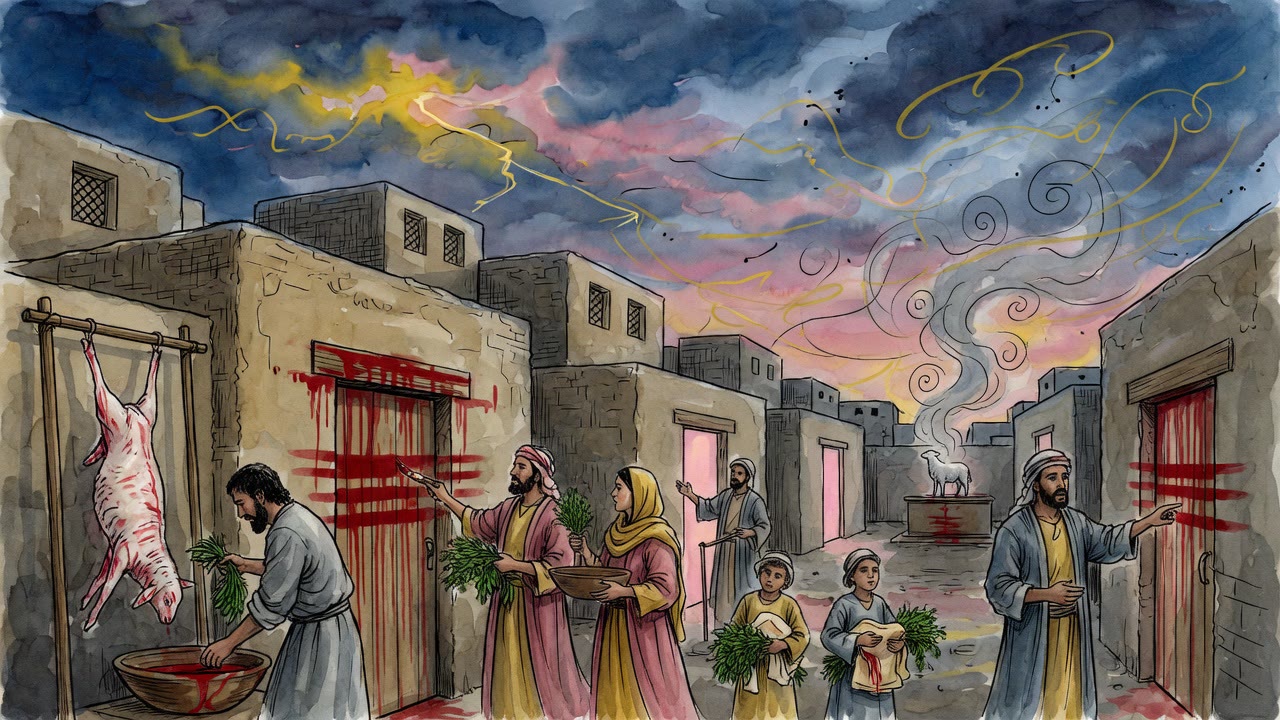
That was the danger. Israel could have waited until the last night, killed quickly, eaten quickly, and slipped out under cover of plague. God demanded something slower. The animal had to be chosen on the tenth day and kept until the fourteenth. Not hidden. Not excused. Set apart where Egyptian eyes could measure every hour.

The Ram Stayed at the Door

The ram was not only meat. Egypt had bowed before it. Its horns carried memory, habit, and fear. When an Israelite household tied the animal near the door, the street itself became a court. Neighbors could pass and know exactly what was being prepared.

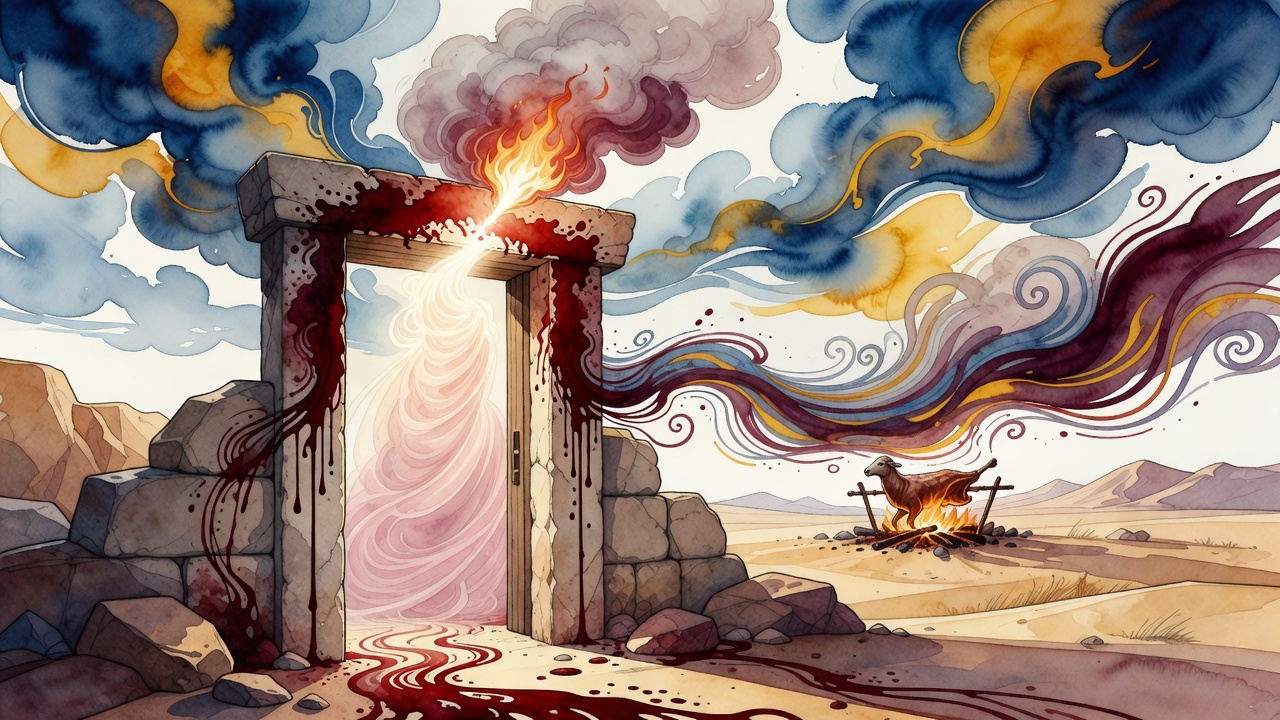
No speech could have said it so cleanly. The master was losing his power. The sacred animal of Egypt would become the Passover offering. A slave family would eat it with belt fastened, staff ready, and blood on the entrance. Freedom began before the sea opened. It began with a rope around a ram.

Four Days Made Fear Visible

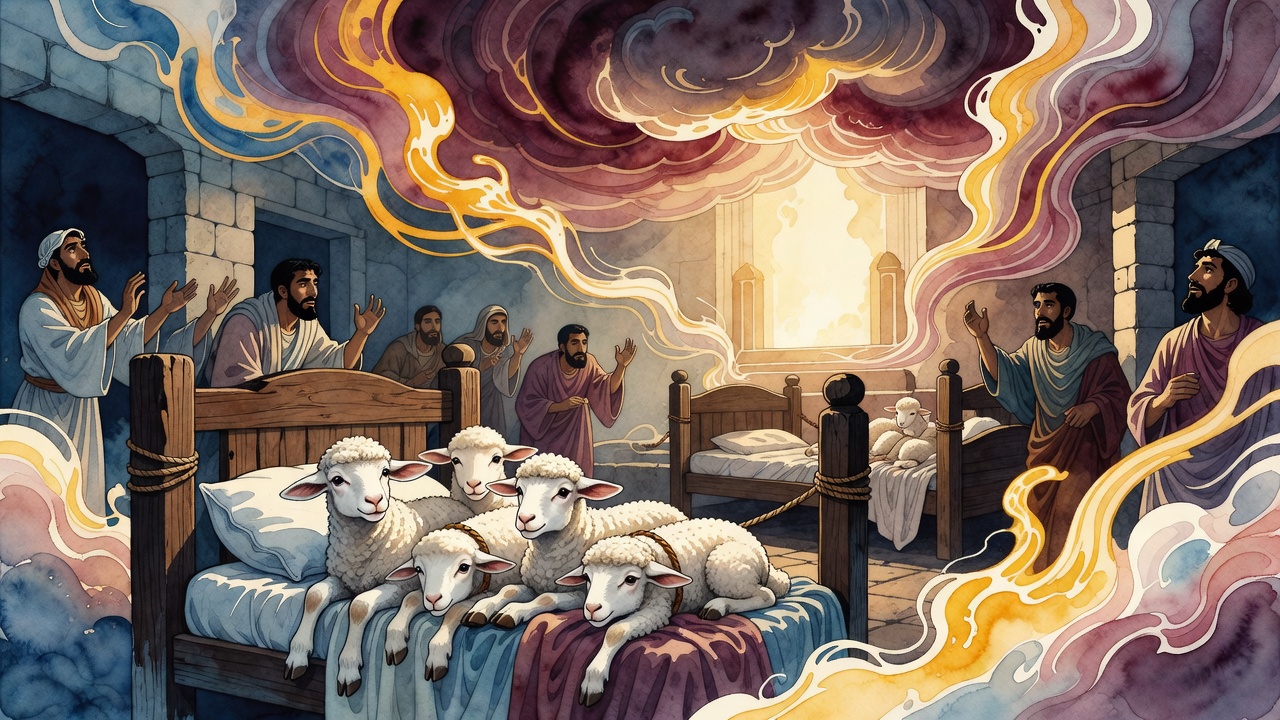
Four days is a long time when a house is being watched. Children would hear the animal shifting outside. Parents would hear footsteps pause near the door. Every morning made the declaration sharper. The ram still lived. The household still intended to kill it. Egypt still had time to threaten.

The command forced fear into the open. Israel had carried Egyptian worship in its lungs for generations. Songs, symbols, punishments, markets, overseers, gods on walls. No nation walks out of slavery with clean hands simply because the gate opens. Something has to be refused. Something has to be cut away in public.

The Old Pull Followed Them

Years later, the memory returned at the Mishkan, the dwelling place where Israel brought offerings before God. The tribe of Gad stood with the force of fighters, linked to Simeon, who had once taken sword in hand for Dinah. Gad had crossed armed for its brothers to help win land beyond the Jordan, and its gifts looked backward to Egypt as if the Exodus still burned under the surface.

A charger weighed one hundred and thirty shekels, and the number carried Jochebed, mother of Moses, who bore him at one hundred and thirty years. A bowl weighed seventy shekels, and the number carried the seventy elders who received from Moses' prophetic spirit without diminishing him. Fine flour filled the bowl, and his spirit did not run thin.

The Offerings Remembered the Wound

Three burnt offerings stood for three things Israel had preserved in Egypt. They had not changed their Hebrew names. They had not abandoned their Hebrew language. They had guarded chastity under pressure. Those virtues did not make slavery gentle, but they kept a people from dissolving into the country that held them.

Then came the sin offerings. They answered the darker memory. Some Israelites had been drawn toward Egypt's idols, and deliverance waited until that pull was renounced. The public ram was not a decoration on the Exodus. It was the cut. Two oxen of peace remembered Jacob and Joseph, for whose sake God drew Israel out. Fifteen small animals gathered the three Patriarchs and the twelve fathers of the tribes into one act of release.

The numbers would not let the past vanish. Three Patriarchs. Twelve tribal fathers. Seventy elders. One mother at 130 years. The gifts made memory countable, heavy enough to place in the courtyard before God.

Judges Guarded the New Land

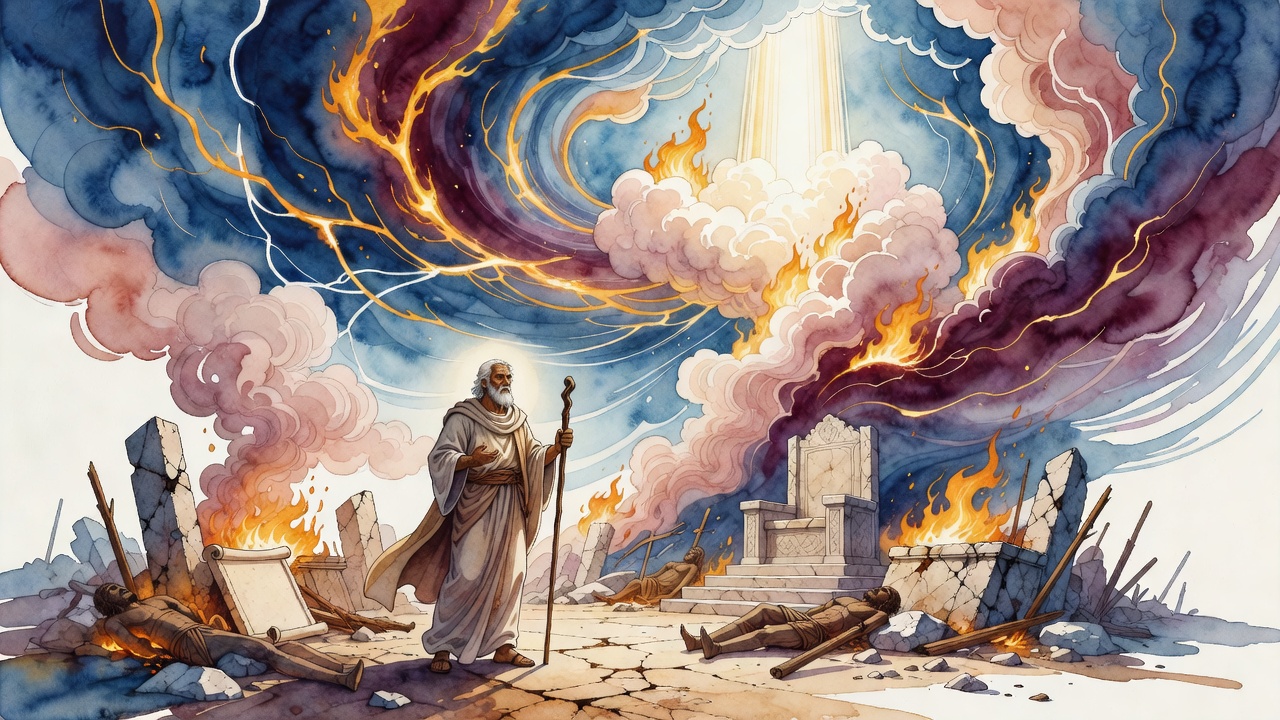
The break with Egypt did not end at the doorway. A freed people still had to build a land where life could stand. Judges had to be appointed so Israel could live and inherit. Without judgment, the strong would become new overseers, and the poor would learn that a changed border had not changed their fate.

The altar also needed clear ground. No asheirah, no tree devoted to idol worship, could be planted beside it. Even an ordinary tree on the Temple Mount was forbidden by the same sharp fence. The land could not carry Egypt's symbols into God's court. The doorpost blood, the tribal bowls, the judges at the gates, the empty space near the altar all pressed toward the same demand: leave the ram behind and do not plant it again.


← All myths

From the tradition

Sources

3 sources

The texts this telling draws on, in full. Open a card to read inline, or expand it for a wider, quieter read.

Legends of the Jews 4:324Legends of the Jews

God wouldn’t have redeemed Israel, wouldn’t have pulled them out of Egypt, if they hadn’t turned away from idol worship. That's powerful.

The key? The paschal lamb itself. God commanded them to sacrifice it. Why? To demonstrate, in a very public way, that they had abandoned the idolatry of the Egyptians. Specifically, the worship of the ram.

It was a bold move.

The way they did things back then, according to tradition, was a bit different than how we understand the Korban (a sacrificial offering) Pesach (the Passover Sacrifice) today. They were instructed to select their sacrificial animal, not just on the day of the offering, but four days prior. Four whole days!

And here’s the kicker: they had to designate it publicly. “This ram,” they were essentially saying, “is for sacrifice.” Imagine the courage that took.

According to Ginzberg's retelling in Legends of the Jews, this act of public declaration served a specific purpose: to show that they no longer feared the Egyptians. It was a direct challenge to their oppressors, a visual representation of their newfound faith and freedom. It wasn't just about sacrificing an animal; it was about sacrificing their fear.

Can you imagine the tension? The Egyptians, seeing the Israelites preparing to slaughter an animal they revered. The Israelites, knowing they were risking everything on God’s promise.

That’s the essence of the Exodus story, isn't it? It's not just a tale of physical liberation, but of spiritual transformation. It's a story of overcoming fear, of choosing faith over oppression, and of publicly declaring your allegiance to something greater than yourself. And it all started with a lamb.

Full source
Legends of the Jews 3:97Legends of the Jews

The offerings each tribe brought to the Mishkan, the Tabernacle, give us some fascinating clues.

Take the tribe of Gad, for instance. Remember Simeon, sword in hand, battling to defend his sister Dinah? Well, in a similar spirit, the tribe of Gad went to battle, too, fighting to win the land beyond the Jordan River for their brothers. And that's why, according to the traditions, their prince, Shelumiel, followed the prince of Simeon when bringing his offerings.

Why these particular offerings? What was Gad trying to tell us?

Well, this tribe, so active in gaining the promised land, seemed to symbolize in their gifts the Exodus from Egypt itself – because, of course, without the Exodus, there would be no march into Palestine! So, let's look closer at what they brought.

The offering included a charger weighing one hundred and thirty shekels. Now, according to some interpretations, this alluded to Jochebed, the mother of Moses, who, at the ripe old age of one hundred and thirty, gave birth to the man who would lead them out of slavery!

And speaking of Moses, the bowl that was also part of the offering, weighing seventy shekels, is also connected to him! How? Because Moses extended his prophetic spirit over the seventy elders of Israel. And just as the bowl was filled with fine flour, the prophetic spirit of Moses didn't diminish at all, even when shared with those seventy elders.

The three burnt offerings, or olot, are especially interesting. They recalled the three virtues that Israel possessed in Egypt that were instrumental in their deliverance. What were these virtues? First, they didn't change their Hebrew names. Second, they didn't abandon their Hebrew language, Lashon Hakodesh. And third, they maintained lives of chastity. These are powerful reminders of the importance of maintaining identity even under immense pressure.

Then there were the sin offerings, or chatat, which served to atone for the idolatry that some Israelites were drawn to while in Egypt. Midrash Rabbah tells us that God wouldn't allow their deliverance until they had renounced that idolatry. This highlights the constant struggle between faith and temptation, a theme that runs throughout Jewish history.

Finally, the two oxen of the peace offering, or shelamim, corresponded to Jacob and Joseph. According to the tradition, it was for their sake that God delivered Israel from Egypt. And they also brought fifteen heads of small cattle as a sacrifice, a reminder that God was mindful of His vow to the three Patriarchs – Abraham, Isaac, and Jacob – and the twelve fathers of the tribes, which led to Him releasing Israel from bondage.

So, what can we take away from all of this? The gifts of the tribe of Gad weren’t just random items. They were a carefully chosen set of symbols, a reminder of the Exodus, the virtues that sustained the Israelites, and the importance of remaining true to their heritage. It’s a beautiful, multi-layered message, reminding us that even the smallest details can hold profound meaning if we take the time to look.

Full source
Sifrei Devarim 145:1Sifrei Devarim

Sifrei Devarim turns to Appointing Judges So That Israel Lives.

The Sifrei Devarim, a legal commentary on the Book of Deuteronomy, offers a profound insight into this very idea. When it says, "so that you live and inherit the land," (Deuteronomy 16) it's not just talking about physical survival. It's saying something much deeper. It's telling us that the act of appointing judges, of establishing a system of justice, is what allows the people of Israel to truly live. And not just live, but to inherit the land, to build a lasting society. What holds a society together? What allows it to grow and prosper? It's trust. Trust in the system, trust in each other. And that trust is built on a foundation of fairness and justice. Without it, everything crumbles. The Sifrei Devarim connects the dots: righteous judgment leads to life, and to inheriting the promise.

Justice isn't just about what we do. It's also about what we don't do.

The text then moves on to another seemingly unrelated topic: trees. Specifically, the prohibition against planting an asheirah. What's an asheirah? It's a tree specifically devoted to idolatry, a symbol of pagan worship. The Sifrei Devarim states plainly: "You shall not plant for yourself an asheirah (a tree devoted to idolatry): We are hereby taught that one who plants an asheirah transgresses a negative commandment" (Deuteronomy 16:21). Simple enough. Don't plant trees for idols.

But then it gets interesting. The text asks: where do we learn that planting any tree on the Temple Mount is forbidden? The answer: from the same verse! "You shall not plant for yourself… any tree beside the altar of the L-rd your G-d" (Deuteronomy 16:21).

Why is this significant? It seems like a leap. Well, the text is drawing a parallel. Just as planting a tree for idolatrous purposes defiles the land and corrupts the spirit, so too does planting any tree in the sacred space of the Temple Mount. It's about preserving the purity and sanctity of that which is holy.

It's a powerful reminder that our actions, even seemingly small ones like planting a tree, can have profound consequences. They can either contribute to the flourishing of life and justice, or they can defile and corrupt.

So, what does this all mean for us today?

Perhaps it's a call to examine the systems of justice around us, and to work towards making them more fair and equitable. Maybe it's a reminder to be mindful of the choices we make, and the impact they have on the world around us. Or maybe, just maybe, it's a nudge to consider what "trees" – what symbols, what values – we are planting in our own lives, and whether they are contributing to a world of life, justice, and holiness. What are we cultivating?

Full source