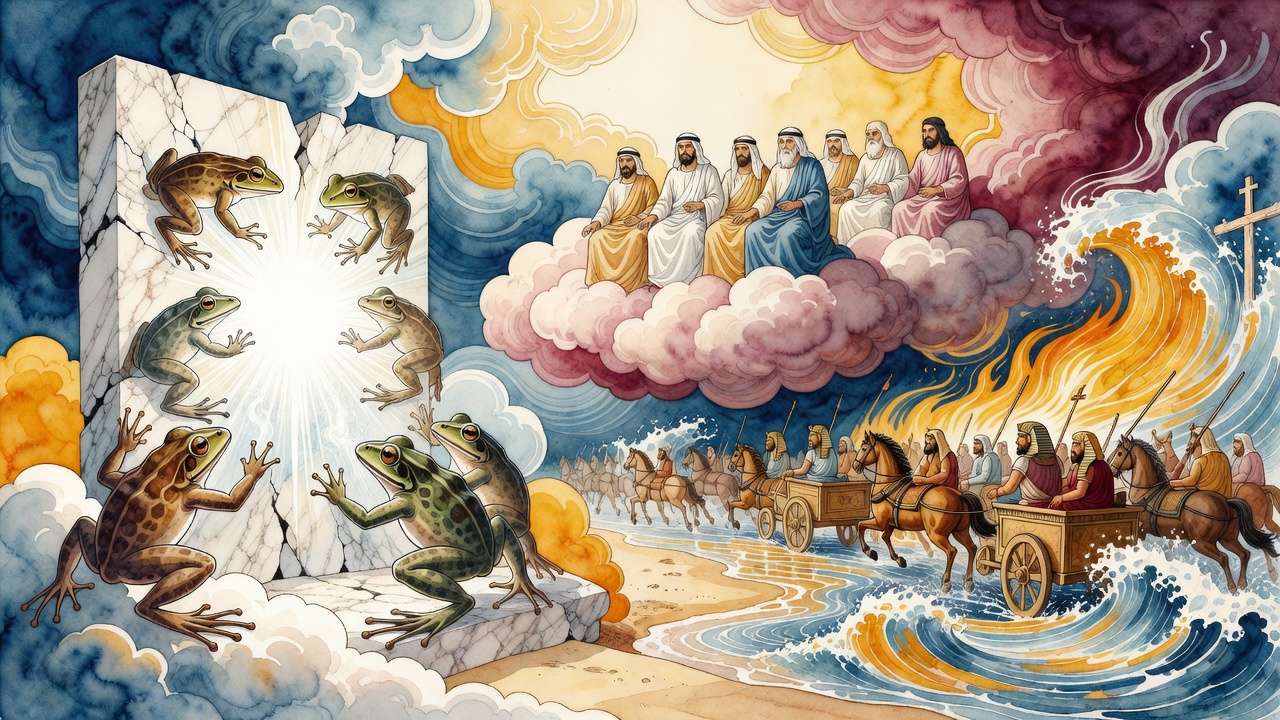
Israel Marked the Doors with Hyssop and Walked Out Singing
Moses held two fistfuls of soot in one palm and threw them at the sky. Boils covered Egypt. That night a plant no one prized marked the doors.
Table of Contents
 Click for full size
Moses Threw Two Fistfuls at the Sky
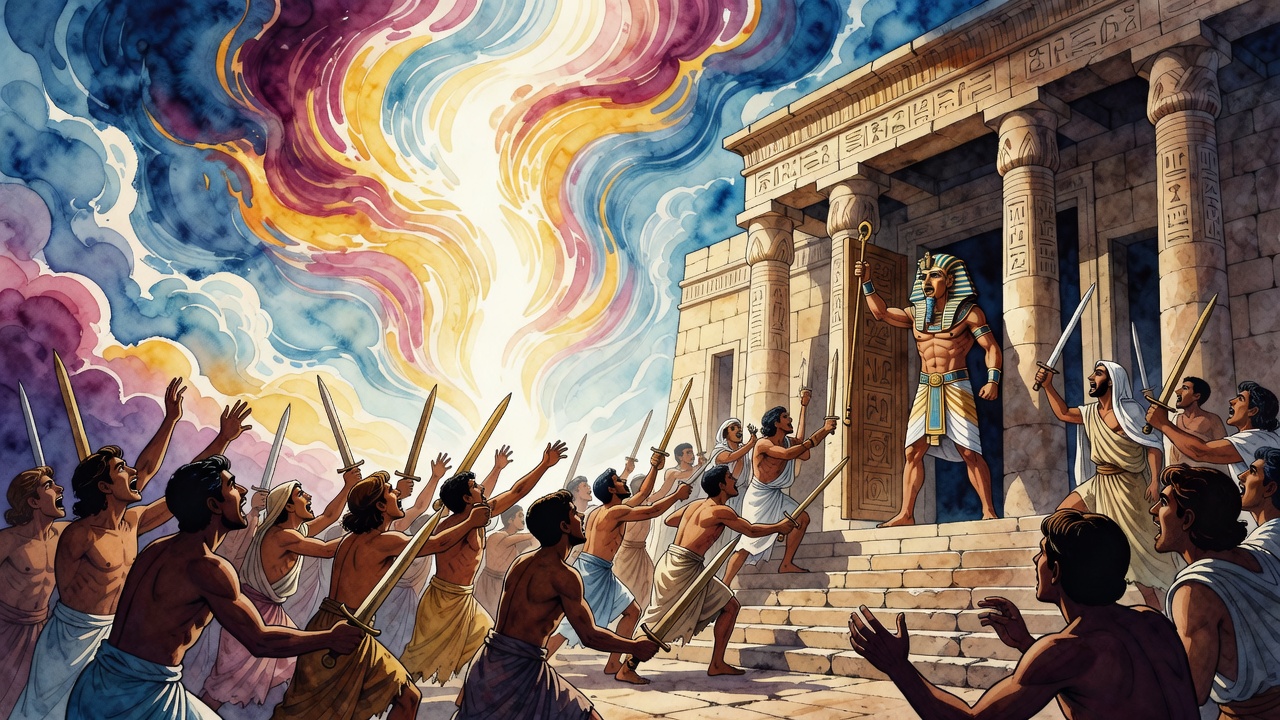
God told Moses to take soot from the furnace and throw it toward heaven in Pharaoh's sight. Moses held his own fistful and Aaron's fistful together in one palm. Both portions crushed into a single hand. He stood before the king of Egypt and threw the ash upward.
The soot spread across the land. Boils broke out on every Egyptian, on their animals, on the magicians who had once stood against Moses and Aaron with their own tricks. The magicians could not stand. The boils were on their feet.
What Moses held was small. What it became covered a civilization. He did not need a large starting material. He needed the right hand at the right moment, throwing the small thing high enough for God to receive it and send it back as something no house in Egypt could shut out.
The Smallest Plant Marked the Door
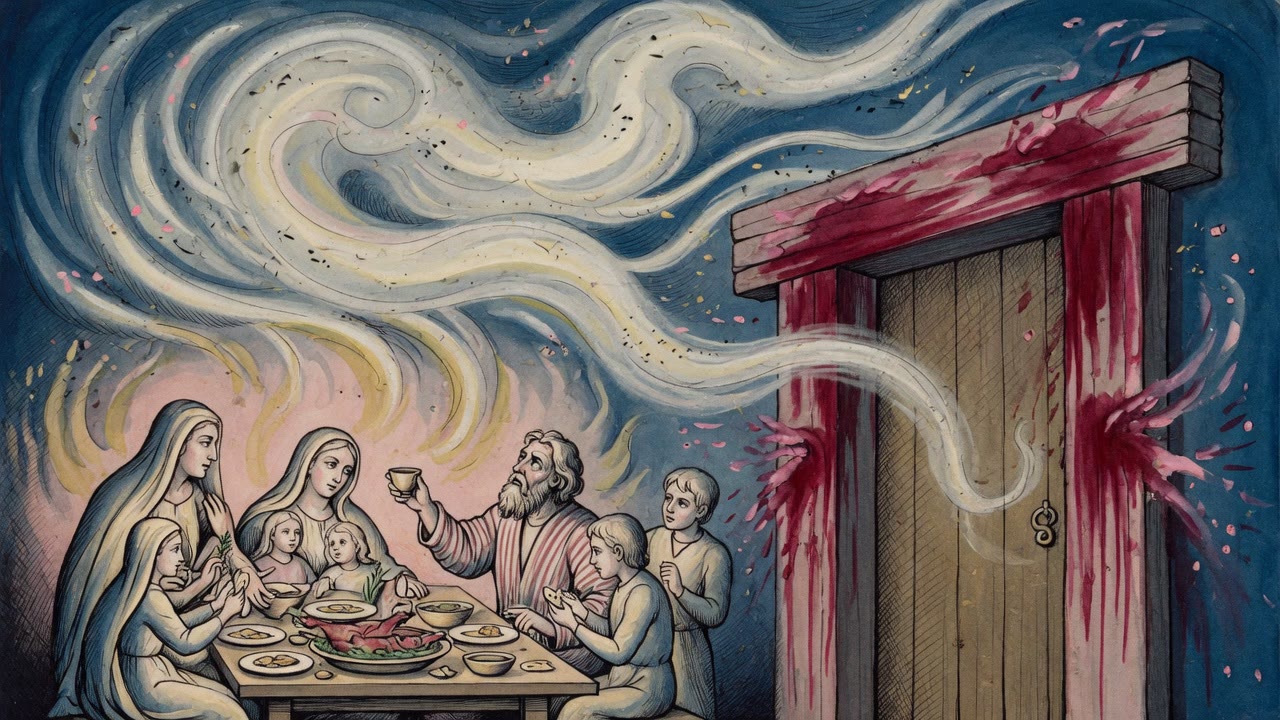
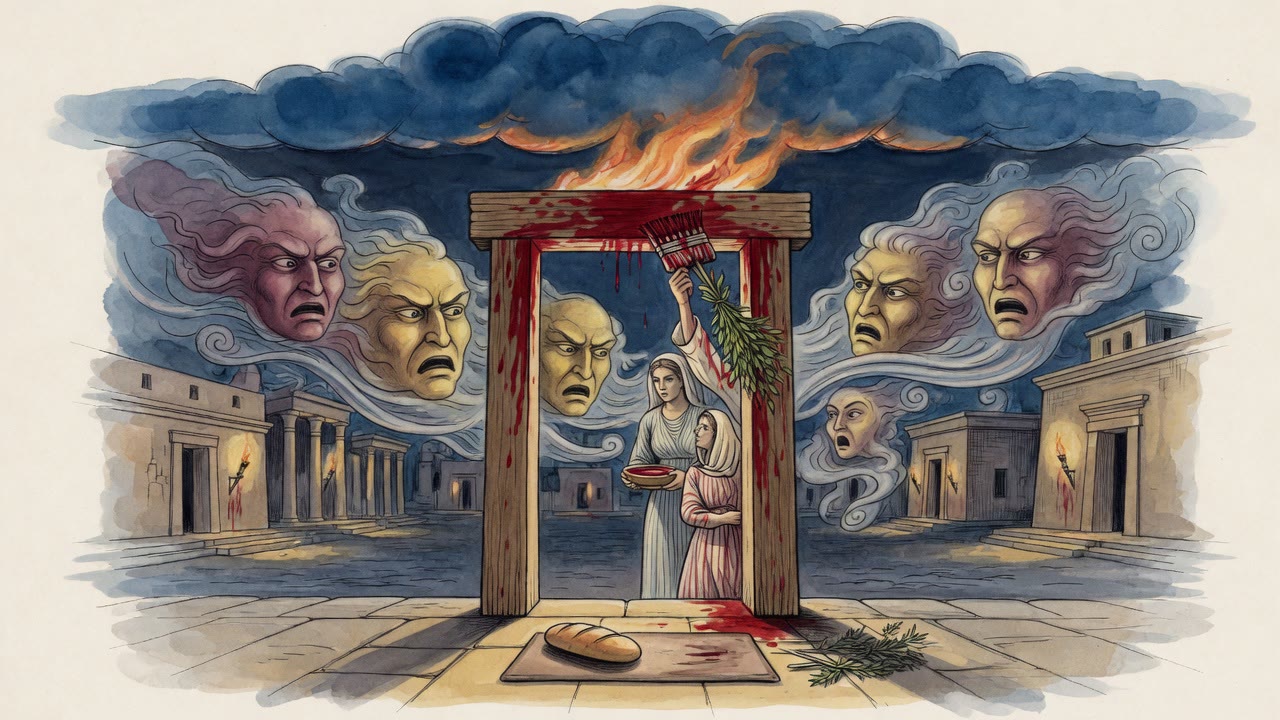
Take a bundle of hyssop, God said, and dip it in the blood and touch the lintel and the two doorposts (Exodus 12:22). The smallest plant in the collection of plants, chosen for the night that would end four hundred years.
Israel went from house to house with that bundle. A plant other nations used to scrub floors. The heavens are His throne. Light is His garment. The hyssop had been waiting for this night, the way the soot had been waiting in the furnace.
A household dipped the plant and marked the wood. The blood was not a charm. It was a mark. We are here, the door said. We remember what we owe. We are going out of this place in the morning. God said He would see the blood and pass over. The hyssop made the announcement. The door received it. The house inside waited, dough already mixed, shoes already on.
Egypt Had Spent the Honor It Was Given
God had given Egypt something before the plagues. A great nation. Law, learning, brick on brick. It had received one of the sons of Israel as its second ruler and had been saved from famine by his management. It had received the family of Jacob and given them the land of Goshen.
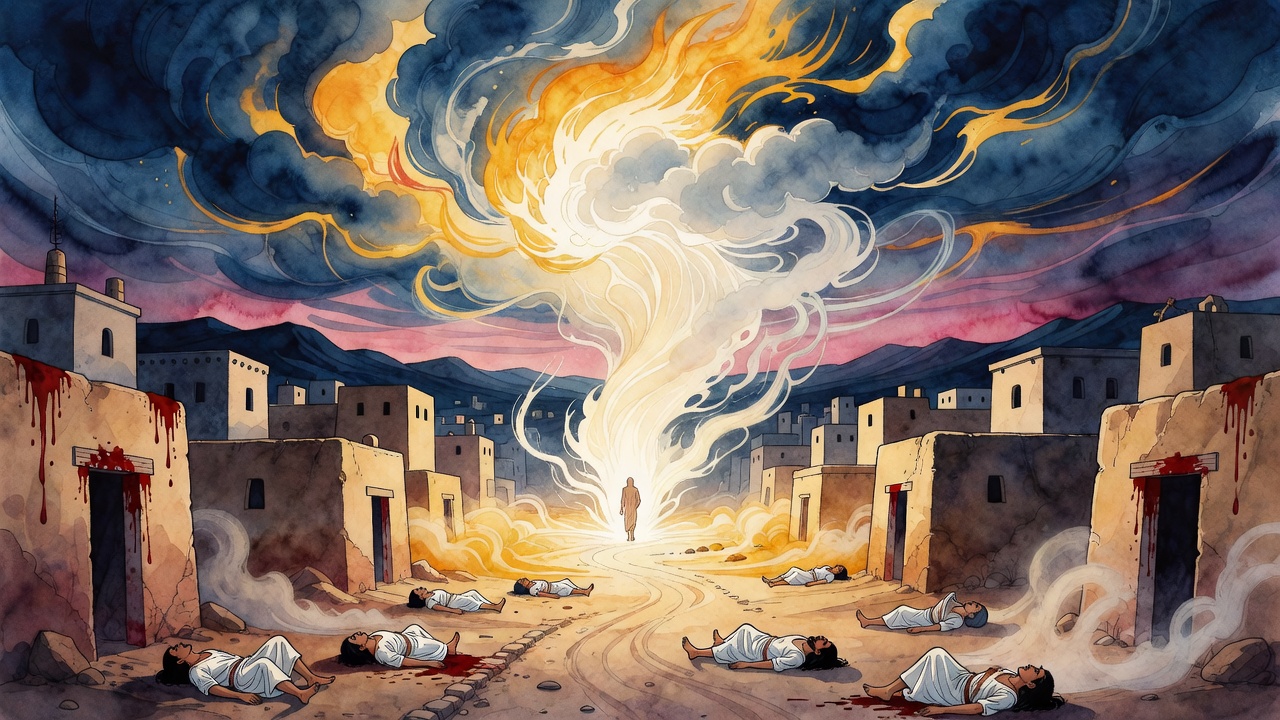
What it did with all of that was make slaves. The honor became fuel. The plagues took apart the specific honors Egypt had abused. The river that had been their pride turned to blood. The sky that had been their roof filled with hail and then with a darkness a man could feel with his hands. The firstborn who had been their future lay dead in every house, from the palace to the mill.
Moses had thrown a handful. Egypt had spent a gift. Both were small at the start. Both became total.
Six Hundred Thousand Walked Out in Daylight
On the morning after the last plague, Israel did not slip out quietly. They walked out in daylight. Six hundred thousand men of fighting age, plus women and children and the mixed multitude who joined them, moving in the full sight of an Egypt that was still in mourning.
Every Egyptian household was grieving. The wailing ran from one end of the country to the other. Into that sound the Israelites walked northward and eastward toward the sea.
They left with silver and gold borrowed from their neighbors, with dough not yet risen, with herds and flocks and the possessions of generations. They also carried the bones of Joseph, the man whose dream had brought the family down in the first place. Four hundred years ended in a procession through a nation too broken to stop them.
Three Days After the Song the Water Was Bitter
They watched the Egyptian army go under. The song came up from the whole people at once. From Miriam with her timbrel. From Moses. From the children who recognized God at the sea before their parents could name what they were seeing.
Then they walked three days without water and arrived at Marah, and the water was bitter, and they complained (Exodus 15:22-23).
Three days. The song had barely finished. Thirst arrived and the praise left. They stood over the pool and asked Moses what they were supposed to drink. He cried out. God showed him a tree. He threw the tree in, the water changed, and they drank.
They had been told to take words with them when they returned, not only animals for an altar. Words. At Marah the words they had were complaint. Sinai was still ahead, a mountain that would give them a structure for holding what the song had said. The song itself did not last through the first week of ordinary thirst.
They drank. They marched. The next dry stretch was already on the road.
← All myths