5 min read

Aaron's Rod Swallowed Every Rod That Pharaoh's Children Cast

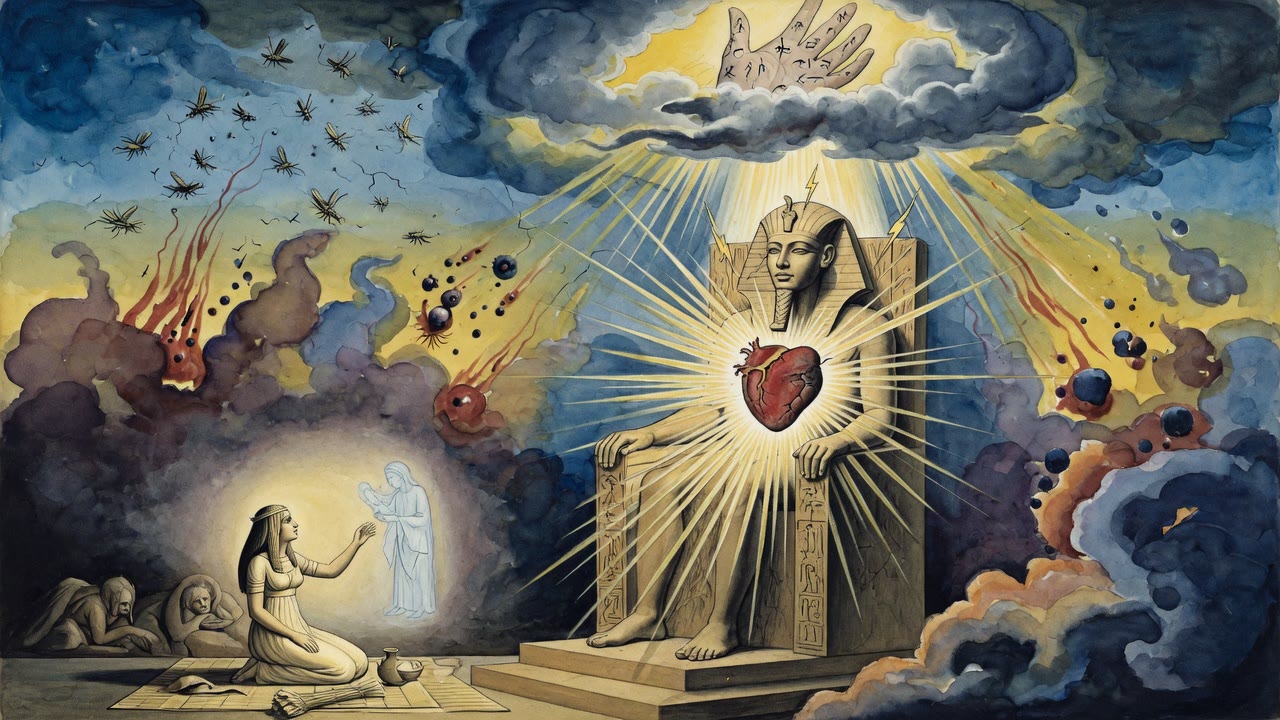
Pharaoh mocked God's wonder as street magic, then called toddlers to cast rods. Aaron's rod swallowed them all and stayed no thicker than before.

Curated by Arthur · Told by Maggid ·
Table of Contents
  1. A Wicked Man's Right to Demand a Sign
  2. Toddlers, Magicians, and a Court Full of Snakes
  3. The Swallow That Did Not Swell
  4. Hiss, Coil, and a Hardened Heart
  5. What the Court Learned Too Late
Aaron's Rod Swallowed Every Rod That Pharaoh's Children Cast Click for full size

A Wicked Man's Right to Demand a Sign

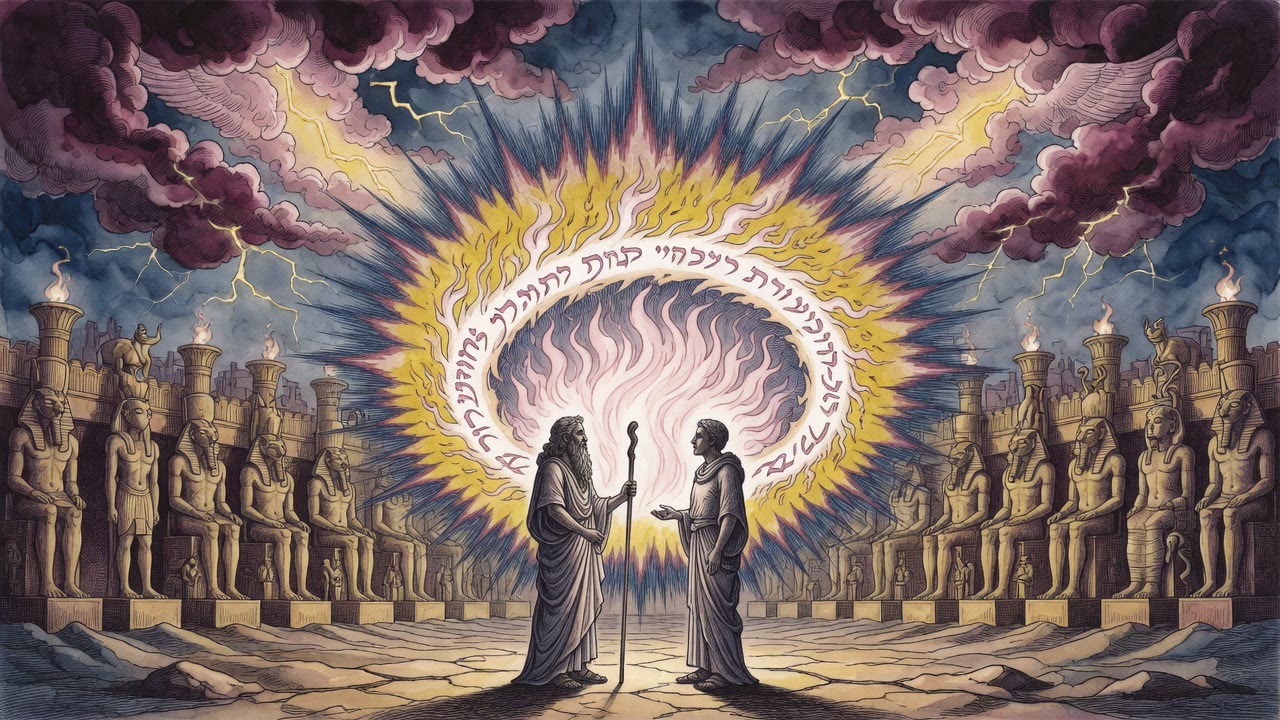
"When Pharaoh shall speak unto you, saying: Show a wonder for you" (Exodus 7:9). The midrash refuses to call the demand absurd. Noah, after the flood, still asked for a sign, and God set a bow in the cloud. Hezekiah, promised healing, asked, "What shall be the sign?" and the shadow moved. If the righteous required proof, how much more a wicked king.

So Moses and Aaron enter a court that thinks it already knows magic. The request is reasonable. The answer will not be. Heaven does not mock the need for evidence. It will mock the belief that evidence can be matched by a school of tricks.

Pharaoh sits as if he is the examiner. He will learn he is the subject of the exam. The rod in Aaron's hand already knows the score.

Toddlers, Magicians, and a Court Full of Snakes

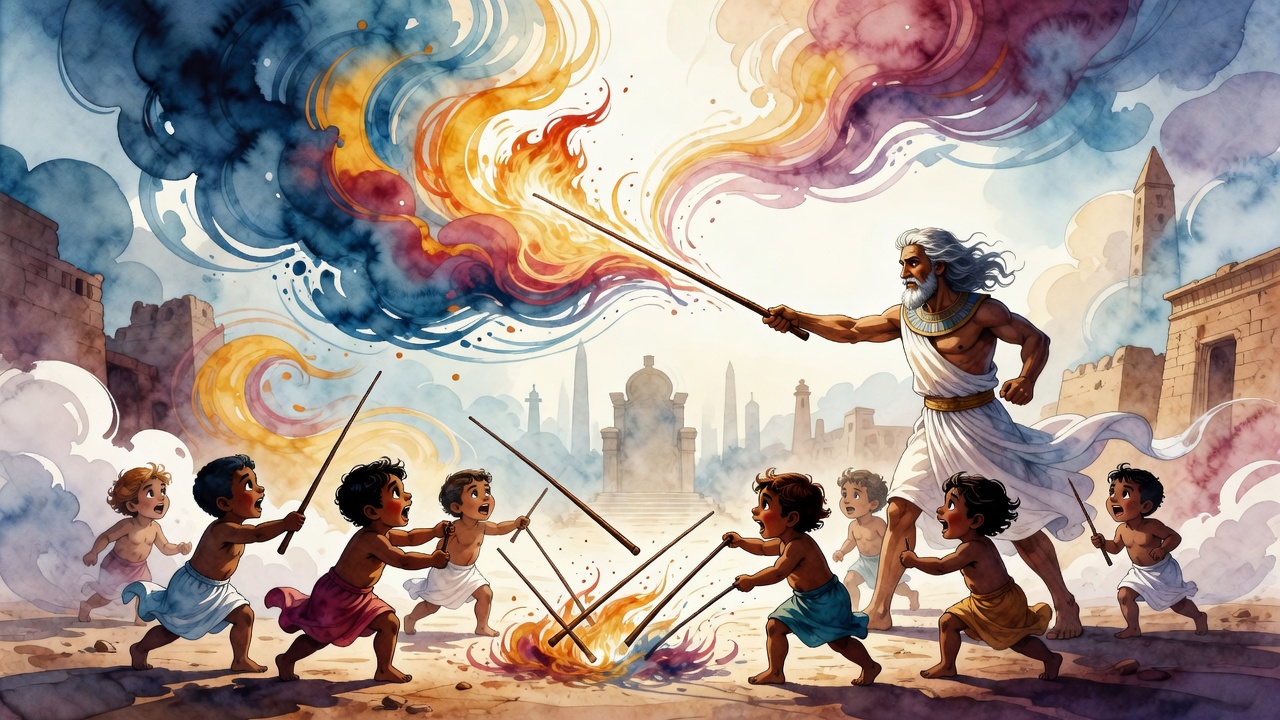
Aaron cast down his rod before Pharaoh and his servants. It became a serpent. Pharaoh sneered. "Is this the full power of your God? Why, my magicians travel throughout the world performing such feats." He called for more than professionals. He summoned youths, even children of five and four, and each cast a rod. "Pharaoh called also," the verse says, because at first he disdained even to bother with his sorcerers.

The floor filled with serpents. Egypt's point was quantity. Any house that trains its infants to throw sticks into snakes will not bow to one Hebrew rod. Pride loves a crowd of proofs. It hates a single proof that eats the crowd.

Picture the noise: hissing, laughter, the shuffle of sandals away from coils. Courtiers grade the show. Moses does not compete on volume. Aaron waits for the moment the midrash loves, when nature's cruelty is not enough and the rod must do something nature refuses.

The Swallow That Did Not Swell

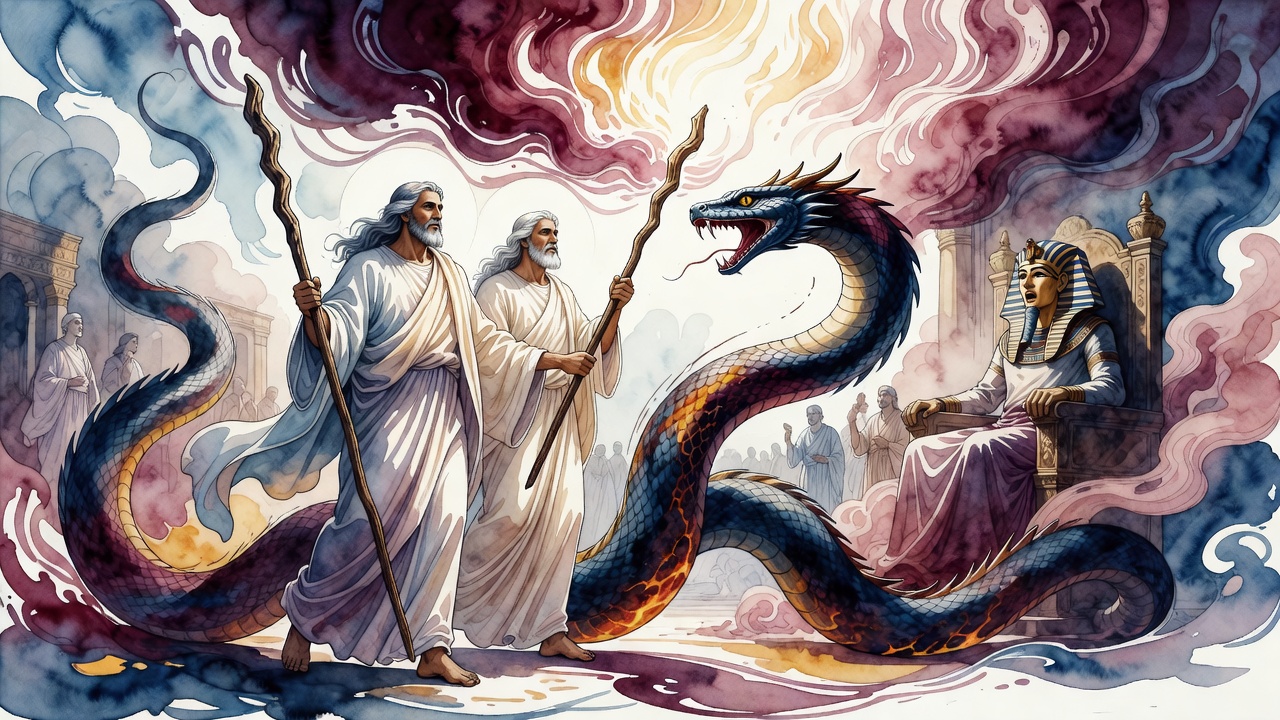
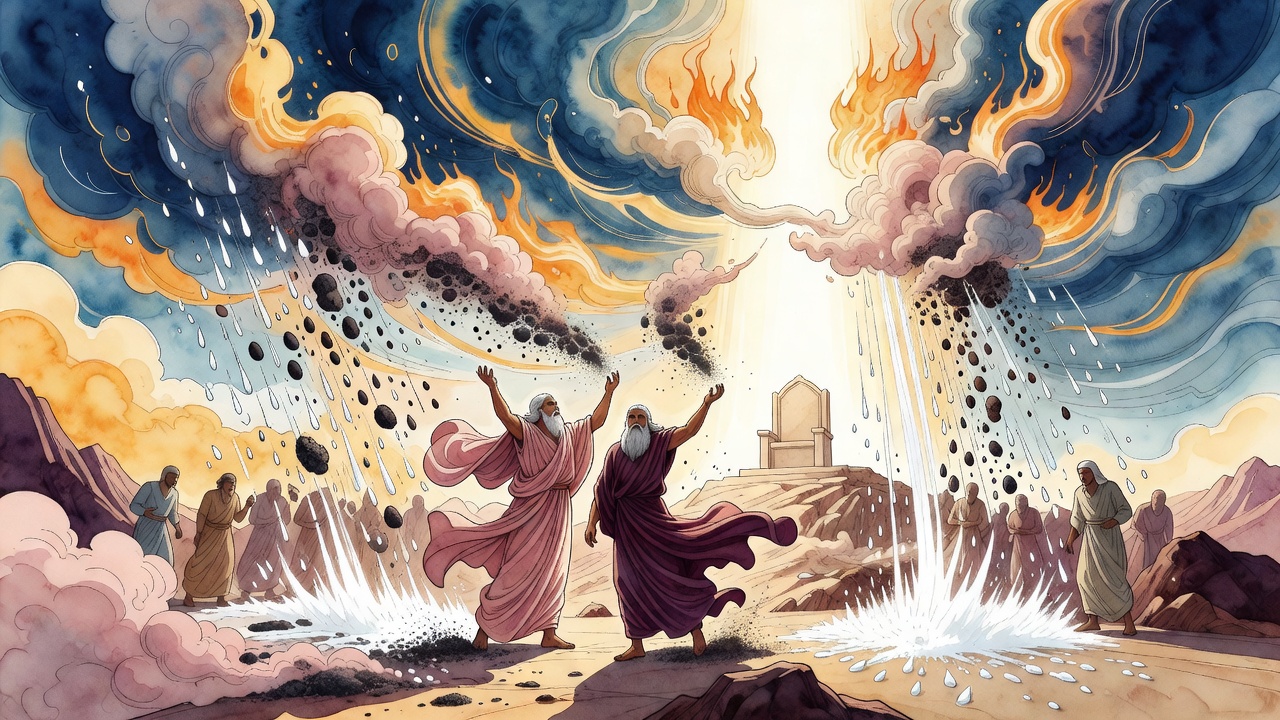
Then Aaron's serpent turned back into a rod and swallowed their rods. A live snake eating snakes is nature's cruelty. A rod eating rods and remaining the same size is a different order of fear. The sages say that if the fallen rods were bundled, there would have been more than ten bundles, and still Aaron's staff took them all without growing thicker.

Pharaoh's face changed. "Surely if he should command the rod to swallow Pharaoh and his throne, it could swallow them." That was the sign first shown at the bush, when God said of what was in Moses' hand, "This, cast it to the earth." "This," the midrash hears, already pointed at Pharaoh, compared to the slant serpent the Lord will punish with a sore sword.

A throne is only wood and gold until a thinner stick makes it feel edible. Pharaoh felt that for one clean second. Then he reached for hardness the way drowning men reach for air.

Hiss, Coil, and a Hardened Heart

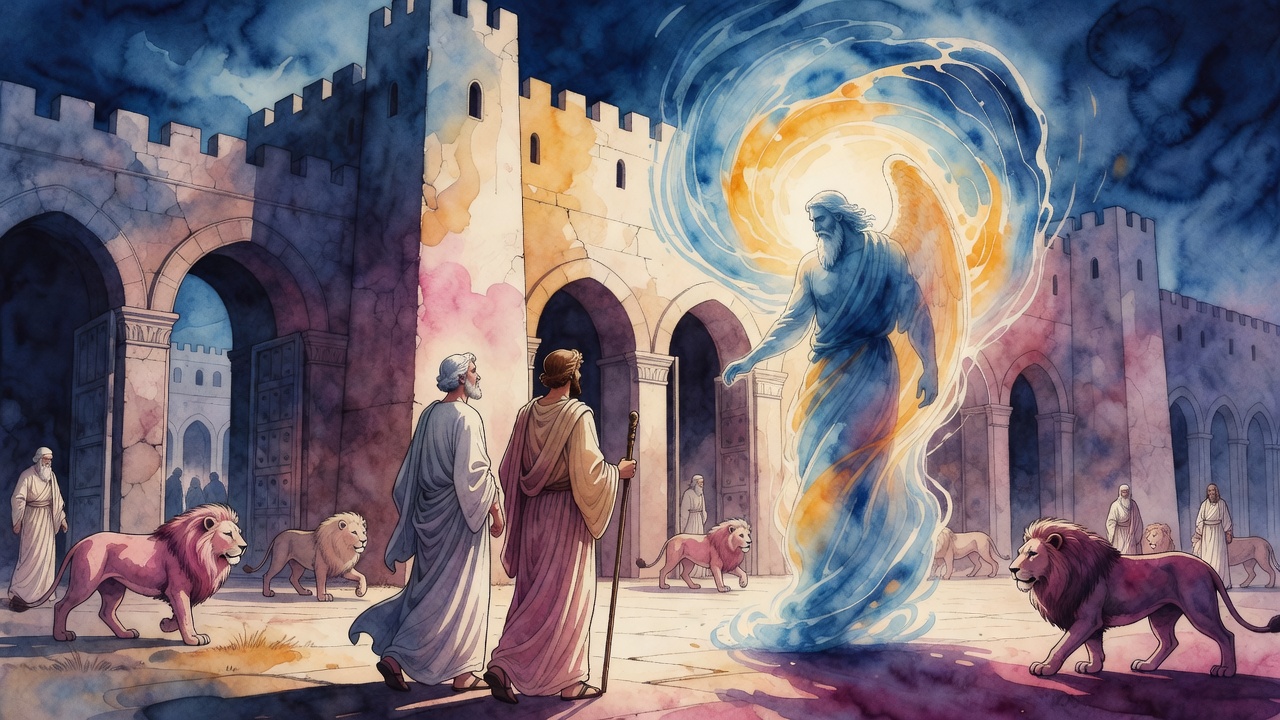
Why compare Egypt to a serpent? Because it hisses and kills. Because it winds and takes devious paths. A man is imprisoned, accused in secret, executed quietly. God told Moses that Pharaoh would be cunning, and that Aaron should raise the rod toward him as a warning: you will be smitten with this. While Moses still stood at the bush, heaven already showed the treachery ahead.

When Moses left, Pharaoh muttered threats: if the son of Amram comes near again, he will be slain, hanged, burned. When Moses returned, the king became like a rod, stiff and unhearing. For the first five plagues the text says Pharaoh's heart was hardened. After the fifth, God said that even if Pharaoh wished to send Israel out, He would not permit it. The last five plagues write, "But the Lord hardened Pharaoh's heart." Moses would decree. God would execute.

Serpent government loves secret rooms. The plagues would drag every secret into public weather: blood, frogs, darkness thick enough to touch. The first sign already told the method. What coils will be forced into open air.

What the Court Learned Too Late

The wonder Pharaoh demanded became the mirror he refused to face. Children could make snakes. Only Aaron's rod could eat the evidence and stay thin. Serpent tactics of secret death met a staff that announced judgment in public. Cunning met a schedule already spoken at a thorn-bush.

Egypt trusted repertoire. Heaven answered with a single object that would not inflate. The throne that feared being swallowed kept hardening until swallowing was no longer a metaphor but a sea. Between the toddler magicians and the final night, one image holds: a rod that takes every counterfeit into itself and still fits a man's hand.

Pharaoh asked for a show. He received a warning shaped like wood. Aaron held it. Moses spoke around it. God had already named the opponent a serpent before the first drop of blood left the river.

Years later Israel would still sing of a right hand glorious in power. The song begins, in a way, on a palace floor where a rod refused to grow fat on its meal. Thin power, holy power, ate the thick tricks and left the king with nothing to hold but his own hardening.


← All myths
From the tradition

Sources

2 sources

The texts behind this telling. Some cards carry a translation of the source; others are our own retelling of it, and each card says which. Every card links out to the original.

Midrash Tanchuma, Vaera 3Midrash Tanchuma

Retold in our words. Read the original at the link below.Townsend 1989 translation of Midrash Tanhuma, S. Buber Recension · CC-BY

When Pharaoh shall speak unto you, saying: “Show a wonder for you” (Exod. 7:9). He will be making a reasonable request to you. You find in the case of Noah, that though He said to him, after He saved him from the flood, Neither shall there be anymore a flood (Gen. 9:11), Noah demanded a sign, and God assured him: I have set my bow in the cloud (ibid., v. 13). Similarly, when Hezekiah was sick, the Holy One, blessed be He, sent Isaiah to him and he said: Thus saith the Lord, the God of David, thy father: “I have heard thy prayer, I have seen thy tears; behold, I will heal thee; on the third day thou shalt go up unto the house of the Lord” (II Kings 20:5). But he replied: What shall be the sign? (ibid., v. 8), and He answered: This shall be the sign unto thee from the Lord, that the Lord will do the thing that He hath spoken: shall the shadow go forward ten degrees, or go back ten degrees? (ibid., v. 9). Likewise, Joshua, the high priest, was told: Hear now, O Joshua the high priest, … for they are men that are a sign (Zech. 3:8). Since the righteous demanded signs, how much more did the wicked Pharaoh (have the right to do so). Hence, when Pharaoh says unto you: Show a wonder for you (he will be making a reasonable request).

And Aaron forthwith cast down his rod before Pharaoh and before his servants, and it became a serpent (Exod. 7:10). Whereupon Pharaoh said: “Is this the full power of your God? Why, my magicians travel throughout the world performing such feats.” Then Pharaoh called also (ibid., v. 11) the youths, and babes of five, yea, even of four years, and each of them cast his rod. It is written: Pharaoh called also because he disdained at first to summon his magicians and sorcerers. Our sages of blessed memory said: He actually performed a great miracle with that rod. When one serpent is able to swallow other serpents, that is not unusual, but this serpent turned itself back into a rod again, as it is written: But Aaron’s rod swallowed up their rods (ibid., v. 12). If a man made bundles out of the rods that were cast to the ground to become serpents, there would have been more than ten bundles, yet Aaron’s rod swallowed them all and it became no larger than it was previously. When Pharaoh beheld that, he was amazed and exclaimed: “Surely if he should command the rod to swallow Pharaoh and his throne, it could swallow them.” That was the sign that He had given to Moses at the bush when He said: This which is in thy hand, cast it to the earth (ibid. 4:2). The word this alludes to Pharaoh, who is compared to a snake, as is said: The Lord with His sore and great and strong sword will punish leviathan the slant serpent (Isa. 27:1). When Moses withdrew from Pharaoh’s presence, the wicked one said: “If this son of Amram comes near me again, I will slay him, I will hang him, I will burn him.” That is why, when Moses returned, Pharaoh became like a rod. And Pharaoh’s heart was hardened, and he harkened not unto them, as the Lord had spoken (Exod. 7:13). With reference to the first five plagues, the words Pharaoh’s heart was hardened, etc., are written, but after the fifth plague occurred and he still would not permit them to leave, the Holy One, blessed be He, said: Henceforth, even if he desires to send them away, I will not allow it. Hence, with reference to the last five plagues it is written: But the Lord hardened Pharaoh’s heart (ibid. 10:20). Moses decreed what was to transpire, and the Holy One, blessed be He, executed it, as it is said:: Thou shalt also decree a thing, and it shall be established unto thee (Job 22:28).

Full source
Midrash Tanchuma, Vaera 4Midrash Tanchuma

Retold in our words. Read the original at the link below.Townsend 1989 translation of Midrash Tanhuma, S. Buber Recension · CC-BY

When Pharaoh shall speak unto you, saying (Exod. 7:9). May it please our masters to teach us whether a man who is bitten by a serpent while standing in prayer may stop praying. Our masters teach us: A man standing in prayer may not respond to the greeting of a king, nor may he stop praying when a serpent encircles his heel. Once a wild ass attacked and bit R. Hanina the son of Dosa while he was standing in prayer and his disciples fled in fear. Upon their return a hour later, they found the ass lying dead near its den. They cried out: “Woe to the man whom a wild ass bites, but woe to the wild ass that attacks R. Hanina the son of Dosa.” Why did the sages compare a serpent that winds itself about the heel of a man with the kingdom of Egypt? R. Yosé the son of Pazzi said: Because it is written: The sound thereof shall go like the serpent’s; for they march with an army, and come against her with axes, as hewers of wood (Jer. 46:22). Just as the serpent hisses and kills, so the kingdom of Egypt hisses and kills a man. He would imprison a man, accuse him in secret, and surreptitiously execute him.

Another comment on why they compared the kingdom of Egypt to a serpent. Just as the serpent winds its way about, so the government of Egypt follows devious paths. Hence the Holy One, blessed be He, said to Moses: Just as the serpent is cunning, so too is the wicked Pharaoh. When he is about to deal cunningly with you, say to Aaron, “Take your rod, and raise it toward him, as though warning him, You will be smitten with this.” Declaring the end from the beginning (Isa. 46:10). While Moses was still at the burning bush, the Holy One, blessed be He, revealed to him that Pharaoh would act treacherously in the future. When he turned his staff into a serpent, it indicated that the wicked Pharaoh was like a treacherous serpent. Hence, Pharaoh acted treacherously.

Full source