Joseph Went Home to the Pit That Sold Him
Dying, Jacob ordered Joseph to forgive and shield his brothers. Ages later the tribes buried Joseph in Shechem, the ground that first took him.
Table of Contents
 Click for full size
A Father's Last Charge
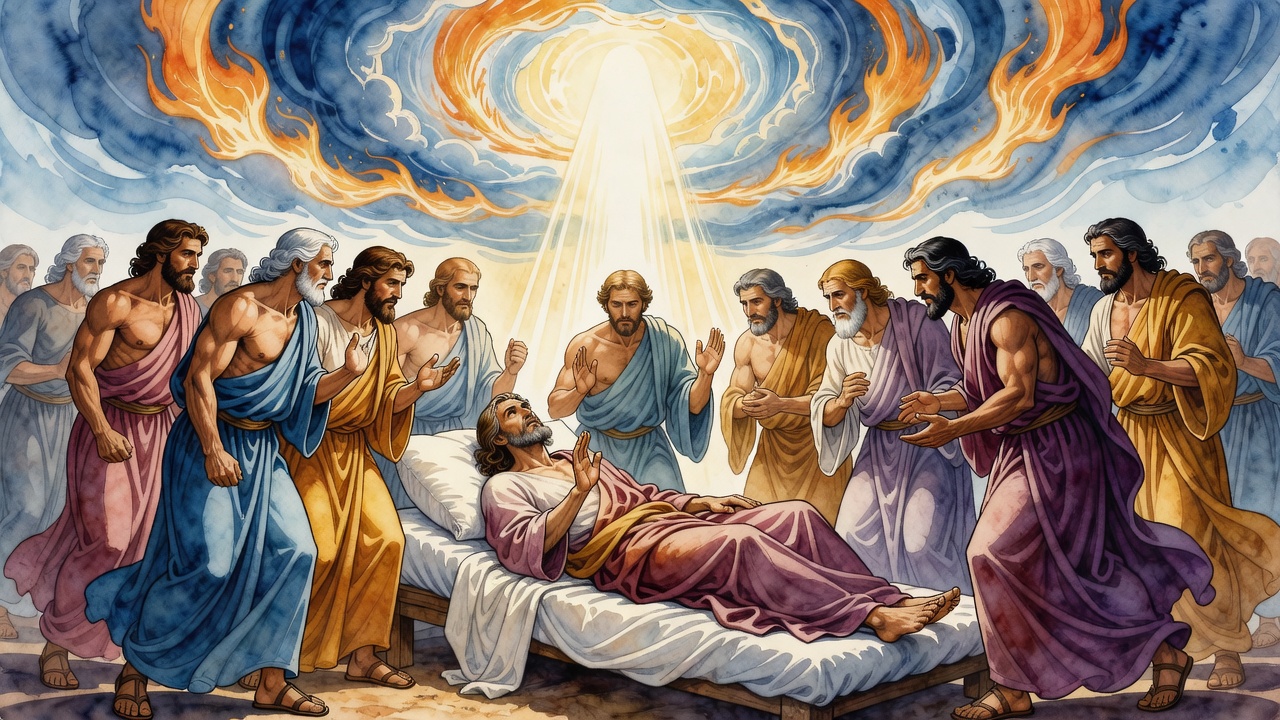
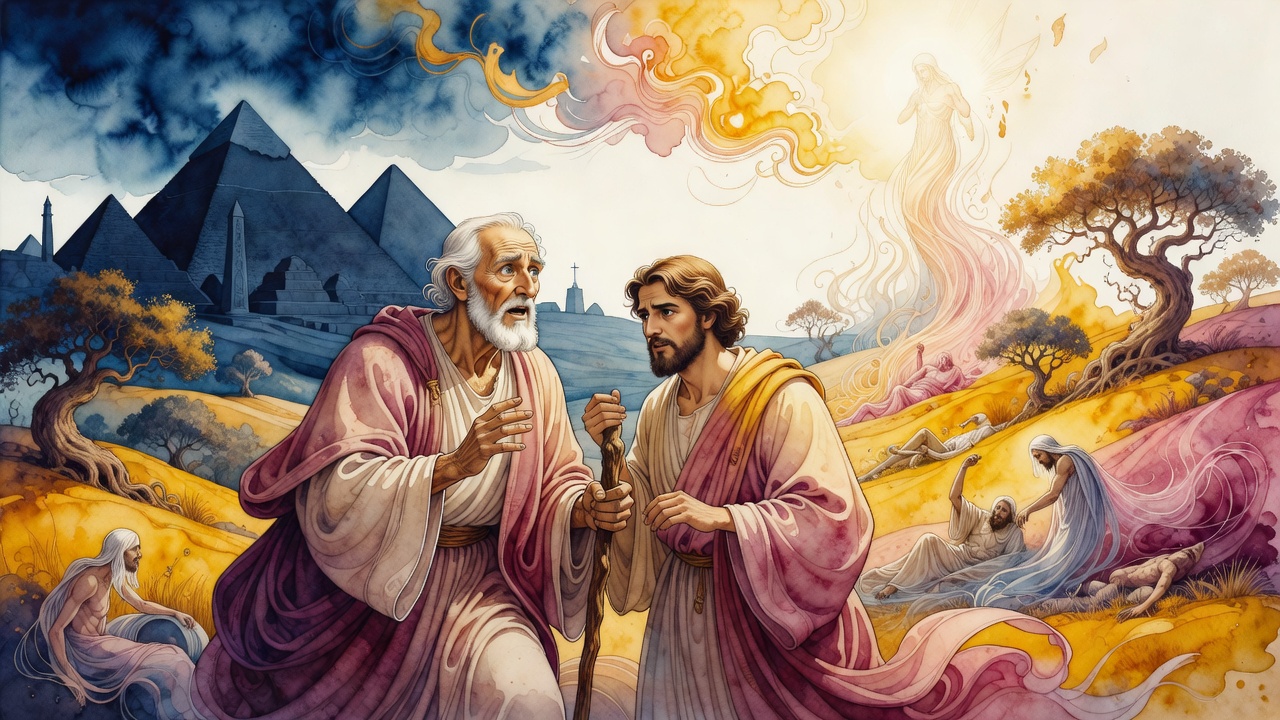
Jacob lay in Egypt with the end of his days already measured on his face. The air of Goshen was thick with cattle and grandchildren, yet his mind kept returning to a coat and a pit and a long road of silence. He turned to Joseph, who held Egypt in his hand, and did not ask for soft words. "And thou, my son Joseph," he said, "forgive thy brethren for their trespass against thee." He did not stop at pardon. "Forsake them not, and grieve them not, for the Lord hath put them into thine hands, that thou shouldst protect them all thy days against the Egyptians."
The man who had been sold now held the sellers. Jacob named the danger without decoration: Egyptian power would press the brothers once Joseph's favor cooled, and only Joseph's shield would keep them. Forgiveness was not a feeling to taste and set down. It was a post he must hold until his own bones left the Nile. Revenge would have been easy and human. Jacob demanded the harder office of guardian.
The Prophecy in the Room
Jacob gathered his sons, the heads of tribes still small enough to stand in one chamber. He told them God would walk with them if they walked in His ways. He also told them the hard part without cushion. Great suffering would fall on their sons and grandsons in this land. Bondage was already breathing in the air of Goshen, in the way Egyptians watched Hebrew wealth with thin smiles.
"But if you will obey God, and teach your sons to know Him," he said, "then He will send you a redeemer, who will bring you forth out of Egypt and lead you into the land of your fathers." The room held both chains and a future road. Joseph heard the charge twice: guard the brothers now, and keep the teaching alive for the generations that would need a redeemer. Faith without transmission would die in the brick pits. Transmission without forgiveness would die in a civil war of brothers.
A Golden Bier Leaves Egypt
When Jacob died, Pharaoh decreed that any Egyptian who refused to join the funeral march to Canaan would die. The edict cracked like a whip across nomes and villages. Princes and common folk filled the road until the procession looked less like a family and more like a moving city. Jacob's own sons alone carried the bier. No grandson's hand touched the gold frame inlaid with onyx and bdellium, fragrant resin catching the sun. Joseph set a golden crown on his father's head and a scepter in his hand, arraying the dead as a living king for the last procession through a land that would one day enslave his seed.
They buried him in the cave of his fathers, returning the wanderer to purchased ground. The road back to Egypt was quieter. Joseph's power still held, but the charge of forgiveness sat heavier than the crown he had placed. Every brother who walked behind the bier knew Joseph could unmake them with a word and had been ordered not to.
Bones Waiting for the Road
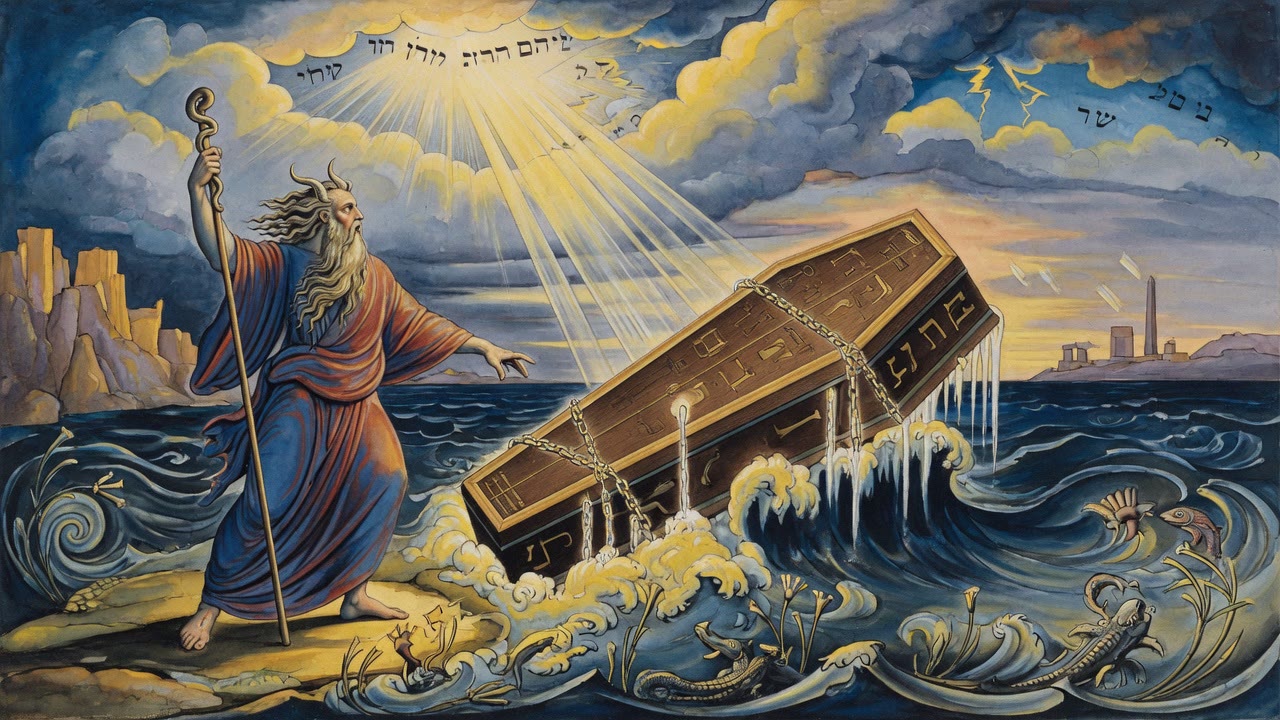
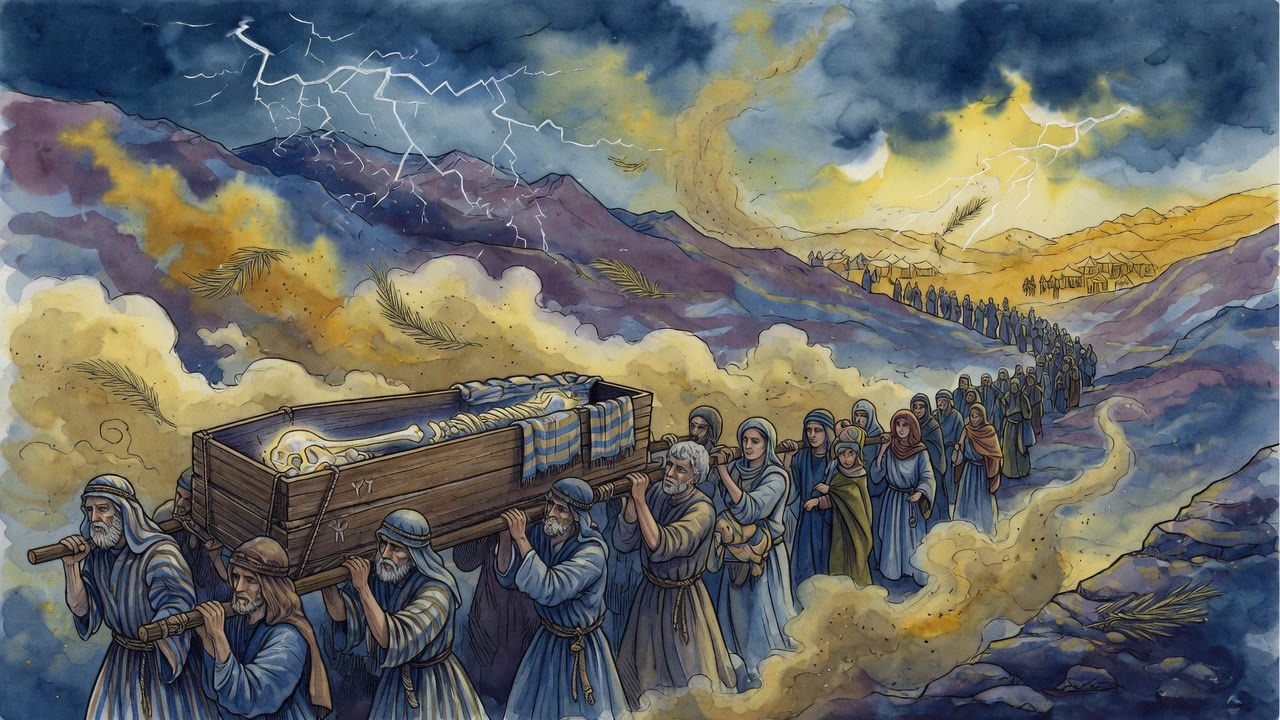
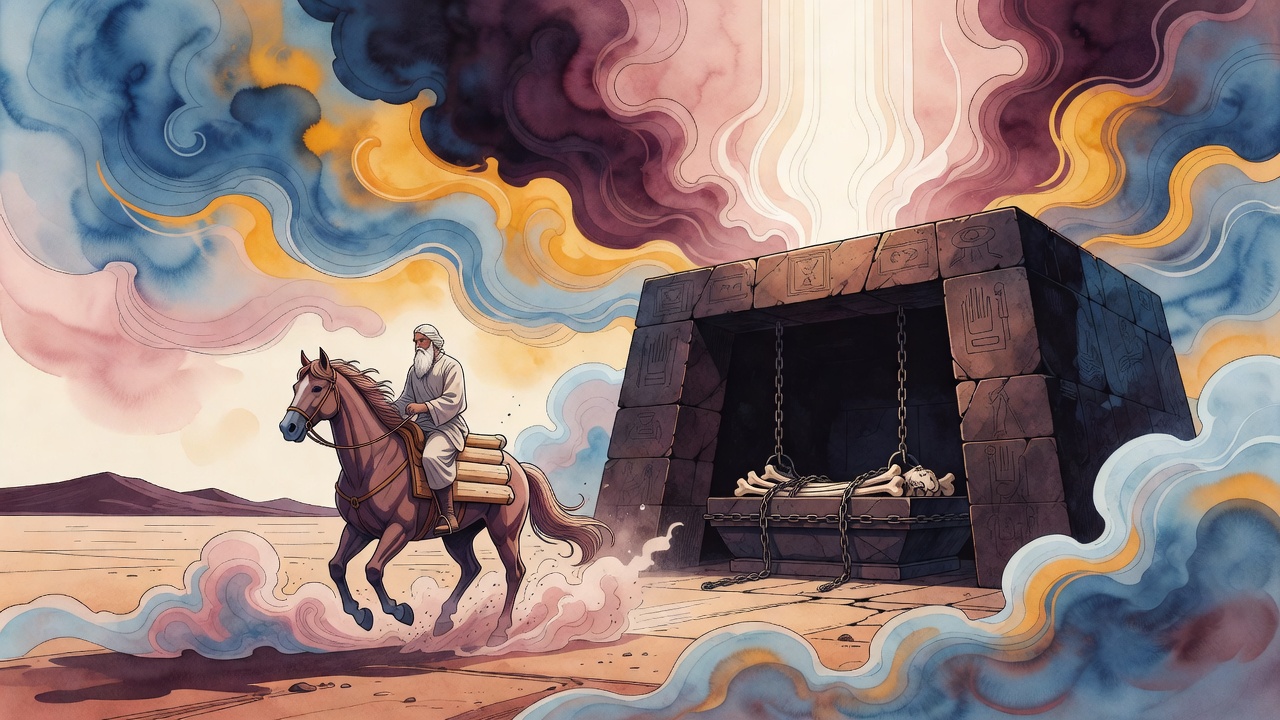
Joseph died in Egypt as well, full of years and of a promise he extracted like a debt: God would surely remember them, and they must carry his bones up from this place. His body did not stay free for the taking. Generations later, when Israel went out under Moses, they lifted Joseph's bones and carried them through the wilderness like a second ark of memory. The man who had made Egypt feed the world went home as cargo on the shoulders of free men, rattling softly in a coffin that refused to become Egyptian forever.
At the edge of the land the work was not finished. The tribes did not scatter to their lots until the debt of place was paid. Conquest could wait an hour. Accounting could not.
Shechem Takes Him Back
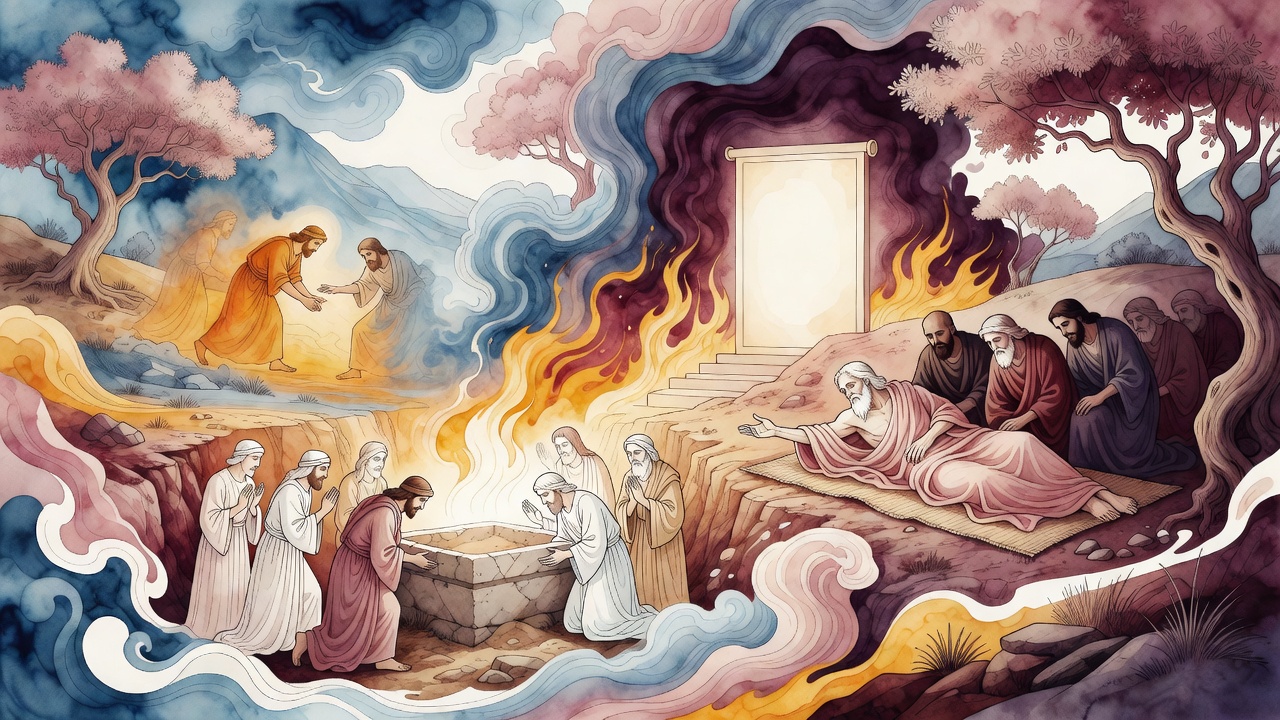
The first act upon entering the land was burial. They laid Joseph in Shechem. Heaven's word, as the legend preserves it, was plain: "From Shechem did ye steal him, and unto Shechem shall ye return him." The pit and the sale and the coat dipped in blood found their answer in a grave on the same ground. Geography itself became teshuvah (repentance, the repair of a wrong).
Jacob had taught his sons the fear of God with a hard hand when needed. The legend says those sons became godly men, and their children walked in the same path, worthy to be called fathers of Israel, bound by covenant as the first patriarchs were bound. A chain stretched from Abraham's tent to Joseph's tomb. The boy thrown into a pit came home as bones that closed the circle. Joseph had forgiven while he lived, protected while he ruled, and waited while he slept in Egypt. The land finished the accounting after he died, and the tribes stood for a moment as men who could not enter inheritance without first repairing a theft.
← All myths