Asenath Wept at Egypt's Wall with a Gold Plate
Jacob hangs a golden plate on Dinah's infant, leaves her by Egypt's wall, and years later that foundling becomes the wife of Egypt's lord.
Table of Contents
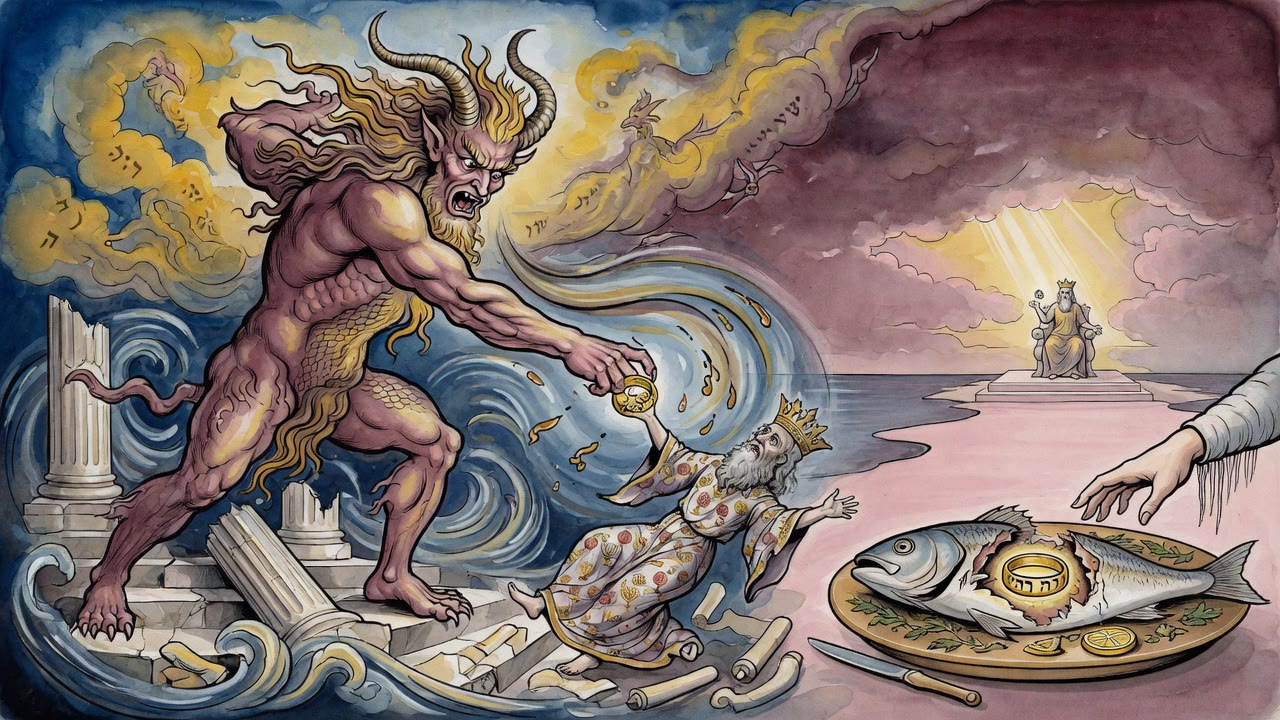 Click for full size
The Plate at the Wall
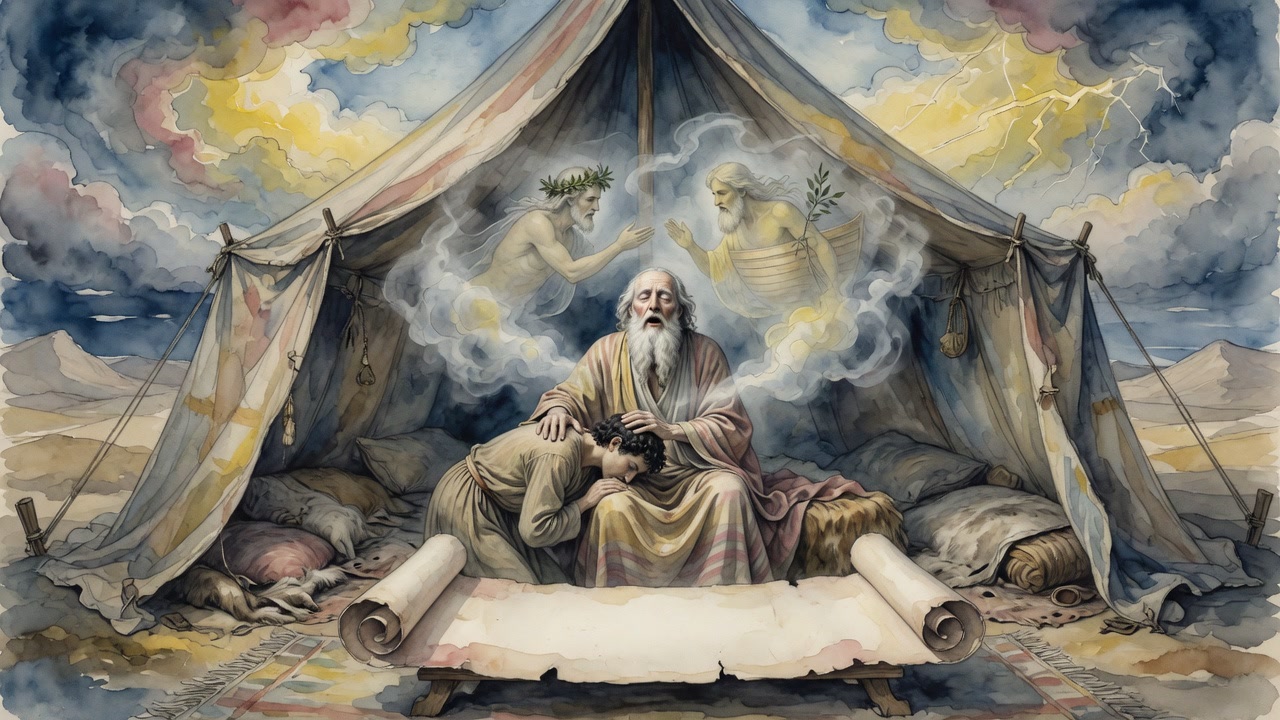
Jacob comes back from Shechem with a house that will not stop bleeding in the memory. He takes gold and writes until the metal holds a history too sharp for a cradle song. Every blow of Hamor and Shechem goes onto the plate: names, shame, rescue, the unfinished story of his daughter. When Dinah bears a girl, he hangs the plate around the infant's neck and lays the child by the wall of Egypt.
The baby cries. Egypt does not know the language of that cry, only its urgency. Jacob's hands empty. The road back to Canaan does not get lighter because the decision was made for safety. It gets quieter, which is not the same mercy.
A father who once locked danger out of a tent now trusts a wall and a strip of gold more than he trusts the road home with a grandchild whose face would open old wounds in every market.
Potiphar Hears Weeping
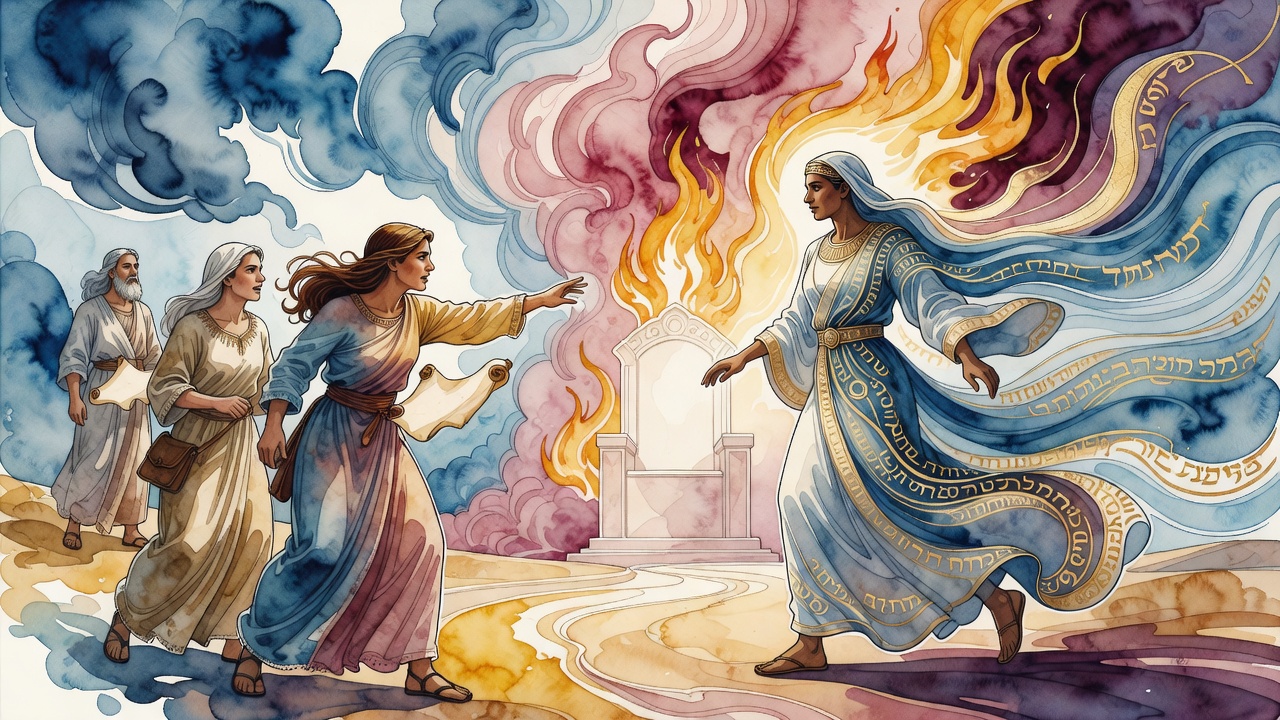
That same day Potiphar walks the wall with servants and hears a child. He lifts her. He reads the plate. "This is a daughter of great ones," he says, and the sentence is both kindness and claim. He takes her home as his own. Scripture can call a raised child by the raiser's name. Michal raised children not her own, and they were still called hers. So Asenath is called the daughter of Poti-phera while the gold at her throat keeps another truth warm against her skin as she grows.
Egyptian rooms teach her Egyptian manners. The plate teaches her, whenever a nurse is careless enough to let her touch it, that she was never only what the rooms say.
How Dinah Went Out
The verse that tells how Shechem seized Dinah names her the daughter of Leah, not of Jacob. The midrash hears the mother in the daughter. Leah once went out to meet Jacob on a night she claimed him (Genesis 30:16). As the mother went out, so the daughter went out, walking the same path into the open air where eyes can find you.
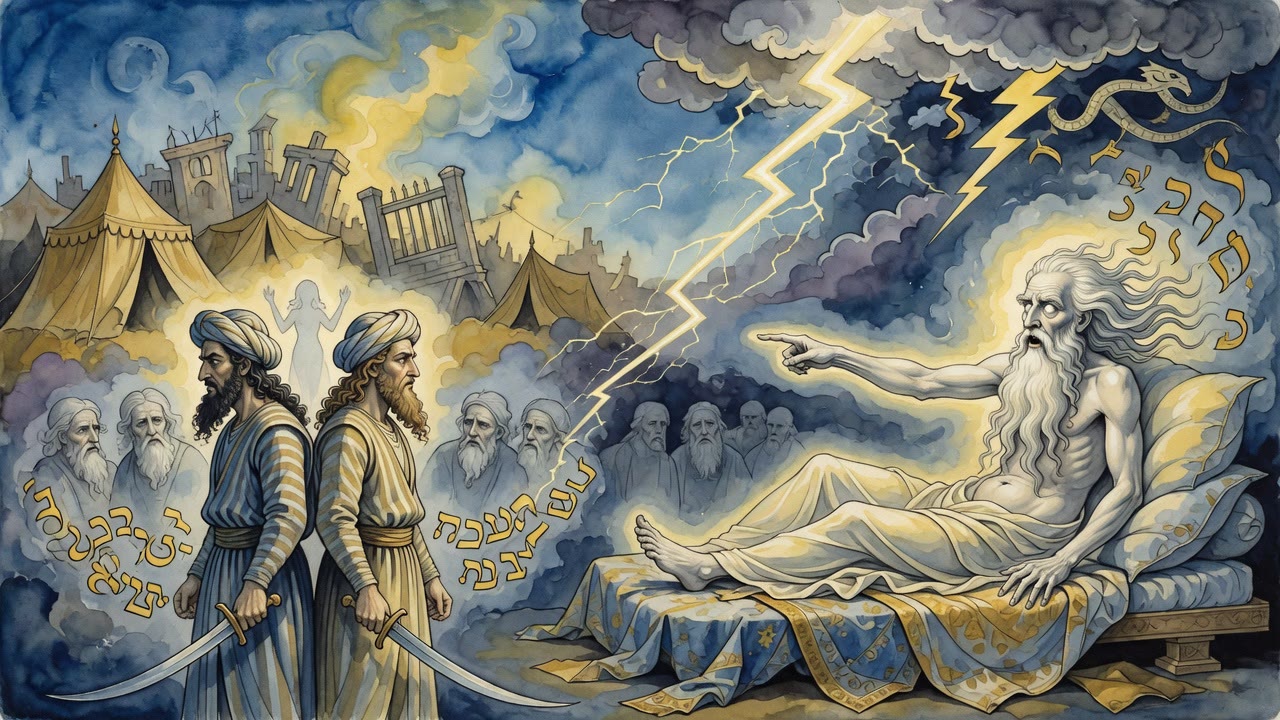
One step pulls a chain. Going-out is the first link. Shechem is the next. The verse doubles its verbs. He lay with her. He afflicted her. Two wrongs joined the way transgression joins to transgression, ordinary cruelty and a cruelty that is not ordinary. Out of that doubled wound comes a child the house cannot safely keep in Canaan, so Jacob writes her passport in gold and sets her on Egypt's stone like a letter he cannot bear to deliver by hand.
The naming "daughter of Leah" is not a slight against Jacob. It is a mirror held up to a family habit of stepping into the open and paying for it.
Tzafnat-Paneach
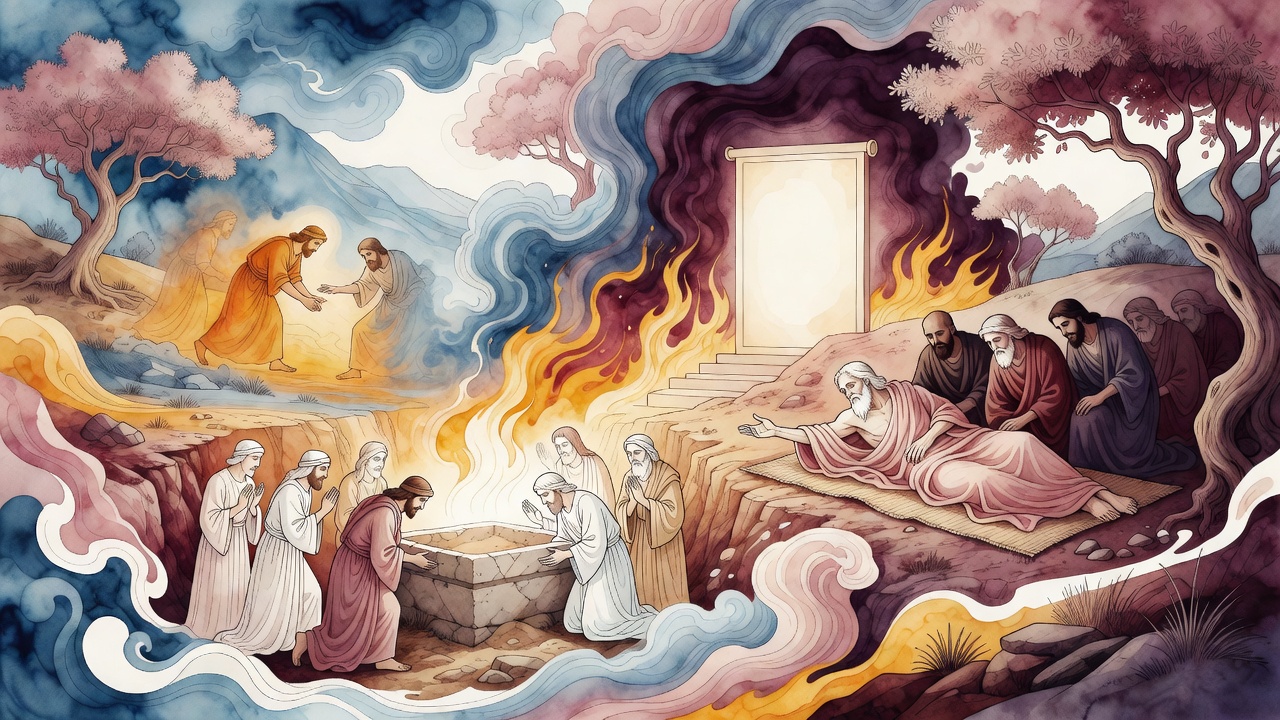
Years later Pharaoh raises Joseph and gives him a name the sages open letter by letter. Tzafnat: seer, redeemer, prophet, supporter. Paneach: perceptive, shrewd, discerning, wise. Every syllable a praise layered on praise until the Egyptian title becomes a Hebrew midrash of its own. Then Pharaoh gives him Asenath to wife. Her name opens too: none like the master who raised her; hidden for beauty; crying out to be saved from a hard hand; perfect in her deeds.
The foundling at the wall becomes the woman of Egypt's second throne. The plate's people and the dreamer's people meet in one house without the wedding feast announcing the full genealogy. Joseph, who was thrown into a pit by brothers, marries the daughter of the sister whose going-out cracked the family in another key. Egypt, which thinks it is arranging a political marriage, is hosting a reunion it cannot read.
What the Wall Kept
Dinah's going-out cost blood. Jacob's leaving of the infant costs a different kind of breath: trust placed in strangers and in metal. Asenath grows under an Egyptian roof with Hebrew truth against her skin. When she marries Joseph, the family that once cracked at Shechem gains a hinge in the empire that will feed them when famine comes and brothers bow without knowing whom they are bowing to.
The wall heard the first cry. The palace will hear the last turn of the story, when men who sold a boy stand before a man married to their sister's daughter, and the gold plate's old sentence finally finds its full meaning: a daughter of great ones, returned to greatness by a road no one planned in the night of the leaving.
In the years between the wall and the wedding, Asenath learns Egyptian speech with a Hebrew secret against her collarbone. Nurses come and go. Potiphar's house rises and trembles through scandals she is too young to name. The plate remains. When Joseph finally stands in Pharaoh's favor, the foundling and the dreamer recognize something in each other that courts cannot invent: both were thrown, both were lifted, both still wear a past Egypt prefers to rename.
← All myths