Simeon and Levi Avenged Their Sister and Were Never Forgiven for It
Simeon and Levi avenged Dinah at Shechem. Jacob cursed their anger at his deathbed, forty years after the swords were put away.
Table of Contents
 Click for full size
The Day the Brothers Did Not Ask Permission
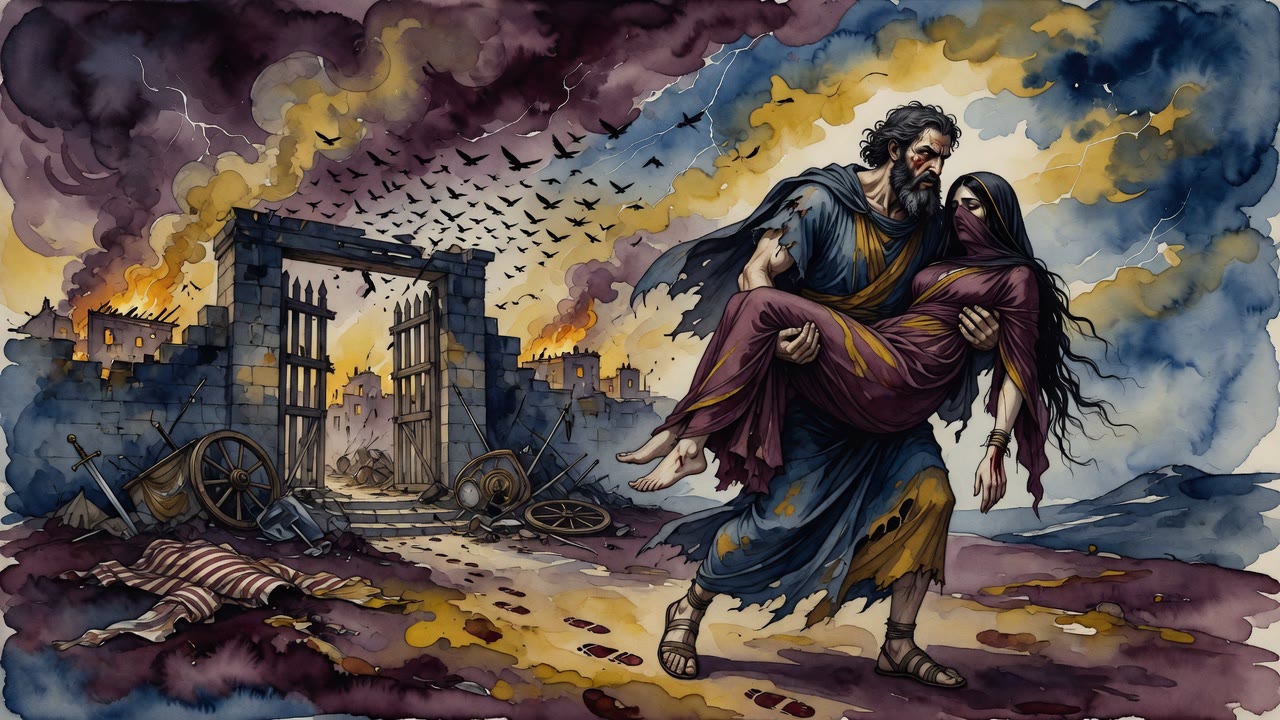
Their sister had been violated in the city of Shechem by the prince who wanted to marry her. Hamor and Shechem came to Jacob's camp with a proposal: give us the girl and we will give you the land and trade and an open future. The sons of Jacob negotiated the circumcision agreement with no intention of honoring it as written. On the third day, Simeon and Levi entered the city with their swords. Every male in Shechem died.
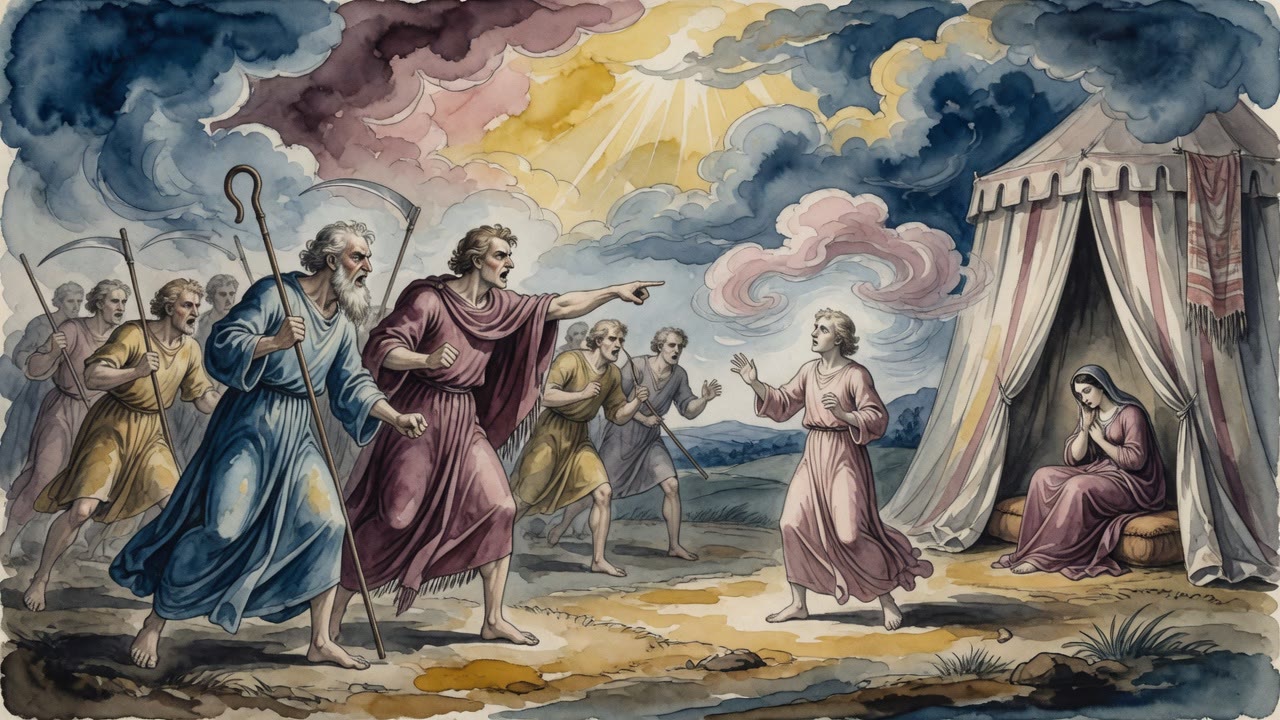
Jacob heard what they had done and his first response was fear, not for them but for himself. "You have troubled me," he said. "You have made me odious to the Canaanites and the Perizzites. My household will be destroyed."
The brothers asked: "should he have treated our sister like a prostitute?"
The tradition preserved both answers. Jacob's fear was rational. The brothers' question was unanswerable. Neither resolved the other.
What Zeal Looked Like From the Inside
Pirkei DeRabbi Eliezer described the brothers' motivation as great zeal provoked by sexual immorality. They were not acting from cold calculation or tribal politics. They were acting from a wound that had no other available remedy. Shechem had taken their sister. The city had organized itself to keep her. The negotiations had been conducted as if the original offense could be retroactively absorbed into an alliance. Simeon and Levi read all of that as a continuing insult to their family's dignity and to something larger than family dignity.
The surrounding nations heard what two sons of Jacob had done and were terrified. The tradition recorded their calculation: if two brothers can destroy an entire city, what would all twelve sons do together? The terror fell on the cities around them and Jacob was not attacked. The action that Jacob had feared would destroy him had produced the opposite of what he feared, at least in the immediate aftermath.
But Jacob did not change his assessment of what the brothers had done. He was still afraid. He moved the camp. He did not celebrate the outcome.
The Testament of Simeon
Simeon's own account of the episode, preserved in the later tradition, described the massacre as an act justified by the law of the uncircumcised who had violated the daughter of Israel. The text attributed to Simeon the reflection that Levi had been the moving force, that Levi's anger had been fiercer and more organized than his own, that what happened at Shechem was Levi's war as much as his. The assignment of responsibility between them was never simple in the tradition: they had acted together, been condemned together, but their fates diverged in ways that suggested the tradition was reading their partnership as containing an asymmetry the partners themselves had not fully understood.
Simeon in his own account also acknowledged envy of Joseph, a connection the tradition found significant: the same energy that drove the massacre at Shechem showed up in the brothers' treatment of their father's favorite son. The anger that Shechem had provoked was the same anger that Joseph's coat provoked, directed at different targets but unmistakably the same force.
Jacob's Deathbed Words
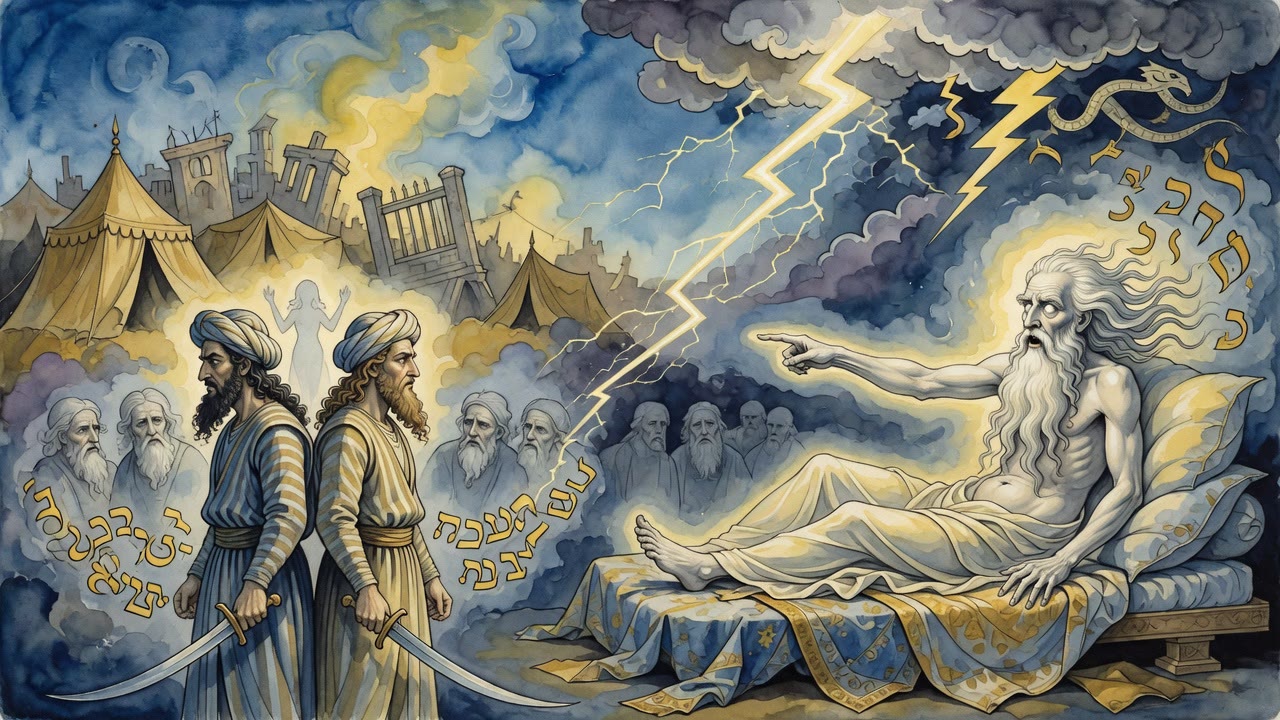
Forty years or more later, Jacob lay dying in Egypt and called his sons around him. He came to Simeon and Levi and did not soften what he had to say. "Instruments of violence are their swords. Let my soul not enter their council. Let my honor not be joined to their assembly. In their anger they killed men. In their rage they hamstrung oxen. Cursed be their anger, for it was fierce. Cursed be their fury, for it was cruel. I will divide them in Jacob and scatter them in Israel."
He did not curse what they had done to avenge Dinah. He cursed the anger itself, the quality of the force, the rage that in killing the men of Shechem had also hamstrung oxen, the violence that had overflowed its target and damaged things that had no part in the offense. He was distinguishing between the wound that had required response and the nature of the response that came.
Simeon was scattered into Judah's portion. His tribe never consolidated its own territory. Levi was also scattered, distributed across the land in forty-eight cities with no contiguous inheritance. But Levi's dispersal became something else: the tribe that had demonstrated its zeal at Shechem, and again at the golden calf when Levi stood with Moses against the people, became the tribe of priests and Levites whose distribution across Israel was their vocation. Jacob's curse on the anger became, for one son, the shape of a calling.
← All myths