5 min read

Isaac Blessed Jacob With the Words of Adam and Noah

The blessing Isaac spoke over Jacob at Beersheba was not new. The same words had been spoken twice before - first to Adam, then to Noah, now to Jacob.

Curated by Arthur · Told by Maggid ·
Table of Contents
  1. Words Older Than Abraham
  2. What the Blessing Actually Said
  3. The Dark History Running Beneath Shechem
  4. Why Torah Was Given to All Israel and Not to Adam Alone

Words Older Than Abraham

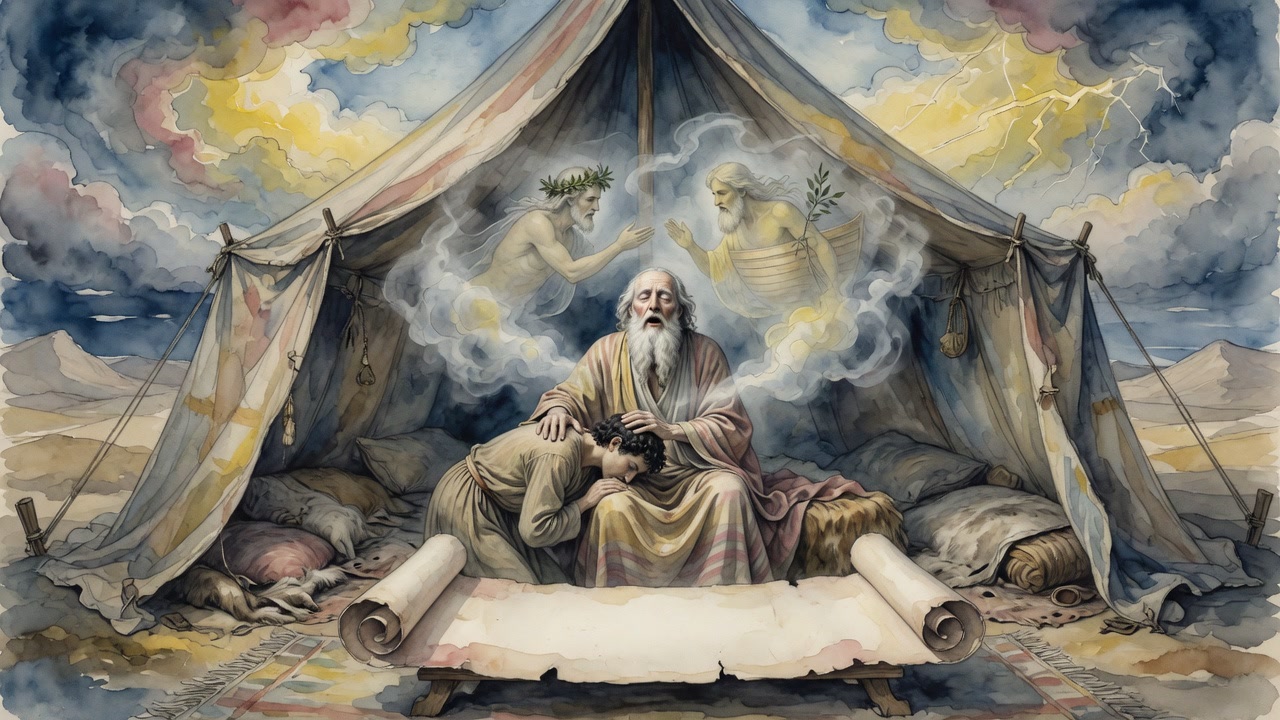
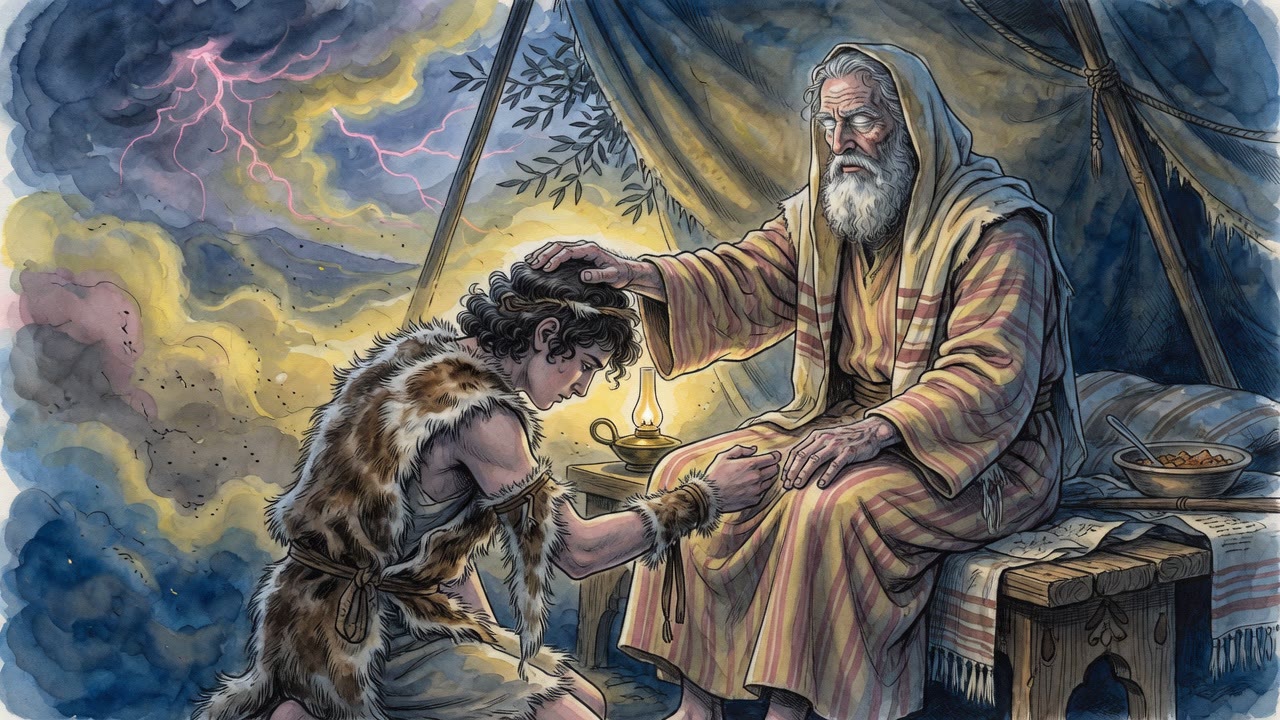
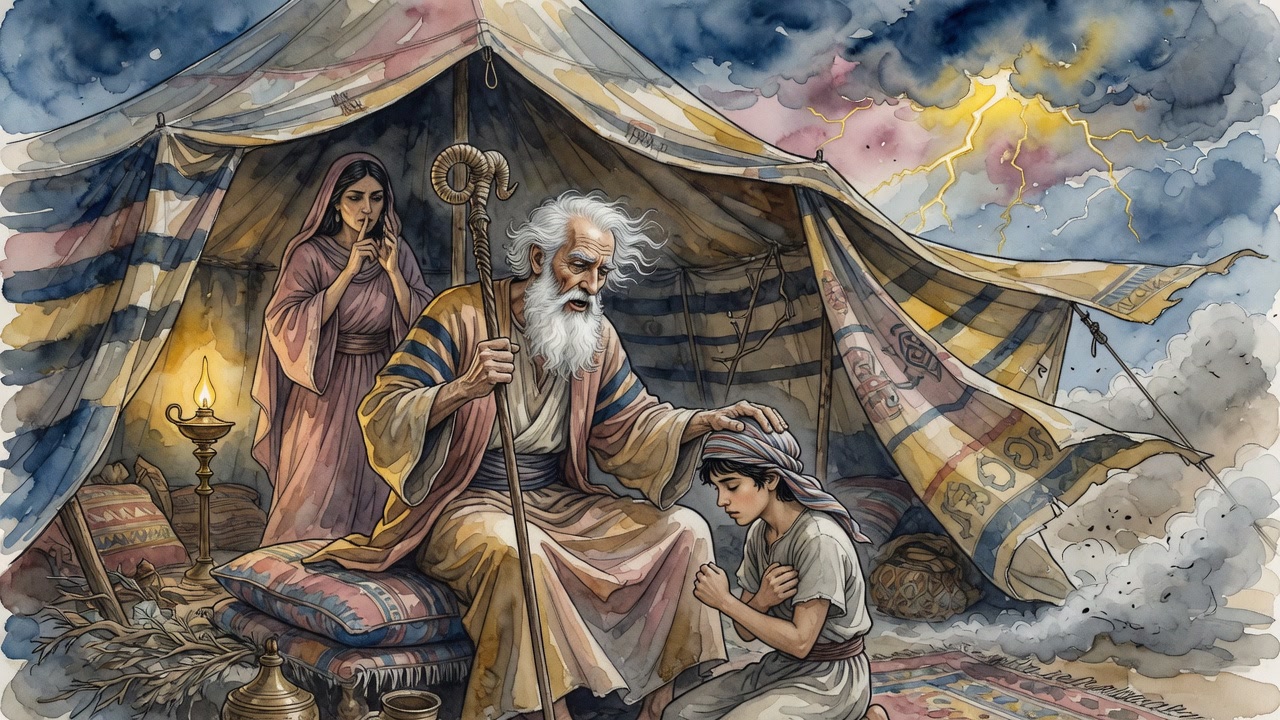
Isaac was dying, or believed he was dying, and he called his son Jacob to receive the blessing. They were in a tent in Beersheba. Outside, the night was ordinary. Inside, an old man was preparing to transfer something he himself had received, and that his father Abraham had received, and that ran back through human history further than either of them could trace.

The Book of Jubilees, composed in the second century BCE and preserved among the Dead Sea Scrolls, records the exact content of Isaac's blessing with a precision the Torah itself does not provide. What Isaac prayed was not original to him. He prayed that God would give Jacob all the blessings with which He had blessed Isaac, and with which He had blessed Noah, and Adam. The chain was explicit. Five links: Jacob, Isaac, Abraham, Noah, Adam. One covenant, passed forward through time.

What the Blessing Actually Said

The core of the blessing carried a phrase that runs like a spine through everything: to exercise authority over all the seed of Seth. Seth was born to Adam and Eve after Cain murdered Abel, born to replace what had been lost. After the flood, when only Noah's family survived, every human being alive was a descendant of Seth. To lead the seed of Seth was not a tribal ambition. It was a universal one: the shepherd of the entire human family, guiding it toward what the text calls a kadosh nation, a people set apart by its commitment to righteous living.

This was not a blessing for prosperity, though prosperity was in it. This was a blessing for responsibility. Isaac was not praying that Jacob would be comfortable or powerful. He was praying that Jacob would become the vessel through which the original divine intention for human beings, the intention present in God's first blessing of Adam and Eve in the garden, would be kept alive and transmitted.

The Dark History Running Beneath Shechem

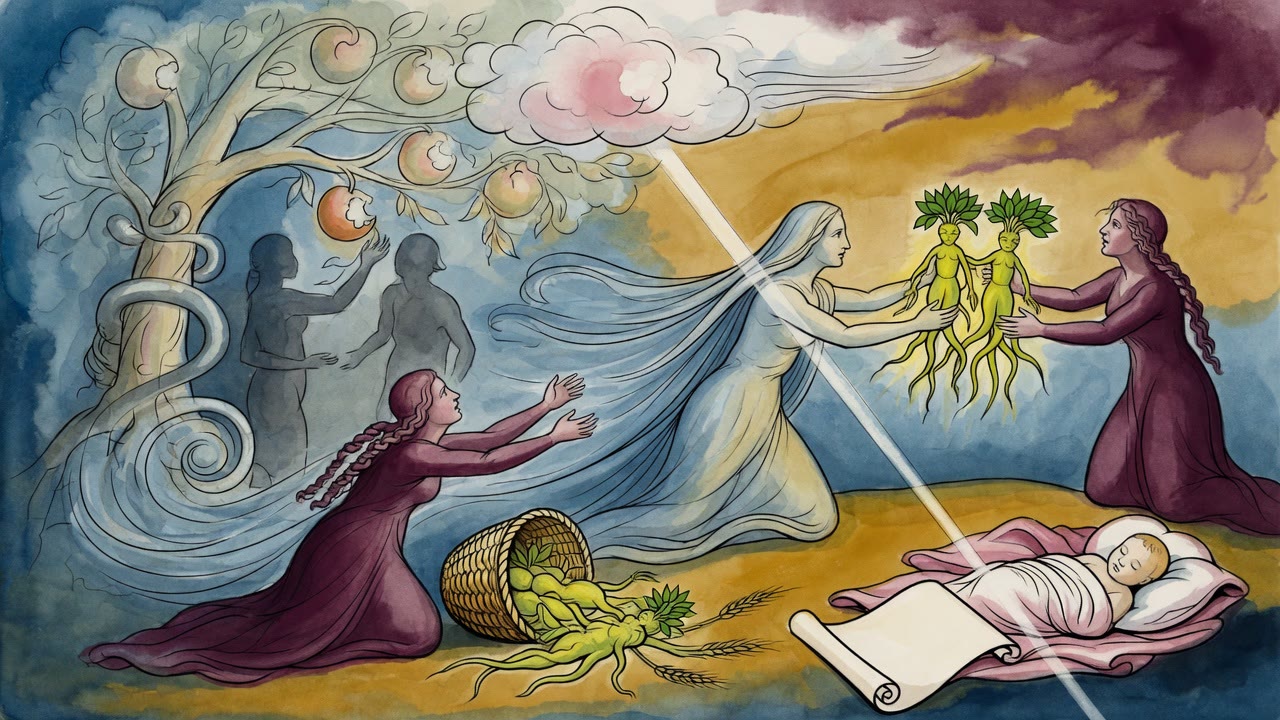
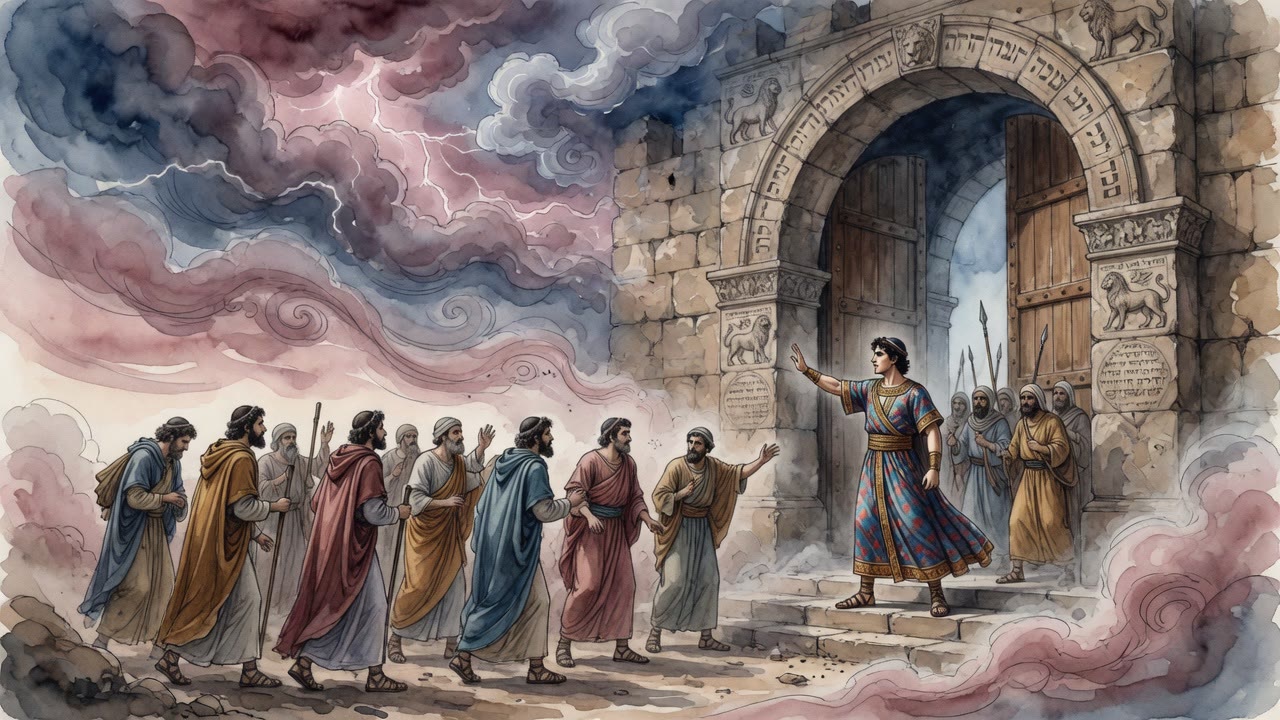
Pirkei DeRabbi Eliezer, the early medieval midrash on Genesis compiled around the 8th century CE in the Land of Israel, lays bare the shadow side of this inheritance. The serpent in the garden, it argues, was Shechem son of Hamor, or rather: the serpent and Shechem represent the same pattern of deception and violation across different generations. In Eden, the serpent manipulated the woman through spectacle. In Canaan, Shechem brought dancing girls and musicians into the streets to lure Dinah out, knowing curiosity would draw her. The method was identical.

What the blessing meant, then, was this: Jacob's descendants would have to carry the original righteous purpose of humanity in a world where that purpose was constantly being undermined, where the serpent's method reappeared in every generation wearing different clothes. The seed of Seth was not a peaceful inheritance. It was a contested one, requiring vigilance, requiring the discipline of being set apart precisely because the alternatives were always available and always seductive.

Why Torah Was Given to All Israel and Not to Adam Alone

Legends of the Jews, drawing on multiple rabbinic sources, asks an adjacent question: why was the Torah not simply given to Adam at the beginning, so that all his descendants would have it? The answer turns on the nature of transmission. A commandment given to a single person depends entirely on that person's faithfulness in passing it down. Adam received the prohibition on the forbidden fruit alone. Eve was not directly addressed. The single point of transmission became the single point of failure.

When the Torah was given at Sinai, it was given to the entire assembled people simultaneously, men, women, and children, so that no single link in the chain of transmission could break the whole. The blessing Isaac spoke over Jacob at Beersheba was the last moment in the old system, the last transmission from patriarch to heir. After Sinai, the covenant would belong to everyone who stood at the mountain. But before Sinai, it passed through Jacob, the seventh righteous man from Adam, heir of a blessing that had been crossing time since the first words ever spoken over a human being.


← All myths
From the tradition

Sources

4 sources

The texts this telling draws on, in full. Open a card to read inline, or expand it for a wider, quieter read.

Legends of the Jews 2:30Legends of the Jews

The Legends of the Jews, that incredible compilation of rabbinic stories and lore by Louis Ginzberg, offers a few compelling reasons. It all boils down to wisdom, foresight, and a little bit of divine strategy.

One reason, according to the legends, is about responsibility. God points out that when the commandment about the forbidden fruit was given, it was given solely to Adam. Eve wasn’t directly addressed, and that, some say, led to the whole… you know… apple incident. So, the thinking goes: if women hear the commandments first, they can then guide the men. A sort of, “Hey, listen up, this is important!” kind of situation.

There's more to it than that. God, in His infinite wisdom, knew something else: women are, on the whole, more scrupulous. More careful in their observance of religious precepts. This isn't about saying one gender is “better” than the other, but rather acknowledging inherent strengths and tendencies. God recognized that inherent diligence. He knew they’d take the commandments seriously.

Finally, perhaps the most beautiful reason of all: education. God expected, and still expects, the women to instruct their children in the ways of the Torah, the teachings. Mothers, traditionally, are the first teachers. Who better to receive the divine message than the very people who will then pass it down to the next generation? It's a powerful statement about the role of women in Jewish tradition. It’s not just about receiving commandments, but about understanding them, internalizing them, and then, most importantly, transmitting them. It places women at the very heart of Jewish continuity.

So, next time you hear someone ask why God spoke to the women first, you can tell them: it was about responsibility, about inherent wisdom, and most profoundly, about the future. About ensuring that the light of the Torah shines brightly for generations to come.

Full source
Pirkei DeRabbi Eliezer 38:1Pirkei DeRabbi Eliezer

Pirkei DeRabbi Eliezer turns to The Dark History of Shechem from Adam to Jacob.

The Pirkei DeRabbi Eliezer asks: who is this serpent? The text startlingly equates the serpent with Shechem, son of Chamor. But how could a person be a serpent? To understand this, we have to rewind a bit and look at the story of Dinah.

Remember Dinah, Jacob’s daughter? She wasn't out in the town square causing trouble. No, But trouble found her anyway. Shechem, in a deceptive and manipulative act, orchestrated a spectacle to lure her out. He brought dancing girls and musicians into the streets, knowing that the sounds of merriment would pique her curiosity.

Sadly, it worked. Dinah, drawn by the music and the allure of the spectacle, went out to see the girls. This is when Shechem seized her, slept with her, and she conceived Asenath. A terrible act of violence.

What happened next is heartbreaking. The sons of Israel, enraged and concerned about their family's reputation, considered killing Dinah. They feared that people would say, "There was an immoral daughter in the tents of Jacob." Can you imagine the weight of that judgment? The impossible situation she was in?

So, where's the "serpent" in all this? The Pirkei DeRabbi Eliezer cleverly connects Shechem's manipulative actions to the subtle, insidious nature of a serpent's bite. Just as a serpent hides and strikes unexpectedly, Shechem used deception to lure Dinah into a vulnerable position. His actions, like a serpent's venom, had devastating consequences.

This passage isn't just about a historical event. It's a cautionary tale about the dangers of hidden threats, the importance of protecting the vulnerable, and the complexities of navigating reputation and justice.

The story of Dinah and Shechem challenges us to look beyond the surface. To recognize that sometimes, the greatest dangers come not from obvious enemies, but from those who disguise their intentions. It also forces us to confront the difficult questions of how we respond to those who have been harmed and how we balance justice with compassion.

So, the next time you hear the verse "the serpent bit him," remember Dinah, remember Shechem, and remember that sometimes, the most dangerous snakes are the ones we least expect.

Full source
Book of Jubilees 22:20Book of Jubilees

That feeling, that connection, is at the very heart of the Book of Jubilees, a text brimming with blessings, covenants, and the destiny of a people.

Specifically, These aren't just any blessings; they're echoes of blessings given to Noah and Adam, reverberating through time.

The scene: a patriarch, looking at his son, sees not just his child, but the future of his lineage. He prays that his son will "exercise authority over all the seed of Seth." This isn't about domination; it's about leadership, about guiding the descendants of Seth – a key figure in the line of humanity after Cain and Abel – towards righteousness. The hope is that through this leadership, the family's "ways and the ways of thy sons will be justified, So that they shall become a holy nation." Think about the weight of that aspiration: to become a kadosh, holy nation, set apart by its commitment to ethical living.

Then come the blessings themselves. "May the Most High God give thee all the blessings Wherewith he hath blessed me And wherewith He blessed Noah and Adam; May they rest on the sacred head of thy seed from generation to generation for ever." The image is powerful: blessings cascading down through time, landing on the "sacred head" of the son and his descendants. It’s a chain of divine favor, linking the present to the very origins of humankind. This echoes the idea of l’dor v’dor, from generation to generation, a concept central to Jewish continuity.

But it's not just about outward blessings. There's a deep yearning for inner purity as well. The patriarch prays, "And may He cleanse thee from all unrighteousness and impurity, That thou mayest be forgiven all (thy) transgressions; (and) thy sins of ignorance." This is a plea for teshuvah (repentance), repentance, for the chance to start anew, cleansed of past mistakes. It’s a recognition that even with the best intentions, we all stumble, we all fall short. Forgiveness is key.

The passage continues: "And may He strengthen thee, And bless thee. And mayest thou inherit the whole earth, And may He renew His covenant with thee, That thou mayest be to Him a nation for His inheritance for all the ages." What does it mean to "inherit the whole earth?" It's not about conquest or domination, but about stewardship, about caring for the world as God's partners. And the renewal of the covenant – that sacred agreement between God and humanity – is a promise of enduring connection, a bond that transcends time. It's a reminder that we are part of something larger than ourselves, that we have a role to play in God's ongoing story.

So, what does this ancient blessing mean for us today? It's a call to embrace our own inheritance, to strive for righteousness, to seek forgiveness, and to remember that we are all links in a chain that stretches back to the very beginning. It's a reminder that the blessings we receive are not just for ourselves, but for generations to come. How will we pass them on?

Full source
Book of Jubilees 27:14Book of Jubilees

The familiar telling remembers blessings, but let’s zero in on one specific instance, a poignant moment from the Book of Jubilees, chapter 27. It's a moment brimming with history, hope, and a father's deep love.

Here, Isaac calls his son Jacob, not just to chat, but to bestow a blessing, a berakah, a powerful invocation for good fortune and divine favor. But it’s more than just a wish; it’s an instruction manual for life, wrapped in the warmth of paternal love.

"Do not take thee a wife of any of the daughters of Canaan," Isaac begins. It's a clear directive, rooted in the desire to preserve the lineage, to keep the faith within the family. Remember, these weren't just casual suggestions. These were matters of profound importance, shaping the destiny of generations.

Then comes the journey. "Arise and go to Mesopotamia, to the house of Bethuel, thy mother's father, and take thee a wife from thence of the daughters of Laban, thy mother's brother." It’s a family affair, a deliberate move to connect Jacob with his roots, to ensure he marries within the extended family, reinforcing those crucial cultural and religious ties.

But the blessing truly soars in its promise: "And God Almighty bless thee and increase and multiply thee that thou mayest become a company of nations." This isn't just about having kids; it's about becoming a wellspring of nations, a source of future generations who will carry on the legacy. The Hebrew word for nations here might be better understood as "multitudes."

And finally, the weight of inheritance, the promise passed down through generations: "and give thee the blessings of my father Abraham, to thee and to thy seed after thee, that thou mayest inherit the land of thy sojournings and all the land which God gave to Abraham: go, my son, in peace." It's a connection to the past, a grounding in the present, and a vision for the future, all tied together with the land, the very soil that will nourish their legacy. The Book of Jubilees really emphasizes the covenantal inheritance, the idea that the promise made to Abraham is continually passed down.

"Go, my son, in peace." With those final words, a father sends his son out into the world, armed with a blessing, a purpose, and a profound sense of belonging. It's a beautiful, simple, yet powerful ending.

This passage from Jubilees isn't just an ancient text; it’s a timeless reminder of the power of blessings, the importance of family, and the enduring legacy we all inherit. What blessings have shaped your life? And what blessings will you pass on?

Full source