Rebekah Was Written in the Heavenly Tablets Before She Was Born
The Book of Jubilees records that Rebekah's role was inscribed in heaven before she drew water from the well. What was written there also included a curse.
Table of Contents
 Click for full size
The Tablets That Recorded the Covenant
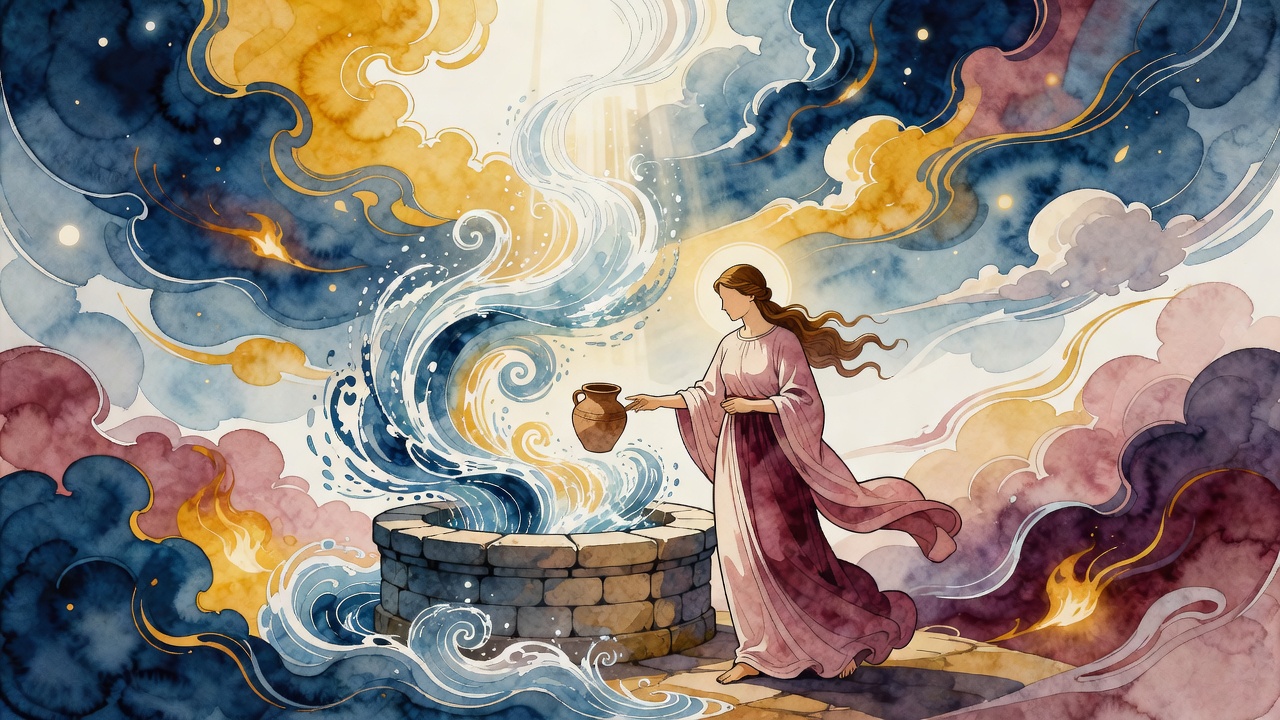
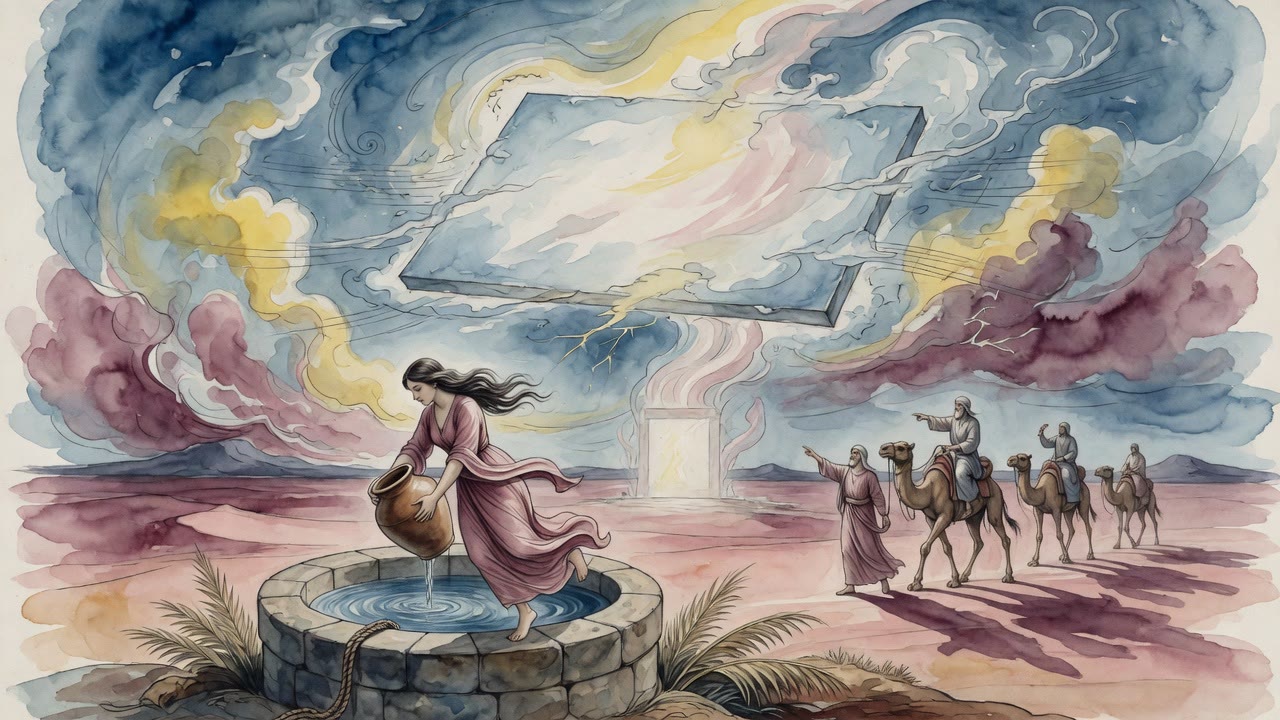
Rebekah had not yet arrived at the well at Nahor when the decision was made. She had not yet lifted the jar to her shoulder or offered water to the stranger's camels or agreed to follow a man she had never met into a life she could not have imagined. Before any of that, her name was written.
The Book of Jubilees, composed in Hebrew in the Land of Israel around 160 BCE and preserved complete only in Ethiopic translation, has a specific understanding of how the covenant works. It does not operate through improvisation or responsive grace. It operates through a document. The heavenly tablets are not metaphor. They are the actual record from which history is copied, event by event, generation by generation. The tablets already contain what will happen. The patriarchs are not shaping the covenant. They are living out what has already been inscribed above.
Jubilees chapter 25 contains one of the most unsettling uses of this device. Rebekah's fate is inscribed in those tablets, and what is inscribed is not only blessing. It is also a curse so complete it reaches beyond death. If the covenant is broken, if the line descends into the nations and abandons the way of the fathers, the offender's name will be erased from the earth and he will go to eternal condemnation. The tablets record consequences as precisely as they record blessings. Rebekah's story cannot be understood without that shadow behind it.
What Noah's Blessing Has to Do With It
The Book of Jubilees is obsessed with a single structural question: how do the blessings given to the patriarchs connect to each other and back to the beginning of the world? When Isaac or Jacob offers a blessing in Jubilees, the text is careful to show that the language echoes the blessings given to Noah and to Adam before him. Nothing is invented in the patriarchal period. Everything is extension.
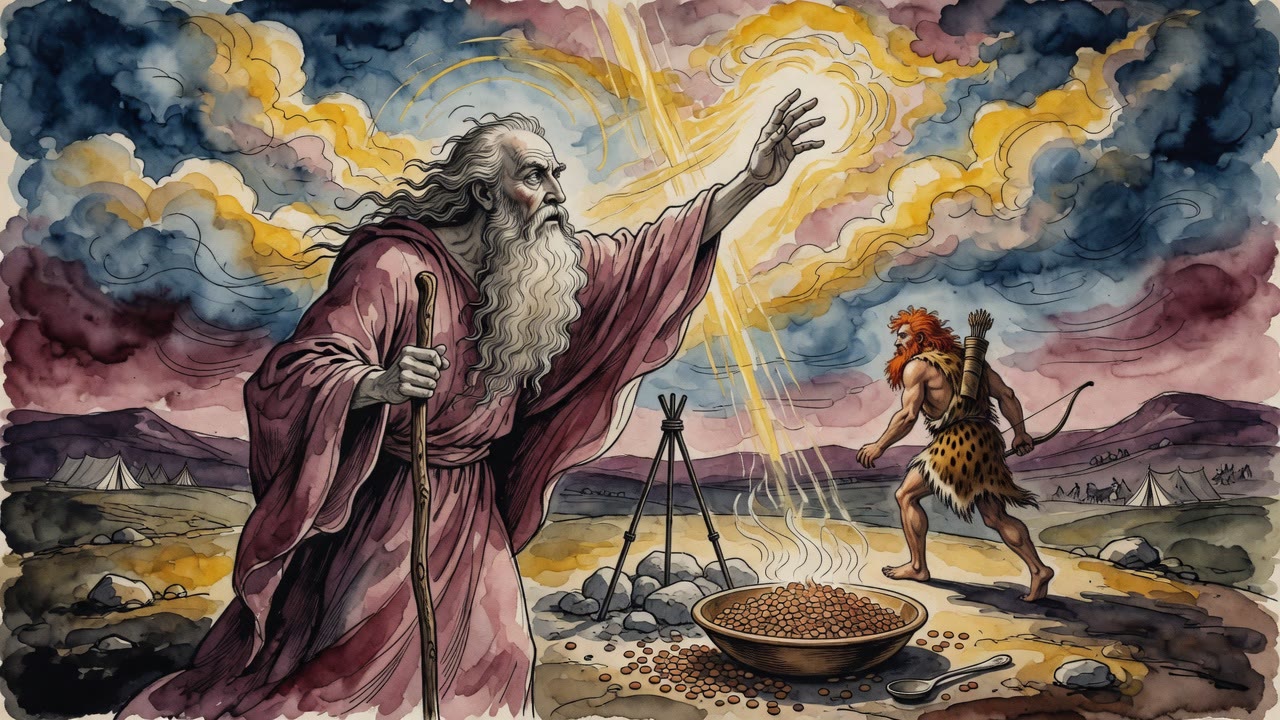
One passage in Jubilees describes Isaac looking at his son and praying that he will exercise authority over all the seed of Seth, that his ways and the ways of his sons will be justified, that they shall become a holy nation. The weight of Seth is specific. Seth was the line that survived Cain, the line from which all righteous humanity descends. To bless someone with authority over the seed of Seth is to place them at the center of the entire human story, not just the tribal one.
Rebekah's inscription in the heavenly tablets places her inside this same chain. She is not a figure who happened to be in the right place when a servant arrived with jewelry and a proposal. She was positioned at the intersection of the covenant line and the rest of human history, and her positioning was recorded before the world had occasion to express it.
Rebekah's Own Blessing Over Jacob
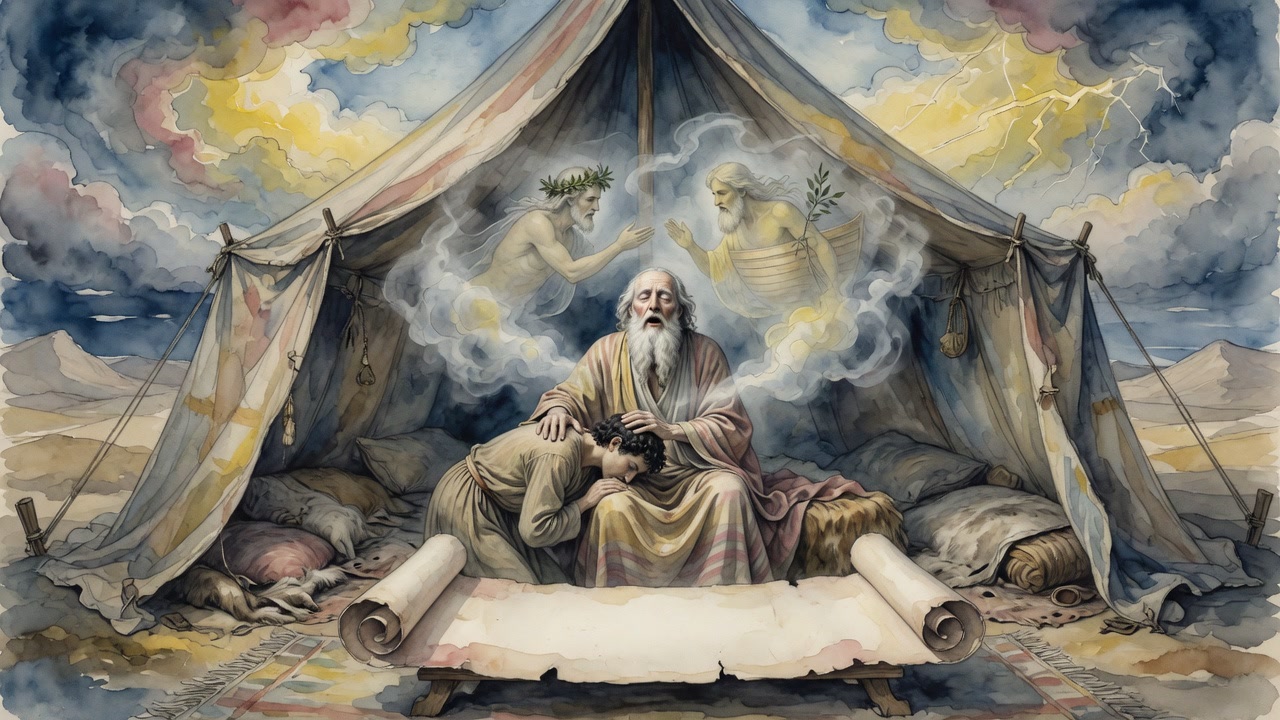
After Jacob secured Isaac's blessing through the famous deception, Rebekah gave her own blessing. Jubilees 25 records this separately, as a deliberate act. She placed her hands on his head. She gave thanks and praise. Then she spoke words that the text treats as more than a mother's wishes for her child.
She blessed him with the blessing that had been inscribed on the tablets. Not a version of it. Not an echo. The text of Jubilees presents Rebekah as someone who knew what was written, who was herself a keeper of the covenant's internal logic. She had watched Isaac bless Esau by mistake and orchestrated the correction. Now she completed the transmission by adding her own hands and her own voice to what had already been fixed above.
The Circuit Designed Before Her Birth
The blessing she spoke over Jacob reached back through Noah and through Adam to the first words of authority spoken by God over a living being. Each generation had carried the same charge forward, hand to head, voice to son, and now her hands rested where Isaac's had rested before her. Rebekah was not improvising. She was closing a circuit that had been designed before her birth, the same circuit the tablets had recorded while she was still unborn at the well.
That circuit did not end when she finished speaking. It would continue long after her death at a hundred and thirty-three years in Hebron, carried by the son she had blessed and the sons who would come from him. What she had spoken over Jacob's head was the same blessing the tablets held, transmitted intact, joining her own hands and her own voice to a line that the document above had fixed before the world began to express it.
← All myths