5 min read

Joseph Demanded His Bones Be Carried Home to Canaan

Joseph ruled Egypt and saved it from famine. His last act was extracting one oath: carry my bones out when you leave. The rabbis asked why Egypt was not enough.

Curated by Arthur · Told by Maggid ·
Table of Contents
  1. The Last Thing He Asked For
  2. What He Designed Before He Was Ready to Forgive
  3. The Caravan Ride He Never Forgot
  4. What the Book of Jubilees Said About the Promise
  5. What Happened After He Died

The Last Thing He Asked For

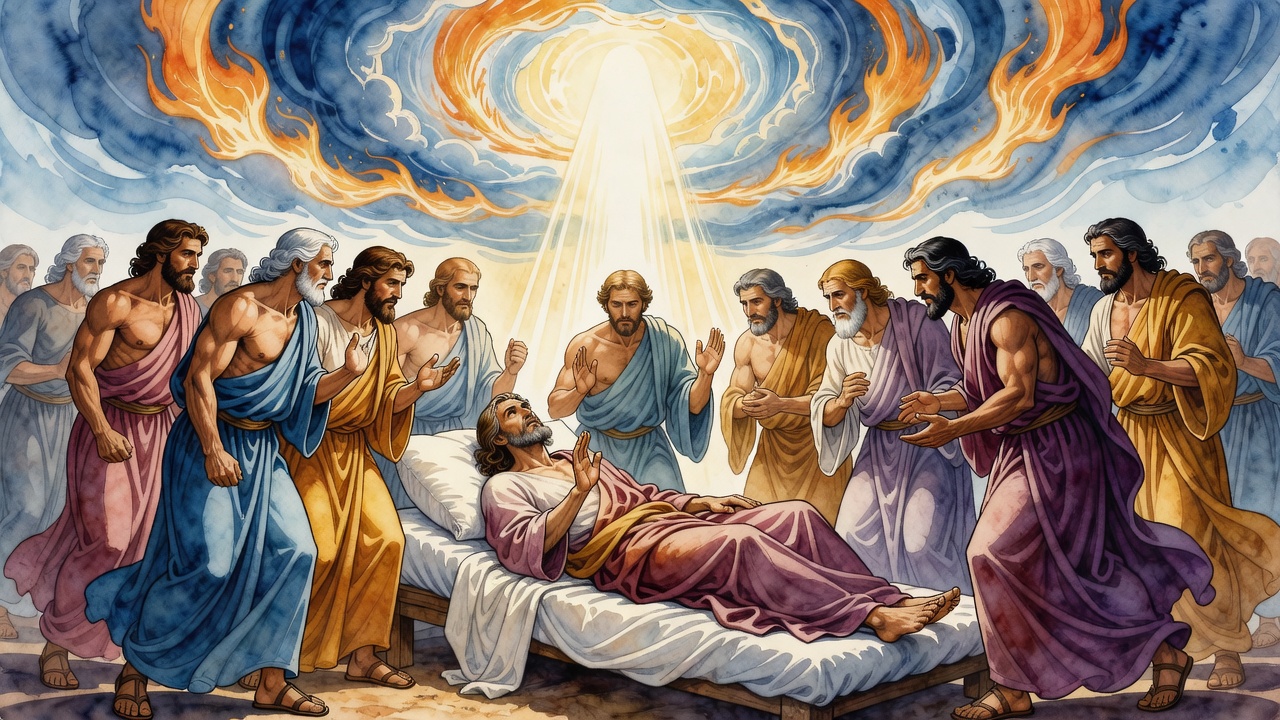
He was dying and he knew it and what he asked for was not a memorial or a monument or even a promise about his children. He made his brothers swear an oath about his bones. When God remembers you, he said, when God lifts you up out of this place, you will carry my bones up from here with you.

By any worldly measure, Joseph had no reason to refuse Egypt. He had been sold into slavery there as a teenager and risen to become second in command to Pharaoh. He had saved the country from famine. He had administered the grain distribution that kept the ancient world alive for seven years. He had brought his father and all his brothers down and settled them in the best land Egypt had to offer. Egypt had been, by every external measure, astonishingly good to him.

What He Designed Before He Was Ready to Forgive

When famine spread and the brothers came to Egypt for grain, Joseph recognized them immediately. They did not recognize him. He had them tested, interrogated, imprisoned, and accused. He arranged it so they had to bring Benjamin, the youngest, the full brother from his mother Rachel. He planted his cup in Benjamin's sack and had them brought back as thieves.

The tradition read this as something more complex than revenge. Joseph was watching to see whether the brothers who had sold him had changed. He needed to know what they would do when given the chance to abandon Benjamin the way they had abandoned him. When Judah offered himself as a slave in Benjamin's place, Joseph broke down entirely and revealed himself.

The Caravan Ride He Never Forgot

In Ginzberg's account of the Ishmaelite caravan that carried Joseph south toward Egypt, the boy prayed on the road. He called out to his father and knew his father could not hear him. He called out to God. The camels walked. The desert opened ahead of him. He was seventeen years old and moving away from everything he had known, and the tradition held that he prayed without stopping the entire way.

This was the detail the rabbis found significant. Egypt was where Joseph was taken. Egypt was not where Joseph was from. No amount of success, no rank, no palace, no office could change the direction his prayers had faced on the caravan road. He had prayed toward Canaan while being carried away from it. The oath about his bones was the same prayer, extended across a lifetime.

What the Book of Jubilees Said About the Promise

The Book of Jubilees, a Second Temple period retelling of Genesis and Exodus composed around the 2nd century BCE, preserved the moment Joseph made his brothers swear with particular attention to the exact wording. He bound them not just to the act of carrying his bones but to the understanding behind it. Canaan was the promised land. Egypt was a place of sojourn. The difference between a promised land and a place of sojourn is not about comfort or success. It is about belonging.

Joseph had lived in Egypt for nearly a century by the time he died. He had been its second ruler for the better part of that time. He asked to leave it anyway, specifically because he knew the difference between where he had succeeded and where he was from.

What Happened After He Died

The gratitude Egypt had felt toward Joseph during his lifetime did not survive him by long. A new Pharaoh arose who did not know Joseph, and the Israelites went from guests to slaves. The tradition saw this as a structural inevitability rather than a betrayal. The Israelites had been welcomed because Joseph was useful. When Joseph was gone, the usefulness was transferred, generalized, demanded as labor rather than offered as expertise.

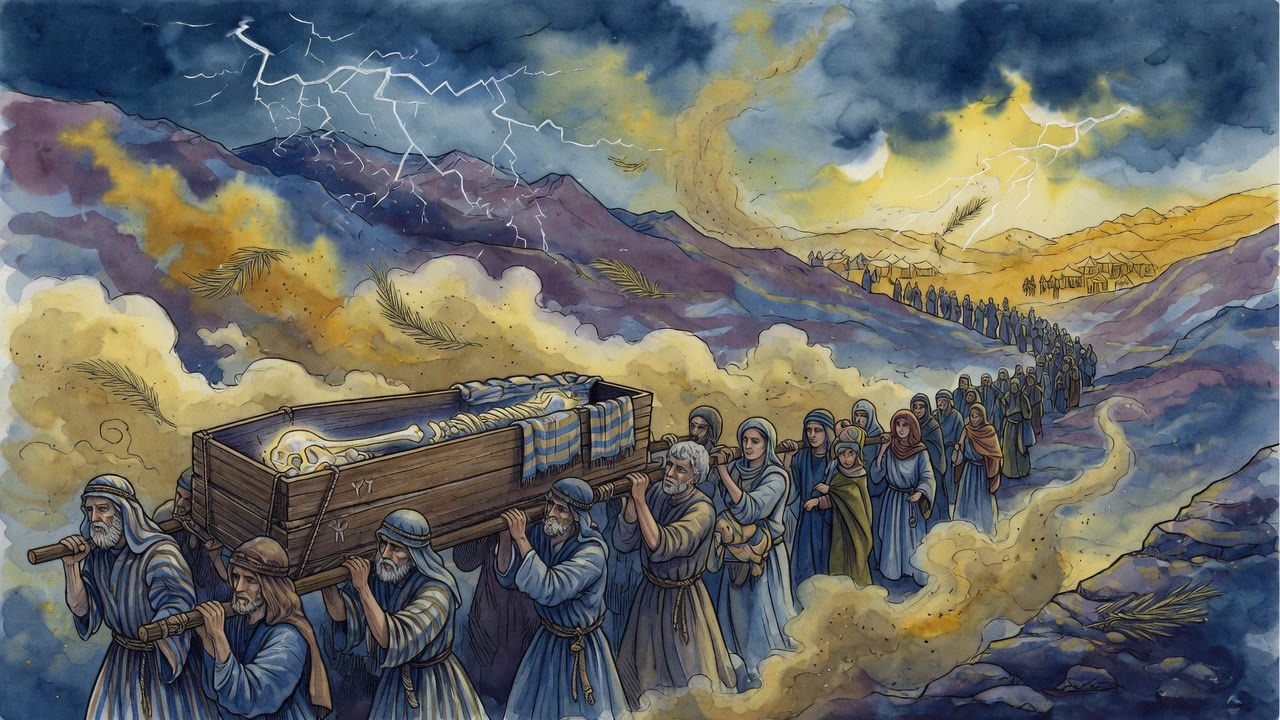
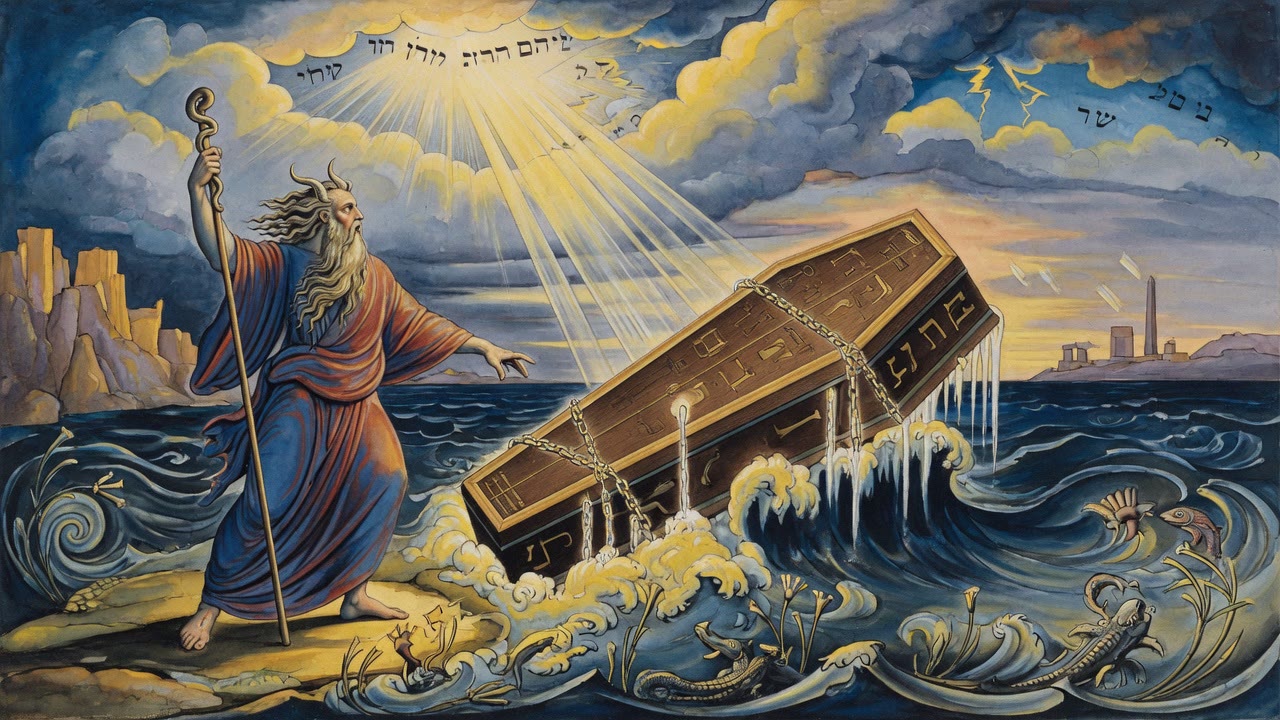
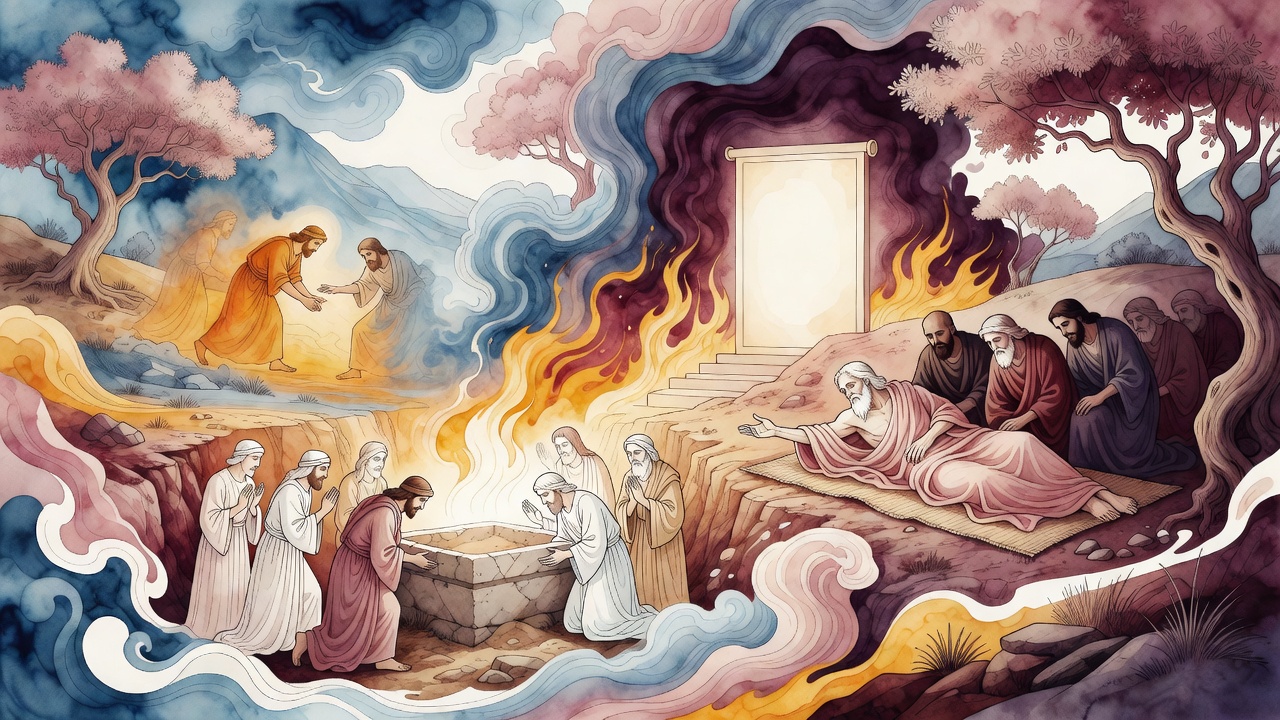
His bones waited in Egypt through all of it. Through the slavery and the plagues and the negotiations and the final departure. When Moses led Israel out, Moses was the one who remembered the oath and carried the coffin. Everyone else was looting gold and silver from their Egyptian neighbors. Moses went to find the bones of Joseph. The rabbis held this up as evidence of Moses's character: he understood what the oath meant and whose it was to honor.


← All myths
From the tradition

Sources

7 sources

The texts this telling draws on, in full. Open a card to read inline, or expand it for a wider, quieter read.

Legends of the Jews 1:195Legends of the Jews

A devastating famine had gripped the land of Canaan, and word reached Joseph, now a high-ranking official in Egypt, that his brothers might be forced to come seeking grain. Remember, these are the very brothers who had sold him into slavery years before! Can you imagine the mix of emotions churning inside him?

He wasn’t just going to sit back and wait, though. Joseph, ever the strategist, decided to orchestrate their arrival. And how did he do it? Through a series of carefully crafted decrees, designed to nudge his brothers in exactly the direction he wanted.

In Legends of the Jews, a monumental work compiled by Louis Ginzberg, Joseph issued a decree concerning the purchase of corn in Egypt. It wasn’t a simple “come and get it” offer. It was far more intricate.

The decree stated: "By order of the king and his deputy, and the princes of the realm, be it enacted that he who desireth to buy grain in Egypt may not send his slave hither to do his bidding, but he must charge his own sons therewith.”: this immediately meant the brothers themselves would have to travel to Egypt. No sending servants to do the job for them.

But Joseph wasn't done yet. The decree continued: "An Egyptian or a Canaanite that hath bought grain and then selleth it again shall be put to death, for none may buy more than he requireth for the needs of his household." This prevented profiteering and ensured people only bought what they needed, carefully controlling the distribution.

And finally, the kicker: "Also, who cometh with two or three beasts of burden, and loads them up with grain, shall be put to death." This last part seems extreme, doesn't it? But it forced people to make multiple trips, preventing any one individual from hoarding the precious grain. It also likely reduced the risk of grain being smuggled out of the country.

These weren't just practical measures; they were calculated moves in a deeply personal game. Joseph was setting the stage for a reunion – a reckoning, perhaps – with the brothers who had betrayed him. He used the power he had gained to control the situation, ensuring they would have to come face to face with him.

Think about the weight of those decisions. The power to control life and death, the desire for reconciliation, the lingering pain of betrayal… It all comes to a head in this moment. What would you do in Joseph’s place? How would you wield that kind of power? It's a question that resonates even today.

Full source
Legends of the Jews 1:206Legends of the Jews

Take the story of Joseph and his brothers.

The familiar story is this:. Joseph, the favored son, gets sold into slavery in Egypt. Years pass. He rises to power, second only to Pharaoh himself. Then famine strikes, and his brothers – the very ones who sold him – come to Egypt seeking grain. And that's where things get really interesting.

Joseph, now a powerful Egyptian official, recognizes his brothers. But instead of revealing himself immediately, he decides to…mess with them a little. And how!

The verse reads, "Joseph made himself strange unto his brethren." That's putting it mildly! He accuses them of being spies. And get this: he pulls out a cup. Not just any cup, but a "magic cup." He knocks against it and proclaims, "By this magic cup I know that ye are spies." Can you imagine the looks on their faces?

Where does this "magic cup" come from? Well, Jewish tradition loves to fill in the gaps. We don't get all the details in the Torah itself, but late antique sources definitely elaborate.

His brothers, naturally, deny the accusation. "Thy servants came from Canaan into Egypt for to buy corn," they plead.

Joseph isn't buying it. He throws another curveball: "If it be true that ye came hither to buy corn, why is it that each one of you entered the city by a separate gate?" It's a clever trap. He wants to see if they'll slip up.

Their response? "We are ALL the sons of one man in the land of Canaan, and he bade us not enter a city together by the same gate, that we attract not the attention of the people of the place." They claim their father, Jacob, told them to enter separately to avoid suspicion. A perfectly reasonable explanation..or is it?

Here's the kicker. The text points out something subtle, something almost hidden: "Unconsciously they had spoken as seers, for the word ALL included Joseph as one of their number." Whoa. Talk about dramatic irony! They're unknowingly acknowledging Joseph as one of them, even though they have no idea they're standing right in front of him.

It's such a loaded moment. They think they're being clever, avoiding suspicion, but their words carry a deeper truth they themselves don’t grasp. It speaks to the complex relationships within families, the secrets we keep, and the ways our past can come back to haunt us.

So, what does it all mean? This little snippet of the Joseph story is a reminder that things aren't always as they seem. Words can have multiple meanings, and sometimes, the truth is hiding in plain sight. And maybe, just maybe, family reunions are never really simple, are they?

Full source
Book of Jubilees 45:17Book of Jubilees

There's a whole world of fascinating texts out there, bubbling with stories and details that expand on the familiar narratives. one of them: the Book of Jubilees.

Specifically, Now, "Jubilees" isn't just a fancy name. The book divides history into periods of 49 years, called jubilees, offering a unique chronological framework for biblical events. It’s a way of understanding time, history, and divine purpose.

So, where does Jubilees 45 take us? Back to Egypt, during the time of Joseph. Remember him? The one with the technicolor dreamcoat who rose to power?

The story in Jubilees picks up after the seven years of famine. A devastating time, as we know from Genesis. But here, we get a tiny, poignant detail: "in the seven years of the famine it had not overflowed and had irrigated only a few places on the banks of the river, but now it overflowed."

Simple. But imagine the relief, the hope that surged through the land as the Nile, the lifeblood of Egypt, finally burst its banks. It's a powerful image of renewal after hardship. The land responds, and "the Egyptians sowed the land, and it bore much corn that year." Jubilees 45 tells us, specifically, that "this was the first year of the fourth week of the forty-fifth jubilee." A very precise dating!

What did Joseph do with this abundance? He took a fifth of the harvest for the king, and left four parts for the people, for food and for seed. “And Joseph made it an ordinance for the land of Egypt until this day.” A system, a structure to ensure the land and its people would flourish.

And what about Jacob, also called Israel? The patriarch who brought his family down to Egypt to escape the famine? Jubilees tells us he lived in Egypt for seventeen years. And adds up his age rather neatly: "all the days which he lived were three jubilees, one hundred and forty-seven years." It’s a tidy, almost mathematical way of summarizing a life.

What's striking about this passage from Jubilees is its groundedness. It's not filled with grand pronouncements or miraculous events, but rather with the details of agricultural recovery, of a society rebuilding itself. It reminds us that even in the grand sweep of biblical history, life goes on, fields are sown, and harvests are gathered.

It also offers a different lens through which to view the well-known story of Joseph. We see him not just as a dreamer and interpreter of dreams, but as an administrator, a wise steward of resources who established lasting policies.

The Book of Jubilees, while not part of the canonical Bible, gives us a fascinating glimpse into the richness and complexity of Jewish tradition. It reminds us that there are always more stories to uncover, more perspectives to consider, and more ways to understand the narratives that shape our understanding of the world.

Full source
Book of Jubilees 46:15Book of Jubilees

That’s kind of what happened after Joseph's incredible rise to power in Egypt.

Remember Joseph? Sold into slavery by his brothers, then, through a series of unbelievable events, rising to become second-in-command to Pharaoh himself? He saved Egypt from famine, brought his entire family to live in the fertile lands, and for a while, things were good.

As the Book of Jubilees, a fascinating text considered apocryphal by some, tells us, that golden era couldn't last forever. Jubilees divides history into periods of 49 years, called – you guessed it – jubilees, offering a unique chronological perspective.

In Jubilees, Joseph wanted to return to Canaan, the land promised to his ancestors. But he couldn't. Why? Because "another, a new king, had become king of Egypt, and he was stronger than he." (Jubilees 46:1-2).

Imagine that. After all Joseph had done for Egypt, a new Pharaoh comes along who either doesn't remember or doesn't care about Joseph's contributions. The gates of Egypt were closed, and no one could leave or enter. The land Joseph had made safe and prosperous had become a gilded cage.

Jubilees continues, matter-of-factly: "And Joseph died in the forty-sixth jubilee, in the sixth week, in the second year, and they buried him in the land of Egypt, and his brethren died after him." (Jubilees 46:3). That’s it. A simple statement marking the end of an era. All the drama, all the triumphs, all the tribulations…reduced to a single sentence.

What a poignant detail. He was buried in Egypt, not in the land he longed for. It makes you wonder what he thought in his final days. Did he feel a sense of accomplishment? Regret? Or just the quiet acceptance of a life lived far from home?

And the narrative marches on, almost relentlessly: "And the king of Egypt went forth to war with the king of Canaan in the forty-seventh jubilee, in the second week in the second year." (Jubilees 46:4).

War. The cycle of conflict begins anew. The focus shifts from the personal story of Joseph and his family to the larger sweep of history, of nations clashing.

It’s a stark reminder that even the most remarkable lives are just brief chapters in a much longer, more complex story. Joseph's life, though extraordinary, couldn't stop the turning of the ages, the rise and fall of kingdoms.

So, what does this brief passage from Jubilees leave us with? Perhaps a sense of the ephemeral nature of power and the enduring power of longing. Or maybe just a quiet contemplation on the lives of those who came before us, whose stories, like Joseph’s, continue to resonate across the centuries.

Full source
Legends of the Jews 1:487Legends of the Jews

Legends of the Jews turns to Joseph Made His Brothers Swear to Carry His Bones Home.

It's a promise that when God finally remembers them – when God "visits" them, as the text says – and brings them up out of Egypt, they will carry his bones back to Eretz Yisrael, the Land of Israel. Joseph, the powerful viceroy, the man who saved Egypt from famine, is now concerned with something far beyond earthly power: his final resting place. He’s thinking about legacy, about connection, about the promise of redemption.

The request itself is fascinating. Joseph says, "I, a ruler, could have taken my father’s body to the Holy Land while it was still intact." He's acknowledging his own power, but also setting it aside. He doesn't want special treatment. All he asks is that they carry his bones, and that they can bury him "in any spot in Palestine."

Why this seemingly humble request? Why not demand a place in the family tomb?

Joseph explains that "the burial-place of the fathers was appointed to be the tomb only of the three Patriarchs and their three wives." In other words, the Cave of Machpelah in Hebron was reserved for Abraham, Isaac, and Jacob, and their respective wives, Sarah, Rebecca, and Leah. It was a sacred space, a place of immense historical and spiritual significance, as we learn in Genesis.

Joseph understood this. He wasn't trying to usurp that legacy. He simply wanted to be part of the promised return, to have his bones touch the soil of the land promised to his ancestors. He wanted to participate, even in death, in the fulfillment of God's covenant.

What does this story tell us? Perhaps it's a reminder that true power isn't about earthly status, but about faith and connection to something larger than ourselves. Maybe it’s about the enduring hope for redemption, even in the face of exile. Or maybe, just maybe, it’s about the importance of keeping promises, even across generations. What do you think?

Full source
Legends of the Jews 1:37Legends of the Jews

The story of Joseph being sold into slavery is one The familiar version gives us. But have you ever stopped to really consider his experience in those first agonizing moments? Ginzberg, in his Legends of the Jews, paints a heartbreaking picture.

As the Ishmaelite caravan carried him toward Egypt, Joseph, realizing the sheer distance growing between him and his beloved father, Jacob, broke down. He wept. Not just a few tears, but a full-blown, soul-wrenching cry. He was being ripped away from everything. Can you imagine the terror?

One of the Ishmaelites, probably annoyed more than sympathetic, figured Joseph was just uncomfortable riding the camel. So, he let him walk. As if that would solve anything! But Joseph's grief only intensified. He sobbed, calling out, "O father, father!" over and over.

Another member of the caravan, completely lacking in empathy, lost his patience. He beat Joseph, trying to silence his cries. It’s brutal, isn’t it? This only made things worse. Joseph, already emotionally shattered, was physically exhausted too. He couldn't even walk anymore.

And then, the real horror: all the Ishmaelites turned on him. They beat him relentlessly, trying to force him into silence with threats and violence. What a stark contrast to the favored son we often picture!

But here's where the story takes a turn, a glimmer of hope amidst the darkness. God saw Joseph's suffering. That God intervened. He sent darkness and terror upon the Ishmaelites. Their hands, raised to strike Joseph, froze, rigid and useless.

They were bewildered. Why was this happening to them? Why were they suddenly paralyzed on the road? They had no idea that their cruelty towards this one young man had caught the attention of the Divine. They didn’t know it was for the sake of Joseph.

It makes you wonder, doesn't it? About the unseen forces at play in our lives. About the power of empathy, and the consequences of cruelty. And about the enduring promise that even in the darkest moments, we are not truly alone. Is this darkness and terror an allegory for a guilty conscience, or a literal intervention from God? What do you think?

Full source
Legends of the Jews 1:488Legends of the Jews

Our story takes us back to Joseph in Egypt, a man who rose from prisoner to viceroy. As his life neared its end, Joseph knew he had one crucial task left: to ensure his bones would one day return to the land of his ancestors, to Eretz Yisrael, the Land of Israel.

It wasn't as simple as just asking. Joseph, wise as he was, foresaw potential problems. According to Ginzberg's retelling in Legends of the Jews, Joseph didn't ask his sons to swear the oath to carry his remains. Instead, he asked his brothers. Why?

Joseph feared the Egyptians. He worried they wouldn't allow his sons to transport his bones, even if they remembered how he had been allowed to do the same for his father, Jacob. They might argue, "Joseph was the viceroy! A wish like that, coming from someone of such high status, cannot be denied." So, he turned to his brothers, placing the responsibility on their shoulders.

There was more to it than just a burial request. Joseph also made them promise something even bigger. He adjured them, commanded them, not to leave Egypt until a redeemer appeared. This redeemer, he said, would announce his message with the words "Pakod – I have surely visited you." That phrase, pakod pakadeti, is so important in our tradition. It’s a signal, a sign of hope.

Where did Joseph get this tradition? It goes back generations. He received it from his father, Jacob, who heard it from Isaac, and Isaac, in turn, heard it from Abraham. A chain of faith passed down through the generations, a promise of future redemption. Think about the weight of that tradition, the power of those words echoing through time.

Joseph understood that God would redeem Israel through Moses. As Ginzberg emphasizes, this redemption was like a glimpse of the Messianic future, a taste of the world to come, right here in this world. It wasn't just about escaping slavery. It was about something much deeper, something spiritual.

And when would this redemption begin, according to Joseph? In Tishri, the seventh month of the Hebrew calendar, the time of Rosh Hashanah (the Jewish New Year) and Yom Kippur (the Day of Atonement). That's when Israel would begin to be freed from their forced labor. And it would be completed in the following Nisan, the month of Passover, when they would finally leave Egypt.

So, what does this all mean for us? Joseph's story reminds us that even in the darkest of times, hope persists. It reminds us that promises, passed down through generations, can carry incredible power. And it reminds us that redemption, both personal and collective, is always possible. Perhaps, like Joseph’s brothers, we too are carrying promises made long ago, waiting for the moment of fulfillment.

Full source